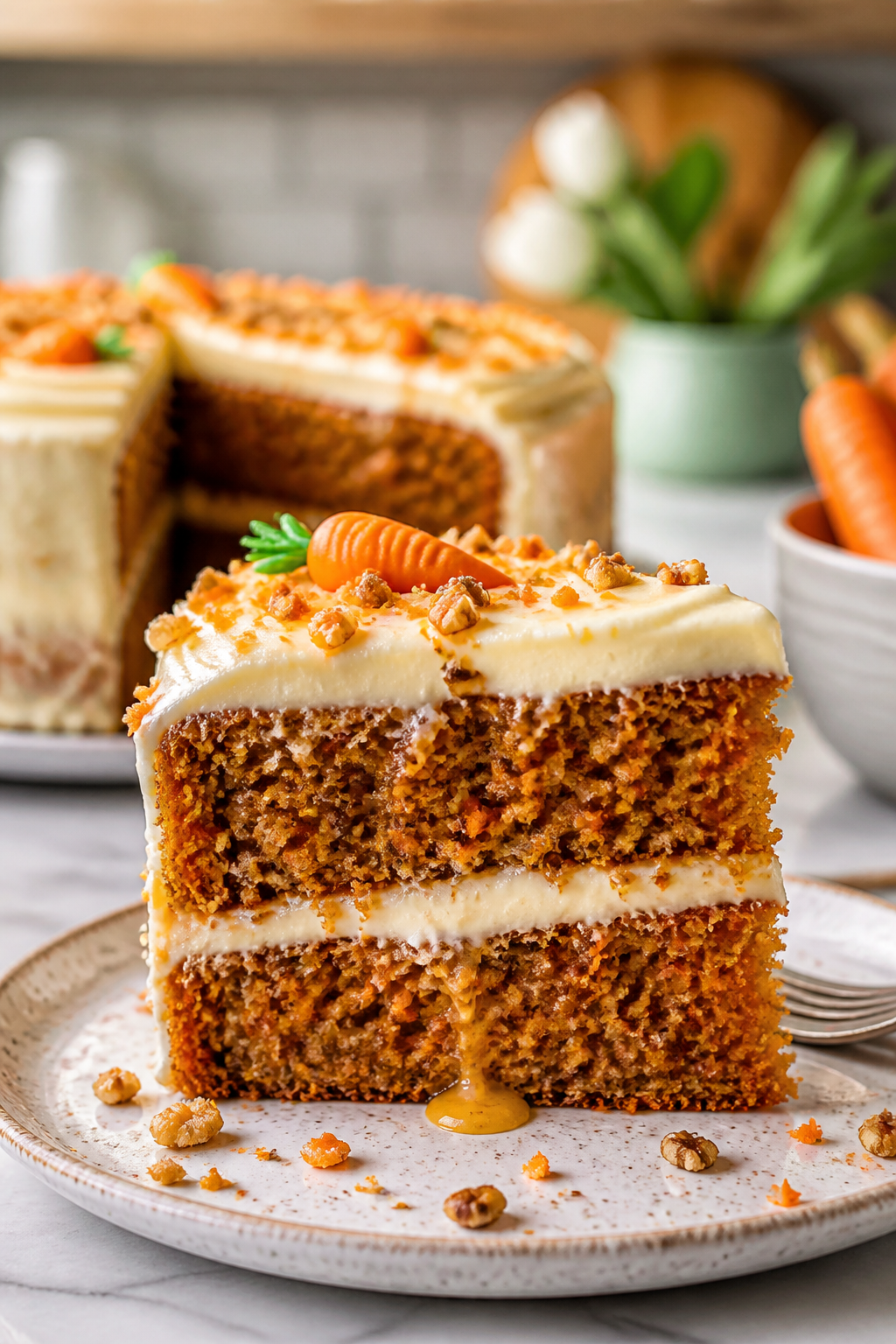
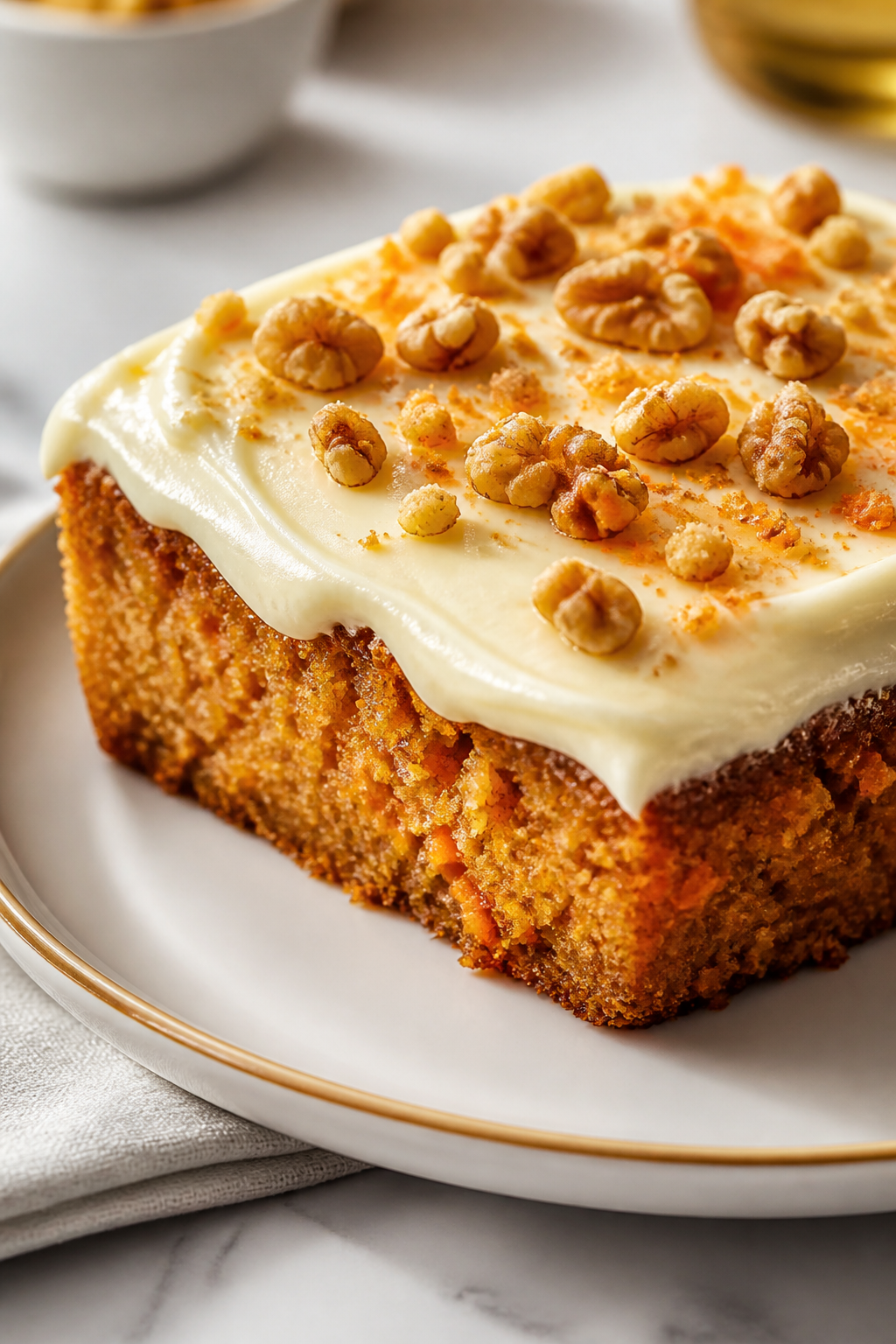
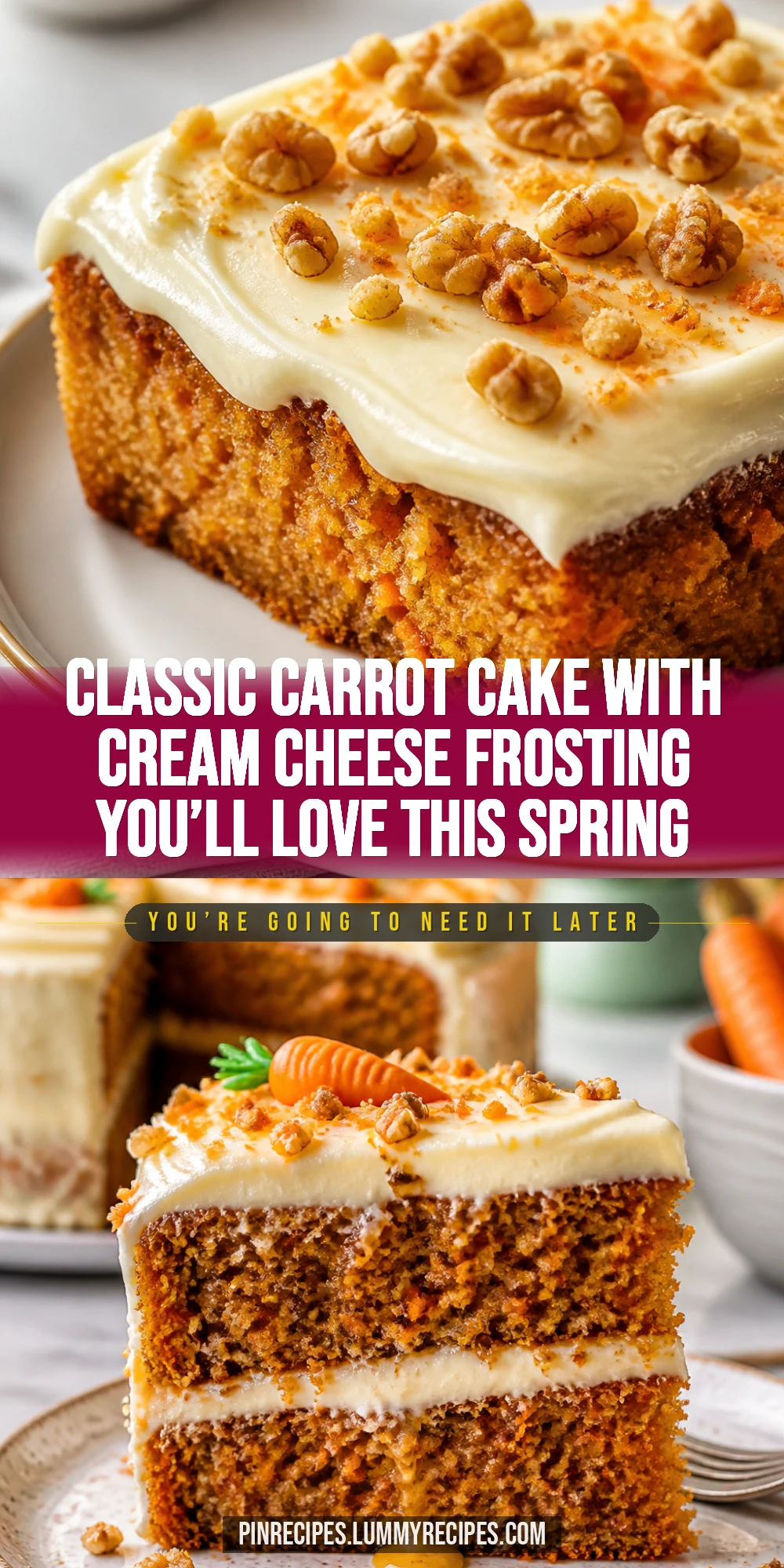
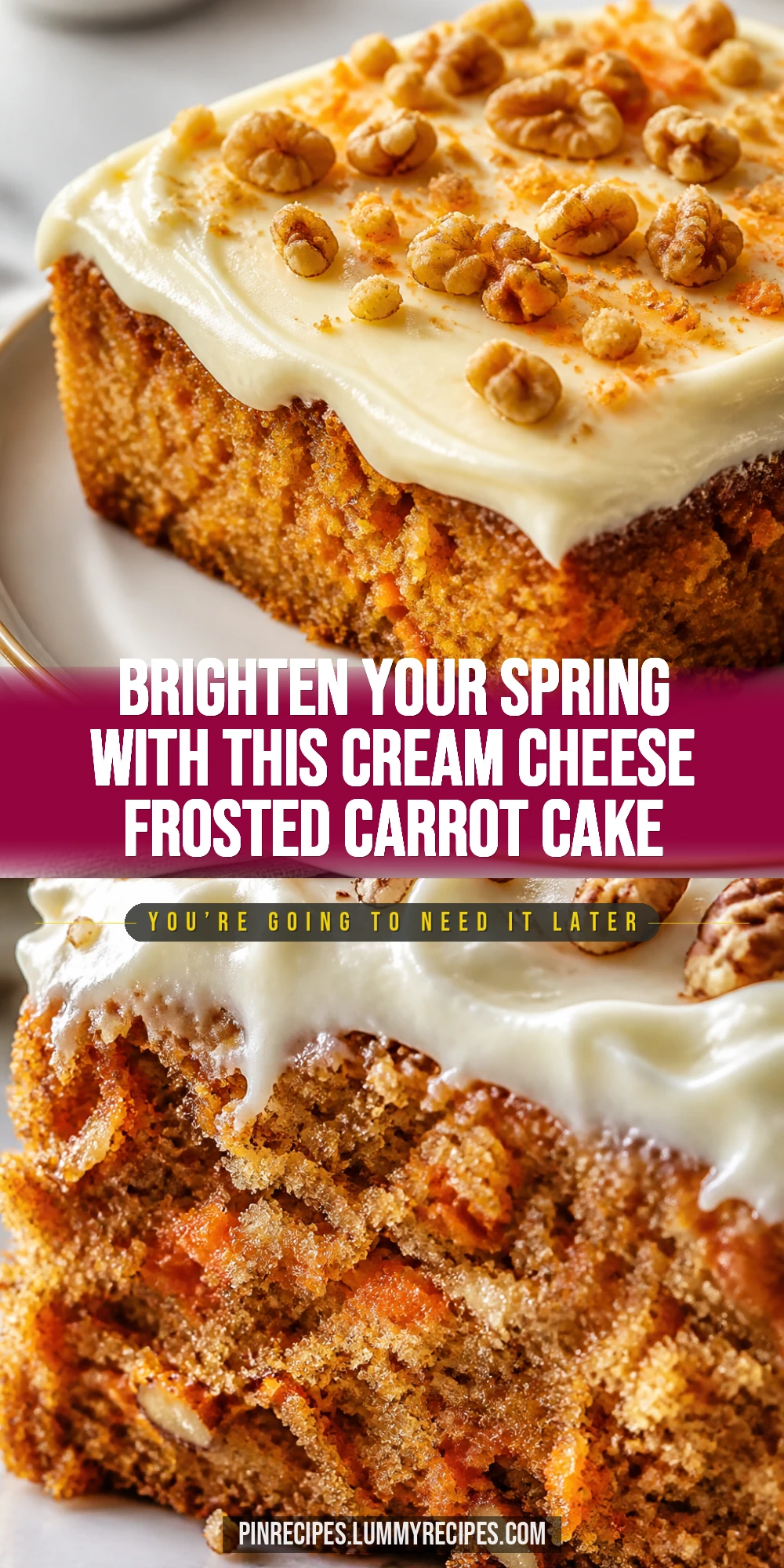
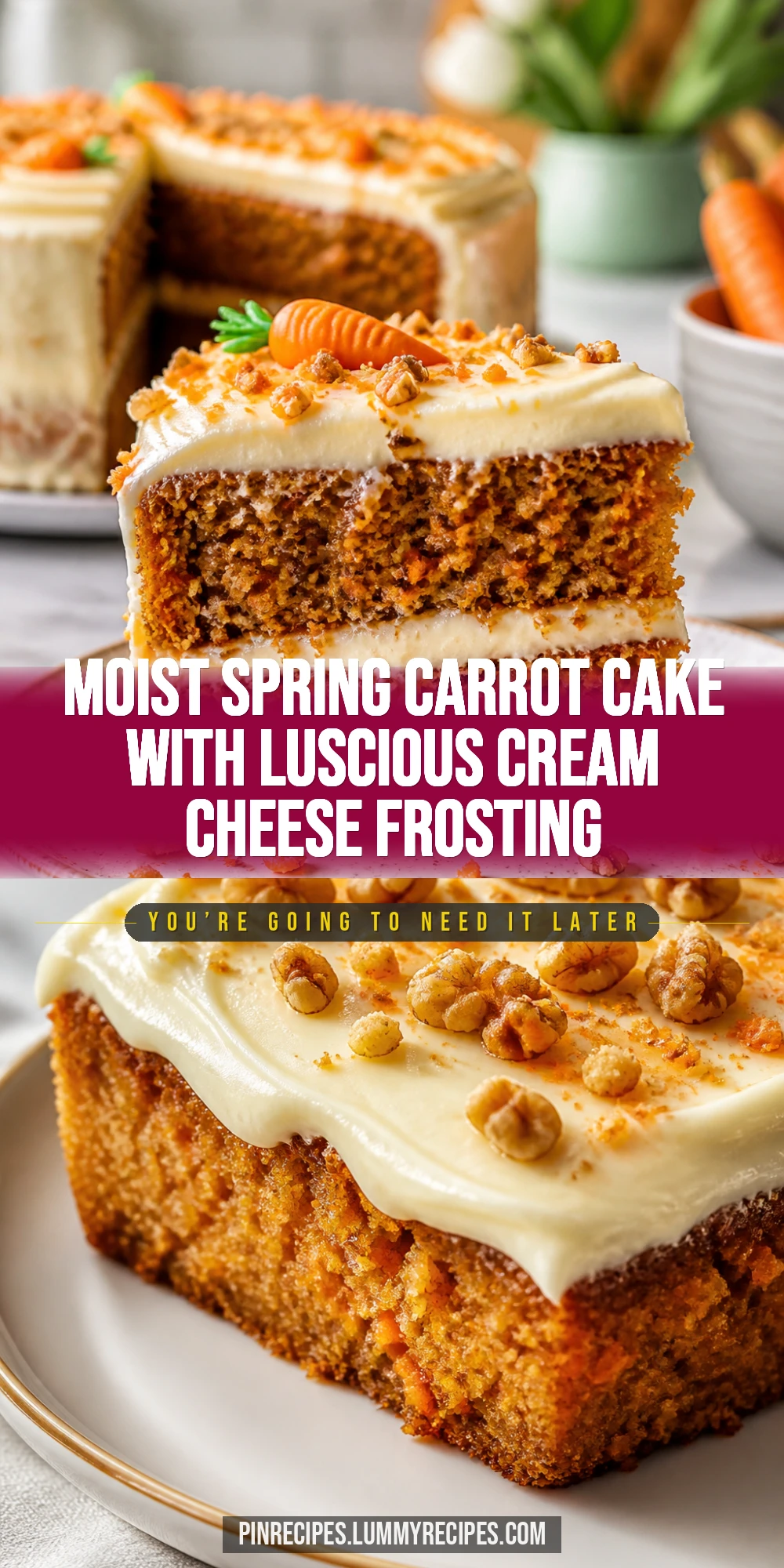
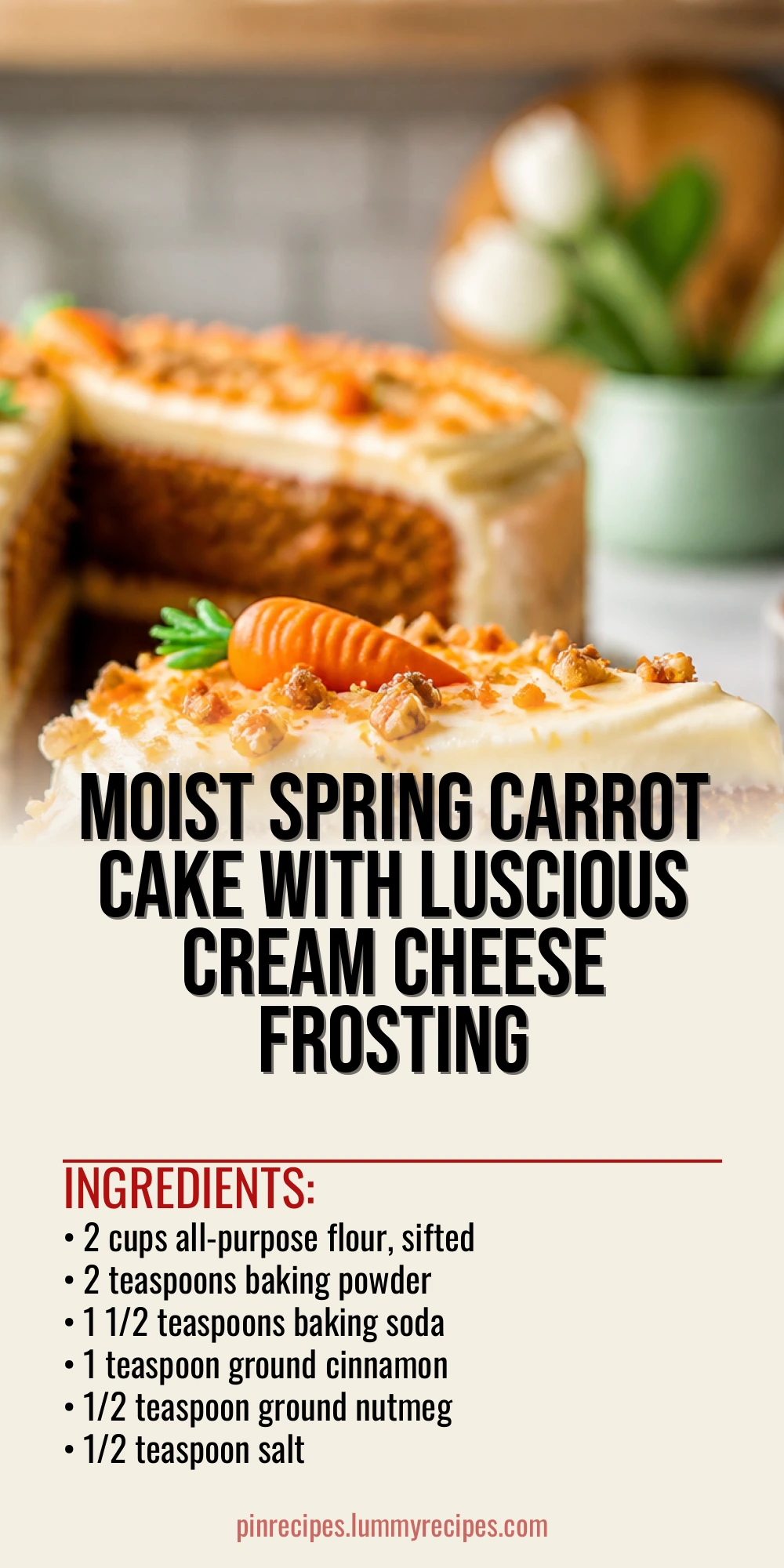
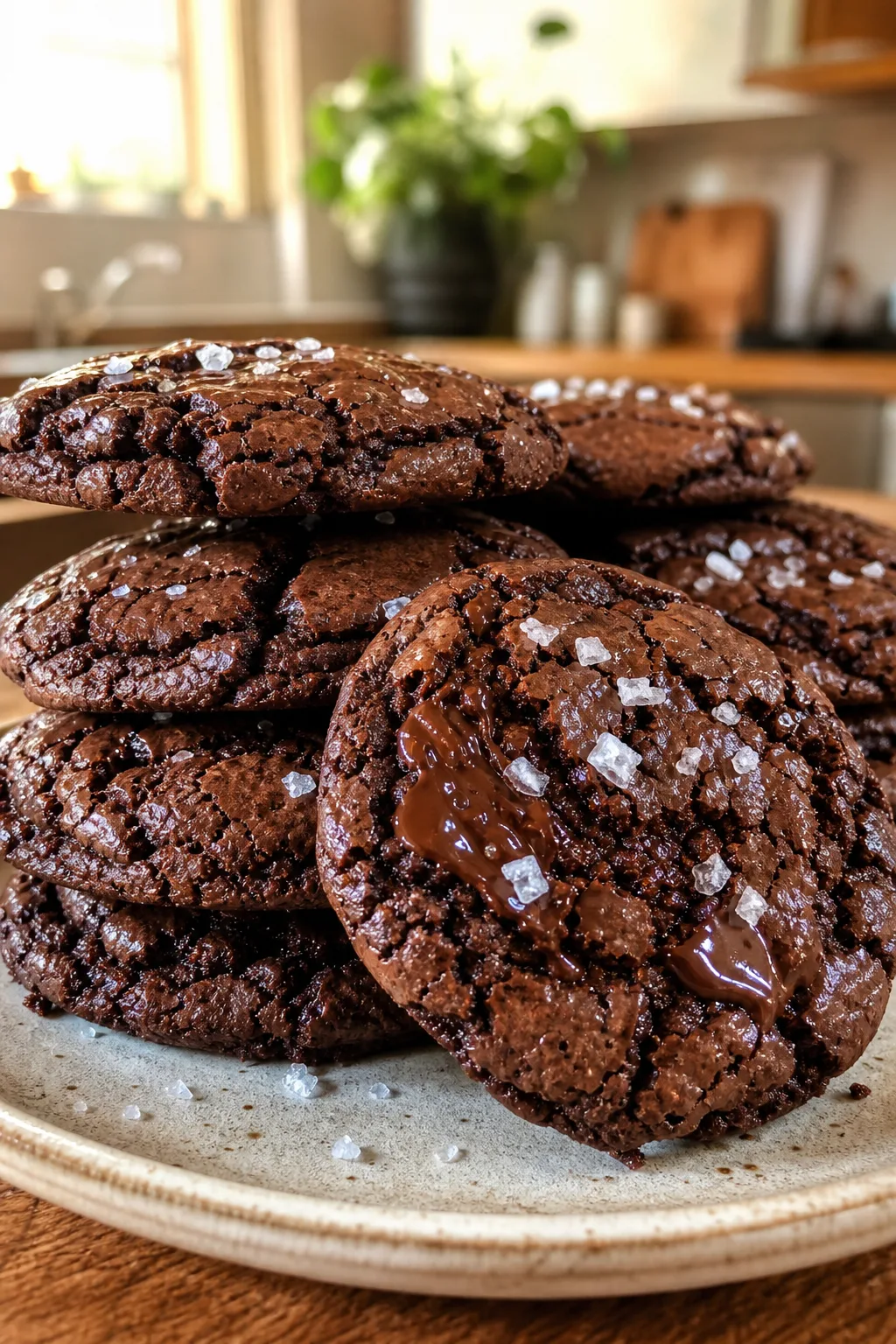
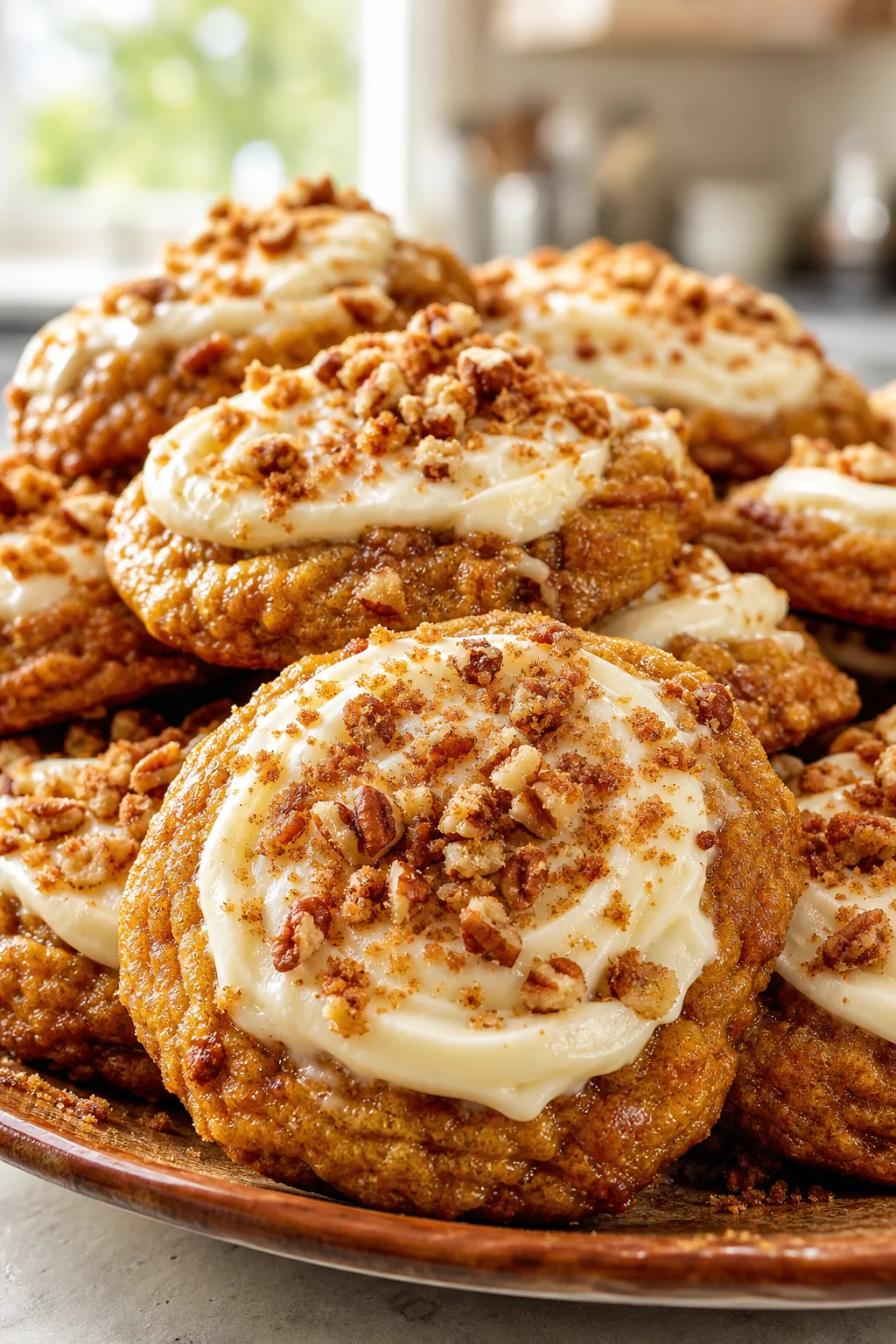
This carrot cake is a fresh take for spring—moist, tender, and packed with warm spices. The cream cheese frosting is silky and tangy, balancing the cake perfectly. Great for Easter brunch or a sunny afternoon treat!
Introduction
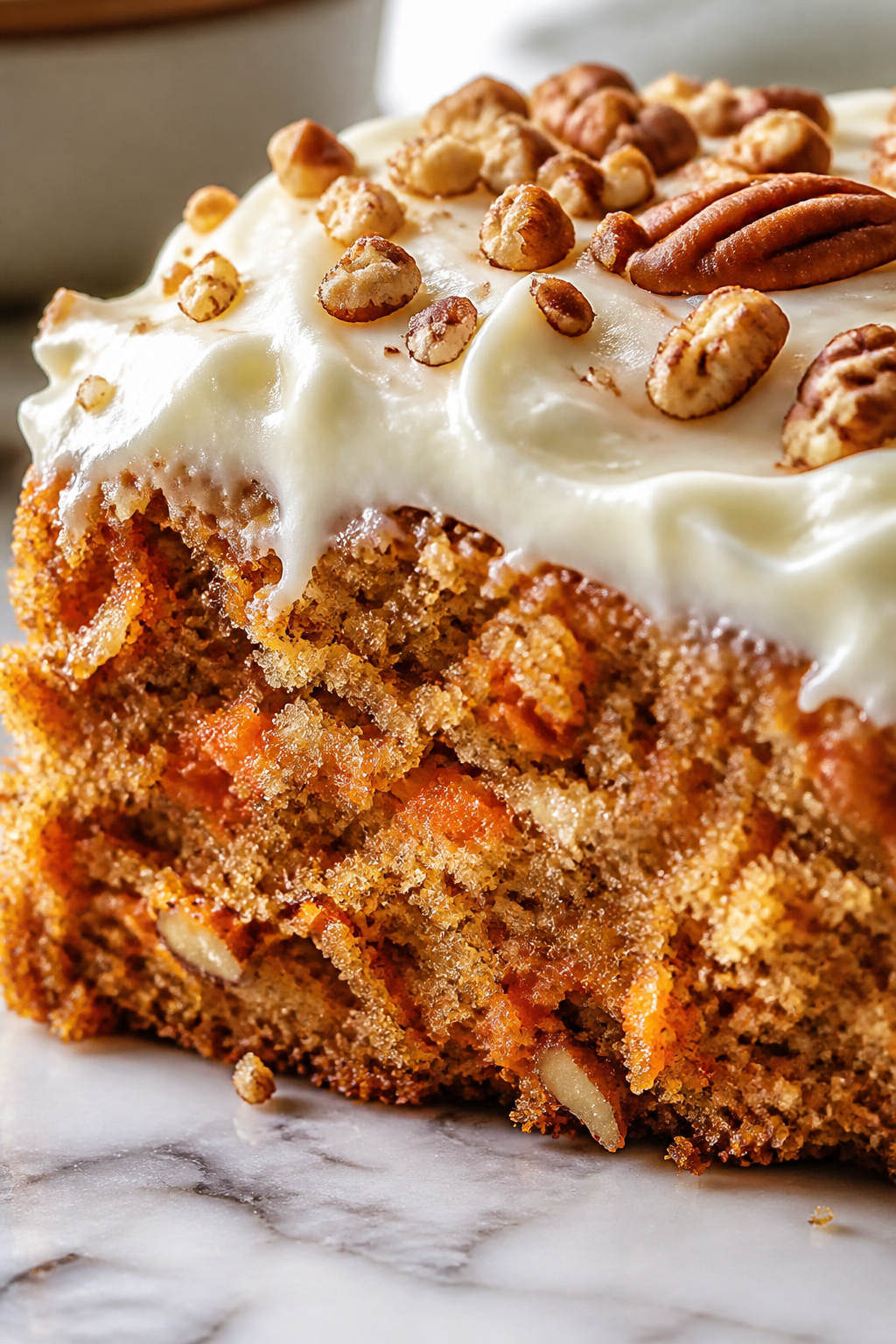
I first made this carrot cake years ago for a spring family gathering, and it instantly became a favorite. What I love about this recipe is how it feels both comforting and fresh, thanks to the pineapple addition and the warm spices. It’s not your typical dense carrot cake; it’s light and moist, with just the right balance of sweetness. The cream cheese frosting is smooth and tangy, which cuts through the cake’s richness beautifully. One trick I learned is to grate the carrots finely and squeeze out excess moisture so the cake stays tender but not soggy. Also, the pineapple adds a subtle moisture and brightness that makes this version stand out. When you slice into it, you’ll see a perfect crumb with flecks of orange carrot and little nutty bits if you add the walnuts. It’s a wonderful cake to serve at spring brunches, Easter celebrations, or anytime you want a slice of sunshine on your plate. Honestly, it’s become my go-to carrot cake because it’s reliably delicious and not too fussy to make.
What You'll Need
One 9-inch two-layer cake, serves 8
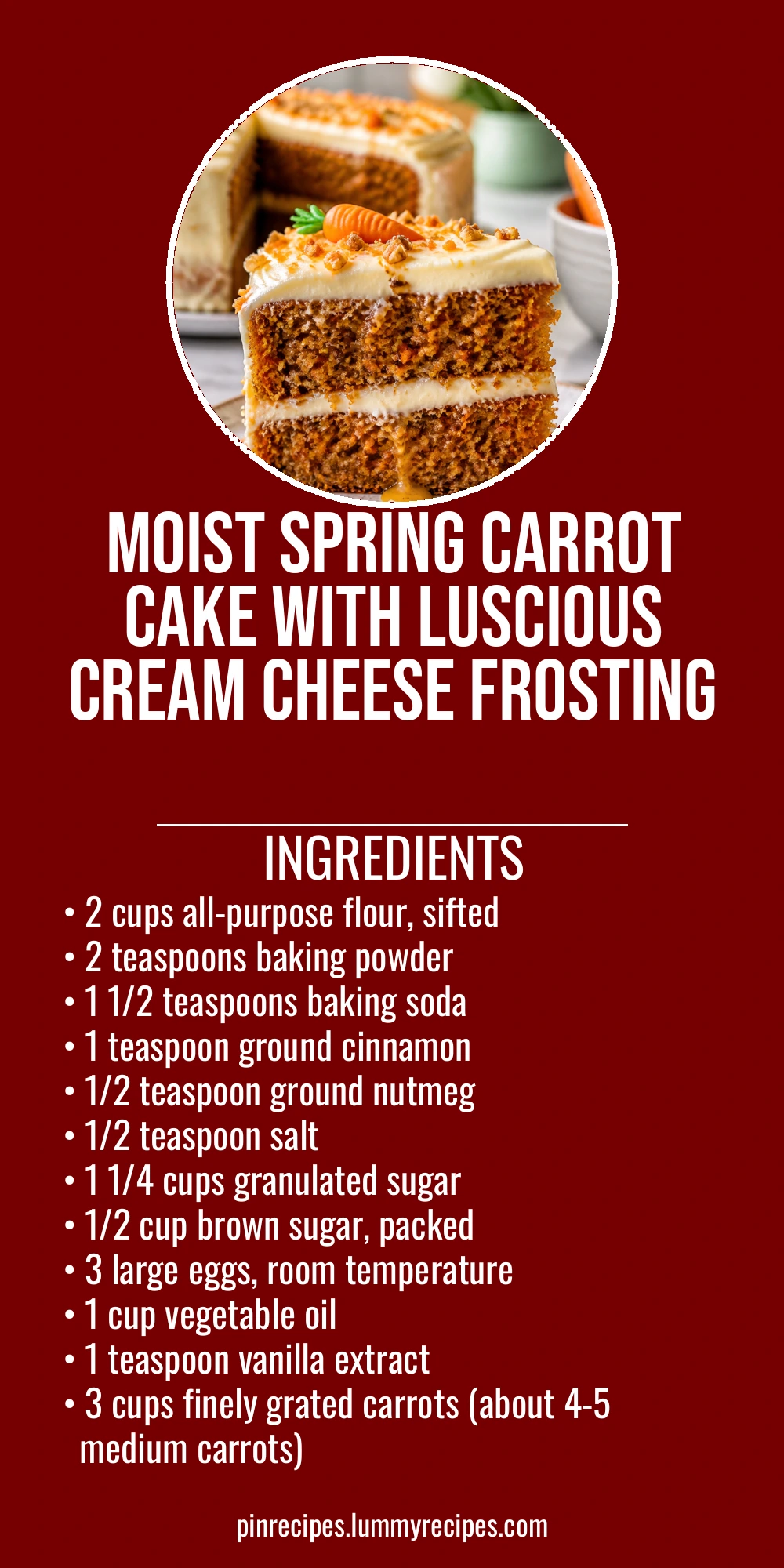
- 2 cups all-purpose flour, sifted
- 2 teaspoons baking powder
- 1 1/2 teaspoons baking soda
- 1 teaspoon ground cinnamon
- 1/2 teaspoon ground nutmeg
- 1/2 teaspoon salt
- 1 1/4 cups granulated sugar
- 1/2 cup brown sugar, packed
- 3 large eggs, room temperature
- 1 cup vegetable oil
- 1 teaspoon vanilla extract
- 3 cups finely grated carrots (about 4-5 medium carrots)
- 1/2 cup crushed pineapple, drained
- 1/2 cup chopped walnuts or pecans (optional)
- For the frosting:
- 8 oz cream cheese, softened
- 1/2 cup unsalted butter, softened
- 3 cups powdered sugar, sifted
- 1 teaspoon vanilla extract
How To Do It
Step 1
Preheat your oven to 350°F (175°C) and grease two 9-inch round cake pans. Line the bottoms with parchment paper to prevent sticking. This step is important because a well-prepared pan ensures your cakes come out cleanly without breaking. If you skip greasing or lining, you risk parts of the cake sticking, which can ruin the presentation.
⏱ Time: 10 minutes
✓ Doneness: Pans are evenly greased and parchment paper fits snugly without wrinkles
Step 2
In a large bowl, whisk together the flour, baking powder, baking soda, cinnamon, nutmeg, and salt. Mixing the dry ingredients first ensures even distribution of the leavening agents and spices, which is crucial for consistent texture and flavor throughout the cake. If you rush this step, you might end up with uneven rising or pockets of spice.
⏱ Time: 5 minutes
✓ Doneness: Dry ingredients are fully combined, no clumps of baking soda or cinnamon visible
Step 3
In a separate bowl, beat the granulated sugar, brown sugar, eggs, oil, and vanilla extract until smooth and creamy. This emulsification step traps air and helps the cake rise properly. Be careful not to overbeat, or the batter can become too dense. The mixture should look shiny and slightly thickened.
⏱ Time: 3-4 minutes
✓ Doneness: Mixture is pale, smooth, and slightly thickened
Step 4
Gradually add the dry ingredients to the wet ingredients, folding gently with a spatula. Mixing gently prevents developing too much gluten, which would make the cake tough. Stop mixing as soon as the flour disappears for a tender crumb.
⏱ Time: 3 minutes
✓ Doneness: Batter is smooth with no visible pockets of flour
Step 5
Fold in the grated carrots, crushed pineapple, and nuts if using. These add moisture and texture. The pineapple’s juice keeps the cake moist, while the nuts add a nice crunch. Make sure the carrots are well-drained or the batter may become too wet.
⏱ Time: 2 minutes
✓ Doneness: Ingredients are evenly distributed without overmixing
Step 6
Divide the batter evenly between the two pans and smooth the tops with a spatula. Even layers bake more uniformly, which is important for stacking later. If the pans are unevenly filled, one layer might bake faster and become dry.
⏱ Time: 5 minutes
✓ Doneness: Batter is level and smooth in both pans
Step 7
Bake the cakes in the preheated oven for 35-40 minutes. Test doneness by inserting a toothpick in the center; it should come out clean or with a few moist crumbs. Don’t overbake or the cake will dry out. Ovens vary, so start checking at 35 minutes.
⏱ Time: 35-40 minutes
✓ Doneness: Toothpick comes out clean or with moist crumbs, cake springs back when pressed lightly
Step 8
Let the cakes cool in the pans for 10 minutes, then turn them out onto a wire rack to cool completely. Cooling in the pan too long traps steam and can make the cake soggy. Cooling fully before frosting prevents the cream cheese from melting.
⏱ Time: 1 hour
✓ Doneness: Cakes are completely cool to the touch
Step 9
For the frosting, beat the softened cream cheese and butter until smooth and fluffy. Gradually add powdered sugar and vanilla, beating until creamy. The key is to have all ingredients at room temperature to avoid lumps. Overbeating can cause the frosting to become too soft and runny.
⏱ Time: 10 minutes
✓ Doneness: Frosting is smooth, spreadable, and holds soft peaks
Step 10
Assemble the cake by spreading frosting on the first layer, topping with the second, and frosting the top and sides evenly. Use an offset spatula for smooth edges. Chill briefly if frosting feels too soft before serving.
⏱ Time: 15 minutes
✓ Doneness: Cake is fully frosted with smooth, even coverage
Pro Tips
Grate carrots finely and squeeze out excess moisture before adding.
Carrots contain a lot of water, which can make the cake soggy if not drained. By grating finely and squeezing, you keep the cake moist but prevent it from becoming too wet, maintaining a tender crumb.
Use room temperature eggs and dairy for better emulsification.
Cold ingredients don’t combine well, leading to uneven batter and dense texture. Room temperature eggs and cream cheese blend smoothly with other ingredients, creating a uniform batter and frosting.
Don’t overmix the batter once flour is added.
Overmixing develops gluten, which toughens the cake. Mixing just until combined keeps the crumb light and tender, which is key for carrot cake’s soft texture.
Line cake pans with parchment paper and grease well.
This prevents sticking and makes removing the cake layers easy without breaking. It also helps the cake bake evenly, avoiding overbaked edges.
Cool cakes completely before frosting.
If the cake is warm, the frosting will melt and slide off, ruining the finish. Cooling ensures the frosting stays thick and smooth for perfect layering.
Add nuts for texture but toast them first.
Toasting nuts enhances their flavor and crunch, adding a nice contrast to the soft cake. Raw nuts can be bland and soft in the cake.
Use sifted powdered sugar in frosting for smoothness.
Sifting removes lumps and ensures the frosting is silky and easy to spread. It also helps the sugar dissolve better into the cream cheese and butter.
Common Mistakes to Avoid
Adding too much moisture from carrots or pineapple
Why it happens Many think more moisture means a moister cake, but excess liquid can cause a gummy texture and prevent proper rising.
Fix Grate carrots finely and squeeze out excess water. Drain pineapple thoroughly. This controls moisture so the cake bakes properly with a tender crumb.
Overmixing the batter after adding flour
Why it happens It’s tempting to mix thoroughly to avoid lumps, but overmixing develops gluten, making the cake tough.
Fix Mix gently just until flour disappears. Stop as soon as the batter looks uniform to keep the cake tender.
Frosting warm cake layers
Why it happens Impatience or lack of planning leads to frosting before the cake cools, causing the frosting to melt.
Fix Allow cakes to cool completely on a wire rack before frosting to keep the frosting stable and smooth.
Using cold cream cheese and butter in frosting
Why it happens Cold ingredients don’t blend well, resulting in lumpy or grainy frosting.
Fix Bring cream cheese and butter to room temperature before mixing to achieve a smooth, creamy frosting.
Not preparing cake pans properly
Why it happens Skipping parchment or greasing can cause cakes to stick and break when removed.
Fix Grease pans well and line with parchment paper for easy removal and clean edges.
Variations
Vegan Spring Carrot Cake
Swap eggs for flax eggs and use plant-based cream cheese and butter alternatives. This version keeps the moist texture and spice but is dairy and egg-free. Expect a slightly denser crumb but still deliciously fresh.
Note: Flax eggs need to sit for a few minutes to gel; baking time may increase by 5 minutes.
Gluten-Free Carrot Cake
Use a gluten-free flour blend with xanthan gum to replace all-purpose flour. This keeps the cake tender and moist while accommodating gluten sensitivities. The texture will be a bit different but still satisfying.
Note: Gluten-free batter may be thicker; avoid overmixing to prevent crumbliness.
Spiced Carrot Cake with Orange Zest
Add a teaspoon of freshly grated orange zest and a pinch of ground ginger to the batter. The citrus brightens the flavor and pairs wonderfully with the warm spices and cream cheese frosting.
Note: Zest adds moisture and flavor, so no other changes needed.
Carrot Cake Cupcakes
Divide the batter into a lined muffin tin for individual servings. Bake for 20-25 minutes. Cupcakes are great for parties and easier to serve, with the same moist texture and delicious frosting.
Note: Watch baking time carefully to avoid drying out cupcakes.
Carrot Cake with Coconut and Raisins
Fold in 1/2 cup shredded coconut and 1/3 cup raisins for extra texture and sweetness. These additions give the cake a tropical twist and a bit of chewiness that contrasts nicely with the creamy frosting.
Note: Soak raisins in warm water for 10 minutes to plump before adding.
Nutrition
Per Serving:
Nutritional values are estimates and may vary based on specific ingredients used.
Storage & Tips
Room Temperature
Store the frosted cake covered at room temperature for up to 1 day. Keep it in a cool place away from direct sunlight to prevent the cream cheese frosting from melting or sweating.
Refrigerator
Keep the cake in an airtight container or covered tightly with plastic wrap in the fridge for up to 4 days. The frosting firms up in the fridge but the cake may dry slightly. Bring to room temperature before serving for best flavor.
Freezer
Wrap the unfrosted cake layers tightly in plastic wrap and aluminum foil, then freeze for up to 2 months. Thaw overnight in the fridge, then frost before serving to maintain texture and flavor.
Reheating
Carrot cake is best served at room temperature. If refrigerated, let it sit out for about 30 minutes before serving. Avoid microwaving as it can melt the frosting and make the cake gummy.
Make Ahead
Bake the layers 1-2 days ahead and store wrapped in the fridge. Make the frosting a day ahead and keep chilled. Assemble the cake the day you plan to serve for the freshest taste and best texture.
FAQ
Can I use shredded carrots from a store bag?
While store-bought shredded carrots are convenient, they can be drier or coarser than freshly grated carrots, which may affect moisture and texture. If using store-bought, make sure to squeeze out any excess water to avoid a soggy cake.
What can I substitute for crushed pineapple?
You can replace crushed pineapple with unsweetened applesauce or mashed ripe banana for moisture and sweetness. Keep in mind the flavor will change slightly, and the acidity that helps leavening may be reduced, so consider adding a bit of lemon juice.
How do I prevent the cream cheese frosting from becoming runny?
Make sure both the cream cheese and butter are fully softened but not melted before mixing. Also, add powdered sugar gradually and chill the frosting if it feels too soft. Avoid overbeating, which can incorporate too much air and soften the frosting.
Can I make this cake gluten-free?
Yes, by substituting all-purpose flour with a gluten-free blend containing xanthan gum, you can make a great gluten-free version. The texture will be slightly different but still moist and flavorful.
Why does my carrot cake sometimes turn out dense?
Dense cake often results from overmixing the batter, too much moisture, or old leavening agents. Mix just until combined, drain carrots well, and use fresh baking powder and soda for a light crumb.
Can I add nuts or raisins to this recipe?
Absolutely! Adding chopped walnuts, pecans, or raisins adds texture and flavor. Toast nuts beforehand for extra depth. Just fold them in gently before baking.
How long will the cake stay fresh?
Frosted carrot cake stays fresh in the fridge for about 4 days. For longer storage, freeze unfrosted layers for up to 2 months and frost after thawing.
Can I use butter instead of vegetable oil?
Yes, melted butter can replace oil for a richer flavor, but it may make the cake slightly denser. Use the same amount and cool it before mixing with eggs to avoid cooking them.
Final Thoughts
I hope you enjoy baking and sharing this spring carrot cake as much as I do! Don’t forget to tell me how it turns out or share your favorite tweaks.