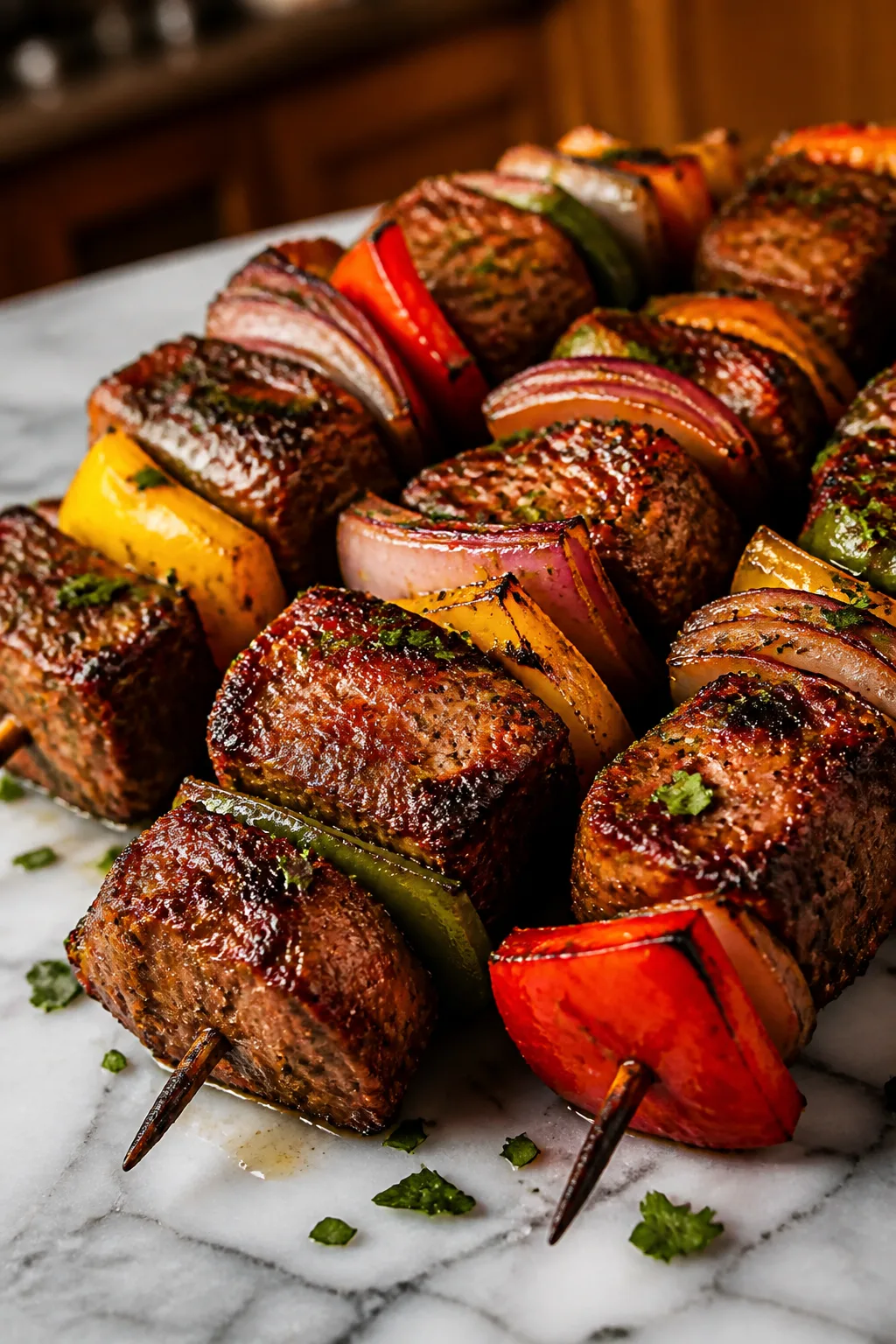
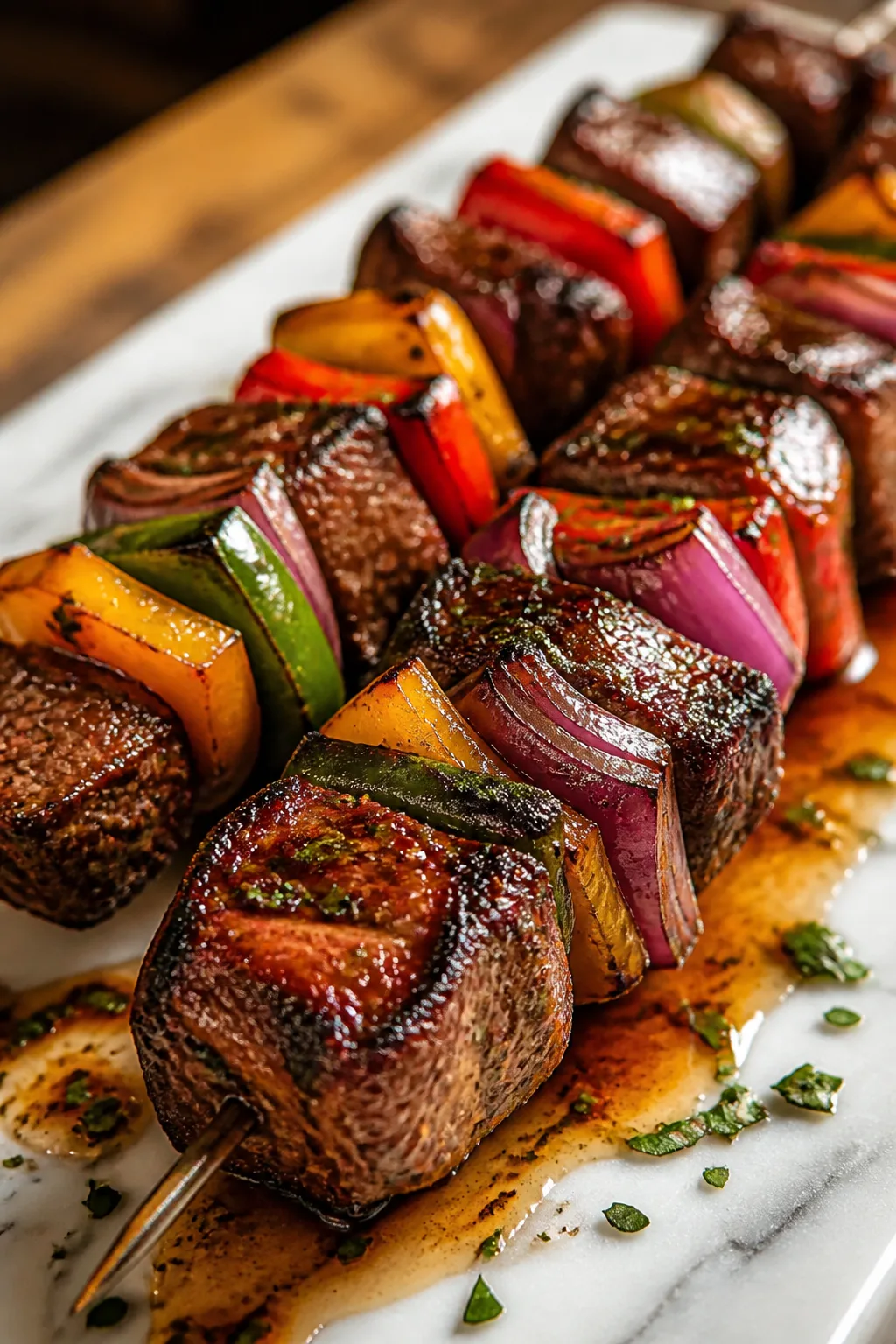
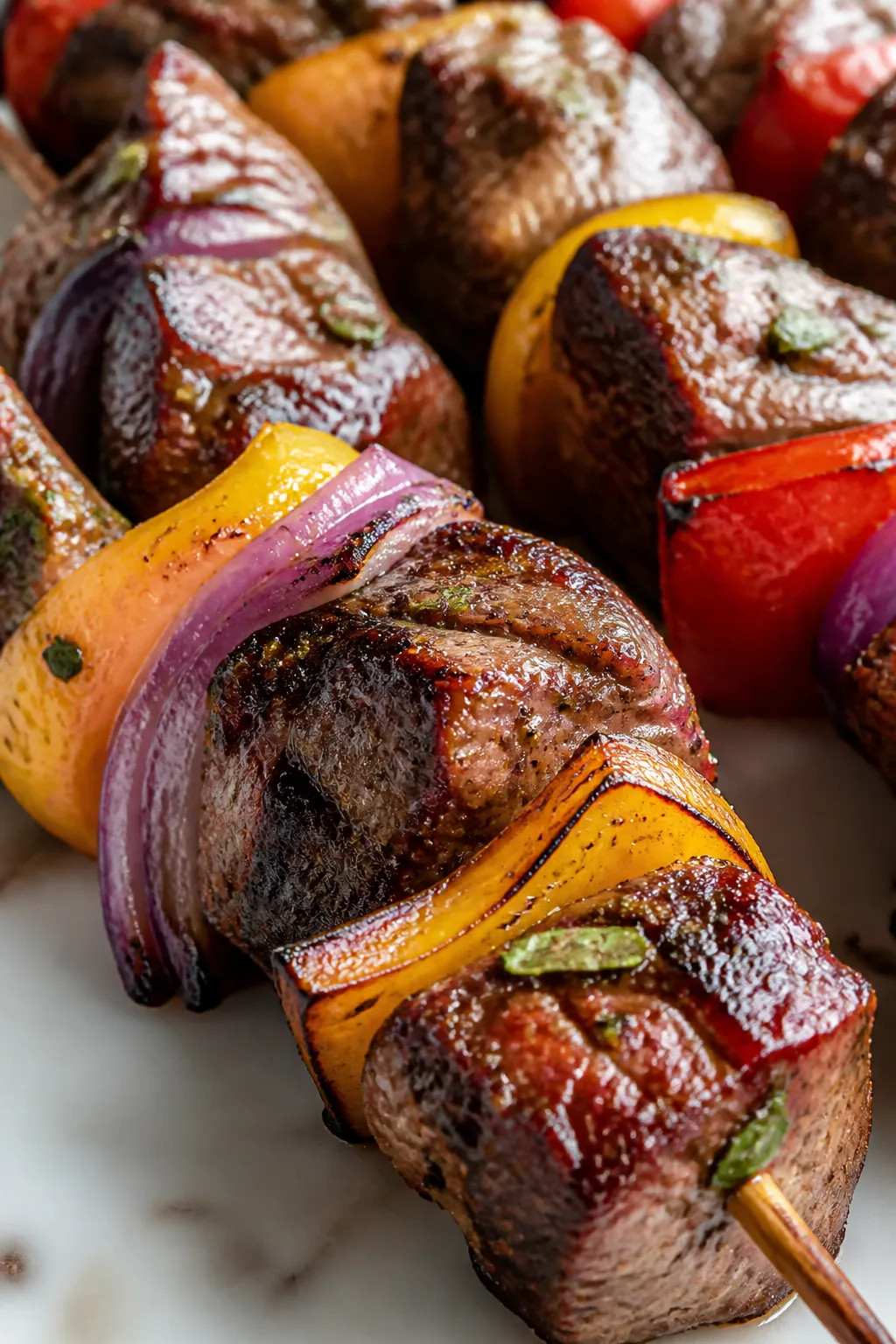
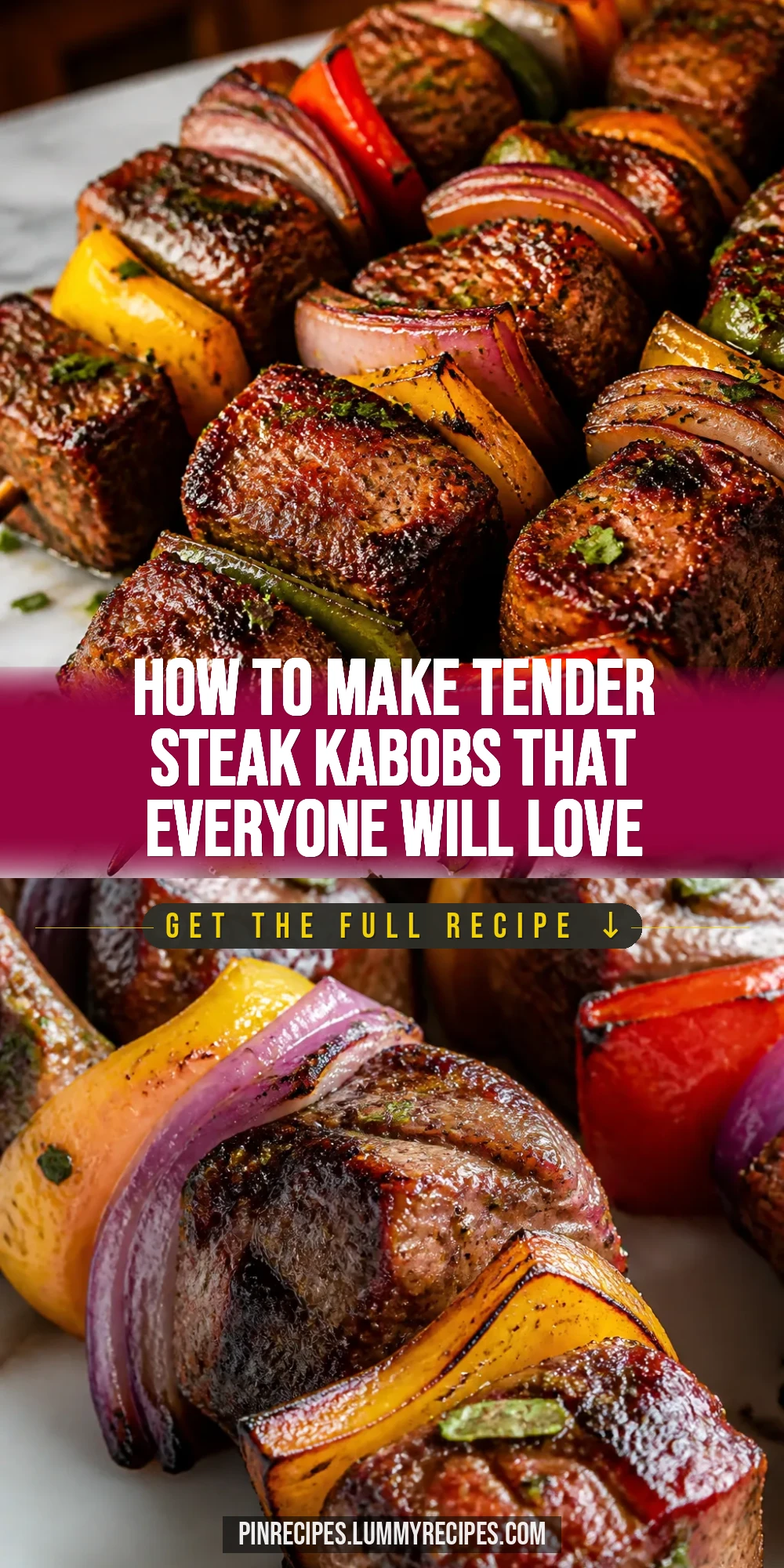
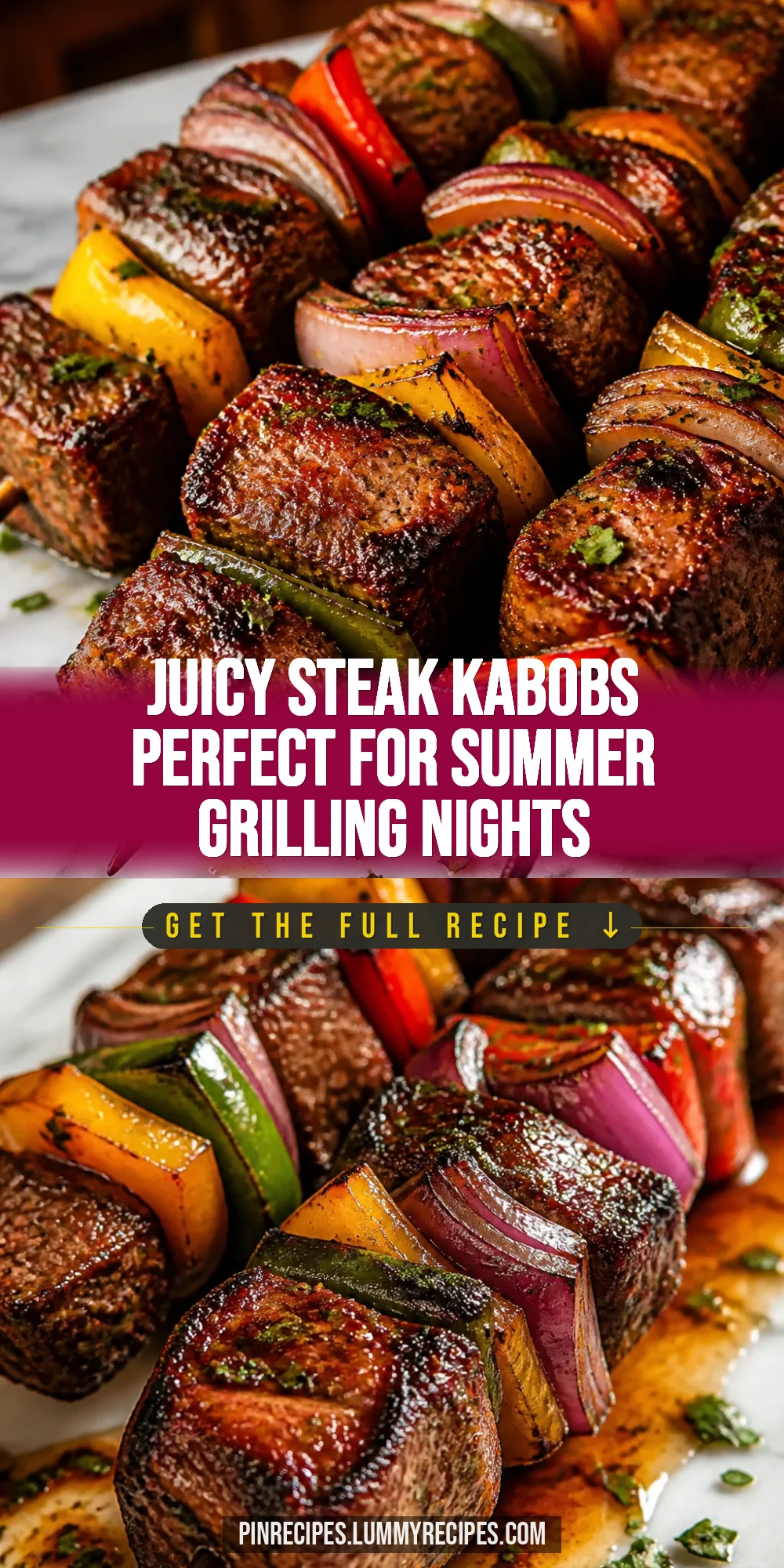
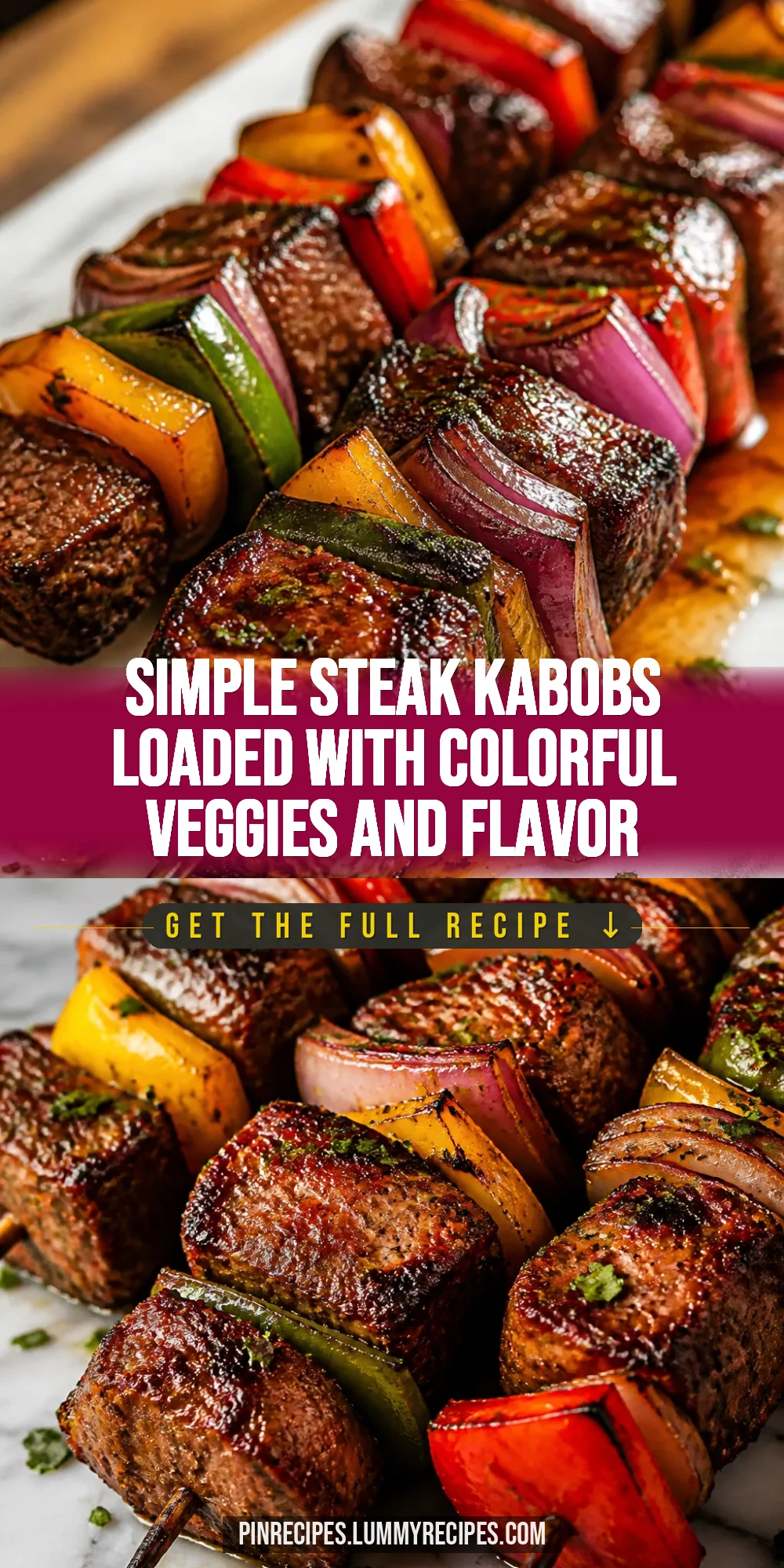
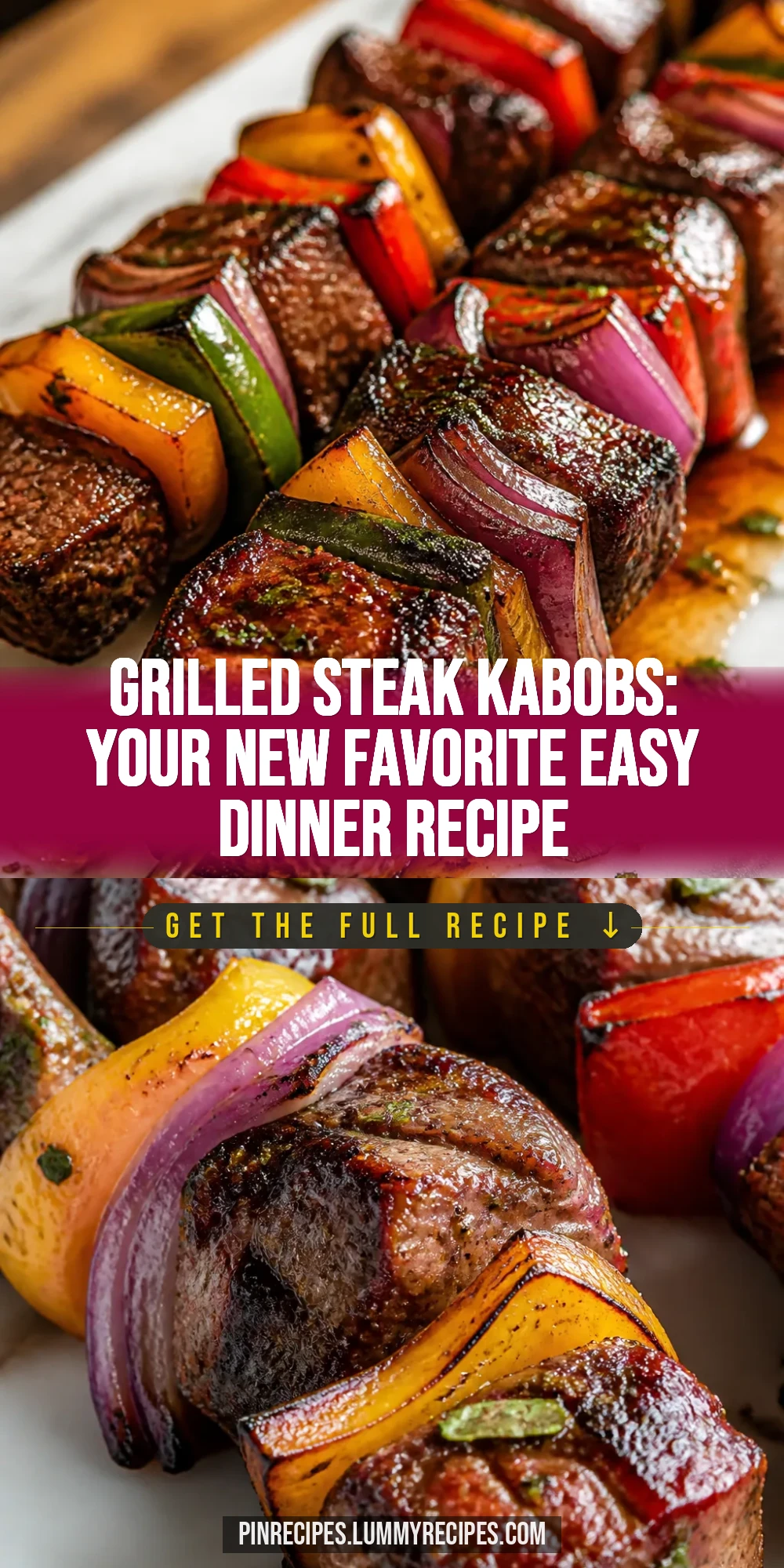
These steak kabobs are my go-to for easy grilling nights. Marinated just right to keep the meat juicy and tender, they’re perfect for weekend dinners or summer cookouts. Plus, the colorful veggies add a fresh crunch!
Introduction
I first tried making steak kabobs years ago when my family wanted something quick and different for dinner. I remember fumbling with the marinade and ending up with tough meat the first time — lesson learned! Since then, I’ve perfected a simple marinade that keeps the steak tender and juicy, plus I always soak wooden skewers to prevent burning. What makes this recipe special is the balance of flavors from the soy and Worcestershire sauce, plus the fresh veggies that add color and texture. When grilled just right, the steak gets a nice sear on the outside but stays tender inside. These kabobs are perfect for family dinners or casual summer cookouts, and they come together in under an hour. I love how easy it is to customize the veggies, too — sometimes I swap in mushrooms or cherry tomatoes. The finished kabobs look inviting with their char marks and vibrant colors, and they taste even better served with a simple side salad or crusty bread. If you’re new to grilling kabobs, this recipe will give you confidence and a delicious meal everyone will enjoy.
What You'll Need
Approximately 12 kabobs, serves 4
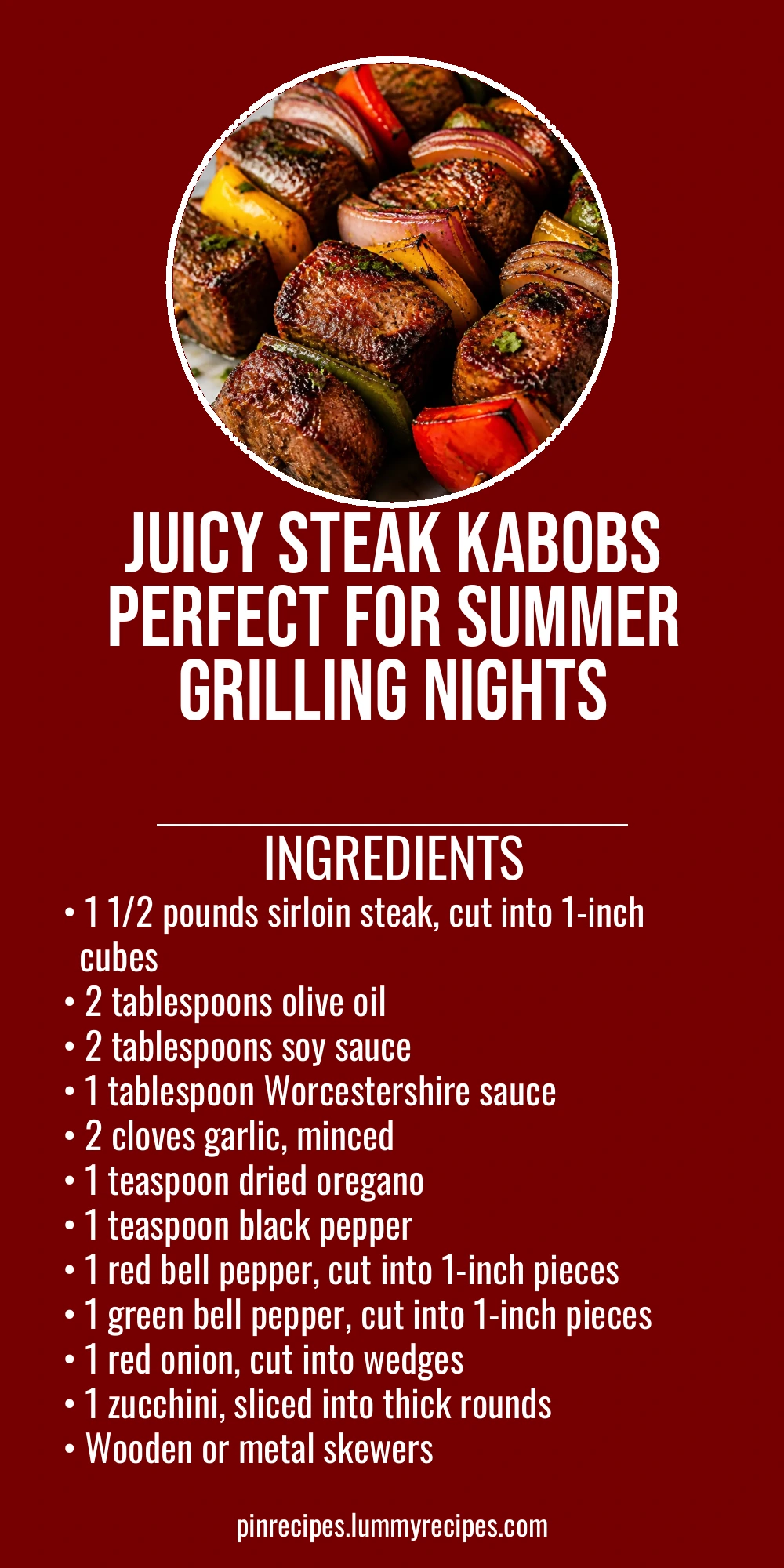
- 1 1/2 pounds sirloin steak, cut into 1-inch cubes
- 2 tablespoons olive oil
- 2 tablespoons soy sauce
- 1 tablespoon Worcestershire sauce
- 2 cloves garlic, minced
- 1 teaspoon dried oregano
- 1 teaspoon black pepper
- 1 red bell pepper, cut into 1-inch pieces
- 1 green bell pepper, cut into 1-inch pieces
- 1 red onion, cut into wedges
- 1 zucchini, sliced into thick rounds
- Wooden or metal skewers
How To Do It
Step 1
Start by preparing the marinade. In a medium bowl, whisk together olive oil, soy sauce, Worcestershire sauce, minced garlic, oregano, and black pepper. This combination infuses the steak with savory, slightly tangy flavors while helping to tenderize the meat. Avoid using too much soy sauce to prevent overpowering saltiness. Mixing these ingredients well ensures every cube of steak will soak up the marinade evenly.
⏱ Time: 5 minutes
✓ Doneness: Marinade is well combined and slightly glossy
Step 2
Place the cubed steak in a resealable plastic bag or shallow dish and pour the marinade over it. Seal or cover, then refrigerate for at least 30 minutes, or up to 2 hours for more flavor. Marinating longer helps break down muscle fibers, making the steak tender. Don’t skip this step — it’s key to juicy kabobs. Avoid marinating more than 4 hours to prevent the meat from becoming mushy.
⏱ Time: 30 minutes to 2 hours
✓ Doneness: Steak cubes are evenly coated and have absorbed some marinade color
Step 3
While the steak marinates, prep your vegetables. Cut bell peppers, onion, and zucchini into uniform 1-inch pieces to ensure even cooking. Uniformity is important so all ingredients finish grilling at the same time. I like to keep the pieces chunky so the veggies don’t get mushy on the grill and maintain a nice bite.
⏱ Time: 10 minutes
✓ Doneness: Vegetables are cut evenly and ready to skewer
Step 4
If using wooden skewers, soak them in water for at least 30 minutes before assembling. This prevents them from burning on the grill. Metal skewers don’t need soaking but handle with oven mitts as they get hot. Properly prepared skewers keep your kabobs intact and safe to handle.
⏱ Time: 30 minutes (can be done alongside marinating)
✓ Doneness: Wooden skewers feel saturated and won’t burn quickly
Step 5
Thread the steak and vegetables alternately onto the skewers, leaving a little space between pieces to allow heat circulation for even cooking. I usually start with a piece of steak, then a pepper, onion, zucchini, and repeat until the skewer is full. Don’t pack too tightly — this helps the kabobs cook evenly and get that nice char.
⏱ Time: 10 minutes
✓ Doneness: Skewers look colorful and balanced with meat and veggies
Step 6
Preheat your grill to medium-high heat, around 400°F. A hot grill sears the steak quickly, locking in juices and creating flavorful grill marks. Make sure to oil the grill grates lightly to prevent sticking. If the grill isn’t hot enough, the steak will cook unevenly and stick to the grates.
⏱ Time: 10 minutes
✓ Doneness: Grill grates are hot and lightly oiled
Step 7
Place the kabobs on the grill and cook for about 10-12 minutes total, turning every 3-4 minutes. This even rotation cooks the steak and veggies on all sides and prevents burning. Watch for the steak edges turning brown and the veggies softening but still crisp. Avoid overcooking to keep the steak tender.
⏱ Time: 10-12 minutes
✓ Doneness: Steak has nice grill marks and veggies are tender-crisp
Step 8
Use a meat thermometer to check the steak’s doneness. For medium-rare, aim for 130-135°F internal temperature. Remember that meat continues to cook slightly after removing from the grill. If you prefer medium or well-done, adjust cooking time accordingly but be careful not to dry out the steak.
⏱ Time: 2 minutes
✓ Doneness: Thermometer reads desired internal temperature
Step 9
Remove the kabobs from the grill and let them rest for 5 minutes before serving. Resting allows the juices to redistribute inside the steak, making each bite juicy and flavorful. Serve with your favorite sides like a fresh salad or grilled corn for a complete meal.
⏱ Time: 5 minutes
✓ Doneness: Kabobs are rested and ready to enjoy
Pro Tips
Always soak wooden skewers for at least 30 minutes before grilling.
Soaking prevents the skewers from catching fire or burning on the grill. If you skip this step, the skewers can char quickly, ruining the kabobs and creating a fire hazard. Properly soaked skewers hold the meat and veggies securely and ensure even cooking.
Cut steak and vegetables into uniform sizes for even cooking.
When pieces are the same size, they cook at the same rate, preventing undercooked or overcooked bites. Uneven pieces cause some to dry out while others remain raw. This uniformity is key to a balanced texture and flavor in every bite.
Use a meat thermometer to check doneness instead of guessing.
Steak can quickly go from perfect to overcooked on the grill. A thermometer takes the guesswork out and ensures you hit your preferred doneness level, keeping the steak juicy and tender. This also prevents food safety issues from undercooked meat.
Rest kabobs for 5 minutes after grilling before serving.
Resting lets the juices inside the steak redistribute rather than spilling out when you cut into it. This results in moister, more flavorful meat. Skipping this step leads to dry kabobs and less satisfying texture.
Lightly oil the grill grates before cooking.
Oiling prevents the kabobs from sticking and tearing when you turn them. It also helps create those attractive grill marks. Without oil, food can stick and break apart, making the presentation less appealing and cleanup harder.
Marinate for at least 30 minutes but no more than 4 hours.
Marinating tenderizes and flavors the steak, but too long can break down proteins excessively, causing mushy texture. Keeping it within this window balances flavor infusion and meat integrity.
Turn kabobs every 3-4 minutes for even cooking.
Regular turning prevents burning on one side and ensures the steak and vegetables cook evenly. Neglecting this can cause flare-ups and uneven doneness, ruining the kabobs’ texture and flavor.
Common Mistakes to Avoid
Skipping the marinade or marinating too briefly
Why it happens Many home cooks underestimate how important marinating is for flavor and tenderness, or they’re pressed for time and skip it.
Fix Always plan ahead to marinate for at least 30 minutes. This allows the flavors to penetrate and the meat to tenderize. If short on time, even a quick 30-minute soak improves taste significantly over no marinade.
Cutting meat or veggies unevenly
Why it happens Rushing prep leads to uneven pieces which cook at different rates.
Fix Take your time to cut all ingredients into similar sizes. Use a sharp knife and steady hand to ensure uniformity. This results in consistent cooking and better texture.
Grilling at too low or too high heat
Why it happens Beginners might not know the ideal grill temperature or are afraid of flare-ups.
Fix Preheat grill to medium-high (about 400°F). This temperature sears the steak quickly, locking in juices and creating flavor. Too low and meat stews instead of grilling; too high and it burns outside before cooking through.
Not turning kabobs regularly
Why it happens People sometimes leave kabobs on one side to avoid flare-ups or because they’re distracted.
Fix Turn kabobs every 3-4 minutes for even cooking and to prevent burning. Use tongs gently to avoid piercing the meat and losing juices.
Serving kabobs immediately off the grill without resting
Why it happens Eagerness to eat leads to skipping the resting step.
Fix Let kabobs rest 5 minutes after grilling. This redistributes juices and improves tenderness. Serve too soon and meat juices run out, leaving dry bites.
Variations
Spicy Steak Kabobs
Add a teaspoon of chili powder and a pinch of cayenne pepper to the marinade for a spicy kick. You can also thread jalapeño slices between the steak and veggies. Expect a bolder flavor with a bit of heat that pairs well with cooling sides like yogurt sauce.
Note: Spicy ingredients don’t affect cooking time but watch for flare-ups on the grill from oil dripping.
Mediterranean Style Kabobs
Swap soy and Worcestershire sauce for lemon juice, olive oil, garlic, and oregano. Add cherry tomatoes and chunks of feta cheese on the skewers for a fresh Mediterranean flavor. These kabobs taste bright and tangy, perfect for warm-weather meals.
Note: Feta cheese should be added near the end of cooking to prevent melting too much.
Mushroom and Steak Kabobs
Include whole button mushrooms with the vegetables for an earthy flavor and meaty texture. Mushrooms absorb marinade well and complement the steak nicely. This variation adds umami depth and a nice bite contrast.
Note: Mushrooms cook quickly; ensure they are similar in size to other veggies for even grilling.
Teriyaki Steak Kabobs
Use a teriyaki sauce marinade instead of the soy-Worcestershire mix. Add pineapple chunks to the skewers for sweetness and a tropical twist. These kabobs have a sticky, sweet glaze that caramelizes beautifully on the grill.
Note: Watch carefully during grilling to avoid burning the sugars in teriyaki sauce.
Herb-Marinated Steak Kabobs
Mix fresh chopped rosemary, thyme, and parsley into the marinade along with lemon juice and olive oil. This herbaceous version offers a fragrant, garden-fresh flavor that’s lighter and very aromatic. Great when paired with a simple green salad.
Note: Fresh herbs can burn quickly; add some herbs in the marinade and reserve some for garnish after grilling.
Nutrition
Per Serving:
Nutritional values are estimates and may vary based on specific ingredients used.
Storage & Tips
Room Temperature
Steak kabobs should not be left out at room temperature for more than 2 hours to avoid bacteria growth. If serving at a picnic or buffet, keep them covered and refrigerated until just before serving.
Refrigerator
Store leftover kabobs in an airtight container in the fridge for up to 3 days. They may firm up and lose some juiciness when cold. Reheat gently to avoid drying out the meat, or serve cold in salads.
Freezer
Kabobs can be frozen for up to 2 months. Wrap tightly in plastic wrap and place in a freezer bag to prevent freezer burn. Thaw overnight in the fridge before reheating. Texture may be slightly affected after freezing.
Reheating
Reheat kabobs on a stovetop grill pan or under a broiler for a few minutes until warmed through. Add a splash of water or broth to keep them moist. Avoid microwaving as it can toughen the steak and make veggies soggy.
Make Ahead
Marinate the steak and prep the vegetables 1 day ahead, storing them separately in the fridge. Assemble the kabobs just before grilling to keep veggies fresh and prevent sogginess.
FAQ
Can I use other cuts of beef for these kabobs?
Absolutely! While sirloin is tender and flavorful, you can use ribeye, flank steak, or even skirt steak. Just keep in mind that tougher cuts like flank or skirt benefit from longer marinating and should be sliced thinly across the grain for tenderness.
How do I prevent the kabobs from sticking to the grill?
Make sure your grill is preheated well and lightly oiled before placing the kabobs. Also, soaking wooden skewers helps prevent sticking. Avoid moving the kabobs too early; wait until they naturally release from the grill grates before turning.
Can I prepare the kabobs entirely ahead of time?
You can marinate the steak and cut the vegetables a day ahead, but it's best to assemble the kabobs just before grilling. This prevents the vegetables from releasing too much moisture and keeps the kabobs from becoming soggy.
What sides pair well with steak kabobs?
Simple sides like a fresh green salad, grilled corn, rice pilaf, or crusty bread complement these kabobs nicely. You can also serve with a yogurt-based sauce or chimichurri for added flavor.
How do I know when the steak is cooked to the right doneness?
Using a meat thermometer is the most reliable method. For medium-rare, aim for 130-135°F; medium is 140-145°F. The steak will continue to cook a bit after removing from the grill, so pull it slightly before your target temperature.
Can I grill these kabobs indoors?
Yes, if you have an indoor grill pan or electric grill, you can cook the kabobs indoors. Just watch the cooking time closely as indoor grills may cook differently than outdoor ones.
What if I don’t have Worcestershire sauce?
You can substitute with extra soy sauce and a splash of balsamic vinegar or a squeeze of lemon juice to mimic the tangy depth Worcestershire adds. The flavor will be slightly different but still delicious.
How do I keep the steak tender and juicy?
Marinating properly and not overcooking are key. Also, letting the kabobs rest after grilling helps juices redistribute. Avoid piercing the meat with forks when turning to keep juices inside.
Final Thoughts
I hope you enjoy making these steak kabobs as much as my family does! Give them a try and let me know how they turn out — I’d love to hear your favorite veggie combos too.