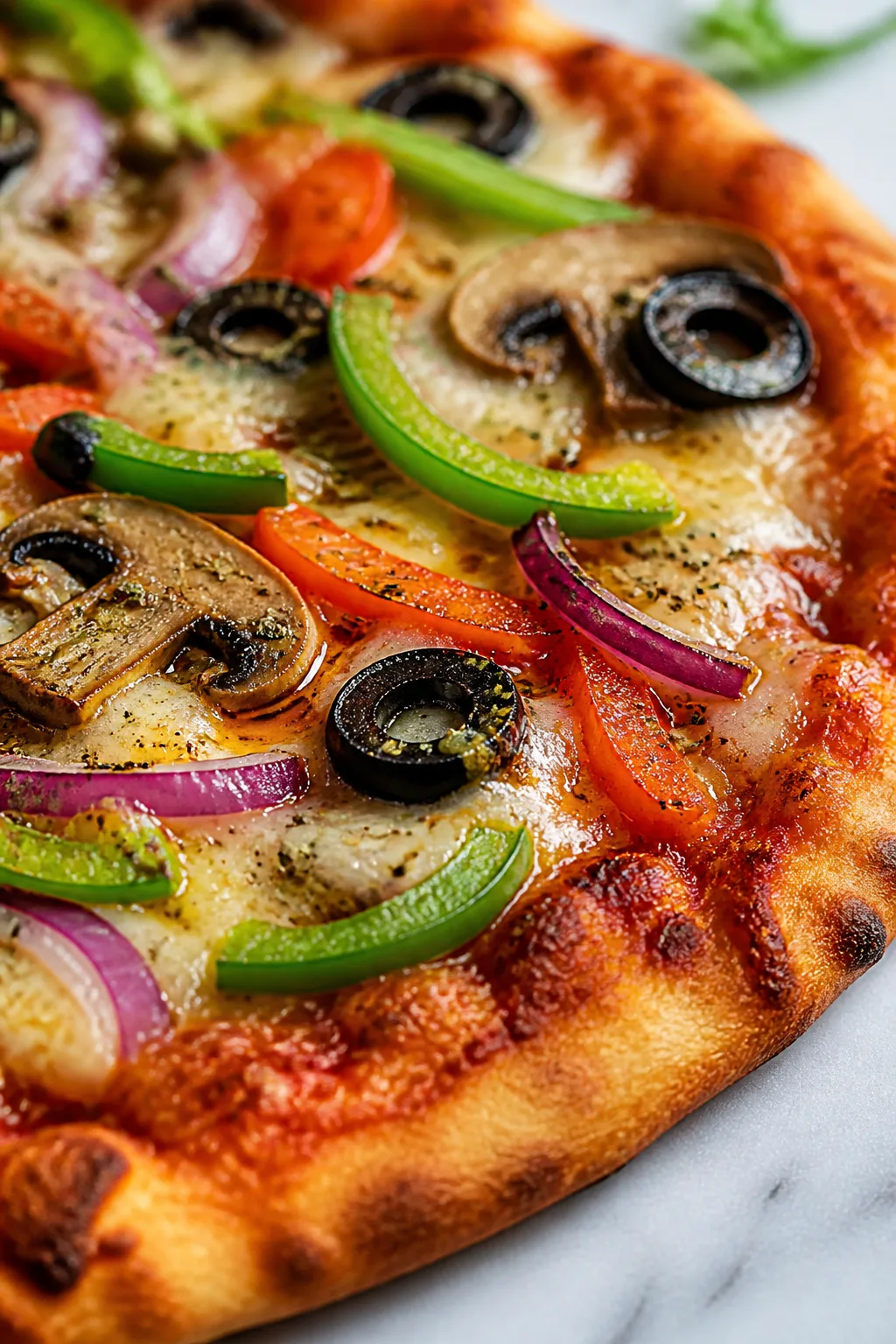
This veggie pizza is my go-to when I want something fresh but comforting. Loaded with colorful peppers, mushrooms, and melty cheese, it’s perfect for a casual dinner or weekend treat. The homemade crust really makes it special!
Introduction
I remember the first time I tried making veggie pizza from scratch — it was a bit of a disaster! The crust was soggy and the veggies released too much water, making the whole thing limp. But after some trial and error, I found a way that works every time. What makes this recipe different is the way I prepare the dough and how I handle the veggies before they hit the pizza. I like to preheat the oven thoroughly and give the dough a quick bake before adding toppings, which helps keep the crust crispy. Also, I lightly sauté some of the veggies to reduce moisture but still keep their fresh flavor. The finished pizza is colorful, with a balanced mix of melty cheese and vibrant veggies, and a crust that’s just the right amount of chewy and crisp. It’s become a favorite for weeknight dinners and casual gatherings alike. I think you’ll love how easy this comes together and how satisfying it is to make your own pizza at home!
What You'll Need
One 12-inch pizza, 4 servings
- 2 1/4 teaspoons active dry yeast (one 7g packet)
- 1 1/2 cups warm water (110°F)
- 3 1/2 cups all-purpose flour
- 2 tablespoons olive oil, plus extra for brushing
- 1 teaspoon sugar
- 1 teaspoon salt
- 1/2 cup tomato sauce, preferably homemade or good quality
- 1 cup shredded mozzarella cheese
- 1/2 cup sliced bell peppers (mixed colors)
- 1/2 cup sliced mushrooms
- 1/4 cup sliced red onion
- 1/4 cup black olives, sliced
- 1 teaspoon dried oregano
- Fresh basil leaves for garnish
How To Do It
Step 1
Start by activating your yeast. In a small bowl, combine the warm water (about 110°F) with the sugar and yeast. Stir gently and let it sit for about 5 to 10 minutes until it becomes frothy. This step is crucial because it confirms your yeast is alive and ready to help your dough rise. If it doesn’t foam, your yeast might be old or the water too hot or cold, which can ruin the dough’s rise.
⏱ Time: 10 minutes
✓ Doneness: The mixture should be bubbly and frothy on top
Step 2
In a large bowl, combine the flour and salt. Make a well in the center and pour in the yeast mixture along with 2 tablespoons of olive oil. Stir with a wooden spoon or your hands until the dough starts to come together. Then, turn it onto a floured surface and knead for about 8 to 10 minutes until the dough is smooth and elastic. Kneading develops gluten, which gives the crust its structure and chewiness.
⏱ Time: 10 minutes
✓ Doneness: Dough is smooth, slightly tacky but not sticky, and springs back when pressed
Step 3
Place the dough in a lightly oiled bowl and cover it with a clean kitchen towel or plastic wrap. Let it rise in a warm spot for about 1 to 1.5 hours, or until it doubles in size. This slow fermentation develops flavor and makes the dough airy and tender. Avoid rushing this step or using too hot a spot, which can kill the yeast or lead to uneven rising.
⏱ Time: 60-90 minutes
✓ Doneness: Dough has doubled in size and looks puffy
Step 4
While the dough is rising, prep your veggies. Slice the bell peppers, mushrooms, onions, and olives. To avoid soggy pizza, sauté the mushrooms and onions in a dry pan over medium heat for about 3 to 4 minutes until they release moisture and start to soften. This step reduces water content that can make the crust soggy and concentrates their flavor.
⏱ Time: 5 minutes
✓ Doneness: Veggies are softened and most moisture has evaporated
Step 5
Preheat your oven to 475°F (245°C) and place a pizza stone or heavy baking sheet inside to heat thoroughly. This ensures the crust starts cooking immediately when placed in the oven, helping it get crispy. If you don’t have a stone, a baking sheet will work fine but preheating is still important.
⏱ Time: 30 minutes
✓ Doneness: Oven and stone/sheet are very hot to the touch (use oven mitts!)
Step 6
Once the dough has risen, punch it down gently and turn it onto a floured surface. Roll or stretch it out into a 12-inch circle, about 1/4 inch thick. Try not to tear the dough. Transfer it to a piece of parchment paper for easy handling. This shaping step sets the pizza’s final thickness and texture.
⏱ Time: 5-7 minutes
✓ Doneness: Dough is evenly shaped with no holes or tears
Step 7
Place the dough (on the parchment) onto the hot pizza stone or baking sheet. Bake for about 5 minutes to set the crust. This pre-bake step prevents the sauce and toppings from soaking into raw dough, which helps keep your crust crisp and sturdy.
⏱ Time: 5 minutes
✓ Doneness: Edges start to puff slightly and crust looks dry but not browned
Step 8
Remove the pizza crust from the oven and quickly spread the tomato sauce evenly over the surface, leaving a small border around the edges. Sprinkle the shredded mozzarella cheese over the sauce, then scatter the sautéed mushrooms, onions, bell peppers, and olives on top. Sprinkle dried oregano for a classic flavor boost.
⏱ Time: 5 minutes
✓ Doneness: Toppings are evenly distributed and cheese is well covered
Step 9
Return the pizza to the oven and bake for another 15 to 20 minutes until the cheese is bubbly and golden brown, and the crust is crisp and nicely browned. Keep an eye on it in the final minutes to avoid burning. When done, remove from oven and garnish with fresh basil leaves before slicing and serving.
⏱ Time: 15-20 minutes
✓ Doneness: Cheese is melted with golden spots, crust is golden and crisp
Pro Tips
Use a pizza stone or inverted baking sheet preheated in the oven.
A hot surface simulates a pizza oven floor, cooking the crust quickly and evenly. This prevents sogginess by setting the dough’s bottom immediately, resulting in a crispier crust.
Sauté moisture-rich veggies before adding to the pizza.
Cooking mushrooms and onions first releases water and intensifies their flavor. This step prevents excess moisture from soaking into the dough and keeps your pizza from turning soggy.
Don’t overload the pizza with sauce or toppings.
Too much sauce or cheese can weigh down the crust and add moisture, leading to a limp pizza. Use moderate amounts for balance and a better texture.
Let the dough rise slowly in a warm but not hot place.
Slow fermentation develops flavor and gluten structure. Too hot a spot can kill yeast or cause uneven rising, resulting in dense or tough crust.
Brush the crust edges lightly with olive oil before baking.
This helps the edges brown nicely and adds a subtle richness, improving both flavor and appearance.
Use parchment paper to transfer the pizza easily.
It prevents sticking and makes moving the pizza onto a hot stone or pan safer and quicker, preserving the dough’s shape.
Add fresh herbs after baking for bright flavor.
Baking herbs can lose aroma and flavor. Fresh basil or oregano added at the end keeps the pizza tasting fresh and vibrant.
Common Mistakes to Avoid
Using cold water to activate yeast
Why it happens Many assume any water temperature will work, but cold water slows yeast activation or stops it entirely.
Fix Always use warm water around 110°F to properly activate yeast. Test with a thermometer or ensure water feels warm but not hot to the touch.
Skipping pre-baking the crust
Why it happens Rushing to add toppings and bake the pizza all at once seems faster but leads to soggy dough.
Fix Pre-bake the crust for 5 minutes to set its structure before adding sauce and toppings. This seals the dough and prevents moisture absorption.
Overloading with too many toppings
Why it happens It’s tempting to pile on veggies and cheese, but too much weight and moisture overwhelm the crust.
Fix Use toppings sparingly and evenly spread. Sauté high-moisture veggies first to reduce water content.
Not preheating the oven and baking surface
Why it happens Skipping preheating saves time but results in uneven cooking and a pale, soft crust.
Fix Preheat your oven and pizza stone or baking sheet for at least 30 minutes to ensure a hot cooking surface.
Using fresh mozzarella without draining
Why it happens Fresh mozzarella contains a lot of moisture that can make your pizza watery.
Fix Drain fresh mozzarella on paper towels and pat dry before using, or opt for low-moisture shredded mozzarella.
Variations
Gluten-Free Veggie Pizza
Swap regular flour for a gluten-free blend designed for baking. The crust will be more delicate, so handle gently and consider a thicker base to hold toppings. Use the same toppings and baking method for a tasty gluten-free option.
Note: Gluten-free dough lacks elasticity, so avoid overworking and bake slightly longer to ensure doneness.
Vegan Veggie Pizza
Replace mozzarella with a plant-based cheese or cashew cream. Use olive oil in the dough and skip any animal products. This keeps the pizza flavorful and suitable for vegan diets without losing the comforting feel.
Note: Plant-based cheeses melt differently; add them later in baking to prevent overcooking.
Spicy Veggie Pizza
Add sliced jalapeños or red pepper flakes to the toppings for a kick. You can also mix a little chili oil into the tomato sauce for heat. This variation adds warmth and depth without overpowering the fresh veggies.
Note: Adjust spice levels carefully to balance with the cheese and crust flavors.
White Sauce Veggie Pizza
Swap tomato sauce for a creamy garlic Alfredo or béchamel sauce. This creates a rich base that pairs beautifully with mushrooms, spinach, and artichokes for a different flavor profile.
Note: White sauces can be heavier, so use sparingly to avoid sogginess.
Roasted Veggie Pizza
Roast your veggies like zucchini, eggplant, and cherry tomatoes before adding to the pizza. Roasting intensifies sweetness and reduces moisture, giving a caramelized flavor that’s irresistible.
Note: Roasted veggies cook faster on pizza, so add them near the end of baking to prevent burning.
Nutrition
Per Serving:
Nutritional values are estimates and may vary based on specific ingredients used.
Storage & Tips
Room Temperature
Pizza can be safely kept at room temperature for up to 2 hours. Cover it loosely with foil or a clean kitchen towel to prevent drying out. Avoid leaving it longer to prevent bacterial growth.
Refrigerator
Store leftover pizza slices in an airtight container or wrapped tightly in plastic wrap for up to 3 days. The crust may become less crisp but reheating can restore some texture. Cold pizza also tastes great if you prefer.
Freezer
Freeze pizza slices individually wrapped in plastic wrap and then foil for up to 2 months. To thaw, place in the fridge overnight. Reheat directly from frozen for best texture.
Reheating
Reheat pizza in a preheated oven at 375°F for 8-10 minutes to revive crispness. Avoid microwave reheating if possible, as it can make the crust chewy and soggy. A splash of water in the oven can help keep toppings moist.
Make Ahead
Prepare the dough and sauté veggies 1-2 days ahead and store separately in the fridge. Assemble and bake the pizza fresh on serving day for the best flavor and texture.
FAQ
Can I use frozen veggies on this pizza?
You can use frozen veggies, but be sure to thaw and drain them thoroughly to remove excess water. Otherwise, they can make the pizza soggy. Sautéing frozen veggies before adding helps evaporate extra moisture and enhances flavor.
What if I don’t have a pizza stone?
No worries! Use an inverted heavy baking sheet and preheat it in the oven as you would a stone. This helps create a hot surface for crisping the crust. Just be careful when transferring the pizza onto the hot sheet.
How do I store leftover pizza without it getting soggy?
Wrap leftovers tightly in plastic wrap or store in an airtight container in the fridge. Reheat in the oven to restore crispness. Avoid stacking slices directly on top of each other to prevent moisture buildup.
Can I make the dough ahead of time?
Absolutely! You can prepare the dough and refrigerate it for up to 2 days. Let it come to room temperature and rise before shaping and baking. This slow fermentation can actually improve flavor.
Why is my pizza crust tough instead of chewy?
This often happens if the dough is over-kneaded or not rested enough. Knead just until smooth and elastic, and allow sufficient rising time. Also, avoid using too much flour when rolling out, which can dry the dough.
Can I substitute the mozzarella with another cheese?
Yes, mild cheeses like provolone or fontina work well. Avoid very hard or crumbly cheeses, as they don’t melt the same way and can affect texture and flavor balance.
How do I prevent my veggies from burning during baking?
Sautéing veggies before adding them helps soften them and reduces baking time needed. Also, distribute toppings evenly and avoid piling too thickly, which can cause uneven cooking.
What’s the best way to roll out pizza dough?
Use a lightly floured surface and your hands or a rolling pin. Stretch gently to avoid tearing. If it springs back, let the dough rest a few minutes to relax the gluten before continuing.
Final Thoughts
Give this veggie pizza a try—you’ll love the fresh flavors and crispy crust. Can’t wait to hear how it turns out for you and your family!