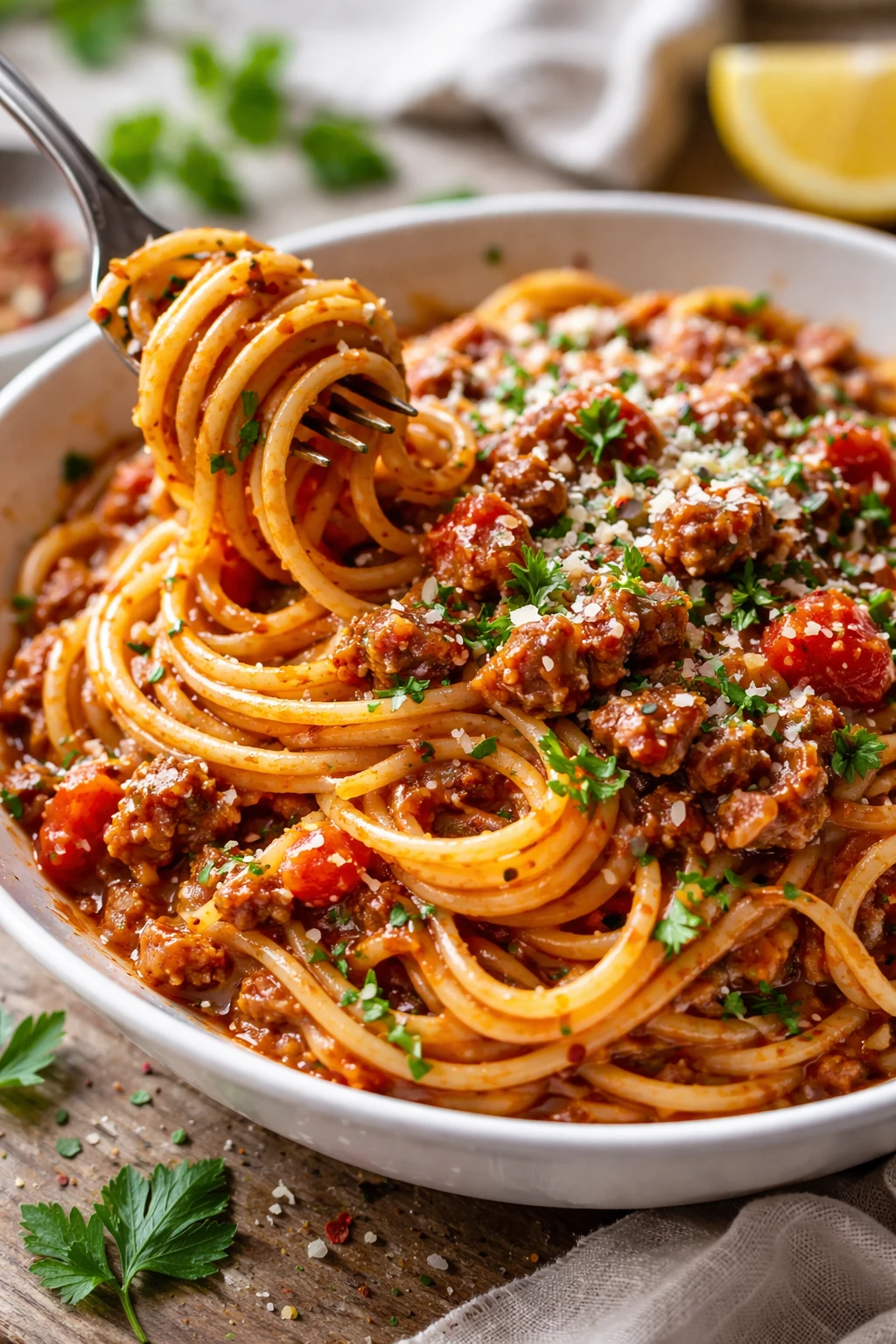
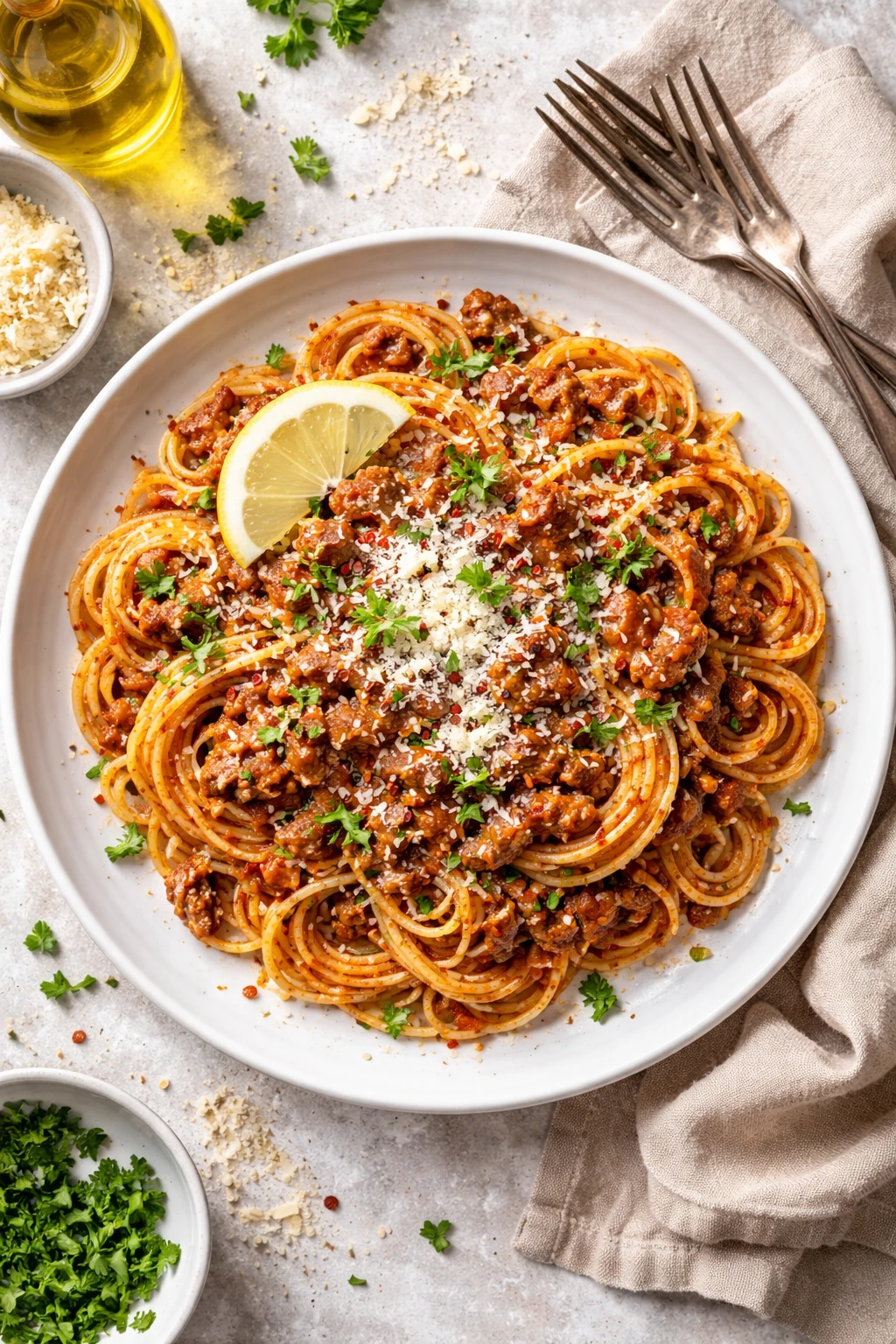
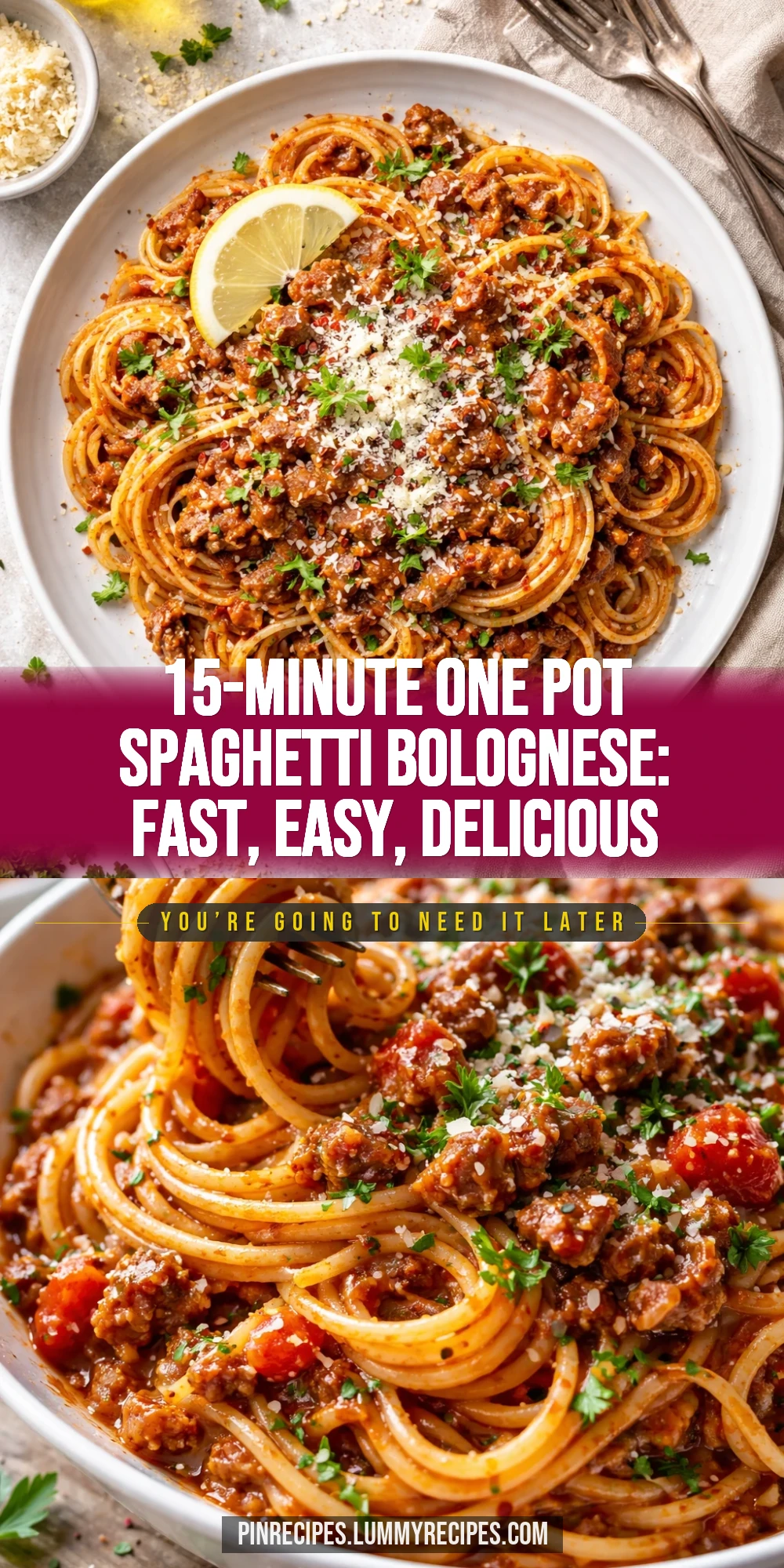
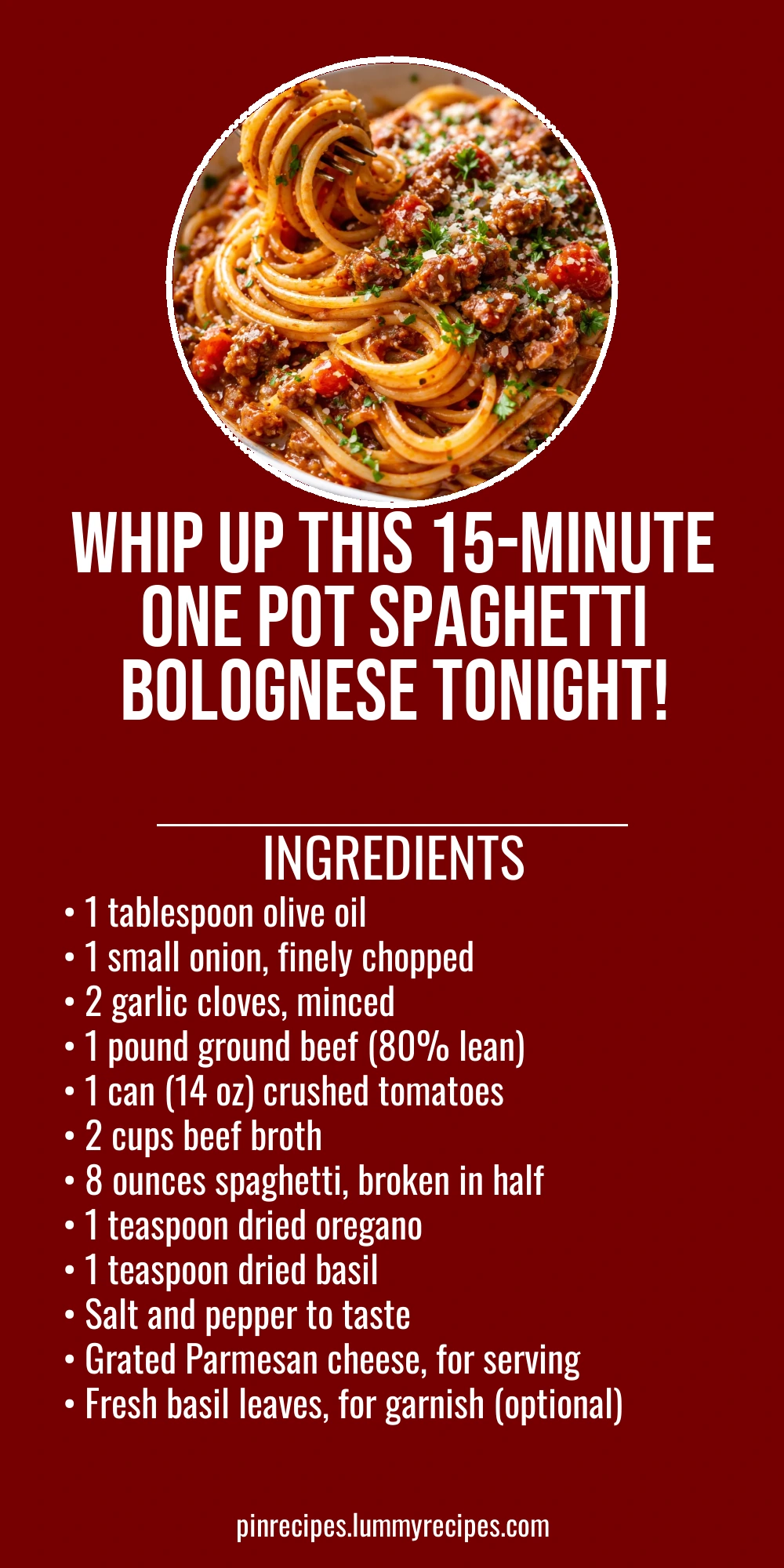
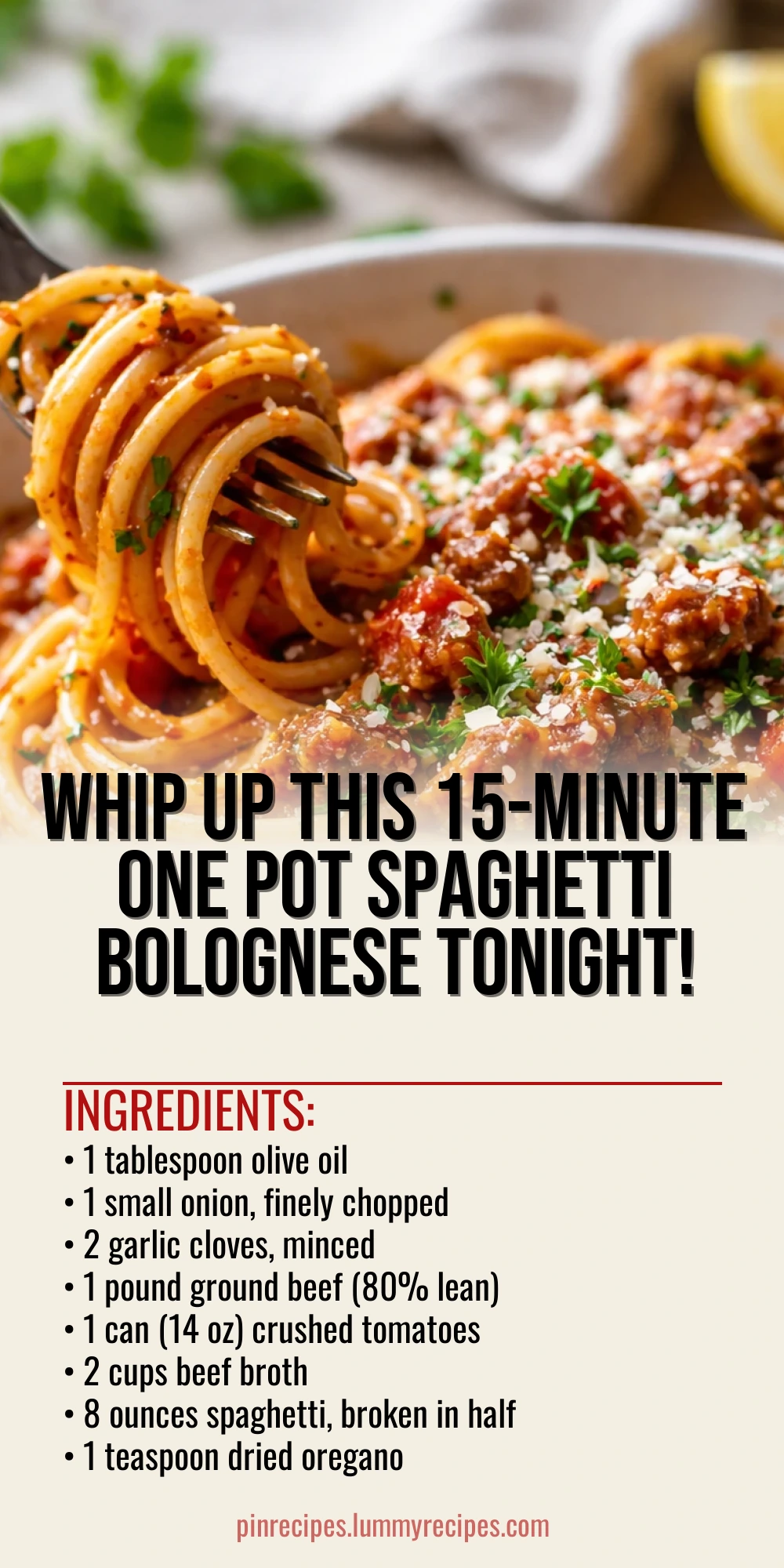
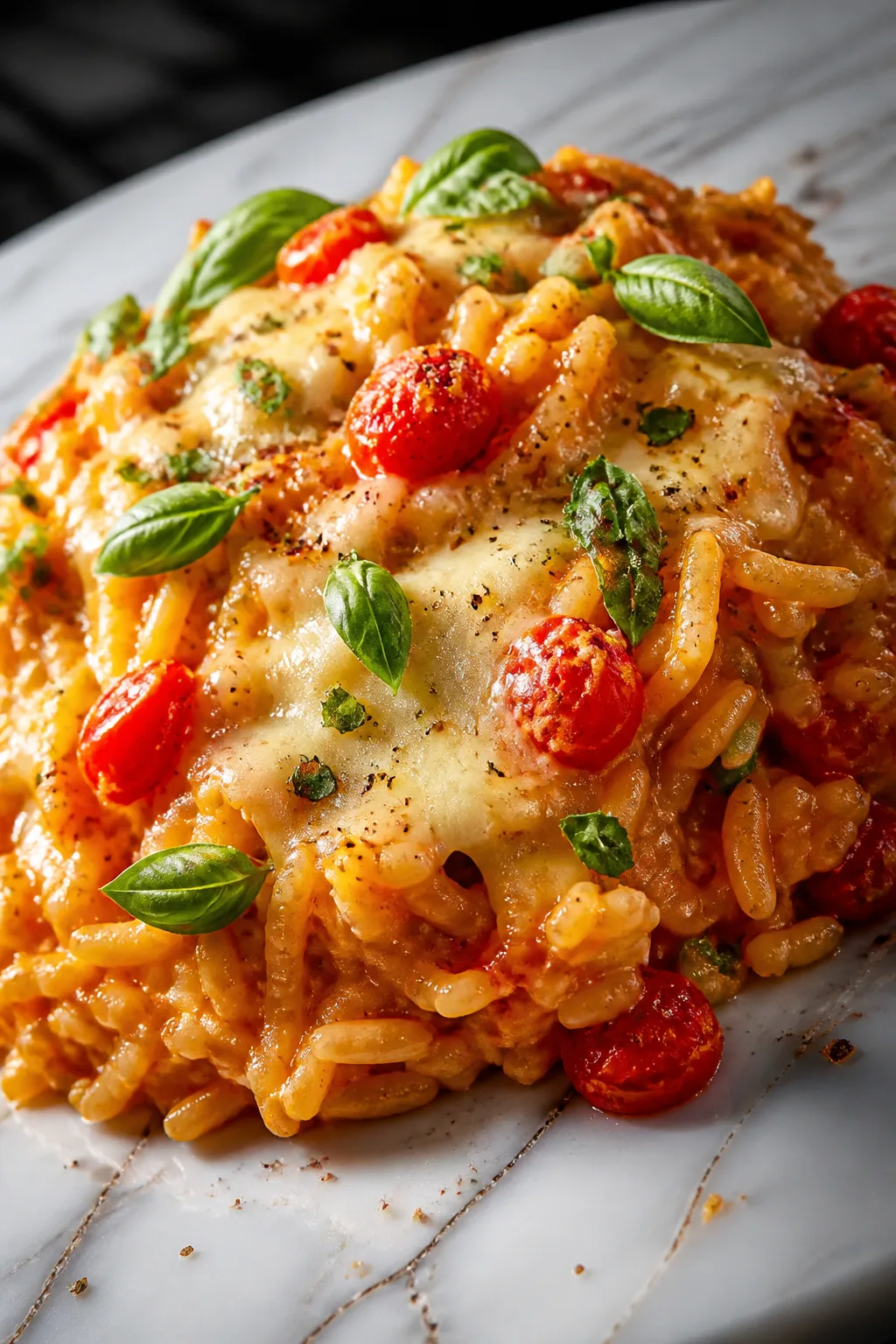
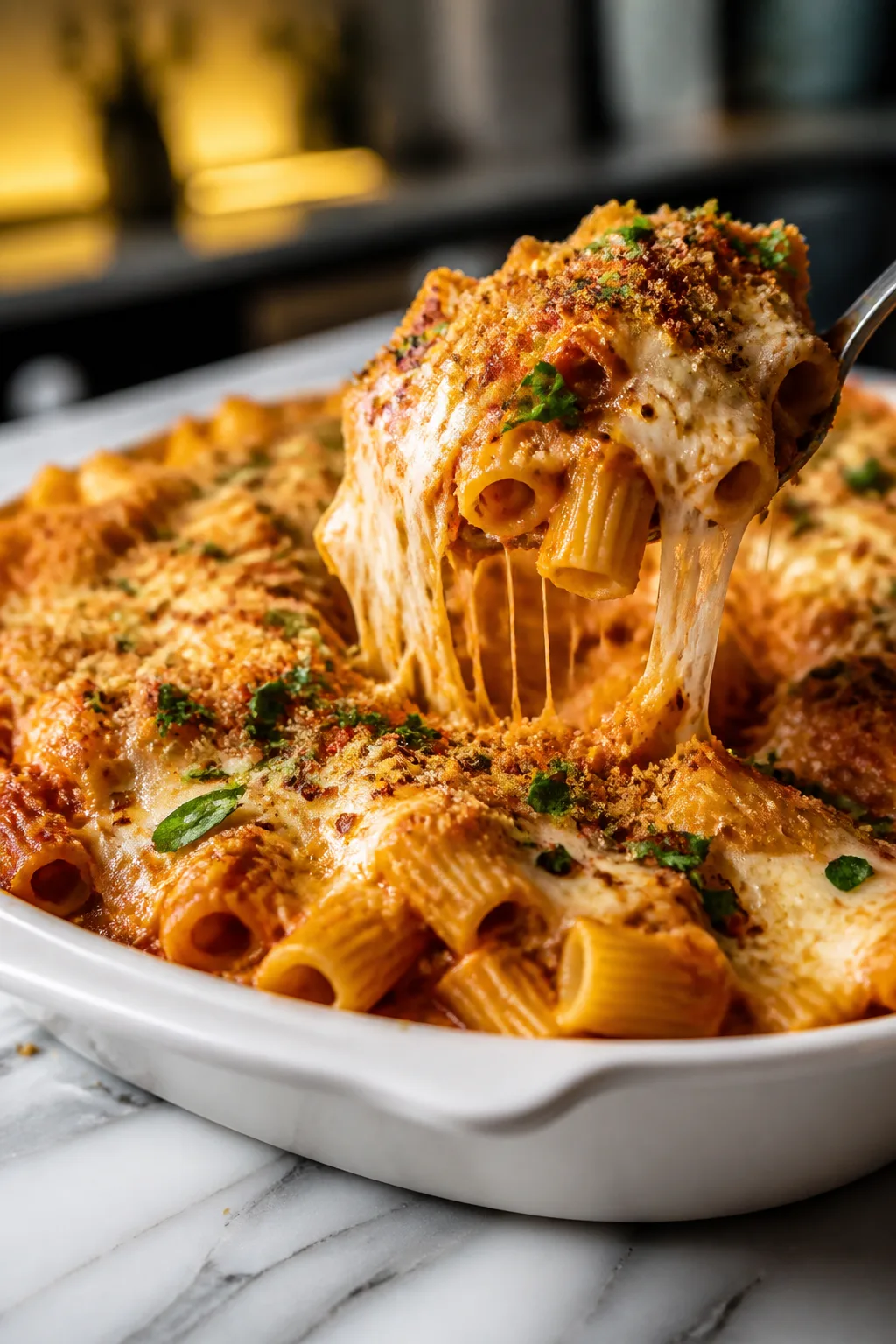
This quick and easy one pot spaghetti bolognese is perfect for busy nights when you want a comforting meal without the fuss. Using simple pantry staples and a speedy method, it’s ready in just 15 minutes—ideal for weeknight dinners or when you're short on time!
Introduction
I remember the first time I tried making a one pot spaghetti bolognese—it was a total game changer for my weeknight dinners. Before discovering this recipe, I used to dread the long prep and cleanup involved with traditional bolognese. This version is different because it’s all cooked together in one pot, saving time and dishes, and it’s ready in just 15 minutes! The trick I learned is to break the spaghetti in half so it fits nicely in the pot and cooks evenly with the sauce. Plus, using beef broth instead of water adds a richer flavor without any extra steps. The finished dish is hearty and comforting, with a thick, savory sauce coating every strand of pasta. It’s perfect for busy nights when you want something warm and satisfying without spending hours in the kitchen. I love how easy it is to customize too—add some chili flakes if you like heat or toss in mushrooms for extra texture. Honestly, this recipe has become a staple in my rotation, and I’m sure you’ll love it as much as I do!
How To Do It
Step 1
Heat the olive oil in a large deep skillet or wide pot over medium heat. Add the chopped onion and sauté for about 3-4 minutes until it becomes translucent and soft. This step is key because it builds the flavor base for your sauce. Don’t rush it or you risk having raw onion bits that can overpower the dish. Stir occasionally to avoid burning, and watch for the onions to turn glossy and tender.
⏱ Time: 4 minutes
✓ Doneness: Onions are soft, translucent, and fragrant without any browning
Step 2
Add the minced garlic to the onions and cook for 30 seconds to 1 minute, stirring constantly. Garlic cooks quickly and can burn easily, so keep an eye on it. This step releases the garlic’s aroma and infuses the oil, which helps flavor the entire sauce.
⏱ Time: 1 minute
✓ Doneness: Garlic is fragrant but not browned or bitter
Step 3
Increase the heat to medium-high and add the ground beef. Break it up with a wooden spoon and cook until it’s no longer pink, about 4-5 minutes. Browning the meat properly is essential because it develops rich, savory flavors through the Maillard reaction. Avoid stirring too often so the beef can brown nicely instead of steaming.
⏱ Time: 5 minutes
✓ Doneness: Beef is evenly browned with no pink spots
Step 4
Pour in the crushed tomatoes, beef broth, dried oregano, and dried basil. Stir everything together to combine. This mixture will become your sauce and cooking liquid for the pasta. Adding broth instead of water deepens the flavor and helps the pasta absorb seasoning as it cooks.
⏱ Time: 2 minutes
✓ Doneness: Sauce is well combined and begins to simmer gently
Step 5
Add the broken spaghetti directly into the pot, pressing it down gently so it’s mostly submerged in the liquid. Don’t stir yet; let the pasta soak for a minute or two to soften slightly. This helps prevent the noodles from sticking together later.
⏱ Time: 2 minutes
✓ Doneness: Spaghetti starts to soften and bend without breaking
Step 6
Once the spaghetti has softened a bit, stir gently to ensure all the pasta is coated and submerged in the sauce. Reduce heat to medium-low and cover the pot. Let it simmer for about 8-10 minutes, stirring occasionally to prevent sticking. The pasta will absorb the liquid and flavors, cooking perfectly in the sauce.
⏱ Time: 10 minutes
✓ Doneness: Pasta is tender but still slightly firm (al dente), sauce thickened
Step 7
Check the seasoning and add salt and pepper to taste. If the sauce is too thick before pasta is done, add a splash more broth or water. Balancing seasoning at the end ensures the flavors are bright and well-rounded.
⏱ Time: 1 minute
✓ Doneness: Sauce tastes flavorful and balanced, pasta fully cooked
Step 8
Turn off the heat and let the pasta rest covered for 2 minutes. This resting time allows the sauce to thicken slightly and the flavors to meld together beautifully.
⏱ Time: 2 minutes
✓ Doneness: Sauce is thickened, pasta holds sauce well
Step 9
Serve hot topped with grated Parmesan cheese and fresh basil leaves if you have them. The cheese adds a salty, creamy contrast, while basil brightens the dish with fresh herbal notes. Enjoy immediately for the best texture.
⏱ Time: Immediate
✓ Doneness: Dish is steaming hot with melted cheese on top
Pro Tips
Break the spaghetti in half before adding it to the pot.
Breaking the pasta helps it fit into the pot and cook evenly. If you add long strands, they often stick out and cook unevenly, resulting in some parts being mushy while others stay hard.
Don’t stir the pasta immediately after adding it to the liquid.
Letting the pasta soak for a minute before stirring prevents it from sticking together. This allows the noodles to soften slightly and separate, making it easier to stir without clumping.
Use beef broth instead of water for cooking the pasta.
Broth adds extra flavor and richness to the sauce and pasta. Water would cook the pasta but leave the dish tasting flat. The broth infuses umami, making the bolognese more savory and satisfying.
Sauté onions and garlic slowly over medium heat.
Cooking aromatics gently releases their sweetness and fragrance without burning. Burnt garlic tastes bitter and can ruin the sauce, so patience here really pays off.
Let the finished dish rest covered off the heat for a couple of minutes.
Resting allows the sauce to thicken naturally and flavors to meld, improving texture and taste. Skipping this step can result in a watery sauce and less cohesive flavor.
Use a wide pot or skillet to cook this dish.
A wide pan gives the pasta plenty of room to spread out and cook evenly. Narrow pots can cause uneven cooking and clumping, especially when cooking pasta with sauce.
Season gradually and taste at the end.
Adding salt and pepper at the end lets you adjust seasoning precisely. Early seasoning can get lost or become too strong as the sauce reduces, so tasting last is best.
Common Mistakes to Avoid
Adding pasta before the sauce is simmering
Why it happens Cooks might add pasta too early hoping to speed things up, but this can cause uneven cooking and clumping.
Fix Wait until the sauce is gently simmering before adding pasta. This ensures the pasta cooks evenly and absorbs the sauce flavor properly.
Stirring pasta constantly right after adding
Why it happens People worry about pasta sticking so they stir immediately, but this can cause noodles to break or clump.
Fix Let the pasta soak for a minute or two before stirring gently. This softens the noodles and reduces sticking.
Skipping the resting time after cooking
Why it happens In a rush, cooks serve immediately, missing the chance for sauce to thicken and flavors to meld.
Fix Turn off heat and cover the pot for 2 minutes before serving. This step improves texture and taste.
Using water instead of broth
Why it happens Sometimes broth isn’t on hand, or cooks don’t realize the flavor difference.
Fix Use beef broth or vegetable broth to add richness. If unavailable, add a bouillon cube to water for better flavor.
Overcooking the pasta
Why it happens Because pasta cooks in sauce, it’s easy to overcook and end up mushy.
Fix Check pasta a minute or two before recommended time and remove from heat when al dente. The pasta will continue to cook slightly during resting.
Variations
Spicy One Pot Bolognese
Add 1/2 teaspoon red chili flakes or a diced fresh chili when sautéing the onions for a spicy kick. This variation adds warmth and depth without overpowering the classic flavors. It’s great for those who like a bit of heat in their pasta dishes.
Note: Be careful not to burn the chili flakes; add them with the garlic to release flavor gently.
Mushroom and Beef Bolognese
Stir in 1 cup finely chopped mushrooms along with the ground beef. Mushrooms add a lovely earthy flavor and extra texture, making the dish more filling and nutritious. This is a great way to sneak in some veggies.
Note: Cook mushrooms until they release their moisture and brown slightly before adding tomatoes.
Vegetarian One Pot Bolognese
Replace ground beef with lentils or plant-based crumbles for a meat-free version. Use vegetable broth instead of beef broth. The lentils provide protein and a similar texture, while the sauce remains rich and satisfying.
Note: Lentils may require slightly longer cooking time; soak or pre-cook if needed.
Cheesy One Pot Bolognese Bake
After cooking, transfer the pasta to a baking dish, top with mozzarella and Parmesan, and broil until golden and bubbly. This variation adds a crispy cheesy crust and makes a great comfort food twist.
Note: Watch carefully under the broiler to avoid burning the cheese.
Herb-Infused Bolognese
Add fresh herbs like thyme or rosemary with the dried oregano and basil for a more aromatic sauce. This adds complexity and freshness, perfect for impressing guests with minimal extra effort.
Note: Remove woody herb stems before serving to avoid tough bites.
Nutrition
Per Serving:
Nutritional values are estimates and may vary based on specific ingredients used.
Storage & Tips
Room Temperature
This dish can safely sit at room temperature for up to 2 hours if covered. Beyond that, bacteria growth increases, so refrigerate promptly.
Refrigerator
Store leftovers in an airtight container for up to 3 days. The flavors may deepen overnight, but the pasta can absorb sauce and become softer. Reheat gently to avoid drying out.
Freezer
Freeze in airtight containers for up to 2 months. Wrap tightly to prevent freezer burn. Thaw overnight in the fridge before reheating.
Reheating
Reheat on the stovetop over low heat with a splash of broth or water to loosen the sauce. Microwave works too but stir halfway through. Avoid overheating to keep pasta from getting mushy.
Make Ahead
You can prepare the sauce base a day ahead and refrigerate. Add the pasta and broth when ready to cook, reducing overall time. This helps save time on busy evenings.
FAQ
Can I use ground turkey instead of beef?
Yes, ground turkey works well as a leaner alternative. However, it has less fat, so the sauce might be less rich. Consider adding a bit of olive oil or butter to compensate. Also, turkey cooks faster, so watch closely to avoid drying it out.
What if I don’t have beef broth?
If you don’t have beef broth, you can use vegetable broth or water with a bouillon cube. The broth adds flavor, so using plain water will result in a less savory sauce. Adding some soy sauce or Worcestershire sauce can help boost umami.
How do I prevent the pasta from sticking?
Don’t stir the pasta immediately after adding it to the liquid; let it soak for a minute or two first. Also, stir gently and occasionally during cooking to keep the noodles separated. Using enough liquid and a wide pot helps as well.
Can I make this recipe gluten-free?
Absolutely! Use gluten-free pasta instead of regular spaghetti. Cooking times might vary slightly, so check the pasta for doneness a bit earlier. Ensure your broth and canned tomatoes are gluten-free as well.
Why is resting the pasta important?
Resting off the heat lets the sauce thicken and flavors meld, improving texture and taste. Skipping this step can leave the sauce watery and the flavors less integrated, making the dish less satisfying.
Can I double this recipe?
You can double it, but use a larger pot or pan to ensure even cooking. The pasta needs enough liquid and space to cook properly. Cooking times may increase slightly, so check pasta doneness accordingly.
What’s the best way to reheat leftovers?
Reheat gently on the stovetop over low heat with a splash of broth or water to loosen the sauce. Stir often to prevent sticking. The microwave works too but be careful not to overcook and make the pasta mushy.
Can I add vegetables to this recipe?
Definitely! Adding diced carrots, bell peppers, or mushrooms when sautéing the onions adds nutrition and flavor. Just cook them until tender before adding the meat and liquids.
Final Thoughts
Give this speedy one pot spaghetti bolognese a try—you’ll love how easy and delicious it is. Don’t forget to share how it turned out for you!