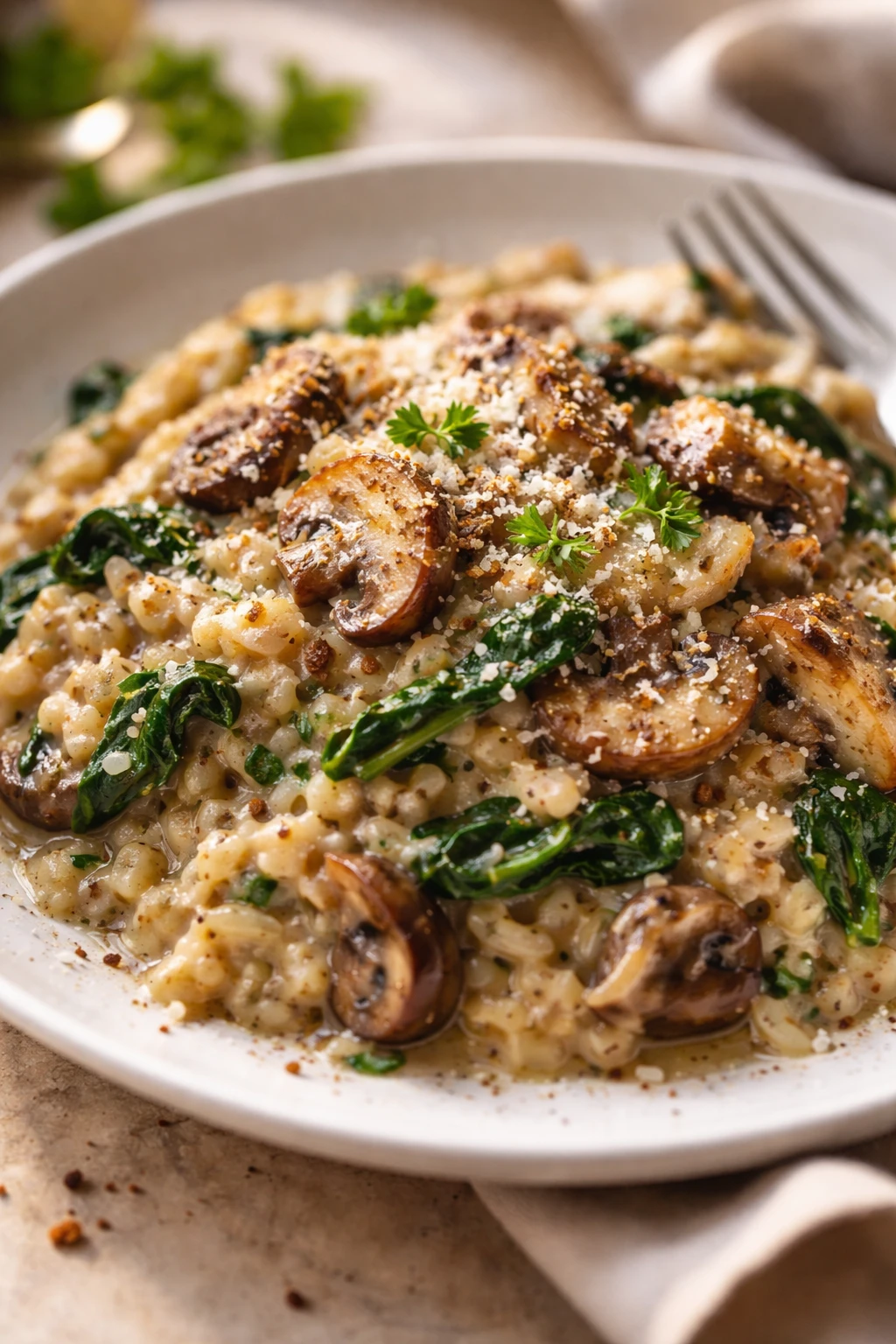
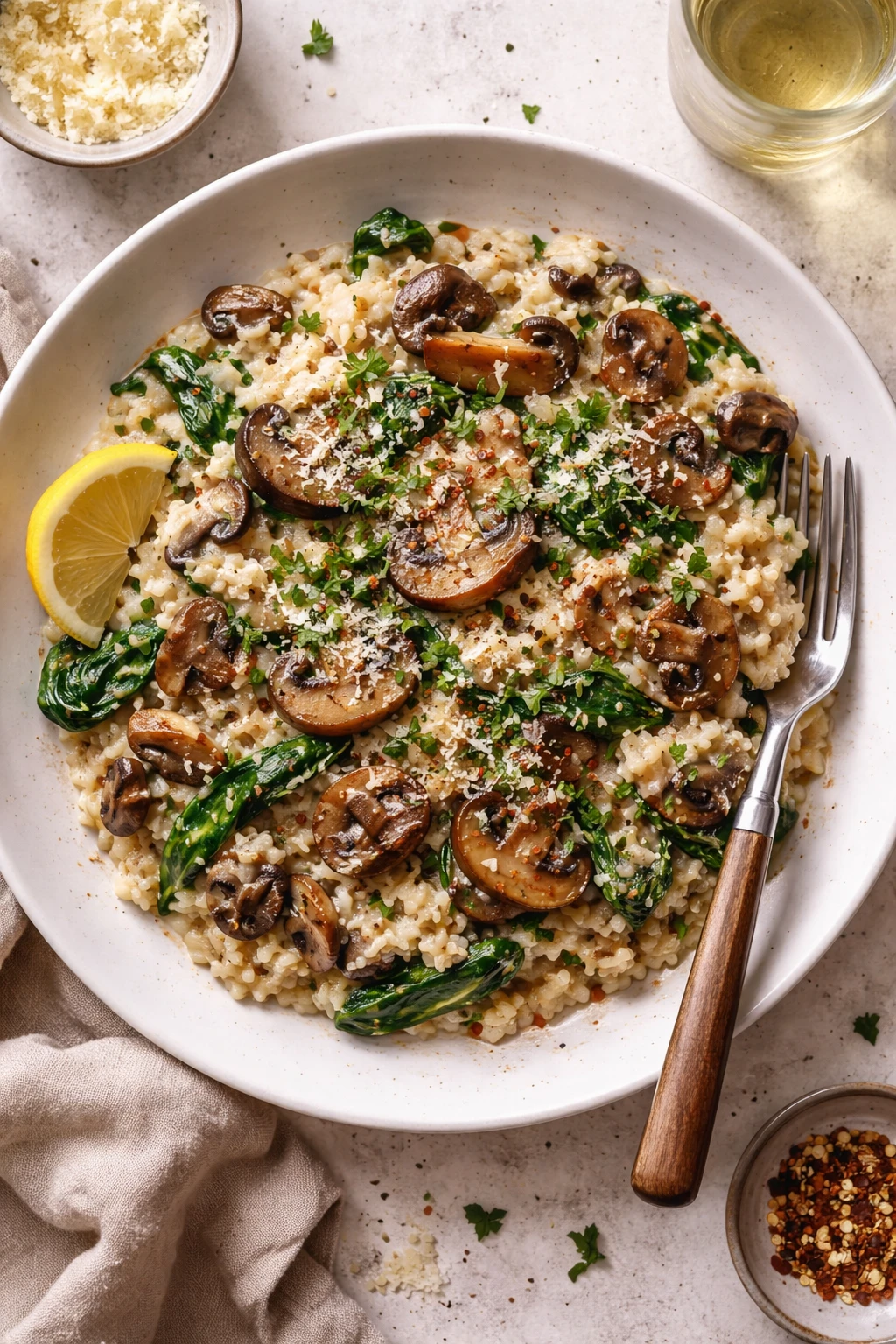
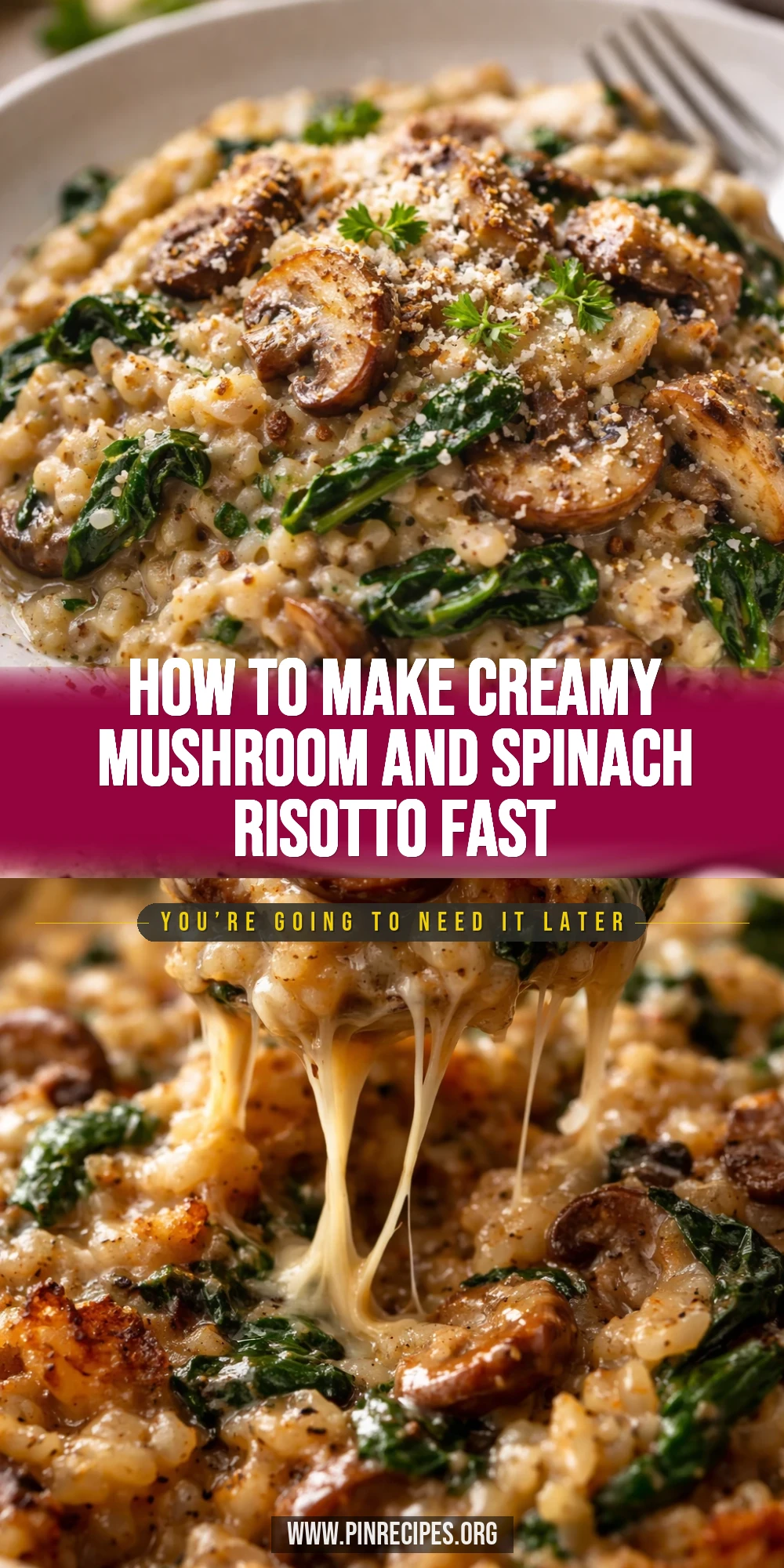
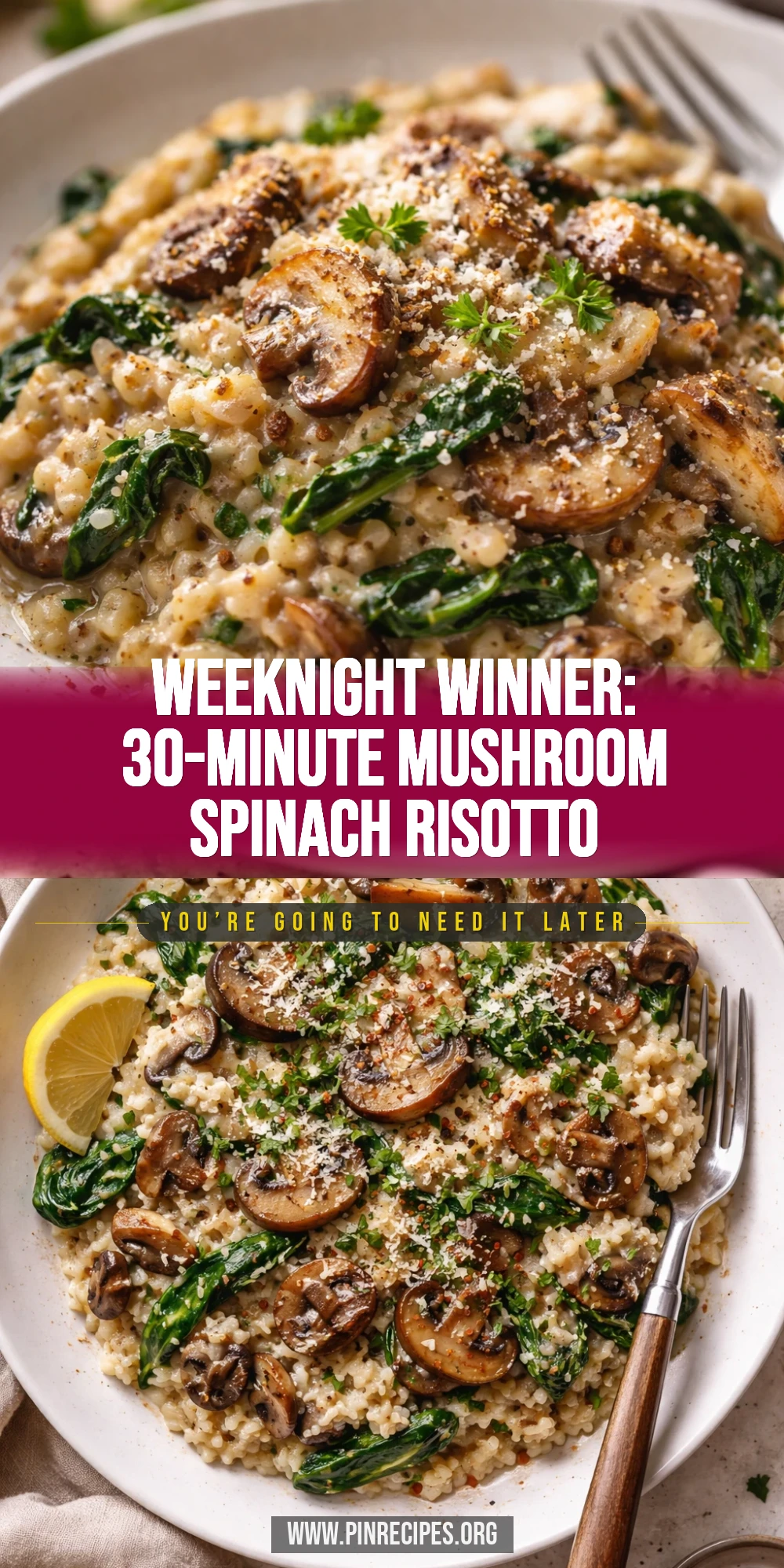
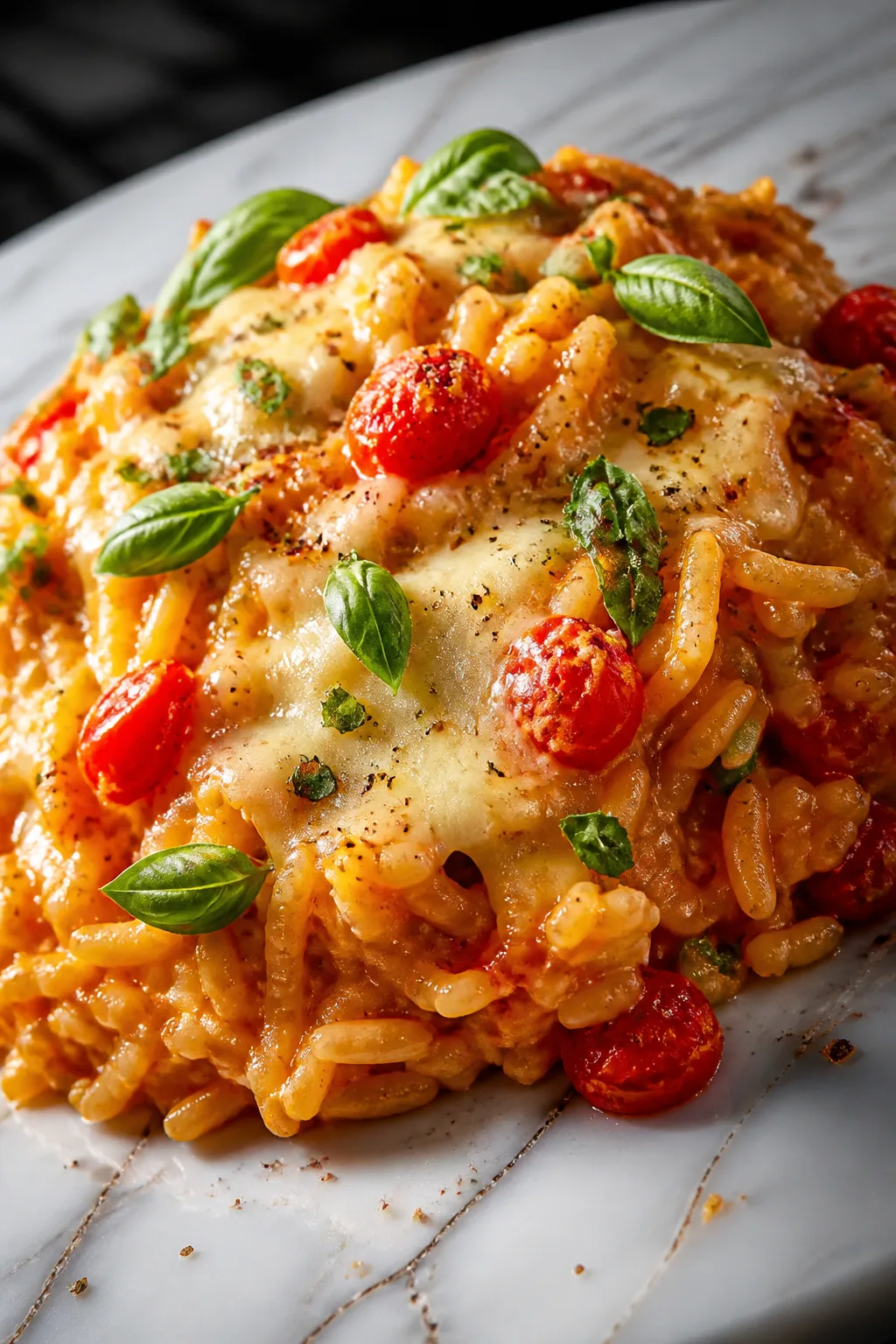
This risotto is a quick, creamy delight packed with earthy mushrooms and fresh spinach. The secret? Toasting the rice first for that perfect bite. Ideal for a cozy weeknight dinner or a simple spring lunch.
Introduction
I first made this creamy mushroom and spinach risotto on a busy weeknight when I wanted something comforting but didn’t have hours to cook. The trick I learned is to toast the Arborio rice in olive oil before slowly adding warm broth, which gives the risotto a lovely nutty depth and perfect texture. Adding fresh spinach at the end keeps the dish bright and fresh, balancing the earthiness of the mushrooms. I like to finish it with a splash of lemon juice and a generous handful of Parmesan for that creamy, tangy punch. It’s become one of my go-to spring dishes because it feels special but comes together quickly. Honestly, the first time I tried risotto, it was a disaster—too mushy and bland—but this method nails the texture every time. The finished dish is creamy and rich but not heavy, with tender mushrooms and vibrant spinach that make it feel like spring on a plate. I think you’ll love how easy it is to whip up a meal that tastes like you spent all afternoon in the kitchen.
What You'll Need
Approximately 4 hearty servings
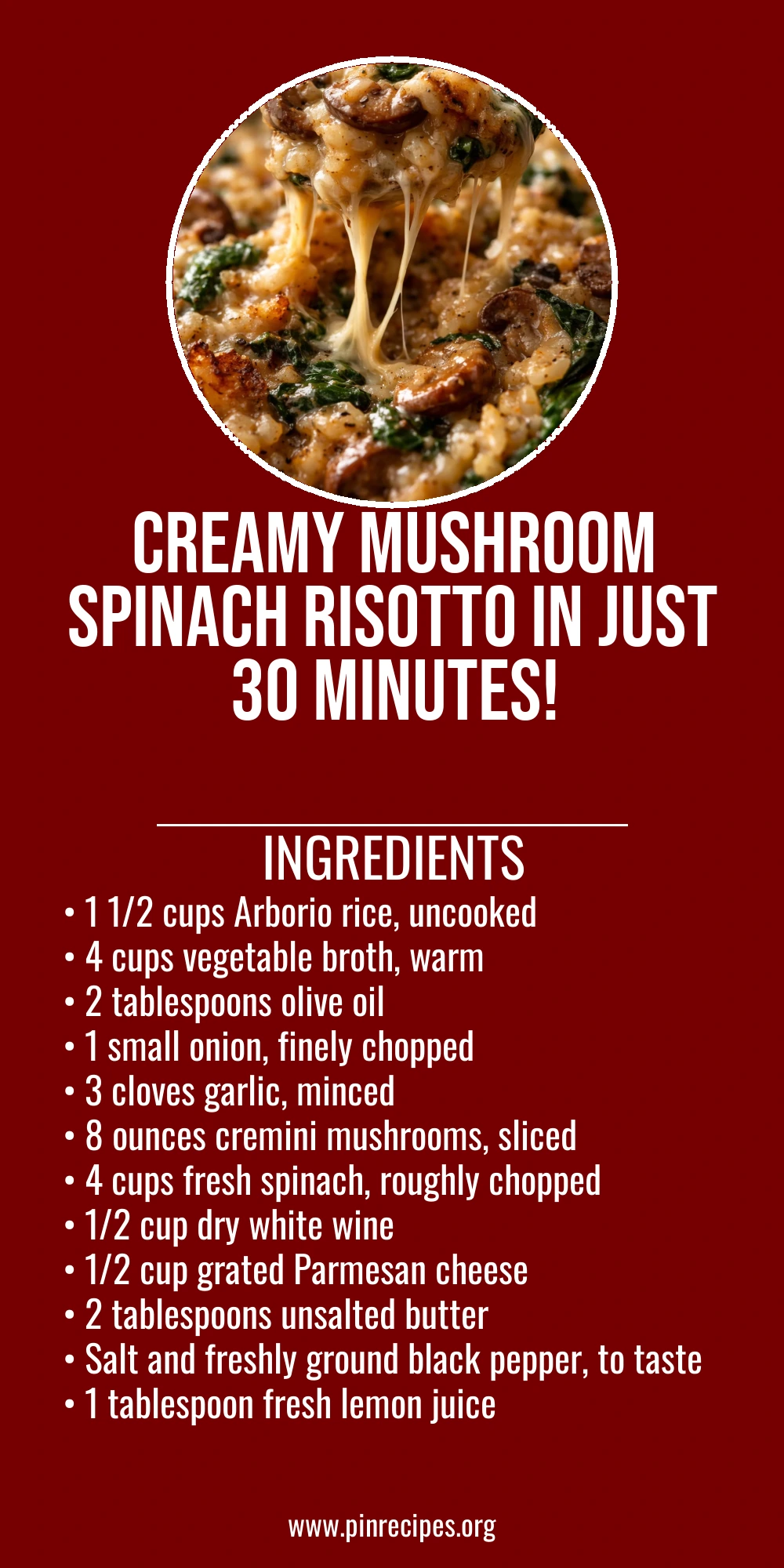
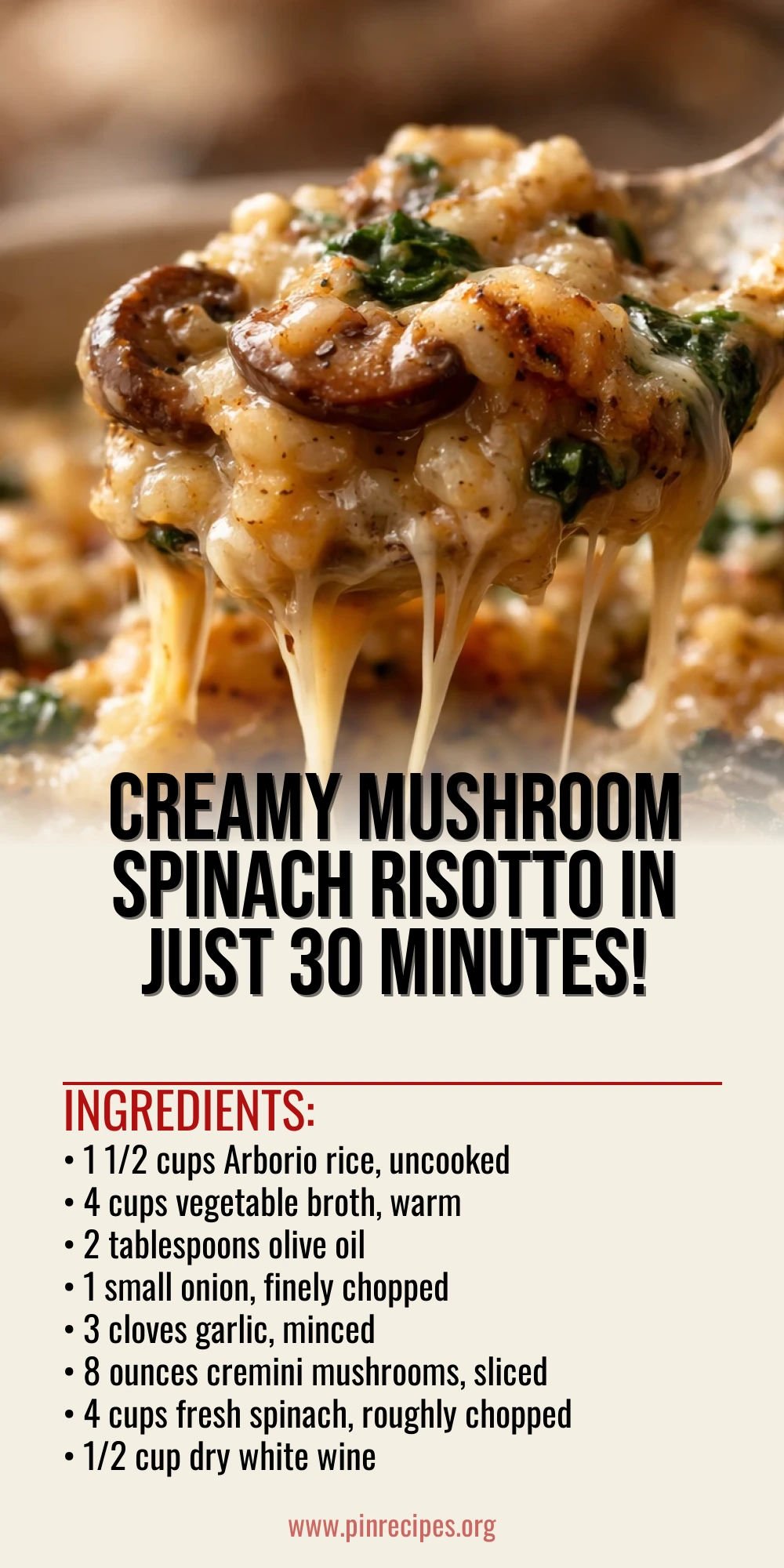
- 1 1/2 cups Arborio rice, uncooked
- 4 cups vegetable broth, warm
- 2 tablespoons olive oil
- 1 small onion, finely chopped
- 3 cloves garlic, minced
- 8 ounces cremini mushrooms, sliced
- 4 cups fresh spinach, roughly chopped
- 1/2 cup dry white wine
- 1/2 cup grated Parmesan cheese
- 2 tablespoons unsalted butter
- Salt and freshly ground black pepper, to taste
- 1 tablespoon fresh lemon juice
How To Do It
Step 1
Heat the olive oil in a large, heavy-bottomed skillet or saucepan over medium heat. Add the finely chopped onion and cook gently for about 5 minutes until translucent and soft but not browned. This step is crucial because sweating the onion slowly builds a sweet, aromatic base that enhances the risotto’s flavor without bitterness. Stir occasionally to prevent sticking and keep the heat moderate to avoid caramelizing the onions too quickly, which would alter the delicate flavor profile.
⏱ Time: 5 minutes
✓ Doneness: Onions should be soft, translucent, and fragrant without any browning
Step 2
Add the minced garlic and sliced mushrooms to the pan and cook for about 7 minutes, stirring often. The mushrooms release moisture and begin to brown slightly, which adds a deep umami flavor to the dish. Cooking the mushrooms thoroughly before adding rice ensures they develop a rich taste and prevent excess water from making the risotto watery later. Watch for the mushrooms to shrink and turn golden, but avoid burning the garlic, which can become bitter.
⏱ Time: 7 minutes
✓ Doneness: Mushrooms should be browned and tender; garlic fragrant but not darkened
Step 3
Stir in the Arborio rice, coating each grain with the oil and mushroom mixture. Toast the rice for about 2 minutes, stirring constantly. This step is key because it slightly toasts the starch on the rice, which helps the grains hold their shape and develop a nutty flavor. If you skip this, your risotto may end up mushy or bland. Keep stirring to prevent the rice from sticking or burning on the bottom.
⏱ Time: 2 minutes
✓ Doneness: Rice grains appear glossy and slightly translucent around edges
Step 4
Pour in the white wine and stir continuously until it’s mostly absorbed. The acidity in the wine balances the creaminess of the risotto and adds a subtle complexity. If you rush this step, the alcohol won’t cook off properly, leaving a harsh taste. Let the wine reduce gently, stirring to help the rice absorb the liquid evenly.
⏱ Time: 3-4 minutes
✓ Doneness: Wine is mostly absorbed; mixture looks creamy but not soupy
Step 5
Begin adding warm vegetable broth one ladle at a time, stirring frequently. Wait until most of the liquid is absorbed before adding the next ladle. This gradual absorption is what creates the creamy texture without adding cream. Stirring releases starch from the rice, which thickens the dish naturally. Avoid adding all broth at once or skipping stirring, as this can lead to uneven cooking or a gluey texture.
⏱ Time: 20 minutes
✓ Doneness: Rice is tender but still slightly firm to the bite; texture creamy and smooth
Step 6
When the rice is almost done, stir in the chopped fresh spinach. The residual heat will gently wilt the spinach without overcooking it, preserving its bright color and fresh flavor. Adding spinach too early can result in a dull color and mushy texture, so timing is important here.
⏱ Time: 2 minutes
✓ Doneness: Spinach is wilted but still vibrant green and tender
Step 7
Remove the pan from heat and stir in the butter and grated Parmesan cheese until melted and fully combined. This finishing step enriches the risotto, giving it a luscious, velvety texture and a savory depth. The butter helps bind everything together, while the cheese adds saltiness and umami. Don’t skip this — it’s what makes risotto truly creamy and indulgent.
⏱ Time: 2 minutes
✓ Doneness: Risotto is glossy, creamy, and evenly coated with cheese and butter
Step 8
Season the risotto with salt, freshly ground black pepper, and a splash of fresh lemon juice. The lemon brightens the dish and balances the richness. Taste as you go to get the seasoning just right. Remember, Parmesan is salty, so add salt gradually to avoid over-seasoning.
⏱ Time: 1 minute
✓ Doneness: Flavors are balanced with a pleasant tang and seasoning
Step 9
Let the risotto rest for a minute or two before serving. This short rest allows the flavors to meld and the texture to settle, making it easier to plate and enjoy. Serve immediately for the best creamy consistency, garnished with extra Parmesan or fresh herbs if desired.
⏱ Time: 2 minutes
✓ Doneness: Risotto holds shape slightly but remains creamy and smooth
Pro Tips
Always use warm broth when adding to the rice.
Cold broth can shock the rice, slowing down the cooking process and causing uneven texture. Warm broth keeps the temperature steady, allowing the rice to cook evenly and release starch gradually for that creamy consistency.
Toast the rice before adding any liquid.
Toasting coats the grains in oil and starts the cooking process, which enhances flavor and helps the rice hold its shape. Skipping this step can result in mushy risotto without the characteristic bite.
Stir frequently but gently.
Stirring encourages starch release, creating creaminess, but vigorous stirring can break grains and cause a gluey texture. Gentle, frequent stirring strikes the right balance.
Add the spinach at the very end.
Adding spinach too early causes it to overcook and lose its vibrant color and fresh flavor. Adding it last ensures it stays bright and tender.
Use freshly grated Parmesan cheese.
Freshly grated cheese melts better and has a richer flavor. Pre-grated cheese often contains additives that can affect texture and flavor.
Don’t rush the broth additions.
Adding broth too quickly prevents the rice from absorbing liquid properly, leading to uneven cooking and a less creamy texture.
Finish with a splash of lemon juice.
The acidity brightens the dish and balances the richness, making the flavors more vibrant and less heavy.
Common Mistakes to Avoid
Using cold broth instead of warm broth
Why it happens Many cooks overlook warming broth to save time, not realizing it affects cooking consistency.
Fix Always heat your broth to a gentle simmer before adding it to the rice. This keeps the cooking temperature steady and ensures even absorption and creamy texture.
Skipping the toasting of rice
Why it happens It’s tempting to add liquid immediately for speed, but this misses key flavor development.
Fix Take 2-3 minutes to toast the rice in oil or butter first. This adds nuttiness and helps the rice maintain a firm texture through cooking.
Adding all broth at once
Why it happens Impatience or misunderstanding of risotto technique leads to dumping in all liquid.
Fix Add broth gradually, one ladle at a time, stirring often. This allows the rice to slowly absorb liquid and release starch, creating creaminess.
Overcooking spinach
Why it happens Adding spinach too early or cooking too long causes it to lose color and texture.
Fix Add spinach at the very end, just before finishing the dish, and stir until wilted but still bright green.
Not seasoning properly
Why it happens Relying only on cheese for salt can result in bland risotto.
Fix Season gradually with salt and pepper throughout cooking, tasting frequently to balance flavors without over-salting.
Variations
Add Crispy Pancetta
For a smoky, savory twist, add crispy pancetta or bacon bits at the end. Cook diced pancetta until crisp, then fold into the risotto just before serving. This adds a salty crunch and depth of flavor.
Note: Make sure to drain excess fat from pancetta to avoid greasiness and add it off heat to keep texture.
Use Asparagus Instead of Spinach
Swap out spinach for tender asparagus tips for a slightly firmer texture and fresh spring flavor. Blanch asparagus briefly before stirring into the risotto near the end of cooking.
Note: Adjust timing to avoid overcooking asparagus; add it in the last 3 minutes of cooking.
Make it Vegan
Replace butter with olive oil and use a vegan Parmesan alternative or nutritional yeast for cheesy flavor. Use vegetable broth to keep it fully plant-based.
Note: Nutritional yeast adds nuttiness but won’t melt like cheese, so stir in at the end off heat.
Add Fresh Herbs
Stir in chopped fresh herbs like thyme, parsley, or basil at the end to brighten the dish. Herbs add a fresh aroma and complexity that complements mushrooms and spinach beautifully.
Note: Add herbs off heat or just before serving to preserve flavor and color.
Swap Mushrooms for Wild Mushrooms
Use wild mushrooms like chanterelles or porcini for a more intense, earthy flavor. Sauté them carefully to avoid excess moisture diluting the risotto.
Note: Wild mushrooms require gentle cooking and should be dried slightly before adding to prevent sogginess.
Nutrition
Per Serving:
Nutritional values are estimates and may vary based on specific ingredients used.
Storage & Tips
Room Temperature
Risotto can be safely kept at room temperature for up to 2 hours. Cover it loosely with foil or a clean towel to prevent drying out but avoid leaving it out longer to reduce food safety risks.
Refrigerator
Store leftover risotto in an airtight container in the fridge for up to 3 days. The texture will thicken and firm up when cold. Reheat gently with a splash of broth or water to loosen it before serving.
Freezer
Freeze risotto in a freezer-safe container for up to 2 months. Wrap tightly to prevent freezer burn. Thaw overnight in the fridge and reheat slowly with added liquid to restore creaminess.
Reheating
Reheat risotto on the stovetop over low heat, stirring frequently and adding a splash of broth or water to loosen it. Avoid microwaving without liquid, as it can dry out or unevenly heat the dish.
Make Ahead
You can prepare the risotto base (onions, mushrooms, toasted rice) up to 1 day ahead and refrigerate. Finish cooking by adding broth and spinach the day of serving for freshest results.
FAQ
Can I make this risotto without white wine?
Yes! You can skip the wine and simply add extra broth instead. The wine adds acidity and depth, but the risotto will still be delicious without it. Just make sure to maintain the gradual broth addition technique for creaminess.
What if I don’t have Arborio rice?
Arborio is best for risotto due to its starch content. If you can’t find it, Carnaroli or Vialone Nano rice are good substitutes. Avoid long-grain rice, which won’t give the creamy texture risotto needs.
How do I know when the risotto is done?
The rice should be tender with a slight bite (al dente) and the overall texture creamy but not soupy. Taste frequently near the end and look for a rich, glossy consistency that coats the spoon.
Can I use frozen spinach?
Frozen spinach releases a lot of water and can make the risotto watery. It’s best to use fresh spinach for texture and color. If you must use frozen, thaw and squeeze out excess moisture before adding.
How do I avoid mushy risotto?
Avoid adding all the broth at once and don’t overcook the rice. Stir gently and add broth gradually to allow the rice to absorb liquid properly. Toasting the rice first also helps maintain texture.
Can I prepare risotto ahead of time?
You can prep some ingredients ahead, but risotto is best served fresh. If you must store leftovers, cool quickly and refrigerate. Reheat gently with added broth to restore creaminess.
Why do I have lumps or clumps in my risotto?
Lumps usually form if you don’t stir enough or add broth too fast. Stirring releases starch evenly, preventing clumping. Also, ensure rice is evenly coated and liquid is added gradually.
What’s the best way to store leftover risotto?
Store in an airtight container in the fridge for up to 3 days. Reheat on the stove with a splash of broth to loosen it. Avoid leaving risotto at room temperature for long periods to prevent spoilage.
Final Thoughts
I hope you enjoy making and eating this creamy mushroom and spinach risotto as much as I do. Don’t forget to share your results—I’d love to hear how it turns out for you!