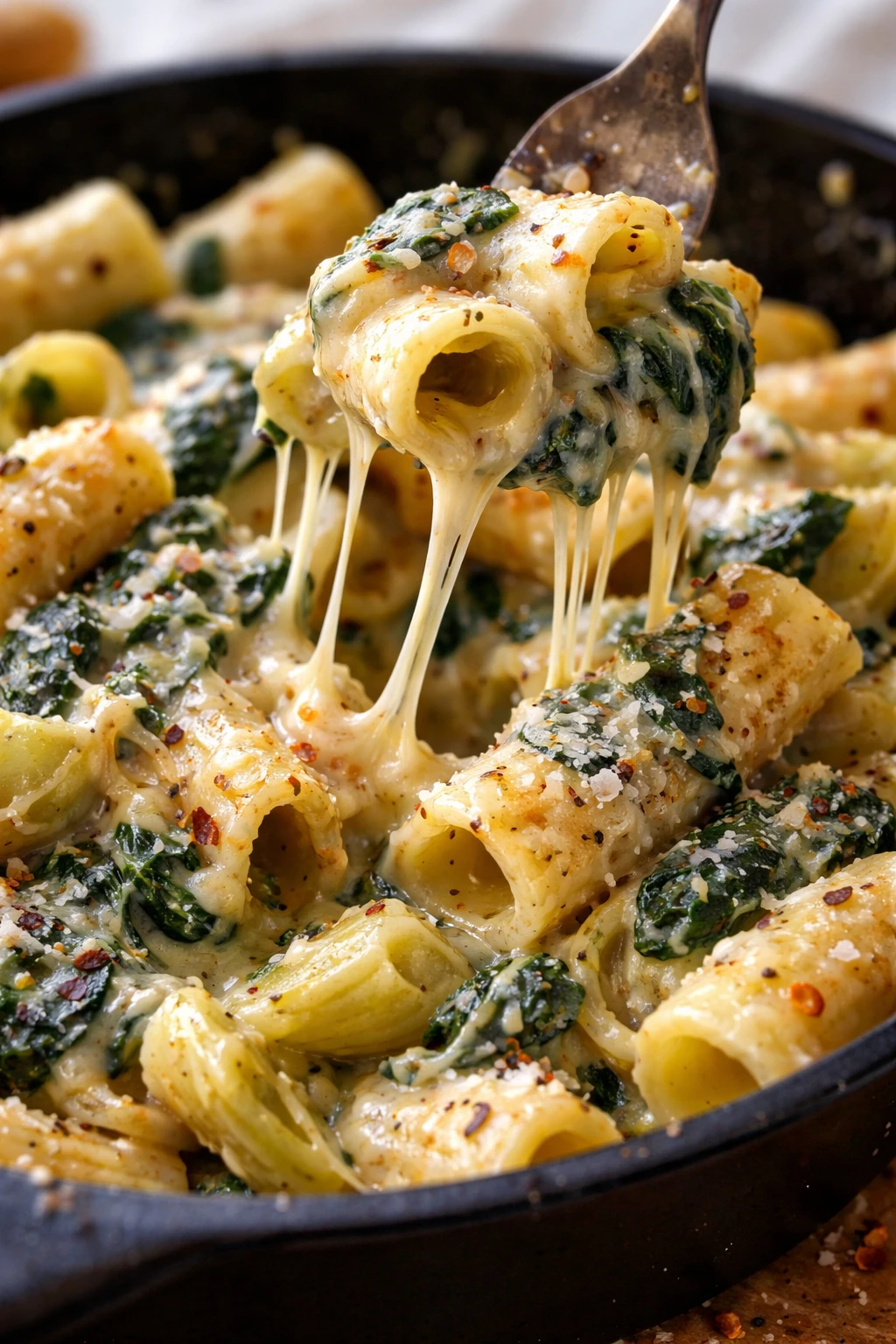
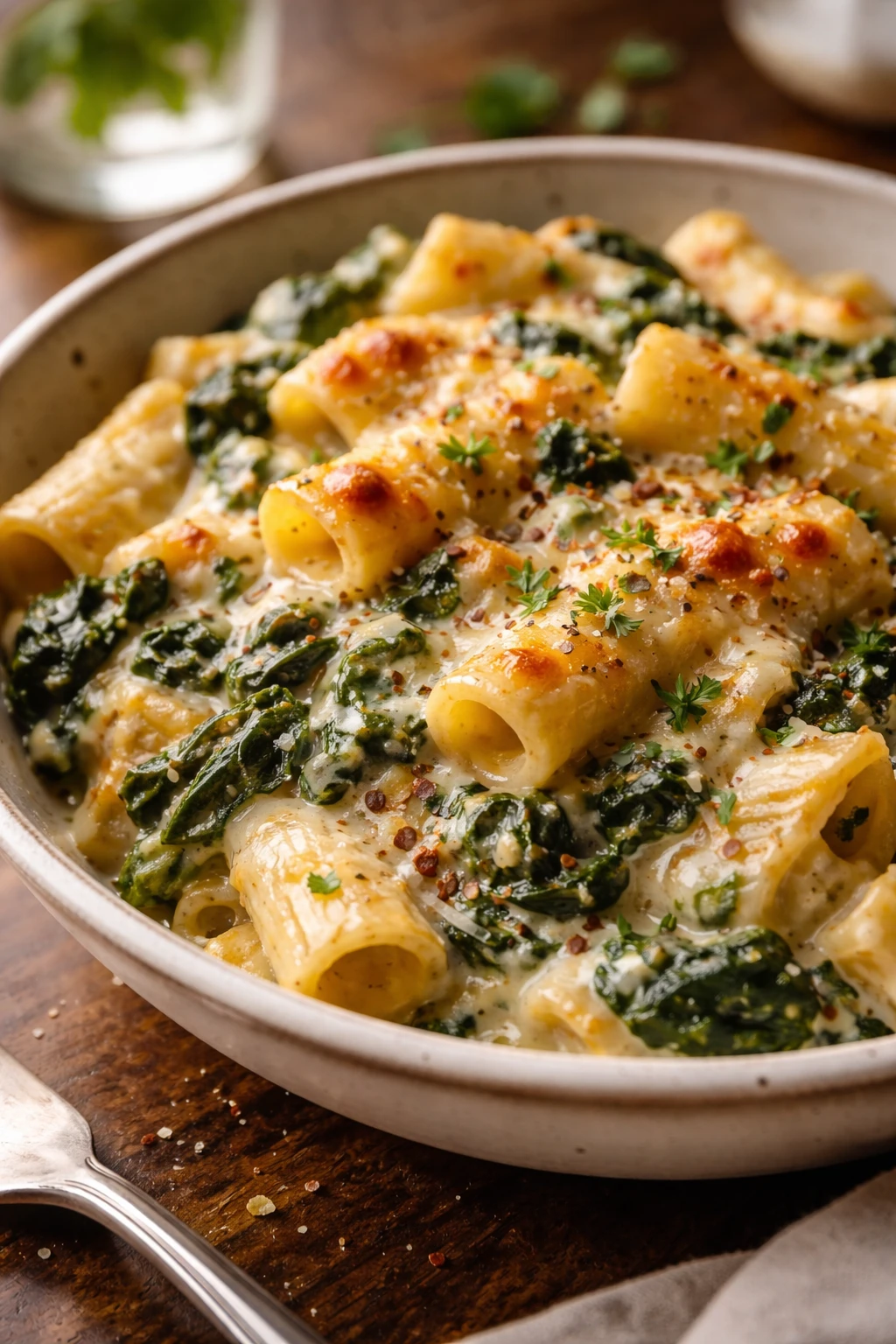
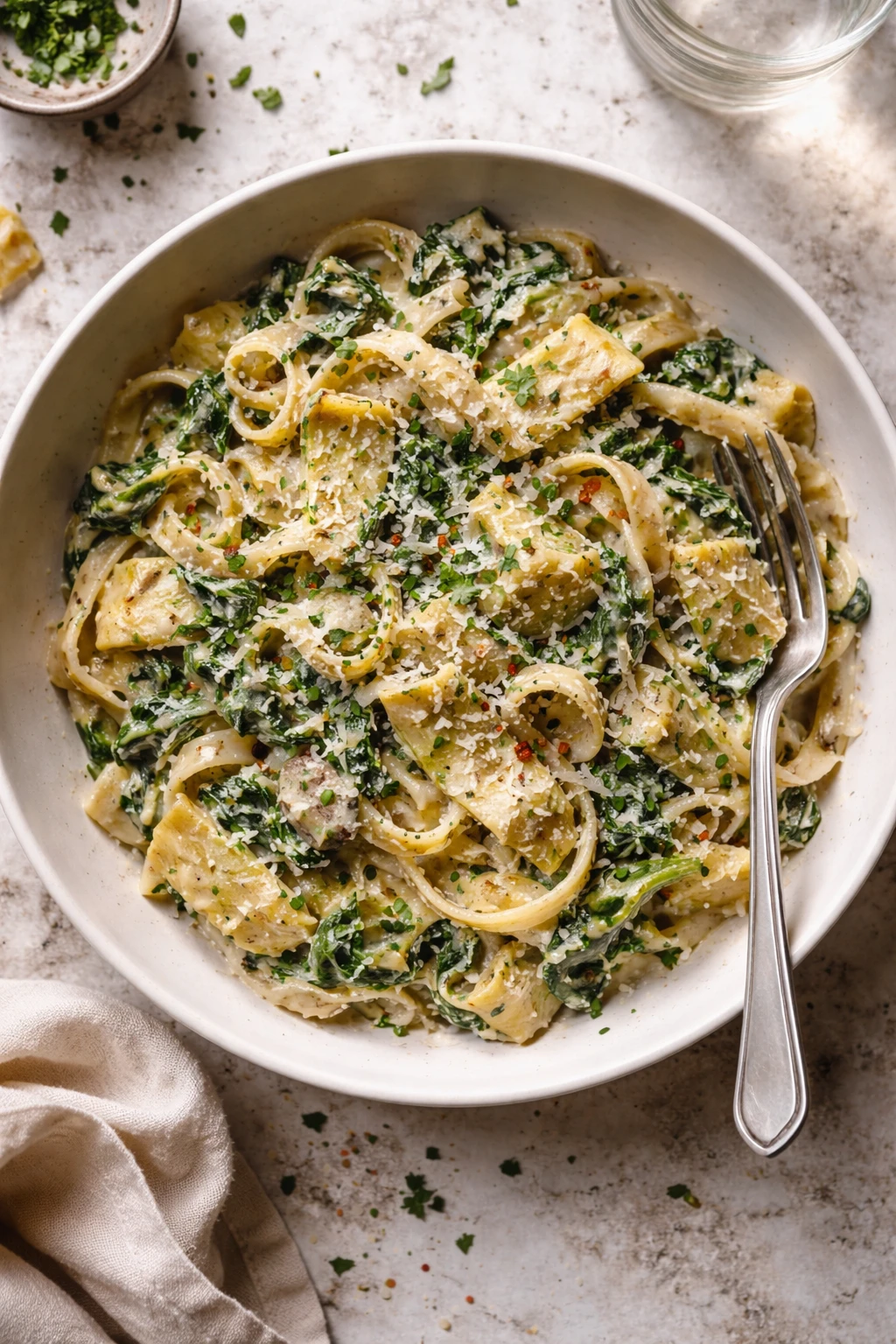
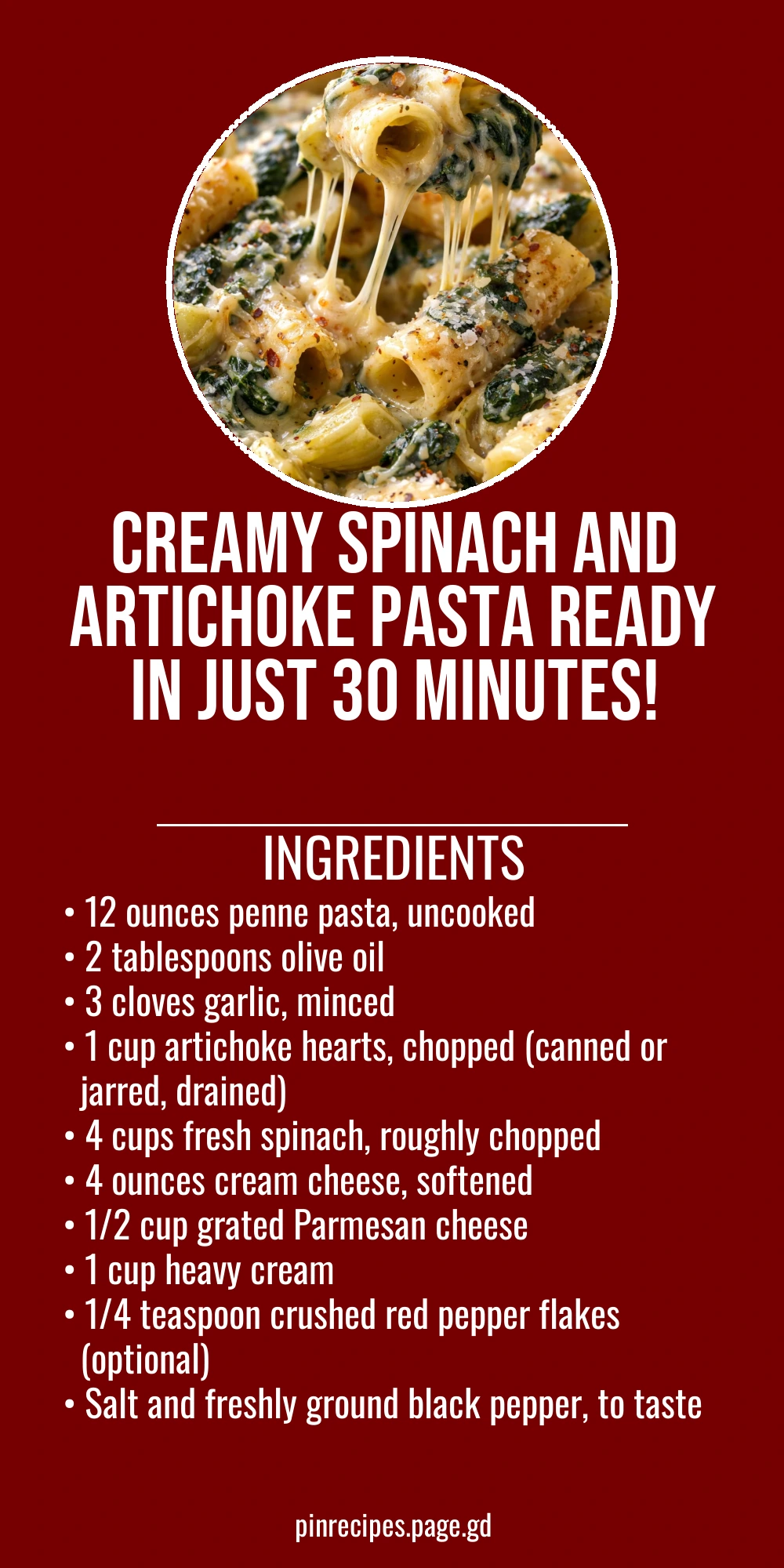
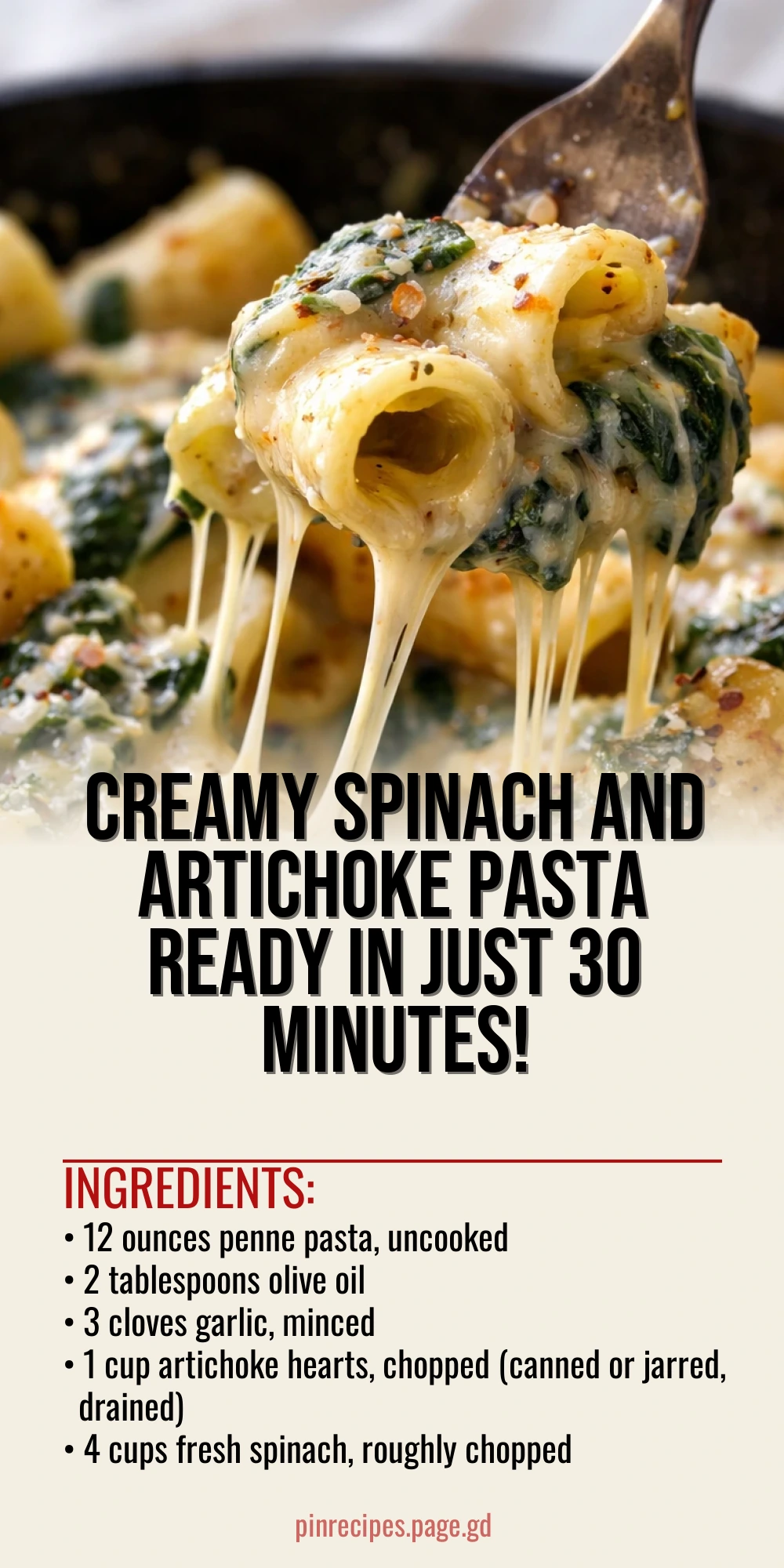
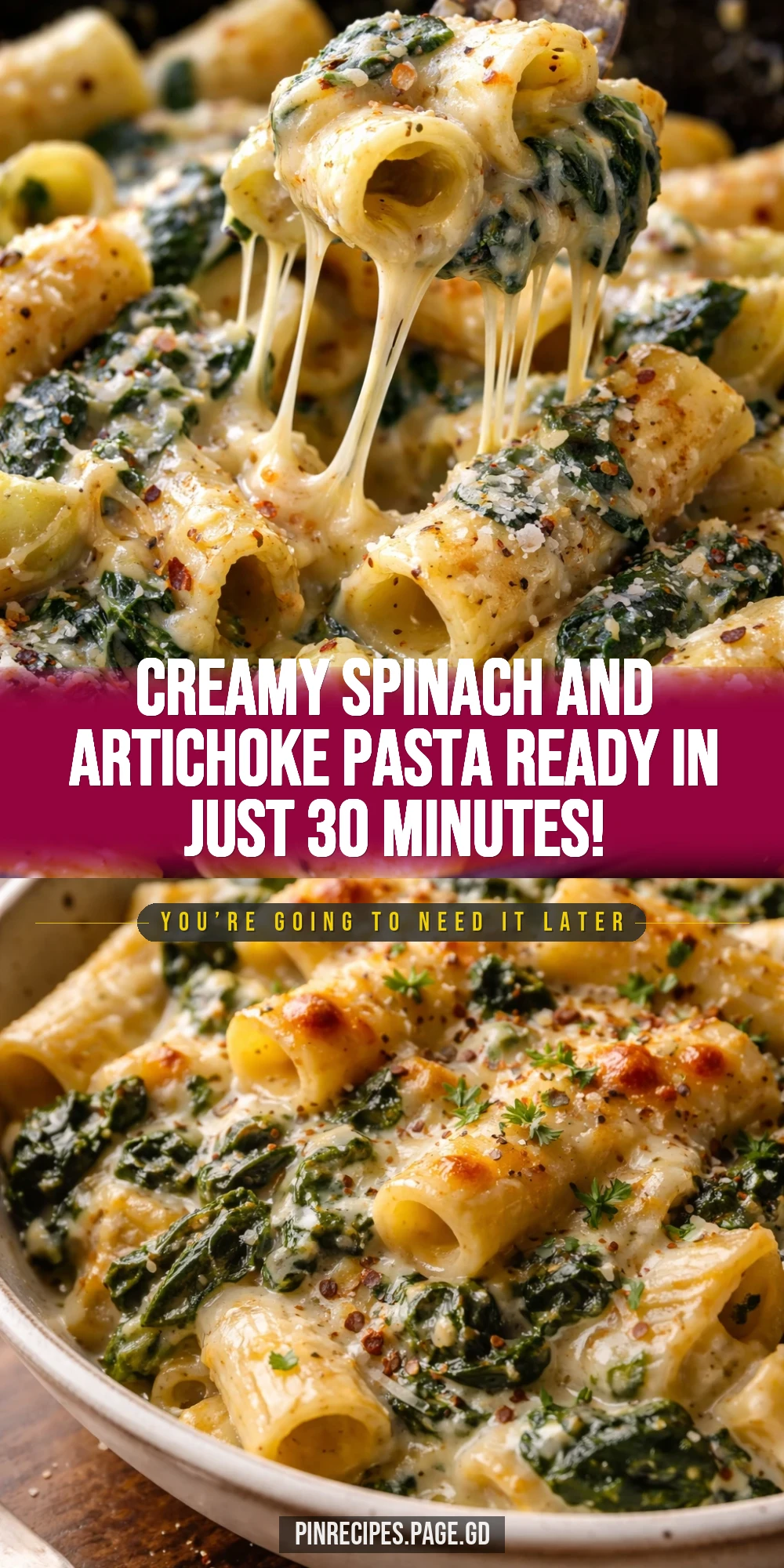
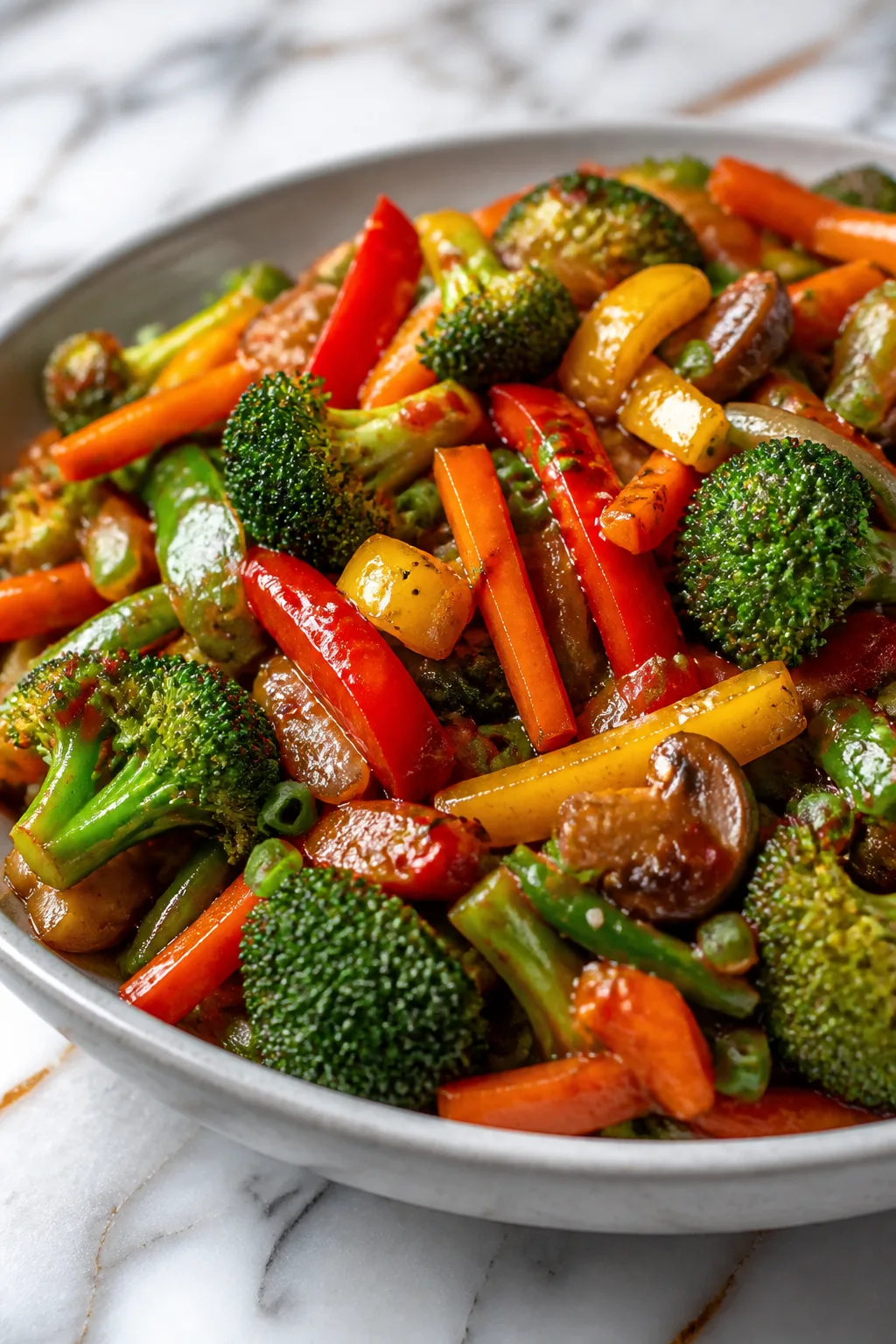
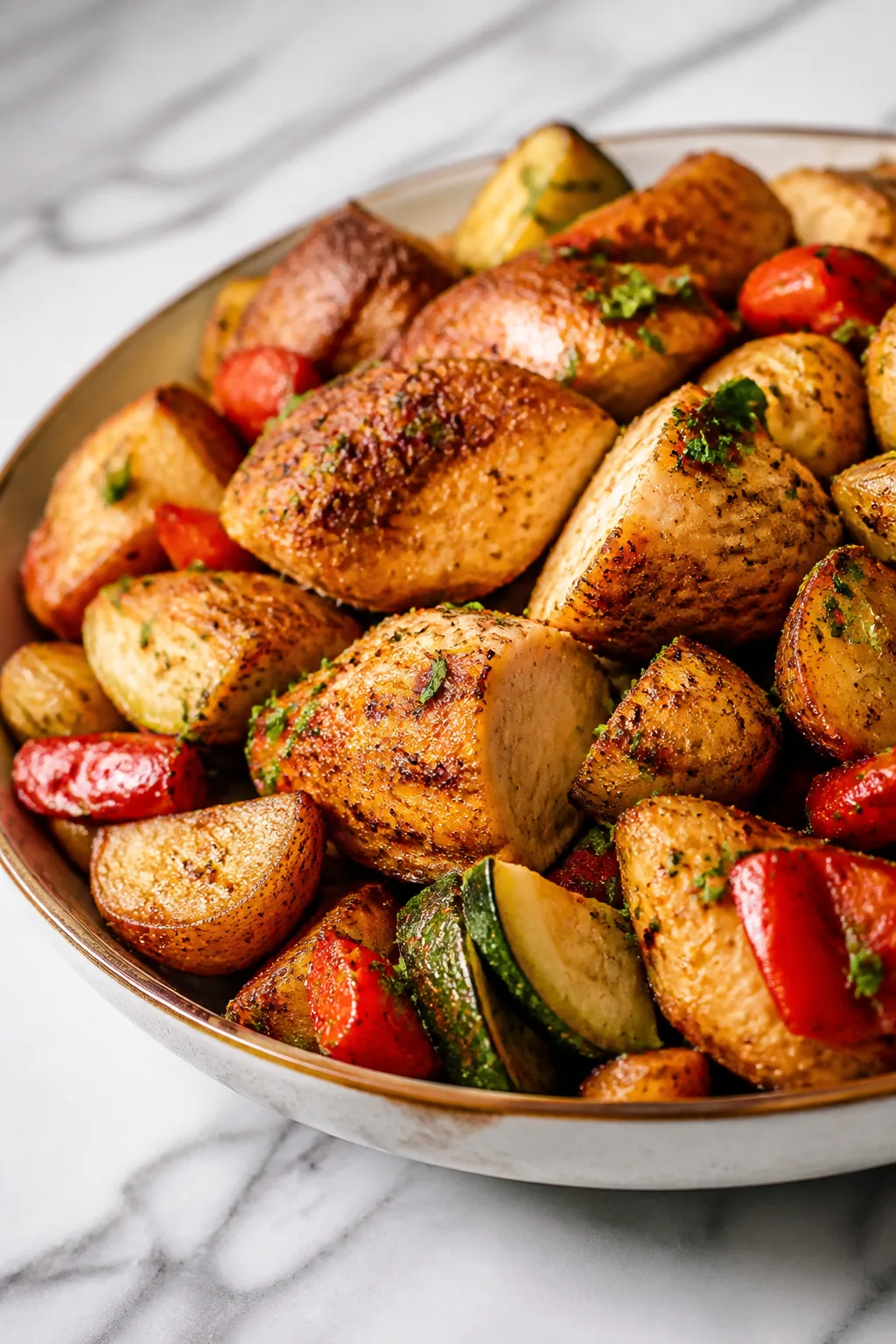
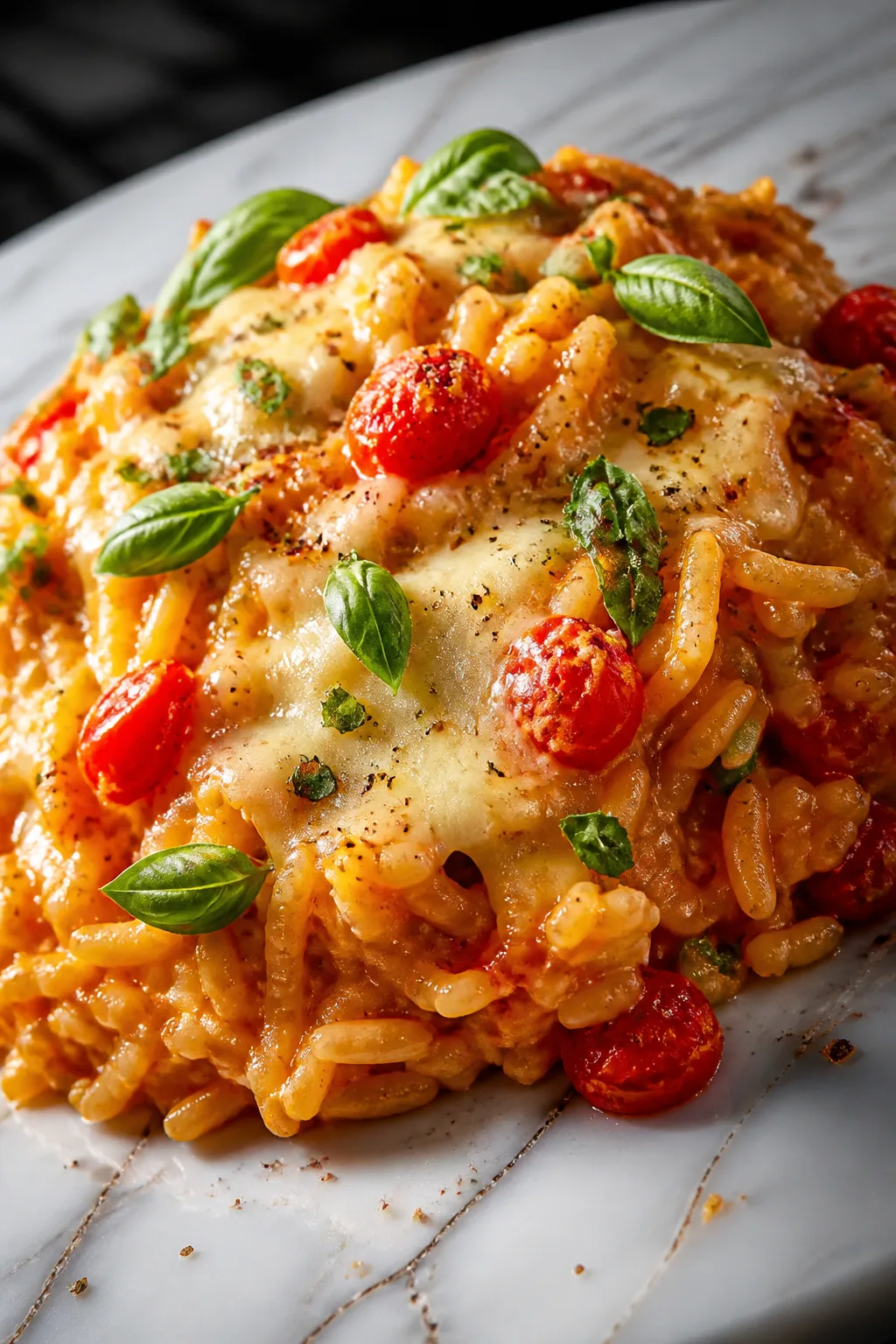
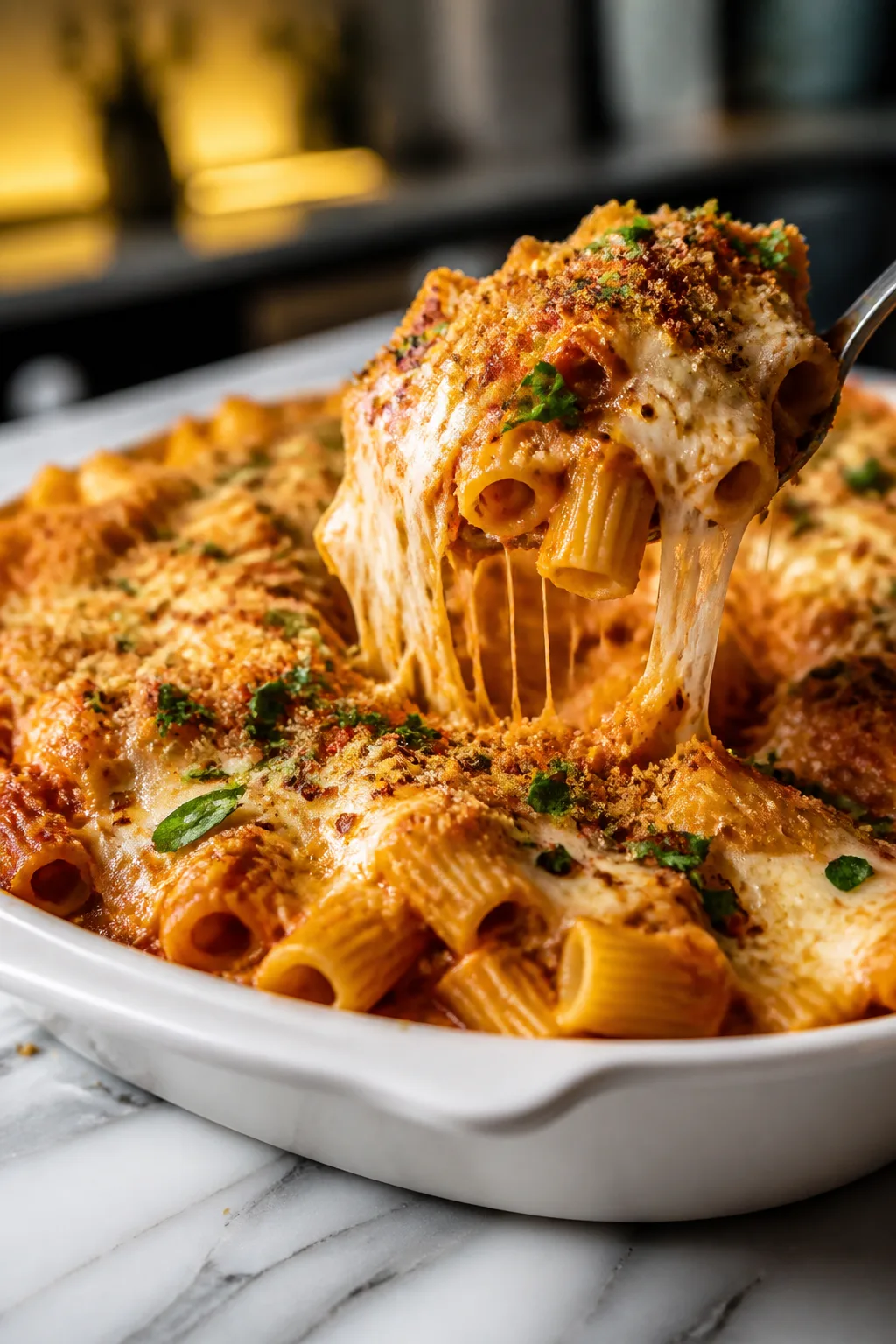
This creamy spinach and artichoke pasta is the ultimate weeknight comfort food. The sauce is luxuriously smooth thanks to cream cheese, and those tender artichokes add a subtle tang. Perfect when you want something cozy but quick!
Introduction
I first stumbled upon this creamy spinach and artichoke pasta on a hectic weeknight when I wanted something comforting but didn’t have hours to spend in the kitchen. What I love about this recipe is how it captures that classic spinach-artichoke dip flavor but turns it into a full meal that’s ready in just 30 minutes. I’ve tweaked it over time to get the sauce just right — creamy but not too heavy, with a little tang from the artichokes and a subtle kick from red pepper flakes. The trick I learned is to soften the cream cheese before adding it to the pan; it melts smoothly and creates a luscious sauce that clings perfectly to the pasta. Plus, adding fresh spinach at the end keeps it vibrant and fresh, balancing the richness. When it’s done, you get a warm, cheesy dish that feels like a cozy hug on a plate — perfect for busy weeknights or whenever you need a quick, satisfying dinner. I’ve made this for friends and family, and it’s always a hit. Just be ready to double the recipe because it disappears fast!
How To Do It
Step 1
Bring a large pot of salted water to a boil and cook the penne pasta according to package instructions until al dente, usually about 10-12 minutes. Cooking the pasta just right is crucial because it will continue to cook slightly when mixed with the sauce later. Overcooking makes it mushy, so keep an eye on it and taste a piece early to check. Once done, reserve about a cup of pasta water, then drain the pasta and set aside. This reserved water will help loosen the sauce if it gets too thick.
⏱ Time: 12 minutes
✓ Doneness: Pasta is tender but still has a slight bite when you chew it.
Step 2
While the pasta cooks, heat olive oil in a large skillet over medium heat. Add the minced garlic and sauté for about 1-2 minutes until fragrant but not browned — burnt garlic tastes bitter and can ruin the sauce. Then add the chopped artichoke hearts and cook for another 3-4 minutes, stirring occasionally. This step lets the artichokes warm through and develop a subtle caramelized flavor that adds depth to the sauce.
⏱ Time: 5 minutes
✓ Doneness: Garlic is golden and aromatic; artichokes are heated through and slightly softened.
Step 3
Lower the heat to medium-low and add the softened cream cheese to the skillet. Stir constantly to melt it evenly into the artichokes and garlic, creating a creamy base. If the cream cheese isn’t softened, it can clump and won’t blend smoothly. The goal is a silky, lump-free sauce before adding the liquids.
⏱ Time: 3 minutes
✓ Doneness: Cream cheese is fully melted and combined with the artichokes into a smooth paste.
Step 4
Pour in the heavy cream slowly while stirring to combine with the cream cheese mixture. Keep the heat low to prevent the cream from curdling. Stir until you have a smooth, rich sauce forming. If the sauce looks too thick, add a splash of the reserved pasta water to loosen it up. This step is key for creating that luscious texture that coats the pasta beautifully.
⏱ Time: 3 minutes
✓ Doneness: Sauce is smooth, creamy, and slightly thickened, with no lumps.
Step 5
Add the grated Parmesan cheese and stir until melted and fully incorporated. Parmesan adds a sharp, nutty flavor and helps thicken the sauce further. Be sure to add it off direct high heat to avoid clumping. Season the sauce with salt, freshly ground black pepper, and crushed red pepper flakes if you like a little heat.
⏱ Time: 2 minutes
✓ Doneness: Cheese is melted; sauce is creamy and seasoned to taste.
Step 6
Add the chopped fresh spinach to the skillet and gently stir into the sauce. The residual heat will wilt the spinach quickly without overcooking it, preserving the bright green color and fresh flavor. Overcooked spinach turns dull and mushy, so just a minute or two is enough here.
⏱ Time: 2 minutes
✓ Doneness: Spinach is wilted but still vibrant green.
Step 7
Return the drained pasta to the skillet and toss gently to coat every piece with the creamy sauce. If the sauce feels too thick, add a little more reserved pasta water, a tablespoon at a time, until the desired consistency is reached. Tossing pasta in the sauce off the heat helps prevent it from drying out or becoming gluey.
⏱ Time: 3 minutes
✓ Doneness: Pasta is evenly coated with a glossy, creamy sauce.
Step 8
Taste and adjust seasoning with more salt, pepper, or red pepper flakes if needed. This final seasoning step is important because the pasta and sauce can mellow flavors slightly. Getting the balance right here ensures the dish is flavorful and satisfying.
⏱ Time: 1 minute
✓ Doneness: Flavor is balanced, with a nice hint of spice if using red pepper flakes.
Step 9
Serve the pasta hot, garnished with extra Parmesan or fresh herbs if you like. Enjoy immediately for the best creamy texture and fresh flavors. Leftovers can thicken as they cool, so reheat gently with a splash of milk or cream to refresh the sauce.
⏱ Time: Immediate
✓ Doneness: Dish is steaming hot, creamy, and visually inviting.
Pro Tips
Always reserve some pasta cooking water before draining.
The starchy pasta water is magic for adjusting sauce consistency. It helps loosen thick sauces and binds the sauce to the pasta better, creating a silky finish. Without it, your sauce might be too thick or separate.
Soften cream cheese before adding it to the pan.
Softened cream cheese melts evenly and prevents lumps that can ruin texture. Cold cream cheese chunks won’t blend properly and can cause the sauce to be grainy or clumpy.
Add fresh spinach at the very end of cooking.
Spinach wilts quickly and adding it too early results in dull color and mushy texture. Adding it last keeps it vibrant, tender, and fresh-tasting.
Use freshly grated Parmesan cheese.
Freshly grated cheese melts more smoothly and adds a sharper, more complex flavor than pre-grated options, enhancing the sauce’s richness and depth.
Don’t overcook the pasta; aim for al dente.
Al dente pasta holds its shape and texture when tossed with sauce, preventing a mushy final dish. Overcooked pasta absorbs too much sauce and becomes gummy.
Cook garlic gently over medium heat.
Garlic burns easily and turns bitter, which can spoil the sauce’s flavor. Cooking it gently releases aroma and sweetness without bitterness.
Season gradually and taste as you go.
Creamy sauces can dull seasoning, so it’s important to adjust salt, pepper, and spices gradually to avoid over- or under-seasoning.
Common Mistakes to Avoid
Adding spinach too early.
Why it happens People often add spinach with the other ingredients to save time, not realizing it wilts too much and loses its vibrant color and fresh flavor.
Fix Add spinach at the very end of cooking, just before tossing with pasta, so it wilts gently and stays bright green and tender.
Using cold cream cheese straight from the fridge.
Why it happens Rushing the process or skipping softening leads to clumpy sauce because cold cream cheese doesn’t melt smoothly.
Fix Let cream cheese sit at room temperature for 20-30 minutes or soften it in short bursts in the microwave before adding.
Overcooking the pasta.
Why it happens Beginners often cook pasta longer than package instructions, thinking softer is better, but it leads to mushy texture once mixed with sauce.
Fix Cook pasta to al dente, taste early, and drain promptly to maintain firmness.
Not reserving pasta water.
Why it happens People forget or don’t know the value of pasta water, missing out on a natural way to adjust sauce consistency.
Fix Always scoop out at least 1 cup of pasta water before draining to use in the sauce if needed.
Burning the garlic.
Why it happens High heat or inattention causes garlic to brown quickly, resulting in a bitter flavor that spoils the dish.
Fix Cook garlic over medium or medium-low heat, stirring constantly and removing from heat if it starts to brown.
Variations
Add Grilled Chicken for Extra Protein
Toss in sliced grilled chicken breast to make this pasta a heartier meal. The smoky chicken pairs beautifully with the creamy sauce and veggies, turning it into a satisfying dinner for meat lovers.
Note: Add cooked chicken in step 7 when tossing pasta with sauce to warm through without drying out.
Swap Penne for Gluten-Free Pasta
Use your favorite gluten-free pasta to make this dish suitable for gluten-sensitive eaters. The creamy sauce works just as well with gluten-free options, though cooking times may vary slightly.
Note: Check package instructions for al dente timing and adjust reserved water as gluten-free pasta can absorb liquids differently.
Make It Vegan with Dairy-Free Alternatives
Replace cream cheese and heavy cream with vegan cream cheese and coconut milk or cashew cream. Nutritional yeast can substitute Parmesan for that cheesy flavor, making it dairy-free and delicious.
Note: Use medium-low heat to prevent plant-based creams from separating; stir gently during melting.
Add Sun-Dried Tomatoes for a Tangy Twist
Mix in chopped sun-dried tomatoes along with the artichokes to add a sweet and tangy pop of flavor. This variation adds complexity and a lovely color contrast to the dish.
Note: Add sun-dried tomatoes in step 2 with artichokes to soften and release their flavor.
Use Fresh Herbs for Brightness
Finish the dish with fresh basil, parsley, or thyme to brighten the creamy sauce and add a fresh herbal aroma. It’s a simple way to elevate the flavor profile.
Note: Add chopped fresh herbs just before serving to preserve their fragrance and color.
Nutrition
Per Serving:
Nutritional values are estimates and may vary based on specific ingredients used.
Storage & Tips
Room Temperature
This pasta can be kept at room temperature for up to 2 hours if covered loosely. Beyond that, bacteria growth increases, so refrigerate promptly to keep it safe.
Refrigerator
Store leftovers in an airtight container in the fridge for up to 3 days. The sauce may thicken and the spinach will darken slightly. Reheat gently with a splash of cream or milk to restore creaminess.
Freezer
Freeze the pasta in a freezer-safe container for up to 2 months. Wrap tightly to prevent freezer burn. Thaw overnight in the fridge and reheat gently to avoid sauce separation.
Reheating
Reheat on the stovetop over low heat, stirring in a splash of cream or milk to loosen the sauce. Avoid high heat or microwave reheating without stirring, as it can cause the sauce to separate or become grainy.
Make Ahead
You can prepare the sauce and cook pasta separately a day ahead. Store them separately in the fridge and combine just before reheating to keep pasta texture fresh and sauce creamy.
FAQ
Can I use frozen spinach instead of fresh?
Frozen spinach isn’t ideal here because it releases excess water when thawed, which can make the sauce watery and thin. If you must use frozen, thaw and squeeze out as much liquid as possible before adding it at the end of cooking.
What can I substitute for cream cheese?
You can use ricotta or mascarpone for a similar creamy texture, though the flavor will be milder. For a non-dairy option, try vegan cream cheese or blended silken tofu with a bit of lemon juice to mimic tang.
How do I prevent the sauce from separating?
Keep the heat low when melting cream cheese and adding cream. High heat or rapid temperature changes can cause the fats to separate. Stir gently and avoid boiling the sauce.
Can I make this gluten-free?
Absolutely! Use your favorite gluten-free pasta and follow package cooking times. The sauce works the same, but you might need to adjust pasta water amounts since gluten-free pasta can absorb liquids differently.
Is this dish suitable for meal prep?
Yes, but store pasta and sauce separately if possible. When reheating, add a splash of cream or milk to refresh the sauce. Spinach may darken over time, so add fresh spinach or herbs when serving if you want extra freshness.
Can I add protein like chicken or shrimp?
Definitely! Grilled or sautéed chicken or shrimp are great additions. Add cooked protein when tossing pasta with sauce to warm through without overcooking.
What’s the best way to soften cream cheese quickly?
Cut cream cheese into small cubes and let it sit at room temperature for 20-30 minutes. Alternatively, microwave in short 10-second bursts, stirring in between, until soft but not melted.
Why is reserving pasta water important?
Pasta water contains starch that helps thicken and bind the sauce to the pasta, creating a silky texture. It also helps loosen sauces that become too thick, improving overall consistency.
Final Thoughts
I hope you give this creamy spinach and artichoke pasta a try soon—it’s one of those dishes that feels fancy but comes together so fast. Don’t forget to share how yours turns out!