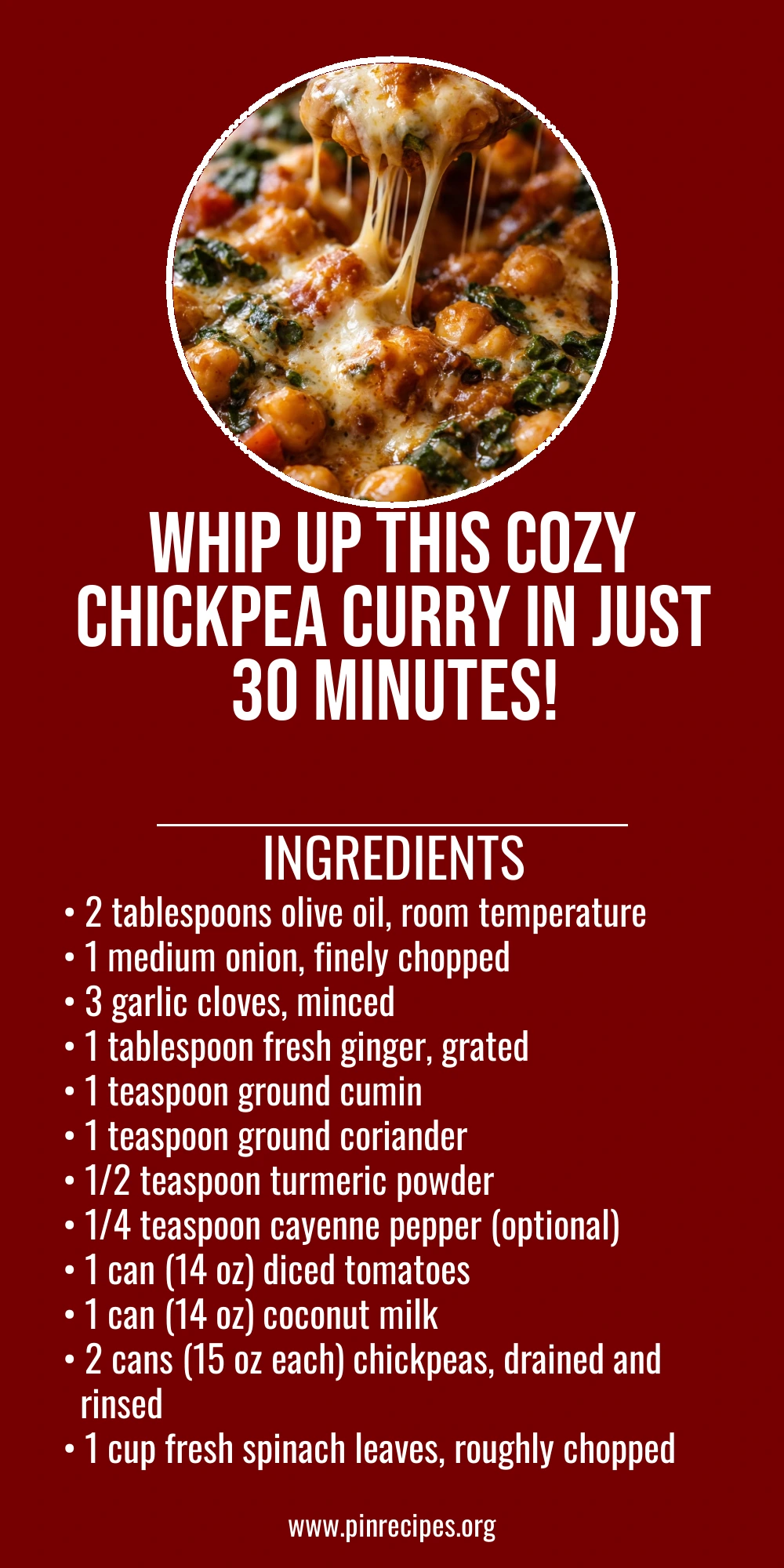
This chickpea curry is a quick, comforting dinner that’s packed with fresh spring flavors and warming spices. I love how the chickpeas soak up the fragrant tomato and coconut sauce. Perfect for a weeknight meal when you want something wholesome and easy!
Introduction
I first stumbled upon this chickpea curry recipe during a hectic spring week when I needed something fast, flavorful, and satisfying. What I love about this version is that it doesn’t rely on complicated ingredients or long cooking times, yet it delivers a rich, comforting dish that feels like a warm hug. Unlike some curries that can feel heavy, this one uses fresh spinach and a bright lemon finish to keep it light and fresh. The trick I learned early on was to toast the spices gently in olive oil before adding the other ingredients — it really unlocks their aroma and depth. Plus, using canned chickpeas makes it incredibly convenient without sacrificing taste. When it’s done, you get a creamy, mildly spiced curry that’s perfect for a quick dinner, especially on busy weeknights. The colors are vibrant, and the flavors are just right — not too spicy but with enough warmth to make you want seconds. I usually serve it with basmati rice or warm naan, and it’s always a crowd-pleaser. Honestly, I’ve tried a few chickpea curries before, but this one wins for simplicity and flavor every time. I hope you’ll enjoy making it as much as I do!
How To Do It
Step 1
Heat the olive oil in a large pan over medium heat. Add the chopped onion and cook, stirring occasionally, until it becomes soft and translucent, about 5-7 minutes. This slow cooking draws out the onion’s sweetness, which forms the base of the curry’s flavor. Avoid rushing this step or turning the heat too high, as burnt onions will add bitterness. Keep the heat moderate and stir often to get that perfect golden softness.
⏱ Time: 7
✓ Doneness: Onions are soft, translucent, and slightly golden but not browned
Step 2
Add the minced garlic and grated ginger to the pan, stirring for about 1 minute until fragrant. Then sprinkle in the cumin, coriander, turmeric, and cayenne pepper if using. Toast the spices gently with the aromatics to release their essential oils and deepen the flavor. Be careful not to burn the spices; if they darken too quickly, lower the heat. This step is crucial because it builds the curry’s warm, complex flavor profile.
⏱ Time: 3
✓ Doneness: Spices smell aromatic and the mixture looks glossy without any burnt bits
Step 3
Pour in the canned diced tomatoes with their juices. Stir well and let the mixture simmer for 5 minutes. This allows the tomatoes to break down and meld with the spices, creating a rich sauce base. If you skip this simmering, the sauce might taste a bit raw or acidic. Watch for the sauce to thicken slightly and the raw tomato smell to fade.
⏱ Time: 5
✓ Doneness: Sauce thickens slightly and has a deep, cooked tomato aroma
Step 4
Pour in the coconut milk and stir to combine. Bring the mixture back to a gentle simmer. The coconut milk adds creaminess and balances the spices with a subtle sweetness. Avoid boiling vigorously here to prevent the coconut milk from separating. Gentle simmering keeps the sauce smooth and luscious.
⏱ Time: 5
✓ Doneness: Sauce is creamy, smooth, and gently bubbling
Step 5
Add the drained chickpeas to the pan, stirring to coat them in the sauce. Let everything simmer together for about 10 minutes, stirring occasionally. This step lets the chickpeas absorb the flavors and heat through evenly. If you rush it or don’t stir, the sauce might stick or the chickpeas won’t be as flavorful. You want the sauce to thicken slightly and cling to the chickpeas.
⏱ Time: 10
✓ Doneness: Chickpeas are heated through and sauce thickened to a creamy consistency
Step 6
Add the chopped fresh spinach and stir it into the curry. Cook for another 2-3 minutes until the spinach wilts completely. This adds freshness, color, and a tender texture contrast. Don’t overcook the spinach or it will lose its bright green color and freshness.
⏱ Time: 3
✓ Doneness: Spinach is wilted but still vibrant green
Step 7
Season the curry with salt to taste. Then squeeze in the juice of half a lemon and stir well. The lemon juice brightens the dish and balances the richness of the coconut milk. Tasting and adjusting seasoning at this stage ensures the flavors are balanced and fresh.
⏱ Time: 2
✓ Doneness: Balanced flavor with a fresh, tangy finish
Step 8
Remove the pan from heat and let the curry rest for a few minutes before serving. This short rest time allows the flavors to meld and the sauce to thicken slightly. Serving immediately might mean a thinner sauce and less integrated flavor.
⏱ Time: 3
✓ Doneness: Sauce slightly thickened and flavors well combined
Step 9
Garnish with chopped fresh cilantro just before serving. The fresh herb adds a lovely aromatic note and a pop of color that makes the dish inviting. Serve with basmati rice or warm naan for a complete meal. Enjoy your comforting, vibrant chickpea curry!
⏱ Time: 1
✓ Doneness: Bright green cilantro scattered on top, ready to serve
Pro Tips
Always toast your spices in oil before adding liquids.
Toasting spices in oil releases their essential oils, which are fat-soluble, enhancing their aroma and flavor complexity. Skipping this step means the spices stay muted and one-dimensional.
Use canned chickpeas for convenience but rinse them well.
Rinsing canned chickpeas removes excess sodium and the canning liquid’s slightly metallic taste, resulting in cleaner flavor and better texture in the curry.
Simmer the tomato base before adding coconut milk.
Simmering tomatoes softens their acidity and allows flavors to meld. Adding coconut milk later prevents it from curdling and keeps the sauce creamy.
Add fresh spinach at the very end.
Spinach wilts quickly and adding it last preserves its vibrant color, fresh flavor, and nutrients, avoiding a dull, overcooked texture.
Squeeze lemon juice just before serving.
Lemon juice adds brightness and balances richness but loses its fresh zing if cooked. Adding it last keeps the flavor lively.
Don’t rush the onion cooking step.
Slowly cooking onions releases natural sugars that balance the curry’s acidity and spice. High heat can burn them, causing bitterness.
Use a heavy-bottomed pan for even heat.
A thick pan prevents hot spots that can burn spices or onions, ensuring even cooking and flavor development.
Common Mistakes to Avoid
Skipping toasting the spices
Why it happens Many cooks rush or overlook this step, thinking it’s unnecessary or time-consuming.
Fix Take the extra few minutes to toast the spices in oil over medium heat until fragrant. This unlocks their full flavor potential and avoids a flat-tasting curry.
Boiling coconut milk vigorously
Why it happens High heat can cause coconut milk to separate or curdle, ruining the sauce texture.
Fix Simmer gently after adding coconut milk, keeping the heat low to preserve creaminess and avoid separation.
Overcooking spinach
Why it happens Adding spinach too early or cooking too long makes it mushy and dull in color.
Fix Add spinach in the last few minutes of cooking just to wilt it, maintaining its bright green color and fresh texture.
Not rinsing canned chickpeas
Why it happens Some skip rinsing to save time, but the canning liquid can taste metallic or salty.
Fix Rinse chickpeas thoroughly under cold water to remove canning liquid and improve flavor.
Using low-quality spices
Why it happens Spices lose potency over time or if stored improperly, leading to bland dishes.
Fix Buy fresh, high-quality ground spices and store them airtight in a cool, dark place to keep their flavor strong.
Variations
Add Sweet Potatoes for Extra Comfort
Dice sweet potatoes and add them along with the tomatoes to simmer until tender. This adds sweetness and heartiness, making the curry even more filling and cozy.
Note: Simmer sweet potatoes for about 15 minutes until soft before adding chickpeas to avoid overcooking.
Make It Spicy with Fresh Chili
Add a finely chopped fresh green chili or a pinch of red chili flakes with the garlic and ginger for a spicier kick. Adjust to taste for heat lovers.
Note: Be cautious when adding fresh chili; start small and increase gradually to avoid overpowering the curry.
Use Kale Instead of Spinach
Swap spinach for chopped kale for a more robust texture and earthy flavor. Kale holds up better if you want leftovers and adds extra nutrients.
Note: Kale needs a longer cooking time; add it earlier and simmer until tender but still slightly firm.
Serve Over Quinoa for a Protein Boost
Instead of rice, serve the curry over cooked quinoa to add more protein and a nutty flavor. Great for a gluten-free, high-protein meal.
Note: Cook quinoa separately according to package instructions; fluff before serving.
Add Coconut Cream for Extra Richness
Stir in a few tablespoons of coconut cream at the end for a richer, silkier sauce. This is perfect if you want a more indulgent curry.
Note: Add coconut cream off heat to avoid curdling and maintain a smooth texture.
Nutrition
Per Serving:
Nutritional values are estimates and may vary based on specific ingredients used.
Storage & Tips
Room Temperature
This chickpea curry can safely sit covered at room temperature for up to 2 hours. Beyond that, it’s best to refrigerate to avoid bacterial growth. Cover with a lid or plastic wrap to prevent drying out or contamination.
Refrigerator
Store in an airtight container in the fridge for up to 4 days. The flavors deepen over time, but the spinach may darken. Reheat gently on the stove or microwave until steaming hot.
Freezer
Freeze in a sealed container for up to 3 months. To prevent freezer burn, cool completely before freezing and use airtight packaging. Thaw overnight in the fridge before reheating.
Reheating
Reheat on the stovetop over medium-low heat, stirring occasionally. Add a splash of water or coconut milk if the sauce is too thick. Avoid boiling vigorously to keep the sauce creamy.
Make Ahead
You can prepare the curry base (onions, spices, tomatoes) 1-2 days ahead and refrigerate. Add chickpeas, spinach, and lemon juice fresh on the day of serving for the best texture and flavor.
FAQ
Can I use dried chickpeas instead of canned?
Yes, but you’ll need to soak dried chickpeas overnight and cook them until tender before adding them to the curry. This adds extra time but can improve flavor and texture. Using canned chickpeas is quicker and convenient for busy nights.
How can I make this curry spicier?
Add fresh chopped chili peppers or increase the cayenne pepper amount. You can also add a pinch of chili flakes. Start with small amounts and adjust to your heat preference to avoid overpowering the dish.
Is this recipe vegan and gluten-free?
Yes, this chickpea curry is naturally vegan and gluten-free as it uses plant-based ingredients and no wheat-containing elements. Just be sure to serve with gluten-free sides if needed.
What can I serve this curry with?
It’s delicious served with basmati rice, quinoa, or warm naan bread. For a low-carb option, try cauliflower rice. The curry pairs well with any mild grain or flatbread.
Can I make this recipe in a slow cooker?
You can adapt it by sautéing onions, garlic, and spices first, then transferring everything to a slow cooker. Cook on low for 4-6 hours or high for 2-3 hours. Add spinach near the end to avoid overcooking.
How do I store leftovers safely?
Store leftovers in an airtight container in the fridge within two hours of cooking. Consume within 4 days. For longer storage, freeze in airtight containers for up to 3 months.
Why is my curry watery?
If the sauce is watery, it might be due to not simmering long enough to reduce the liquid or adding too much coconut milk. Simmer uncovered to thicken the sauce and adjust coconut milk quantity next time.
Can I add other vegetables to this curry?
Absolutely! Vegetables like bell peppers, carrots, or peas can be added. Add harder veggies earlier to cook through and softer ones later to avoid mushiness.
Final Thoughts
I hope you give this fast and simple spring chickpea curry a try — it’s one of my favorite easy dinners that never disappoints. Let me know how it turns out for you!