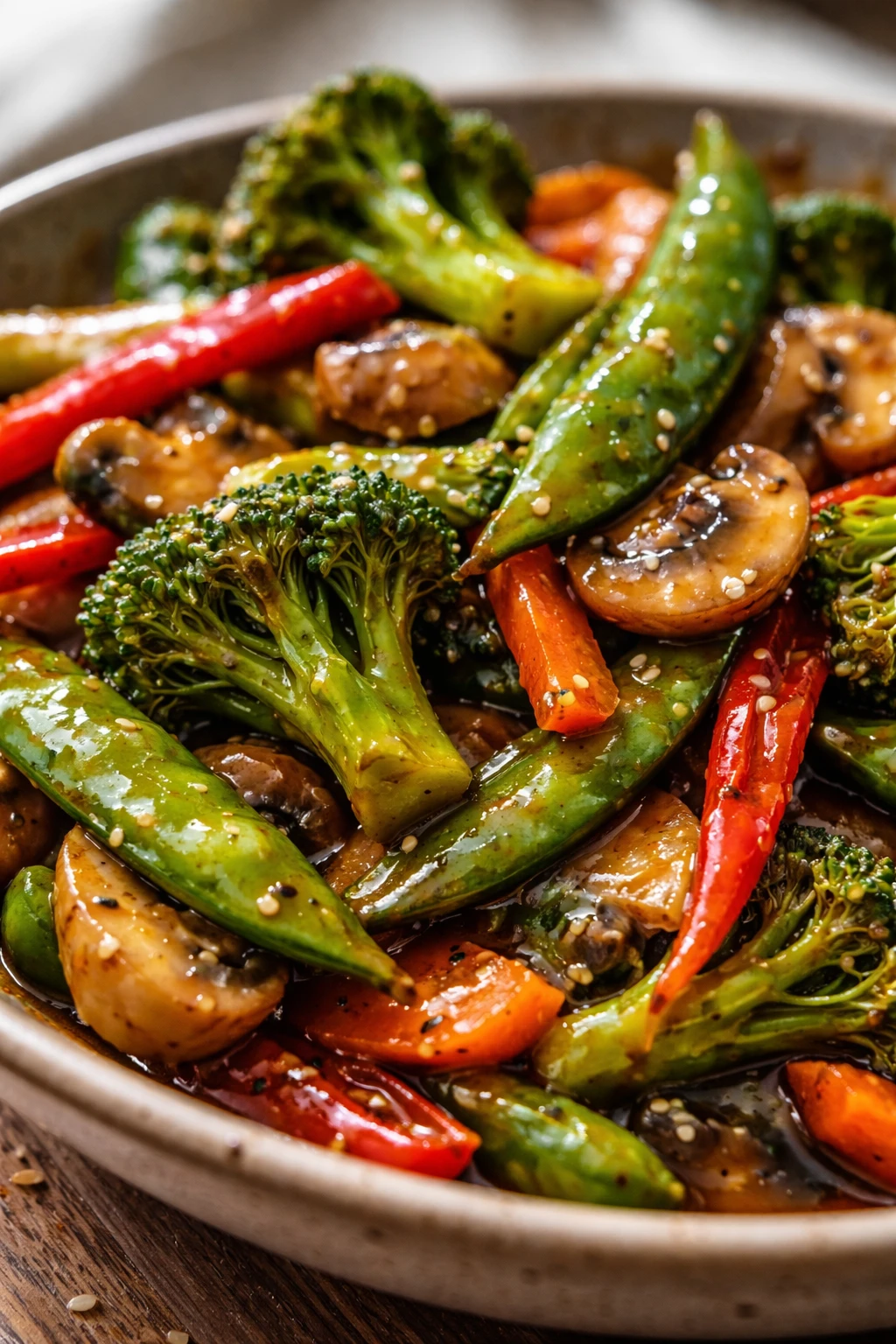
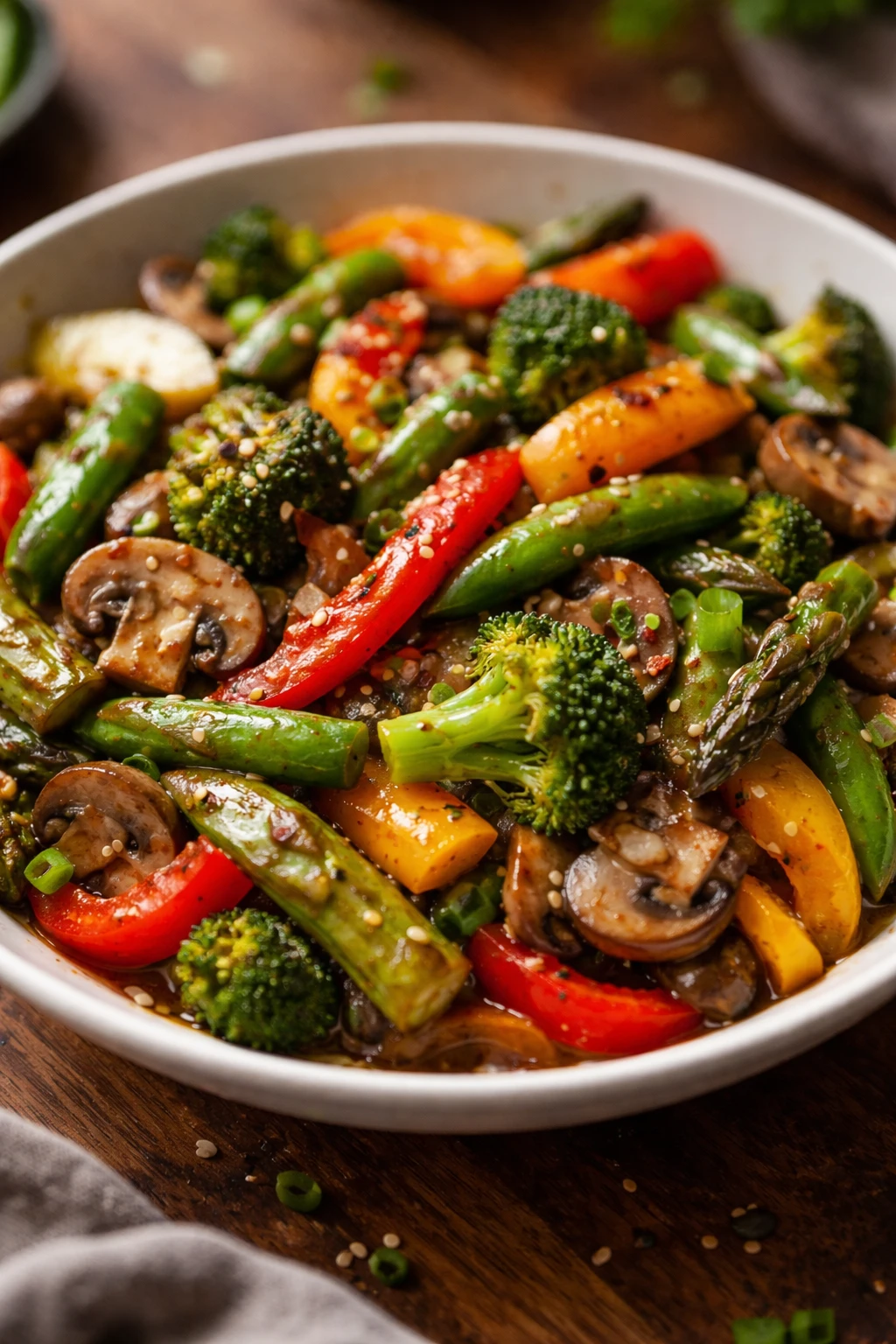
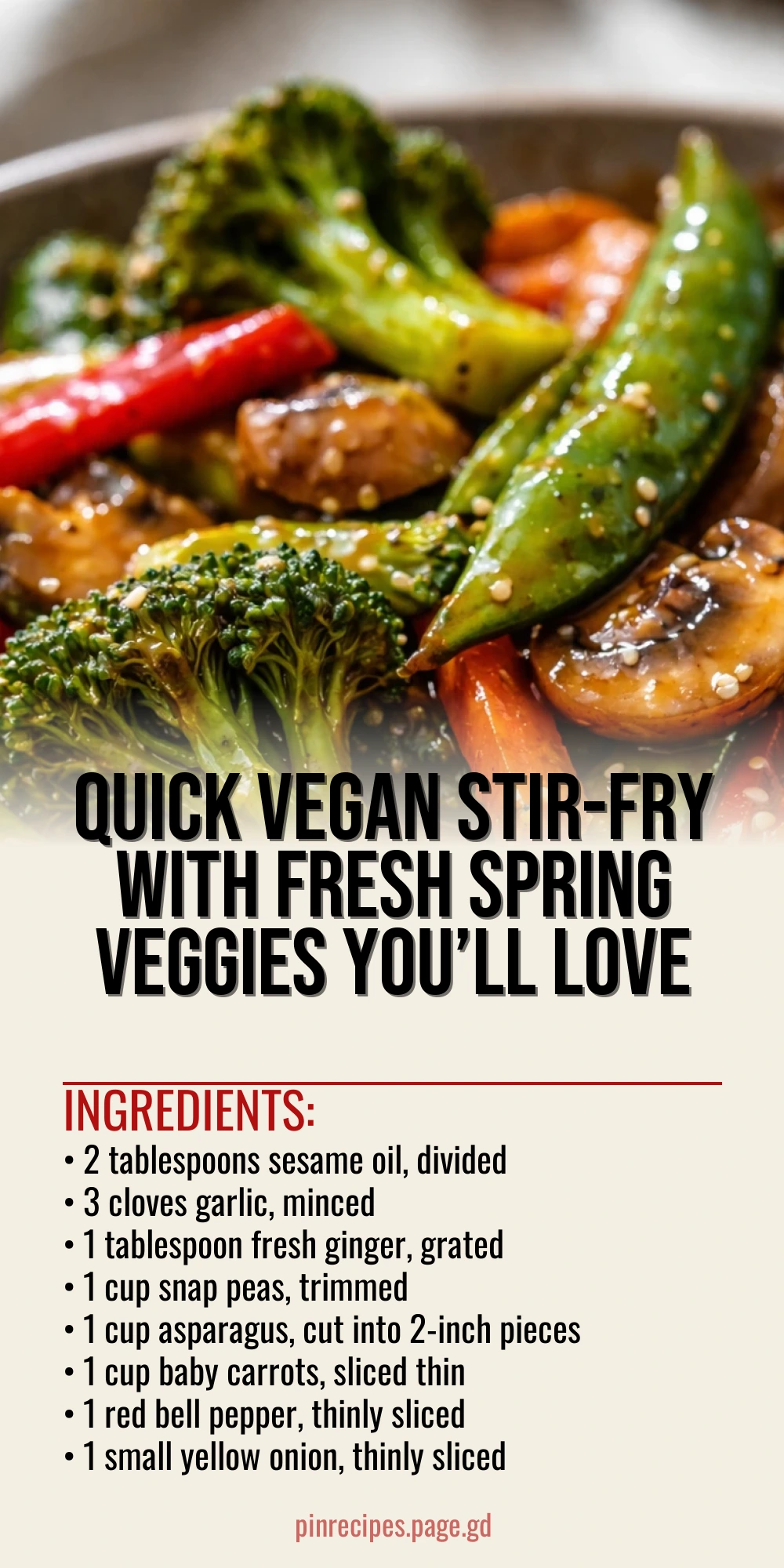
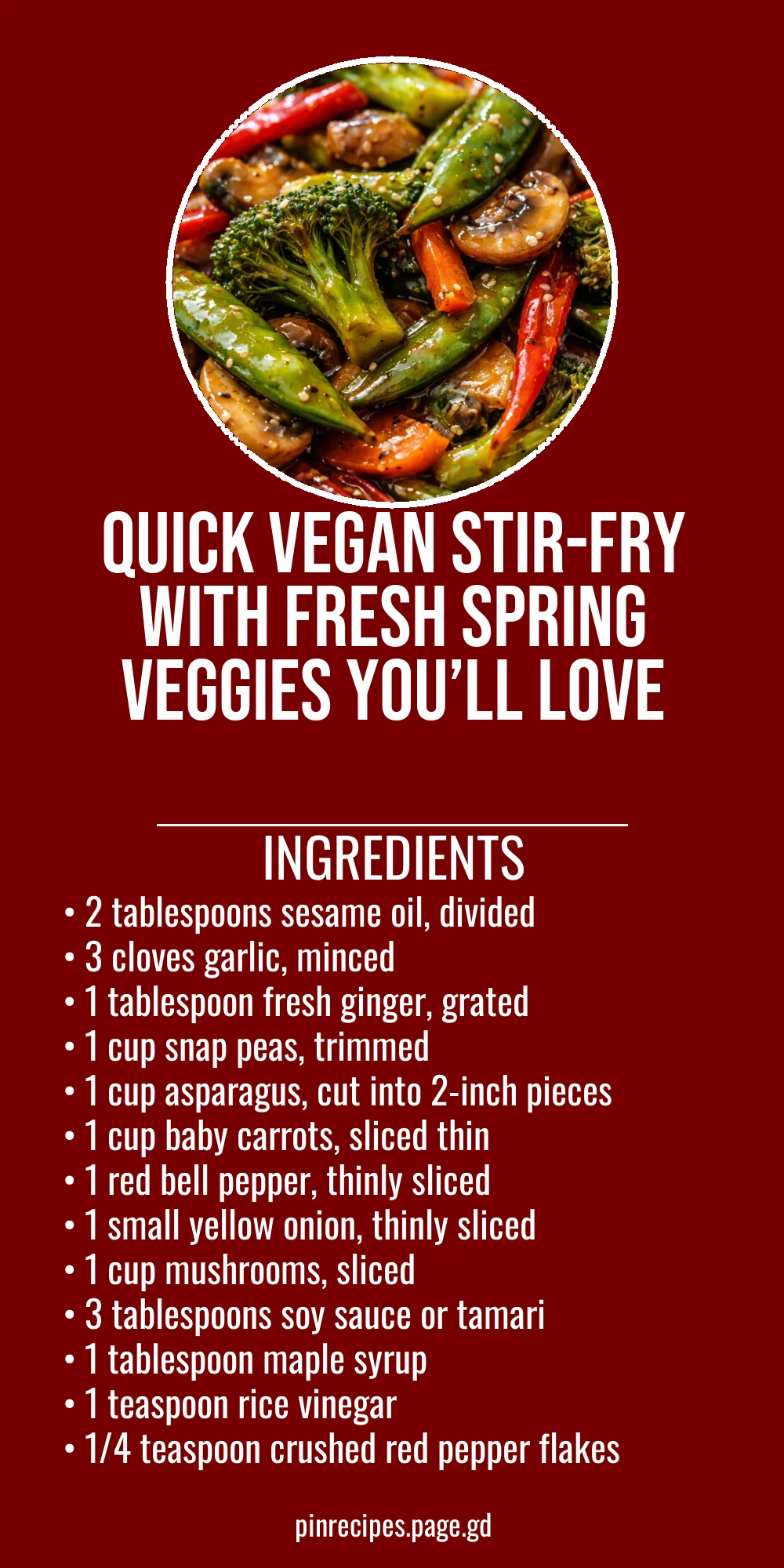
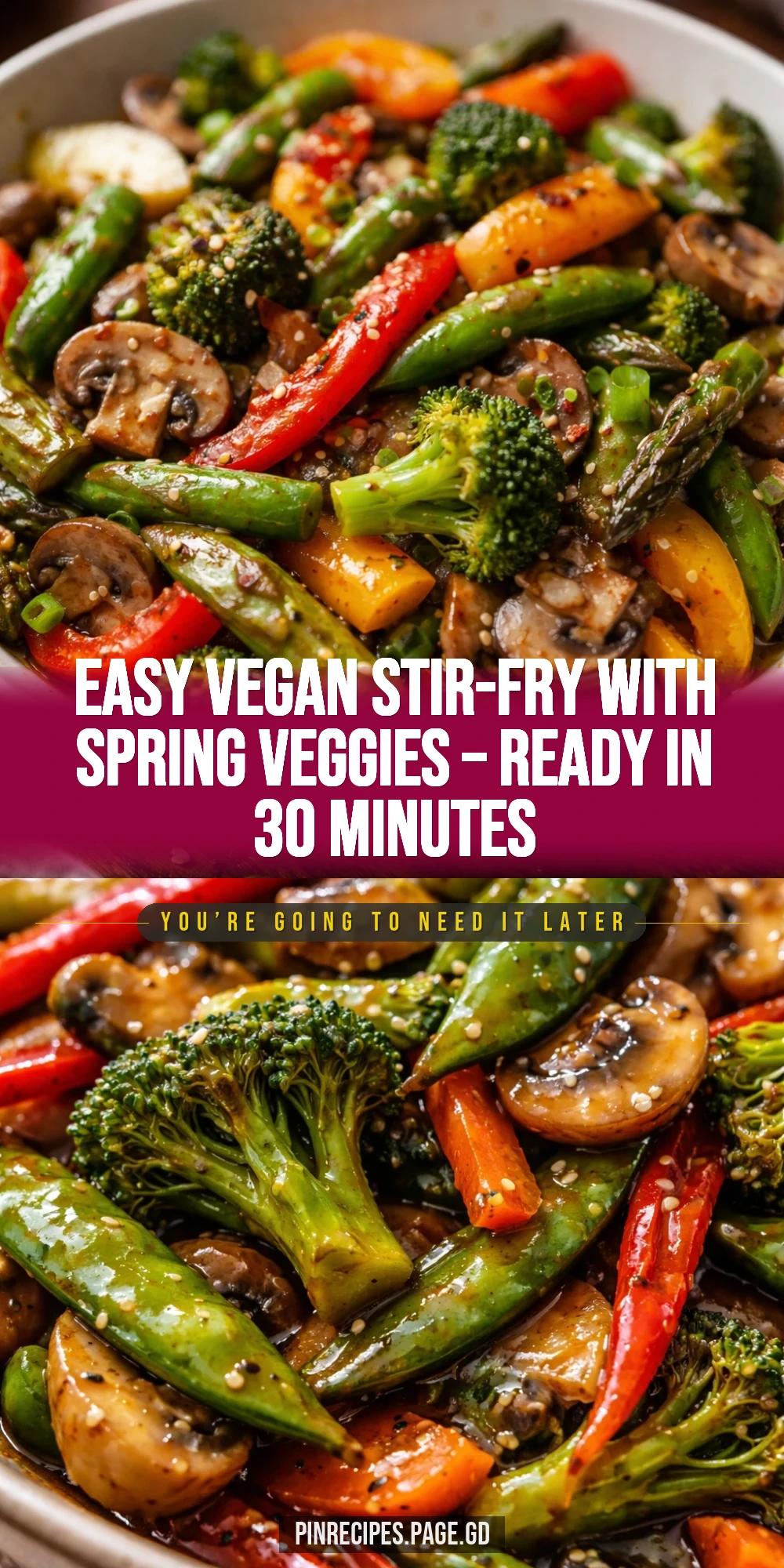
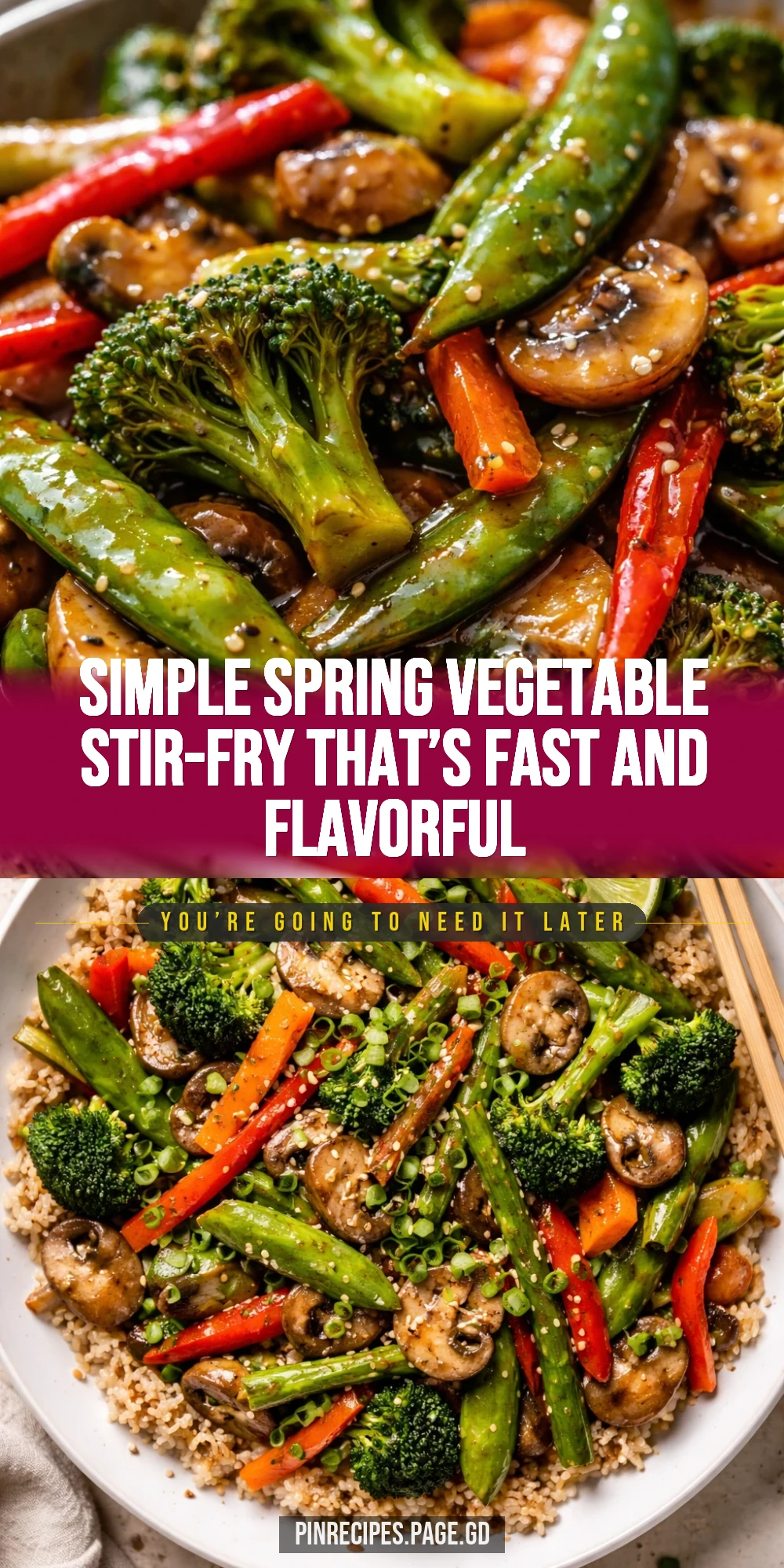
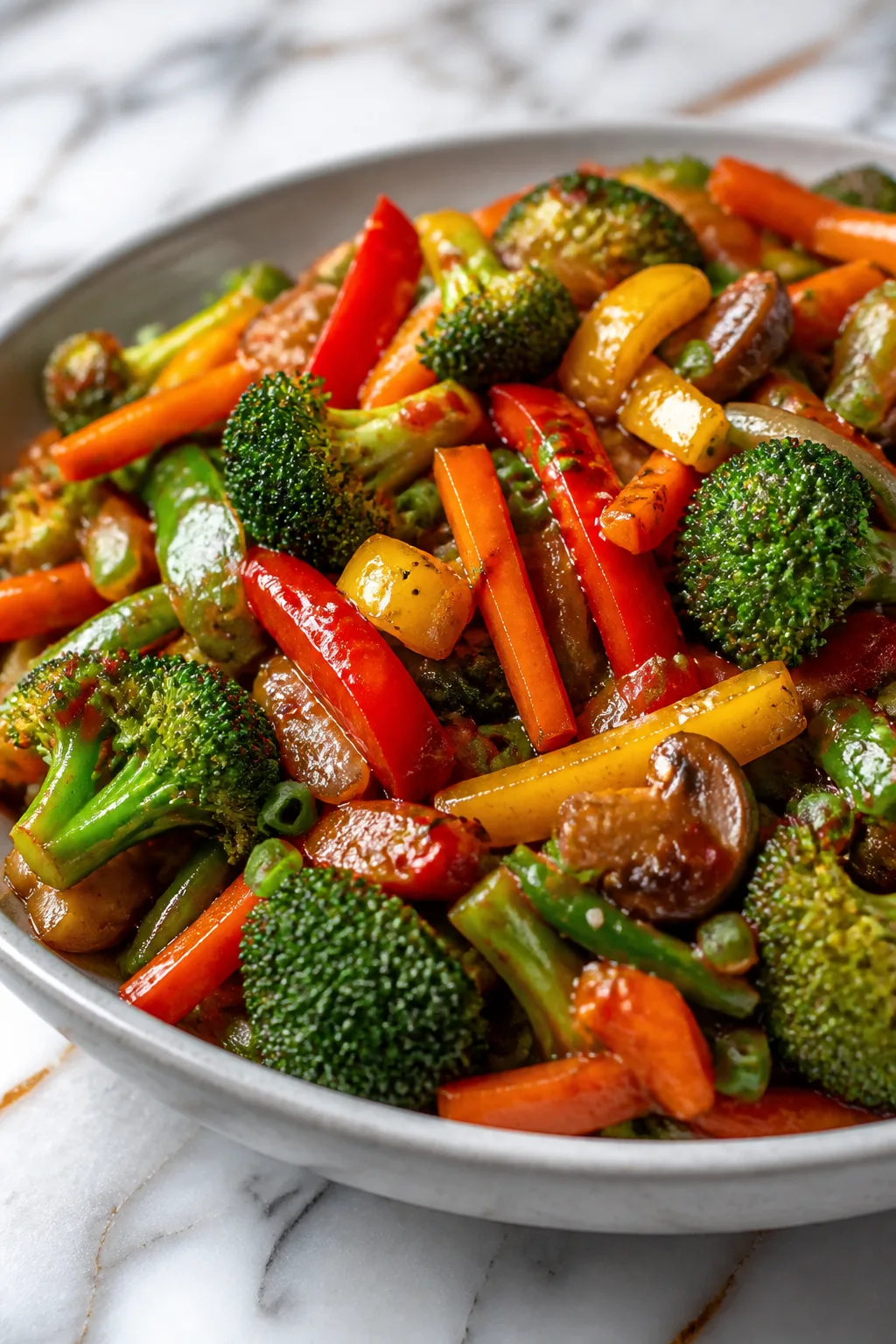
This vibrant vegan stir-fry bursts with fresh spring veggies and a zingy sauce. It’s quick to whip up and perfect when you want something healthy but satisfying on a busy evening. I love how the snap peas add crunch!
Introduction
I first made this vegan spring vegetable stir-fry when I was craving something fresh and light but didn’t want to spend ages in the kitchen. It quickly became a favorite because it’s so easy and uses whatever crisp veggies are in season. What sets this stir-fry apart for me is the balance of flavors — the ginger and garlic give it a fresh punch, while the maple syrup adds a subtle sweetness that rounds everything out. Plus, I love that the veggies stay bright and slightly crunchy because I cook them just right. The sesame oil adds a toasty note that makes the whole dish feel special without extra fuss. I’ve tried a bunch of stir-fry recipes before, but this one always hits the spot, especially on busy weeknights when I want something healthy, colorful, and satisfying. It’s perfect served over jasmine rice or brown rice if you want a bit more fiber. Honestly, it’s a recipe I keep coming back to because it’s quick, nourishing, and just plain delicious.
How To Do It
Step 1
Heat 1 tablespoon of sesame oil in a large skillet or wok over medium-high heat. Once hot, add the minced garlic and grated ginger. Sauté for about 30 seconds until fragrant but not browned — this step releases their essential oils and flavors the oil, which will coat the vegetables nicely. Be careful not to burn the garlic as it can turn bitter and ruin the dish’s delicate balance.
⏱ Time: 2 minutes
✓ Doneness: Aromatic garlic and ginger with no browning
Step 2
Add the sliced onions and baby carrots to the pan. Stir-fry for about 3-4 minutes until the onions start to become translucent and the carrots begin to soften. This gentle cooking helps build a sweet base flavor and ensures the carrots aren’t too crunchy but still have a bite. Keep stirring frequently so nothing sticks or burns.
⏱ Time: 4 minutes
✓ Doneness: Onions translucent, carrots slightly tender
Step 3
Add the asparagus and snap peas next. Continue stir-frying for another 3-4 minutes. These veggies cook quickly and you want them to stay crisp and vibrant green. Overcooking will make them mushy and dull the colors. Keep the heat high and stir often to cook evenly.
⏱ Time: 4 minutes
✓ Doneness: Veggies bright green and crisp-tender
Step 4
Add the sliced red bell pepper and mushrooms. Stir-fry for 3 minutes until the mushrooms release their moisture and soften slightly. The bell pepper should still have a nice crunch. This step adds color and umami depth to the stir-fry. Avoid overcrowding the pan to ensure proper cooking.
⏱ Time: 3 minutes
✓ Doneness: Mushrooms softened, bell pepper crisp
Step 5
In a small bowl, whisk together the soy sauce, maple syrup, rice vinegar, and crushed red pepper flakes if using. This sauce balances salty, sweet, and tangy notes that elevate the veggies perfectly. Pour the sauce over the stir-fry and toss well to coat everything evenly.
⏱ Time: 2 minutes
✓ Doneness: Sauce evenly coats vegetables, sizzling gently
Step 6
Add the remaining tablespoon of sesame oil to the pan and toss everything together for another 1-2 minutes. This final step enhances the nutty flavor and gives the stir-fry a beautiful glossy finish. Taste and adjust seasoning if needed — sometimes a splash more soy sauce or a pinch of salt helps.
⏱ Time: 2 minutes
✓ Doneness: Glossy, fragrant stir-fry with well-coated veggies
Step 7
Remove from heat and sprinkle sliced green onions over the top for a fresh, mild onion crunch. This adds a nice color contrast and fresh bite that complements the cooked veggies beautifully.
⏱ Time: 1 minute
✓ Doneness: Bright green garnish on top
Step 8
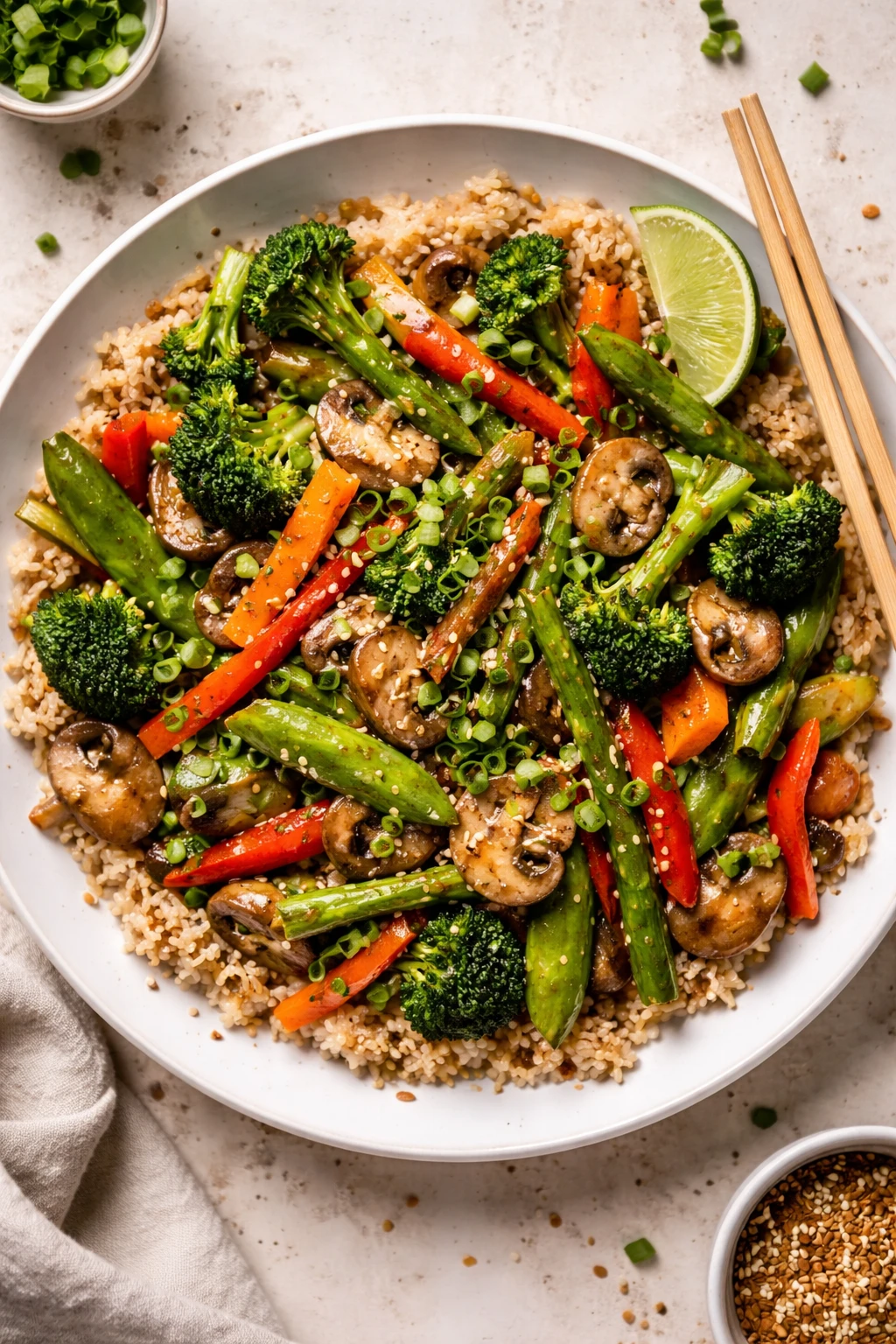
Serve the stir-fry immediately over warm jasmine or brown rice. The rice soaks up the flavorful sauce and makes the dish more filling. This meal is best enjoyed fresh to preserve the crisp textures and vibrant flavors.
⏱ Time: Serve immediately
✓ Doneness: Steaming rice with colorful stir-fry on top
Step 9
If you want to add protein, toss in some cooked tofu cubes or edamame in the last few minutes of cooking. This keeps the protein warm without overcooking it. It’s a great way to make this dish more hearty while keeping it vegan.
⏱ Time: 2-3 minutes
✓ Doneness: Protein warmed through but still firm
Pro Tips
Prep all your vegetables before you start cooking.
Stir-frying happens quickly over high heat, so having everything chopped and ready prevents overcooking. If you pause to chop during cooking, veggies can burn or get mushy. Mise en place ensures smooth, efficient cooking and consistent texture.
Don’t overcrowd the pan when stir-frying.
Crowding traps steam and causes vegetables to steam rather than fry, resulting in soggy textures. Cooking in batches or using a large wok allows for proper searing and crispness, which is the hallmark of a great stir-fry.
Use high heat but watch carefully to avoid burning garlic.
High heat cooks veggies quickly and preserves texture, but garlic burns fast and turns bitter. Adding garlic first and stirring constantly for just 30 seconds releases flavor without burning, maintaining a balanced taste.
Add sauce ingredients separately and toss well.
Mixing sauce ingredients before adding ensures even distribution of flavors. Tossing vegetables with sauce at the end allows them to absorb the flavors without becoming soggy or losing crunch.
Use fresh ginger instead of powdered.
Fresh ginger provides a bright, zesty heat and aroma that powdered ginger can’t replicate. It enhances the overall flavor complexity and freshness of the dish.
Serve immediately after cooking.
Stir-fried vegetables continue to cook from residual heat and will lose their crispness if left sitting. Serving right away preserves the vibrant textures and colors, making the dish more enjoyable.
Garnish with fresh green onions or herbs.
Fresh garnishes add a pop of color and a mild onion flavor that complements the cooked vegetables, balancing the dish and adding freshness.
Common Mistakes to Avoid
Overcooking the vegetables
Why it happens People often leave vegetables in the pan too long, thinking they need to be very soft. This results in soggy, dull-tasting veggies.
Fix Cook vegetables in stages based on their firmness and remove from heat as soon as they are crisp-tender. Use high heat and stir constantly to avoid steaming.
Burning the garlic or ginger
Why it happens Garlic and ginger cook very fast and can burn if left unattended on high heat, causing bitterness.
Fix Add garlic and ginger to hot oil and stir quickly for only 20-30 seconds until fragrant. Immediately add vegetables to cool down the pan.
Using too much oil
Why it happens Adding excess oil can make the dish greasy and heavy rather than light and fresh.
Fix Use just enough oil to coat the pan and vegetables lightly. Sesame oil is flavorful, so a little goes a long way.
Skipping the sauce or using too little
Why it happens Some skip the sauce or use too little, resulting in a bland stir-fry.
Fix Prepare a balanced sauce with salty, sweet, and tangy elements and pour evenly over the vegetables. Toss well to coat every piece.
Overcrowding the pan
Why it happens Trying to cook everything at once traps steam and prevents proper frying.
Fix Cook in batches or use a large wok/skillet to allow vegetables to sear and stay crisp.
Variations
Add Tofu for Protein
Cube firm tofu and pan-fry until golden before adding vegetables. This adds a protein boost and a crispy texture that contrasts nicely with the tender veggies. Press tofu beforehand to remove excess moisture for best results.
Note: Cook tofu separately to maintain crispness, then toss with vegetables and sauce at the end.
Spicy Kick Stir-Fry
Add sliced fresh chili or increase crushed red pepper flakes in the sauce for a spicy version. You can also drizzle with chili oil after cooking for extra heat. This variation adds warmth and complexity to the dish.
Note: Adjust spice level gradually to suit your taste and avoid overpowering the fresh vegetable flavors.
Noodle Stir-Fry
Swap rice for cooked rice noodles or soba noodles to turn this into a noodle stir-fry. Toss noodles with the sauce and vegetables for a comforting, filling meal with a different texture.
Note: Cook noodles separately and add at the end to prevent sogginess.
Add Fresh Herbs
Finish the stir-fry with fresh cilantro, basil, or mint for an herbal lift. This adds brightness and a fresh aroma that pairs beautifully with the ginger and garlic base.
Note: Add herbs just before serving to preserve their flavor and color.
Use Seasonal Veggie Mix
Feel free to swap or add other spring vegetables like baby bok choy, zucchini, or broccoli florets depending on what’s fresh and available. This keeps the recipe versatile and interesting.
Note: Adjust cooking times slightly to account for different vegetable textures.
Nutrition
Per Serving:
Nutritional values are estimates and may vary based on specific ingredients used.
Storage & Tips
Room Temperature
This stir-fry can safely sit at room temperature for up to 2 hours if covered. Beyond that, it’s best refrigerated to maintain freshness and safety.
Refrigerator
Store leftover stir-fry in an airtight container for up to 3 days. The vegetables will soften slightly but remain tasty. Reheat gently to avoid overcooking and losing texture.
Freezer
You can freeze the stir-fry for up to 1 month. Use airtight containers or heavy-duty freezer bags to prevent freezer burn. Thaw overnight in the refrigerator before reheating.
Reheating
Reheat on the stovetop over medium heat with a splash of water or vegetable broth to loosen the sauce. Avoid microwaving too long as it can make veggies mushy.
Make Ahead
Chop all vegetables and prepare the sauce 1 day ahead. Store separately in the fridge. When ready, stir-fry quickly for a fresh, fast meal.
FAQ
Can I use frozen vegetables for this stir-fry?
Frozen vegetables can be used in a pinch, but they tend to release more water and become soggy. If you do use them, cook over higher heat and drain excess moisture to keep the stir-fry from getting watery.
What can I substitute for soy sauce if I’m allergic?
Coconut aminos is a great soy-free alternative with a similar salty and slightly sweet flavor. Use it in equal amounts to soy sauce for best results.
How do I make this stir-fry gluten-free?
Use tamari or a gluten-free soy sauce instead of regular soy sauce. Also, check that your other ingredients like rice vinegar are gluten-free to keep the dish safe.
Can I prepare this stir-fry in advance?
You can chop vegetables and mix the sauce ahead of time, but it’s best to cook the stir-fry fresh to preserve the crisp texture. If cooked in advance, reheat gently to avoid sogginess.
What rice works best with this stir-fry?
Jasmine rice is traditional and fragrant, but brown rice adds more fiber and a nuttier flavor. Both work well and can be chosen based on your preference.
How do I keep the vegetables crisp when reheating leftovers?
Reheat quickly over medium heat with a small splash of water or broth, stirring constantly. Avoid microwaving for long periods which can make veggies mushy.
Can I add nuts or seeds to this stir-fry?
Yes! Toasted sesame seeds or chopped cashews add a nice crunch and extra flavor. Add them at the end of cooking or sprinkle on top before serving.
What if I don’t have maple syrup? Can I use something else?
You can substitute with agave nectar, brown sugar, or even a little honey if you’re not strictly vegan. Adjust amounts to taste since sweetness levels vary.
Final Thoughts
I hope you enjoy making and eating this vibrant vegan spring vegetable stir-fry as much as I do. It’s a quick, fresh meal that never fails to satisfy—let me know how yours turns out!