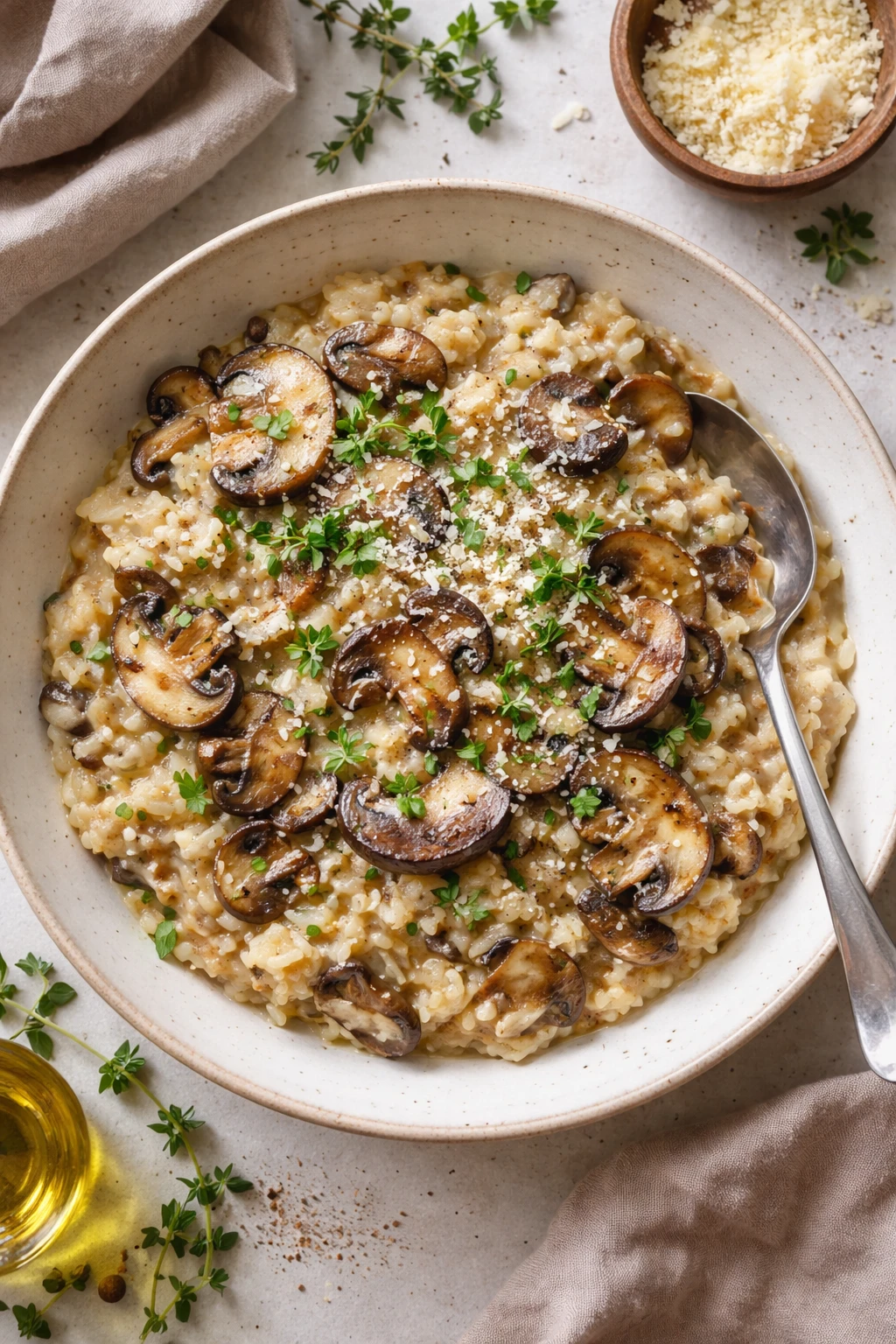
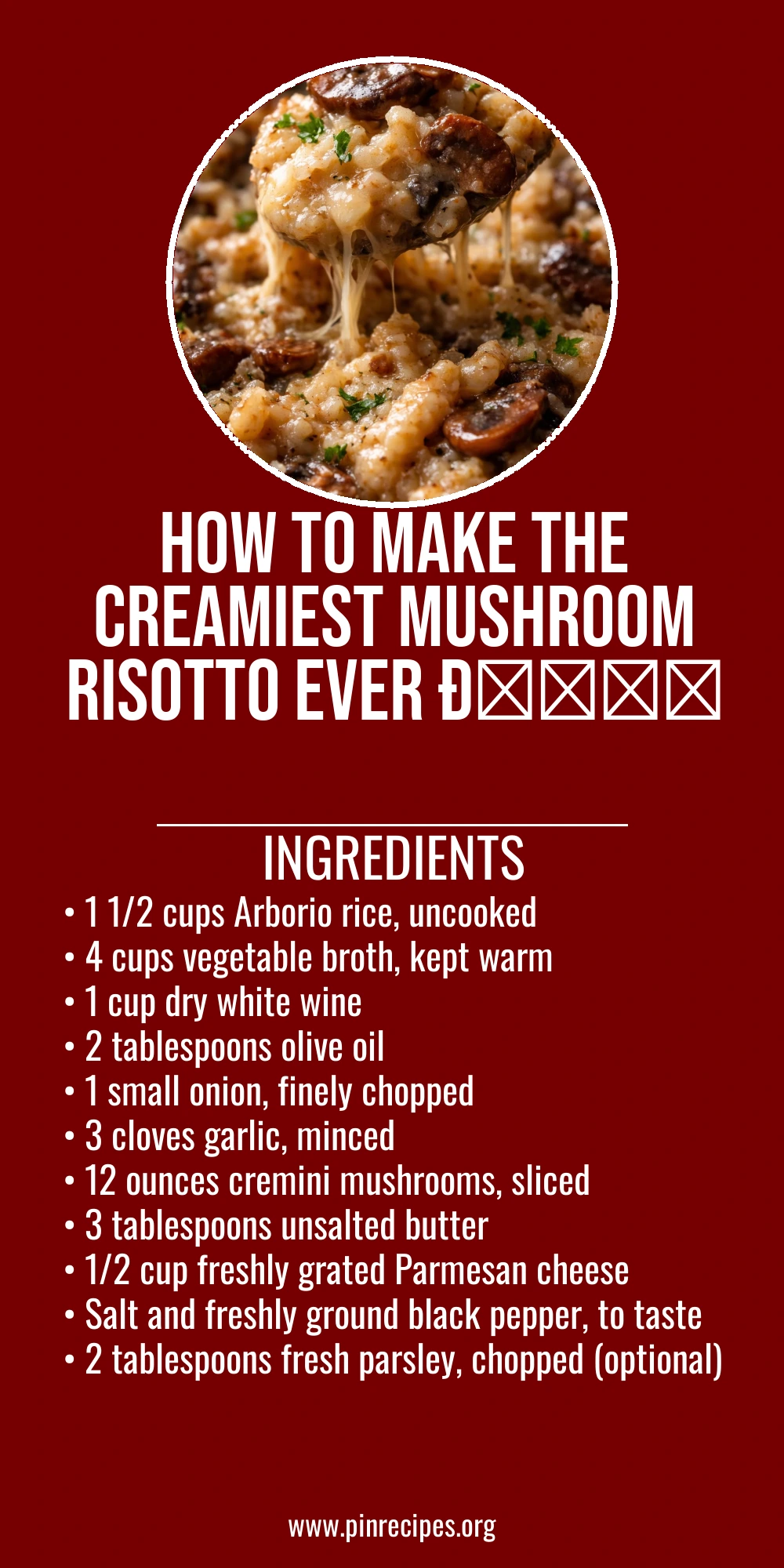
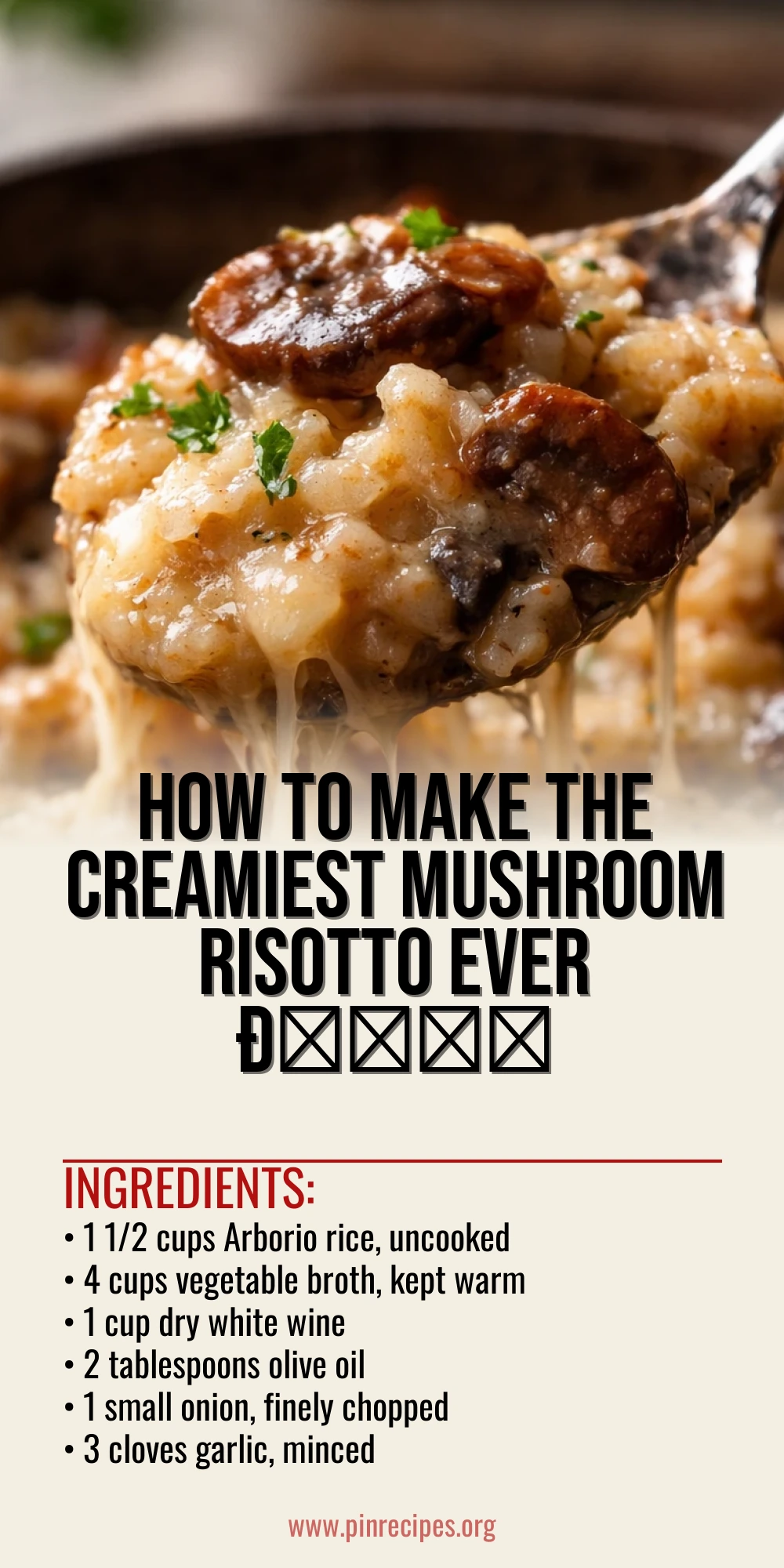
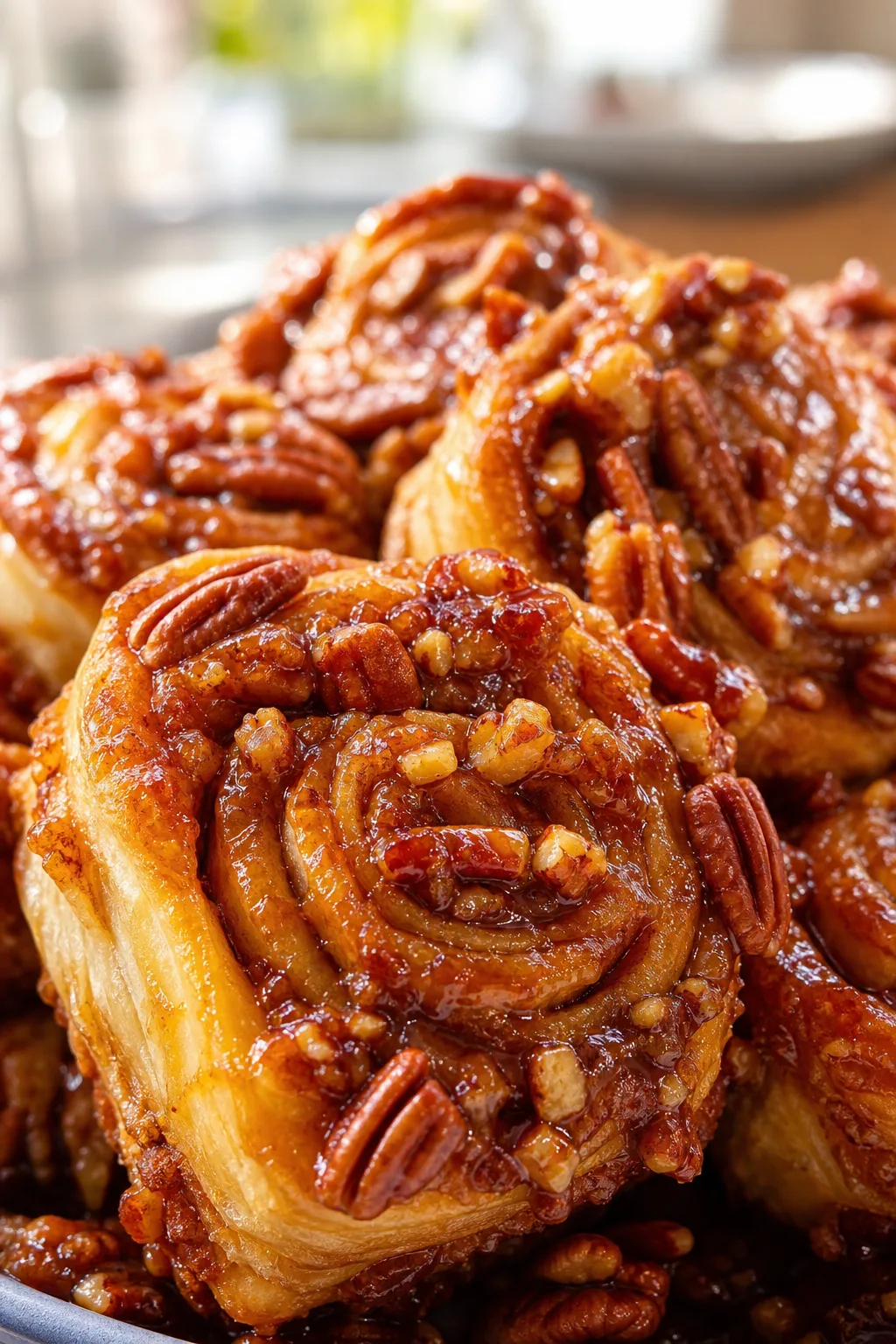
This mushroom risotto is creamy, comforting, and packed with earthy flavor. The secret? Slowly stirring in broth to get that perfect silky texture. Ideal for cozy dinners when you want something soothing and satisfying.
Introduction
I first tried making mushroom risotto years ago, and honestly, it was a bit of a disaster—too mushy and bland. But after some trial and error, I found a way to get that perfect creamy texture without it turning into a sticky mess. What makes this version special is the slow addition of warm broth and constant gentle stirring, which coax the starch out of the Arborio rice to create a silky finish. Plus, using cremini mushrooms adds a deep, earthy flavor that feels just right for a cozy spring night. I love how the Parmesan cheese melts in at the end, making every bite rich and satisfying. It’s one of those dishes that feels fancy but is surprisingly easy to pull off, and it’s always a hit with my family. You’ll notice the risotto is creamy but still has a slight bite to the rice, which I think is key. This recipe is perfect when you want to slow down a bit and enjoy a comforting, homemade meal.
How To Do It
Step 1
Heat the olive oil in a large skillet over medium heat. Add the chopped onion and cook gently for about 5 minutes until translucent but not browned. The key here is to soften the onion slowly so it releases its sweetness without caramelizing, which would add a different flavor profile. Stir occasionally and watch carefully to avoid burning. This step builds the flavor base for your risotto.
⏱ Time: 5 minutes
✓ Doneness: Onions should be soft, translucent, and fragrant without any browning.
Step 2
Add the minced garlic and sliced mushrooms to the skillet. Cook for another 7-8 minutes, stirring frequently until the mushrooms release their moisture and start to brown slightly. This step intensifies the mushroom flavor and adds a lovely umami depth. Avoid overcrowding the pan to ensure the mushrooms brown rather than steam.
⏱ Time: 7-8 minutes
✓ Doneness: Mushrooms should be tender, golden in spots, and most of their liquid evaporated.
Step 3
Stir in the Arborio rice, coating it well with the mushroom mixture and oil. Toast the rice for about 2 minutes until the edges become translucent. This toasting step helps the rice hold its shape and improves the final texture of the risotto. Keep stirring to avoid the rice sticking to the pan.
⏱ Time: 2 minutes
✓ Doneness: Rice grains look glossy and slightly translucent around the edges.
Step 4
Pour in the white wine and stir continuously until the liquid is mostly absorbed. The acidity from the wine balances the richness and adds complexity. Don’t rush this step; letting the wine reduce properly is important for flavor development.
⏱ Time: 3-4 minutes
✓ Doneness: Wine should be almost completely absorbed by the rice.
Step 5
Begin adding the warm vegetable broth one ladle at a time, stirring frequently. Wait until each addition is almost fully absorbed before adding the next. This slow process releases the rice’s starches, creating that signature creamy risotto texture. Stirring also prevents sticking and promotes even cooking.
⏱ Time: 20-25 minutes
✓ Doneness: Rice should be creamy and tender but still have a slight bite (al dente).
Step 6
Once the rice is cooked to your liking, remove the pan from heat. Stir in the butter and Parmesan cheese until melted and fully combined. This enriches the risotto and adds a luscious finish. Season with salt and pepper to taste. The butter and cheese also help bind everything together for a silky mouthfeel.
⏱ Time: 2-3 minutes
✓ Doneness: Risotto is glossy, creamy, and evenly coated with cheese and butter.
Step 7
Let the risotto rest for a minute or two before serving. This short rest allows the flavors to meld and the texture to settle. If desired, sprinkle with freshly chopped parsley for a fresh, herbal note and a pop of color.
⏱ Time: 2 minutes
✓ Doneness: Risotto holds its shape slightly on the spoon but remains creamy.
Step 8
Serve immediately while warm. Risotto is best enjoyed fresh because it can thicken as it cools. If you need to reheat, add a splash of broth or water to loosen it up gently on the stove or in the microwave.
⏱ Time: Serve immediately
✓ Doneness: Risotto should be creamy and warm with vibrant mushroom aroma.
Step 9
Pair this risotto with a simple green salad or roasted vegetables for a complete meal. The richness of the risotto balances nicely with fresh, crisp sides. Enjoy with a glass of the same white wine you cooked with for a lovely dinner experience.
⏱ Time: Optional serving suggestion
✓ Doneness: Balanced plate with creamy risotto and fresh accompaniments.
Pro Tips
Always keep your broth warm while making risotto.
Adding warm broth prevents the temperature from dropping abruptly, allowing the rice to cook evenly and release starch gradually. Cold broth would slow the cooking process and can result in uneven texture or longer cooking times.
Stir gently but consistently during cooking.
Frequent stirring helps release the rice’s starch, which is essential for the risotto’s creamy texture. However, stirring too vigorously can break the rice grains, making the dish mushy. Gentle, steady stirring strikes the right balance.
Toast the rice briefly before adding liquids.
Toasting the rice coats the grains with oil and slightly firms their outer layer. This step helps the rice maintain a pleasant bite and prevents it from becoming overly soft or mushy during cooking.
Use freshly grated Parmesan cheese.
Freshly grated Parmesan melts smoothly and helps emulsify the risotto, giving it a creamy finish. Pre-grated cheese often contains additives that hinder melting, resulting in a grainy texture.
Sauté mushrooms separately until golden.
Cooking mushrooms until their moisture evaporates intensifies their flavor and prevents the risotto from becoming watery. Adding raw mushrooms would release excess liquid into the dish.
Add broth ladle by ladle, allowing absorption.
Slowly adding broth ensures the rice absorbs liquid evenly and releases starch gradually, which is key for creamy risotto. Pouring all the liquid at once would make it soupy and unevenly cooked.
Finish risotto off the heat with butter and cheese.
Stirring in cold butter and cheese off the heat emulsifies the dish, enriching flavor and texture. Doing this on the heat can cause the cheese to separate or clump.
Common Mistakes to Avoid
Adding cold broth directly to the rice.
Why it happens Many cooks overlook the temperature of the broth or don't have a second burner to keep it warm.
Fix Always heat your broth in a separate pot and keep it warm throughout the cooking process. This prevents the rice temperature from dropping, ensuring even cooking and proper starch release.
Rushing the broth addition by pouring it all at once.
Why it happens Impatience or lack of understanding about risotto technique leads to skipping gradual liquid addition.
Fix Add broth gradually, one ladle at a time, stirring often. Wait until the liquid is mostly absorbed before adding more. This method is essential for creamy texture and proper rice doneness.
Overcooking the rice until mushy.
Why it happens Cooking too long or not paying attention to texture results in loss of al dente bite.
Fix Taste the rice frequently starting around 18 minutes. Stop cooking once the rice is tender but still slightly firm in the center for perfect texture.
Using pre-grated Parmesan cheese.
Why it happens Convenience or lack of fresh cheese leads to using pre-grated varieties.
Fix Always use freshly grated Parmesan for smooth melting and better flavor. It makes a big difference in the risotto’s creaminess and taste.
Not stirring enough during cooking.
Why it happens Some cooks think constant stirring is unnecessary or too much work.
Fix Stir gently but regularly to help the rice release starch and prevent sticking. This is key to achieving the creamy texture risotto is famous for.
Variations
Add Fresh Herbs
Mix in chopped fresh thyme or rosemary during the last few minutes of cooking for an herbal twist that complements the mushrooms beautifully. It adds a bright, aromatic note to the dish.
Note: Add herbs off the heat or in the final minute to preserve their fresh flavor without overpowering the risotto.
Use Mixed Mushrooms
Swap cremini mushrooms for a mix of shiitake, oyster, and porcini for a more complex, earthy flavor profile. Each mushroom type brings unique textures and aromas.
Note: Adjust cooking times slightly as some mushrooms cook faster; sauté separately to control texture.
Make It Vegan
Replace butter with olive oil and use nutritional yeast instead of Parmesan cheese for a dairy-free version that still has a nutty, cheesy flavor.
Note: Use vegan broth and double-check all ingredients to ensure the dish remains plant-based.
Add Peas for Color
Stir in fresh or frozen peas during the last 5 minutes of cooking for a pop of color and a sweet contrast to the earthy mushrooms.
Note: Add peas late to keep them bright and tender, avoiding overcooking.
Top with Crispy Pancetta
Sprinkle crispy pancetta bits over the finished risotto for a salty crunch that contrasts nicely with the creamy texture.
Note: Cook pancetta separately until crisp and add just before serving to maintain crunch.
Nutrition
Per Serving:
Nutritional values are estimates and may vary based on specific ingredients used.
Storage & Tips
Room Temperature
Risotto can safely sit at room temperature for up to 2 hours if covered loosely. Beyond that, bacteria growth can occur, so it's best to refrigerate promptly.
Refrigerator
Store leftover risotto in an airtight container for up to 3 days. The texture will thicken as it cools; reheat gently with a splash of broth to loosen it back up. It tastes best warmed rather than cold.
Freezer
Risotto can be frozen for up to 1 month. Portion it into airtight containers or freezer bags, removing as much air as possible. Thaw overnight in the fridge and reheat gently with broth to restore creaminess. Texture may be slightly softer after freezing.
Reheating
Reheat risotto on the stovetop over low heat, stirring frequently. Add a splash of warm broth or water to loosen the texture. Avoid high heat to prevent drying out or burning. Microwave reheating is possible but stir halfway through to ensure even warming.
Make Ahead
You can prepare the mushroom mixture and broth a day ahead. Cook the risotto up to the point before adding butter and cheese, cool, and refrigerate. Finish with butter and cheese just before serving for best texture and flavor.
FAQ
Can I use a different type of rice for risotto?
Arborio rice is ideal because of its high starch content, which creates the creamy texture. Using long-grain rice will result in a less creamy, more separate grain texture. If Arborio isn’t available, Carnaroli or Vialone Nano are good substitutes.
What if I don’t have white wine on hand?
You can replace the white wine with extra broth plus a splash of lemon juice or white wine vinegar to add acidity. This helps balance the richness but won’t provide the exact same flavor complexity as wine.
Why does my risotto sometimes turn out too thick or dry?
This usually happens if you add broth too quickly or don’t stir enough. Adding liquid gradually and stirring gently helps the rice release starch evenly, keeping the texture creamy and moist.
How do I know when the risotto is done?
Taste the rice starting around 18 minutes. It should be tender but still have a slight bite in the center (al dente). The texture should be creamy and not soupy or mushy.
Can I make risotto ahead of time?
You can prepare risotto up to just before adding butter and cheese, then cool and refrigerate. Finish with butter and cheese when reheating to refresh the texture and flavor.
Is it necessary to stir constantly?
You don’t have to stir nonstop, but frequent gentle stirring is important to release starch and prevent sticking. It also helps the risotto cook evenly.
What’s the best way to reheat leftover risotto?
Reheat gently on the stovetop over low heat, adding a splash of broth to loosen the texture. Stir often to prevent sticking and ensure even warming.
Can I add other vegetables to this risotto?
Yes! Peas, asparagus tips, or spinach are great additions. Add them towards the end of cooking to keep their color and texture fresh.
Final Thoughts
Give this mushroom risotto a try—you’ll love how comforting and creamy it is. Don’t forget to share how it turns out for you!