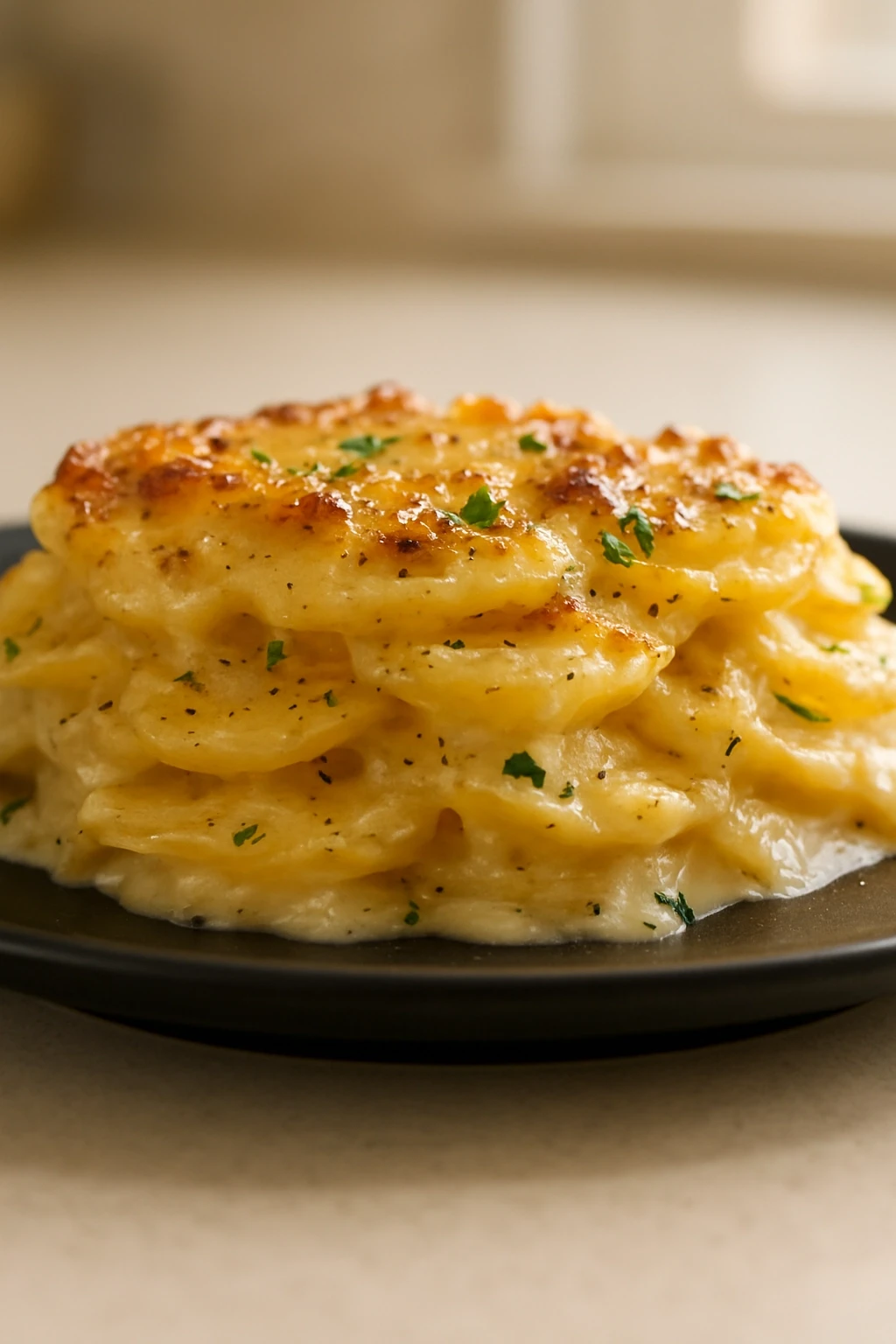
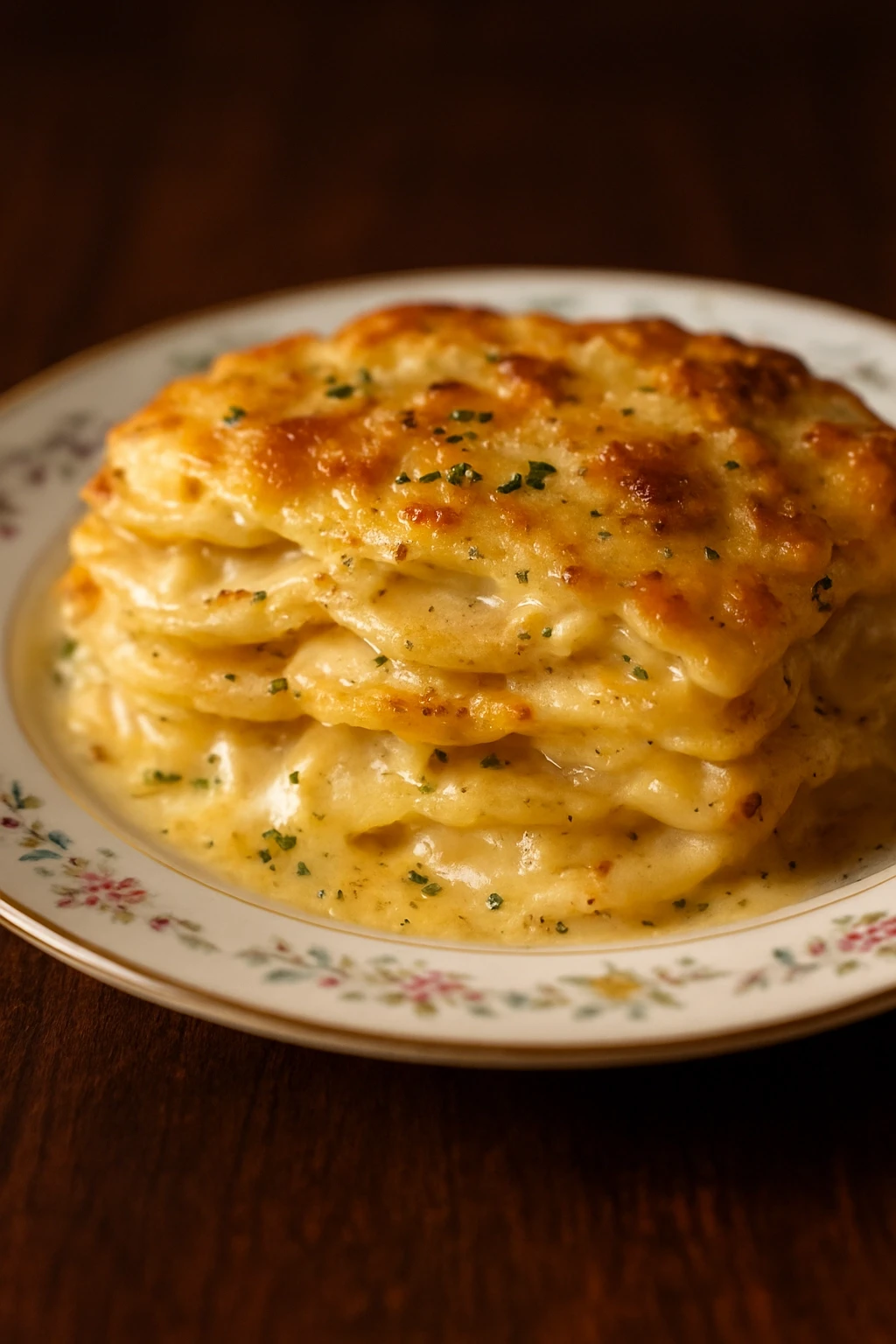
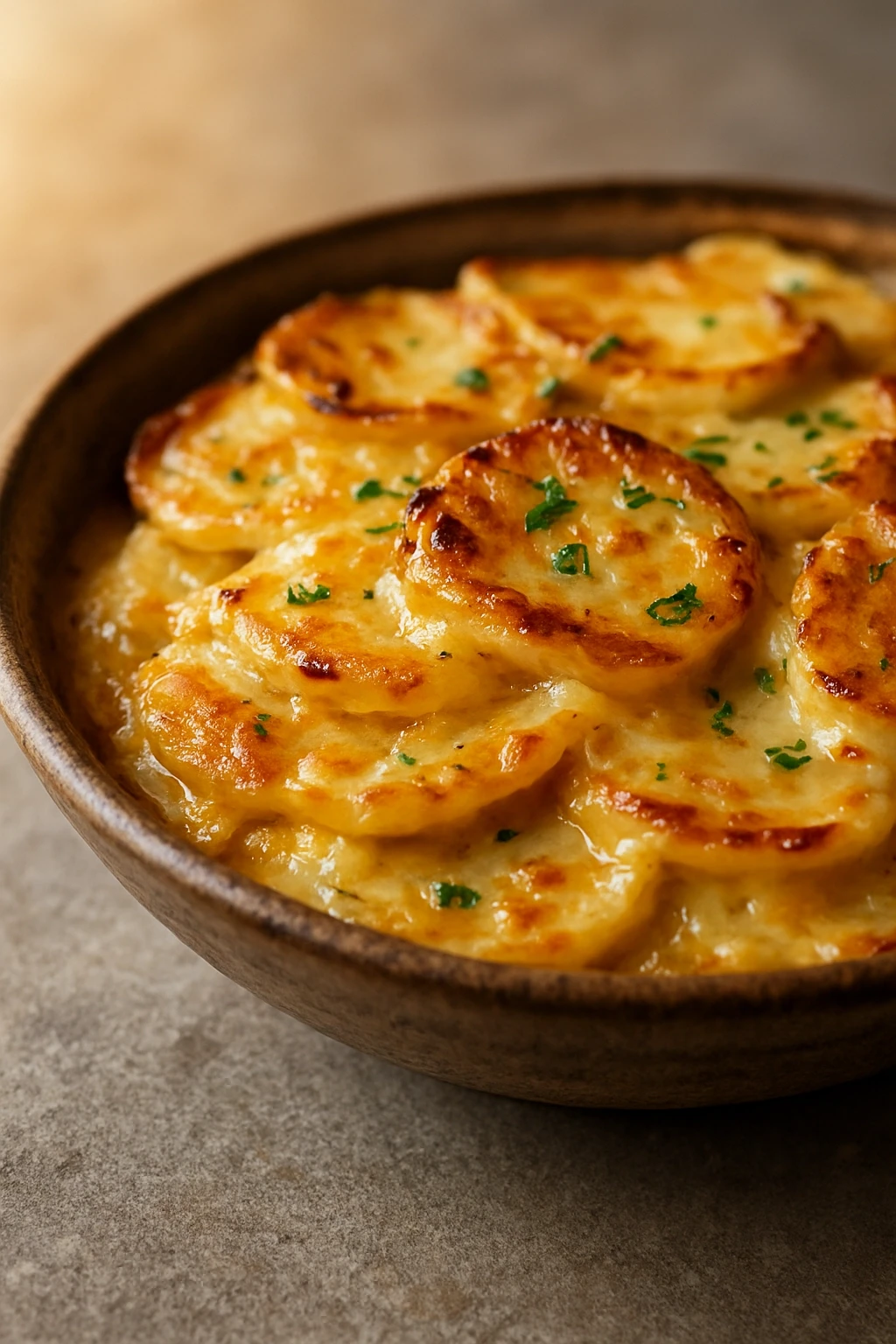
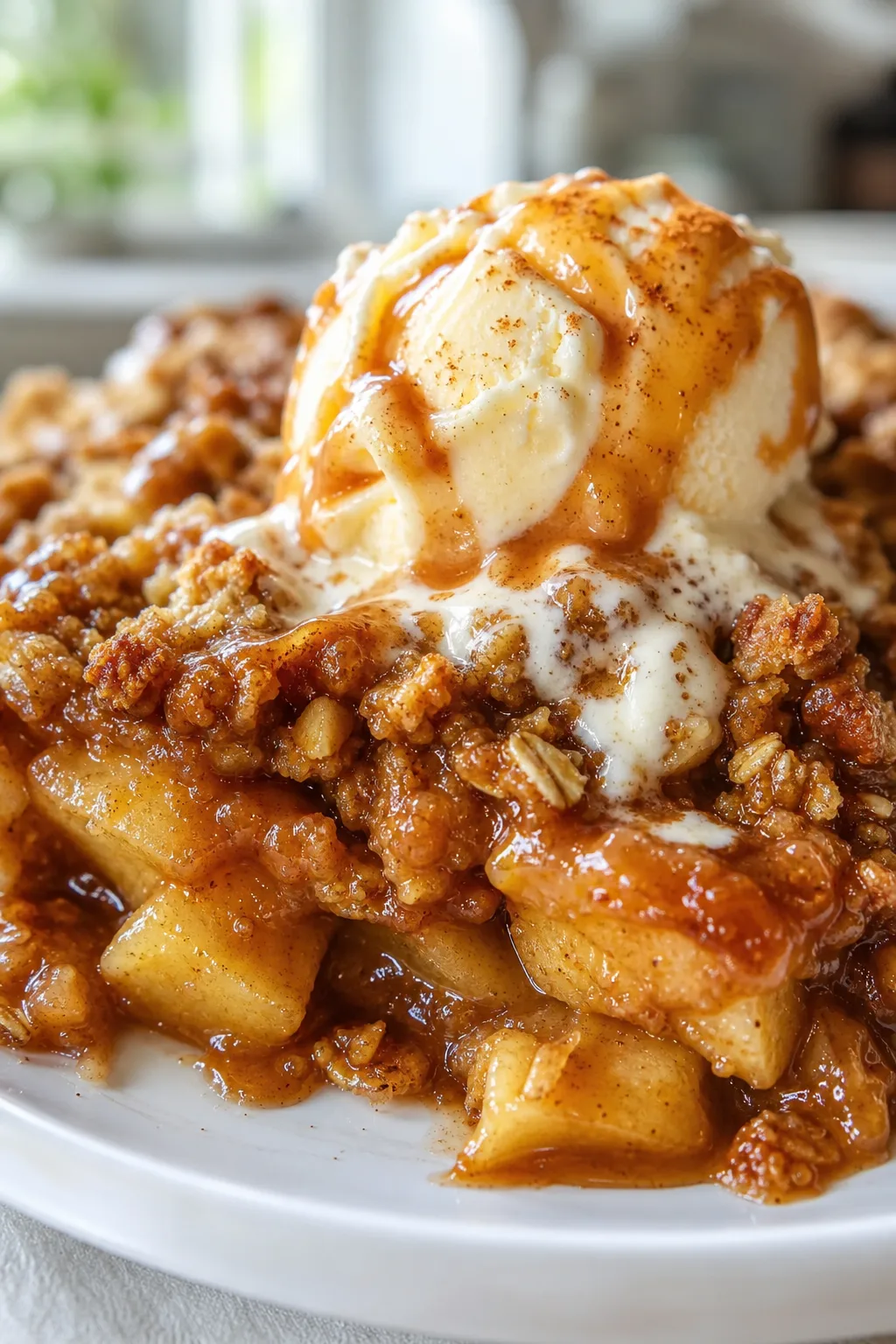
These scalloped potatoes are rich and velvety, with just the right amount of garlic and cheese. I love how the thinly sliced potatoes soak up the creamy sauce. Perfect side for holiday dinners or cozy family meals.
Introduction
I first made scalloped potatoes years ago for a family Easter dinner, and it quickly became a staple side dish. What sets this recipe apart is the creamy sauce that perfectly coats every thin potato slice without becoming watery or gummy. I learned the trick of making a roux with butter and flour before slowly whisking in the milk and cream — that step ensures the sauce thickens beautifully. Also, I like to use Yukon Gold potatoes because they hold their shape well and have a naturally buttery flavor that really shines here. The nutmeg adds a subtle warmth that balances the sharpness of the cheddar cheese. When baked slowly, the top gets golden and bubbly, while the inside stays luxuriously creamy. It’s the kind of dish that comforts you and impresses guests all at once. If you’re looking for a classic, foolproof scalloped potato recipe that’s rich but not overwhelming, this one’s for you!
How To Do It
Step 1
Preheat your oven to 350°F (175°C). Begin by peeling and slicing the potatoes very thinly, about 1/8-inch thick. Using a mandoline slicer makes this easier and ensures even cooking. Even slices are crucial because uneven pieces can cause some potatoes to undercook while others become mushy. Rinse the slices briefly in cold water to remove excess starch, then pat them dry with a clean kitchen towel. This step helps prevent the sauce from becoming gluey and keeps the potatoes from sticking together.
⏱ Time: 15 minutes
✓ Doneness: Potato slices are uniform, thin, and dry to the touch.
Step 2
In a medium saucepan, melt the butter over medium heat. Once melted, whisk in the flour to form a smooth roux. Cook this mixture for about 2 minutes, stirring constantly, until it’s bubbling but hasn’t browned. This cooking step removes the raw flour taste and helps the sauce thicken properly without lumps. Slowly add the milk and cream in a steady stream while whisking vigorously to keep the sauce smooth. Continue cooking and stirring until the sauce thickens and coats the back of a spoon, about 5-7 minutes. Season with minced garlic, salt, pepper, and nutmeg. This flavorful béchamel base is what transforms simple potatoes into a luscious side.
⏱ Time: 12 minutes
✓ Doneness: Sauce is thick, smooth, and coats the spoon evenly without lumps.
Step 3
Lightly butter a 9x13-inch baking dish. Arrange a layer of potato slices evenly over the bottom. Pour a portion of the sauce over the potatoes, then sprinkle a handful of shredded cheddar and Parmesan cheese on top. Repeat layering potatoes, sauce, and cheese until all ingredients are used, finishing with a cheese layer. This layering ensures every bite has a perfect balance of creamy sauce and cheesy goodness. Press down gently on each layer to remove air pockets, helping the dish bake evenly.
⏱ Time: 10 minutes
✓ Doneness: Dish is evenly layered with sauce and cheese visible between potato layers.
Step 4
Cover the baking dish tightly with aluminum foil. Bake in the preheated oven for 45 minutes. Covering traps steam, allowing the potatoes to cook through evenly and become tender without drying out. Avoid removing the foil too early, as this could cause the top to dry or burn. After 45 minutes, remove the foil and continue baking for another 15 minutes to let the top brown and bubble beautifully.
⏱ Time: 60 minutes total
✓ Doneness: Potatoes are tender when pierced with a fork; top is golden and bubbly.
Step 5
Once baked, let the scalloped potatoes rest for 10-15 minutes before serving. This resting time allows the sauce to thicken slightly and the dish to set, making it easier to serve clean slices. Garnish with fresh thyme leaves if desired for a pop of color and subtle herbal aroma. Serve warm alongside your favorite main dishes for a comforting, crowd-pleasing side.
⏱ Time: 15 minutes
✓ Doneness: Dish is set but still creamy; slices hold shape when served.
Step 6
For an extra golden crust, you can broil the top for 2-3 minutes after baking, watching carefully to prevent burning. This step adds a lovely crisp texture contrast to the creamy interior. If you prefer a milder garlic flavor, sauté the garlic in butter before adding flour to the roux, which mellows its sharpness and infuses the sauce with a gentle aroma.
⏱ Time: 3 minutes
✓ Doneness: Top is evenly browned with small bubbly spots.
Step 7
If you want to prepare the dish ahead, assemble everything but hold off on baking. Cover tightly and refrigerate for up to 24 hours. When ready, bake covered for 50 minutes, then uncovered for 20 minutes. This method helps flavors meld and saves time on the day of your meal.
⏱ Time: Preparation ahead
✓ Doneness: Potatoes are tender and sauce bubbly after baking.
Step 8
To ensure even cooking, rotate the baking dish halfway through baking. Oven heat can be uneven, and rotating helps brown the top uniformly and cook the potatoes consistently. Use oven mitts and be gentle to avoid disturbing the layers.
⏱ Time: During baking
✓ Doneness: Top browns evenly without hot spots.
Step 9
Use a sharp knife to slice the scalloped potatoes when serving. A serrated knife can tear the layers, so a chef’s knife or large kitchen knife works best. Serve with a wide spatula to keep slices intact. This presentation makes a beautiful addition to any holiday table.
⏱ Time: Serving
✓ Doneness: Slices hold shape and display distinct layers.
Pro Tips
Use a mandoline slicer for even potato slices.
Uniform thickness ensures all potato slices cook at the same rate, preventing some from becoming mushy while others stay undercooked. Uneven slices can ruin the texture and overall dish consistency.
Cook the roux gently without browning.
Cooking the butter and flour just until bubbling avoids developing a toasted flavor that could overpower the delicate sauce. It also helps the flour fully incorporate, preventing lumps and ensuring a smooth texture.
Layer cheese between potato layers.
Distributing cheese throughout the dish rather than just on top ensures every bite has a cheesy richness. It also helps the layers bind together, creating a cohesive, luscious texture.
Cover with foil during most of the baking time.
Covering traps steam and cooks the potatoes gently, preventing drying out. Removing the foil too early can cause the top to burn before the potatoes are tender inside.
Let the dish rest before slicing.
Resting allows the sauce to thicken slightly and the layers to set, making the dish easier to cut and serve without falling apart.
Rotate the baking dish halfway through cooking.
Ovens often have hot spots. Rotating ensures even browning and consistent cooking throughout the dish.
Use fresh garlic minced finely.
Fresh garlic imparts a bright, fragrant flavor that powder or pre-minced garlic can’t match. Minced finely ensures it disperses evenly without overpowering.
Common Mistakes to Avoid
Using thick potato slices
Why it happens Many cooks underestimate how long thick slices take to cook, leading to unevenly cooked potatoes with some hard centers.
Fix Slice potatoes uniformly thin (about 1/8 inch) using a mandoline or sharp knife. This ensures they cook evenly and absorb the sauce properly.
Skipping the roux step
Why it happens Sometimes people try to mix cream and flour directly, resulting in lumps or thin sauce.
Fix Always cook the flour in butter first to create a roux, then slowly whisk in milk and cream. This prevents lumps and produces a smooth, thick sauce.
Not covering the dish during baking
Why it happens Some want a crispy top from the start and skip covering, but this dries out the potatoes.
Fix Cover with foil for most of baking time to trap steam and cook potatoes thoroughly, then uncover near the end to brown the top.
Over-salting the sauce
Why it happens Adding too much salt early on can make the dish overly salty, especially with cheese added later.
Fix Season lightly at first, then taste the sauce before layering cheese, adjusting salt as needed.
Rushing the resting time
Why it happens Impatience leads to cutting immediately after baking, causing the dish to fall apart.
Fix Allow at least 10 minutes of rest after baking so the sauce thickens and the layers set for clean slices.
Variations
Herb and Gruyere Scalloped Potatoes
Swap out cheddar for Gruyere cheese and add fresh thyme and rosemary to the sauce. This gives a nutty, aromatic twist perfect for special occasions or when you want a more sophisticated flavor profile.
Note: Gruyere melts differently, so watch the sauce thickness and adjust baking time slightly to avoid over-browning.
Vegan Scalloped Potatoes
Use plant-based milk (like oat or cashew) and vegan butter. Replace cheese with nutritional yeast and a bit of vegan cheese for creaminess. This version is lighter and dairy-free but still creamy and flavorful.
Note: Plant milks have different fat content, so thicken sauce with a bit more flour and cook gently to avoid separation.
Spicy Jalapeño Cheddar Scalloped Potatoes
Add finely diced jalapeños to the sauce and use a sharp cheddar with a bit of smoked paprika. This variation adds a nice kick and smoky depth, great for those who like some heat.
Note: Balance spice by starting with small jalapeño amounts; too much can overpower the creamy texture.
Mushroom and Onion Scalloped Potatoes
Sauté mushrooms and caramelized onions, then layer them between the potatoes. This adds earthy umami and sweetness that pairs beautifully with the creamy sauce.
Note: Cook mushrooms and onions until moisture evaporates to prevent soggy layers.
Garlic and Herb Crusted Scalloped Potatoes
Top the dish with a mixture of panko breadcrumbs, minced garlic, parsley, and Parmesan before baking. This creates a crunchy, flavorful crust contrasting the creamy interior.
Note: Add the topping during the last 15 minutes of baking to avoid burning.
Nutrition
Per Serving:
Nutritional values are estimates and may vary based on specific ingredients used.
Storage & Tips
Room Temperature
Scalloped potatoes can safely sit out covered for up to 2 hours. To keep them fresh, cover tightly with foil or plastic wrap to prevent drying and contamination.
Refrigerator
Store leftovers in an airtight container for up to 3 days. The sauce may thicken and the texture firm up when chilled. Reheat gently in the oven or microwave, adding a splash of milk to loosen the sauce if needed.
Freezer
Freeze in a freezer-safe container for up to 2 months. Wrap tightly with plastic wrap and foil to prevent freezer burn. Thaw overnight in the refrigerator before reheating. Texture may be slightly softer after freezing.
Reheating
Reheat in a 325°F oven covered with foil for 20-30 minutes until warmed through. For microwave reheating, cover loosely and heat in short intervals, stirring or checking often. Add a little milk if sauce seems dry.
Make Ahead
Assemble the dish up to 24 hours in advance and keep covered in the fridge. Bake fresh on the day of serving for best texture and flavor. This saves time and lets flavors meld.
FAQ
Can I use russet potatoes instead of Yukon Gold?
Russet potatoes are higher in starch and tend to break down more during baking, which can result in a mushier texture. Yukon Golds hold their shape better and have a creamier texture, making them ideal for scalloped potatoes. If you must use russets, slice them a bit thicker and bake carefully to avoid overcooking.
How do I prevent the sauce from becoming watery?
The key is making a proper roux by cooking flour and butter before adding milk and cream, which thickens the sauce. Also, rinsing potato slices removes excess starch that can make the sauce gluey. Baking covered traps steam, but uncovering near the end lets excess moisture evaporate, balancing creaminess without wateriness.
Can I make this recipe gluten-free?
Yes! Substitute the all-purpose flour with a gluten-free flour blend or cornstarch. If using cornstarch, mix it with cold milk before adding to the roux to avoid lumps. Be mindful that gluten-free flours may thicken differently, so adjust quantities slightly.
Why does my scalloped potatoes sauce sometimes separate?
Sauce separation usually happens if the sauce is overheated or if the fat and liquid aren’t properly emulsified. Cooking the roux gently and slowly adding cold dairy while whisking helps create a stable sauce. Avoid boiling the sauce vigorously after thickening.
Can I add other cheeses besides cheddar?
Absolutely. Gruyere, mozzarella, or fontina work wonderfully and add different flavor profiles. Just keep in mind that some cheeses melt differently and may affect the sauce’s thickness and baking time.
How thin should I slice the potatoes?
Aim for about 1/8-inch thickness. Too thick and the potatoes may take too long to cook; too thin and they might become mushy. A mandoline slicer helps achieve consistent thin slices.
Is it necessary to cover the dish while baking?
Yes, covering traps steam and ensures the potatoes cook evenly without drying out. Removing the cover near the end helps brown the top. Skipping this step can result in dry or unevenly cooked potatoes.
Can I prepare this dish a day ahead?
Definitely! Assemble the dish, cover tightly, and refrigerate overnight. When ready, bake as directed, adding a bit more time if baking from cold. This makes holiday prep much easier.
Final Thoughts
I hope you give these creamy scalloped potatoes a try—they’re a guaranteed crowd-pleaser. Let me know how they turn out and if you add your own twist!