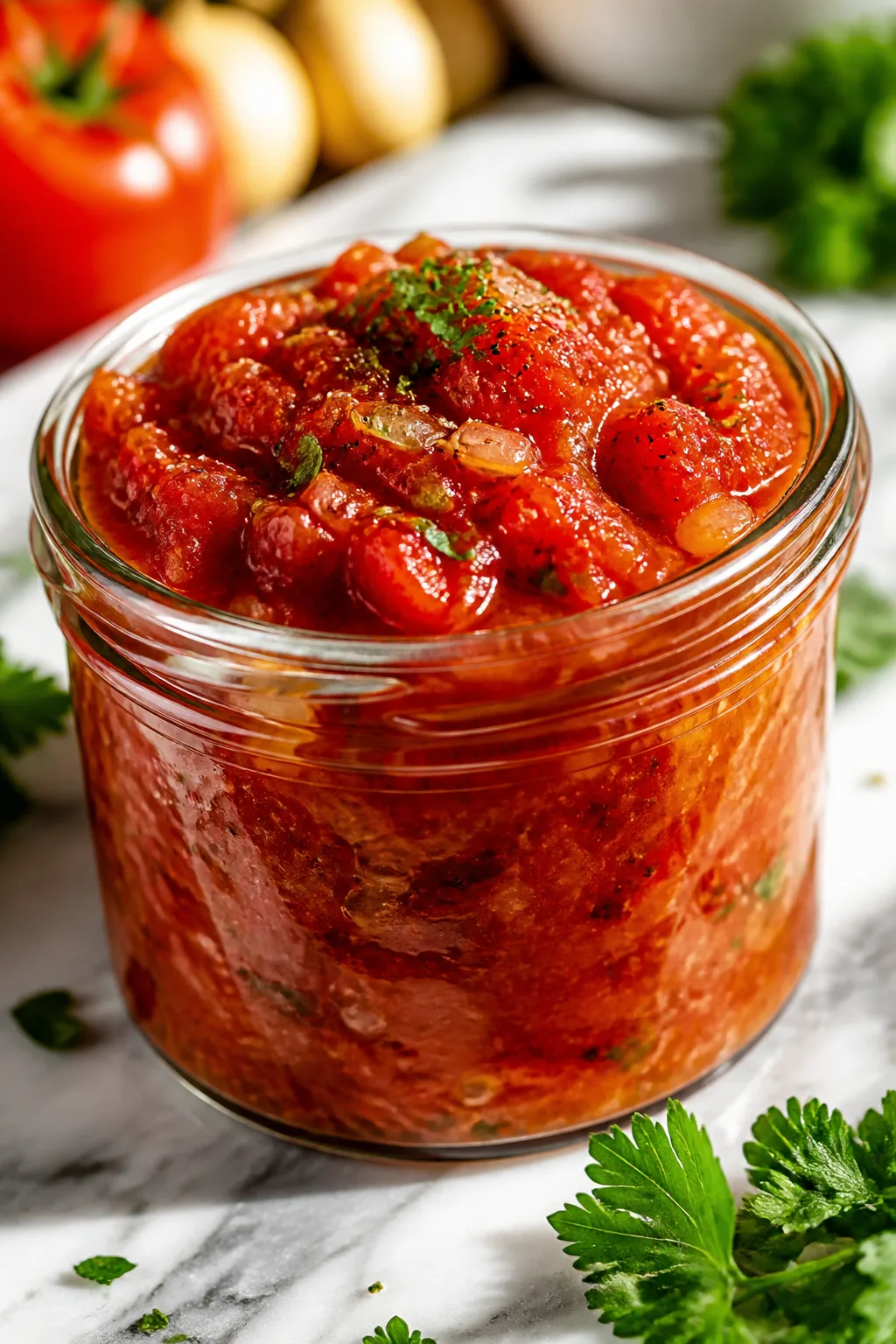
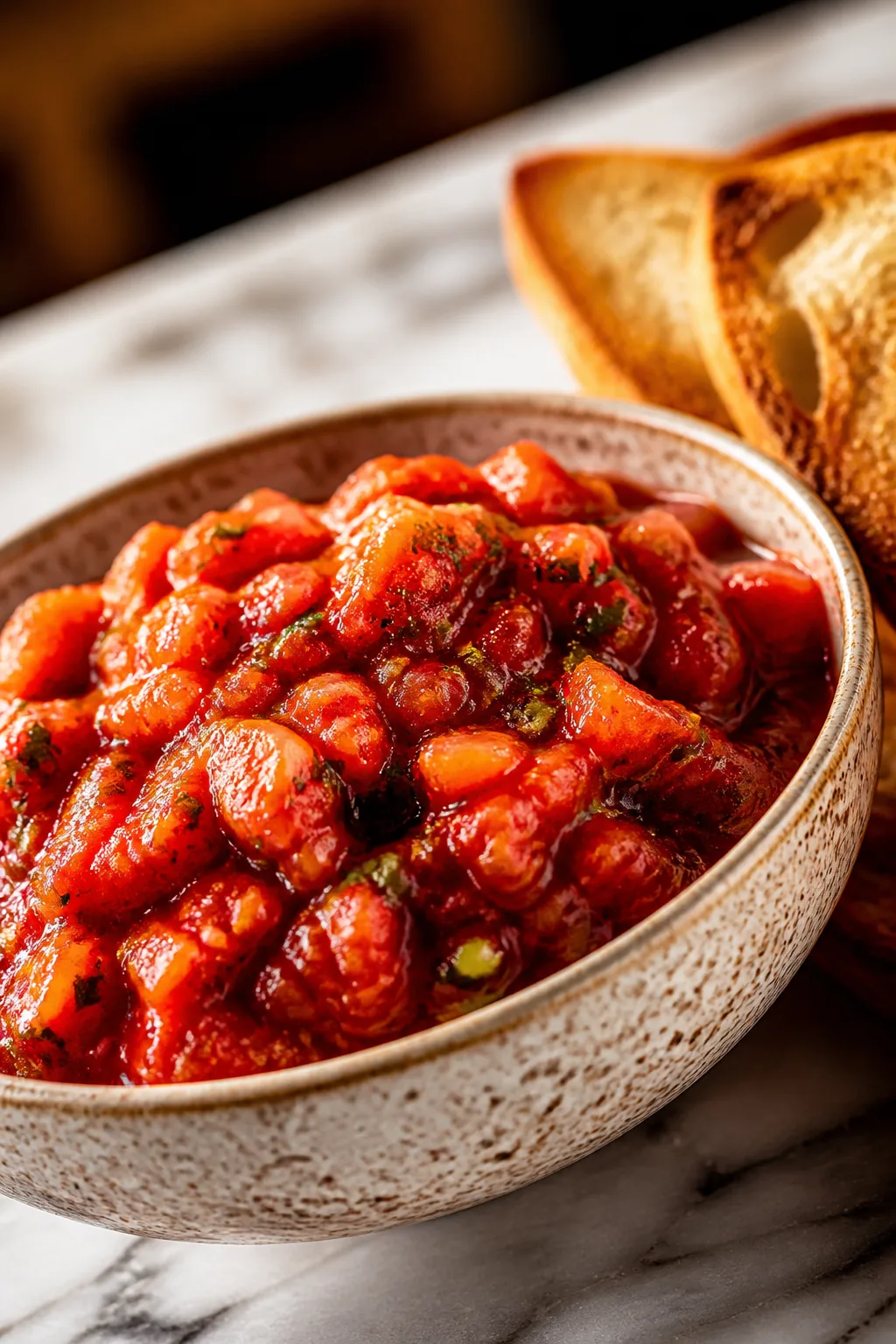
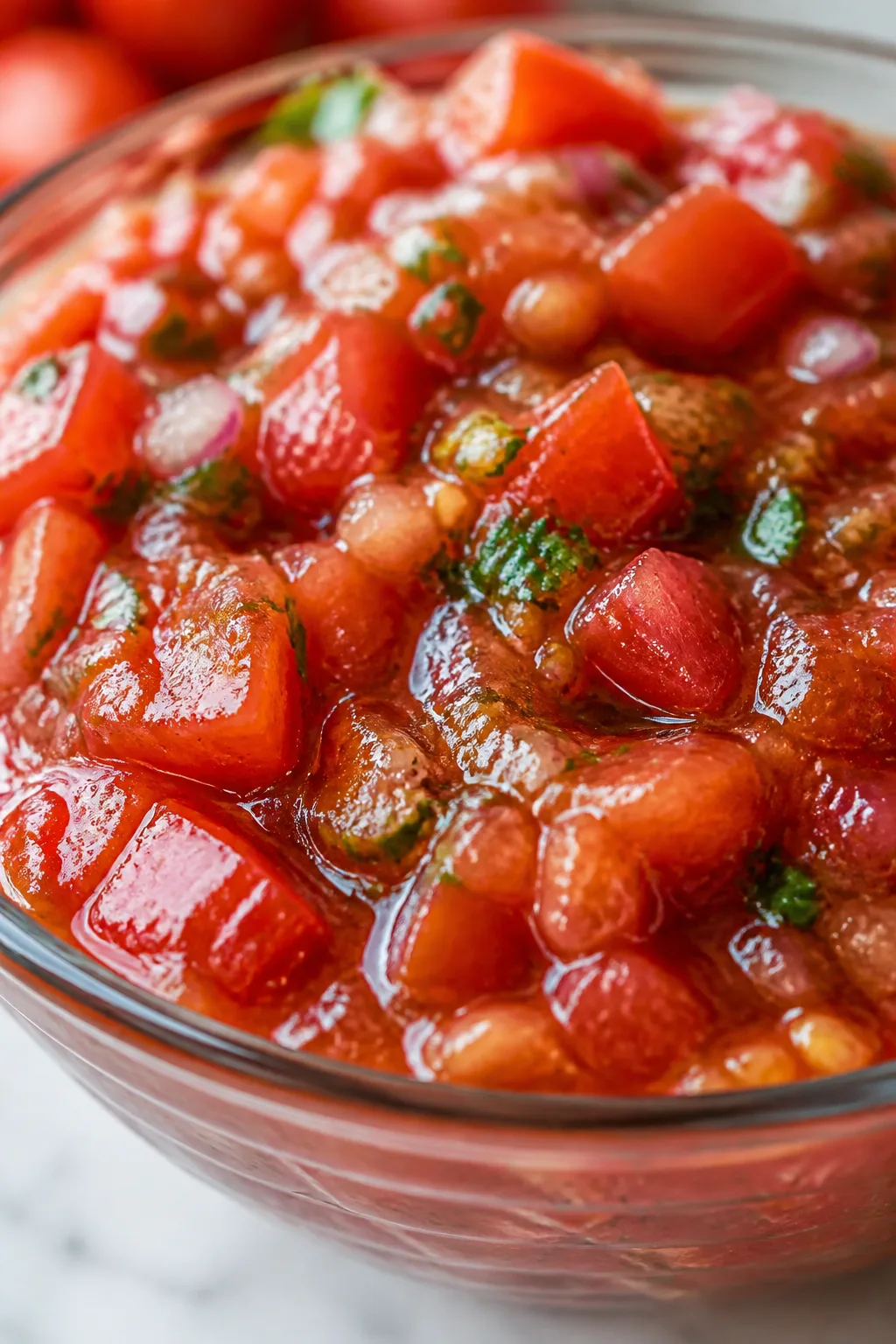
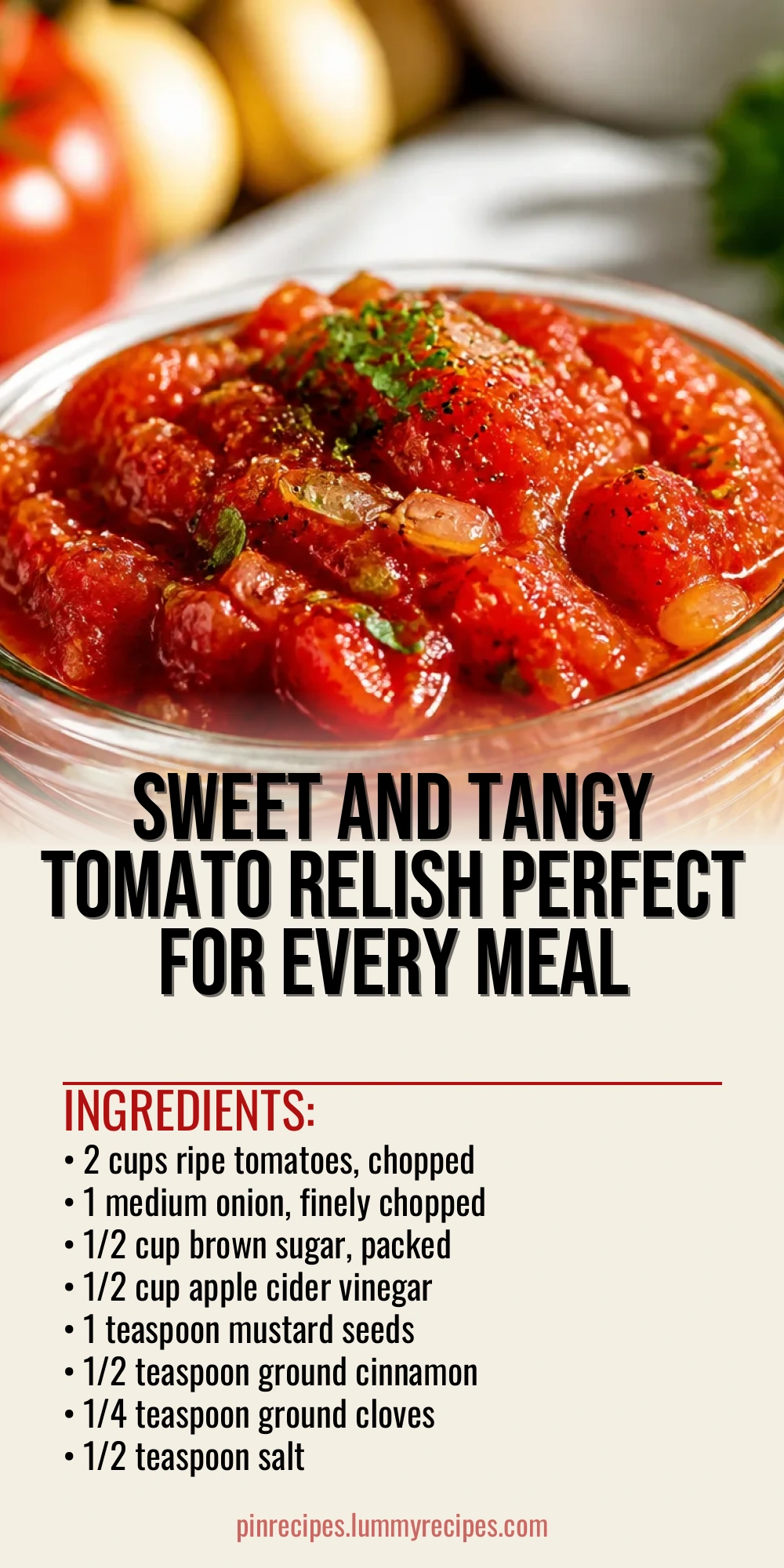
This tomato relish is a timeless favorite, bursting with sweet and tangy flavors. The secret? Slow simmering to deepen the taste. Great alongside grilled meats or sandwiches for a nostalgic touch.
Introduction
I first stumbled upon this classic tomato relish recipe in my grandmother’s worn-out cookbook, and it instantly took me back to summer family picnics. Unlike the overly sweet versions you often find in stores, this one balances sweetness with a hint of spice and tang, thanks to the slow simmering technique I swear by. The trick I learned is to cook it gently so the flavors meld without turning mushy. The finished relish is thick, glossy, and packed with bursts of tomato goodness, perfect for dolloping on burgers or serving alongside roasted meats. I’ve made this a dozen times now, and every batch reminds me why simple, old-fashioned recipes still hold a special place in our hearts. Plus, it’s surprisingly easy to whip up, even on a busy afternoon. If you’re looking for a condiment that’s homemade, flavorful, and just a little nostalgic, give this a try—you might find it becoming a staple in your kitchen too.
What You'll Need
Approximately 2 cups, 4 servings
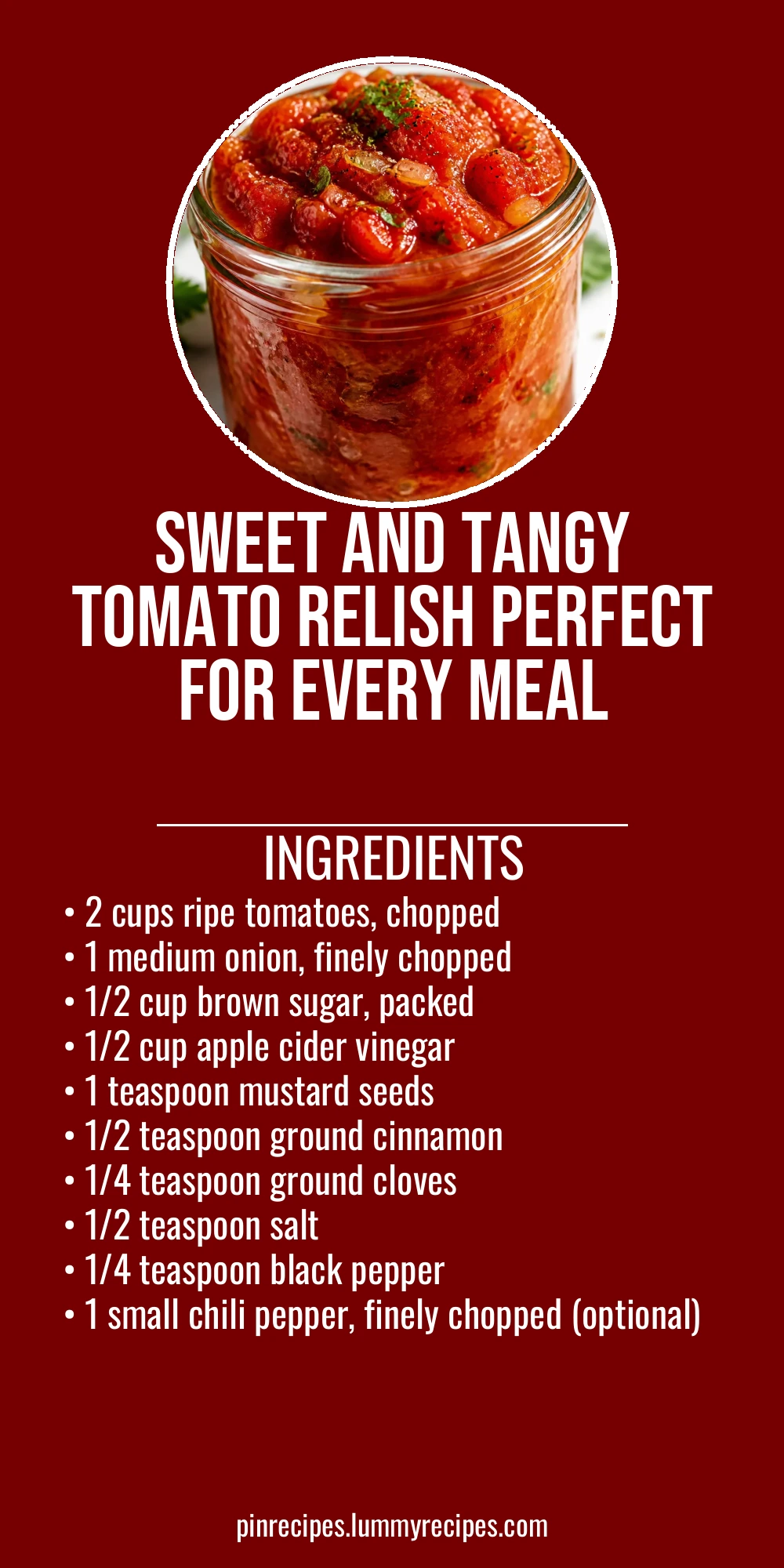
- 2 cups ripe tomatoes, chopped
- 1 medium onion, finely chopped
- 1/2 cup brown sugar, packed
- 1/2 cup apple cider vinegar
- 1 teaspoon mustard seeds
- 1/2 teaspoon ground cinnamon
- 1/4 teaspoon ground cloves
- 1/2 teaspoon salt
- 1/4 teaspoon black pepper
- 1 small chili pepper, finely chopped (optional)
How To Do It
Step 1
Start by prepping your ingredients carefully. Chop the ripe tomatoes and finely dice the onion to ensure they cook evenly. This step is crucial because uniform pieces help the relish develop a consistent texture and flavor. Avoid large chunks that might not soften properly during cooking. Also, finely chopping the chili pepper (if using) ensures the heat is distributed throughout the relish rather than concentrated in one spot.
⏱ Time: 10 minutes
✓ Doneness: Ingredients are uniformly chopped and ready to cook
Step 2
In a medium saucepan, combine the chopped tomatoes, onions, brown sugar, and apple cider vinegar. Stir in the mustard seeds, cinnamon, cloves, salt, and pepper. The vinegar not only adds tang but also acts as a natural preservative, while the spices provide warmth and depth. Mix everything well to distribute the flavors before heating.
⏱ Time: 5 minutes
✓ Doneness: Ingredients are evenly mixed and starting to blend
Step 3
Place the saucepan over medium heat and bring the mixture to a gentle boil. Once boiling, reduce the heat to low to maintain a simmer. This slow simmering is key—it allows the flavors to meld beautifully without burning or reducing too quickly. Stir occasionally to prevent sticking, especially as the sugar starts to caramelize.
⏱ Time: 5 minutes
✓ Doneness: Mixture is bubbling gently with steam rising
Step 4
Let the relish simmer uncovered for about 25-30 minutes. This gradual cooking thickens the mixture and deepens the flavors. Keep an eye on the texture; it should become thick and glossy but not dry or burnt. Stir every few minutes to ensure even cooking and to avoid any burning on the bottom.
⏱ Time: 25-30 minutes
✓ Doneness: Relish thickens and coats the back of a spoon
Step 5
Taste the relish and adjust seasoning if needed. Sometimes a pinch more salt or a splash more vinegar can brighten the flavor. This final tweak makes all the difference in balancing sweetness and tanginess, so don’t skip it.
⏱ Time: 2 minutes
✓ Doneness: Balanced flavor with no overpowering sweetness or acidity
Step 6
Remove the saucepan from heat and let the relish cool slightly. Cooling allows it to thicken further and makes it easier to handle. Avoid covering it while hot to prevent condensation which can water down the relish.
⏱ Time: 10 minutes
✓ Doneness: Relish is warm but not steaming
Step 7
Transfer the cooled relish to a sterilized jar or airtight container. Proper storage is important to keep your relish fresh and flavorful. Use a clean spoon to avoid contamination, and seal tightly.
⏱ Time: 5 minutes
✓ Doneness: Relish stored in clean, sealed container
Step 8
Refrigerate the relish for at least 24 hours before serving. This resting time lets the flavors deepen and marry beautifully. It’s worth the wait, as the taste improves noticeably after resting.
⏱ Time: 24 hours
✓ Doneness: Relish flavor is well-developed and harmonious
Step 9
Serve your classic tomato relish chilled or at room temperature alongside grilled meats, sandwiches, or as a tangy dip. It adds a lovely homemade touch and a burst of flavor that’s hard to beat. Enjoy!
⏱ Time: As desired
✓ Doneness: Relish enhances your dish with bright, balanced flavor
Pro Tips
Chop ingredients uniformly for consistent cooking.
Uniform chopping ensures all pieces cook evenly, preventing some bits from becoming mushy while others remain undercooked. This consistency is key to achieving the desired texture where the relish is thick but still has some bite.
Simmer the relish slowly, don’t rush the cooking.
Slow simmering allows flavors to meld and the mixture to thicken naturally without burning. Rushing by increasing heat can cause uneven cooking and bitter burnt flavors, ruining the delicate balance.
Use a heavy-bottomed pan to prevent scorching.
A heavy pan distributes heat evenly, reducing the risk of hot spots that can burn the sugar and spices. This helps maintain a smooth texture and prevents unpleasant burnt notes.
Taste and adjust seasoning at the end.
Flavors concentrate during cooking, so seasoning needs to be balanced at the end. Adding salt or vinegar late ensures the relish isn’t too salty or acidic, making it perfectly balanced.
Let the relish rest overnight before serving.
Resting allows the flavors to deepen and marry, resulting in a more harmonious and richer taste. Serving immediately often means the flavors haven’t fully developed.
Sterilize jars before storing the relish.
Proper sterilization prevents bacterial growth and extends shelf life. It also keeps the relish tasting fresh and safe to eat longer.
Add chili pepper for a subtle heat kick.
Chili adds warmth without overpowering the relish. Finely chopping it ensures even distribution, enhancing the flavor complexity subtly.
Common Mistakes to Avoid
Cooking at too high heat.
Why it happens Many cooks try to speed up the process by increasing heat, assuming it will save time.
Fix Maintain a gentle simmer to prevent burning and allow flavors to develop. If the mixture bubbles too vigorously, lower the heat immediately to avoid bitterness and uneven cooking.
Using underripe or overripe tomatoes.
Why it happens Sometimes cooks use whatever tomatoes are on hand without considering ripeness.
Fix Choose firm, ripe tomatoes for best flavor and texture. If only underripe are available, consider adding a bit more sugar to balance acidity.
Skipping the resting period.
Why it happens Impatience or lack of planning leads to serving the relish immediately.
Fix Plan ahead to let the relish rest at least 24 hours in the fridge. This step is essential for flavor melding and improves taste significantly.
Not stirring enough during simmering.
Why it happens Some assume occasional stirring is enough and forget to monitor the pot.
Fix Stir every few minutes to prevent sticking and burning on the bottom. This keeps the texture smooth and avoids bitter burnt spots.
Using non-sterile containers for storage.
Why it happens Rushing to store the relish often leads to skipping sterilization.
Fix Always sterilize jars and utensils to keep the relish fresh and safe. Boil jars or use a dishwasher cycle before filling.
Variations
Spicy Tomato Relish
Add extra chopped chili peppers or a pinch of cayenne for a fiery twist. This variation adds heat without overpowering the sweet and tangy base, perfect if you like a bit of spice in your condiments.
Note: Monitor the heat level carefully; too much chili can mask other flavors. Adjust sugar slightly to balance heat.
Sweet and Herb Tomato Relish
Include fresh herbs like basil or thyme towards the end of cooking for a fresh, aromatic flavor. This version adds complexity and pairs wonderfully with grilled chicken or fish.
Note: Add herbs late to preserve their bright flavor and avoid bitterness from overcooking.
Low-Sugar Tomato Relish
Reduce the brown sugar by half and add a splash of honey or maple syrup for natural sweetness. This is a great option for those watching their sugar intake without sacrificing flavor.
Note: Lower sugar affects thickness; simmer a bit longer to compensate.
Chunky Tomato Relish
Leave the tomatoes and onions in larger pieces for a heartier texture. This makes the relish more rustic and adds a pleasant bite to sandwiches or burgers.
Note: Cook a bit less time to keep chunks intact but ensure flavors meld.
Smoky Tomato Relish
Add a teaspoon of smoked paprika or a drop of liquid smoke to infuse a subtle smoky flavor. This variation pairs beautifully with BBQ dishes and grilled meats.
Note: Add smoky elements towards the end to preserve aroma without overpowering.
Nutrition
Per Serving:
Nutritional values are estimates and may vary based on specific ingredients used.
Storage & Tips
Room Temperature
Tomato relish can be safely kept at room temperature for up to 4 hours if covered. Beyond that, it should be refrigerated to prevent spoilage. Always use clean utensils to avoid contamination.
Refrigerator
Store the relish in an airtight container in the fridge for up to 2 weeks. The flavor may deepen but texture can thicken slightly. It’s best served cold or at room temperature, no reheating needed.
Freezer
Freeze tomato relish in a freezer-safe container for up to 3 months. Leave some headspace as the relish will expand. Thaw overnight in the fridge and stir well before serving. Texture may soften slightly after freezing.
Reheating
If you prefer warm relish, gently heat it on the stovetop over low heat until warmed through. Avoid boiling as it can alter the texture and flavor. Add a splash of water if it’s too thick.
Make Ahead
You can prepare the relish a day or two ahead and refrigerate it to let flavors mature. Just be sure to cool it completely before sealing and storing. This makes it perfect for meal prepping or entertaining.
FAQ
Can I use canned tomatoes instead of fresh?
Yes, you can substitute canned tomatoes, preferably whole peeled or diced. Drain excess liquid to avoid a watery relish. Fresh tomatoes provide a brighter flavor, but canned work well in a pinch.
How spicy is this relish with chili added?
The chili adds a mild to moderate heat depending on how much you use. Start with a small amount and adjust to taste. Removing seeds reduces heat, so tailor it to your preference.
Can I make this relish without sugar?
You can reduce or omit sugar, but it will affect the balance and thickness. Consider adding natural sweeteners like honey or maple syrup or simmer longer to concentrate flavors.
How long does the relish last in the fridge?
Stored properly in an airtight container, it lasts about 2 weeks. Always check for signs of spoilage like off smell or mold before use.
Is it necessary to sterilize jars before storing?
Sterilizing jars helps prevent bacterial growth and extends shelf life. While not strictly required if you consume quickly, it’s a good practice for safety and freshness.
Can I freeze the tomato relish?
Yes, freezing is a great option. Use a freezer-safe container and thaw in the fridge before use. Texture may soften slightly but flavor remains intact.
What dishes pair well with tomato relish?
It’s fantastic with grilled meats, sandwiches, burgers, and even as a dip for fries or crackers. The sweet and tangy flavor complements many comfort foods.
Can I use other types of vinegar?
Apple cider vinegar is preferred for its mildness and flavor, but white wine vinegar can be a substitute. Avoid stronger vinegars like distilled white vinegar as they can overpower the relish.
Final Thoughts
I hope you enjoy making and sharing this classic tomato relish as much as my family does. It’s a simple, comforting recipe that adds so much flavor to everyday meals—give it a try and let me know how it turns out!