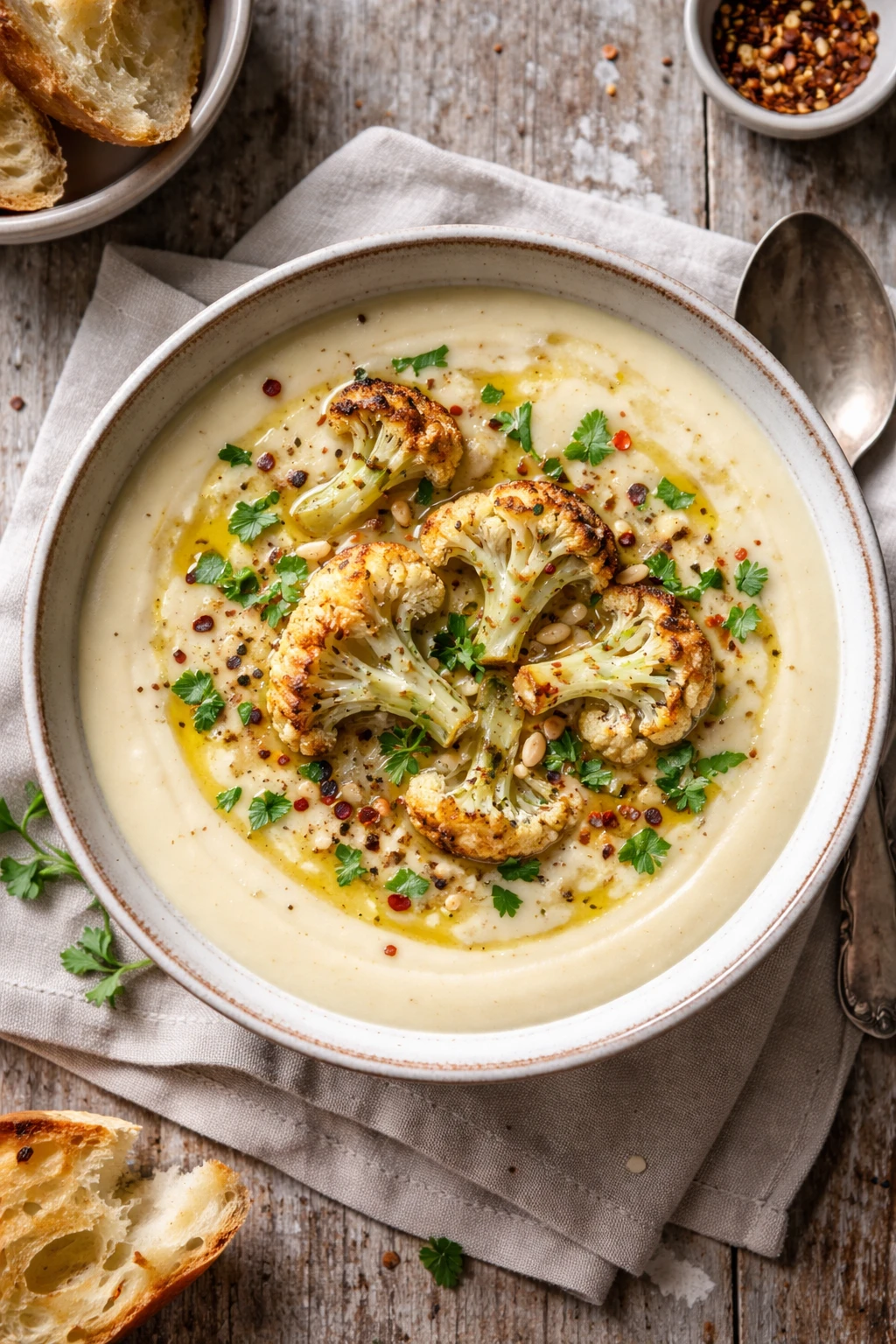
This velvety cauliflower soup is pure comfort in a bowl, perfect for those chilly spring evenings. The secret? Roasting the cauliflower first to deepen the flavor. Cozy up with a warm bowl anytime you need a little soothing.
Introduction
I first made this creamy cauliflower soup on a chilly spring evening when the weather was still teasing winter’s last cold breath. I wanted something warm and comforting but light enough for the season. Roasting the cauliflower before blending it was a game changer — it brings out a subtle nuttiness that you just don’t get with plain boiled cauliflower. Plus, using a splash of cream makes the texture luxuriously smooth without feeling heavy. This soup has become my go-to when I want a cozy meal that feels indulgent but is still wholesome. The trick I learned is to roast the veggies until they’re just golden, which adds depth without overpowering the gentle flavors. When it’s done, the soup is silky with a hint of caramelized sweetness, perfect for sipping while curled up on the couch. I think you’ll love how simple it is yet so satisfying — it’s the kind of recipe you’ll want to make again and again as the spring nights turn cool.
What You'll Need
Approximately 4 generous servings
- 1 large head cauliflower, cut into florets
- 2 tablespoons olive oil
- 1 medium onion, chopped
- 3 cloves garlic, minced
- 4 cups vegetable broth
- 1 cup whole milk or cream
- Salt and freshly ground black pepper, to taste
- 1 teaspoon dried thyme
- Optional: fresh chives or parsley for garnish
How To Do It
Step 1
Preheat your oven to 425°F (220°C). Toss the cauliflower florets with 2 tablespoons of olive oil, salt, pepper, and dried thyme. Spread them out on a baking sheet in a single layer to ensure even roasting. Roasting caramelizes the natural sugars in the cauliflower, deepening the flavor and adding a subtle sweetness that you won’t get from boiling. Keep an eye on them so they turn golden brown but don’t burn, usually about 20-25 minutes. This step is crucial because it builds the foundation of flavor for the soup.
⏱ Time: 20-25 minutes
✓ Doneness: Cauliflower should be tender and golden brown on the edges
Step 2
While the cauliflower roasts, heat a large pot over medium heat and add a splash of olive oil. Sauté the chopped onion until it’s translucent and soft, about 5-7 minutes. Then add the minced garlic and cook for another minute until fragrant. This slow cooking softens the aromatics and releases their natural sweetness, which layers nicely with the roasted cauliflower. Avoid browning the garlic too much as it can turn bitter. This step builds the savory base of the soup.
⏱ Time: 7-8 minutes
✓ Doneness: Onions should be soft and translucent; garlic fragrant but not browned
Step 3
Add the roasted cauliflower to the pot with the onions and garlic. Pour in the vegetable broth and bring everything to a simmer. Let it cook gently for about 10 minutes to allow the flavors to meld. This simmering step helps soften the cauliflower further and blends the flavors into a harmonious base for the soup. Don’t rush this — it’s important for developing depth.
⏱ Time: 10 minutes
✓ Doneness: Cauliflower is very tender and broth smells infused with roasted flavor
Step 4
Using an immersion blender (or carefully transferring in batches to a blender), puree the soup until it’s completely smooth and creamy. This is where the magic happens — blending transforms the roasted cauliflower and broth into a silky, comforting soup. If it’s too thick, add a splash more broth or milk to reach your desired consistency. Be cautious when blending hot liquids to avoid splashes.
⏱ Time: 5-7 minutes
✓ Doneness: Soup is smooth with no lumps, creamy texture
Step 5
Return the soup to the pot if necessary and stir in the milk or cream. Heat gently over low heat just until warmed through — don’t boil once the dairy is added as it can curdle. Taste and adjust seasoning with salt and pepper. The cream adds richness and a velvety mouthfeel that makes this soup feel indulgent without heaviness. This final step balances the flavors and texture perfectly.
⏱ Time: 3-5 minutes
✓ Doneness: Soup is warm, creamy, and well-seasoned
Step 6
Serve the soup hot, garnished with chopped fresh chives or parsley if you like a pop of color and fresh flavor. This simple garnish brightens the bowl and adds a lovely herbal note that complements the creamy soup beautifully. Plus, it makes the presentation inviting. Enjoy immediately for the best texture and flavor.
⏱ Time: Immediate
✓ Doneness: Soup looks creamy and garnished with fresh herbs
Step 7
If you want to add a little extra, consider a drizzle of good olive oil or a sprinkle of toasted nuts for crunch. These add texture contrasts that make each spoonful more interesting. Just be mindful not to overpower the delicate cauliflower flavor.
⏱ Time: Optional
✓ Doneness: Added toppings enhance texture without overwhelming the soup
Step 8
For a dairy-free version, swap the cream for coconut milk or a plant-based alternative. Add it at the same stage and gently warm through. This keeps the soup creamy and rich while accommodating dietary preferences.
⏱ Time: Optional
✓ Doneness: Soup remains smooth and rich with alternative milk
Step 9
Leftovers can be stored in the fridge for a couple of days. When reheating, warm gently on the stove and add a splash of broth or milk if it thickens too much. This helps maintain the creamy texture and fresh flavor.
⏱ Time: Optional
✓ Doneness: Soup reheated evenly without separation
Pro Tips
Don’t overcrowd the roasting pan when roasting cauliflower.
Overcrowding traps steam and prevents proper caramelization, leading to soggy, steamed florets instead of golden, roasted ones. Spreading them in a single layer ensures each piece browns nicely, which is essential for that deep roasted flavor.
Use an immersion blender for easier, safer blending.
Blending hot liquids can be dangerous if transferred to a regular blender. An immersion blender lets you puree the soup directly in the pot, controlling texture and avoiding spills or burns. It also allows you to blend in stages for perfect smoothness.
Add cream or milk off the heat or on very low heat.
Dairy can curdle if boiled, ruining the smooth texture. Gently warming the soup after adding cream preserves its silky consistency and rich mouthfeel without separating.
Season the soup at the end after blending.
Salt and pepper levels can change after blending and adding dairy. Seasoning last lets you adjust precisely, ensuring the soup is perfectly balanced and not too salty or bland.
Use fresh herbs as garnish instead of cooking them in.
Fresh herbs add a bright, fresh flavor and attractive color contrast. Cooking herbs too long can dull their flavor and color, so adding them just before serving keeps the soup lively.
Let the roasted cauliflower cool slightly before blending.
Blending very hot ingredients can create steam pressure and splatter. Letting it cool a bit makes blending safer and more controlled, preventing burns and mess.
For a vegan version, substitute cream with coconut milk.
Coconut milk adds creaminess and a subtle sweetness that complements cauliflower well. It also keeps the soup dairy-free and suitable for vegan diets without sacrificing texture.
Common Mistakes to Avoid
Skipping the roasting step
Why it happens Sometimes cooks want to save time or think boiling is easier, but they miss that roasting adds essential flavor.
Fix Take the extra 20 minutes to roast the cauliflower until golden. This step is what gives the soup its rich, nutty flavor and makes it truly comforting.
Overcooking garlic
Why it happens Garlic can burn quickly if cooked too long or at too high heat, creating bitterness.
Fix Add garlic after onions are softened and cook just until fragrant, about 1 minute. Watch carefully and stir constantly to avoid burning.
Blending hot soup too quickly
Why it happens Rushing to blend boiling soup can cause splatters and burns.
Fix Let soup cool slightly and blend in small batches or use an immersion blender directly in the pot for safety.
Adding dairy too early
Why it happens Some add cream before simmering, risking curdling and separation.
Fix Add cream off heat or on very low heat after blending, warming gently without boiling.
Not seasoning at the end
Why it happens Saltiness can change after blending and adding dairy, so seasoning too early leads to imbalance.
Fix Taste and adjust salt and pepper only after the soup is fully blended and creamy.
Variations
Spicy Cauliflower Soup
Add a pinch of cayenne pepper or red chili flakes while sautéing the onions for a gentle heat kick. This variation brings warmth and complexity to the creamy base, perfect if you like your soup with a little spice.
Note: Be sure to balance the heat with the cream to keep the soup smooth and mellow.
Cheesy Cauliflower Soup
Stir in 1/2 cup of grated sharp cheddar cheese after blending for a rich, cheesy twist. This adds depth and a gooey texture that’s irresistible on colder days.
Note: Add cheese off heat and stir until melted to avoid curdling.
Herbed Cauliflower Soup
Blend in fresh herbs like basil or dill for a bright, garden-fresh flavor. This variation feels lighter and more vibrant, great for springtime meals.
Note: Add herbs at the end or use as garnish to preserve their fresh flavor.
Vegan Coconut Cauliflower Soup
Replace dairy with full-fat coconut milk and use vegetable broth. This keeps the soup creamy and adds a subtle tropical note, while making it vegan-friendly.
Note: Warm coconut milk gently to prevent separation.
Cauliflower and Potato Soup
Add one peeled and diced potato when cooking the onions for extra creaminess and body. The potato blends into the soup, giving it a thicker, heartier texture.
Note: Simmer until potatoes are very soft before blending.
Nutrition
Per Serving:
Nutritional values are estimates and may vary based on specific ingredients used.
Storage & Tips
Room Temperature
The soup can safely sit at room temperature for up to 2 hours if covered. Beyond that, it’s best to refrigerate to prevent bacterial growth.
Refrigerator
Store the soup in an airtight container for up to 3 days. The flavor deepens but the texture may thicken; simply reheat gently and add a splash of broth or milk to loosen it.
Freezer
Freeze the soup in airtight containers or heavy-duty freezer bags for up to 3 months. To avoid freezer burn, remove as much air as possible. Thaw overnight in the fridge before reheating.
Reheating
Warm the soup gently on the stovetop over low heat, stirring occasionally. Add a splash of broth or milk if it’s too thick. Avoid boiling after adding cream to prevent curdling.
Make Ahead
You can roast the cauliflower and sauté the aromatics 1-2 days ahead and store them separately in the fridge. Blend and add cream just before serving for the freshest flavor and texture.
FAQ
Can I use frozen cauliflower for this soup?
Yes, frozen cauliflower works in a pinch but it won’t roast as well, so you might lose some of the caramelized flavor. If using frozen, thaw and pat dry, then roast briefly or sauté to develop some color before adding to the soup.
What can I substitute for cream if I’m lactose intolerant?
You can use coconut milk, almond milk, or oat milk as dairy-free alternatives. Coconut milk gives the richest texture, while nut milks add creaminess but are lighter. Add these at the end and warm gently to avoid separation.
Why is my soup grainy after blending?
Graininess can happen if the cauliflower isn’t cooked soft enough before blending or if the blender isn’t powerful enough to fully puree the soup. Make sure the cauliflower is very tender and blend in batches if needed for smoothness.
Can I make this soup in a slow cooker?
Yes, but you’ll miss the roasting step that adds key flavor. You can roast the cauliflower separately and add it to the slow cooker with the sautéed onions and broth. Cook on low for 4-6 hours, then blend and add cream at the end.
How do I store leftovers to keep the soup fresh?
Store in airtight containers in the fridge for up to 3 days. Reheat gently with a splash of broth or milk to refresh texture. Avoid reheating multiple times to preserve quality and safety.
Can I add other vegetables to this soup?
Absolutely! Potatoes, leeks, or parsnips blend well and add body. Add them when sautéing the onions and cook until soft before blending. Adjust broth amounts to keep the desired consistency.
What if I don’t have an immersion blender?
You can use a regular blender in batches, but be very careful with hot liquids to avoid splashes. Let the soup cool slightly before blending and fill the blender jar only halfway for safety.
How long will the soup keep in the freezer?
Properly stored, it will keep for up to 3 months. Beyond that, flavor and texture may degrade. Freeze in portion-sized containers for easy thawing and reheating.
Final Thoughts
I hope you enjoy this cozy creamy cauliflower soup as much as my family does. It’s simple, comforting, and perfect for those chilly spring nights—give it a try and let me know what you think!