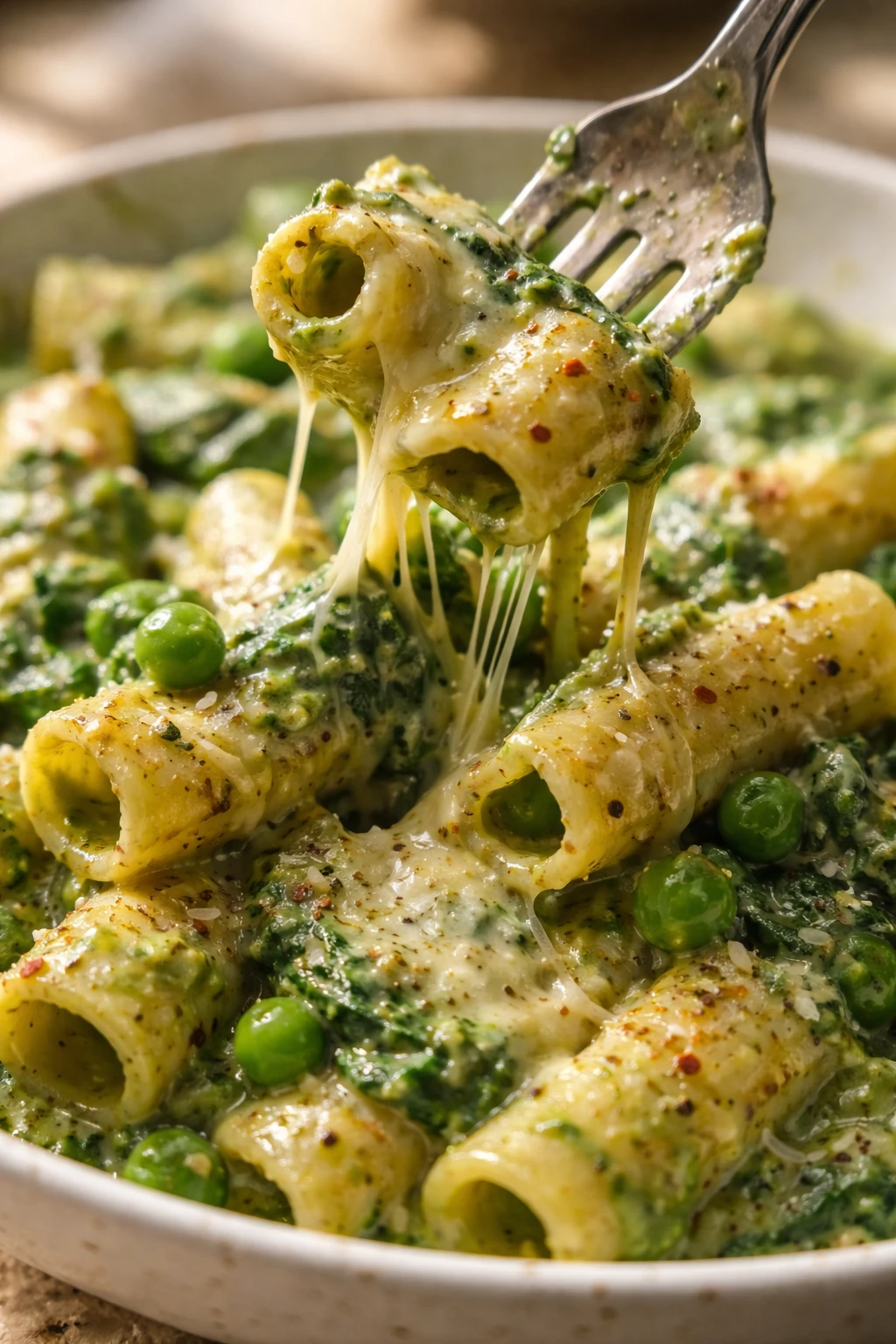
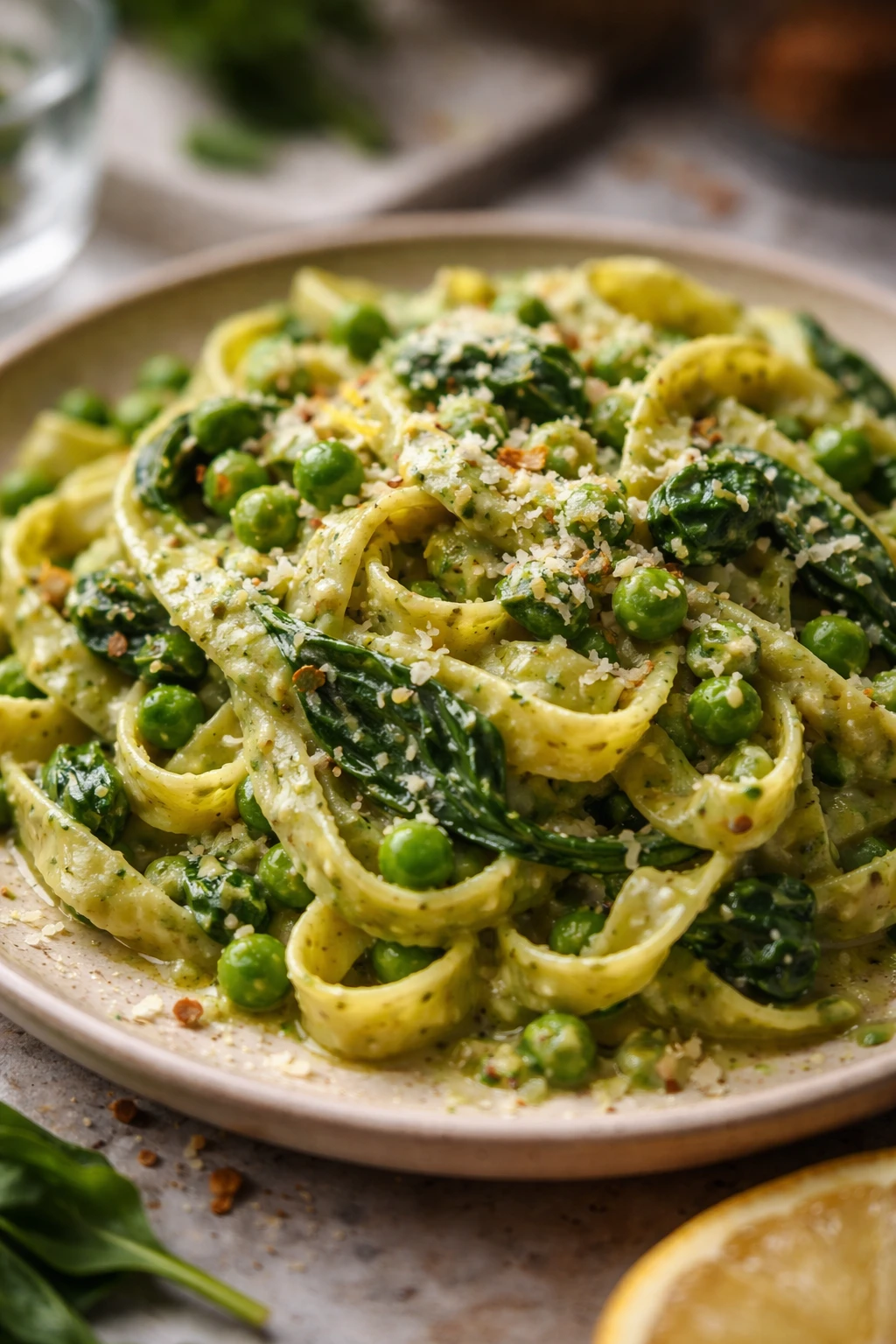
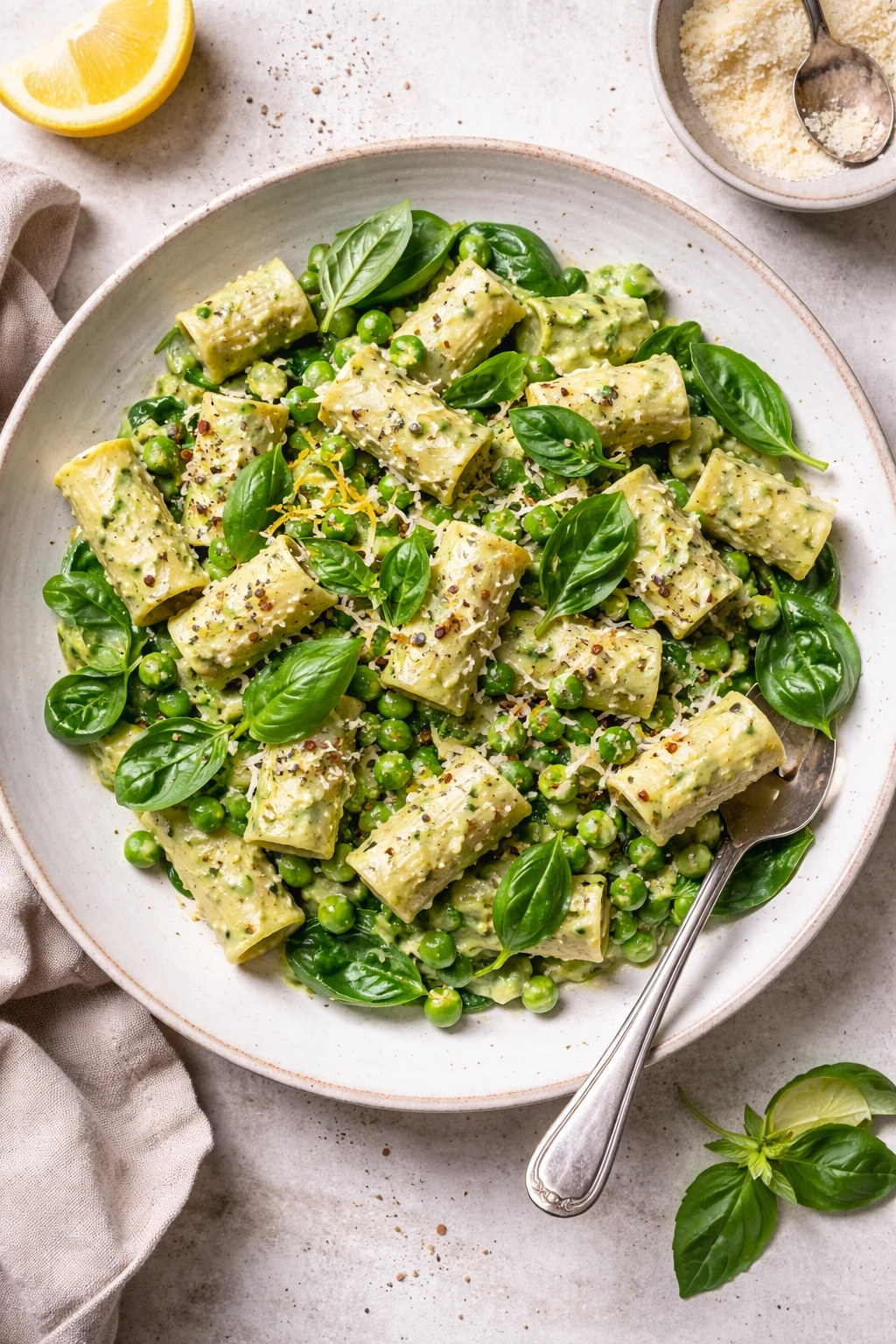
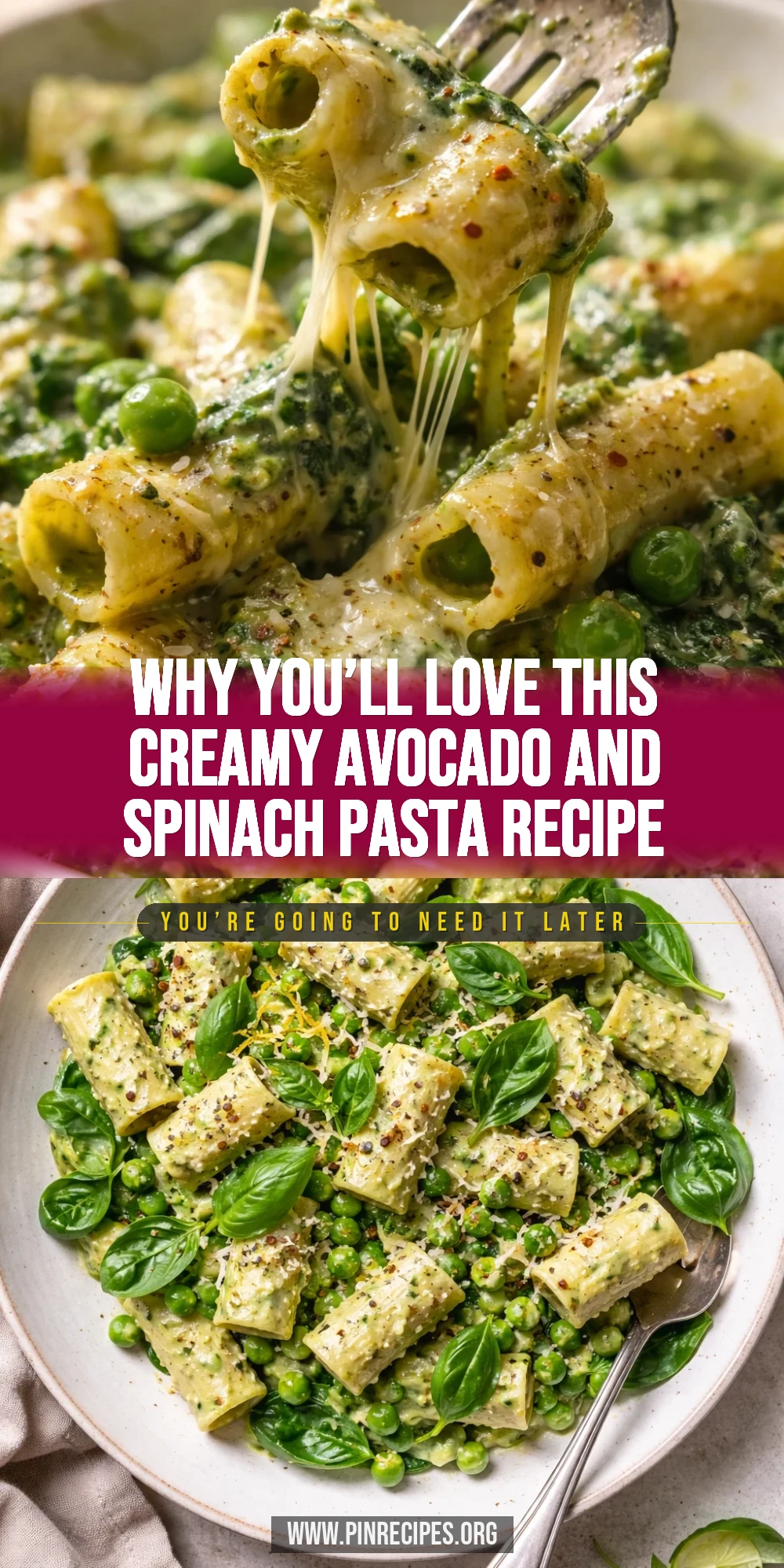
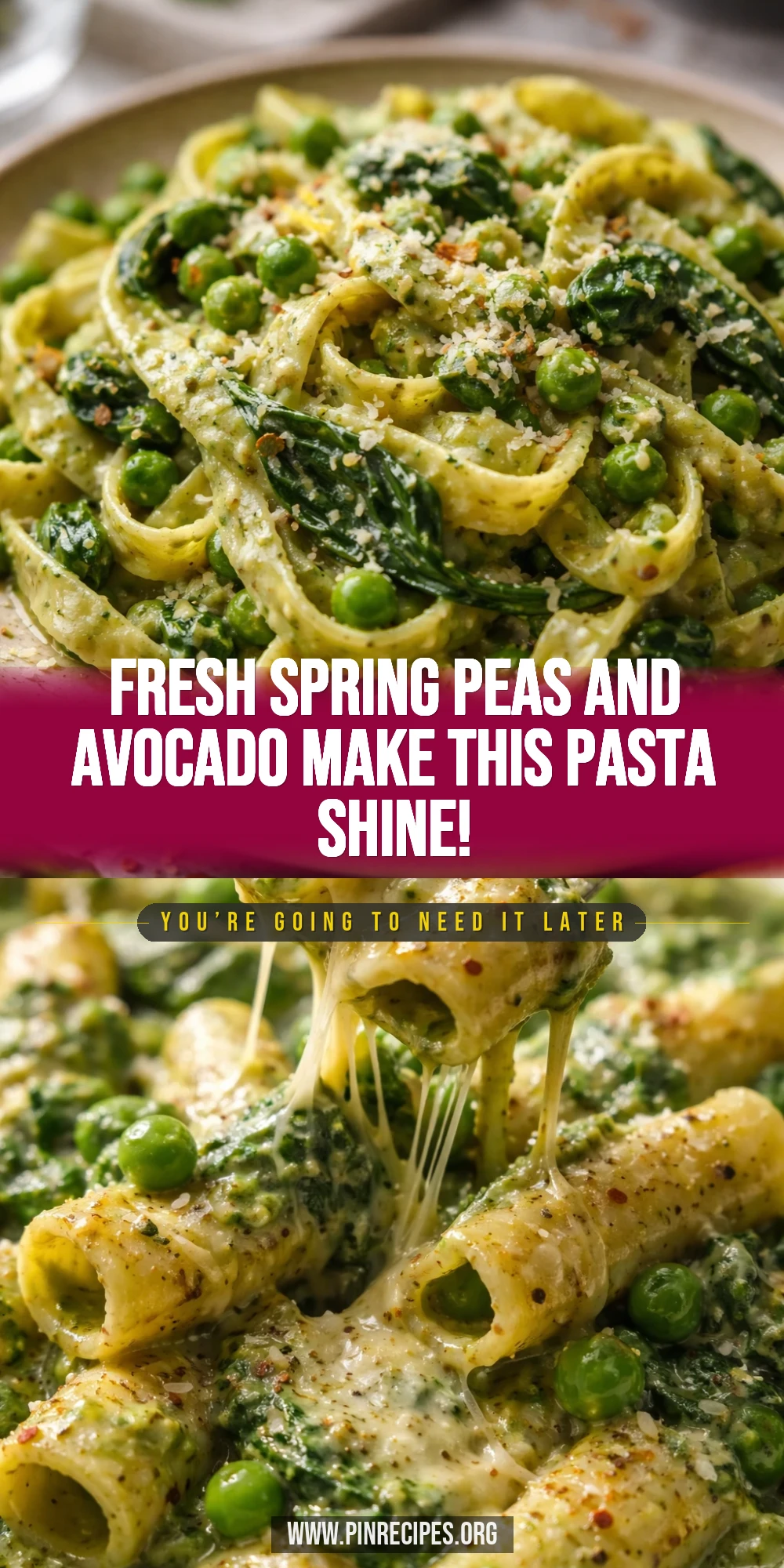
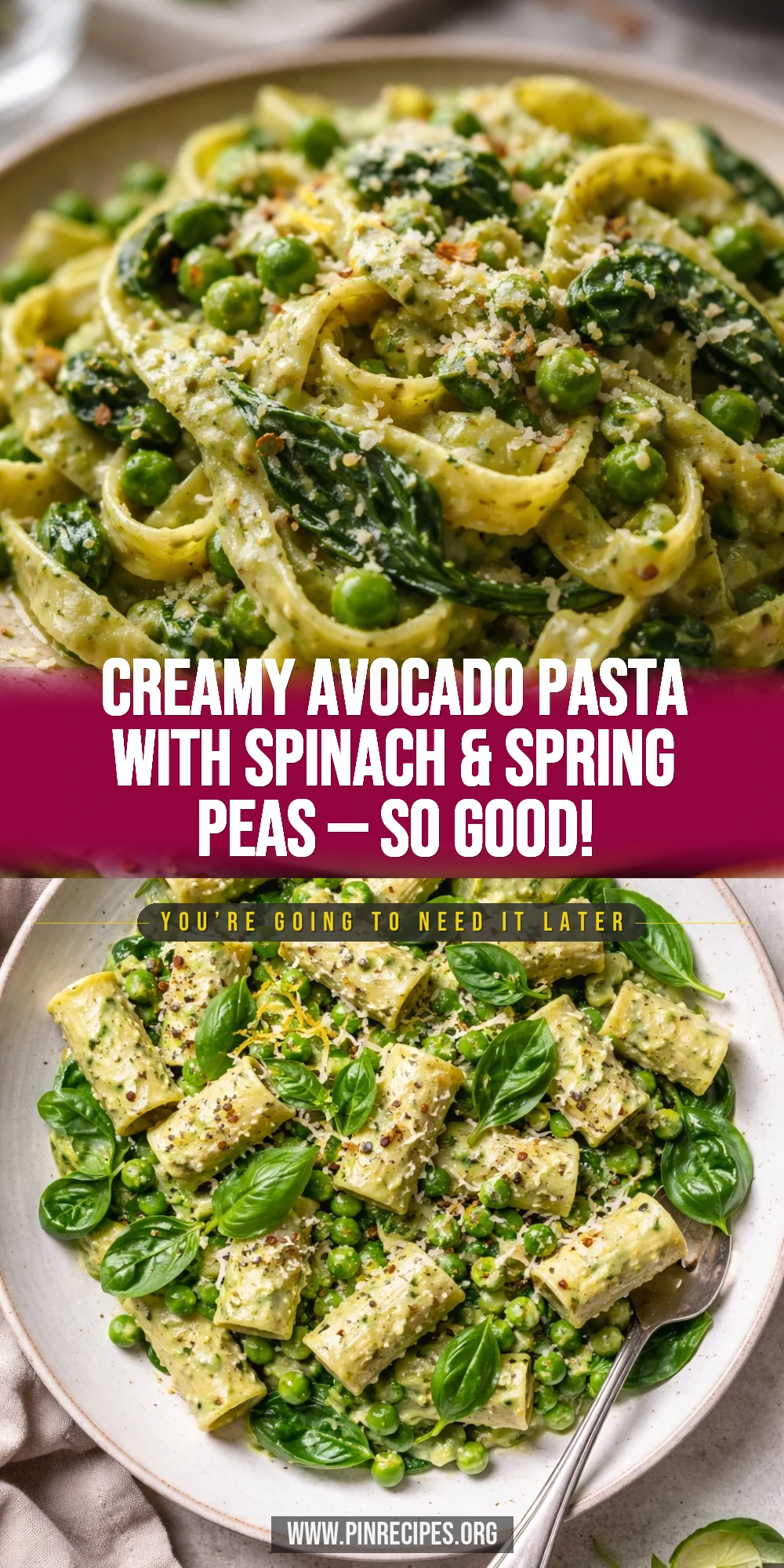
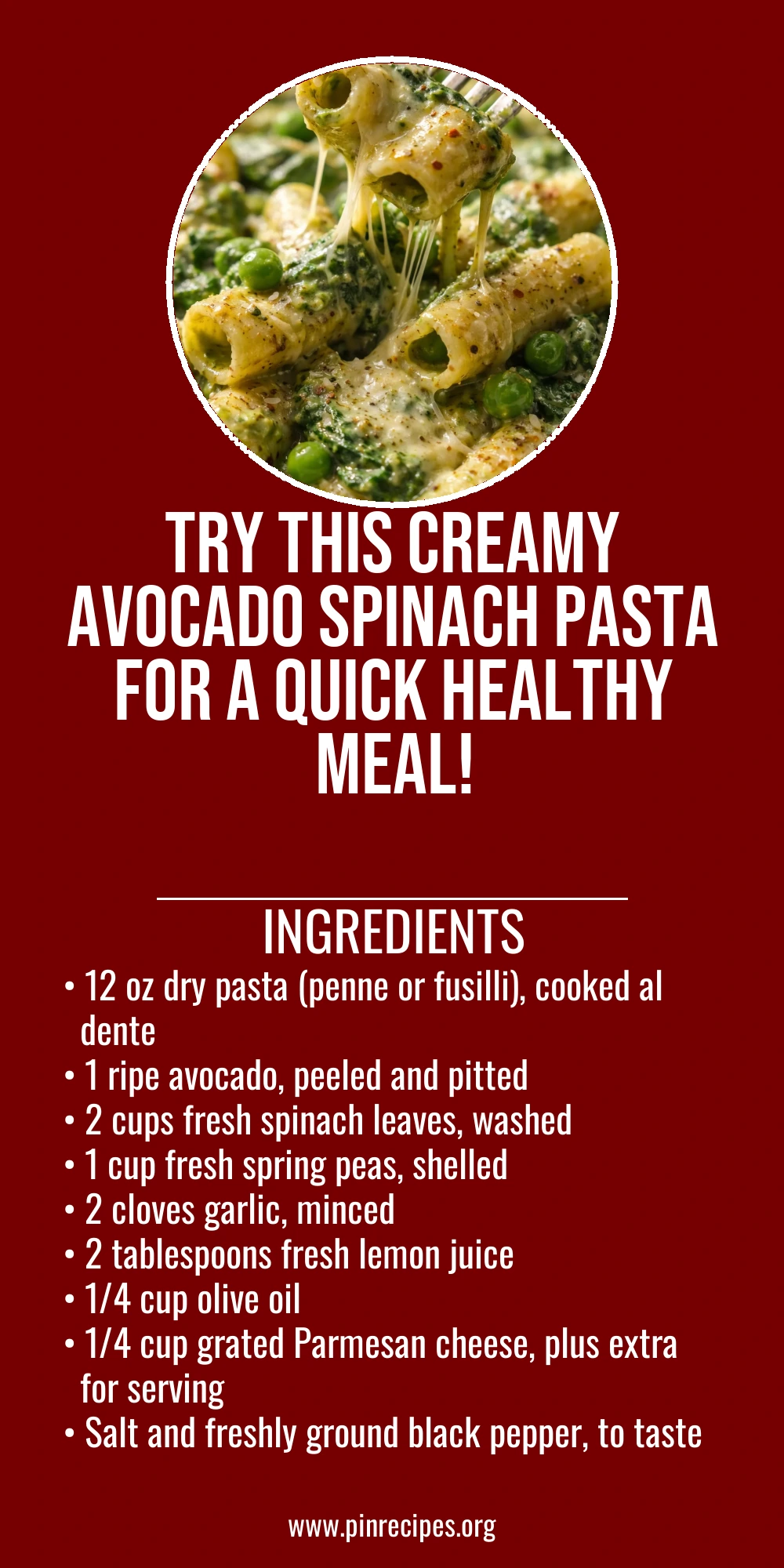
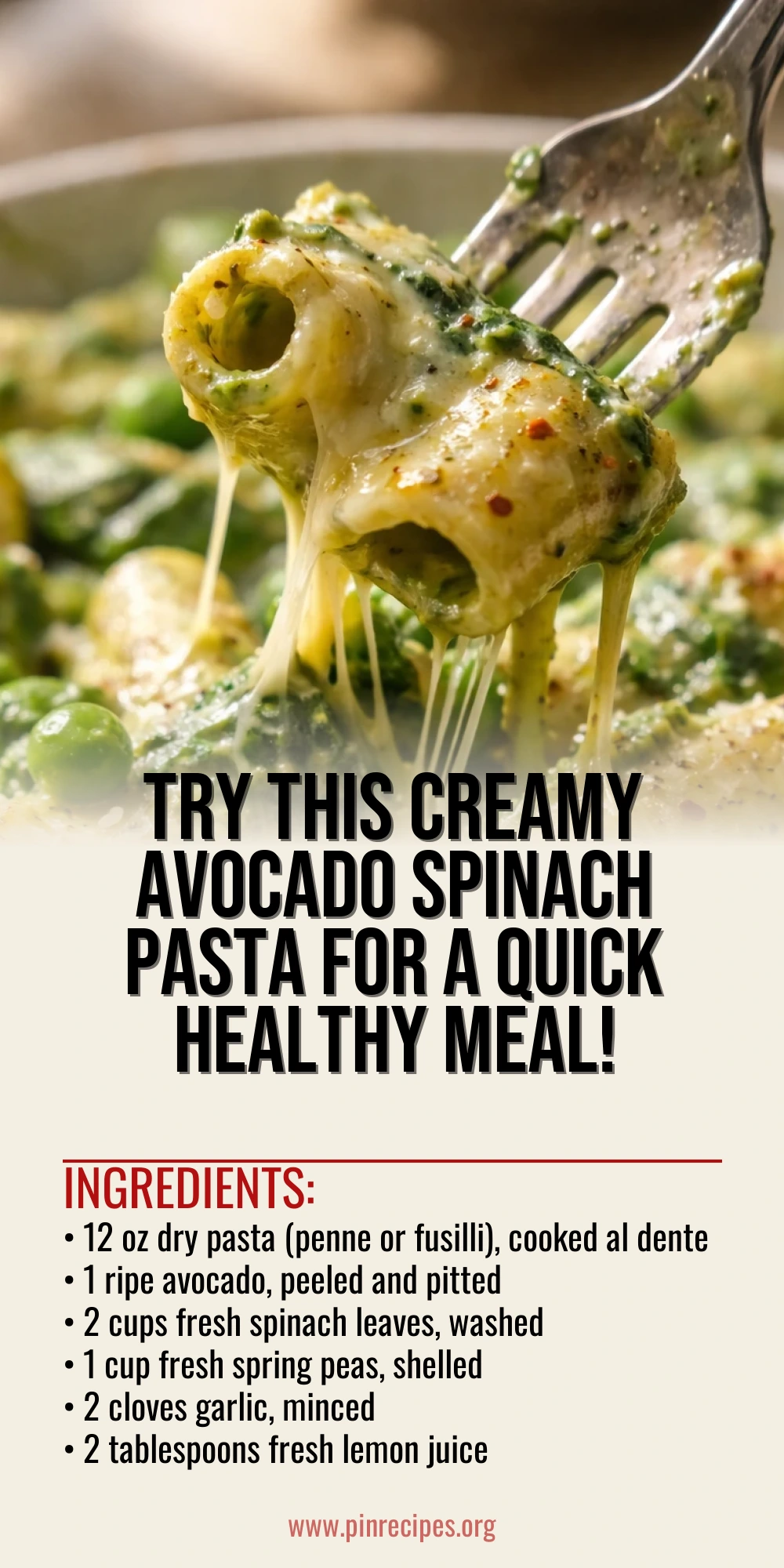
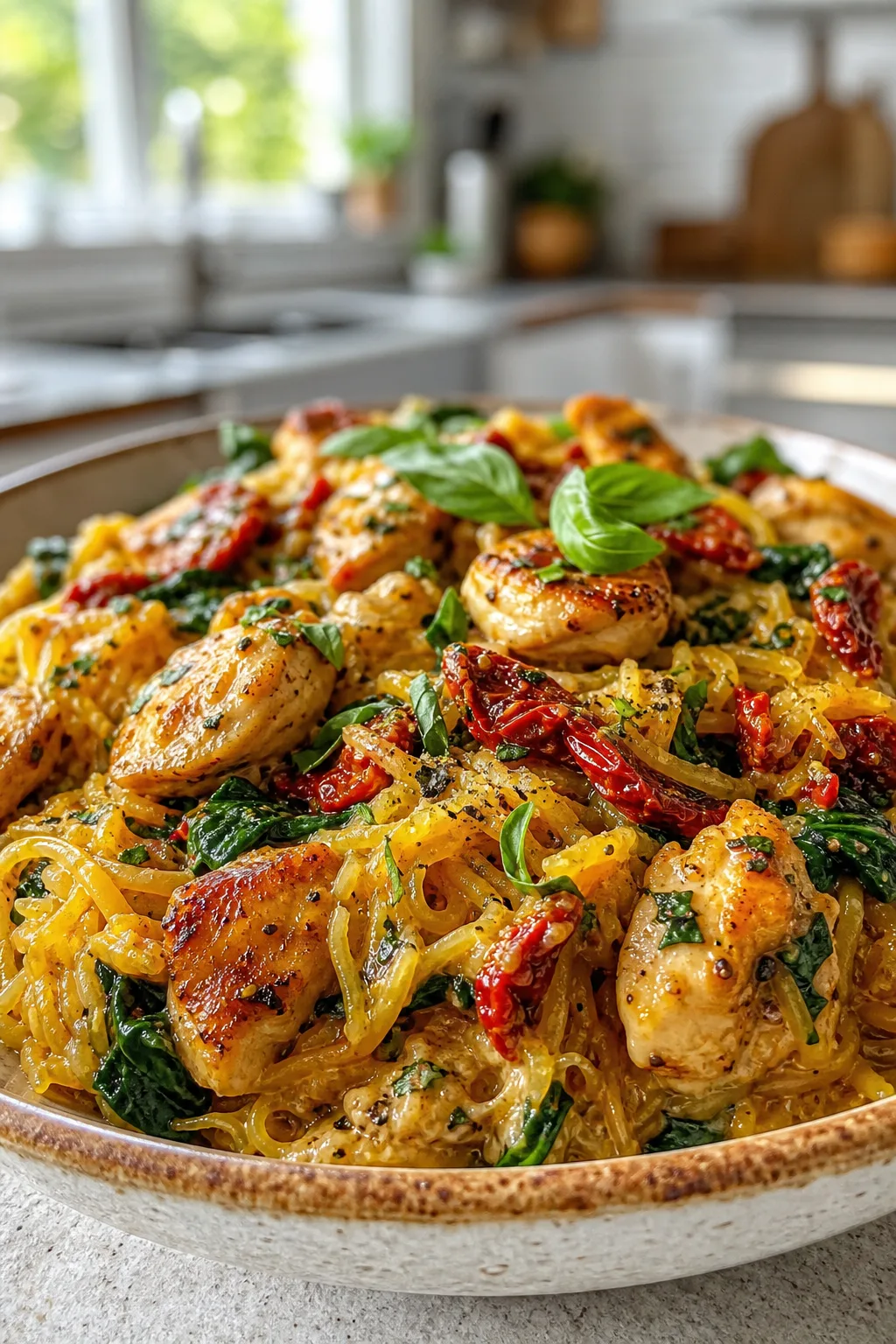
This creamy avocado pasta blends fresh spinach and sweet spring peas for a vibrant, healthy meal. The avocado adds a luscious texture without any cream. Great for a light lunch or quick dinner!
Introduction
I first stumbled upon avocado pasta a few years ago when I wanted something creamy and comforting but without heavy cream or dairy overload. This recipe evolved from my love of fresh spring veggies and the silky texture avocado provides. Unlike traditional cream sauces, the avocado blends into a luscious, velvety coating for the pasta, while the spinach and sweet spring peas add freshness and a pop of color. What I love most is how quick it is — just about 30 minutes from start to finish — making it perfect for busy weeknights or a light weekend lunch. The secret is blending the avocado with lemon juice and olive oil to get a sauce that’s rich but bright and not greasy. Plus, tossing in the peas at the end keeps them tender-crisp, giving a nice textural contrast. I remember the first time I made this for friends; they couldn’t believe something so simple tasted so indulgent. It’s a great way to get in veggies without feeling like you’re eating a salad. The finished dish looks vibrant and inviting, with the green hues shining through and a sprinkle of Parmesan adding a salty finish. It’s definitely become a staple in my kitchen, and I think you’ll enjoy it as much as I do!
How To Do It
Step 1
Bring a large pot of salted water to a boil. Add the pasta and cook until al dente according to package instructions, usually around 8-10 minutes. Cooking pasta al dente means it will have a slight bite to it, which helps it hold up well when tossed with the creamy sauce. Avoid overcooking, as mushy pasta will ruin the texture of the dish. Drain the pasta, reserving about 1 cup of the pasta water to loosen the sauce later if needed.
⏱ Time: 10 minutes
✓ Doneness: Pasta should be tender but still firm to the bite, not mushy or overly soft.
Step 2
While the pasta cooks, blanch the fresh spring peas in boiling water for 1-2 minutes until bright green and tender-crisp. Immediately transfer them to an ice bath to stop cooking and preserve their vibrant color and texture. This step ensures the peas stay sweet and fresh, adding a lovely contrast to the creamy sauce. Drain and set aside.
⏱ Time: 5 minutes
✓ Doneness: Peas should be bright green and tender but still have a slight snap when bitten.
Step 3
In a blender or food processor, combine the ripe avocado, fresh spinach, minced garlic, lemon juice, olive oil, and grated Parmesan. Blend until smooth and creamy. The lemon juice not only adds brightness but also prevents the avocado from browning. The olive oil helps emulsify the sauce, giving it a silky texture. This creamy green sauce is the heart of the dish, so blending until perfectly smooth is key.
⏱ Time: 5 minutes
✓ Doneness: Sauce should be smooth, creamy, and bright green with no large avocado chunks.
Step 4
Taste the sauce and season with salt and freshly ground black pepper. Adjust lemon juice or olive oil if needed to balance the flavors and consistency. The sauce should be flavorful but not overpowering, with a nice balance of creaminess, acidity, and saltiness. Don’t skip tasting here — it’s the best way to get it just right.
⏱ Time: 2 minutes
✓ Doneness: Sauce tastes balanced with a hint of tang and seasoning.
Step 5
Return the drained pasta to the pot or a large mixing bowl. Pour the avocado-spinach sauce over the pasta and toss gently to coat evenly. If the sauce feels too thick, add reserved pasta water a tablespoon at a time to loosen it until it reaches a creamy, silky consistency that clings to the pasta.
⏱ Time: 3 minutes
✓ Doneness: Pasta is evenly coated with a smooth, creamy sauce that isn’t too thick or watery.
Step 6
Fold in the blanched spring peas carefully to avoid crushing them. The peas add a fresh burst of sweetness and a delightful pop of texture against the creamy pasta. Mixing them in last keeps their color bright and texture crisp.
⏱ Time: 2 minutes
✓ Doneness: Peas are evenly distributed and remain whole and vibrant.
Step 7
If you like a little heat, sprinkle in some red pepper flakes and toss gently. This step is optional but adds a nice kick that complements the creamy, fresh flavors beautifully.
⏱ Time: 1 minute
✓ Doneness: Red pepper flakes are evenly distributed and aroma is noticeable but not overpowering.
Step 8
Serve the pasta immediately, garnished with extra grated Parmesan and a drizzle of olive oil if desired. Freshly cracked black pepper on top adds a nice finishing touch. Serving right away ensures the sauce is creamy and the peas stay crisp.
⏱ Time: 1 minute
✓ Doneness: Dish looks vibrant with creamy sauce and fresh garnishes.
Step 9
Enjoy your creamy avocado and spinach pasta warm. Leftovers can be stored but the sauce may thicken, so add a splash of water or olive oil when reheating to restore creaminess. This pasta is just as good the next day with a little refresh!
⏱ Time: N/A
✓ Doneness: Pasta reheats smoothly without drying out or clumping.
Pro Tips
Use ripe but firm avocados for the best creamy texture.
Ripe avocados that are too soft can make the sauce watery and less smooth, while underripe ones won’t blend well. The right ripeness ensures a silky, luscious sauce that coats the pasta perfectly.
Reserve some pasta water before draining to adjust sauce consistency.
The starchy pasta water helps loosen the avocado sauce without diluting flavor. It also helps the sauce cling to the pasta better, creating a cohesive dish.
Blanch peas briefly and shock in ice water to keep them crisp and green.
This technique stops cooking instantly, preserving the peas’ sweet flavor, bright color, and satisfying crunch that balances the creamy sauce.
Add lemon juice gradually and taste to avoid overpowering acidity.
Lemon juice brightens the sauce but too much can make it sour. Tasting as you go helps achieve the perfect balance between richness and freshness.
Cook pasta al dente to maintain texture and prevent mushiness.
Firm pasta holds the sauce better and provides a pleasant bite. Overcooked pasta absorbs too much sauce and becomes soggy, ruining the dish’s texture.
Use a blender or food processor to get a perfectly smooth sauce.
Blending emulsifies the ingredients, creating a creamy texture that coats pasta evenly. Hand-mashing won’t achieve the same silky consistency.
Serve immediately after tossing to enjoy the best texture and flavor.
The avocado sauce can thicken and darken if left too long. Serving right away ensures the pasta is creamy and fresh, with vibrant green color.
Common Mistakes to Avoid
Using underripe or overripe avocados
Why it happens It's easy to grab an avocado that feels okay but is either too hard or too mushy without checking carefully.
Fix Choose avocados that yield slightly to gentle pressure but aren’t overly soft. If your avocado is underripe, let it ripen a day or two before using.
Overcooking the pasta
Why it happens Rushing or not timing the pasta properly can lead to mushy noodles that don’t hold sauce well.
Fix Follow package instructions closely and taste the pasta a minute or two before the suggested time to ensure al dente texture.
Skipping the ice bath for peas
Why it happens Sometimes cooks blanch peas but forget to cool them quickly, leading to overcooked, dull peas.
Fix Immediately transfer peas to ice water after blanching to stop cooking and lock in color and texture.
Not seasoning the sauce
Why it happens Assuming avocado and lemon juice provide enough flavor can result in bland pasta.
Fix Always taste and season with salt, pepper, and lemon juice to balance richness and enhance flavor.
Not reserving pasta water
Why it happens Many cooks drain pasta without saving water, missing out on a natural thickener.
Fix Save a cup of pasta water before draining and use it to adjust the sauce consistency as needed.
Variations
Add Grilled Chicken for Extra Protein
Toss in sliced grilled chicken breast for a heartier meal that’s still light and fresh. The smoky chicken pairs beautifully with the creamy avocado sauce and spring peas, making it a perfect dinner option.
Note: Ensure the chicken is cooked through and sliced thinly. Add it after tossing pasta with sauce to keep it tender.
Swap Spinach for Kale for a More Robust Flavor
Use tender kale instead of spinach for a slightly earthier, chewier texture. Massage the kale with a bit of olive oil beforehand to soften it, then blend with avocado for a green sauce with more bite.
Note: Kale is tougher than spinach, so blending longer and massaging prior helps achieve smooth sauce.
Make It Vegan by Omitting Parmesan
Skip the Parmesan or replace it with nutritional yeast for a cheesy flavor without dairy. This keeps the sauce creamy and flavorful while making the dish fully plant-based.
Note: Nutritional yeast adds umami but won’t melt like cheese, so texture will be slightly different.
Add Fresh Herbs Like Basil or Mint
Blend fresh basil or mint leaves into the sauce for a fragrant, herbaceous twist that brightens the dish even more. It adds complexity and a fresh garden flavor.
Note: Use about 1/4 cup fresh herbs, adding them with the spinach before blending.
Use Zucchini Noodles Instead of Pasta for Low Carb
Swap regular pasta for spiralized zucchini noodles for a lighter, low-carb version. Toss the sauce with zucchini just before serving to avoid sogginess.
Note: Zucchini noodles cook quickly and release water, so serve immediately after tossing with sauce.
Nutrition
Per Serving:
Nutritional values are estimates and may vary based on specific ingredients used.
Storage & Tips
Room Temperature
This pasta is best served fresh and should not be left at room temperature for more than 2 hours. Cover it loosely if you need to keep it out briefly.
Refrigerator
Store leftovers in an airtight container for up to 2 days. The sauce may thicken and darken; stir in a splash of water or olive oil when reheating to restore creaminess. It can be enjoyed cold but the texture is best warmed.
Freezer
Freezing is not recommended as avocado sauces tend to discolor and separate when thawed, affecting texture and appearance.
Reheating
Reheat gently on the stovetop over low heat or in short bursts in the microwave. Add a tablespoon of water or olive oil to loosen the sauce. Avoid high heat to prevent avocado sauce from breaking or becoming grainy.
Make Ahead
You can prepare the sauce and blanch the peas 1-2 days ahead, storing them separately in airtight containers. Cook pasta fresh and toss everything together just before serving for best texture and flavor.
FAQ
Can I use frozen peas instead of fresh spring peas?
Yes, frozen peas can be used if fresh aren’t available. Just thaw and drain them well before adding. They will be softer and less vibrant but still add sweetness and texture. Blanching frozen peas is usually unnecessary.
How do I prevent the avocado sauce from turning brown?
The lemon juice in the sauce helps prevent oxidation, which causes browning. Also, serve the pasta immediately after tossing with sauce. If storing leftovers, keep covered tightly and add a bit more lemon juice when reheating to freshen the color.
Can I make this pasta ahead of time?
You can prepare the sauce and peas ahead and store separately, but it’s best to cook and toss the pasta just before serving. This keeps the texture fresh and prevents the sauce from thickening or discoloring.
What pasta types work best with this sauce?
Short, ridged pasta like penne or fusilli works great because the sauce clings well to the grooves. You can also use spaghetti or linguine if you prefer, but make sure to toss well so the sauce coats evenly.
Is this recipe suitable for vegans?
To make it vegan, simply omit the Parmesan or replace it with nutritional yeast. The sauce remains creamy and flavorful, but the cheesy depth will be milder.
How can I add more protein to this dish?
Add grilled chicken, shrimp, or tofu for extra protein. Cook and season your protein separately, then toss with the pasta and sauce just before serving to keep everything fresh and flavorful.
Can I substitute lemon juice with lime juice?
Yes, lime juice works as a substitute and adds a slightly different citrus note. Use the same amount but adjust to taste since lime can be more tart.
Why does the sauce sometimes turn watery?
If the avocado isn’t ripe enough or if too much olive oil or lemon juice is added, the sauce can become watery. Also, adding too much pasta water at once can thin it out. Add liquids gradually to control consistency.
Final Thoughts
I hope you enjoy this fresh, creamy avocado and spinach pasta as much as I do! Give it a try and let me know how it turns out — I’d love to hear your twists and tips.