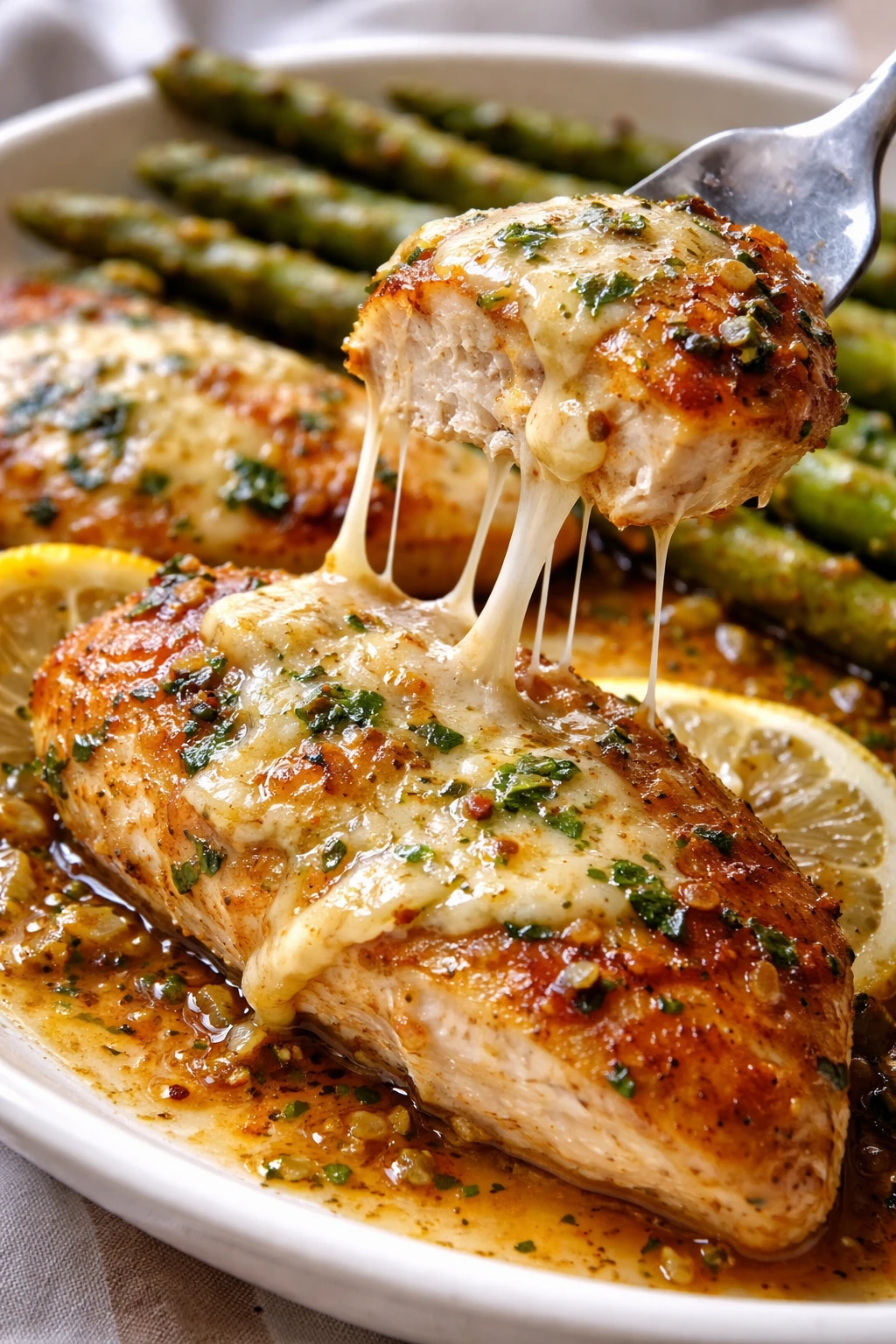
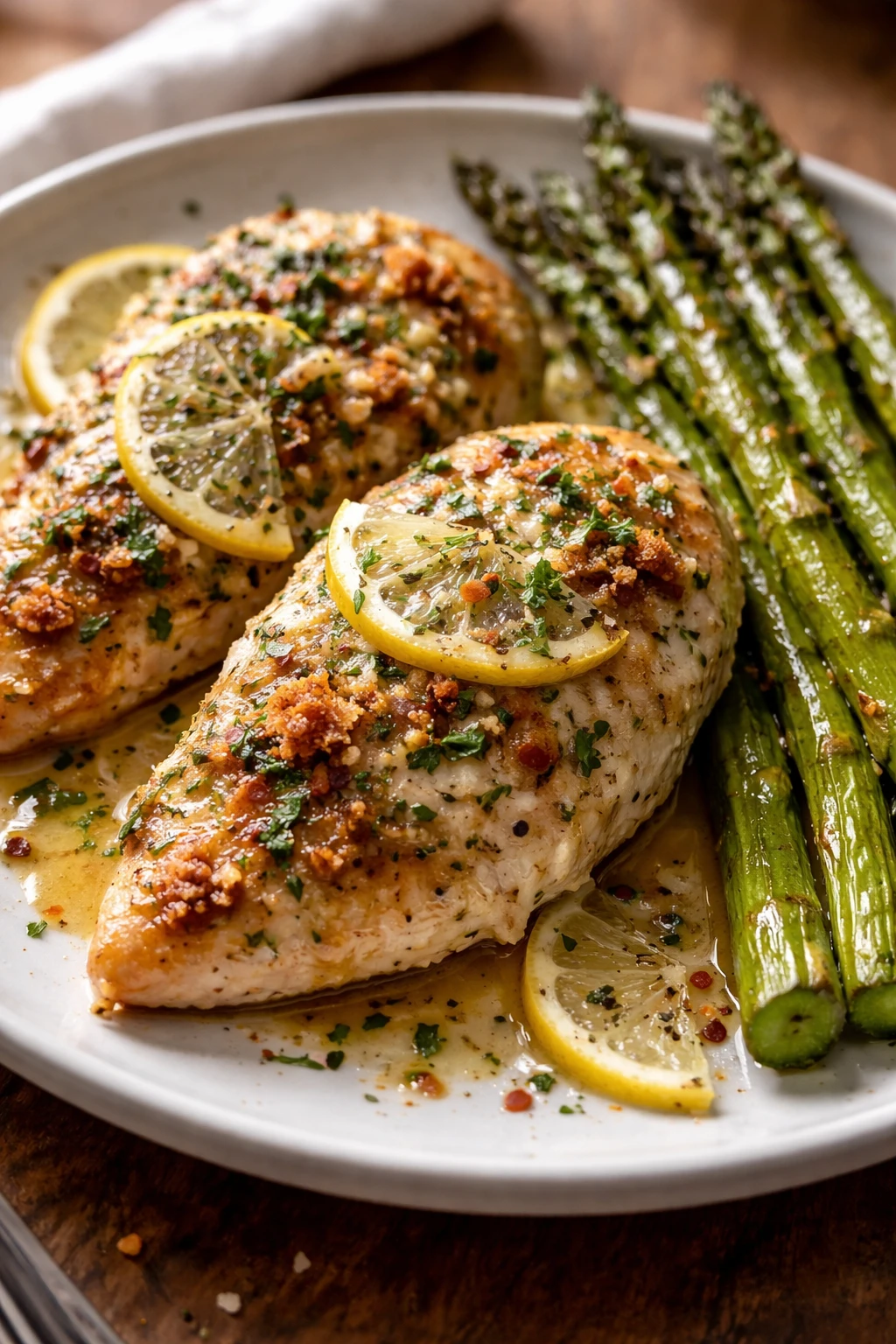
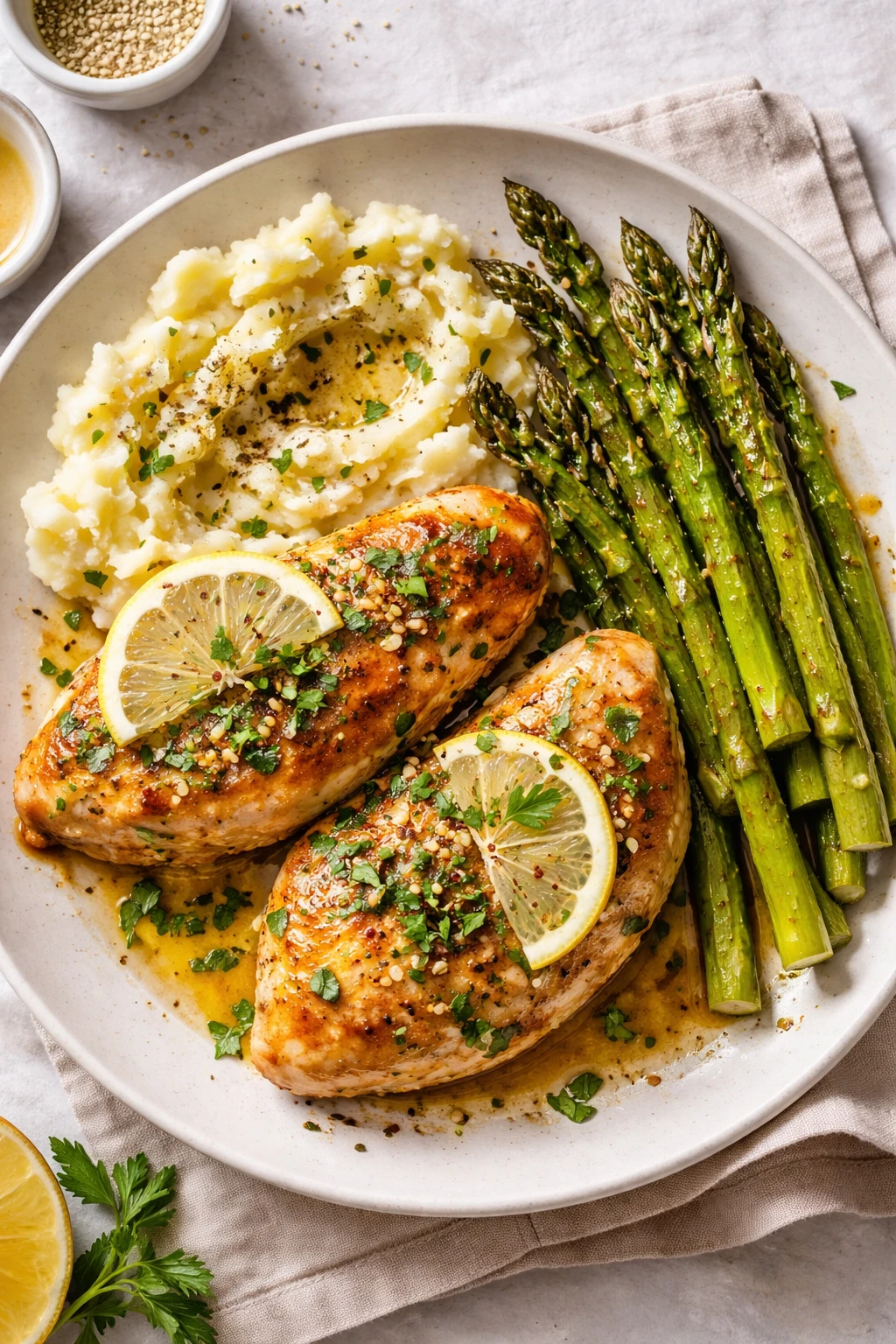
This lemon herb chicken paired with roasted asparagus is a quick, fresh dinner that feels fancy but comes together in under 45 minutes. The bright lemon zest and fresh herbs really lift the dish. Perfect for busy weeknights when you want something light but satisfying.
Introduction
I first made this lemon herb chicken on a hectic weeknight when I needed something quick but still full of flavor. What I love about this recipe is how it balances bright lemon with fragrant herbs and garlic, making it feel special without extra fuss. The trick I learned early on was to pound the chicken breasts to an even thickness — it helps them cook evenly and stay juicy. Roasting the asparagus alongside the chicken means everything finishes around the same time, which is a total win in my book. The finished dish is tender, zesty, and fresh, perfect for a light dinner that doesn’t leave you feeling weighed down. Plus, it’s so easy to customize with whatever herbs you have on hand. This has become a staple in my rotation, especially when I want something healthy but satisfying without spending hours in the kitchen.
How To Do It
Step 1
Start by preheating your oven to 425°F (220°C). While it heats, pat the chicken breasts dry with paper towels — this helps the seasoning stick and promotes better browning. Then, place them between two sheets of plastic wrap and gently pound with a meat mallet or rolling pin until they’re about 1/2 inch thick. This step is key because it ensures even cooking and prevents the thicker parts from drying out while the thinner parts finish. Avoid pounding too hard to keep the chicken tender.
⏱ Time: 10 minutes
✓ Doneness: Chicken breasts are evenly flattened and dry to the touch
Step 2
In a small bowl, whisk together 1 tablespoon olive oil, lemon zest, lemon juice, chopped thyme, rosemary, minced garlic, salt, and pepper. This marinade will infuse the chicken with bright, herbaceous flavor. Don’t rush this step — letting the lemon juice and herbs mingle creates a fresh, balanced taste. If you skip or shorten marinating, the chicken will still taste good but less vibrant.
⏱ Time: 5 minutes
✓ Doneness: Marinade is well combined and aromatic
Step 3
Brush both sides of the chicken breasts with the lemon herb marinade, making sure they’re evenly coated. Set aside while you prepare the asparagus. This resting time lets the flavors start soaking in. If you have time, you can marinate for up to 30 minutes in the fridge, but even a quick coat before cooking works well.
⏱ Time: 5 minutes
✓ Doneness: Chicken breasts glisten with marinade and smell fragrant
Step 4
Trim the woody ends off the asparagus and toss the spears with the remaining 1 tablespoon of olive oil, a pinch of salt, and pepper. Spread the asparagus on a rimmed baking sheet in a single layer. This ensures they roast evenly and get nicely caramelized. Overcrowding the pan leads to steaming instead of roasting, which dulls flavor and texture.
⏱ Time: 5 minutes
✓ Doneness: Asparagus is evenly coated and arranged flat on the baking sheet
Step 5
Arrange the marinated chicken breasts on the baking sheet alongside the asparagus. Make sure they don’t overlap to allow proper heat circulation. Placing them on the same pan means both cook simultaneously and finish together, saving time and dishes — a total weeknight win!
⏱ Time: 5 minutes
✓ Doneness: Chicken and asparagus are spaced evenly on the sheet
Step 6
Roast everything in the preheated oven for about 20-25 minutes, flipping the chicken halfway through. The chicken should reach an internal temperature of 165°F (74°C) — use a meat thermometer if you have one. The asparagus should be tender but still have a slight snap and some caramelized edges. Overcooking the chicken dries it out, so keep an eye on it.
⏱ Time: 25 minutes
✓ Doneness: Chicken is opaque and juices run clear; asparagus is tender and lightly browned
Step 7
Once cooked, remove the pan from the oven and let the chicken rest for 5 minutes. Resting allows the juices to redistribute, making the chicken juicy and tender rather than dry. During this time, the asparagus will cool slightly but remain flavorful and crisp-tender.
⏱ Time: 5 minutes
✓ Doneness: Chicken surface is warm but not steaming; juices settle when cut
Step 8
Serve the chicken breasts topped with extra lemon zest or fresh herbs if desired, alongside the roasted asparagus. Adding lemon wedges on the side lets everyone squeeze fresh citrus over their plates, brightening every bite. This simple garnish adds freshness and makes the meal feel extra special.
⏱ Time: 2 minutes
✓ Doneness: Plated dish looks vibrant with fresh herb and lemon accents
Step 9
Clean up your prep area and enjoy! This dish pairs beautifully with a side of quinoa, rice, or crusty bread to soak up any juices. Leftovers reheat well, making this a perfect meal prep option. Try not to skip the resting step next time you cook chicken to keep it juicy and tender.
⏱ Time: N/A
✓ Doneness: Meal is ready to enjoy, kitchen tidy
Pro Tips
Pound chicken breasts to even thickness before cooking.
This ensures the chicken cooks evenly, preventing dry edges and undercooked centers. Uneven thickness causes the thinner parts to overcook while waiting for the thicker parts to finish, resulting in a less juicy final product.
Use fresh lemon zest and juice in the marinade.
Fresh lemon zest contains essential oils that add bright, aromatic citrus notes beyond just acidity. The juice tenderizes the meat slightly and balances richness, making the dish lively and fresh.
Roast asparagus on the same pan as chicken for convenience.
Cooking both together saves time and dishes. The asparagus roasts quickly at high heat, developing caramelized edges that complement the chicken’s flavor and texture.
Flip chicken halfway through roasting.
Flipping promotes even browning and cooking on both sides, giving the chicken a golden crust and juicy interior. Skipping this can cause uneven color and texture.
Rest chicken for 5 minutes after cooking.
Resting allows juices to redistribute within the meat, preventing them from spilling out when cut. This results in a tender, moist bite rather than dry, stringy chicken.
Trim woody ends off asparagus before roasting.
Woody ends are tough and fibrous, detracting from texture. Removing them ensures the asparagus cooks evenly and remains tender without unpleasant chewiness.
Don’t overcrowd the baking sheet.
Crowding traps steam, preventing caramelization and crispness. Spacing ingredients allows hot air circulation, producing better browning and flavor development.
Common Mistakes to Avoid
Cooking chicken breasts straight from the fridge without resting.
Why it happens Many cooks want to save time and put cold chicken directly in the oven, but cold meat cooks unevenly and can dry out.
Fix Let chicken rest at room temperature for 15-20 minutes before cooking. This helps it cook more evenly and stay juicy.
Skipping the pounding step for uneven chicken breasts.
Why it happens People often overlook this step thinking it’s unnecessary, but uneven thickness leads to uneven cooking.
Fix Use a meat mallet or rolling pin to gently pound chicken to uniform thickness before marinating and cooking.
Not flipping chicken during roasting.
Why it happens Some think flipping isn’t needed or forget to do it, but it’s crucial for even browning.
Fix Set a timer to flip chicken halfway through cooking to ensure golden crust on both sides.
Overcrowding the pan with asparagus and chicken.
Why it happens Trying to save time or dishes leads to crowding, causing steaming instead of roasting.
Fix Use a large enough pan or roast asparagus separately to allow space for proper caramelization.
Not resting chicken after cooking.
Why it happens Impatience often leads to slicing immediately, causing juice loss.
Fix Allow chicken to rest 5 minutes before slicing to keep it moist and tender.
Variations
Garlic Butter Lemon Chicken
Add melted garlic butter to the marinade for a richer, indulgent flavor. Roast the chicken and asparagus as usual, then drizzle extra garlic butter over the top before serving. This variation adds depth and a silky texture that’s perfect for cozy dinners.
Note: Butter has a lower smoke point than olive oil, so watch the oven temperature carefully to avoid burning.
Spicy Lemon Herb Chicken
Incorporate red pepper flakes or cayenne into the marinade for a spicy kick. This variation pairs beautifully with the fresh lemon and herbs, adding warmth without overpowering the brightness. Great for those who like a little heat!
Note: Adjust spice level to taste; add chili after marinating to avoid bitterness.
Mediterranean Style with Olives and Cherry Tomatoes
Add halved cherry tomatoes and pitted olives to the baking sheet for a Mediterranean twist. The tomatoes roast down to a sweet, juicy sauce that complements the lemon herb chicken perfectly. This variation brightens the dish with extra color and flavor complexity.
Note: Add tomatoes and olives halfway through roasting to prevent overcooking.
Honey Lemon Glazed Chicken
Mix honey into the lemon herb marinade for a touch of sweetness that balances the acidity. The glaze caramelizes during roasting, giving the chicken a beautiful golden color and sticky-sweet finish. A crowd-pleaser for sure!
Note: Keep oven temperature moderate to prevent honey from burning.
Herb-Marinated Chicken Thighs
Swap chicken breasts for bone-in, skin-on thighs for juicier, more flavorful meat. Marinate and roast as directed but increase cooking time by 10-15 minutes. The skin crisps up beautifully, adding texture contrast.
Note: Use a meat thermometer to ensure thighs reach 175°F for safe doneness.
Nutrition
Per Serving:
Nutritional values are estimates and may vary based on specific ingredients used.
Storage & Tips
Room Temperature
This dish can safely sit out covered for up to 2 hours. Beyond that, bacteria growth increases. Keep covered with foil or a clean kitchen towel to prevent drying.
Refrigerator
Store leftovers in an airtight container for up to 3 days. The chicken may firm up slightly when cold, so reheating gently is recommended to restore tenderness. Asparagus can become softer when refrigerated but still tastes great.
Freezer
Freeze cooked chicken and asparagus separately in airtight containers or freezer bags for up to 2 months. Wrap tightly to prevent freezer burn. Thaw overnight in the refrigerator before reheating.
Reheating
Reheat gently in a skillet over medium-low heat with a splash of water or broth to keep chicken moist. Microwave on medium power in short bursts, covering to trap steam. Avoid high heat to prevent drying out.
Make Ahead
Marinate the chicken up to 24 hours ahead to deepen flavor. Trim and prep asparagus and store separately in the fridge. Assemble and roast on the day of serving for best freshness and texture.
FAQ
Can I use frozen chicken breasts for this recipe?
It's best to use fresh chicken breasts that are fully thawed before cooking. Frozen chicken tends to release excess moisture and can cook unevenly, resulting in a less juicy texture. If using frozen, thaw completely in the fridge overnight and pat dry before marinating.
What if I don’t have fresh herbs on hand?
Dried herbs can be used as a substitute, but use about half the amount since dried herbs are more concentrated. Add them earlier in the marinade to allow flavors to develop. Fresh herbs provide a brighter, fresher flavor, so try to use them when possible.
Can I cook the chicken and asparagus separately?
Absolutely! Cooking them separately allows you to control timing precisely, especially if your asparagus stalks vary in thickness. Roast the asparagus for about 10-15 minutes and the chicken for 20-25 minutes. This method works well if you want perfect doneness for each.
How do I know when the chicken is fully cooked?
The safest way is to use a meat thermometer. The internal temperature should reach 165°F (74°C). If you don’t have a thermometer, cut into the thickest part — the meat should be opaque with clear juices, not pink or bloody.
Can I make this recipe vegan or vegetarian?
For a vegan version, swap the chicken for firm tofu or tempeh, marinate similarly, and roast with asparagus. The cooking time will be shorter, so watch carefully to avoid drying out. This keeps the fresh lemon herb flavors intact.
Is it okay to skip the resting step after cooking?
Skipping resting often leads to juices running out when you cut the chicken, resulting in drier meat. Resting allows juices to redistribute, so even a short 5-minute rest makes a big difference in tenderness and moisture.
What sides go well with this lemon herb chicken?
This dish pairs nicely with quinoa, rice pilaf, roasted potatoes, or a simple green salad. The fresh lemon and herbs complement light, fresh sides well, balancing the meal without overpowering the flavors.
Can I use other vegetables instead of asparagus?
Definitely! Green beans, broccoli florets, or sliced bell peppers work well roasted alongside the chicken. Adjust roasting time based on the vegetable’s tenderness to avoid overcooking or undercooking.
Final Thoughts
I hope you enjoy making and eating this lemon herb chicken as much as I do! It’s a simple, bright, and satisfying meal that’s perfect any night of the week. Don’t forget to share how it turns out!