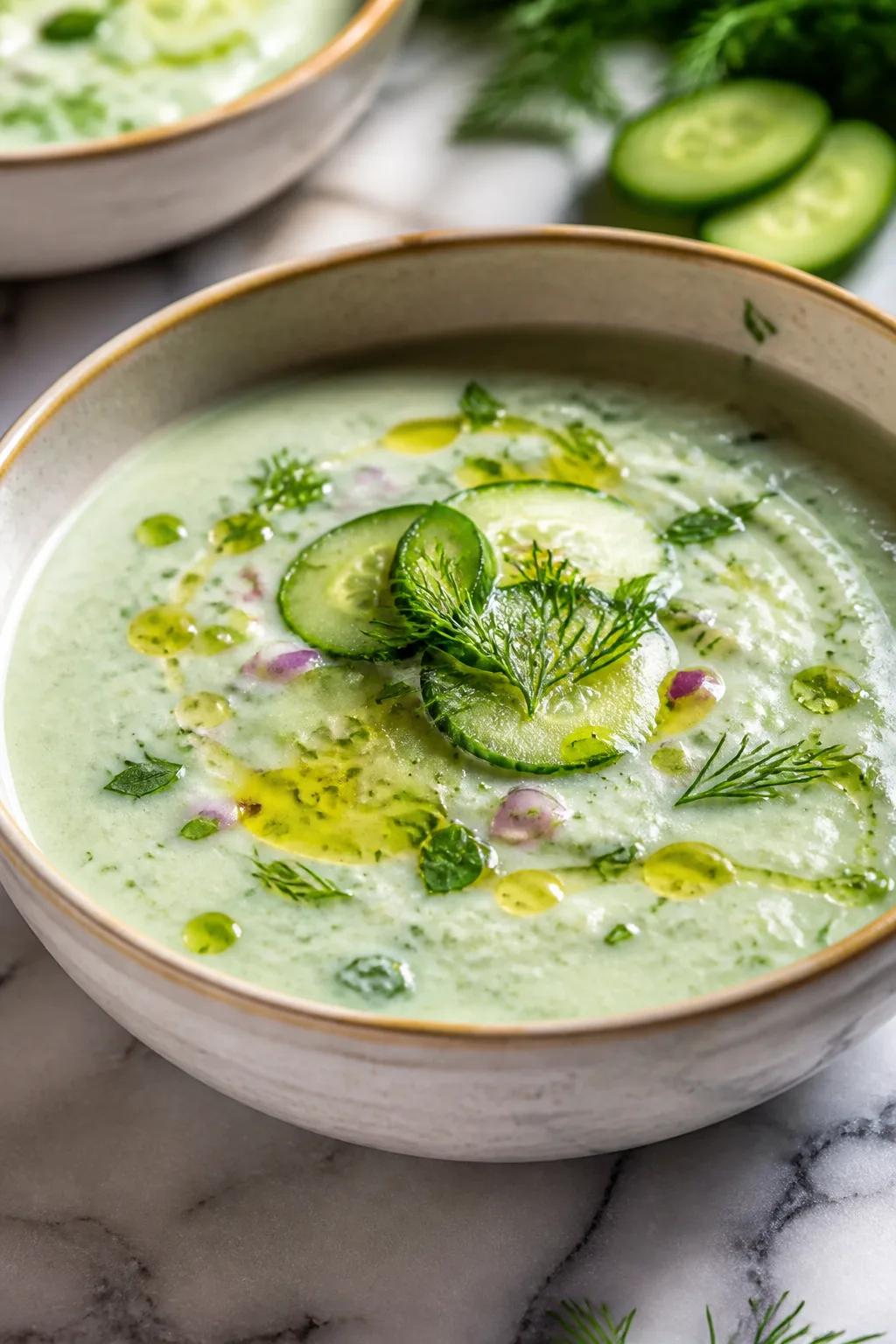
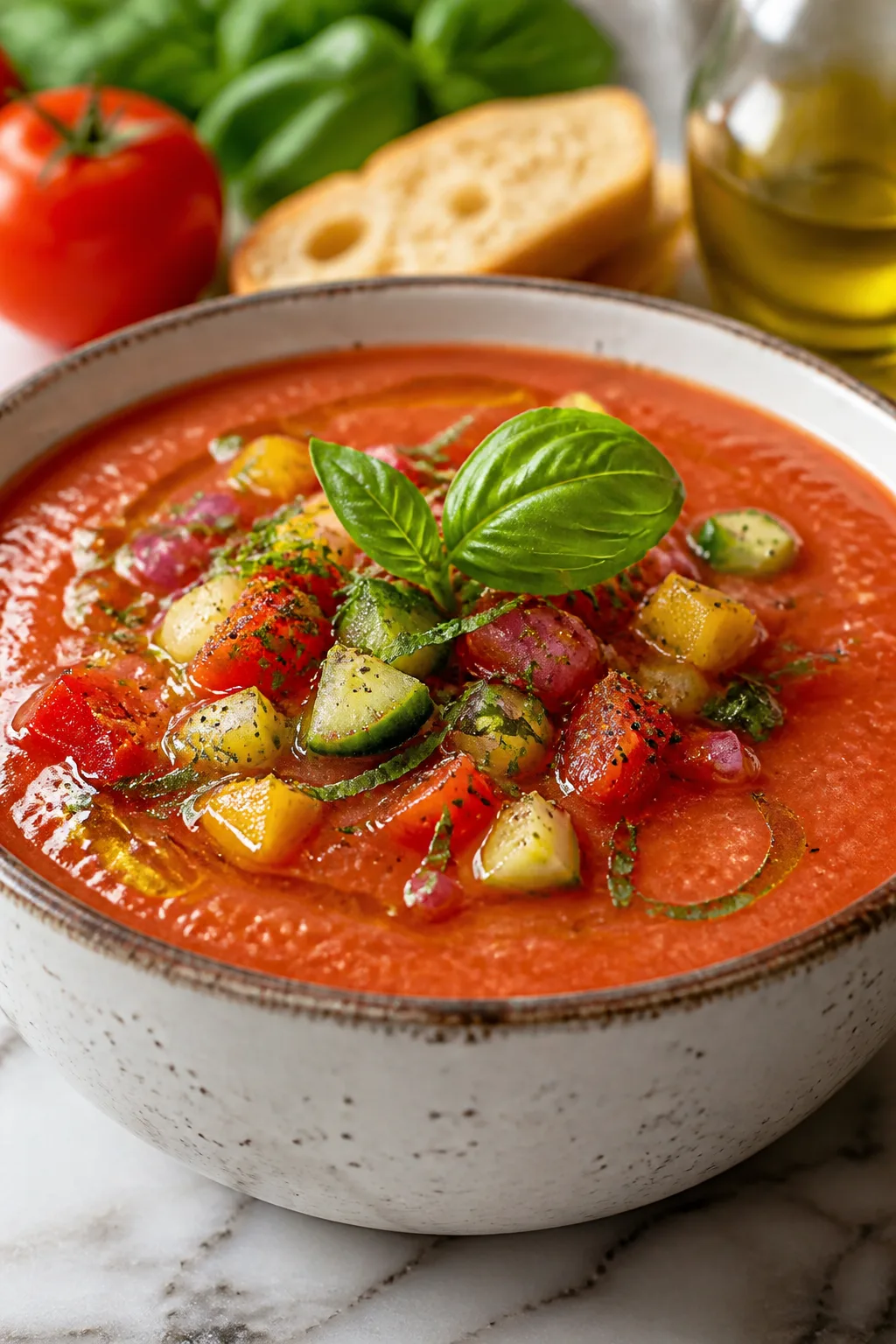
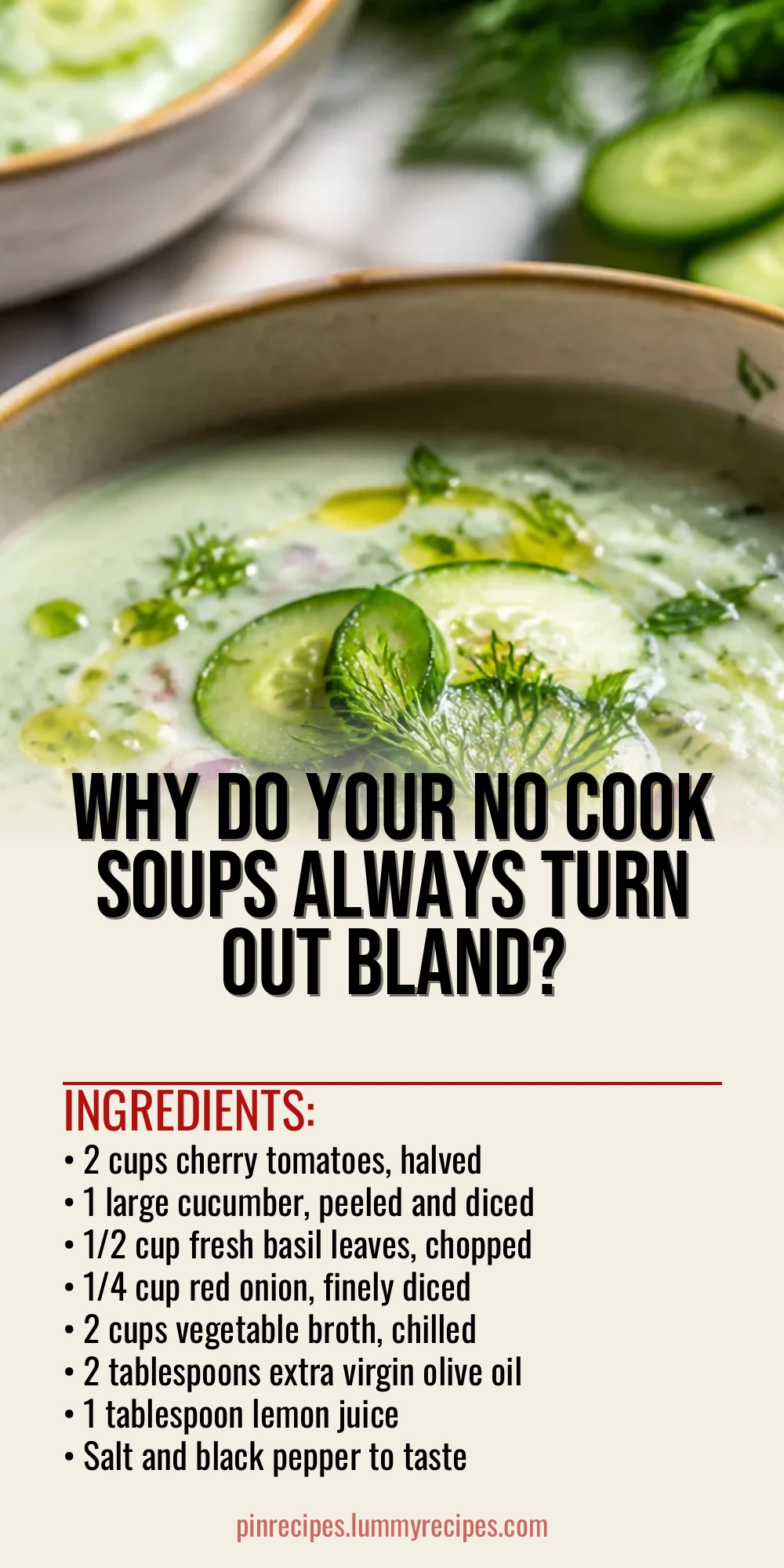
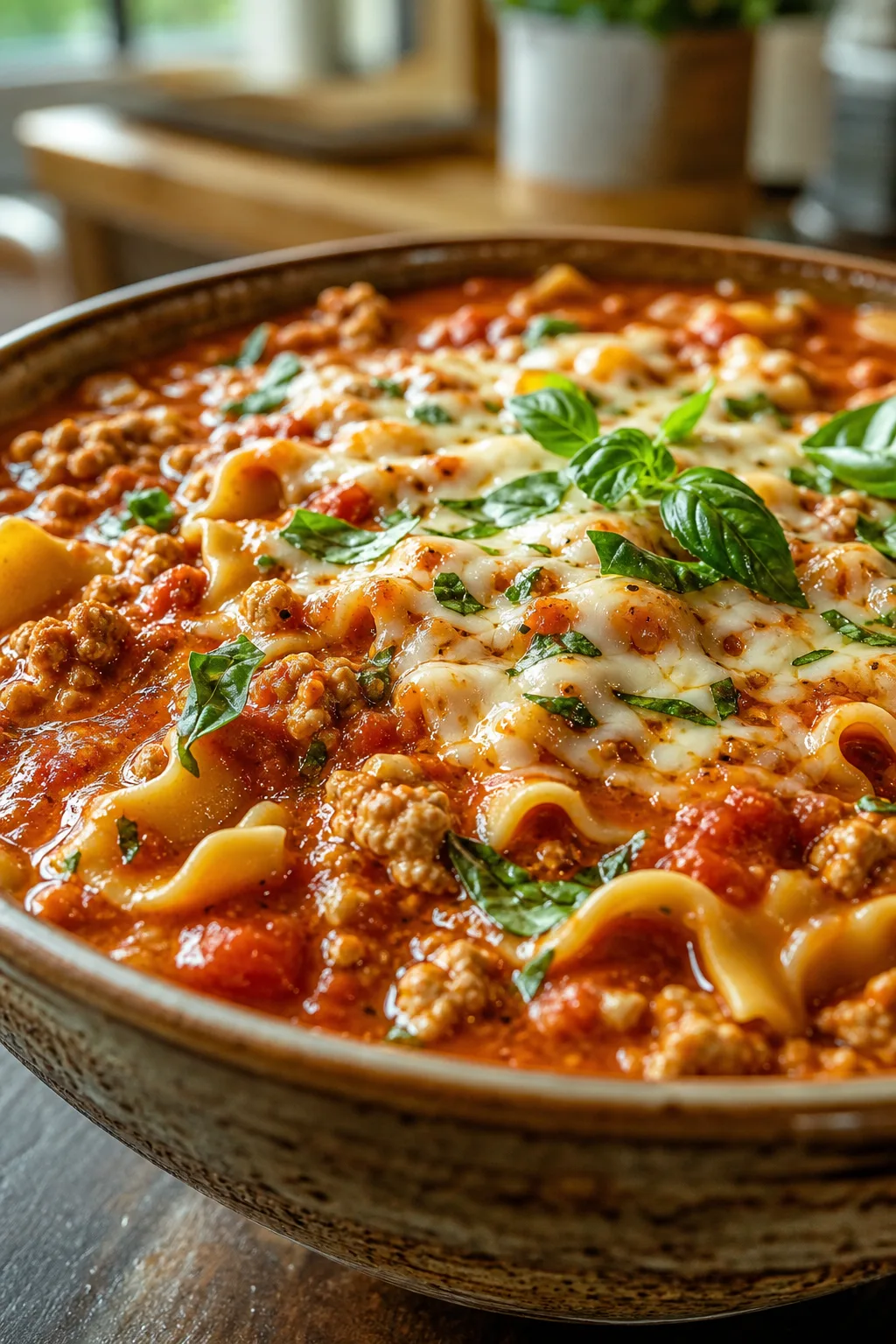
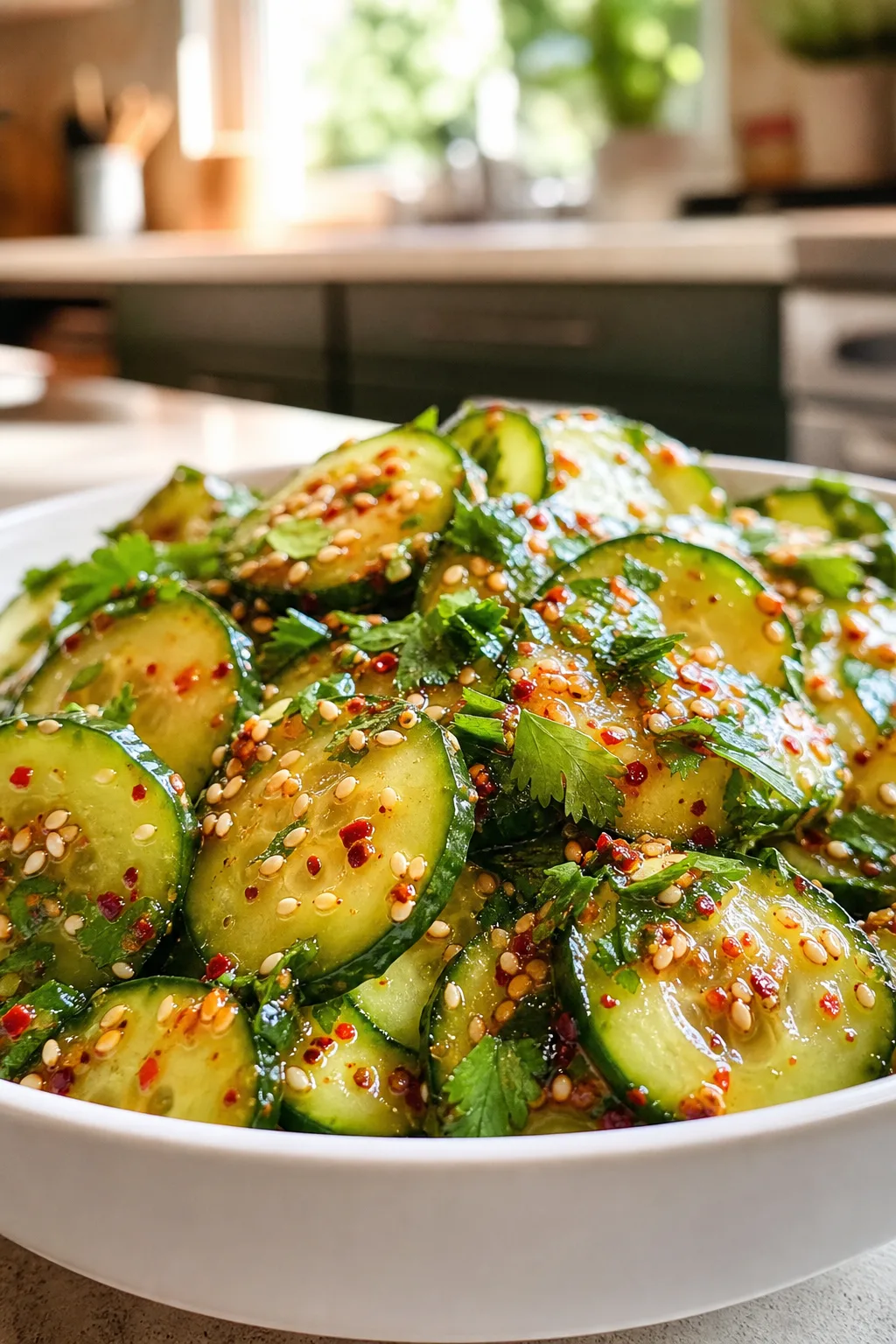
No cook soups are a lifesaver on hot days when you want something fresh and light without turning on the stove. This recipe mixes simple, fresh ingredients for a cool, flavorful meal that’s ready in minutes. Great for lunch or a light dinner!
Introduction
I first stumbled upon no cook soups during a sweltering summer when I just couldn’t bear to turn on the stove. It was a revelation—fresh, cool ingredients blended into a tasty, light soup in minutes. What makes this version stand out is the balance of acidity from lemon juice and the freshness of basil, which really wakes up the flavors. Plus, using chilled vegetable broth adds depth without any cooking. I love serving this on busy days or as a refreshing starter when friends drop by. It’s straightforward, healthy, and perfect for those who want something satisfying without the fuss. Honestly, I was skeptical at first, but this recipe quickly became a summer staple for my family. It’s bright, flavorful, and so easy to throw together—no heat, no mess, just pure deliciousness.
What You'll Need
Approximately 4 cups, 4 servings
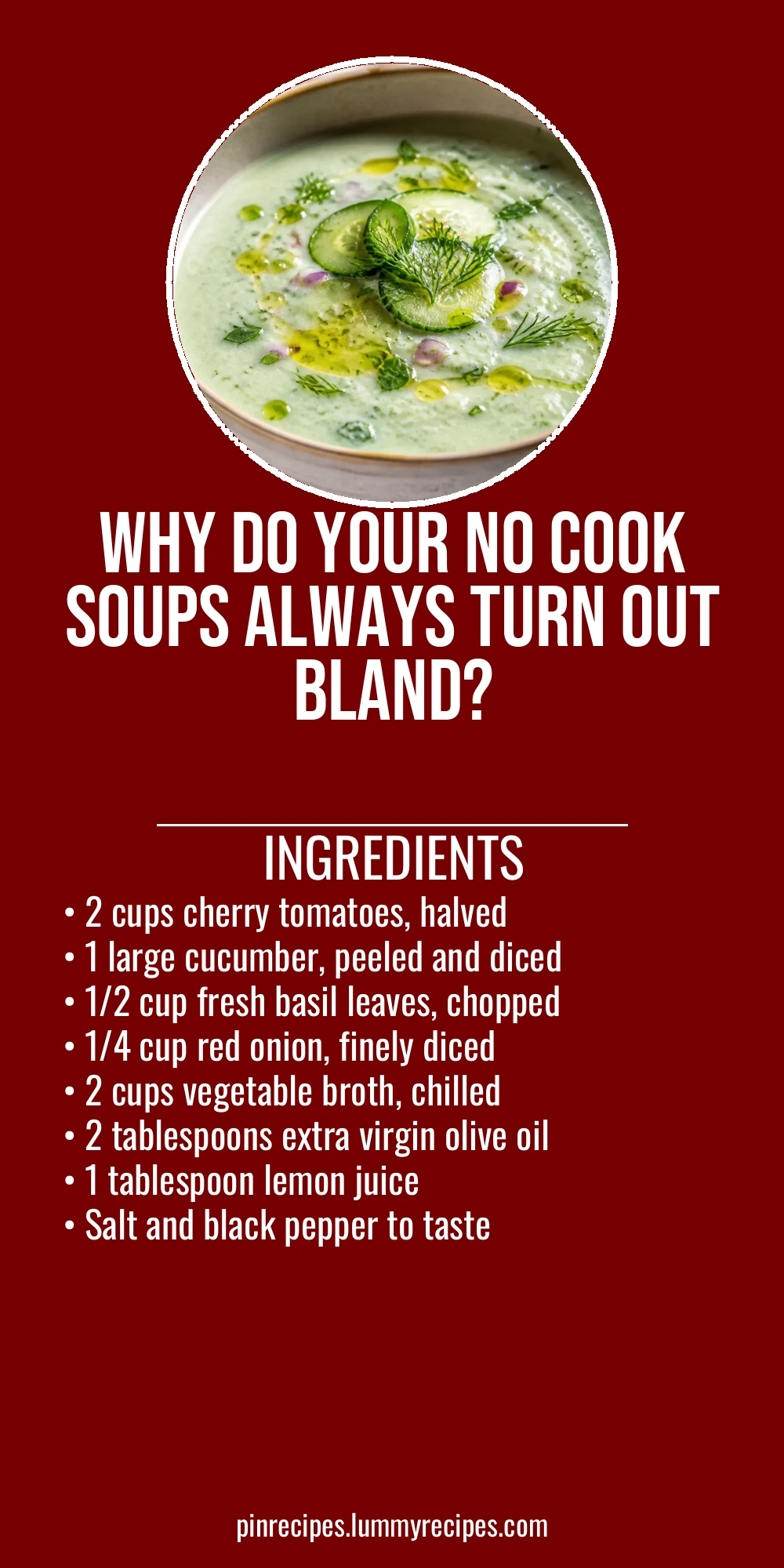
- 2 cups cherry tomatoes, halved
- 1 large cucumber, peeled and diced
- 1/2 cup fresh basil leaves, chopped
- 1/4 cup red onion, finely diced
- 2 cups vegetable broth, chilled
- 2 tablespoons extra virgin olive oil
- 1 tablespoon lemon juice
- Salt and black pepper to taste
How To Do It
Step 1
Start by prepping all your fresh ingredients carefully. Halve the cherry tomatoes and dice the cucumber into bite-sized pieces. Finely chop the basil and red onion. This step is crucial because the texture of your ingredients will define the mouthfeel of the soup. Using fresh, ripe tomatoes ensures natural sweetness, while the cucumber adds a refreshing crunch. Avoid over-dicing the onion to keep its flavor subtle and not overpowering.
⏱ Time: 10
✓ Doneness: Ingredients are uniformly chopped and ready to blend or mix.
Step 2
In a large bowl, combine the chopped vegetables with the chilled vegetable broth. Stir in the olive oil and lemon juice, then season with salt and black pepper to taste. The lemon juice brightens the flavors and balances the richness of the olive oil. Mix gently but thoroughly to ensure everything is evenly coated. Let the soup chill in the fridge for at least 15 minutes before serving to allow the flavors to meld. Rushing this step can result in a less harmonious taste.
⏱ Time: 15
✓ Doneness: Soup is well combined, chilled, and flavors have melded together.
Step 3
Taste the soup before serving and adjust the seasoning if needed. Sometimes a pinch more salt or a splash of lemon juice can make a big difference. Serve chilled, garnished with extra basil leaves if you like. This soup is best enjoyed cold and fresh, so avoid leaving it out too long at room temperature.
⏱ Time: 5
✓ Doneness: Soup tastes balanced, fresh, and well-seasoned.
Pro Tips
Use ripe, fresh vegetables for the best flavor.
Since this soup isn’t cooked, the quality of your ingredients directly impacts the taste. Fresh, ripe produce provides natural sweetness and vibrant flavors that heat cannot develop.
Let the soup chill for at least 15 minutes before serving.
Allowing the flavors to meld in the fridge helps the acidity and seasoning balance out, making the soup taste more harmonious and refreshing.
Finely dice the onion to avoid overpowering sharpness.
Large chunks of onion can dominate the soup’s delicate flavor. Small pieces distribute the flavor evenly without overwhelming the palate.
Use high-quality extra virgin olive oil.
Good olive oil adds fruity, peppery notes and creates a smooth mouthfeel that enhances the overall soup experience.
Adjust seasoning just before serving.
Salt and acid levels can shift while chilling; tasting last ensures the perfect balance and prevents over-seasoning.
Serve immediately after chilling for best texture.
The fresh ingredients maintain their crispness and brightness when served cold and fresh, which is the hallmark of no cook soups.
Add fresh herbs last to preserve their aroma.
Herbs like basil release their essential oils best when added just before serving, keeping the soup fragrant and fresh.
Common Mistakes to Avoid
Using underripe or watery tomatoes.
Why it happens Sometimes cooks grab whatever tomatoes are on hand without checking ripeness, assuming cooking will fix flavor.
Fix Choose firm, ripe cherry tomatoes for natural sweetness and avoid watery or mealy textures that dilute the soup.
Skipping the chilling step.
Why it happens Impatience or lack of planning can lead to serving immediately, missing flavor melding.
Fix Chill the soup for at least 15 minutes to allow flavors to marry, which enhances taste and texture.
Overusing onion, making soup too sharp.
Why it happens Not dicing finely or adding too much onion can overpower the delicate balance.
Fix Use only a small amount of finely diced red onion to add subtle flavor without overwhelming the soup.
Using bottled lemon juice.
Why it happens Convenience leads to using bottled juice, which lacks fresh acidity.
Fix Always use fresh lemon juice for brightness and natural acidity that lifts the soup.
Not adjusting seasoning after chilling.
Why it happens Flavor perception changes after chilling, and seasoning might need tweaking.
Fix Taste and adjust salt, pepper, and lemon juice just before serving for perfect balance.
Variations
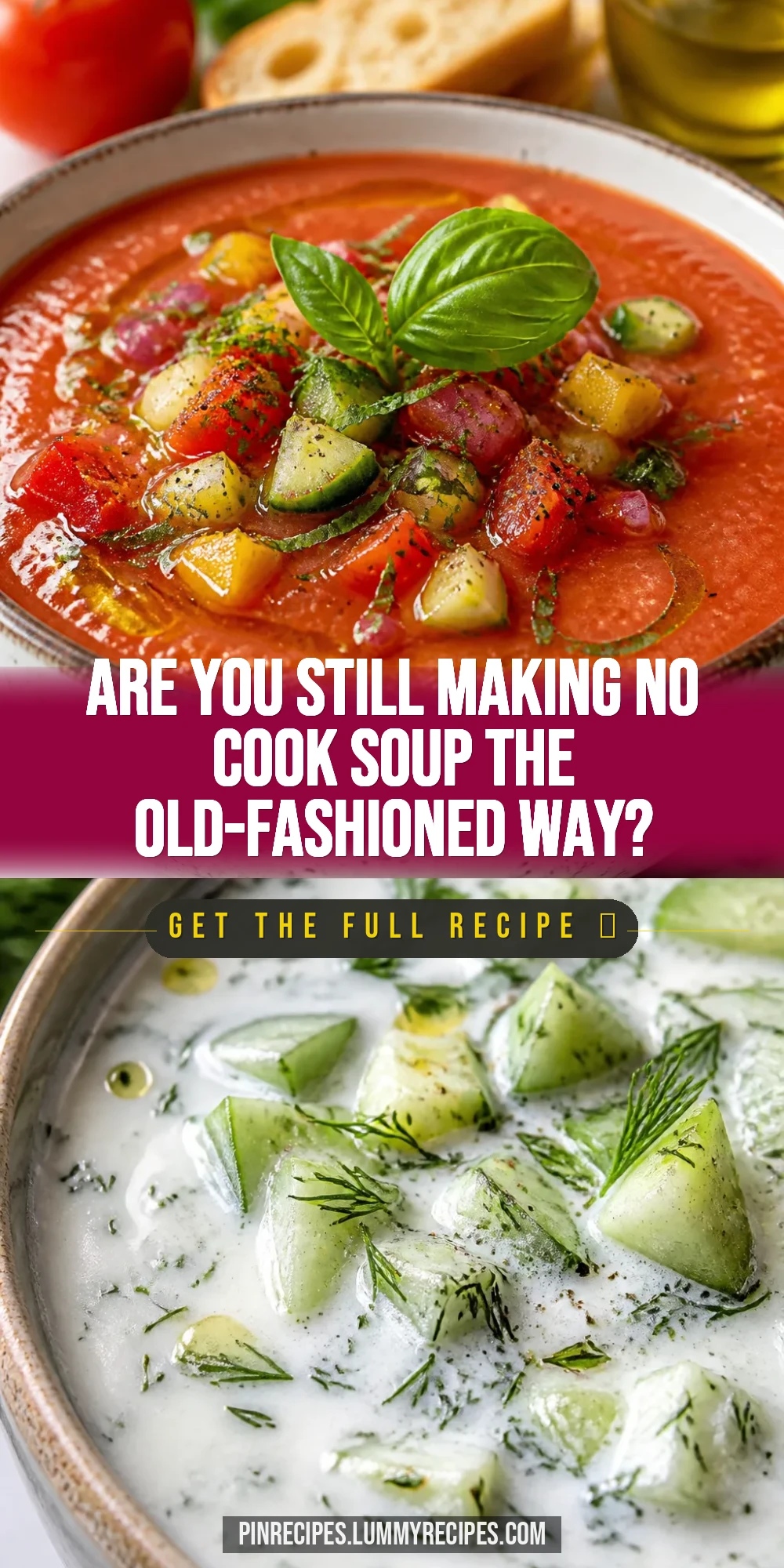
Spicy No Cook Gazpacho
Add diced jalapeños and a splash of hot sauce to the base recipe for a spicy kick. You can also blend part of the soup for a creamier texture while leaving some chunks for bite.
Note: Adjust spice levels carefully to avoid overpowering the fresh flavors; chilling time helps mellow heat.
Creamy Avocado No Cook Soup
Blend in ripe avocado for creaminess without cooking. This adds healthy fats and a velvety texture, making the soup more filling and smooth.
Note: Add avocado just before serving to prevent browning and maintain vibrant color.
Mediterranean No Cook Soup
Include chopped kalamata olives, feta cheese, and a sprinkle of oregano for a Mediterranean twist. This variation is tangy and savory, perfect for a light lunch.
Note: Add cheese and olives last to keep their texture intact and flavors fresh.
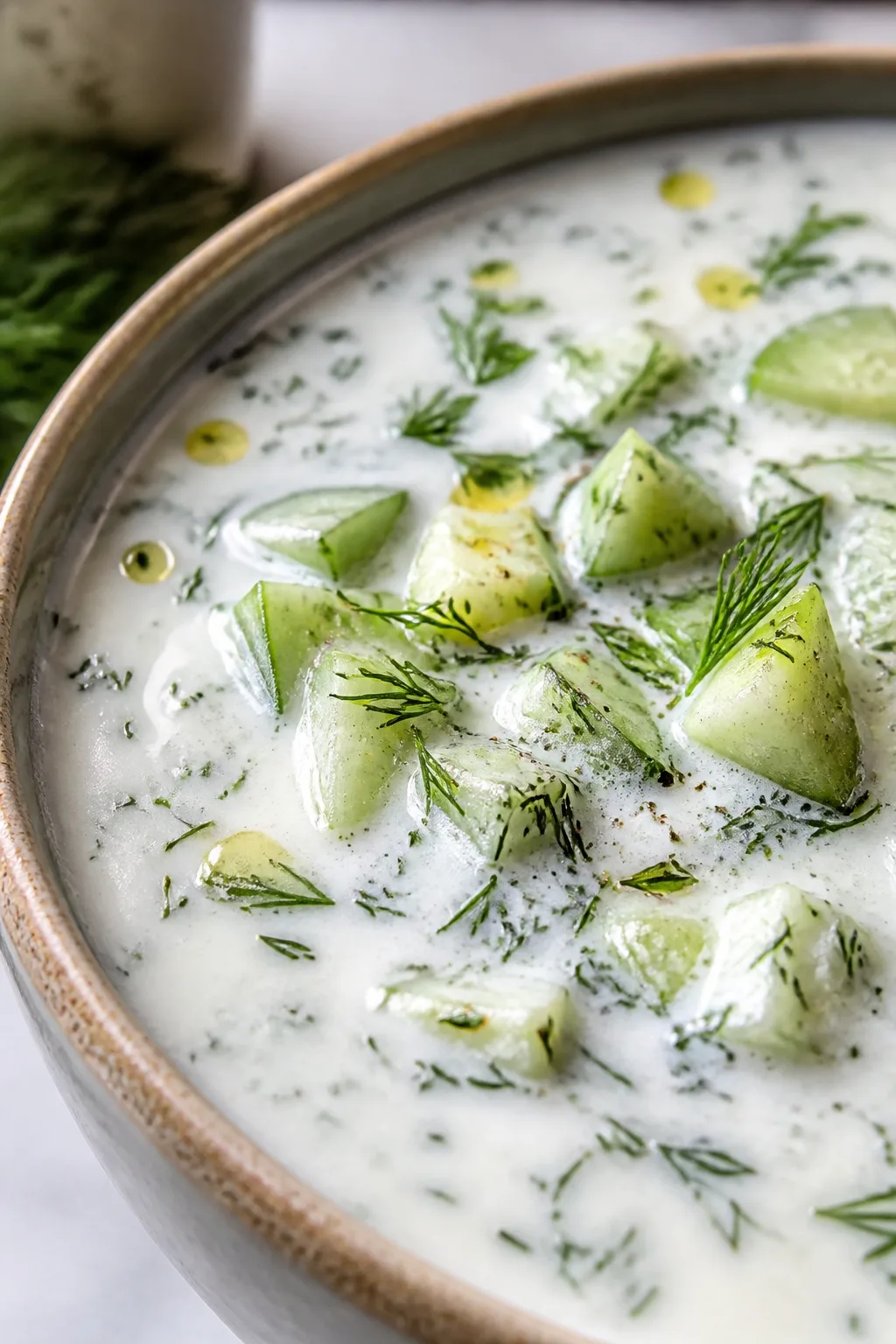
Cucumber Dill No Cook Soup
Swap basil for fresh dill and add a dollop of Greek yogurt for a tangy, creamy flavor. This version is especially refreshing and pairs well with grilled bread.
Note: Greek yogurt should be stirred in gently to avoid curdling; serve chilled immediately.
Tropical No Cook Soup
Mix diced mango and pineapple with the base ingredients and add a touch of coconut milk. This sweet and savory combo is bright and exotic without cooking.
Note: Use firm, ripe fruit to avoid a mushy texture; chill well before serving.
Nutrition
Per Serving:
Nutritional values are estimates and may vary based on specific ingredients used.
Storage & Tips
Room Temperature
No cook soup should not be left at room temperature for more than 2 hours as it contains fresh vegetables and broth that can spoil. Cover with plastic wrap or a lid if left out briefly.
Refrigerator
Store the soup in an airtight container in the fridge for up to 3 days. The flavors may intensify but the fresh texture might soften slightly. Best served chilled or at room temperature.
Freezer
Freezing is not recommended for no cook soups with fresh vegetables and broth as texture and flavor will degrade significantly upon thawing.
Reheating
This soup is best served cold or at room temperature. If you prefer it warmer, gently heat on the stovetop without boiling, adding a splash of broth to maintain texture. Avoid microwaving to preserve freshness.
Make Ahead
Prepare all ingredients and mix the soup base a day ahead, storing it chilled. Add fresh herbs and final seasoning just before serving to keep the flavors bright.
FAQ
Can I use regular tomatoes instead of cherry tomatoes?
You can, but cherry tomatoes tend to be sweeter and less watery, which helps keep the soup fresh and flavorful. If using regular tomatoes, choose ripe ones and remove seeds to avoid excess liquid.
Is it necessary to use vegetable broth?
While vegetable broth adds depth, you can substitute with water or a light tomato juice. However, broth enhances the savory notes and makes the soup more satisfying.
Can I make this soup vegan?
Yes! This recipe is naturally vegan as it contains no animal products. Just ensure your vegetable broth is vegan-friendly.
How long can I store this soup in the fridge?
Store in an airtight container for up to 3 days. The flavors will deepen, but fresh vegetables may soften, so it’s best enjoyed within that timeframe.
Can I add protein to this soup?
Absolutely! Try adding cooked chickpeas, white beans, or diced tofu for a protein boost without altering the no cook method.
What if I don’t have fresh basil?
Fresh basil is ideal, but you can substitute with fresh parsley or mint for a different herbal note. Avoid dried herbs as they lack the fresh flavor needed here.
Can I blend this soup for a smoother texture?
Yes, blending part or all of the soup creates a creamy texture. Leaving some chunks adds nice contrast, so try a combination for best results.
Is this soup suitable for meal prep?
It is! Just keep it chilled and add delicate herbs or seasoning adjustments right before serving to keep it fresh and vibrant.
Final Thoughts
Give this no cook soup a try for your next easy meal—it’s fresh, flavorful, and perfect for hot days. I’d love to hear how it turns out for you!