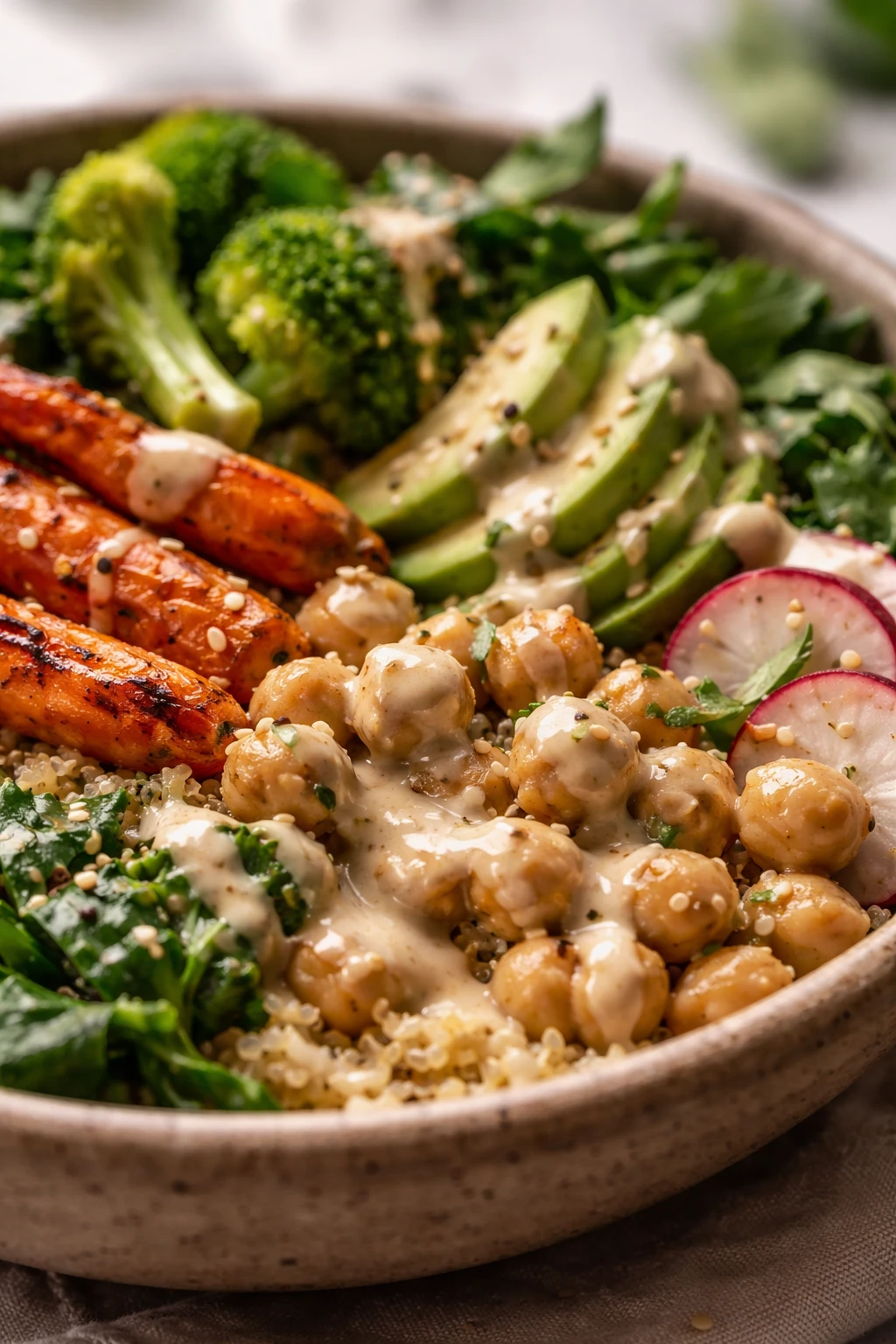
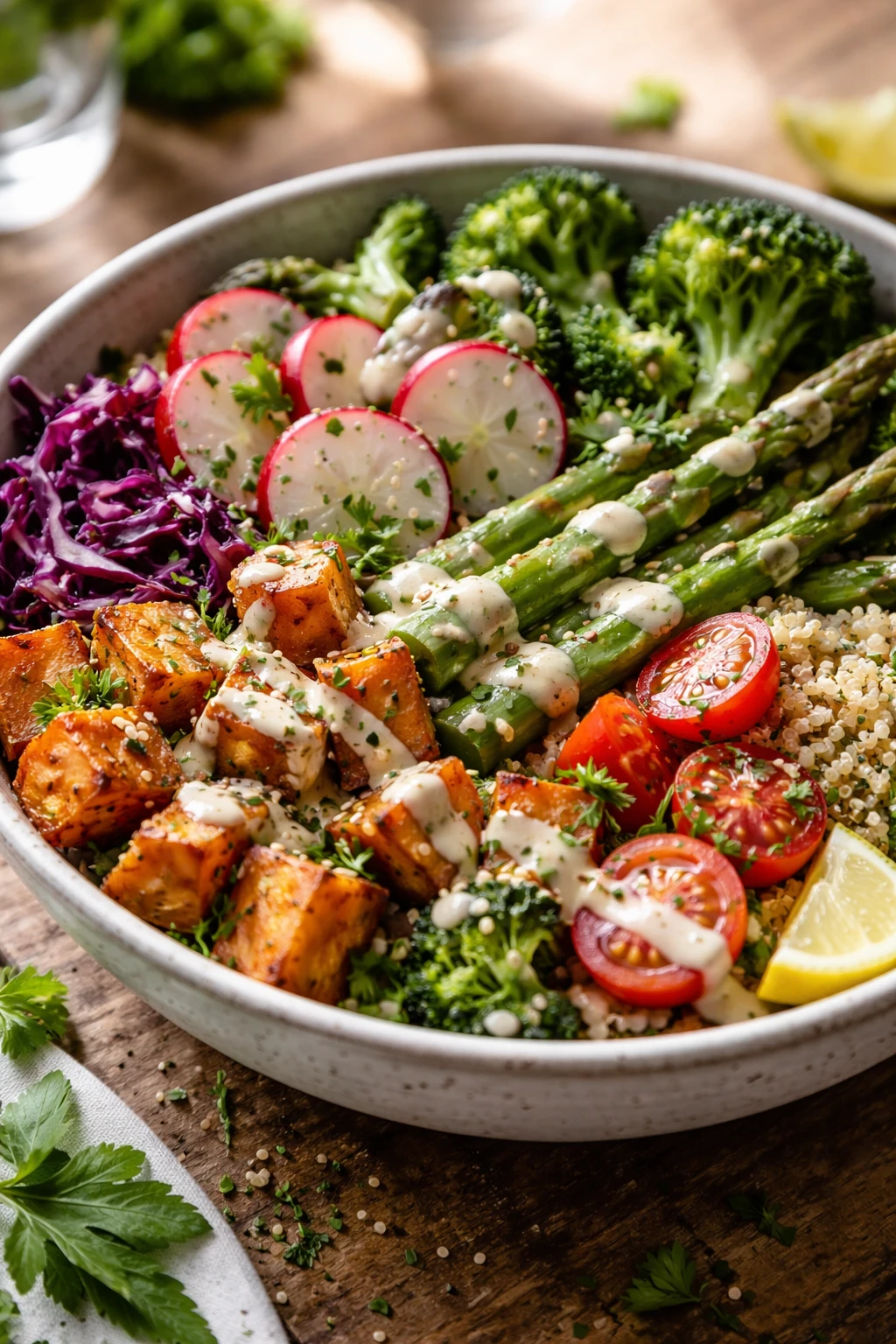
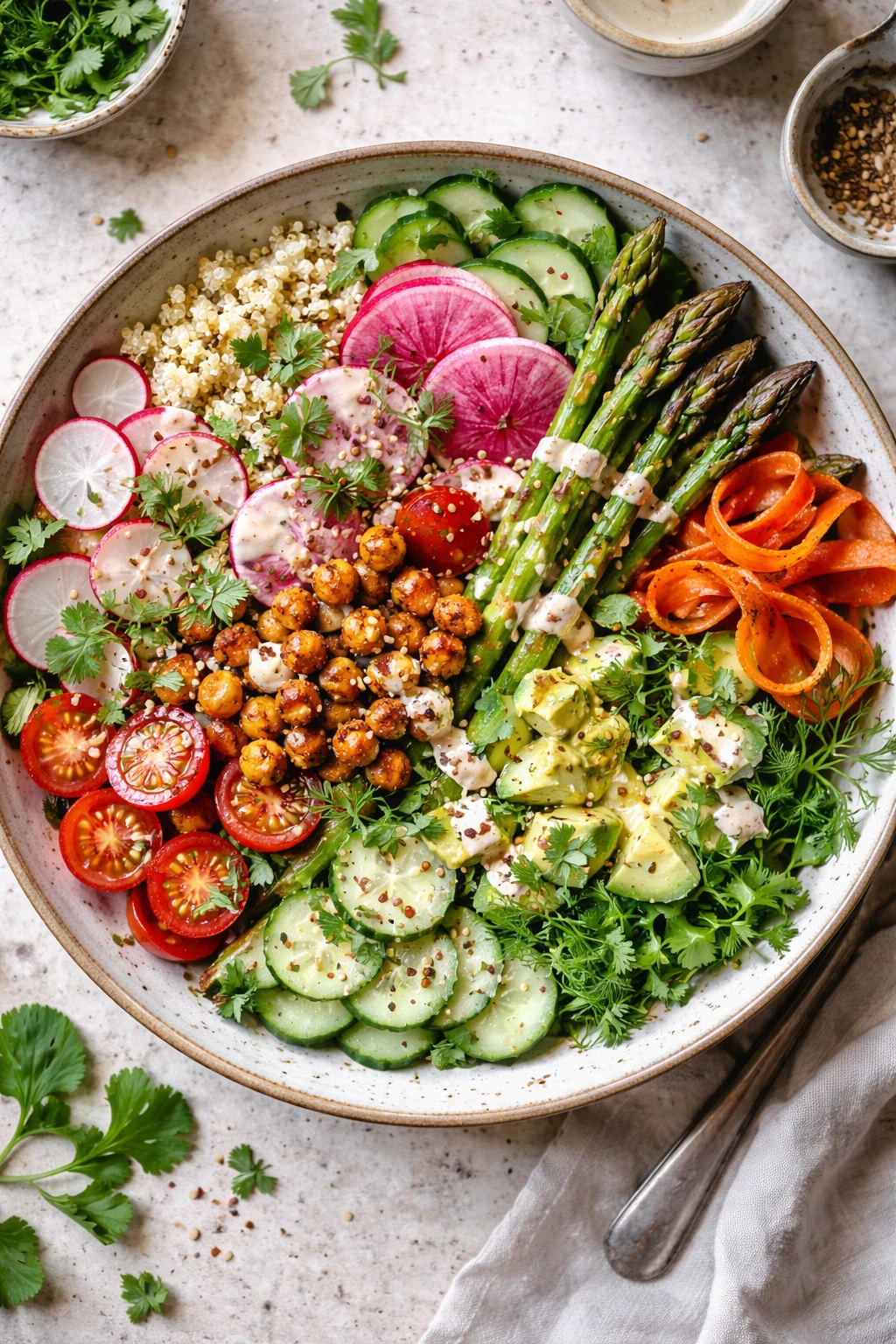
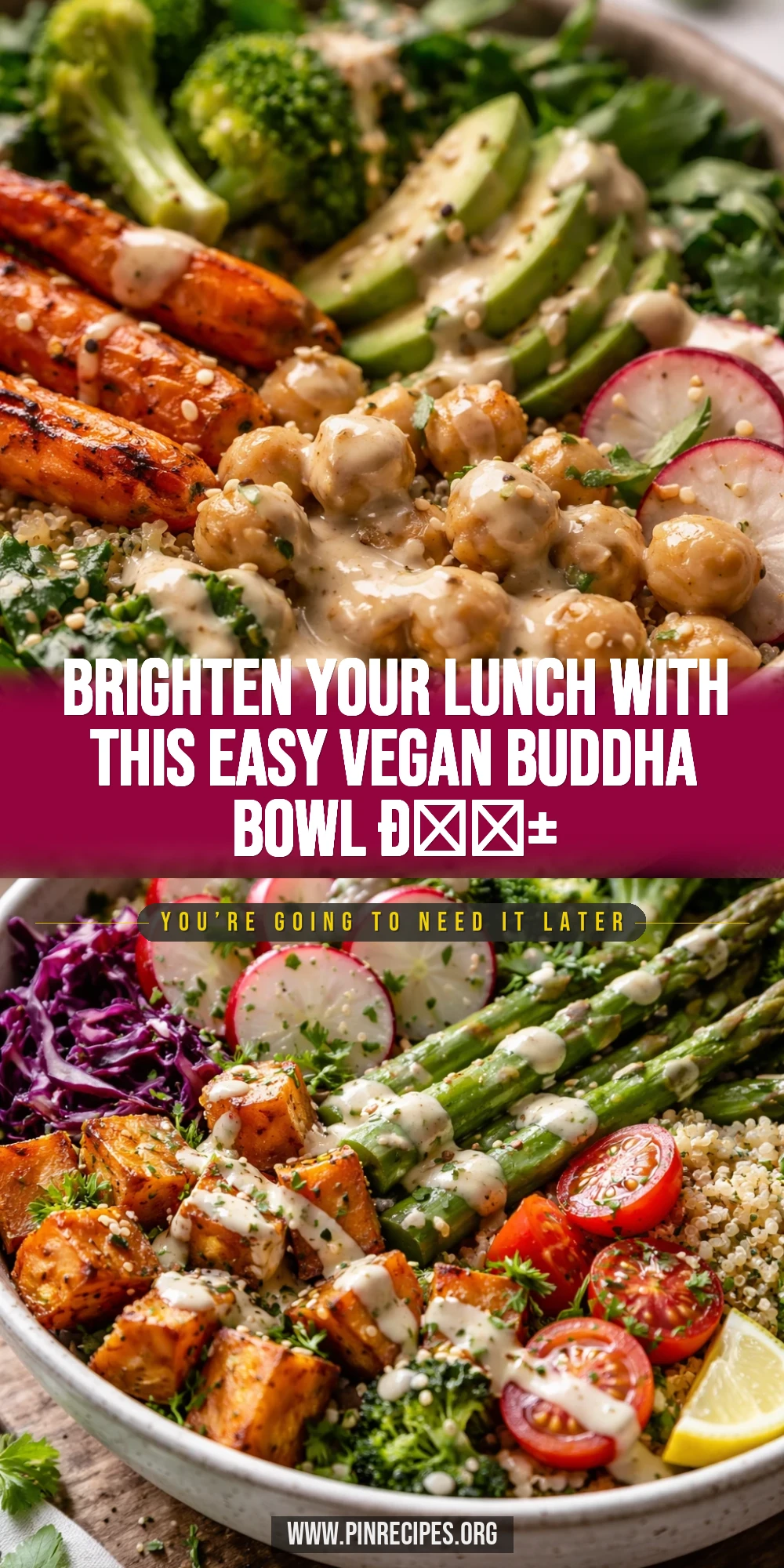
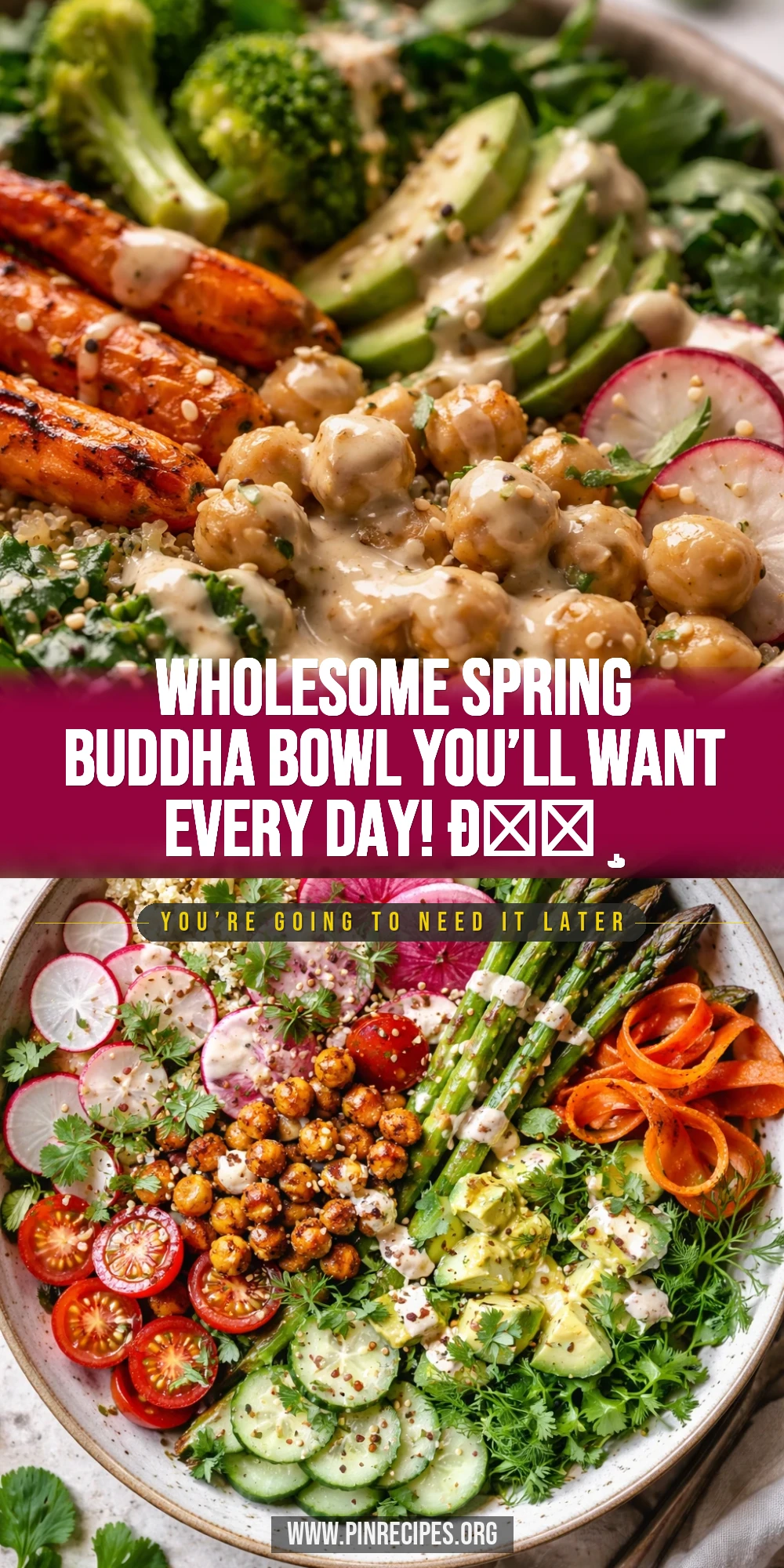
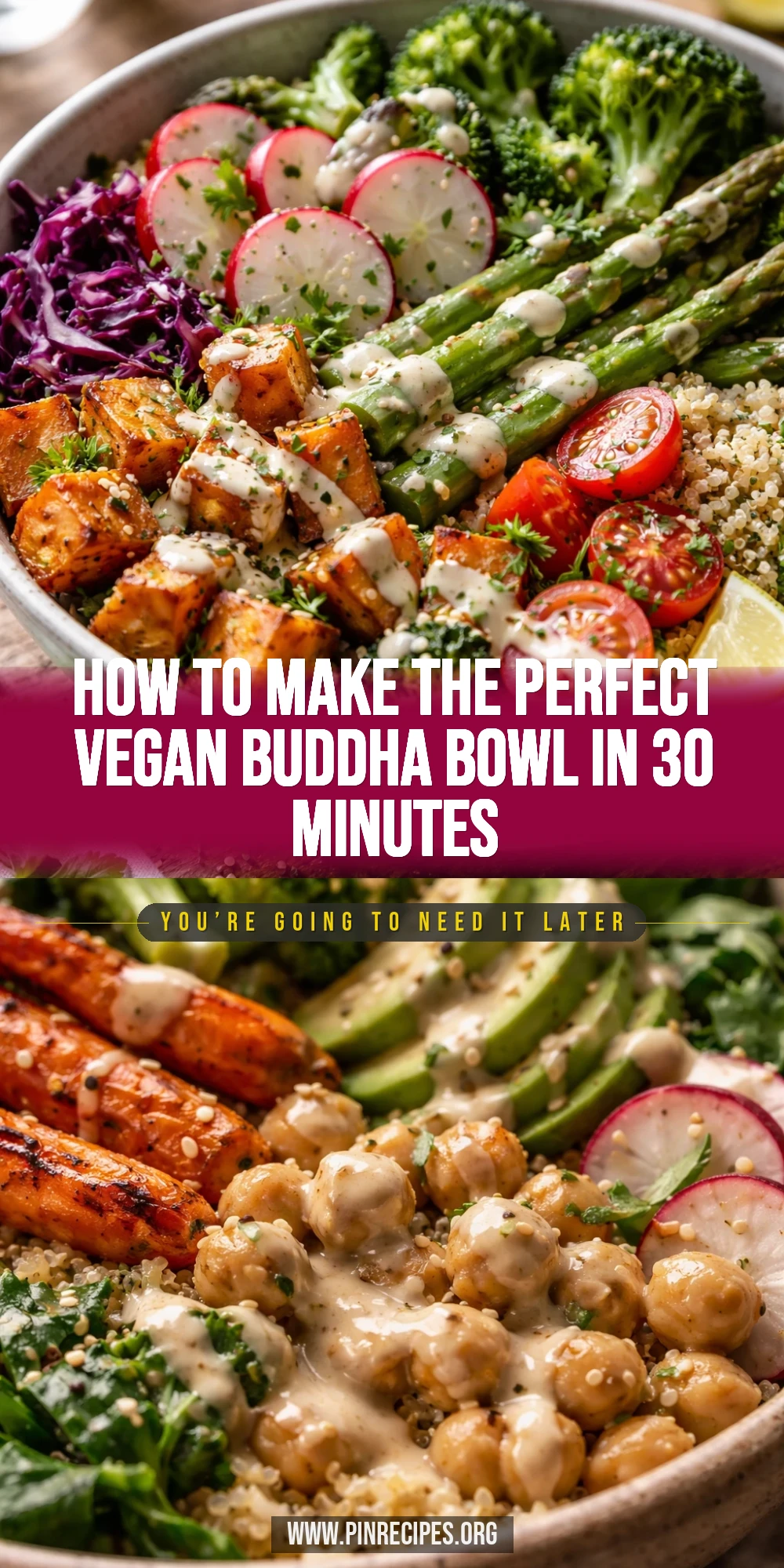
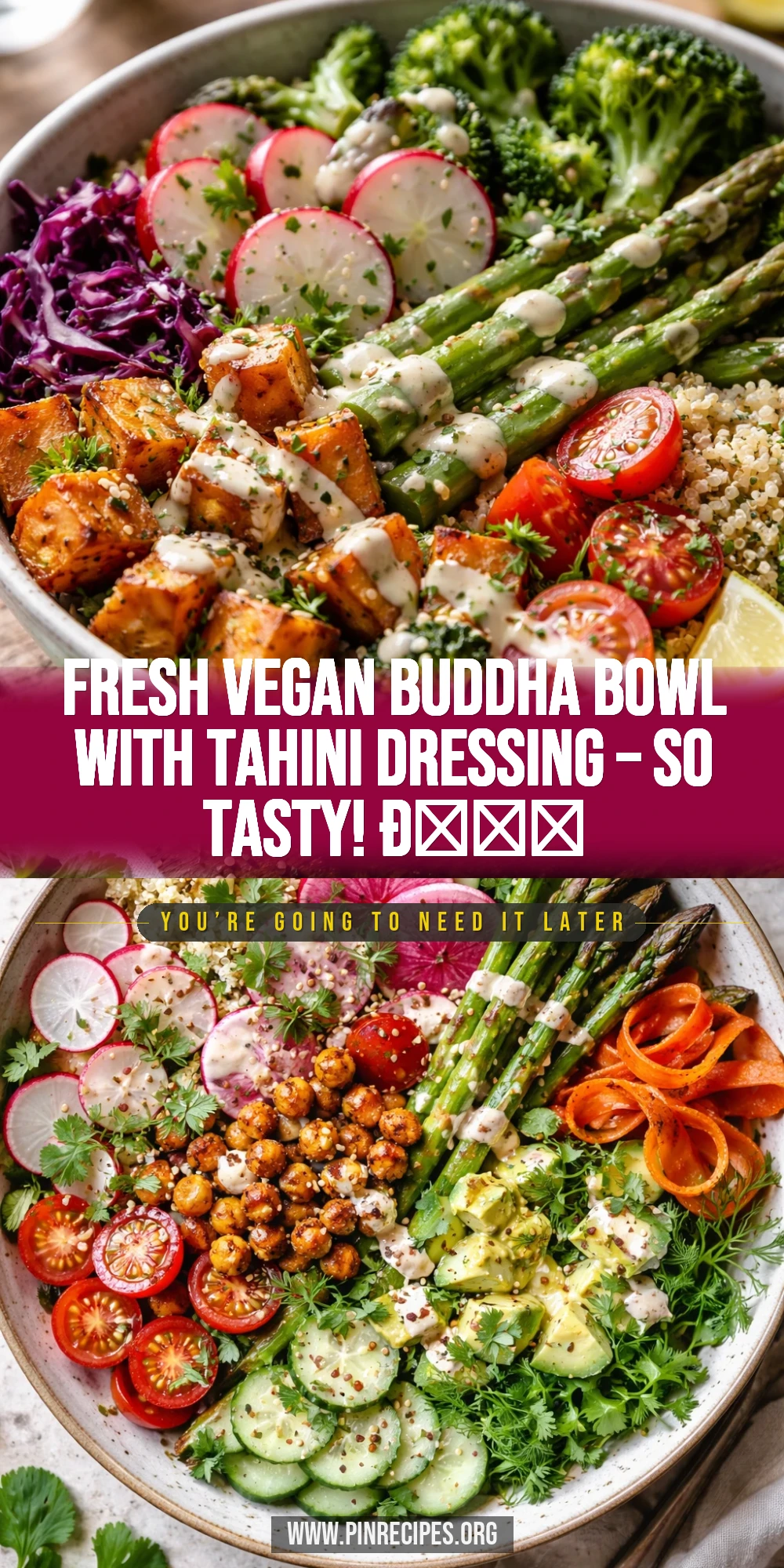
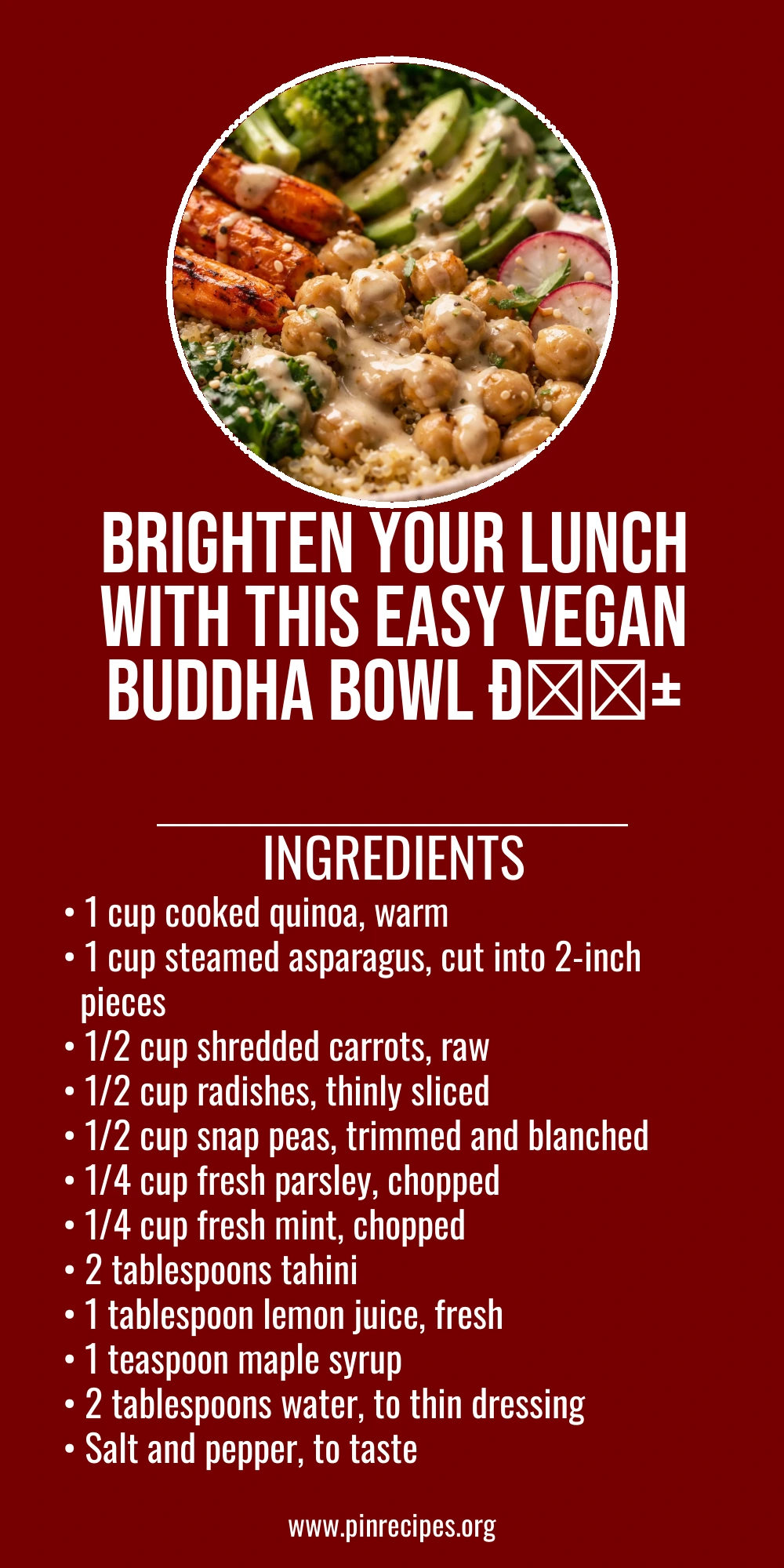
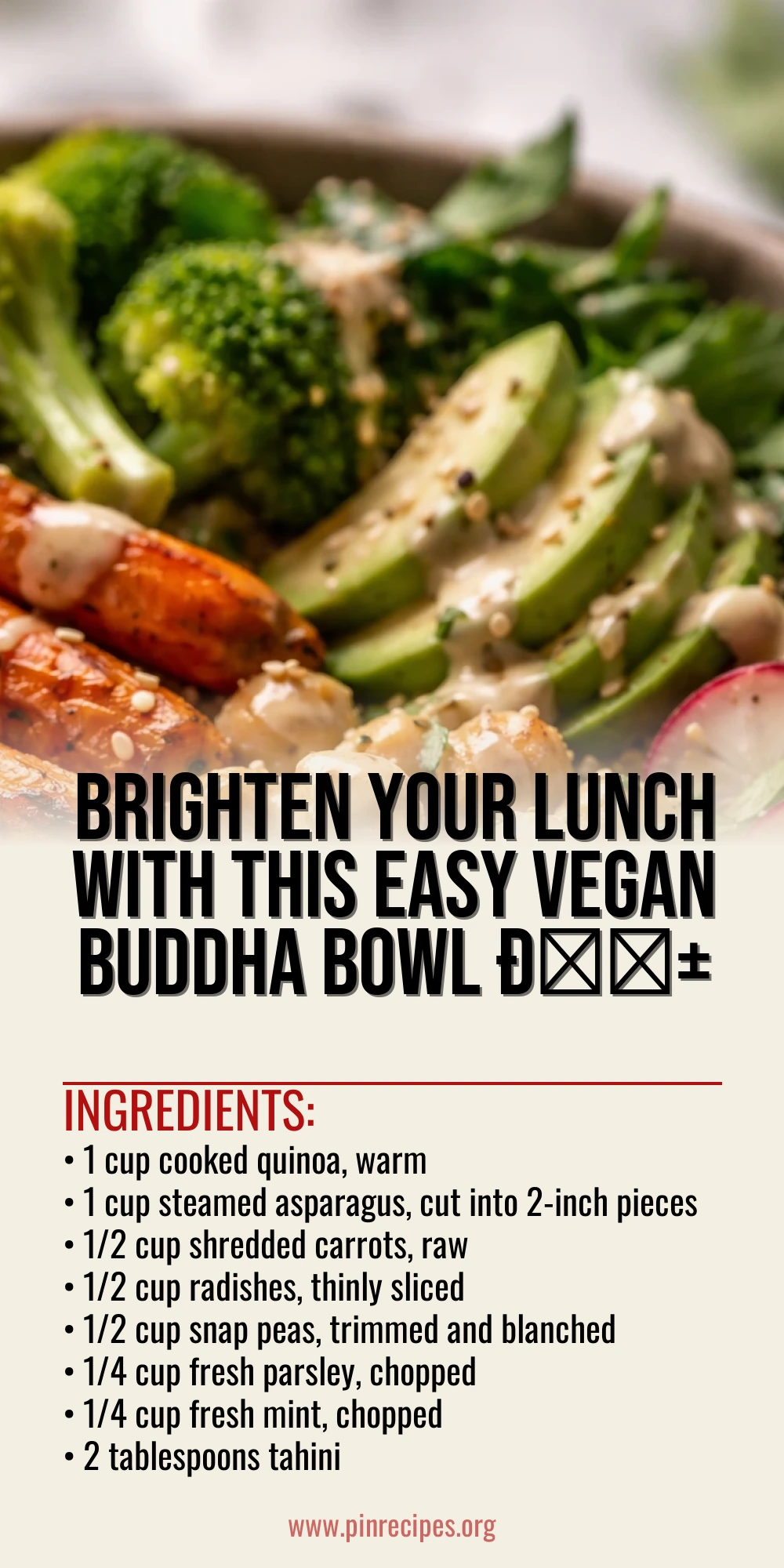
This vibrant vegan Buddha bowl is packed with fresh spring veggies and a creamy tahini dressing that makes it feel indulgent yet healthy. I love how the herbs brighten every bite. Perfect for a light lunch or dinner.
Introduction
I first stumbled upon Buddha bowls a few years ago when I wanted a meal that was both nourishing and easy to customize. This spring vegetable version quickly became my favorite because it captures the fresh, bright flavors of the season. What sets this bowl apart for me is the combination of fresh herbs like parsley and mint, which add an unexpected pop of freshness that lifts the whole dish. Plus, the tahini dressing brings a creamy, nutty element without any dairy, which I find makes it feel indulgent but still light. I’ve had my fair share of soggy bowls in the past—too much dressing or overcooked veggies—but here I make sure to keep the vegetables crisp-tender and toss the dressing just before serving. The result is a colorful, satisfying bowl that’s perfect for a quick lunch or an easy dinner when you want something healthy but still exciting. Every bite has a nice balance of textures and flavors, from crunchy radishes to creamy quinoa, with the herbs and lemon dressing tying everything together beautifully.
How To Do It
Step 1
Start by cooking the quinoa according to package instructions. Rinse it well before cooking to remove any bitterness and then simmer in water until fluffy. Fluff with a fork and keep warm. Properly cooked quinoa should be tender but still have a slight bite, not mushy. This step is crucial because quinoa forms the base of your bowl and provides a satisfying texture and protein boost.
⏱ Time: 15 minutes
✓ Doneness: Quinoa grains look translucent with a tiny white spiral (the germ) visible, and the texture is fluffy, not sticky.
Step 2
While the quinoa cooks, prepare your vegetables. Trim the asparagus and snap peas, then blanch them in boiling water for 2-3 minutes until bright green and crisp-tender. Immediately transfer to ice water to stop cooking and keep their vibrant color. This quick blanching preserves the fresh crunch and prevents overcooking, which would make the veggies mushy and dull in flavor.
⏱ Time: 5 minutes
✓ Doneness: Vegetables are tender but still firm and vibrant in color.
Step 3
Slice the radishes thinly and shred the carrots using a grater or food processor. These raw veggies add a nice crunch and peppery bite that contrast nicely with the softer quinoa and steamed asparagus. Keeping them raw preserves their fresh flavor and texture, so don’t skip this step.
⏱ Time: 5 minutes
✓ Doneness: Veggies look crisp and fresh, not wilted or soggy.
Step 4
Chop the fresh parsley and mint finely. Herbs are the secret to adding brightness and freshness to the bowl. The mint adds a cool, slightly sweet flavor while parsley brings earthiness. Adding herbs last ensures their flavor stays vibrant and doesn’t get lost in the dressing.
⏱ Time: 3 minutes
✓ Doneness: Herbs look bright green and smell fragrant.
Step 5
Make the dressing by whisking tahini, lemon juice, maple syrup, and water together until smooth and creamy. Adjust the water to get a pourable consistency. Season with salt and pepper to taste. The balance of tangy lemon and sweet maple syrup cuts through the richness of tahini, making the dressing both flavorful and light.
⏱ Time: 5 minutes
✓ Doneness: Dressing is smooth, creamy, and easy to drizzle.
Step 6
Assemble the bowls by dividing the warm quinoa between two bowls. Arrange the asparagus, snap peas, shredded carrots, and radishes on top in separate sections or mixed, depending on your preference. This layering helps showcase the colors and keeps textures distinct until mixed.
⏱ Time: 5 minutes
✓ Doneness: Bowls look colorful and inviting with distinct veggie sections.
Step 7
Sprinkle the chopped herbs evenly over the veggies and quinoa. Herbs add a fresh aroma and flavor burst with every bite, making the bowl feel lively and fresh.
⏱ Time: 2 minutes
✓ Doneness: Herbs are evenly distributed and vibrant.
Step 8
Drizzle the tahini dressing generously over the bowl just before serving. Toss gently if desired or enjoy as is to savor the layered textures. Adding dressing last prevents veggies from getting soggy and keeps the bowl fresh tasting.
⏱ Time: 2 minutes
✓ Doneness: Dressing coats the ingredients lightly without pooling excessively.
Step 9
Finish with a sprinkle of toasted sesame seeds for a nutty crunch. These little seeds add texture contrast and a subtle toasty flavor that complements the tahini and fresh veggies beautifully.
⏱ Time: 1 minute
✓ Doneness: Seeds look evenly scattered and add visual appeal.
Pro Tips
Rinse quinoa thoroughly before cooking.
Rinsing removes the natural saponins coating quinoa, which can taste bitter or soapy. This simple step ensures a clean, nutty flavor and improves the final texture, preventing any off-putting aftertaste.
Blanch vegetables quickly and shock in ice water.
Blanching cooks veggies just enough to soften slightly while preserving their vibrant color and crunch. Shocking in ice water immediately stops the cooking process, preventing mushiness and keeping nutrients intact.
Add dressing just before serving.
Adding dressing too early causes vegetables to become soggy and lose their fresh texture. Drizzling it last preserves the crispness and allows each bite to have a nice contrast between creamy and crunchy.
Use fresh herbs generously.
Fresh herbs add an aromatic brightness that elevates the entire dish. They balance richer elements like tahini and add complexity. Wilted or dried herbs won’t provide the same fresh pop of flavor.
Toast sesame seeds for garnish.
Toasting sesame seeds enhances their nutty aroma and adds a subtle crunch that complements the creamy tahini and fresh veggies. Untoasted seeds can taste bland and lack texture.
Adjust dressing thickness with water gradually.
Tahini can be thick and hard to mix. Adding water a little at a time helps achieve a smooth, pourable consistency without making the dressing too thin or watery, ensuring it coats ingredients evenly.
Serve quinoa warm for best texture.
Warm quinoa contrasts nicely with cool, crisp vegetables and fresh herbs, creating a comforting yet refreshing bowl. Cold quinoa can feel dense and less appealing in this kind of dish.
Common Mistakes to Avoid
Overcooking the vegetables
Why it happens People often cook vegetables too long thinking it makes them softer and more palatable, but this can lead to mushy, flavorless veggies.
Fix Blanch vegetables for just 2-3 minutes until crisp-tender and immediately transfer to ice water to halt cooking. This preserves texture, color, and nutrients.
Not rinsing quinoa before cooking
Why it happens Some skip rinsing quinoa to save time, unaware that the natural coating can cause bitterness.
Fix Always rinse quinoa under cold water for at least 30 seconds to remove saponins, improving taste and texture.
Adding dressing too early
Why it happens People often dress bowls ahead to save time, but this causes sogginess.
Fix Add dressing just before serving to keep vegetables crisp and fresh.
Using bottled lemon juice
Why it happens Convenience makes bottled lemon juice tempting, but it lacks brightness.
Fix Use freshly squeezed lemon juice for vibrant acidity and fresh flavor.
Skipping herbs
Why it happens Some overlook herbs as optional garnish when they’re actually key flavor boosters.
Fix Don’t skip fresh herbs—they add brightness and complexity that lifts the whole bowl.
Variations
Add Roasted Chickpeas for Extra Protein
For a heartier bowl, toss in some roasted chickpeas seasoned with smoked paprika and garlic powder. This adds crunch, protein, and a smoky depth that complements the fresh veggies and tahini dressing.
Note: Roast chickpeas at 400°F for 20-25 minutes until crispy, then add just before serving to maintain crunch.
Swap Quinoa for Brown Rice or Farro
If you prefer a chewier grain, brown rice or farro works well here. They add a different texture and earthier flavor but still pair nicely with the vibrant veggies and creamy dressing.
Note: Adjust cooking times for grains accordingly and keep warm before assembling.
Make It Spicy with Sriracha or Chili Flakes
Add a kick by mixing sriracha into the tahini dressing or sprinkling chili flakes on top. This gives the bowl a fiery edge that balances the fresh herbs and creamy dressing.
Note: Start with small amounts of spice and adjust to taste to avoid overpowering the delicate flavors.
Use Seasonal Roasted Vegetables Instead
For a cozy twist, roast veggies like sweet potatoes, beets, or Brussels sprouts instead of blanching. Roasting brings out sweetness and adds a caramelized flavor to the bowl.
Note: Roast at 425°F for 25-30 minutes until tender and caramelized. Cool slightly before assembling.
Add Avocado for Creaminess
Sliced or mashed avocado adds luscious creaminess and healthy fats, making the bowl even more satisfying and rich without dairy.
Note: Add avocado just before serving to avoid browning.
Nutrition
Per Serving:
Nutritional values are estimates and may vary based on specific ingredients used.
Storage & Tips
Room Temperature
This Buddha bowl is best eaten fresh but can be kept at room temperature for up to 2 hours covered. Beyond that, the vegetables may lose crispness and the dressing can cause sogginess.
Refrigerator
Store components separately in airtight containers for up to 3 days. Quinoa and blanched vegetables reheat well, but fresh herbs and dressing are best added just before serving to maintain freshness.
Freezer
Freezing is not recommended for the fresh vegetables or herbs as they lose texture and flavor. You can freeze cooked quinoa for up to 1 month in an airtight container and thaw in the fridge before use.
Reheating
Reheat quinoa and blanched vegetables gently on the stovetop or microwave until warm. Add fresh herbs and drizzle with dressing after reheating to preserve texture and flavor. Avoid overheating to prevent mushiness.
Make Ahead
Cook quinoa and blanch vegetables 1-2 days ahead and store separately in the fridge. Prepare the dressing and chop herbs the day of serving for maximum freshness. Assemble bowls just before eating.
FAQ
Can I use other grains instead of quinoa?
Absolutely! Brown rice, farro, or couscous all work well as a base. Just adjust cooking times accordingly and keep the grain warm before assembling the bowl. Each grain brings a slightly different texture and flavor, so feel free to experiment.
How long can I store the assembled bowl?
It’s best to eat the Buddha bowl fresh because the dressing can make the veggies soggy over time. If you need to store leftovers, keep components separate and assemble just before eating to maintain texture and flavor.
What can I substitute for tahini in the dressing?
If you don’t have tahini, you can use almond butter or sunflower seed butter for a similar creamy texture and nutty flavor. Adjust the lemon and water to get the right consistency and taste.
Can I make this recipe gluten-free?
Yes! Quinoa is naturally gluten-free, so this recipe is safe. Just be sure any added ingredients like soy sauce (if used in variations) are gluten-free as well.
How do I keep the herbs fresh and bright?
Add fresh herbs just before serving to preserve their flavor and color. Storing chopped herbs in an airtight container with a damp paper towel in the fridge helps keep them fresh longer.
Is it okay to use bottled lemon juice?
For best flavor, use freshly squeezed lemon juice. Bottled lemon juice tends to be less vibrant and can affect the overall brightness of the dressing.
Can I add protein to make it more filling?
Definitely! Roasted chickpeas, tofu, or tempeh are great vegan protein options that pair well with this bowl. Add them just before serving to maintain texture.
What’s the best way to reheat leftovers?
Reheat quinoa and blanched veggies gently on the stovetop or microwave until warm. Add fresh herbs and dressing after reheating to keep flavors fresh and textures crisp.
Final Thoughts
I hope you give this fresh, easy vegan Buddha bowl a try soon. It’s one of my go-to meals when I want something healthy, colorful, and satisfying—let me know how it turns out!