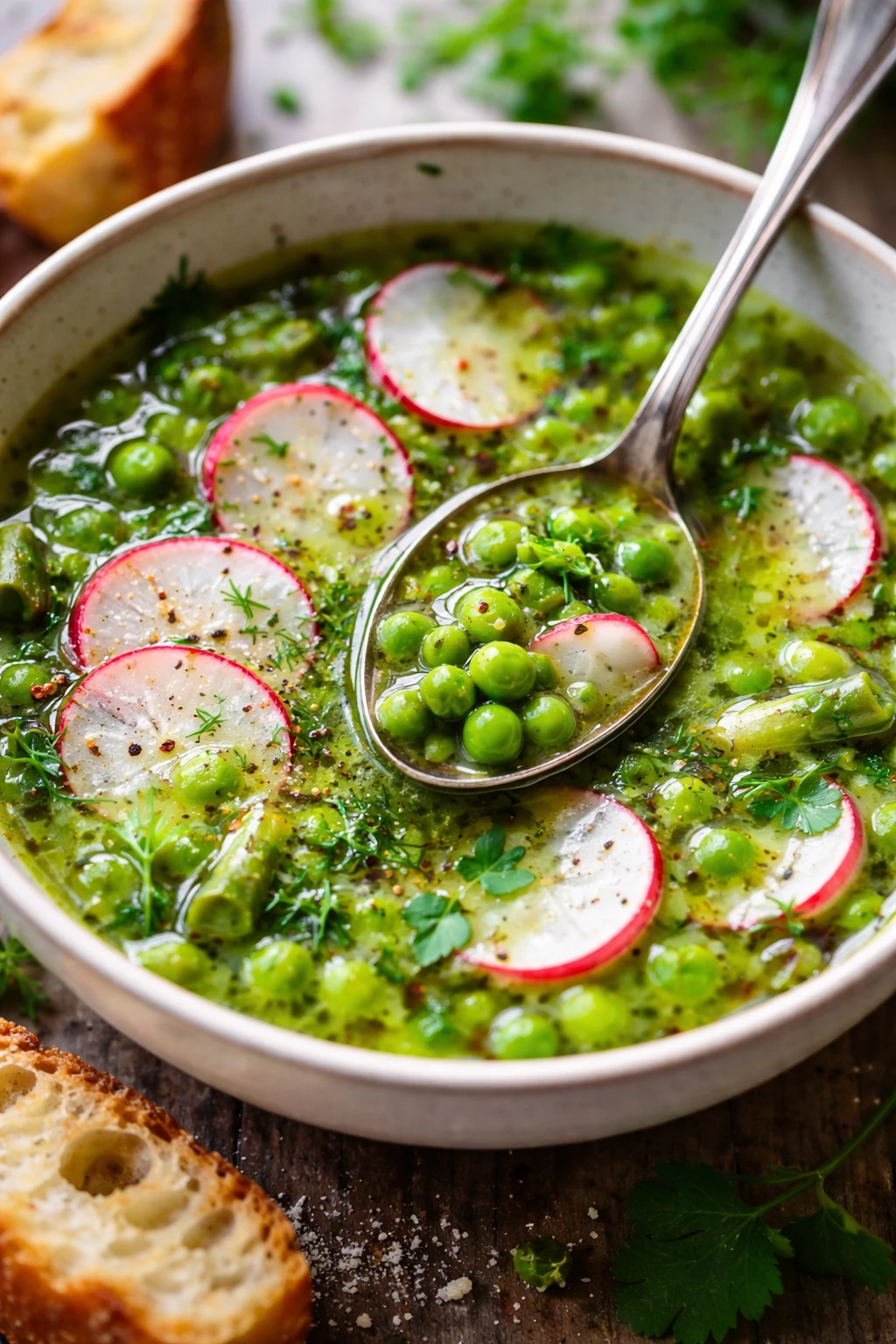
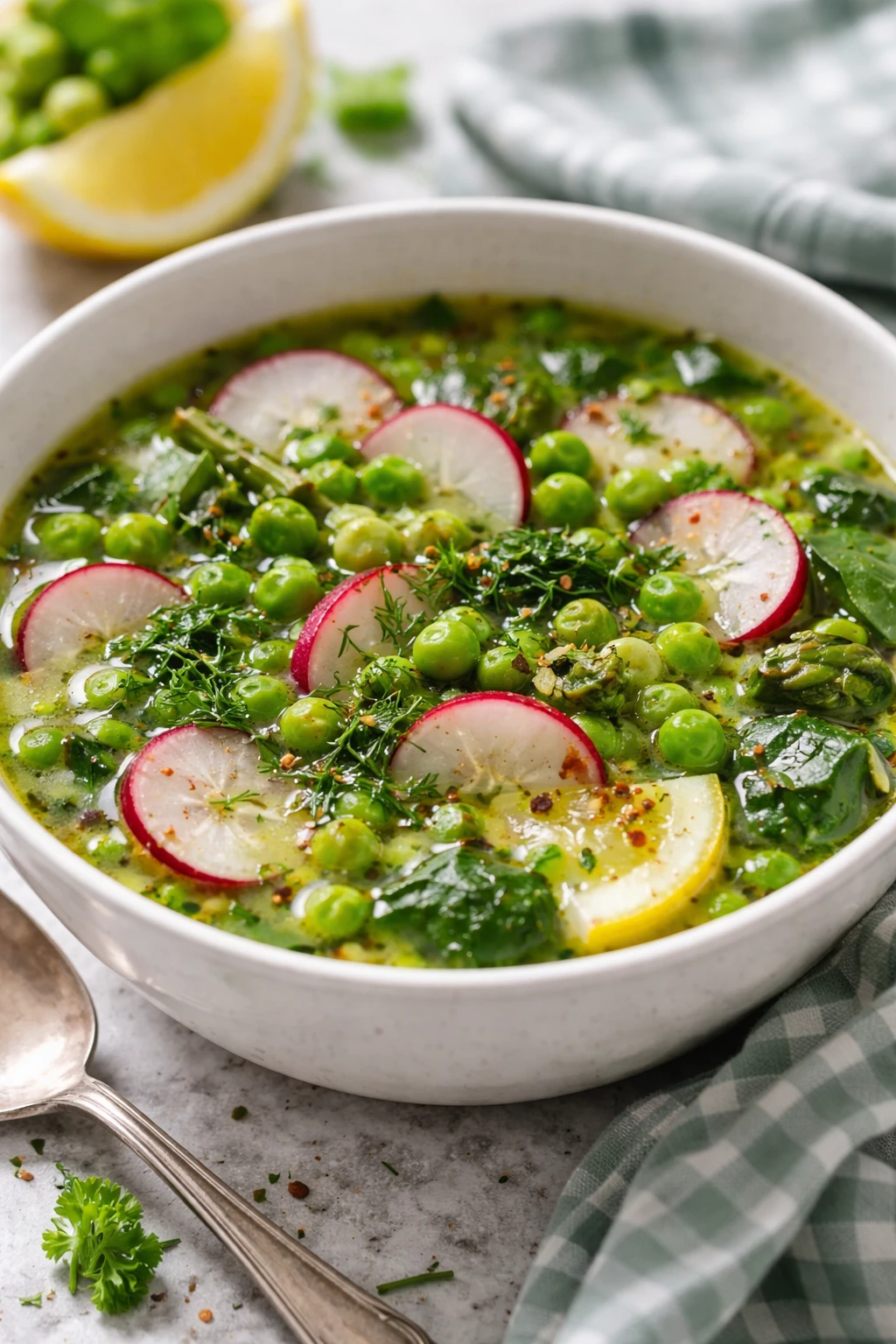
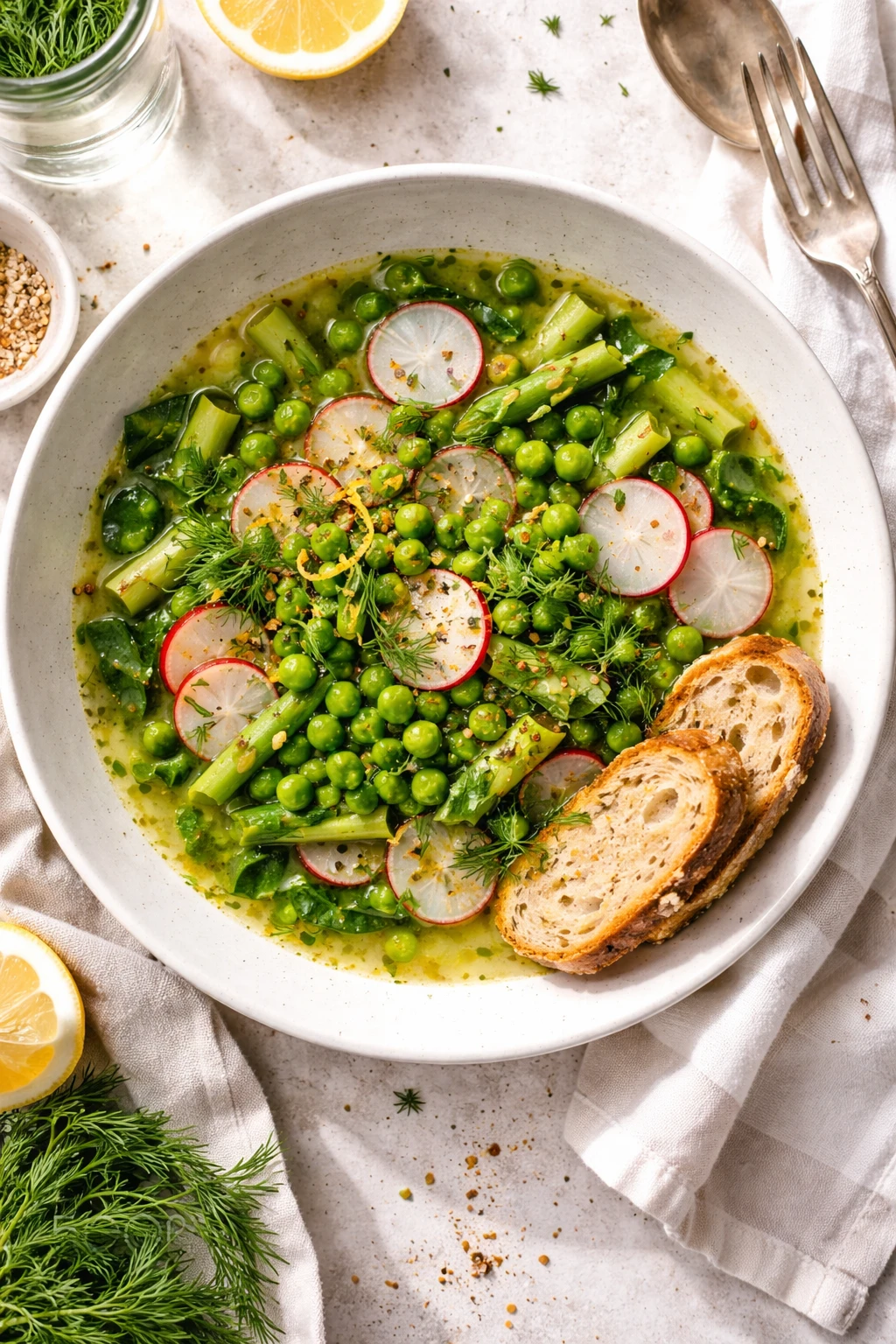
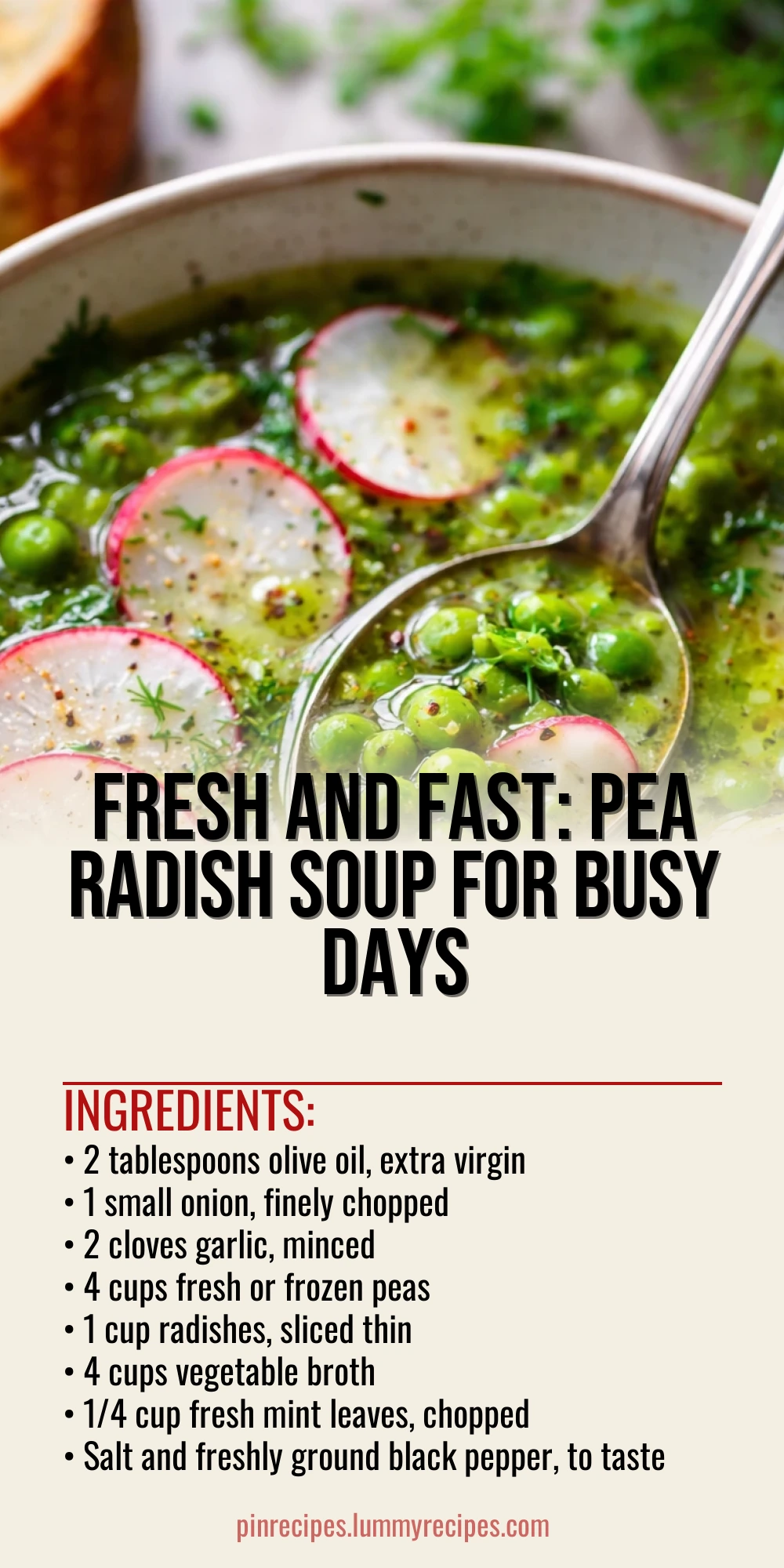
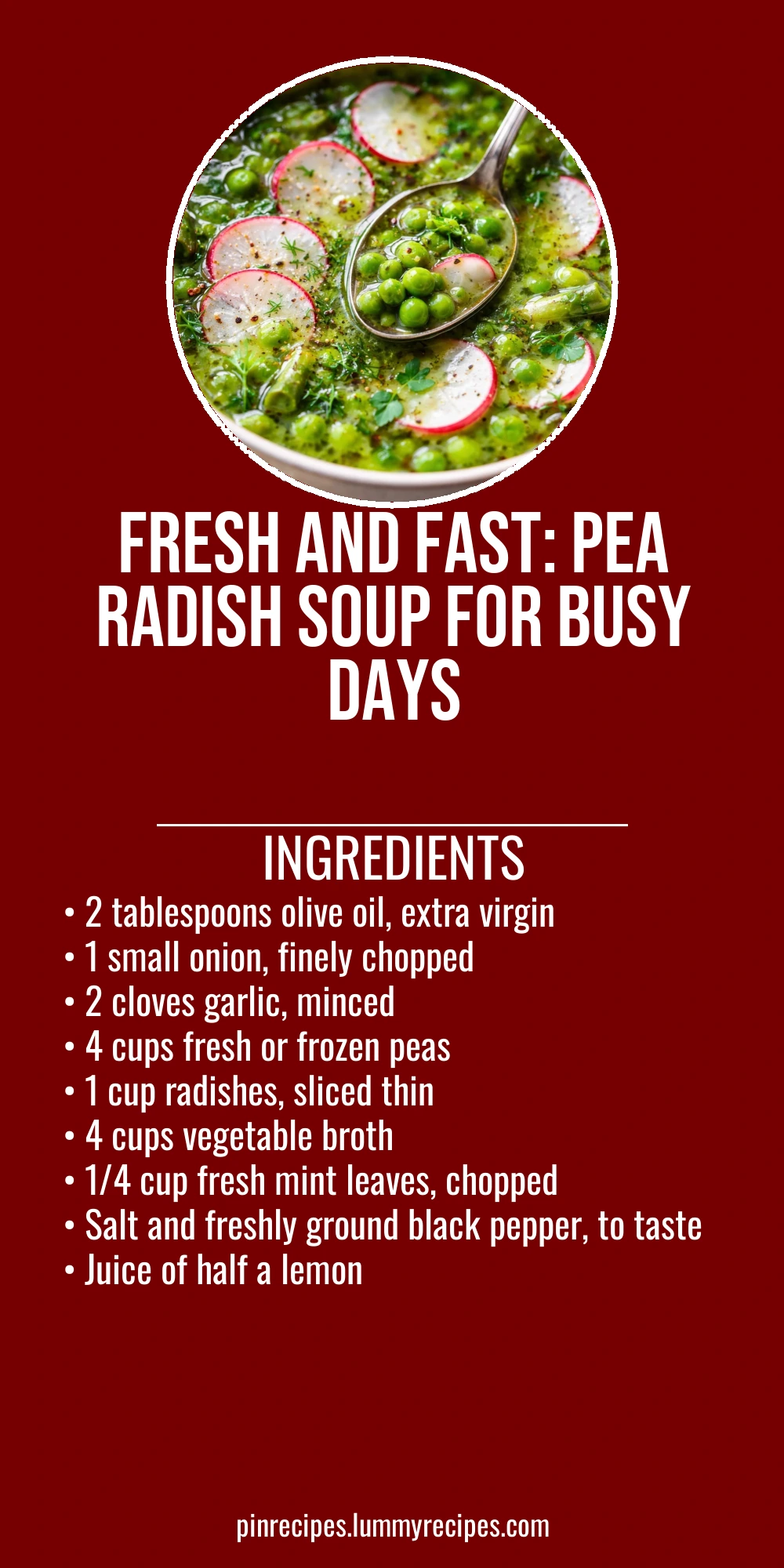
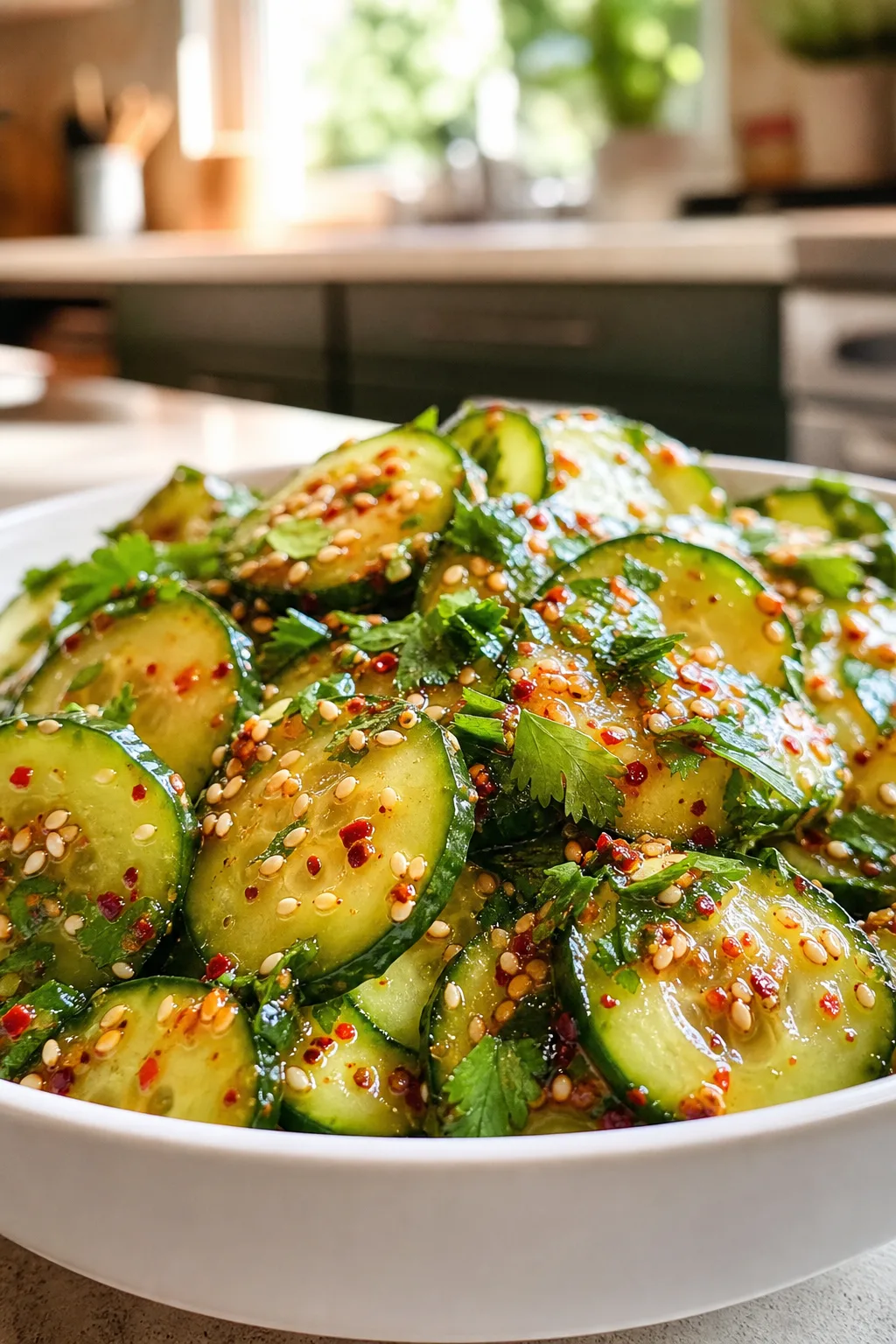
This bright, fresh soup combines sweet peas and crisp radishes for a light, healthy meal you can whip up in just 20 minutes. The secret? A quick sauté and blending that keeps all the spring flavors vibrant. Perfect for a light lunch or starter on a sunny day.
Introduction
I first stumbled upon this pea and radish soup recipe during an early spring when I was craving something light but flavorful after a long winter. What I love about this soup is how it captures the freshness of spring veggies in just 20 minutes — no long simmering needed. Unlike heavier soups, this one relies on a quick sauté and blending technique that keeps the peas bright and the radishes crisp yet tender. The addition of fresh mint and a squeeze of lemon really lifts the flavors and makes it feel like a celebration of the season. I remember the first time I made it, I was skeptical about blending radishes — but it actually adds a subtle peppery note that balances the sweetness of the peas perfectly. This soup is ideal for a light lunch or as a starter when you want something healthy and refreshing without spending hours in the kitchen. It’s simple, vibrant, and just feels like a breath of fresh air in a bowl. Plus, it’s vegan and gluten-free, which is always a win in my book!
What You'll Need
Approximately 4 cups, 4 servings
- 2 tablespoons olive oil, extra virgin
- 1 small onion, finely chopped
- 2 cloves garlic, minced
- 4 cups fresh or frozen peas
- 1 cup radishes, sliced thin
- 4 cups vegetable broth
- 1/4 cup fresh mint leaves, chopped
- Salt and freshly ground black pepper, to taste
- Juice of half a lemon
How To Do It
Step 1
Heat the olive oil in a large pot over medium heat. Add the chopped onion and sauté gently for about 5 minutes until soft and translucent but not browned. This step is crucial because it builds the soup’s flavor base without overpowering the delicate peas and radishes. Stir occasionally to prevent sticking and watch closely so the onions don’t caramelize, which would change the soup’s fresh character.
⏱ Time: 5 minutes
✓ Doneness: Onions are soft, translucent, and fragrant without any browning
Step 2
Add the minced garlic to the pot and cook for about 1 minute, stirring constantly to avoid burning. Garlic cooks quickly and releasing its aroma at this stage infuses the soup with a subtle depth. If you rush or skip this, the garlic flavor won’t fully develop and might taste raw or harsh in the finished soup.
⏱ Time: 1 minute
✓ Doneness: Garlic is fragrant and slightly softened but not browned
Step 3
Stir in the sliced radishes and cook for 2-3 minutes, letting them soften slightly while retaining some crunch. This brief cooking mellows their peppery bite without losing their fresh texture. Overcooking here can make radishes mushy and dull the soup’s brightness.
⏱ Time: 3 minutes
✓ Doneness: Radishes are tender but still hold their shape and slight crunch
Step 4
Add the peas and vegetable broth to the pot. Bring the mixture to a gentle simmer over medium-high heat. Simmering instead of boiling helps preserve the peas’ sweetness and vibrant color. High heat or rapid boiling can dull the flavors and turn the soup cloudy.
⏱ Time: 5 minutes
✓ Doneness: Soup is simmering gently, peas are tender and bright green
Step 5
Remove the pot from heat and add fresh mint leaves. Using an immersion blender or regular blender, puree the soup until smooth and creamy. Blending at this stage releases the mint’s fresh aroma and creates a silky texture that’s easy to enjoy. Avoid over-blending which can cause the soup to become too thin or lose its vibrant color.
⏱ Time: 3 minutes
✓ Doneness: Soup is smooth, creamy, and bright green with visible mint flecks
Step 6
Return the blended soup to the pot and gently reheat over low heat if needed. Season with salt, pepper, and lemon juice to taste. The lemon juice adds a subtle brightness that balances the sweetness and earthiness perfectly. Don’t skip seasoning — it’s what brings the whole soup to life.
⏱ Time: 2 minutes
✓ Doneness: Soup is warm, well-seasoned, and balanced in flavor
Step 7
Ladle the soup into bowls and garnish with a few fresh mint leaves or thin radish slices for an extra pop of color and texture. This final touch adds a fresh, inviting look and a little crunch contrast to the creamy soup.
⏱ Time: 1 minute
✓ Doneness: Soup looks vibrant and garnished attractively
Step 8
Serve immediately while warm for the best flavor and texture. This soup is also delicious chilled if you prefer a refreshing cold starter on warmer days. Just adjust seasoning after chilling as flavors can mellow out.
⏱ Time: Serving time
✓ Doneness: Soup is at desired temperature and flavor balance
Step 9
Clean up pots and utensils promptly to avoid pea starch sticking and drying, which makes cleaning harder later. Rinse blender parts immediately after use to prevent residue buildup. This keeps your kitchen workflow smooth and stress-free.
⏱ Time: 5 minutes
✓ Doneness: Kitchen is clean, and utensils are ready for next use
Pro Tips
Use an immersion blender for easy pureeing right in the pot.
Immersion blenders allow you to blend the soup directly without transferring to a blender jar, which reduces cleanup and preserves heat. This helps maintain the soup’s temperature and texture, ensuring a smooth, creamy consistency without losing any volume.
Add lemon juice at the end, not during cooking.
Adding lemon juice too early can cause bitterness and dull the fresh flavors. Adding it at the end preserves its bright acidity and enhances the overall flavor balance, making the soup taste fresher and more vibrant.
Don’t overcook the radishes; aim for tender-crisp.
Overcooking radishes makes them mushy and dulls their natural peppery flavor. Cooking them just until tender-crisp keeps their texture and sharpness intact, adding a nice contrast to the creamy peas.
Use frozen peas if fresh aren’t available.
Frozen peas are picked and frozen at peak ripeness, locking in sweetness and nutrients. They’re a convenient, affordable substitute that still delivers great flavor and texture when cooked briefly.
Season gradually and taste often.
Soup flavors develop as ingredients cook and blend. Adding salt and pepper gradually and tasting along the way helps avoid over-seasoning and ensures a balanced, nuanced taste.
Serve soup immediately for best flavor and color.
Freshly made soup retains its bright color, fresh aroma, and vibrant flavor. Letting it sit too long can dull these qualities and change the texture, especially with pea-based soups.
Garnish with fresh herbs or radish slices for texture.
Adding garnishes introduces fresh texture and visual appeal, making the soup more inviting and enjoyable. It also reinforces the fresh, springtime feel of the dish.
Common Mistakes to Avoid
Overcooking the peas
Why it happens Many cooks assume peas need long cooking to soften, but overcooking breaks down their sugars and starches, resulting in a dull flavor and loss of vibrant color.
Fix Cook peas just until tender and bright green, about 3-5 minutes simmering. Remove from heat promptly and blend to preserve sweetness and color.
Burning the garlic
Why it happens Garlic cooks very quickly and can burn if left unattended or cooked on too high heat, leading to a bitter, unpleasant taste.
Fix Add garlic after onions soften and cook on medium heat for only 30-60 seconds, stirring constantly to prevent burning.
Skipping seasoning
Why it happens Some assume vegetable soups don't need much salt, but without seasoning, the soup tastes flat and bland.
Fix Season gradually with salt and pepper, tasting frequently, and finish with lemon juice to brighten flavors.
Blending while soup is too hot
Why it happens Blending very hot soup can cause splatters and steam burns, and may also affect texture.
Fix Let soup cool slightly before blending or use an immersion blender carefully. Blend in batches if using a regular blender, venting the lid.
Using old or woody radishes
Why it happens Older radishes become tough and bitter, which negatively impacts the soup’s flavor and texture.
Fix Choose fresh, firm radishes with bright skin and avoid any that feel soft or shriveled.
Variations
Add Creamy Coconut Milk
For a dairy-free creamy twist, stir in 1/2 cup of coconut milk after blending. This adds richness and a subtle sweetness that pairs beautifully with the peas and radishes, making the soup more indulgent while keeping it vegan.
Note: Add coconut milk off heat to prevent curdling and keep the soup smooth.
Spicy Kick with Jalapeño
Add a finely chopped jalapeño during the onion sauté step for a gentle heat that brightens the soup’s flavor profile. This variation is great if you like a little spice without overwhelming the fresh vegetable notes.
Note: Remove seeds for mild heat or keep them for more intensity; adjust to taste.
Herb Swap: Basil Instead of Mint
If you don’t have mint, fresh basil makes a lovely substitute, lending a sweet, peppery aroma. This changes the flavor profile slightly but keeps the soup fresh and vibrant.
Note: Add basil leaves at the blending stage to preserve their bright flavor.
Add Potato for Extra Body
Include one peeled, diced potato with the peas and broth to make the soup heartier. The potato adds creaminess and thickness without overpowering the fresh flavors, perfect for cooler days.
Note: Simmer until potato is tender before blending for smooth texture.
Serve Chilled as a Summer Gazpacho
After blending, chill the soup thoroughly and serve cold with a drizzle of olive oil and fresh herbs. This makes a refreshing summer starter that highlights the fresh pea and radish flavors.
Note: Adjust seasoning after chilling as flavors may mellow.
Nutrition
Per Serving:
Nutritional values are estimates and may vary based on specific ingredients used.
Storage & Tips
Room Temperature
This soup can be safely kept at room temperature for up to 2 hours if covered. Beyond that, it’s best to refrigerate to prevent spoilage.
Refrigerator
Store in an airtight container for up to 3 days. The soup may thicken when cold; reheat gently and stir in a splash of broth or water to loosen the texture. Flavors may mellow but remain delicious.
Freezer
Freeze in a freezer-safe container for up to 2 months. Leave some headspace as the soup expands. Thaw overnight in the fridge and reheat gently on the stove to restore texture.
Reheating
Reheat on the stovetop over low heat, stirring occasionally. Add a splash of broth or water if the soup is too thick. Avoid high heat to preserve flavor and prevent scorching. Microwave reheating is possible but stir halfway through for even warming.
Make Ahead
You can prepare the sautéed onion, garlic, and radishes 1-2 days ahead and store chilled. When ready, add peas and broth, simmer, blend, and season. This saves time on serving day without compromising freshness.
FAQ
Can I use frozen radishes instead of fresh?
Frozen radishes are not commonly available and tend to lose their crisp texture when thawed, which can result in a mushy soup. Fresh radishes provide the best texture and peppery flavor. If you can’t find fresh, consider adding a pinch of white pepper or horseradish to mimic the peppery bite.
Is this soup suitable for a vegan diet?
Yes! This recipe uses vegetable broth and olive oil, making it completely vegan. Just be sure to check your broth ingredients to avoid any animal products if buying store-bought.
Can I make this soup ahead of time?
Absolutely. You can prepare the soup fully and refrigerate it for up to 3 days. Reheat gently before serving and add a splash of broth if it thickens. The flavors meld nicely overnight, making it even tastier the next day.
How can I make this soup creamier without dairy?
Try adding coconut milk or a dollop of cashew cream after blending. Both add richness and creaminess without dairy, complementing the peas’ natural sweetness beautifully.
What if I don’t have fresh mint?
Fresh mint adds a bright, cooling note, but if you don’t have it, fresh basil or parsley can work as milder alternatives. Add them at the blending stage for best flavor.
Can I add other vegetables to this soup?
Yes, vegetables like zucchini or spinach can be added for extra nutrition. Add them with the peas and broth so they cook through before blending.
Why is my soup dull in color after cooking?
Overcooking peas or boiling vigorously can dull their bright green color. To keep it vibrant, simmer gently and blend promptly. Also, adding lemon juice at the end brightens the color and flavor.
Can I freeze this soup?
Yes, freeze in airtight containers for up to 2 months. Thaw overnight in the fridge and reheat gently. The texture and flavor hold up well to freezing with this recipe.
Final Thoughts
I hope you enjoy making this fresh and healthy pea and radish soup as much as I do. It’s a quick, vibrant way to welcome spring to your table—don’t forget to share how it turns out!