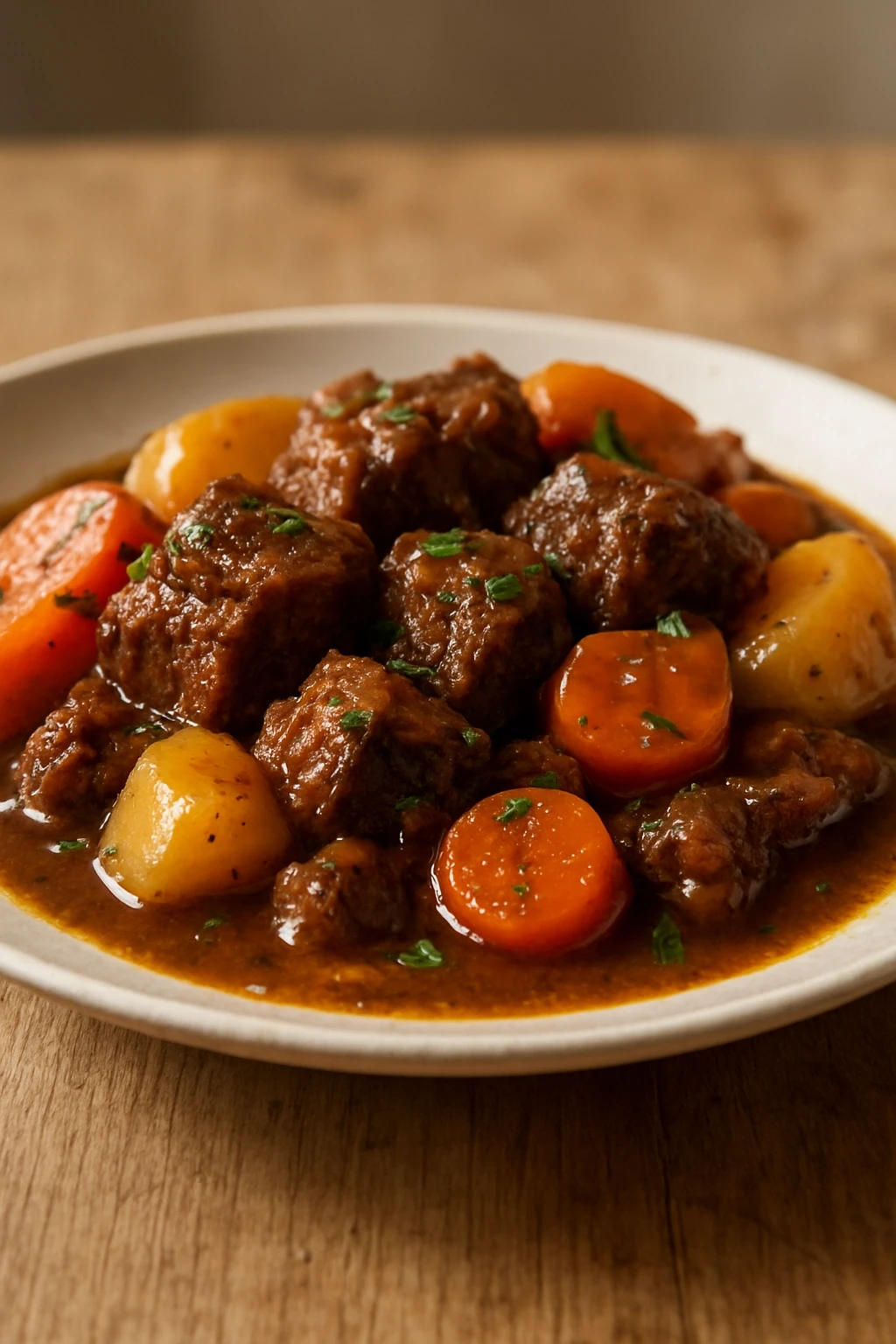
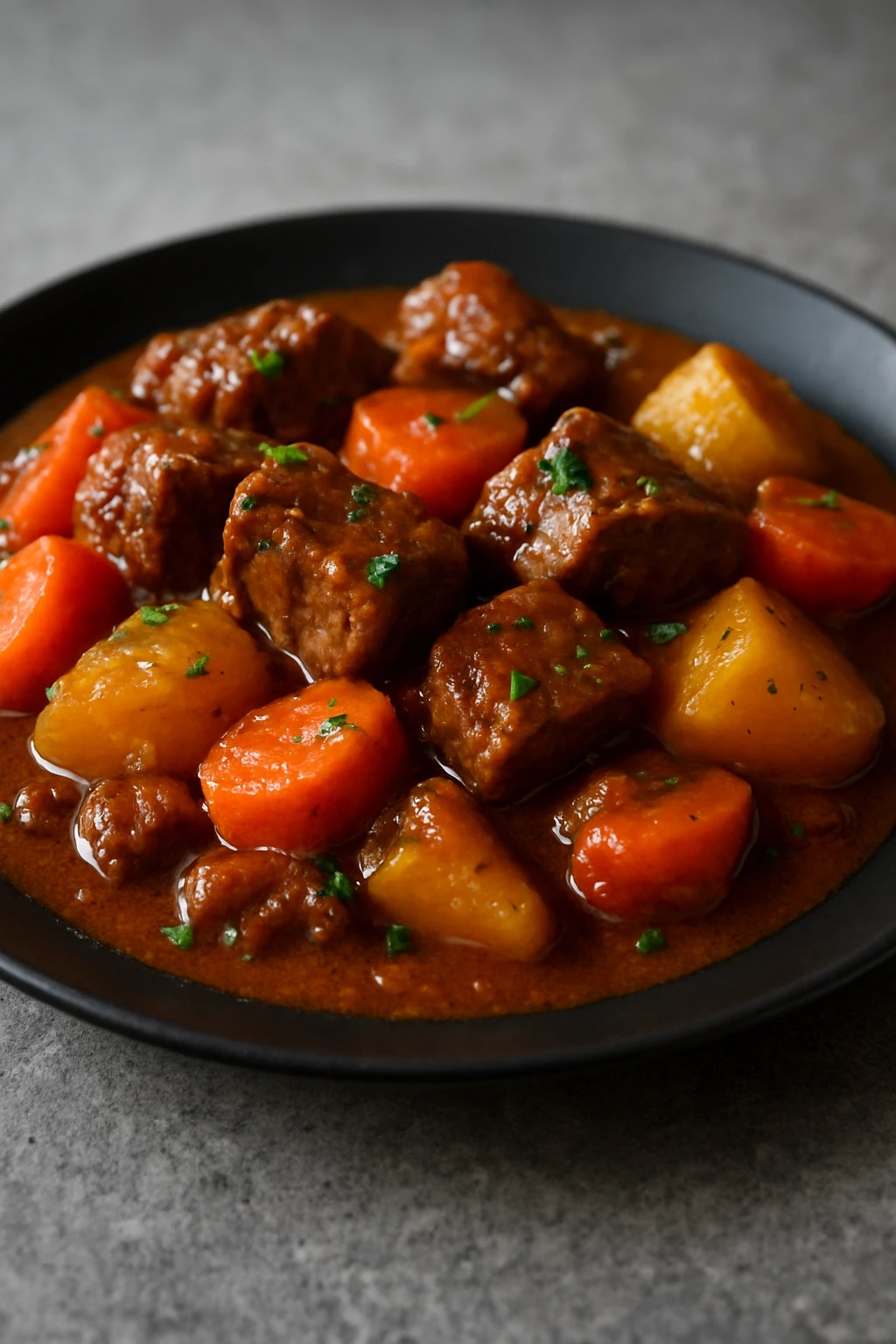
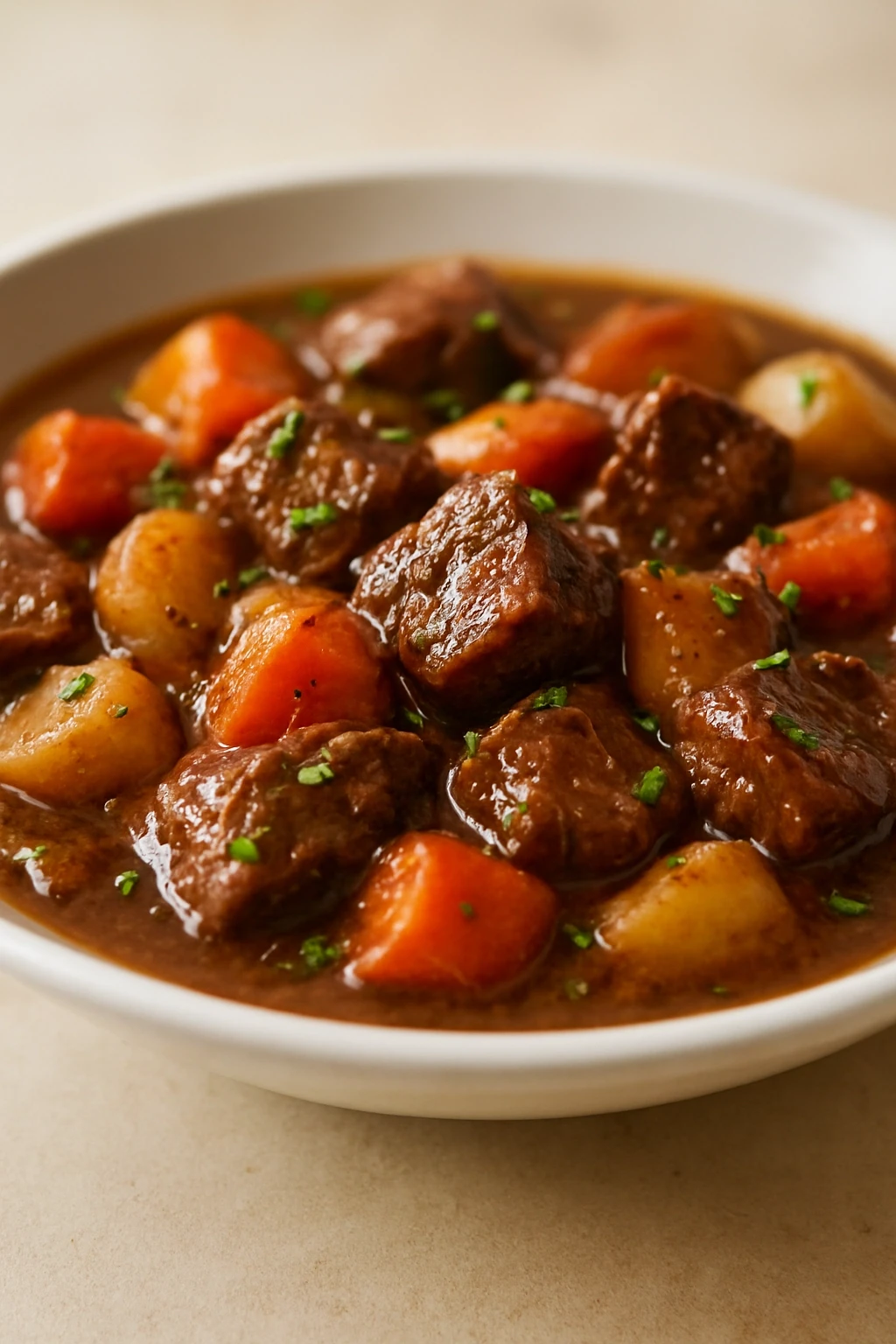
This rich Irish beef stew is slow-cooked with Guinness and root veggies for deep flavor and tender meat. It’s the perfect cozy meal to celebrate St. Patrick’s Day or any chilly night.
Introduction
I’ve been making this Irish beef stew for years, especially when March rolls around and I want to celebrate St. Patrick’s Day with something warm and comforting. My first attempt was a bit bland, so I started experimenting with Guinness beer as the braising liquid, and that really changed everything. The bitterness of the stout balances the richness of the beef beautifully. What sets this stew apart is the slow simmer that tenderizes the meat to melt-in-your-mouth perfection and allows the root vegetables to soak up all those deep flavors. I also love adding parsnips alongside carrots and potatoes for that slightly sweet earthiness. When it’s done, the stew is thick, hearty, and has this gorgeous dark mahogany color. It’s the kind of dish that makes your kitchen smell amazing and your family ask for seconds. You’ll want to serve it with crusty bread to soak up every last drop of the sauce. Trust me, this one’s a keeper!
What You'll Need
Approximately 8 cups, serves 6 generously
- 2 pounds beef chuck, cut into 1-inch cubes, trimmed of excess fat
- 2 tablespoons vegetable oil
- 1 large onion, chopped
- 3 cloves garlic, minced
- 3 large carrots, peeled and sliced into 1-inch pieces
- 2 parsnips, peeled and sliced
- 2 celery stalks, chopped
- 4 medium potatoes, peeled and cubed
- 1 tablespoon tomato paste
- 1 bottle (12 oz) Guinness stout
- 4 cups beef broth, low sodium
- 2 teaspoons dried thyme
- 2 bay leaves
- Salt and freshly ground black pepper, to taste
- Fresh parsley, chopped, for garnish
How To Do It
Step 1
Start by patting the beef cubes dry with paper towels — this helps them brown properly instead of steaming. Heat the vegetable oil in a large heavy-bottomed pot or Dutch oven over medium-high heat. Add the beef in batches so you don’t overcrowd the pan, and brown on all sides until a deep caramelized crust forms, about 4-5 minutes per batch. Browning is crucial because it develops those rich, savory flavors through the Maillard reaction. Avoid stirring too often; let the meat sit so it can brown well. Once browned, transfer the beef to a plate and set aside.
⏱ Time: 15 minutes
✓ Doneness: Beef cubes should have a deep brown crust with no pink spots
Step 2
In the same pot, reduce heat to medium and add the chopped onions, stirring occasionally until softened and translucent, about 6-8 minutes. Then add the minced garlic and cook for another minute until fragrant — watch closely so it doesn’t burn. The softened onions add sweetness and depth, while the garlic enhances aroma. Deglaze the pot by stirring in the tomato paste and scraping up any browned bits stuck to the bottom; these bits pack intense flavor into the stew.
⏱ Time: 10 minutes
✓ Doneness: Onions are soft and golden, garlic fragrant, and pot bottom scraped clean
Step 3
Return the browned beef to the pot and pour in the entire bottle of Guinness stout. The beer adds a subtle bitterness and complexity that really elevates the stew. Scrape the bottom again to lift any remaining fond. Let the mixture come to a gentle simmer, allowing the alcohol to cook off for about 5 minutes. This step infuses the meat with the beer’s flavor while preventing any harsh boozy taste.
⏱ Time: 10 minutes
✓ Doneness: Liquid is simmering gently with no strong alcohol smell
Step 4
Add the beef broth, dried thyme, and bay leaves. Bring everything up to a simmer again, then reduce the heat to low and cover the pot partially with a lid. Let the stew cook gently for about 2 hours, stirring occasionally. This slow braise breaks down the connective tissue in the beef, making it tender and flavorful. Avoid boiling vigorously, which can toughen the meat and cloud the broth.
⏱ Time: 120 minutes
✓ Doneness: Beef is fork-tender and broth is rich and flavorful
Step 5
After 2 hours, add the carrots, parsnips, celery, and potatoes to the pot. Stir gently to combine, then cover again and cook for an additional 30-40 minutes until the vegetables are tender but not mushy. Adding the veggies later prevents them from disintegrating and keeps their texture intact. Taste and season with salt and pepper at this stage to balance flavors.
⏱ Time: 40 minutes
✓ Doneness: Vegetables are fork-tender and stew is thickened
Step 6
Remove the bay leaves and discard. Give the stew a final stir and adjust seasoning if needed. If the stew is too thin, uncover and simmer gently for 10-15 minutes to reduce and thicken the sauce. The stew should coat the back of a spoon nicely. Thickening intensifies flavor and gives that comforting mouthfeel you want in a stew.
⏱ Time: 15 minutes
✓ Doneness: Stew is thick and coats a spoon without running off quickly
Step 7
Ladle the stew into bowls and garnish with freshly chopped parsley for a bright, fresh note. The parsley cuts through the richness and adds a pop of color. Serve immediately with crusty bread or Irish soda bread for soaking up the sauce. This final touch makes the dish feel complete and inviting.
⏱ Time: 5 minutes
✓ Doneness: Garnish is fresh and vibrant, stew steaming hot
Step 8
If you’re making this ahead, let the stew cool slightly before transferring to airtight containers. Refrigerate for up to 3 days or freeze for longer storage. Reheat gently on the stovetop over low heat, adding a splash of broth or water if it’s too thick. Slow reheating preserves the tender texture and melded flavors.
⏱ Time: N/A
✓ Doneness: Stew reheated evenly and maintains thickness
Step 9
For an extra touch, try adding a splash of Irish whiskey or a handful of chopped fresh herbs like thyme or rosemary just before serving. These additions layer in more aroma and complexity. Just be careful not to overpower the classic flavors — subtlety is key.
⏱ Time: 5 minutes
✓ Doneness: Flavors are well balanced with fresh herbal notes
Pro Tips
Don’t skip browning the beef in batches.
Browning meat in batches prevents overcrowding, which causes steaming instead of searing. The Maillard reaction creates those deep, savory flavors and a beautiful crust that forms the stew’s flavor foundation. If you rush this step, the stew will lack depth and color.
Use a heavy-bottomed pot or Dutch oven.
A thick pot distributes heat evenly and prevents hot spots that can burn the meat or vegetables. It also retains heat well during slow cooking, ensuring consistent simmering. Thin pans can cause uneven cooking and scorching.
Add root vegetables later in cooking.
Adding veggies too early leads to mushy texture as they break down. Adding them after the meat has become tender ensures they cook just enough to soften while maintaining shape and texture. This layering keeps the stew balanced.
Simmer gently, don’t boil.
A gentle simmer breaks down connective tissues without toughening the meat. Boiling agitates the stew, causing proteins to seize and become chewy, and can make the broth cloudy. Keep heat low for a clear, tender result.
Use fresh parsley as a finishing touch.
Fresh herbs brighten the dish and add contrast to the rich stew. Parsley’s fresh, slightly peppery flavor cuts through the heaviness and adds color, making the dish more visually appealing and balanced in taste.
Let the stew rest before serving.
Allowing the stew to rest off heat lets flavors meld and the sauce thicken as it cools slightly. This resting time improves the texture and makes the dish taste more harmonious. Serving immediately can result in a thinner sauce.
Use a wooden spoon to scrape the pot.
Scraping up browned bits with a wooden spoon during deglazing incorporates those flavorful fond particles into the stew. Metal utensils can scratch your pot, and not scraping means losing those concentrated flavor pockets.
Common Mistakes to Avoid
Overcrowding the pan when browning beef
Why it happens Many cooks want to speed up the process by adding all the meat at once, not realizing this traps steam and prevents proper browning.
Fix Brown the beef in small batches, allowing space between pieces. This encourages caramelization and flavor development. Use two pans if needed to avoid crowding.
Boiling the stew vigorously
Why it happens Some assume a rolling boil cooks food faster and better, but high heat can toughen meat and cloud the broth.
Fix Maintain a gentle simmer by lowering the heat once the stew comes to a boil. You should see occasional bubbles, not a roaring boil.
Adding vegetables too early
Why it happens Inexperienced cooks may add all ingredients at once, thinking it saves time.
Fix Add root vegetables after the meat has braised for a couple of hours to prevent them from becoming mushy.
Not seasoning throughout cooking
Why it happens Some only salt at the end, missing the chance to build flavor gradually.
Fix Season the beef before browning and taste the stew at the end to adjust salt and pepper. Layering seasoning enhances depth.
Skipping the deglazing step
Why it happens Sometimes cooks forget or rush past scraping browned bits from the pan.
Fix Always deglaze with beer or broth after browning to lift flavorful bits stuck to the pot. This adds richness to the stew.
Variations
Spicy Irish Stew
Add a diced jalapeño or a pinch of cayenne pepper when cooking the onions for a gentle heat kick. You can also sprinkle crushed red pepper flakes before serving. This adds warmth and a modern twist to the traditional stew without overpowering the classic flavors.
Note: Introduce spicy ingredients early to mellow their heat through cooking. Adjust spice level gradually to avoid overwhelming the dish.
Vegetarian Irish Stew
Replace beef with hearty mushrooms like cremini or portobello and use vegetable broth instead of beef stock. Add extra root vegetables and some lentils for protein. This version keeps the comforting texture while making it meat-free and just as satisfying.
Note: Reduce cooking time since vegetables and lentils cook faster than beef. Sauté mushrooms well to develop flavor.
Slow Cooker Irish Stew
Brown the beef and sauté aromatics as usual, then transfer everything to a slow cooker. Cook on low for 6-8 hours, adding vegetables in the last hour. This hands-off method is great for busy days and yields tender, flavorful results.
Note: Avoid lifting the lid too often to maintain steady temperature. Add delicate herbs at the end to preserve freshness.
Irish Stew with Guinness and Bacon
Add diced smoked bacon or pancetta at the start along with the onions for a smoky depth. The bacon fat enriches the stew and adds complexity. It’s a great option if you want a slightly richer, smoky flavor profile.
Note: Render bacon slowly to avoid burning and use the fat for browning beef and vegetables.
Herb-Infused Irish Stew
Increase the amount of fresh herbs like thyme, rosemary, and parsley. Tie them in a bundle for easy removal or chop finely and add near the end. This version is fragrant and aromatic, perfect for herb lovers who want a garden-fresh touch.
Note: Add hardy herbs early for infusion; delicate herbs should be added at the end to preserve flavor.
Nutrition
Per Serving:
Nutritional values are estimates and may vary based on specific ingredients used.
Storage & Tips
Room Temperature
This stew can safely sit out covered at room temperature for up to 2 hours. Beyond that, bacteria growth increases, so refrigerate promptly. Cover with a lid or plastic wrap to prevent contamination.
Refrigerator
Store leftovers in an airtight container in the fridge for up to 3 days. The stew thickens and flavors meld further when chilled. Reheat gently on the stovetop, adding a splash of broth if it’s too thick. Avoid microwaving for long periods to prevent uneven heating.
Freezer
Freeze the stew in airtight containers or heavy-duty freezer bags for up to 3 months. Remove as much air as possible to prevent freezer burn. Thaw overnight in the fridge before reheating. Texture may soften slightly but remains delicious.
Reheating
Reheat on the stovetop over low to medium heat, stirring occasionally. Add a little broth or water if the stew is too thick. Avoid boiling during reheating to keep meat tender. Microwave can be used but stir frequently to ensure even heating.
Make Ahead
You can prepare the stew up to 2 days ahead. Cook fully, cool, and refrigerate. On serving day, reheat gently and add fresh parsley. Vegetables hold up well, and flavors improve with resting time, making it a great make-ahead option.
FAQ
Can I use a different type of beer instead of Guinness?
Yes, you can substitute Guinness with another stout or porter for similar rich, roasted flavors. Avoid light beers or lagers as they won’t provide the same depth. If you don’t want to use beer, beef broth alone works but the stew will be less complex.
How do I thicken the stew if it’s too thin?
Simmer the stew uncovered for 10-15 minutes to reduce and thicken naturally. Alternatively, mix a tablespoon of cornstarch with cold water and stir it in, cooking until thickened. Avoid adding flour directly as it can clump.
Can I make this stew in a slow cooker?
Absolutely! Brown the meat and sauté aromatics first, then transfer everything to the slow cooker. Cook on low for 6-8 hours, adding vegetables in the last hour to avoid overcooking. This method is convenient and yields tender results.
What cut of beef is best for this stew?
Beef chuck is ideal because it has enough fat and connective tissue that breaks down during slow cooking, making the meat tender and flavorful. Avoid lean cuts like sirloin, which can dry out and become tough.
How do I prevent the vegetables from turning mushy?
Add root vegetables like carrots and potatoes after the beef has cooked for a couple of hours. This way, they cook just enough to become tender but still hold their shape and texture.
Can I prepare this stew ahead of time?
Yes, this stew actually tastes better the next day as flavors meld. Store in the fridge for up to 3 days and reheat gently. You can also freeze portions for longer storage.
Is there a vegetarian version of this stew?
You can swap beef for hearty mushrooms and use vegetable broth. Add lentils or beans for protein. Cook vegetables slightly longer and sauté mushrooms well to develop flavor.
What’s the best way to serve this stew?
Serve hot with crusty bread or traditional Irish soda bread to soak up the sauce. A simple side salad or steamed greens balance the richness nicely.
Final Thoughts
Give this Irish beef stew a try—it’s a warm, satisfying dish that brings a little taste of Ireland to your table. I’d love to hear how it turns out for you!