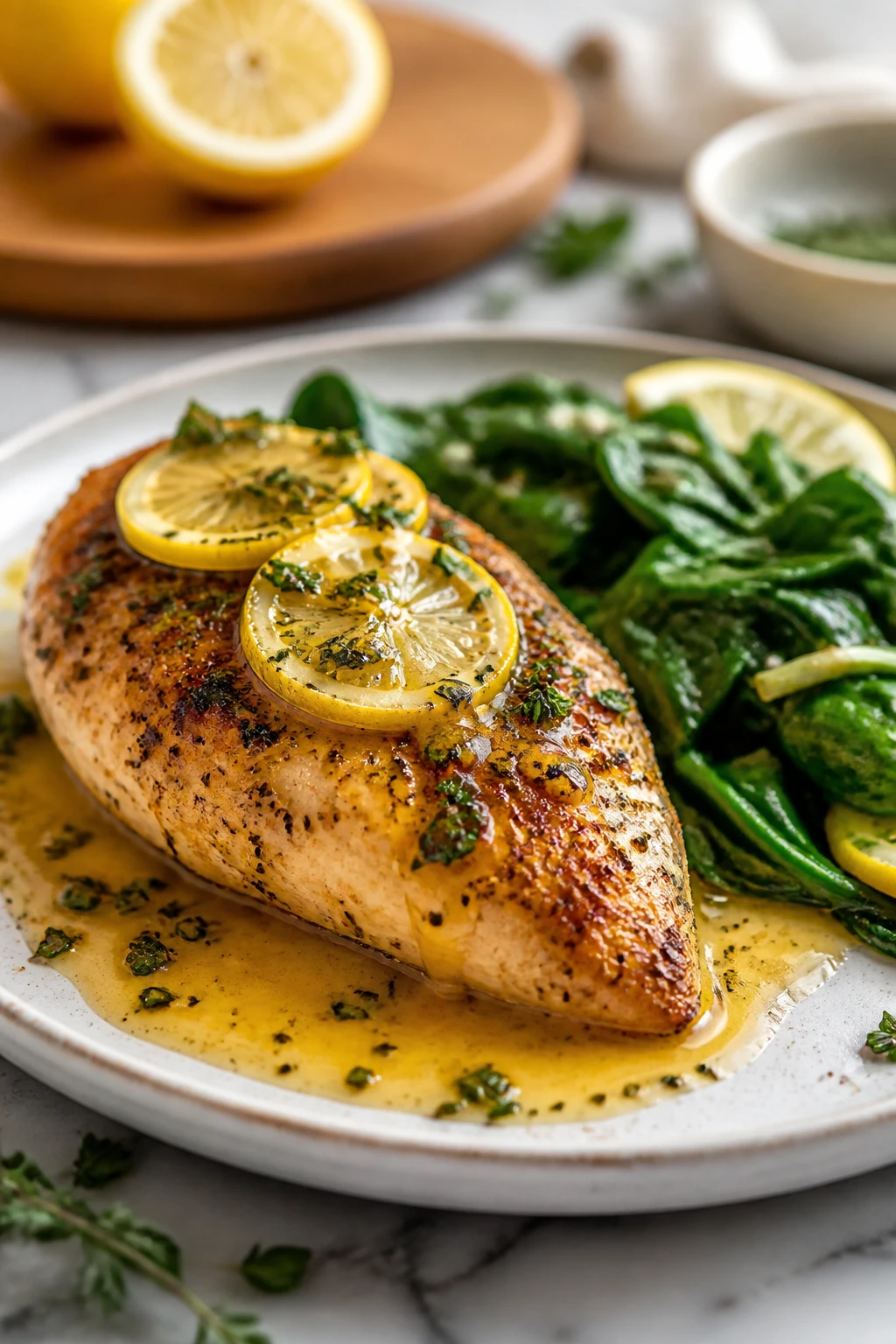
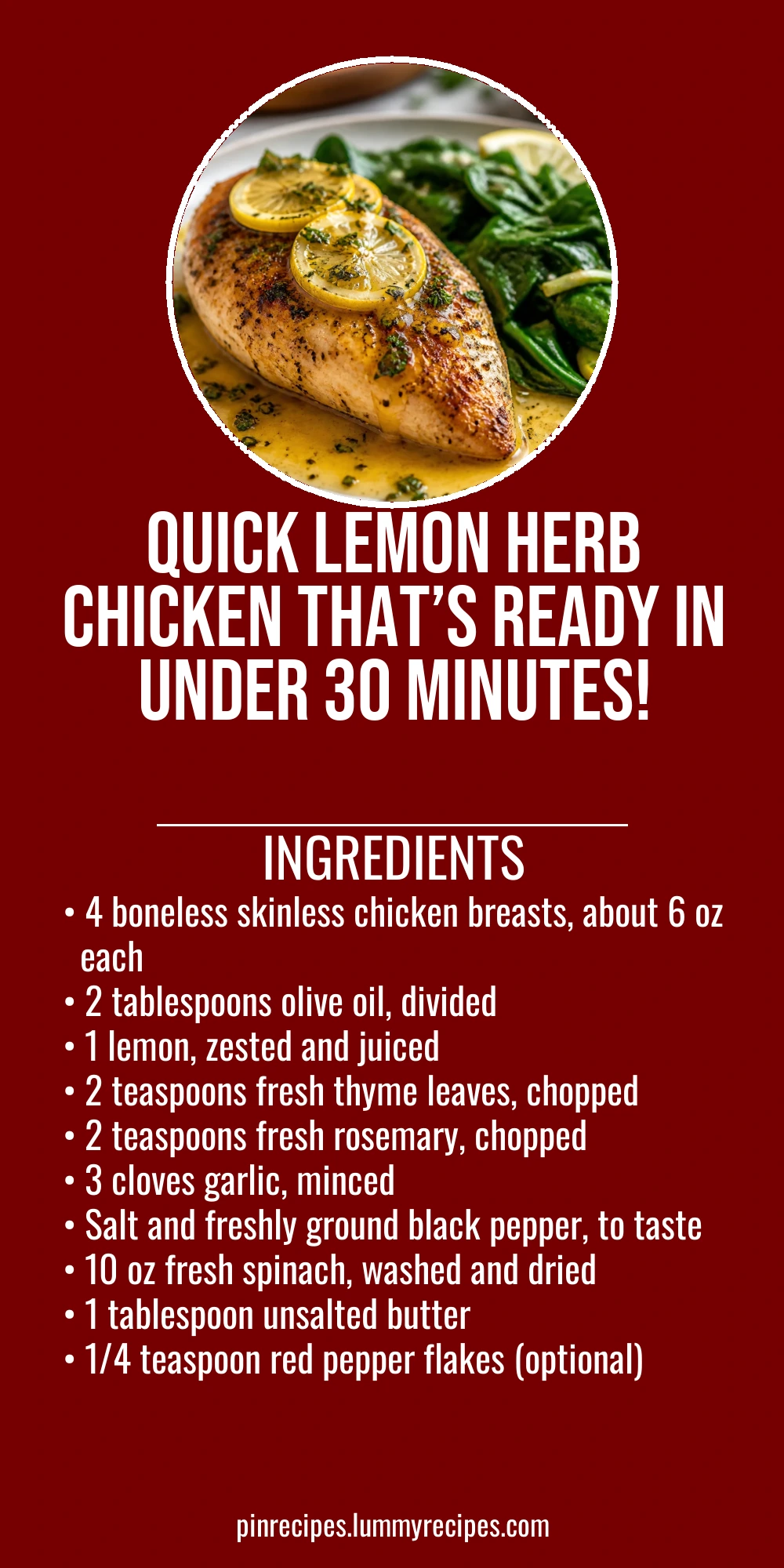
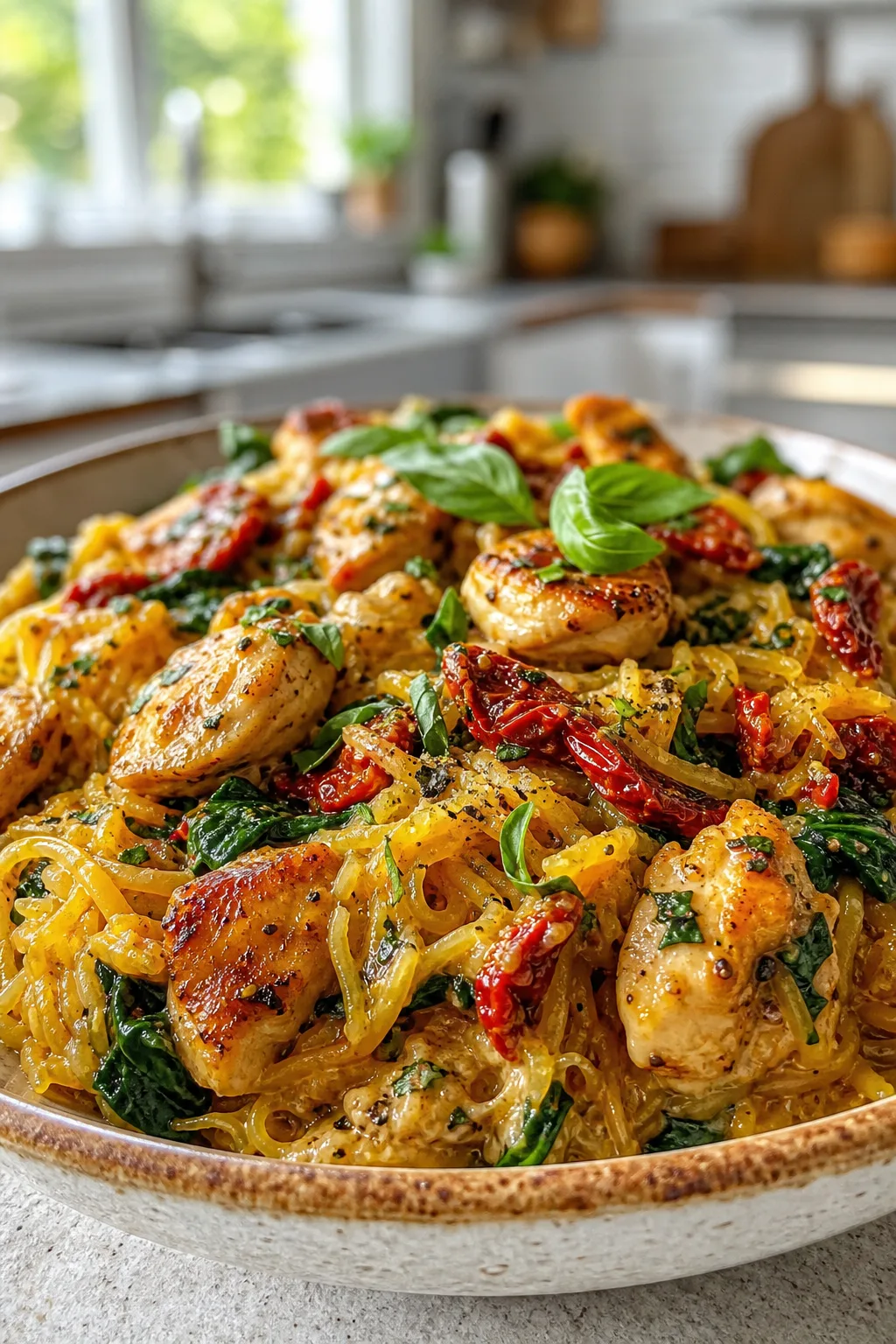
Juicy chicken breasts infused with fresh lemon and herbs, paired with quick sautéed spinach for a vibrant, healthy dinner. Ready in just 25 minutes, it’s perfect for busy weeknights when you want something light but flavorful.
Introduction
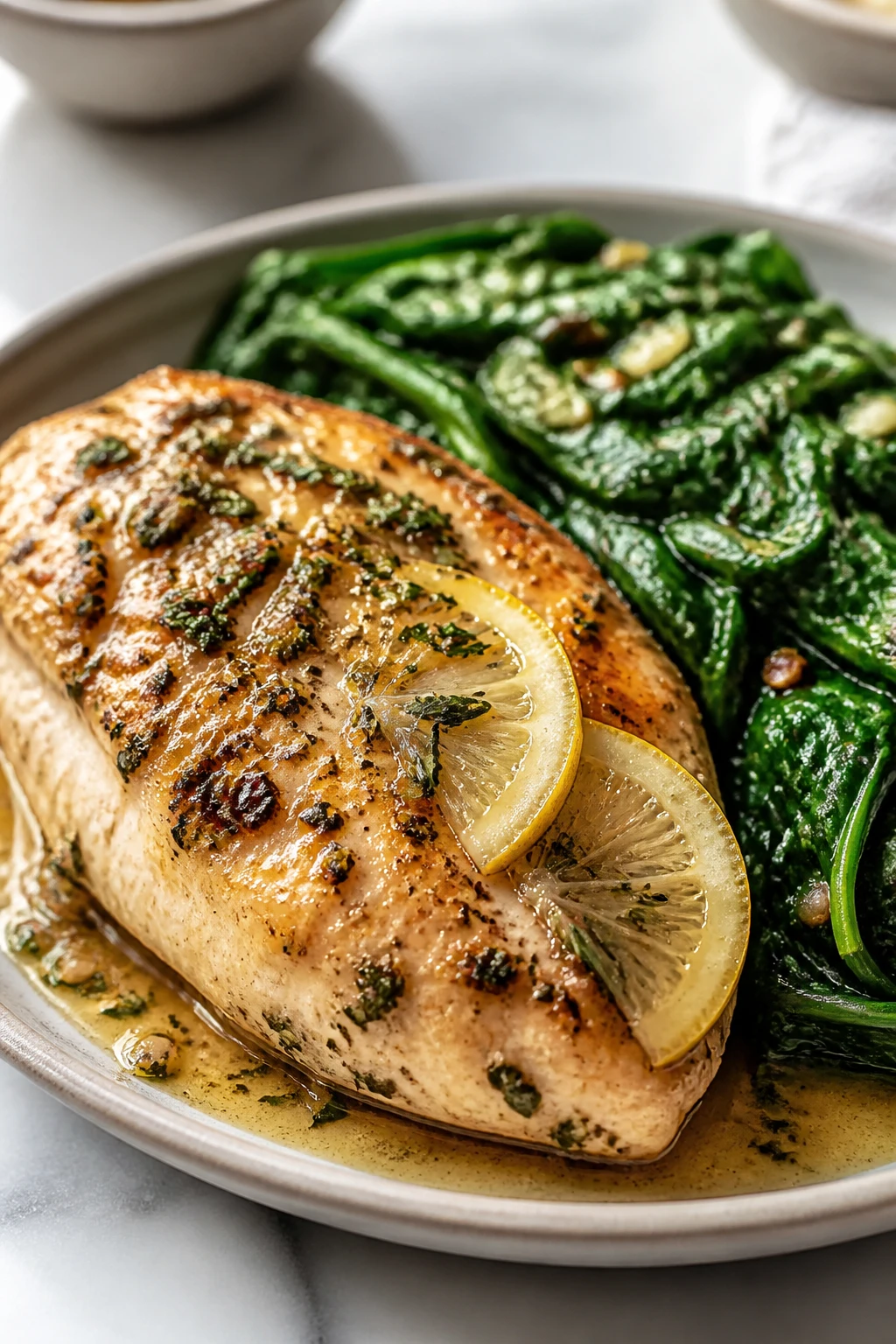
I first made this lemon herb chicken breast dish on a hectic weeknight when I wanted something fresh but quick. What I love about this recipe is how the lemon brightens the chicken without overpowering it, and the fresh herbs add a lovely depth of flavor. Plus, the sautéed spinach is a wonderful, simple side that cooks in minutes, making the whole meal come together in just about 25 minutes. I’ve tried other lemon chicken recipes before, but this one stands out because I use fresh lemon zest and juice separately — the zest gives a fragrant citrus punch, while the juice adds tang and moisture. Also, I learned that letting the chicken rest a few minutes after cooking keeps it juicy and tender, which is a game changer. The spinach gets just a quick wilt with garlic and butter, so it stays vibrant and flavorful. When everything’s plated, the chicken looks golden with flecks of herbs, and the spinach’s deep green makes the dish feel wholesome and satisfying. This recipe is perfect for those nights when you want a healthy dinner that doesn’t feel like a chore to prepare.
How To Do It
Step 1
Start by patting the chicken breasts dry with paper towels—this helps the seasoning stick and ensures a nice sear. Season both sides generously with salt, pepper, half the minced garlic, lemon zest, thyme, and rosemary. Let the chicken rest at room temperature for 5 minutes so the flavors can penetrate and the meat cooks evenly.
⏱ Time: 5 minutes
✓ Doneness: Chicken surface looks evenly coated with herbs and slightly moist but not wet.
Step 2
Heat 1 tablespoon of olive oil in a large skillet over medium-high heat. Once hot, add the chicken breasts, making sure not to crowd the pan. Cook undisturbed for about 6 minutes on the first side so a golden crust forms. Avoid flipping too soon or pressing down, which can squeeze out juices and dry the meat.
⏱ Time: 6 minutes
✓ Doneness: Edges of chicken turn golden brown and release easily from the pan.
Step 3
Flip the chicken breasts and reduce heat to medium. Add the remaining garlic and lemon juice to the pan. Spoon some of the pan juices over the chicken as it cooks for another 6-7 minutes. This technique keeps the chicken moist and infuses it with bright citrus flavor. Use a meat thermometer to check for an internal temperature of 165°F (74°C).
⏱ Time: 6-7 minutes
✓ Doneness: Chicken reaches 165°F internally and juices run clear.
Step 4
Remove the chicken from the pan and cover loosely with foil. Let it rest for 5 minutes to allow the juices to redistribute — this keeps the meat tender and juicy when you slice it.
⏱ Time: 5 minutes
✓ Doneness: Chicken feels firm but springy to the touch.
Step 5
While the chicken rests, wipe out the skillet if needed and add 1 tablespoon olive oil and butter over medium heat. Once melted, add the fresh spinach and red pepper flakes if using. Toss frequently so the spinach wilts evenly and doesn’t stew in its own liquid. This quick sauté keeps it bright and tender.
⏱ Time: 3-4 minutes
✓ Doneness: Spinach is wilted but still bright green and glossy.
Step 6
Season the spinach with salt and pepper to taste. Toss one last time and remove from heat to avoid overcooking, which can make spinach soggy and dull in color.
⏱ Time: 1 minute
✓ Doneness: Spinach tastes fresh with a slight bite, not mushy.
Step 7
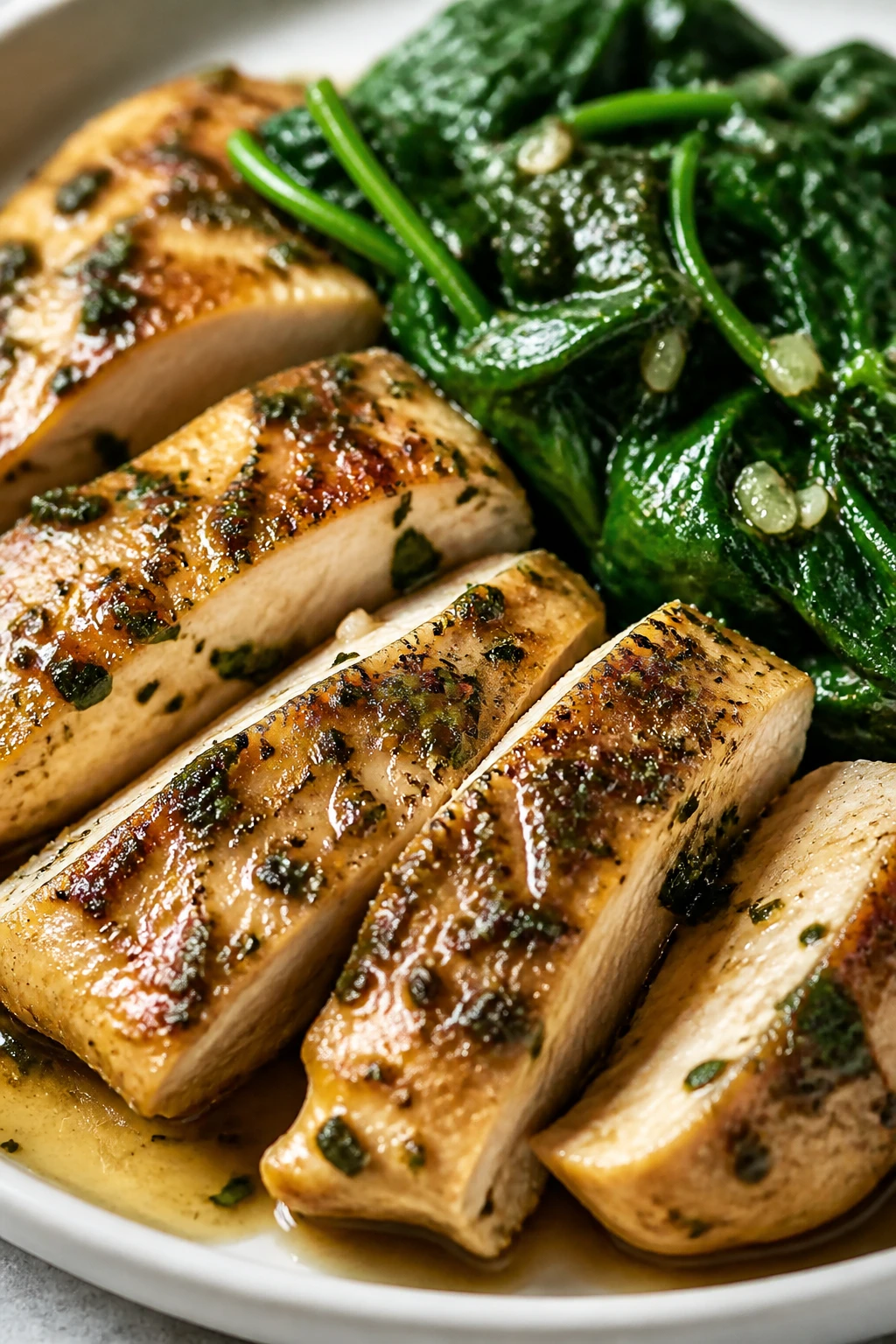
Slice the rested chicken breasts against the grain to keep them tender. Arrange on plates alongside the sautéed spinach. Spoon any remaining pan juices over the chicken for extra flavor and moisture.
⏱ Time: 2 minutes
✓ Doneness: Chicken slices reveal juicy, opaque meat with herb flecks.
Step 8
Garnish with extra lemon zest or fresh herbs if desired for a pop of color and aroma. Serve immediately while warm.
⏱ Time: 1 minute
✓ Doneness: Dish looks vibrant and fresh with visible herb and lemon accents.
Step 9
Clean up your cooking space and enjoy your quick, healthy meal! This recipe pairs well with a simple quinoa or brown rice if you want a heartier dinner.
⏱ Time: N/A
✓ Doneness: N/A
Pro Tips
Always let the chicken rest after cooking before slicing.
Resting allows the juices to redistribute throughout the meat, preventing them from spilling out when you cut. This keeps the chicken moist and tender rather than dry.
Use fresh lemon zest and juice separately for layered citrus flavor.
Zest contains aromatic oils that provide brightness without acidity, while juice adds tang and moisture. Using both enhances flavor complexity.
Don’t overcrowd the pan when searing chicken breasts.
Crowding lowers the pan’s temperature, causing the chicken to steam rather than sear. This prevents the Maillard reaction, resulting in less flavorful, pale chicken.
Wilt spinach quickly over medium heat to preserve color and texture.
Cooking spinach too long or at too high heat breaks down chlorophyll and makes it soggy. Quick sautéing keeps it vibrant and tender.
Season the chicken generously before cooking.
Salt enhances flavor and helps extract moisture to create a better sear. Herbs and garlic added early infuse the chicken with flavor as it rests.
Use a meat thermometer to check doneness.
Chicken can dry out if overcooked. A thermometer ensures the chicken reaches the safe temperature of 165°F without guessing.
Add garlic towards the end of chicken cooking to avoid burning.
Garlic burns quickly and turns bitter. Adding it later preserves its aroma and flavor.
Common Mistakes to Avoid
Skipping the resting step after cooking chicken.
Why it happens Many assume slicing immediately saves time, but this causes juices to run out, drying the meat.
Fix Cover the chicken loosely with foil and rest for 5 minutes after cooking. This keeps the meat juicy and tender.
Overcrowding the pan during searing.
Why it happens Trying to cook all chicken pieces at once seems faster, but it lowers pan temperature.
Fix Cook chicken in batches if needed, allowing enough space for proper browning and flavor development.
Using bottled lemon juice instead of fresh.
Why it happens Bottled juice is convenient but lacks fresh aroma and can taste harsh.
Fix Always zest and juice fresh lemons for best flavor and brightness.
Overcooking spinach until mushy.
Why it happens Leaving spinach in the pan too long or on high heat breaks down texture and dulls color.
Fix Sauté spinach quickly over medium heat just until wilted, then remove from heat.
Not drying chicken before seasoning.
Why it happens Moisture on chicken surface prevents good sear and causes steaming.
Fix Pat chicken dry thoroughly with paper towels before seasoning.
Variations
Garlic Butter Lemon Chicken
Add a pat of garlic butter on top of each chicken breast just before resting. This enriches the flavor and adds a silky finish. You can also toss the spinach in the garlic butter for an extra indulgent touch.
Note: Butter melts quickly; add it off heat to avoid burning and preserve its creamy texture.
Spicy Lemon Herb Chicken
Include a pinch of cayenne pepper or chili flakes in the herb seasoning for a spicy kick. This variation pairs well with a cooling side like cucumber salad to balance heat.
Note: Adjust spice level carefully so it complements but doesn’t overpower the lemon flavor.
Lemon Herb Chicken with Quinoa Salad
Serve the chicken and spinach over a bed of fluffy quinoa mixed with diced cucumber, cherry tomatoes, and a simple vinaigrette. This makes the meal more filling and adds fresh textures.
Note: Cook quinoa separately and cool slightly before mixing with salad ingredients.
Creamy Lemon Herb Chicken
After cooking the chicken, make a quick pan sauce by adding a splash of cream and extra lemon juice to the skillet. Simmer until thickened and pour over the chicken for a richer dish.
Note: Use heavy cream and watch closely to avoid curdling; keep heat low.
Herb-Marinated Grilled Chicken
Marinate the chicken breasts in lemon juice, olive oil, garlic, and herbs for 30 minutes before grilling. This adds smoky flavor and makes the chicken extra tender.
Note: Grill over medium heat and monitor closely to prevent drying out.
Nutrition
Per Serving:
Nutritional values are estimates and may vary based on specific ingredients used.
Storage & Tips
Room Temperature
This dish can safely sit at room temperature for up to 2 hours if covered. For best flavor, serve immediately after cooking.
Refrigerator
Store leftovers in an airtight container for up to 3 days. The chicken may firm up slightly when cold; gently reheat to restore juiciness. Spinach can be reheated briefly or served cold in salads.
Freezer
Freeze cooked chicken breasts wrapped tightly in plastic wrap and foil for up to 2 months. Spinach does not freeze well and is best made fresh. Thaw chicken overnight in the fridge before reheating.
Reheating
Reheat chicken gently in a skillet over low heat with a splash of water or broth to keep it moist. Avoid microwave reheating which can dry the meat. Spinach reheats quickly; toss briefly in a hot pan.
Make Ahead
Marinate the chicken up to 2 hours ahead to deepen flavor. You can also wash and dry spinach in advance, but sauté it right before serving for best texture.
FAQ
Can I use frozen spinach instead of fresh?
Frozen spinach tends to release more water and may become soggy when cooked quickly. If using frozen, thaw and squeeze out excess moisture before sautéing to avoid a watery side dish.
What if I don’t have fresh herbs?
Dried herbs can be used but use about one-third the amount since they are more concentrated. Add them earlier in the cooking process to allow flavors to develop.
Can I prepare this recipe for meal prep?
Yes! The chicken and spinach can be cooked ahead and stored separately in airtight containers. Reheat gently to keep textures intact. Add fresh lemon juice after reheating for brightness.
What sides go well with this lemon herb chicken?
This dish pairs beautifully with quinoa, brown rice, roasted potatoes, or a simple green salad. Choose sides that complement the light, fresh flavors without overpowering them.
How do I avoid overcooking the chicken?
Cook over medium heat and monitor closely. Using a meat thermometer to reach 165°F ensures doneness without drying out. Resting also helps retain moisture.
Is it okay to use bottled lemon juice?
Bottled lemon juice lacks the fresh aroma and brightness of fresh lemons, which can affect flavor quality. Fresh lemon juice and zest are recommended for best results.
Can I make this recipe vegan?
To veganize, substitute chicken with firm tofu or tempeh and use olive oil instead of butter. Adjust cooking times accordingly to ensure proper texture.
What if I don’t have thyme or rosemary?
You can substitute with other fresh herbs like oregano or parsley, or use a mix of dried Italian seasoning. The flavor will differ but still be delicious.
Final Thoughts
I hope you enjoy making this lemon herb chicken as much as I do! Give it a try and let me know how it turns out — I’d love to hear your tweaks and favorite sides.