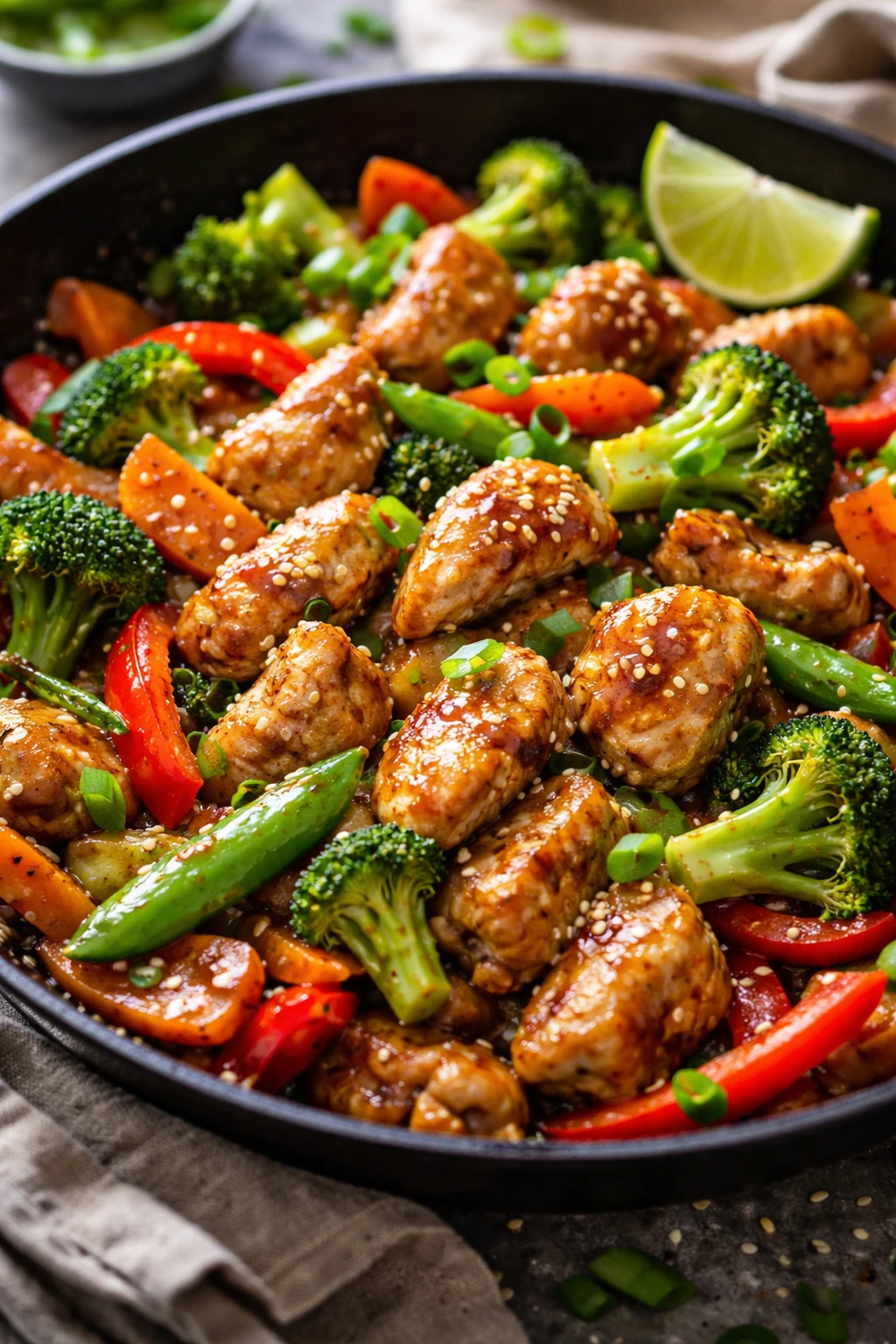
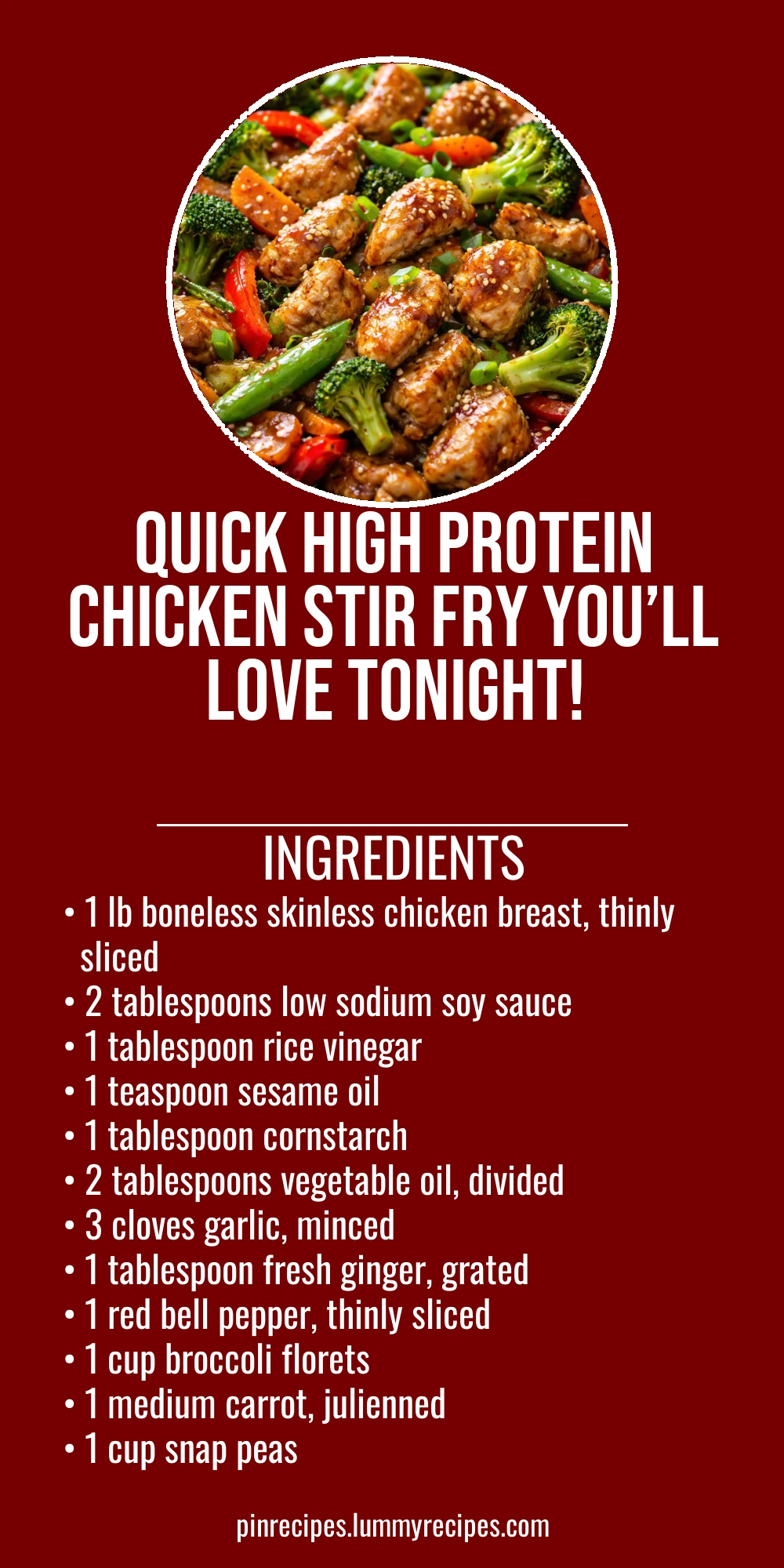
This stir fry is my go-to for busy nights—light, packed with protein, and loaded with fresh veggies. The secret? A quick marinade that keeps the chicken juicy without extra calories. Perfect for a healthy dinner that’s ready in no time!
Introduction
I first stumbled onto this chicken stir fry recipe when I needed something quick, healthy, and satisfying after long workdays. What I love most is how it’s packed with lean protein and fresh veggies, but still light on calories, making it perfect for weeknights when time and energy are tight. I’ve tweaked the marinade over time to keep the chicken super tender without adding fat. The trick I learned is tossing the chicken in cornstarch before cooking—it locks in moisture and gives a nice silky texture without frying. Plus, using a mix of crunchy veggies adds color and keeps each bite interesting. The finished dish is vibrant, flavorful, and hits that perfect balance between juicy chicken and crisp vegetables. It’s the kind of meal my whole family enjoys, and it’s easy enough to whip up even when I’m rushing around. Honestly, this stir fry has become a staple in my kitchen—quick, healthy, and totally satisfying every time.
How To Do It
Step 1
Start by preparing the chicken: thinly slice the breast into bite-sized strips. Toss the chicken with soy sauce, rice vinegar, sesame oil, and cornstarch in a bowl. This marinade not only flavors the meat but the cornstarch creates a light coating that seals in juices during cooking, preventing dryness. Let it sit for at least 10 minutes. This step is crucial because it tenderizes the chicken and helps it brown nicely without sticking or drying out. Avoid skipping the cornstarch—it’s the secret to juicy, silky chicken pieces.
⏱ Time: 10 minutes
✓ Doneness: Chicken pieces look evenly coated and slightly glossy from marinade
Step 2
Heat 1 tablespoon of vegetable oil in a large wok or skillet over medium-high heat until shimmering but not smoking. Add the marinated chicken in a single layer, leaving space between pieces. Cook undisturbed for 2 minutes to develop a golden crust, then stir-fry until cooked through, about 3-4 more minutes. The high heat ensures a quick sear locking moisture inside. If you crowd the pan, the chicken will steam instead of sear, leading to a soggy texture. Remove chicken and set aside once opaque and slightly caramelized.
⏱ Time: 6 minutes
✓ Doneness: Chicken is opaque, golden on edges, and firm but tender to touch
Step 3
In the same pan, add the remaining 1 tablespoon of oil. Toss in minced garlic and grated ginger, stirring quickly for about 30 seconds until fragrant. This step releases essential oils and flavors that form the aromatic base of the stir fry. Be careful not to burn the garlic as it turns bitter fast—keep it moving in the pan.
⏱ Time: 30 seconds
✓ Doneness: Fragrant aroma fills the kitchen, garlic just turning golden
Step 4
Add the sliced bell pepper, broccoli florets, julienned carrot, and snap peas to the pan. Stir-fry the veggies over high heat for about 4-5 minutes until bright and crisp-tender. The high heat cooks quickly, preserving crunch and nutrients. Stir constantly to avoid burning and to cook veggies evenly. If you prefer softer veggies, cook a minute or two longer.
⏱ Time: 5 minutes
✓ Doneness: Vegetables are vibrant in color and tender but still have a slight crunch
Step 5
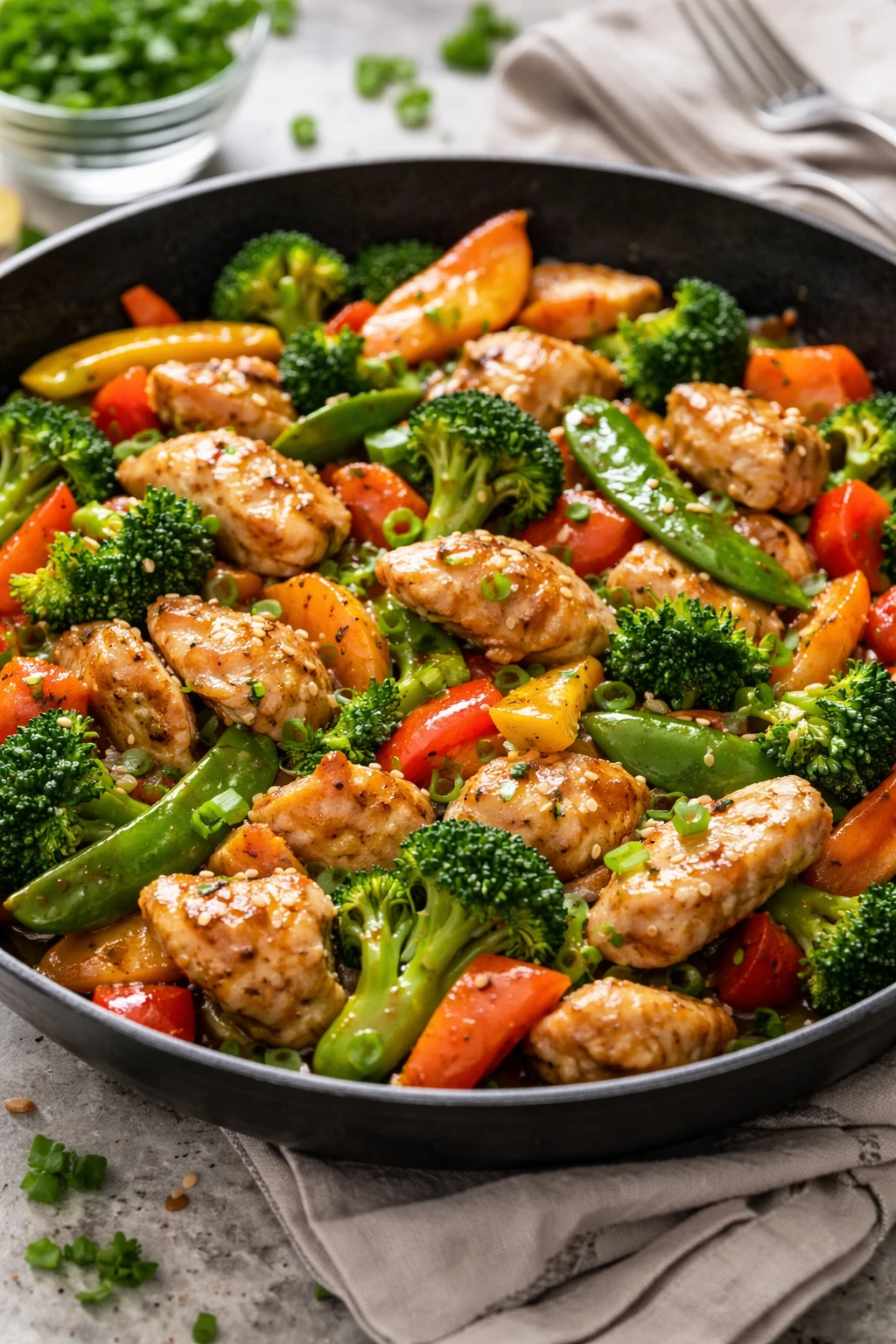
Return the cooked chicken to the pan with the vegetables. Toss everything together and stir-fry for another 2 minutes to combine flavors and heat through. This final step allows the sauce and marinade to coat all ingredients evenly. Taste and season with salt, pepper, and optional red pepper flakes to add a little kick if you like heat.
⏱ Time: 2 minutes
✓ Doneness: Dish is steaming hot and well mixed, with a glossy sauce coating
Step 6
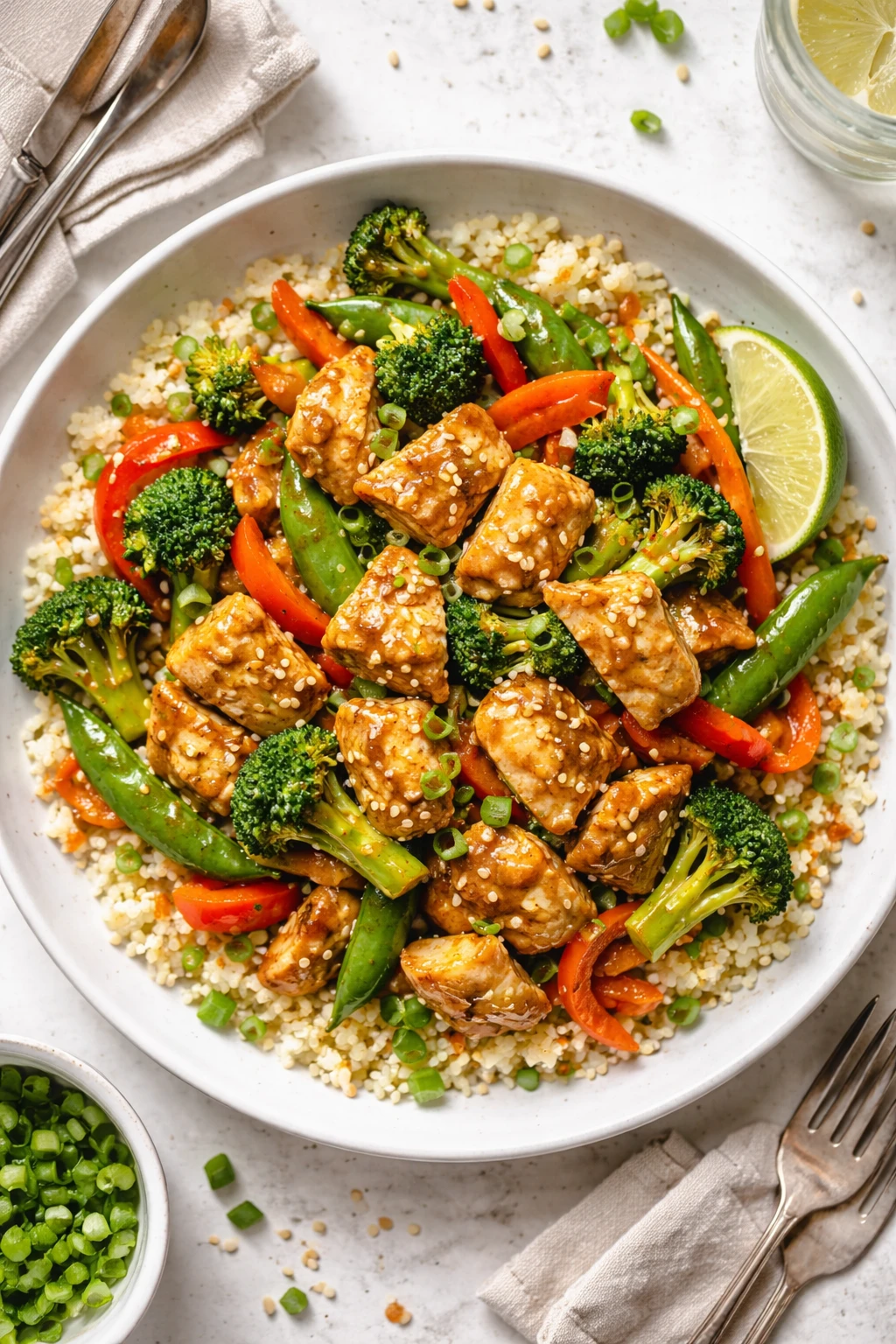
Remove from heat and sprinkle sliced green onions over the stir fry for a fresh finish. The green onions add a mild onion flavor and a pop of color. Serve immediately over steamed rice or noodles for a complete meal. The contrast between tender chicken, crisp veggies, and fresh onions makes every bite satisfying.
⏱ Time: 1 minute
✓ Doneness: Bright green onions on top and dish ready to serve
Step 7
If you want to prep ahead, slice your veggies and chicken and store separately in airtight containers in the fridge. Marinate the chicken just before cooking to keep it fresh. This saves precious time on busy evenings and keeps ingredients tasting their best.
⏱ Time: 5 minutes prep ahead
✓ Doneness: Ingredients prepped and stored without wilting or discoloration
Step 8
For an extra boost of flavor, try adding a splash of low sodium chicken broth or a teaspoon of honey during the final stir-fry step. The broth adds moisture and depth, while honey balances savory with a touch of sweetness. Adjust to taste and enjoy experimenting!
⏱ Time: Optional, 1 minute
✓ Doneness: Sauce looks slightly glossy and balanced in flavor
Step 9
Always use a very hot pan and keep ingredients moving during cooking to avoid steaming and sogginess. This technique ensures crisp vegetables and nicely seared chicken, which are key to a great stir fry texture. Invest in a good wok or heavy skillet for best results.
⏱ Time: Throughout cooking
✓ Doneness: Ingredients remain vibrant and texturally distinct
Pro Tips
Marinate the chicken for at least 10 minutes before cooking.
Marinating allows the soy sauce and vinegar to tenderize the chicken and infuse flavor. The cornstarch in the marinade creates a protective barrier that locks in moisture, preventing the chicken from drying out during high-heat cooking. Skipping this step can lead to bland, tough meat.
Use a very hot pan and cook in batches if needed.
High heat is essential for stir frying to sear the chicken and veggies quickly, preserving texture and flavor. Overcrowding the pan lowers the temperature, causing ingredients to steam instead of sear, resulting in soggy veggies and unevenly cooked chicken.
Prep all ingredients before you start cooking.
Stir frying is a fast process, so having everything sliced and ready ensures you can add ingredients at the right time without delay. This keeps the cooking sequence smooth and prevents overcooking or burning.
Add vegetables in order of cooking time.
Harder vegetables like carrots and broccoli need longer to cook than snap peas or bell peppers. Adding them in the right sequence ensures everything finishes cooking simultaneously, preserving texture and flavor balance.
Don’t skip the garlic and ginger aromatics.
They provide essential flavor complexity and freshness. Cooking them briefly in hot oil releases their oils without burning, which would create bitterness and ruin the dish’s balance.
Use fresh green onions for garnish.
They add a mild onion flavor and a fresh pop of color that brightens the dish. Adding them at the end preserves their delicate texture and flavor.
Serve immediately after cooking.
Stir fry tastes best fresh because the veggies stay crisp and the chicken juicy. Sitting too long causes the dish to steam and lose its appealing texture.
Common Mistakes to Avoid
Overcrowding the pan
Why it happens Many cooks try to cook all ingredients at once to save time, not realizing it lowers the pan temperature drastically.
Fix Cook chicken and vegetables in batches if your pan isn’t large enough. This keeps the heat high so ingredients sear properly instead of steaming, preserving texture and flavor.
Skipping the cornstarch coating
Why it happens It might seem unnecessary or like an extra step, so some skip it to save time.
Fix Always toss chicken in cornstarch before cooking. It traps moisture and creates a silky texture that makes the chicken juicy and helps it brown evenly.
Burning garlic or ginger
Why it happens Garlic and ginger cook very quickly and can burn if left unattended or cooked on too high heat.
Fix Add them last and stir constantly for just 30 seconds until fragrant. If they start to brown too fast, lower the heat immediately.
Not prepping ingredients ahead
Why it happens Beginners sometimes start cooking before all ingredients are ready, causing rushed and uneven cooking.
Fix Slice and measure everything before heating the pan. This ensures smooth timing and even cooking.
Using low heat for stir frying
Why it happens Some cooks mistakenly think slow cooking is better for tenderness.
Fix Always use high heat to quickly sear ingredients. This locks in juices and keeps vegetables crisp.
Variations
Spicy Szechuan Chicken Stir Fry
Add Szechuan peppercorns and chili paste to the marinade for a numbing, spicy kick. Include sliced onions and water chestnuts for crunch. This version has a bold, fiery flavor perfect for spice lovers.
Note: Adjust chili paste quantity carefully to control heat; cook peppercorns briefly to release aroma without bitterness.
Teriyaki Style Chicken Stir Fry
Swap soy sauce and vinegar for a homemade teriyaki sauce with mirin, sugar, and soy. Add pineapple chunks and snap peas for sweetness and texture. Expect a glossy, sweet-savory finish.
Note: Simmer sauce to thicken before tossing with chicken and veggies for best coating.
Low Carb Chicken Stir Fry
Omit carrots and bell peppers, add more broccoli and mushrooms instead. Serve over cauliflower rice to keep carbs low while maintaining bulk and flavor.
Note: Cook mushrooms separately to avoid excess moisture diluting the stir fry.
Peanut Sauce Chicken Stir Fry
Finish the dish with a creamy peanut sauce made from peanut butter, soy sauce, and lime juice. Add shredded cabbage and carrots for crunch. This gives a rich, nutty twist to the classic stir fry.
Note: Add sauce off heat to prevent peanut butter from separating.
Ginger Lime Chicken Stir Fry
Increase fresh ginger and add lime zest and juice at the end for a bright, zesty flavor. Toss in snap peas and baby corn for extra texture. It’s refreshing and light.
Note: Add lime juice right before serving to keep the fresh citrus aroma vibrant.
Nutrition
Per Serving:
Nutritional values are estimates and may vary based on specific ingredients used.
Storage & Tips
Room Temperature
This stir fry can safely sit out for up to 2 hours covered. Beyond that, bacteria growth increases so refrigerate promptly. Cover with a lid or foil to keep moisture in.
Refrigerator
Store leftovers in an airtight container for up to 3 days. The veggies may soften and the chicken can dry out slightly when cold. Reheat gently to preserve texture and flavor.
Freezer
Freeze stir fry in airtight containers or heavy-duty freezer bags for up to 2 months. To prevent freezer burn, remove as much air as possible and label with date. Thaw overnight in the fridge before reheating.
Reheating
Reheat in a skillet over medium heat with a splash of water or broth to revive moisture. Avoid microwaving too long which can dry out chicken and make veggies mushy. Stir frequently for even heating.
Make Ahead
You can slice and marinate the chicken and chop veggies 1-2 days ahead, storing separately in airtight containers. Combine and cook fresh on the day for best texture and flavor.
FAQ
Can I use chicken thighs instead of breast?
Yes! Chicken thighs are juicier and more forgiving but higher in fat. Slice them thinly to ensure quick, even cooking. The flavor will be richer but the texture slightly different—more tender and less lean.
What can I substitute for soy sauce?
Tamari or coconut aminos are great gluten-free alternatives with similar umami flavor. Use the same quantity but taste as tamari can be saltier. Avoid regular soy sauce if you want a low-sodium version.
How do I keep vegetables crisp?
Cook veggies quickly over high heat and don’t overcrowd the pan. Stir constantly and add them in order of hardness. Avoid overcooking by removing from heat as soon as they’re tender-crisp.
Can I make this stir fry vegan?
Absolutely! Substitute chicken with firm tofu or tempeh, pressing it well to remove moisture. Cook similarly, adding extra marinade time for flavor absorption. Use vegetable broth instead of chicken broth if adding liquid.
Is it okay to use frozen vegetables?
Fresh veggies are best for texture and flavor, but frozen can work in a pinch. Thaw and pat dry to avoid extra water which can steam the stir fry. Cooking time may be slightly longer to remove moisture.
How do I make this stir fry spicier?
Add red pepper flakes, fresh chili slices, or a splash of chili garlic sauce during cooking. Adjust quantity to your heat preference. Adding spice mid-cooking lets flavors meld without overpowering.
Can I prepare this recipe ahead of time?
Yes! Prep all ingredients and marinate the chicken up to 24 hours ahead. Store separately in the fridge and cook fresh to maintain the best texture and flavor. Avoid cooking too far in advance to prevent sogginess.
What’s the best oil for stir frying?
Use oils with a high smoke point like vegetable, canola, or peanut oil. They tolerate the high heat needed for stir frying without burning or imparting off flavors. Avoid olive oil as it smokes at lower temperatures.
Final Thoughts
I hope you give this low calorie, high protein chicken stir fry a try—it’s a fast, tasty way to eat healthy on busy nights. Let me know how it turns out and what veggies you add!