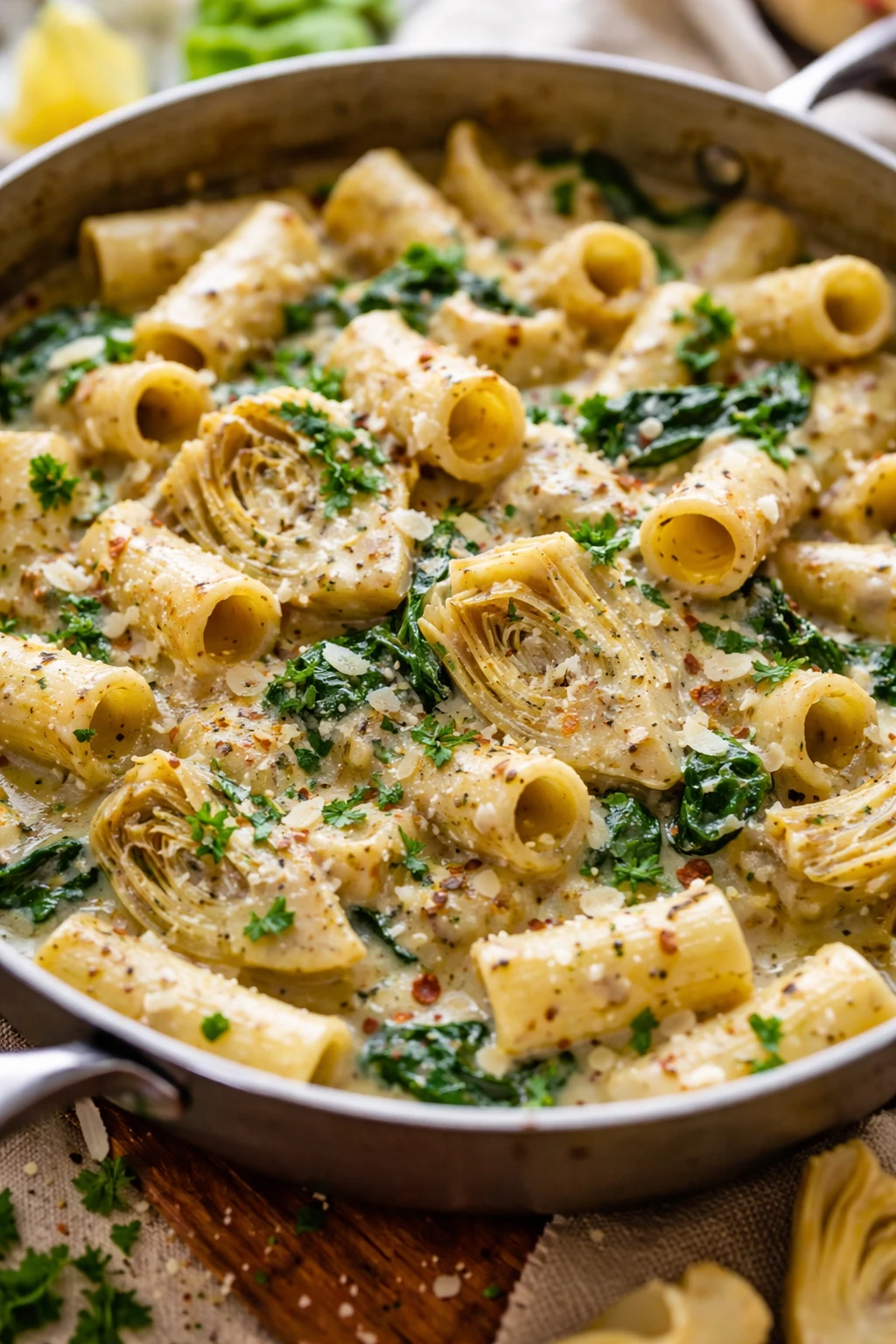
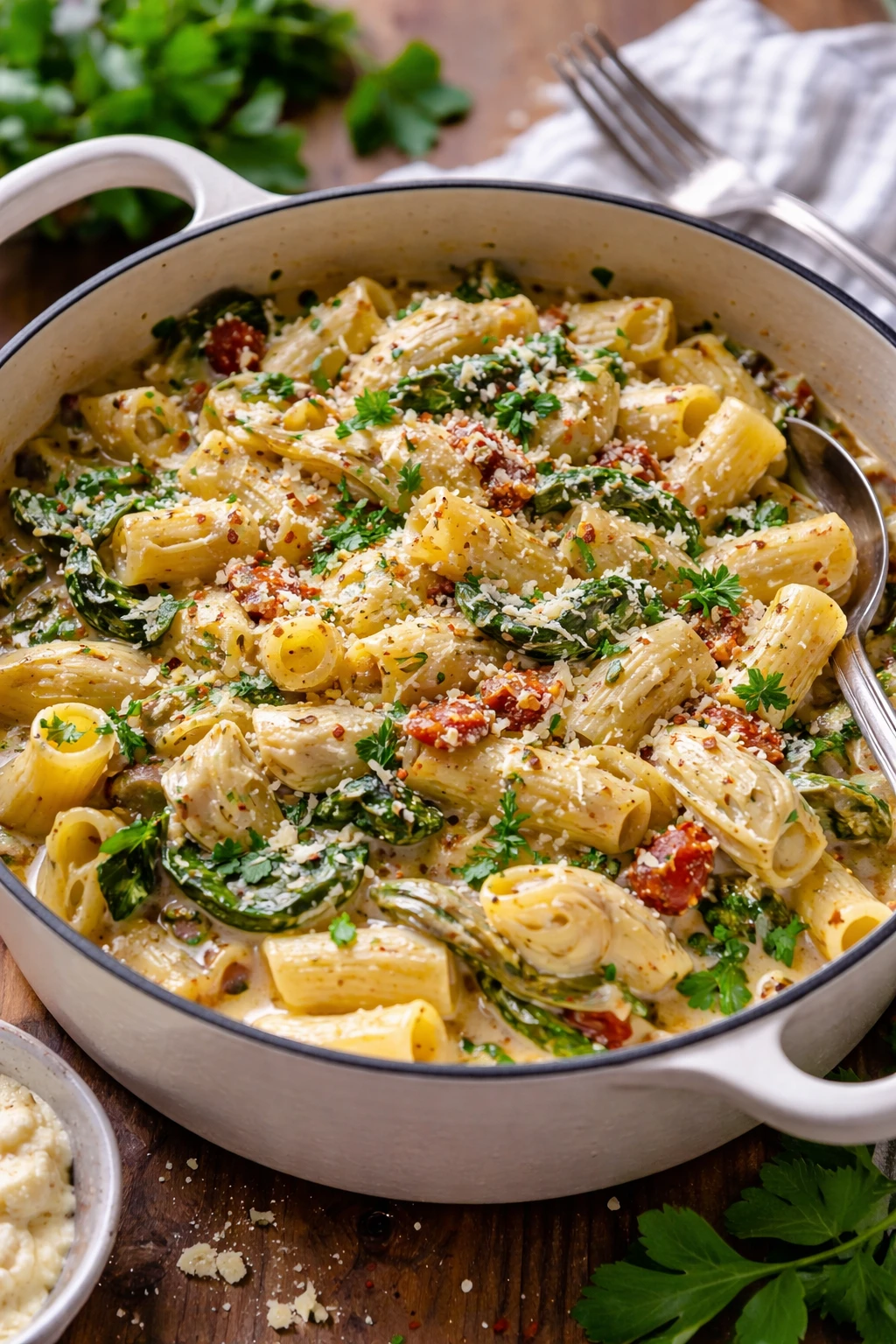
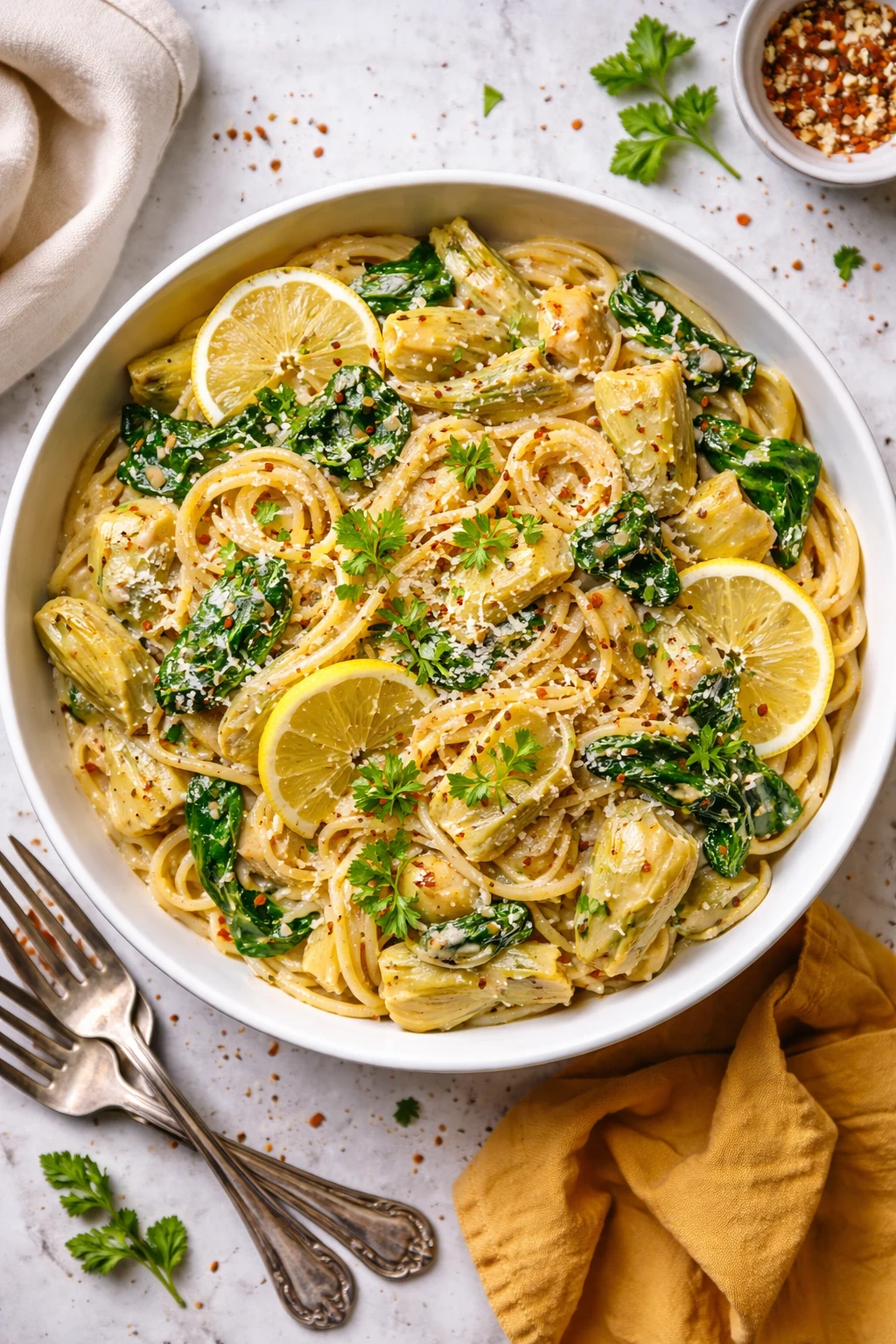
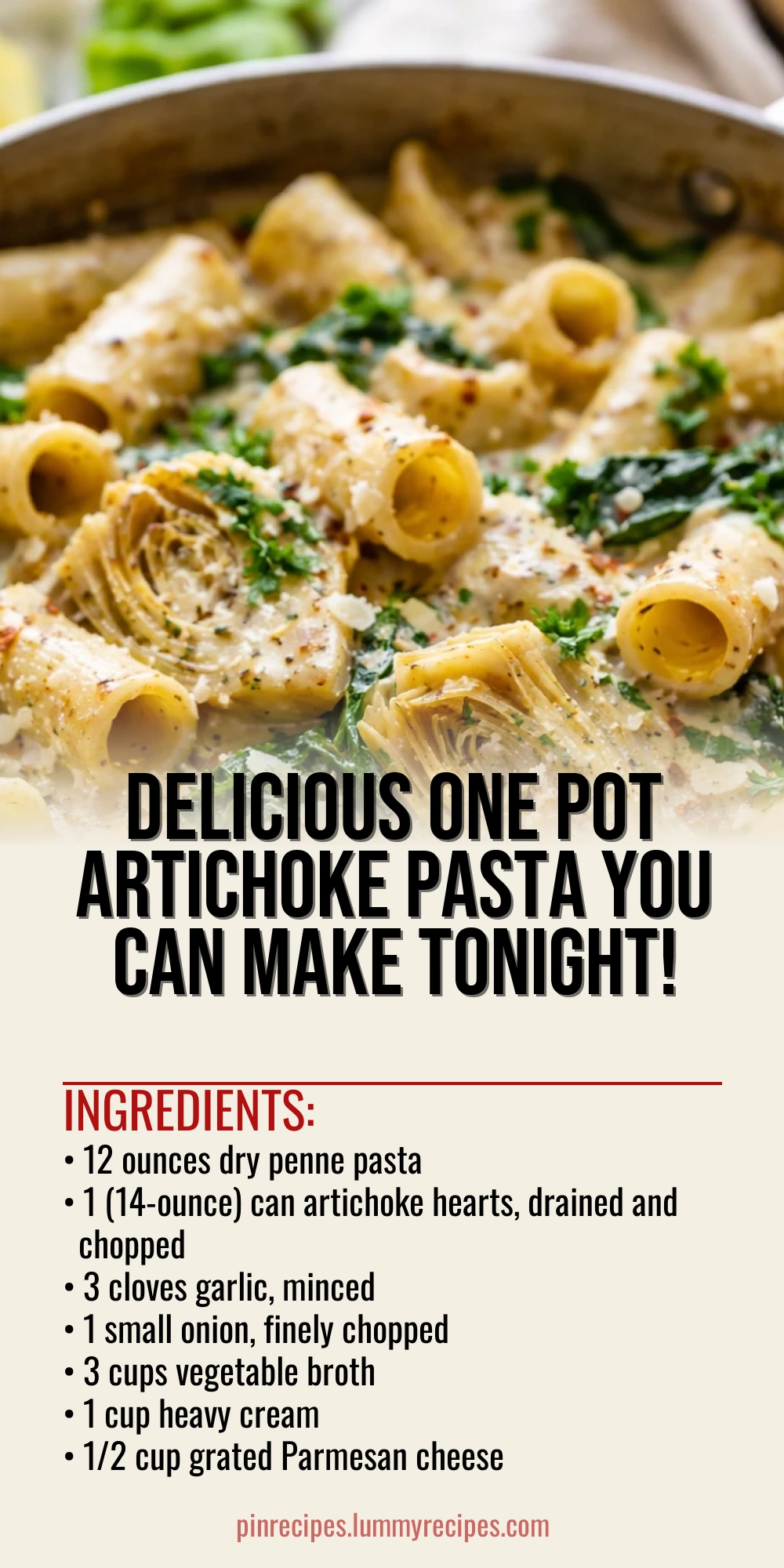
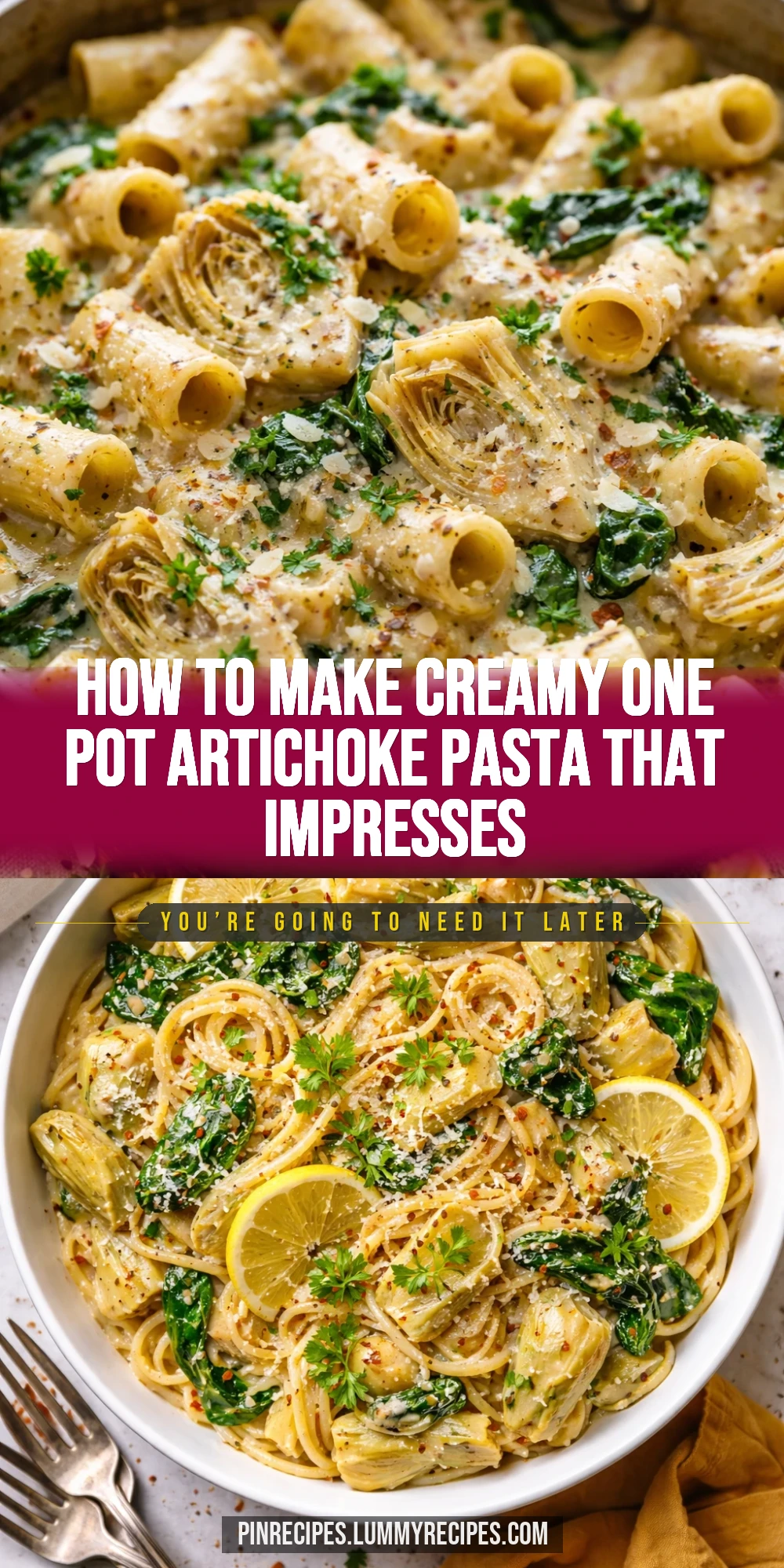
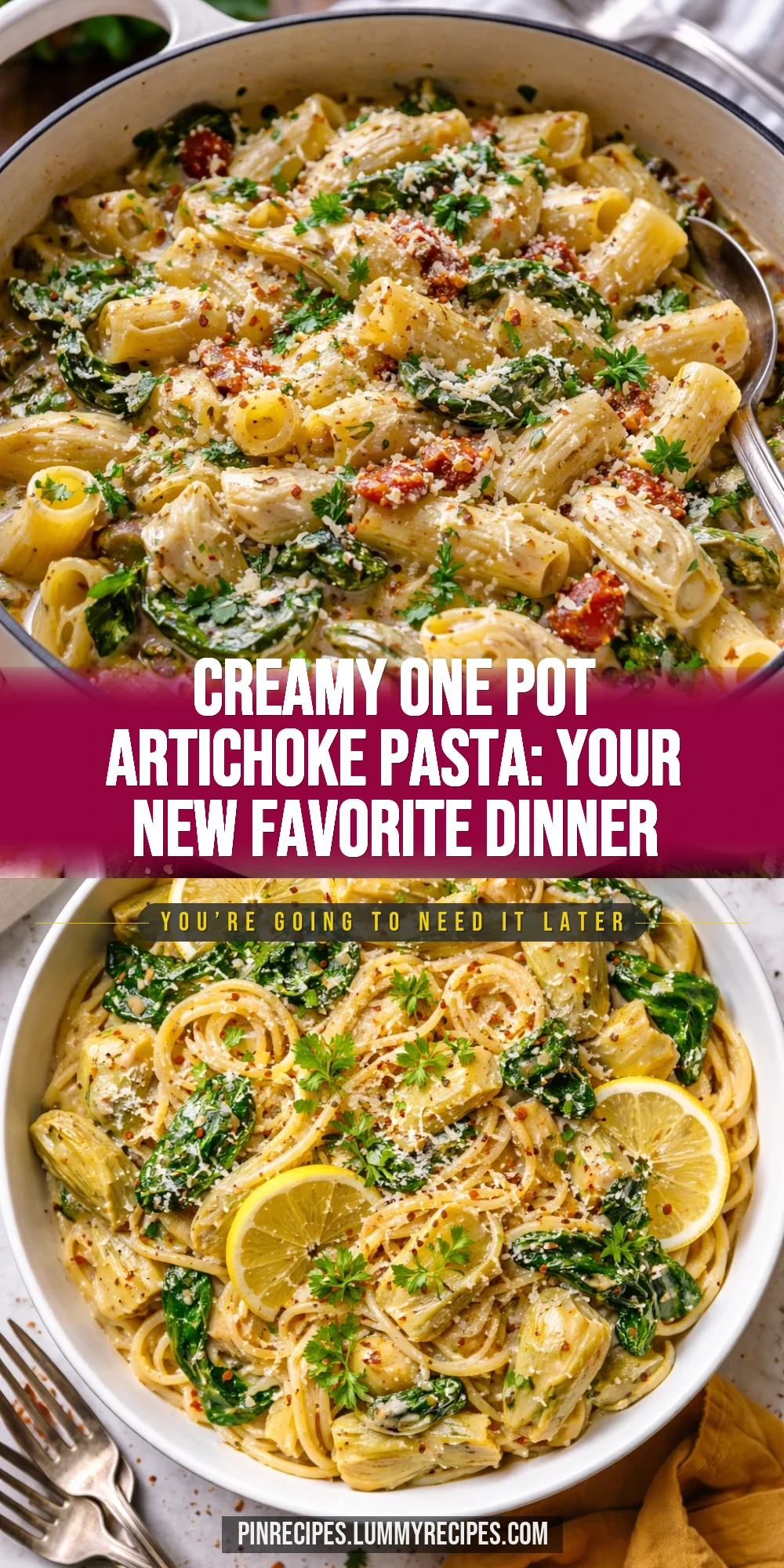
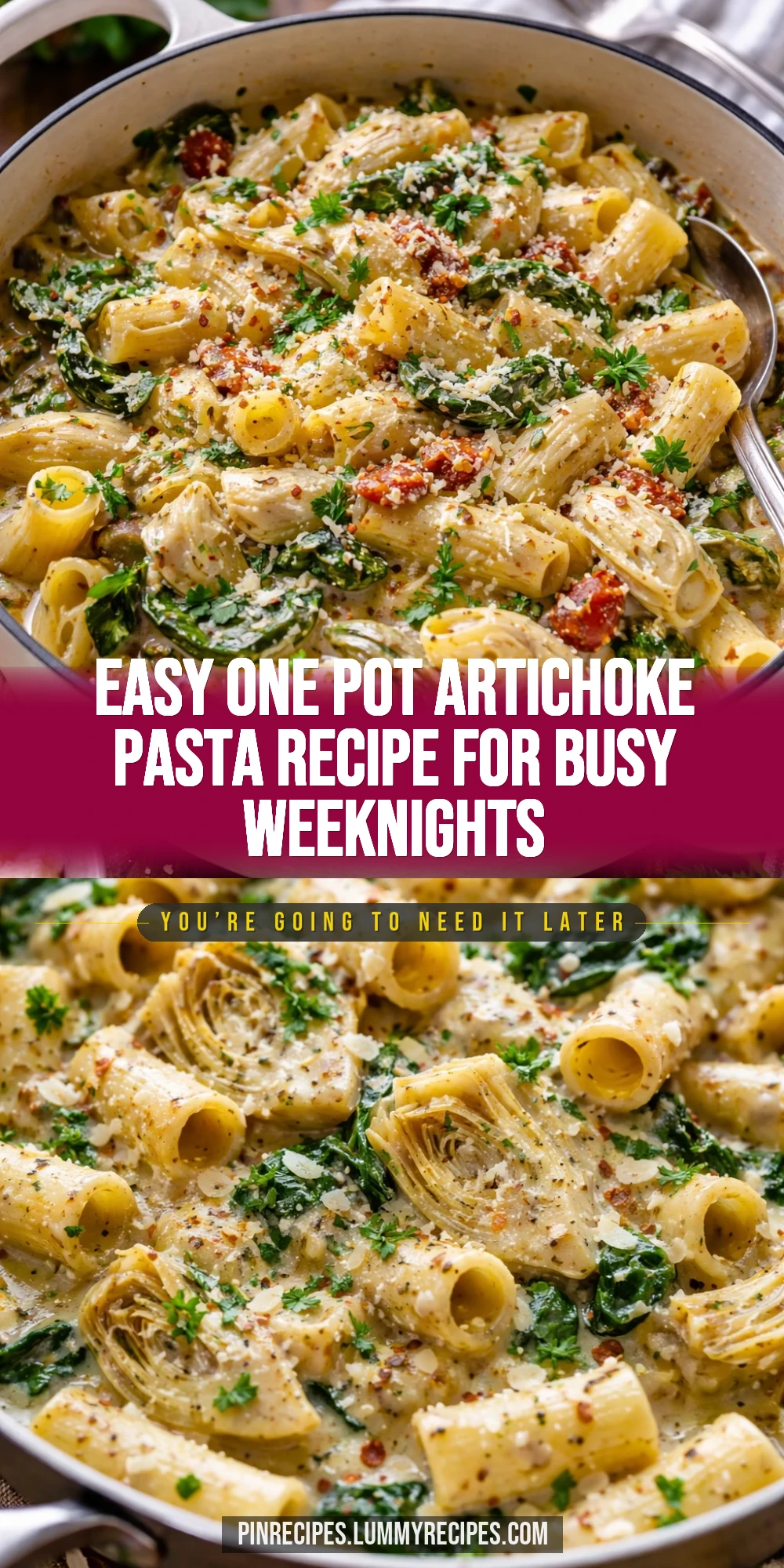
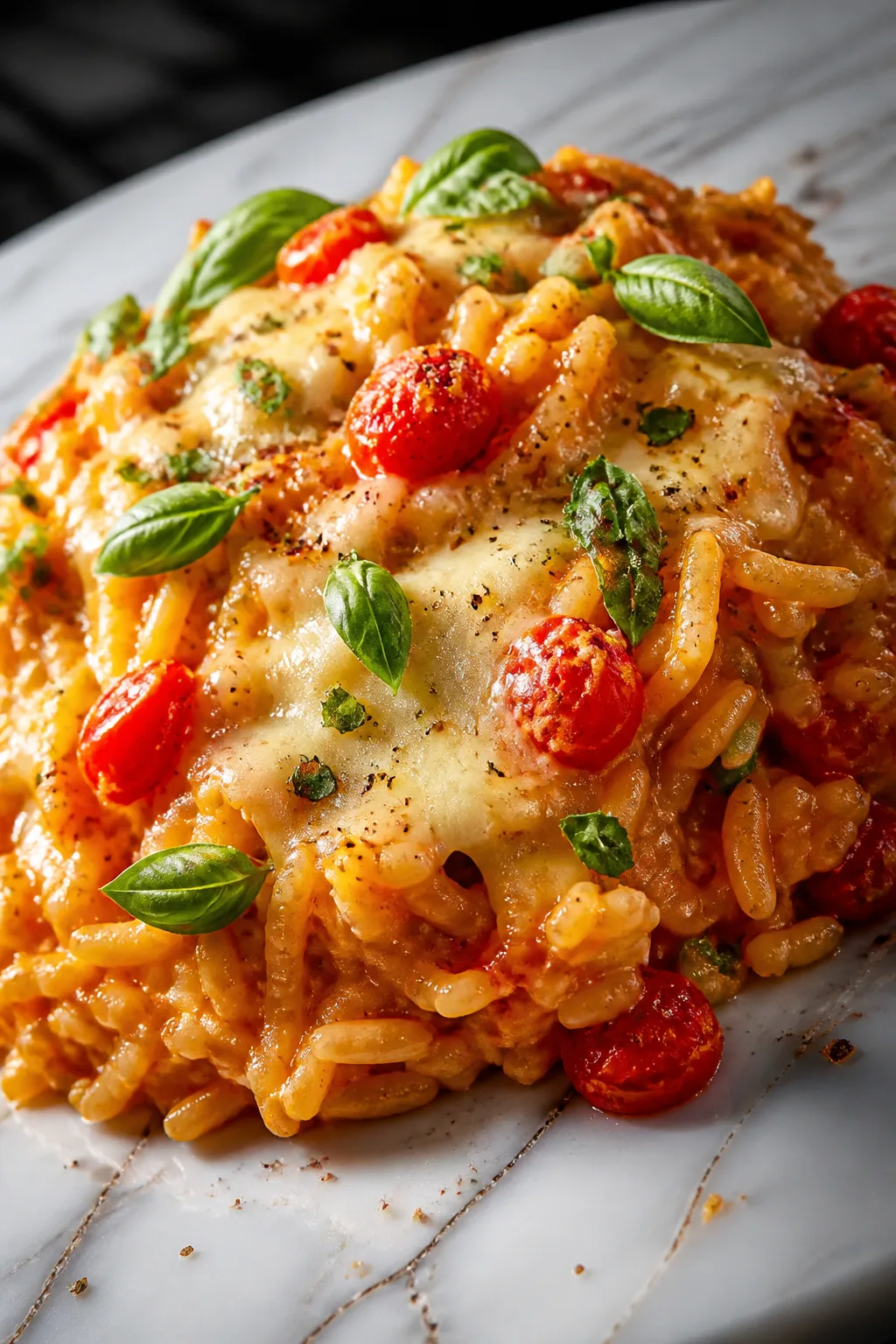
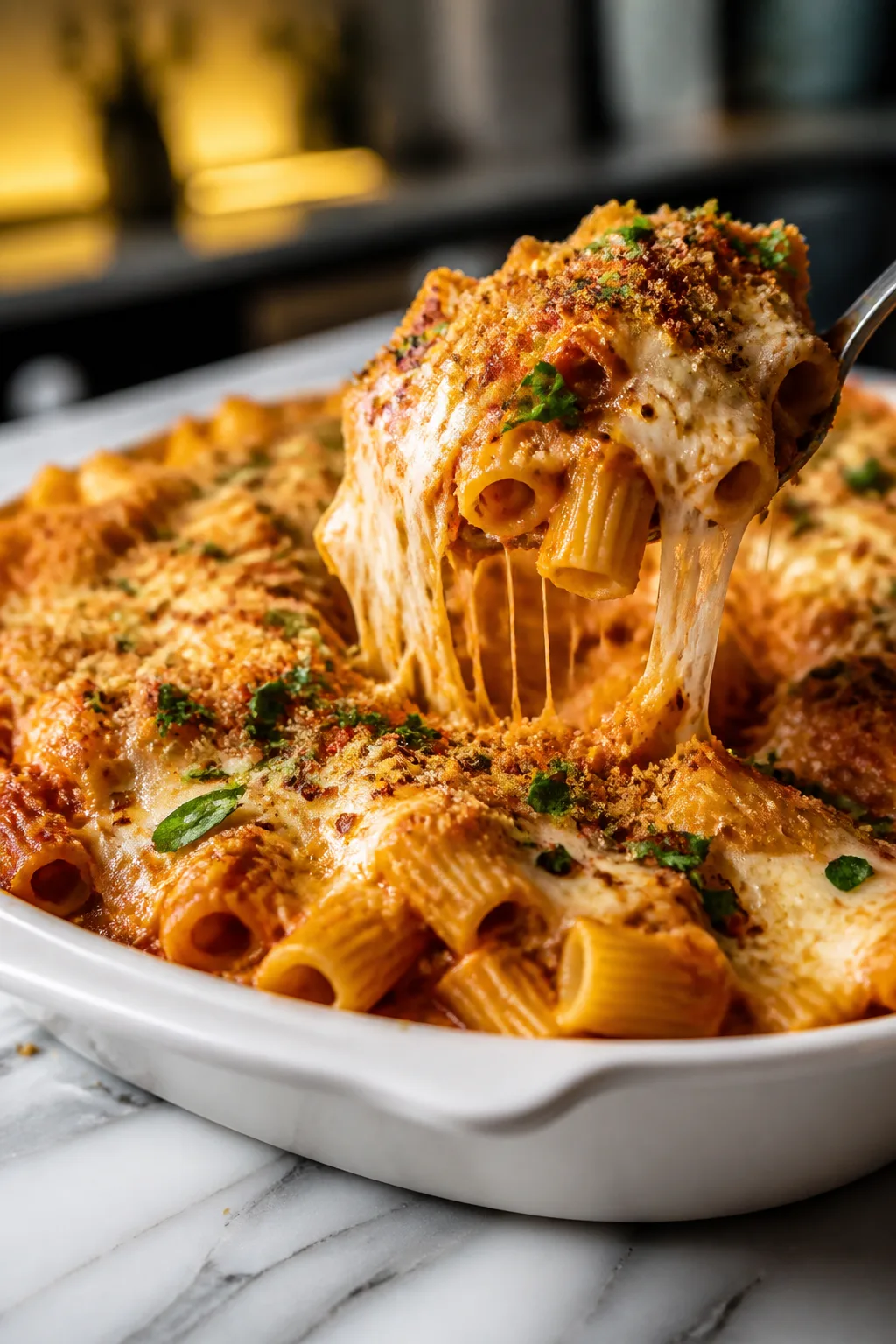
This one pot artichoke pasta is a total game changer—creamy, tangy, and so easy to whip up. The secret? Using artichokes to add a bright, unique flavor that makes weeknight dinners feel special.
Introduction
I first stumbled upon this one pot artichoke pasta recipe during a hectic week when I wanted something comforting but didn’t want to spend ages cooking or washing up. I’ve been making it ever since because it’s just so simple yet packed with flavor. What I love about this version is how it uses canned artichoke hearts to bring a slightly tangy, fresh taste that really elevates the whole dish. Plus, everything cooks together in one pot, so the pasta soaks up all those delicious garlic and herb flavors as it simmers. The trick I learned is to add the cream and Parmesan right at the end to create that perfect silky sauce without it breaking or getting greasy. The finished dish is creamy, comforting, and pretty enough to serve when friends come over but easy enough for a weeknight family meal. Sometimes I add a little extra garlic or a pinch of red pepper flakes for a bit of a kick. Honestly, it’s become a staple in my kitchen when I want a fuss-free but satisfying meal that feels a little special.
How To Do It
Step 1
Start by heating the olive oil in a large deep skillet or pot over medium heat. Add the chopped onion and sauté for about 5 minutes until it softens and becomes translucent. This step is crucial because cooking the onion slowly releases its natural sweetness and builds the flavor base for the dish. Avoid rushing this step or turning the heat too high, as burnt onion will make the pasta taste bitter.
⏱ Time: 5 minutes
✓ Doneness: Onions are soft, translucent, and fragrant without browning
Step 2
Add the minced garlic and dried oregano to the pot and cook for another 1-2 minutes, stirring constantly. Garlic cooks quickly and can burn easily, so keep an eye on it. This step infuses the oil with aromatic flavors that will permeate the pasta later on.
⏱ Time: 2 minutes
✓ Doneness: Garlic is fragrant but not browned or burnt
Step 3
Pour in the vegetable broth and bring it to a gentle boil. The broth will act as the cooking liquid for the pasta, so using a flavorful broth is key. Once boiling, add the dry pasta and stir to submerge it fully. This one pot method allows the pasta to absorb all the garlic and onion flavors as it cooks, making the dish more cohesive.
⏱ Time: 2 minutes to boil, then start cooking pasta
✓ Doneness: Broth is simmering steadily and pasta is submerged
Step 4
Cook the pasta uncovered over medium heat, stirring occasionally to prevent sticking. Keep an eye on the liquid level; if it evaporates too quickly, add a splash more broth or water. The pasta should be tender but still have a slight bite (al dente) after about 12-15 minutes. This timing ensures the pasta isn’t mushy and retains good texture.
⏱ Time: 12-15 minutes
✓ Doneness: Pasta is tender but firm to the bite, liquid mostly absorbed
Step 5
Once the pasta is nearly cooked, stir in the chopped artichoke hearts. They add a wonderful tang and texture contrast. Gently fold them in so they warm through without breaking apart. This step also lets their flavor meld with the pasta and broth.
⏱ Time: 3 minutes
✓ Doneness: Artichokes are heated and integrated but still hold shape
Step 6
Reduce the heat to low and slowly stir in the heavy cream. Adding cream at this stage enriches the sauce and makes it silky. Be careful not to boil after adding cream, or it might curdle. Stir gently until everything is combined and heated through.
⏱ Time: 3 minutes
✓ Doneness: Sauce is smooth, creamy, and well blended
Step 7
Remove the pot from heat and stir in the grated Parmesan cheese. The cheese will melt into the sauce, thickening it and adding a sharp, savory note. Stir until the cheese is fully incorporated. This step is what makes the sauce luscious and flavorful.
⏱ Time: 2 minutes
✓ Doneness: Cheese is melted and sauce has thickened slightly
Step 8
Taste and season with salt and freshly ground black pepper as needed. The broth and cheese bring saltiness, so add seasoning gradually. This final seasoning balances the flavors perfectly.
⏱ Time: 1 minute
✓ Doneness: Balanced flavor with no overpowering saltiness
Step 9
Serve immediately garnished with chopped fresh parsley for a pop of color and freshness. The pasta should be creamy, with tender artichokes and a rich, garlicky sauce. Enjoy while warm for the best texture and flavor.
⏱ Time: Serve immediately
✓ Doneness: Pasta plated with vibrant garnish, creamy sauce evident
Pro Tips
Don’t rush cooking the onions—let them soften slowly.
Slowly cooking onions releases their natural sugars through the Maillard reaction, creating a sweet, rich flavor base. If you turn the heat too high, they’ll burn and taste bitter, ruining the dish’s balance.
Stir the pasta frequently while cooking in broth.
Pasta can stick to the bottom of the pot or clump together when cooking in liquid. Stirring prevents sticking and ensures even cooking, so every piece absorbs flavor and cooks uniformly.
Add cream and cheese off the heat or on very low heat.
High heat can cause cream to curdle and cheese to clump, ruining the sauce’s smooth texture. Low heat allows gentle melting and emulsification, producing a silky, cohesive sauce.
Use freshly grated Parmesan for best melting and flavor.
Pre-grated cheeses often contain additives that interfere with melting and texture. Freshly grated cheese melts smoothly and adds a richer, more authentic flavor to the sauce.
Reserve a little pasta water before draining if you want a looser sauce.
Pasta water contains starch that helps loosen and bind sauces. Adding a splash can adjust sauce consistency without diluting flavor.
Taste and adjust seasoning at the end, not before cooking.
Broth and cheese add saltiness, so seasoning too early can lead to an overly salty dish. Adjust at the end for perfect balance.
Garnish with fresh parsley for color and brightness.
Fresh herbs add a pop of color and a fresh flavor contrast to the creamy pasta, making the dish more visually appealing and balanced.
Common Mistakes to Avoid
Cooking pasta too long until mushy.
Why it happens Many cooks overestimate cooking time or don’t test pasta, resulting in mushy texture that ruins the dish.
Fix Check pasta a minute or two before package instructions. Aim for al dente—tender but still firm. This keeps the pasta’s bite and prevents the sauce from becoming gluey.
Adding cream too early and boiling it.
Why it happens Adding cream at high heat causes it to curdle or separate, ruining sauce texture.
Fix Add cream off heat or on very low heat after pasta is cooked. Stir gently to combine and avoid boiling after adding cream.
Not stirring pasta enough while cooking.
Why it happens Pasta tends to stick together or to the pot bottom without regular stirring.
Fix Stir frequently during cooking to keep pasta separate and ensure even cooking.
Using low-quality broth or water instead of broth.
Why it happens Some skip broth and cook pasta in plain water, losing flavor depth.
Fix Use a flavorful vegetable broth to cook pasta so it absorbs rich taste from the start.
Skipping the sauté step for onions and garlic.
Why it happens Rushing to add all ingredients at once sacrifices the flavor base.
Fix Always sauté onions and garlic first to develop sweetness and aroma that elevate the dish.
Variations
Vegan One Pot Artichoke Pasta
Swap heavy cream for coconut cream or cashew cream and replace Parmesan with nutritional yeast or vegan cheese. This creates a creamy, dairy-free version that’s still rich and flavorful.
Note: Vegan cheeses melt differently, so add slowly and stir well to avoid clumping. Nut-based creams may thicken differently, adjust liquid accordingly.
Add Grilled Chicken for Protein Boost
Toss in sliced grilled chicken breasts or thighs for a heartier meal. The smoky grilled flavor pairs well with artichokes and creamy sauce, making it a satisfying dinner option.
Note: Add cooked chicken in the last 5 minutes of cooking to warm through without drying out.
Spicy Artichoke Pasta
Add red pepper flakes or a diced jalapeño during the onion sauté for a spicy kick. This variation brings heat that balances the creamy sauce and tangy artichokes perfectly.
Note: Adjust spice level to taste; add gradually to avoid overpowering the dish.
Use Spinach and Artichoke Hearts
Add fresh spinach leaves along with artichokes for a green, nutrient-packed twist. The spinach wilts into the sauce adding color and mild flavor.
Note: Add spinach in the last 3 minutes of cooking to prevent overcooking and preserve nutrients.
Whole Wheat or Gluten-Free Pasta
Substitute regular pasta with whole wheat or gluten-free varieties for dietary preferences. Cooking times may vary slightly, but the one pot method still works well.
Note: Adjust liquid amounts as gluten-free pasta may absorb more or less broth; watch pasta closely to avoid overcooking.
Nutrition
Per Serving:
Nutritional values are estimates and may vary based on specific ingredients used.
Storage & Tips
Room Temperature
This pasta can safely sit at room temperature for up to 2 hours if covered. Beyond that, bacteria growth can occur, so refrigerate promptly to keep it safe.
Refrigerator
Store leftovers in an airtight container for up to 3 days. The sauce may thicken in the fridge; reheat gently with a splash of broth or cream to loosen it. Serving cold is possible but the sauce texture changes.
Freezer
Freeze in a sealed container for up to 2 months. Wrap tightly to prevent freezer burn. Thaw overnight in the fridge before reheating. Texture may be slightly softer after freezing.
Reheating
Reheat on the stovetop over low heat, stirring frequently and adding a splash of broth or cream to restore creaminess. Microwave reheating is faster but may dry out the pasta if overdone.
Make Ahead
You can prepare the sautéed onions, garlic, and broth base a day ahead and refrigerate. Add pasta, artichokes, cream, and cheese fresh when ready to cook, reducing total cooking time.
FAQ
Can I use fresh artichokes instead of canned?
Yes, fresh artichokes work well but require more prep—trimming tough leaves and cooking until tender before adding. Canned artichokes save time and have a milder, consistent flavor. If using fresh, steam or boil them first to soften, then chop and add as the recipe directs.
What if I don’t have heavy cream? Can I substitute?
You can use half-and-half or whole milk for a lighter sauce, but it won’t be as rich or creamy. For a dairy-free option, coconut cream or cashew cream works well. Just add slowly and watch for curdling. The texture and flavor will vary slightly but still be delicious.
How do I prevent the pasta from sticking in the pot?
Stir the pasta frequently while it cooks to prevent clumping and sticking to the pot’s bottom. Also, ensure there’s enough liquid covering the pasta; add a little more broth or water if it starts to dry out before pasta is tender.
Can I make this recipe gluten-free?
Absolutely! Use your favorite gluten-free pasta. Cooking times might be shorter or longer depending on the pasta brand, so watch closely. The one pot method still works great, but adjust liquid as gluten-free pasta can absorb differently.
Is it okay to add other vegetables?
Yes, adding spinach, mushrooms, or sun-dried tomatoes can add more flavor and nutrition. Add quick-cooking veggies like spinach near the end, and heartier ones like mushrooms during the sauté step to ensure even cooking.
Why does my sauce sometimes separate or curdle?
Sauce separation usually happens if cream or cheese is added at too high a temperature or boiled after adding dairy. To avoid this, remove the pot from heat before stirring in cream and cheese, and stir gently to combine.
Can I prepare this recipe ahead of time?
You can prep the aromatics and broth base a day ahead. Store refrigerated and add pasta and other ingredients fresh when ready to cook. This keeps pasta texture optimal and reduces cooking time on the day you serve.
How do I store and reheat leftovers without drying out?
Store leftovers in airtight containers in the fridge. When reheating, add a splash of broth or cream and warm gently on the stove, stirring often. This helps restore creaminess and prevents drying or clumping.
Final Thoughts
Give this one pot artichoke pasta a try—it’s easy, comforting, and full of flavor. I’d love to hear how it turns out for you, so please share your thoughts or tweaks!