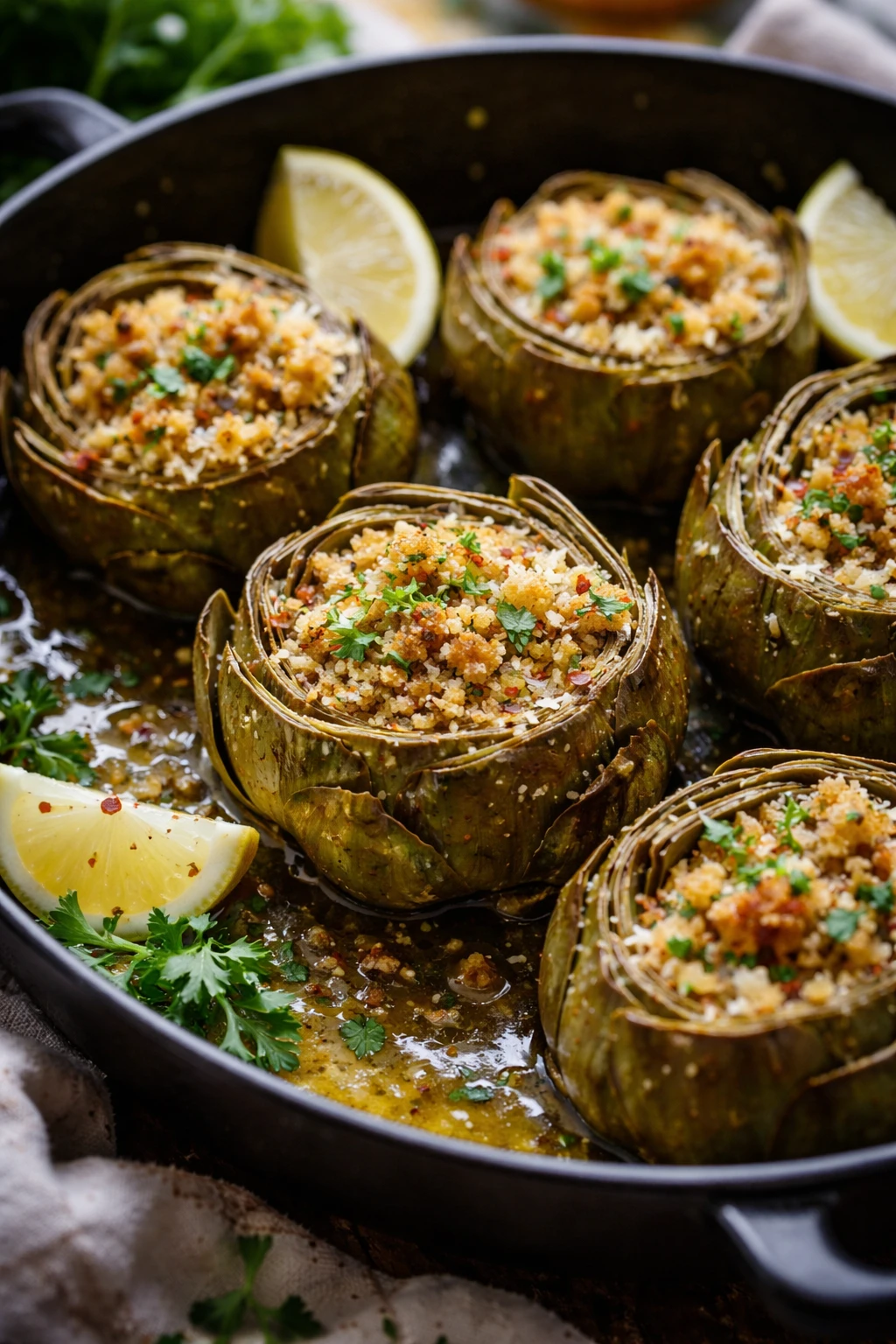
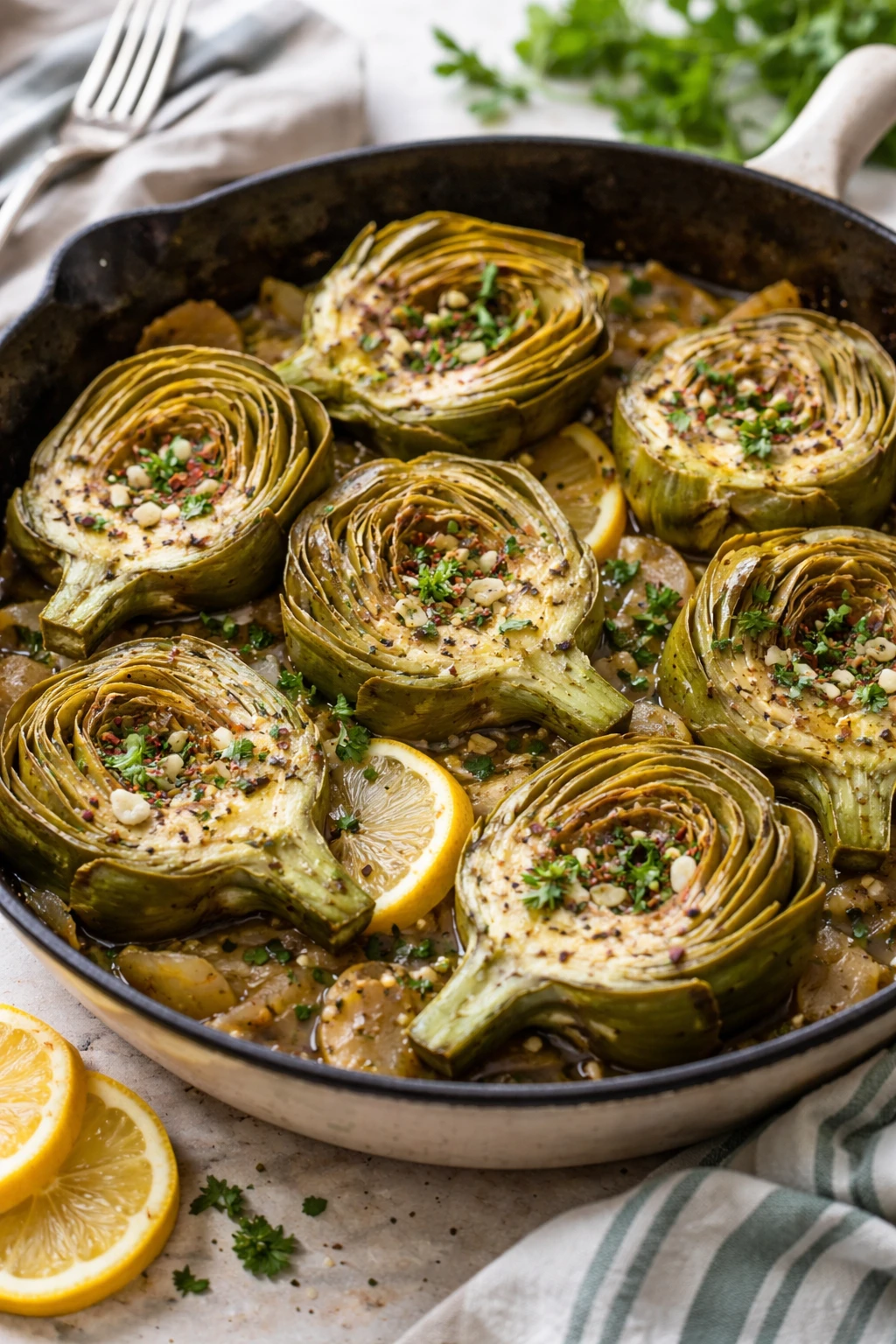
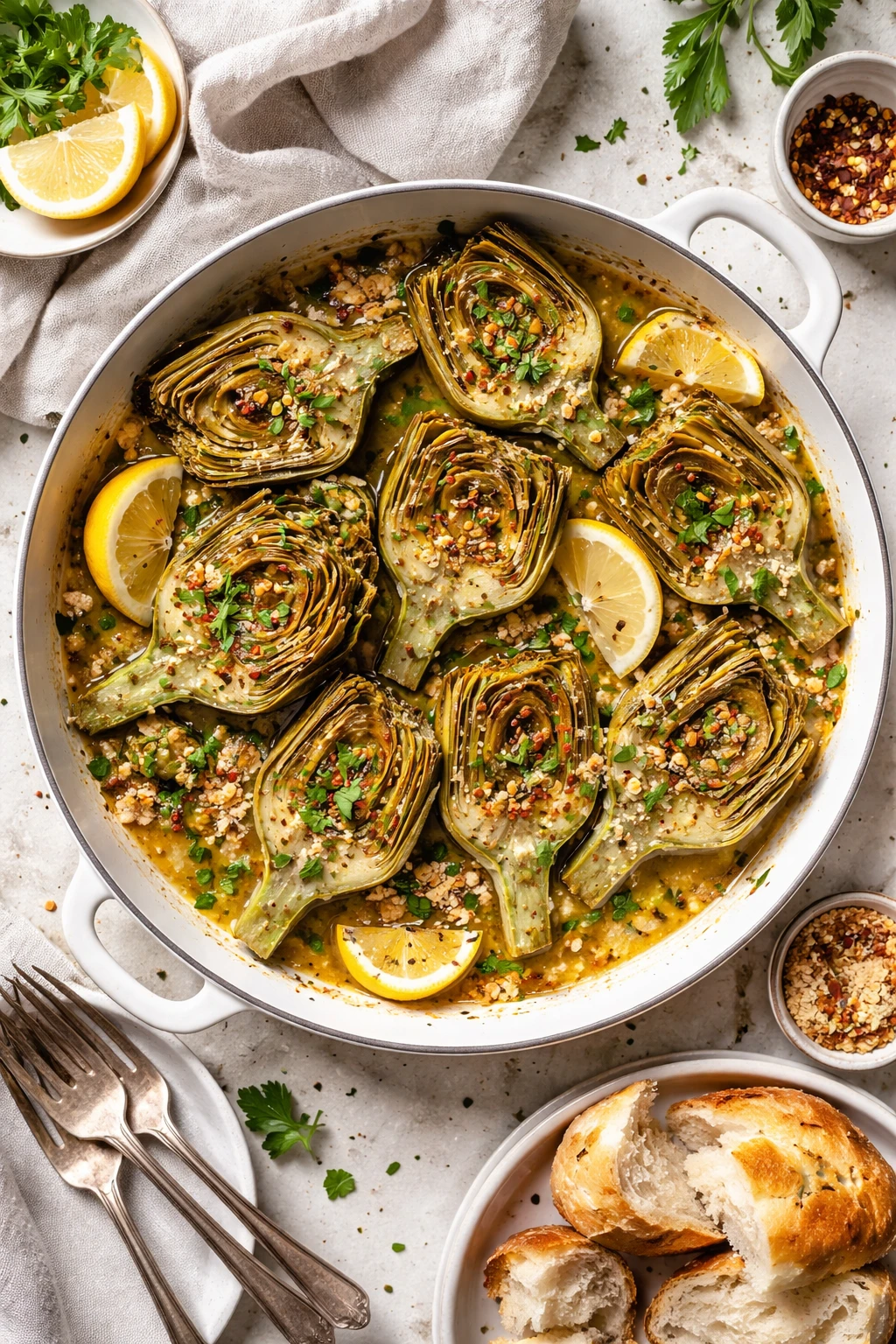
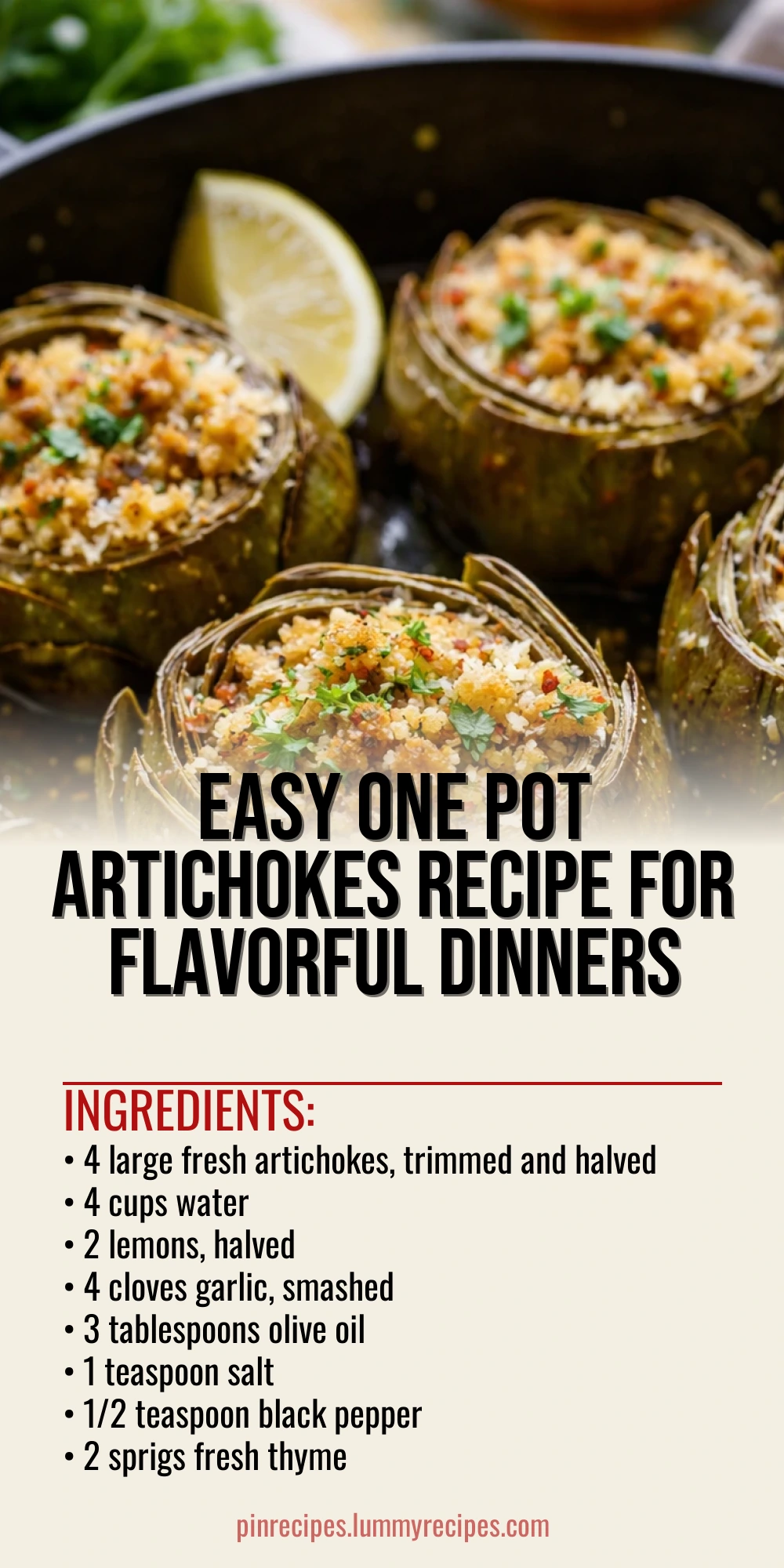
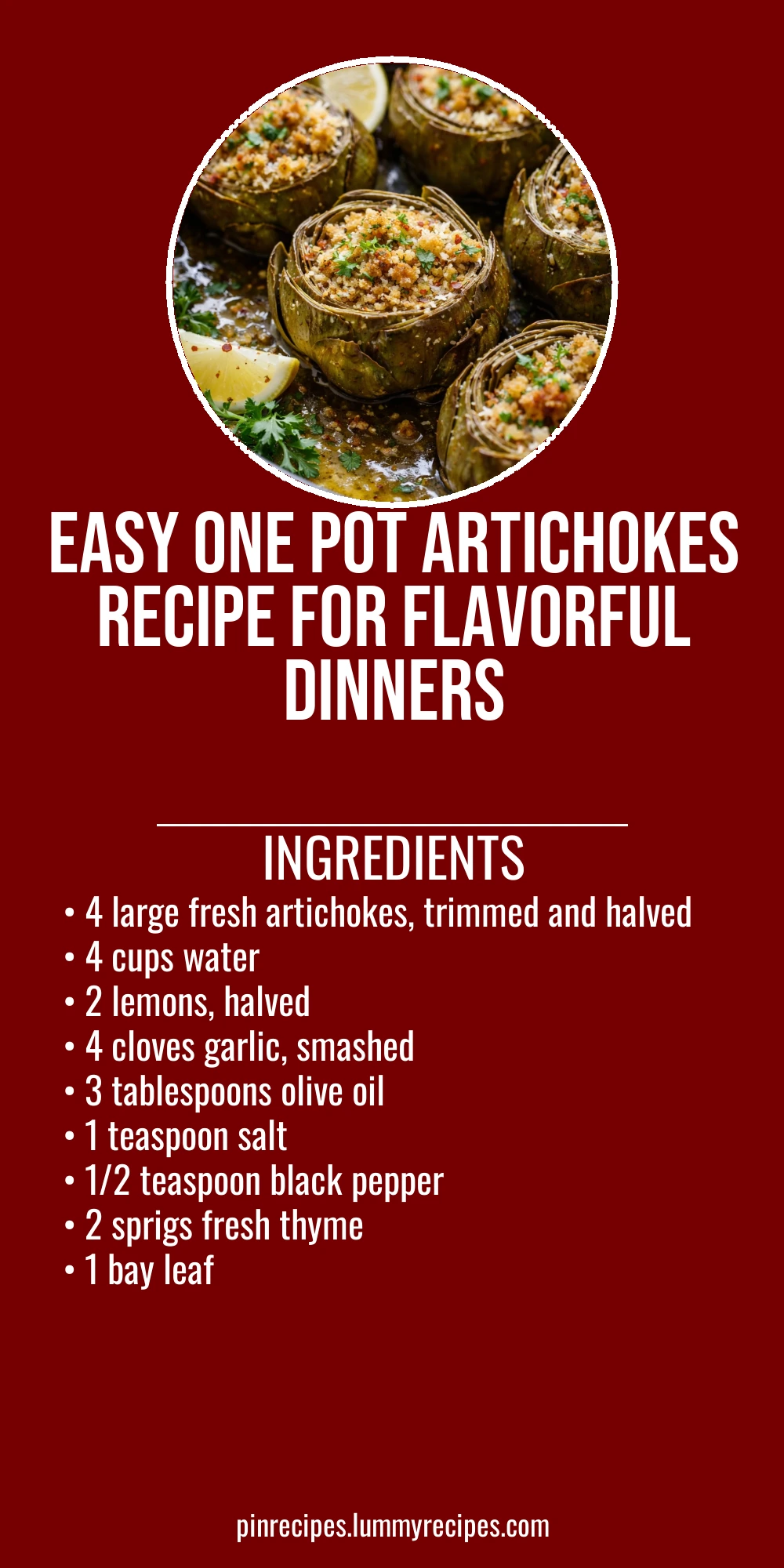
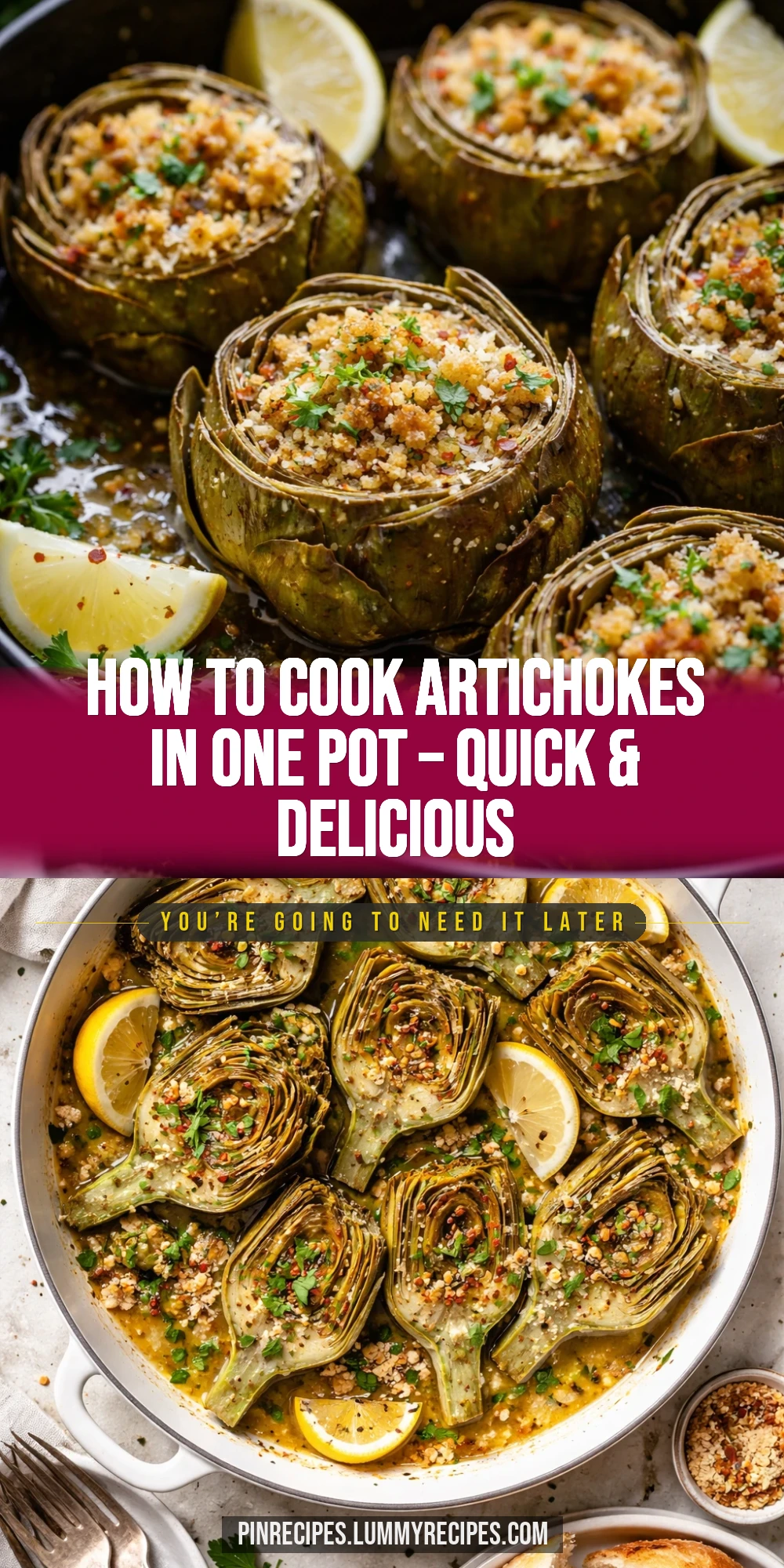
These one pot artichokes are a breeze to make and full of fresh, lemony flavor. The secret is slow simmering in garlic and herbs. Ideal for a relaxed weekend appetizer or side dish.
Introduction
I first tried cooking artichokes the traditional way, steaming them for ages, and honestly, it felt like a bit of a chore. Then I stumbled on this one pot method that changed everything. It’s so simple and requires minimal cleanup, which I love. The trick is simmering the artichokes gently in a fragrant broth of lemon, garlic, and herbs, which really brings out their natural sweetness without any bitterness. Plus, you get to enjoy them right from the pot, dipping the leaves into olive oil or a little aioli if you like. This recipe has become a favorite for weekend appetizers or light dinners with friends. The artichokes come out tender but still hold their shape, with a bright, fresh flavor that’s just irresistible. I think you’ll love how easy and satisfying this one pot artichoke dish is—perfect for when you want something impressive but don’t want to fuss over the stove for hours.
How To Do It
Step 1
Start by prepping the artichokes: trim the tough outer leaves and cut off the top third of each artichoke to remove the prickly tips. Then slice them in half lengthwise and use a spoon to scoop out the fuzzy choke in the center. This step is crucial because it makes the artichokes edible and pleasant to eat. Don’t skip the trimming or you’ll end up with a tough, unpleasant bite. Also, rub the cut surfaces with lemon halves to prevent browning while you work on the rest.
⏱ Time: 15 minutes
✓ Doneness: Artichokes are trimmed clean, halved, and the choke is fully removed with no fuzzy bits left
Step 2
In a large pot, combine the water, olive oil, smashed garlic, thyme sprigs, bay leaf, salt, and pepper. Squeeze the juice of the two lemon halves into the pot and toss the halves in as well for extra flavor. Bring this mixture to a gentle simmer over medium heat. This aromatic broth will infuse the artichokes with bright, savory notes as they cook, so don’t rush it or boil aggressively, which could make the artichokes tough.
⏱ Time: 5 minutes
✓ Doneness: Broth is simmering gently with fragrant garlic and herbs
Step 3
Add the prepared artichokes to the pot, cut side down. The artichokes should be mostly submerged in the broth. Cover the pot with a lid and let them simmer gently. This slow simmer allows the artichokes to cook evenly and absorb the lemony, garlicky flavors. Avoid boiling vigorously, which can toughen the leaves. If needed, add a bit more water to keep them mostly covered.
⏱ Time: 20 minutes
✓ Doneness: Artichokes look tender and slightly translucent at the edges
Step 4
After about 20 minutes, check for doneness by piercing the base of an artichoke with a fork. It should slide in easily without resistance. If it’s still firm, continue simmering for a few more minutes. Once tender, carefully remove the artichokes with tongs and drain briefly.
⏱ Time: 5 minutes
✓ Doneness: Fork slides easily into the base of the artichoke
Step 5
Serve the artichokes warm or at room temperature with a drizzle of good quality olive oil and a sprinkle of flaky sea salt. You can also add a squeeze of fresh lemon juice or serve with a side of garlic aioli for dipping. These finishing touches highlight the natural flavors and make each bite deliciously satisfying.
⏱ Time: 5 minutes
✓ Doneness: Artichokes are glossy with olive oil and seasoned evenly
Step 6
If you want to add a little extra flavor, sprinkle chopped fresh parsley or basil on top just before serving. This fresh herb note adds a pop of color and brightness that pairs beautifully with the artichokes’ earthiness.
⏱ Time: 2 minutes
✓ Doneness: Herbs are fresh and vibrant on the artichokes
Step 7
For a heartier twist, try tossing the cooked artichokes with toasted pine nuts or slivered almonds. The crunch contrasts nicely with the tender leaves and adds a lovely nutty flavor. Just sprinkle them on top right before serving to keep their texture.
⏱ Time: 2 minutes
✓ Doneness: Nuts are golden and crisp, complementing the artichokes
Step 8
If you have leftovers, store them in an airtight container in the fridge. To reheat, warm gently in a skillet with a splash of water or broth to keep them moist, avoiding the microwave which can dry them out.
⏱ Time: 3 minutes
✓ Doneness: Artichokes are warmed through but still tender and moist
Step 9
Enjoy your one pot artichokes with crusty bread or as a side to grilled meats or fish. This versatile dish pairs well with many flavors and makes a lovely starter or light meal. The simplicity of the cooking method lets the artichokes shine.
⏱ Time: 0 minutes
✓ Doneness: Dish is plated attractively, ready to serve and enjoy
Pro Tips
Rub artichoke cuts with lemon to prevent browning.
Artichokes oxidize quickly once cut, turning brown and unappetizing. The acid in lemon juice slows this process by neutralizing enzymes that cause discoloration. This keeps your dish looking fresh and vibrant, especially if you prep ahead.
Simmer artichokes gently instead of boiling hard.
A vigorous boil can toughen artichoke leaves and cause uneven cooking. A gentle simmer allows heat to penetrate slowly, softening the vegetable without breaking it down. This results in tender yet intact artichokes with a better texture.
Use whole smashed garlic cloves for mellow flavor infusion.
Smashed garlic releases flavor gradually without turning bitter or overpowering the dish. Minced garlic can cook too fast and become harsh. Whole cloves infuse the broth gently, creating a balanced garlic aroma that complements the artichokes.
Add lemon halves to the cooking liquid for extra brightness.
Including lemon halves in the broth releases essential oils from the peel and extra acidity, which brightens the overall flavor. This technique deepens the lemony notes beyond just juice, enhancing the dish complexity.
Cover the pot while simmering to trap steam and flavors.
Trapping steam helps cook the artichokes evenly and keeps them moist. It also concentrates the lemon and herb aromas around the vegetable, infusing flavor more effectively than an uncovered pot.
Check doneness with a fork at the base, not the leaves.
The base is the thickest part and takes the longest to cook. Testing here ensures the entire artichoke is tender. Leaves may feel soft sooner, but the heart must be tender for a pleasant eating experience.
Serve with a drizzle of olive oil and flaky sea salt.
Finishing with olive oil adds richness and mouthfeel, while flaky salt enhances flavor without overwhelming. These simple touches elevate the dish and highlight the natural artichoke taste.
Common Mistakes to Avoid
Skipping trimming the choke and tough leaves.
Why it happens Many people assume all parts of the artichoke are edible or are intimidated by trimming. This leads to bitter or fibrous bites that ruin the experience.
Fix Make sure to remove the fuzzy choke completely with a spoon and trim away tough outer leaves before cooking. This ensures a tender, pleasant texture and flavor.
Boiling artichokes too aggressively.
Why it happens Rushing the cooking process can cause cooks to crank up the heat, thinking it will speed things up.
Fix Maintain a gentle simmer to allow even cooking and prevent toughening. Use a lid to trap steam and monitor liquid levels to avoid drying out.
Not preventing browning during prep.
Why it happens Artichokes oxidize quickly and turn brown if left exposed after cutting.
Fix Rub cut surfaces with lemon juice immediately and keep them submerged in lemon water if prepping ahead to maintain a fresh appearance.
Using low-quality olive oil.
Why it happens Some cooks use generic oils without realizing it impacts flavor significantly.
Fix Choose a good quality extra virgin olive oil for cooking and finishing to enhance flavor and mouthfeel.
Overcooking resulting in mushy artichokes.
Why it happens Leaving artichokes in hot liquid too long or boiling hard breaks down texture.
Fix Check doneness early by piercing the base with a fork and remove from heat once tender but still holding shape.
Variations
Spicy One Pot Artichokes
Add a pinch of red pepper flakes to the cooking broth for a subtle kick. This variation brings warmth and depth without overpowering the artichokes’ natural flavor. Serve with a cooling yogurt dip to balance the heat.
Note: Add red pepper flakes at the start of simmering to infuse evenly; monitor spice level to suit taste.
One Pot Artichokes with White Wine
Replace half the water with dry white wine for a more complex, slightly fruity flavor. The wine adds acidity and depth, making this version ideal for pairing with seafood or poultry dishes.
Note: Simmer gently to allow alcohol to cook off while retaining flavor; adjust salt since wine adds acidity.
Herb-Butter One Pot Artichokes
Finish cooked artichokes by tossing them in melted herb butter (parsley, chives, thyme). This adds richness and a fresh herbal note, making the dish more indulgent and perfect for special occasions.
Note: Toss artichokes while warm to help butter coat evenly without clumping.
Vegan One Pot Artichokes with Nutritional Yeast
Sprinkle nutritional yeast over the finished artichokes to add a cheesy, umami flavor without dairy. This is a great vegan-friendly twist that adds depth and richness.
Note: Add nutritional yeast just before serving to maintain its flavor and texture.
One Pot Artichokes with Garlic Aioli Dip
Serve the artichokes with a side of homemade garlic aioli for dipping. The creamy, garlicky sauce complements the lemony artichokes beautifully and adds a luxurious texture contrast.
Note: Prepare aioli ahead and chill; serve cold alongside warm artichokes.
Nutrition
Per Serving:
Nutritional values are estimates and may vary based on specific ingredients used.
Storage & Tips
Room Temperature
Artichokes can be kept at room temperature for up to 2 hours if covered loosely to avoid drying out. Beyond this, they should be refrigerated to prevent spoilage.
Refrigerator
Store leftover artichokes in an airtight container for up to 3 days. They may lose some texture when cold but can be served chilled or reheated gently for best flavor.
Freezer
Freezing is not recommended as artichokes tend to become mushy and lose texture. If necessary, freeze cooked artichokes in a sealed container for up to 1 month and thaw overnight in the fridge.
Reheating
Reheat artichokes gently in a skillet over low heat with a splash of water or broth to keep moist. Avoid microwaving as it can dry them out and toughen the leaves.
Make Ahead
You can prep and trim artichokes 1 day ahead, storing them submerged in lemon water to prevent browning. The cooking and final seasoning are best done the day of serving for optimal freshness.
FAQ
Can I use frozen artichokes for this recipe?
Frozen artichokes can be used but the texture will be softer and less firm than fresh ones. They also won’t absorb the broth flavors as well. If using frozen, reduce cooking time and add them towards the end of simmering.
How do I know when artichokes are fully cooked?
Pierce the base of the artichoke with a fork or knife. It should slide in easily without resistance. The leaves should also pull away easily but still hold their shape. Overcooked artichokes become mushy and lose structure.
Can I prepare this recipe without lemon?
Lemon is important for flavor and preventing browning. If unavailable, you can substitute with a splash of white vinegar or lime juice, but the flavor profile will be slightly different and less bright.
What’s the best way to eat cooked artichokes?
Pull off the leaves one at a time, dip the base in olive oil, aioli, or melted butter, then scrape the soft part off with your teeth. The heart is fully edible and delicious—slice and enjoy it with seasoning.
Can I add other vegetables to the pot?
Yes, small potatoes or baby carrots can be added to the pot to cook alongside the artichokes, making the dish heartier. Adjust cooking time accordingly to ensure all vegetables are tender.
Is it necessary to remove the choke?
Yes, the choke is fibrous and inedible once cooked. Removing it prevents an unpleasant texture and bitterness. Use a spoon to scoop it out carefully after halving the artichokes.
How do I store leftover artichokes?
Store leftovers in an airtight container in the fridge for up to 3 days. Reheat gently or enjoy cold in salads. Avoid freezing as it affects texture negatively.
Can I make this recipe vegan?
Absolutely! This recipe is naturally vegan as long as you avoid serving with butter or dairy-based dips. Use olive oil and plant-based dips for a fully vegan dish.
Final Thoughts
Give this one pot artichoke recipe a try—you’ll be surprised how easy and delicious artichokes can be. Don’t forget to share your results; I’d love to hear how it turns out!