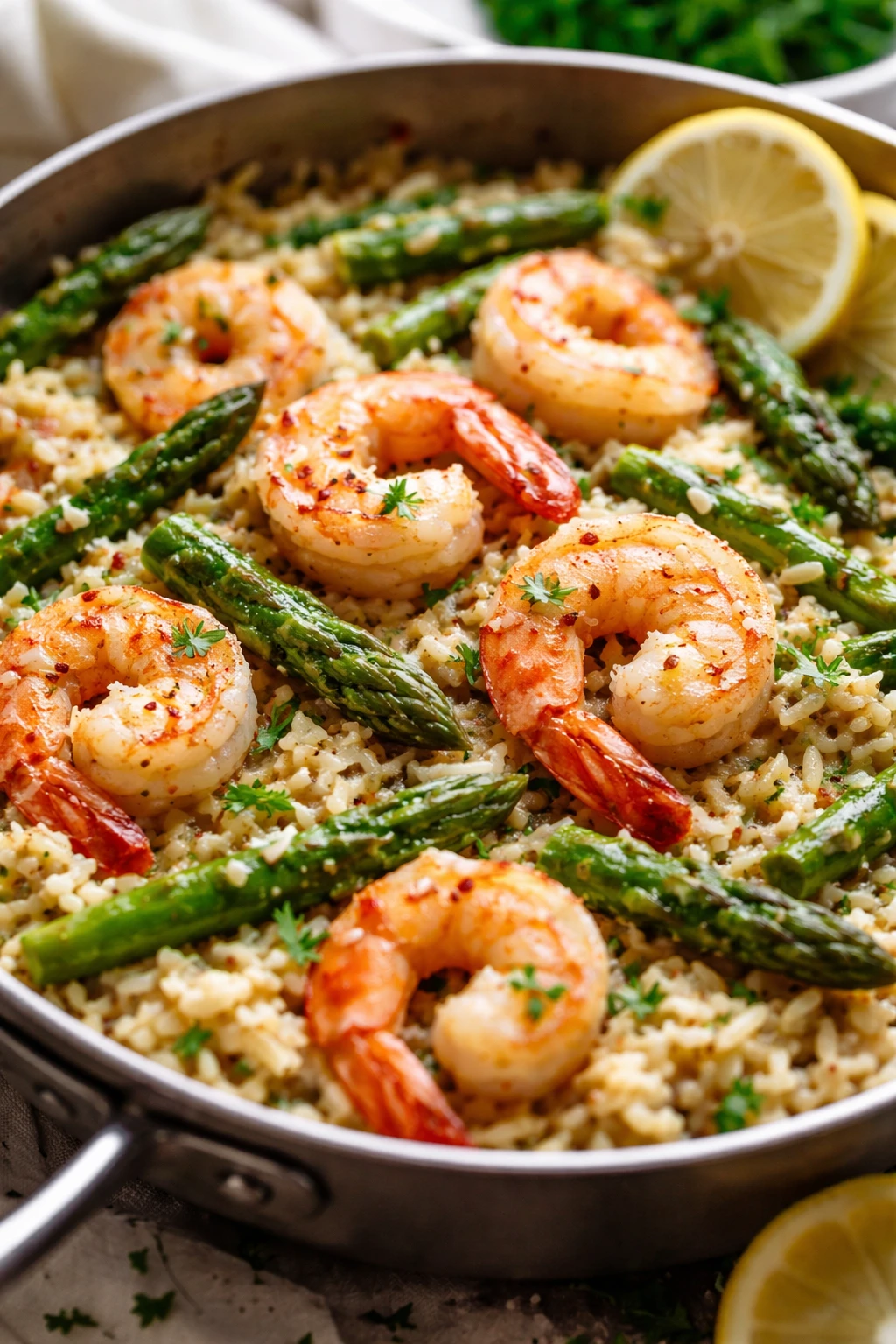
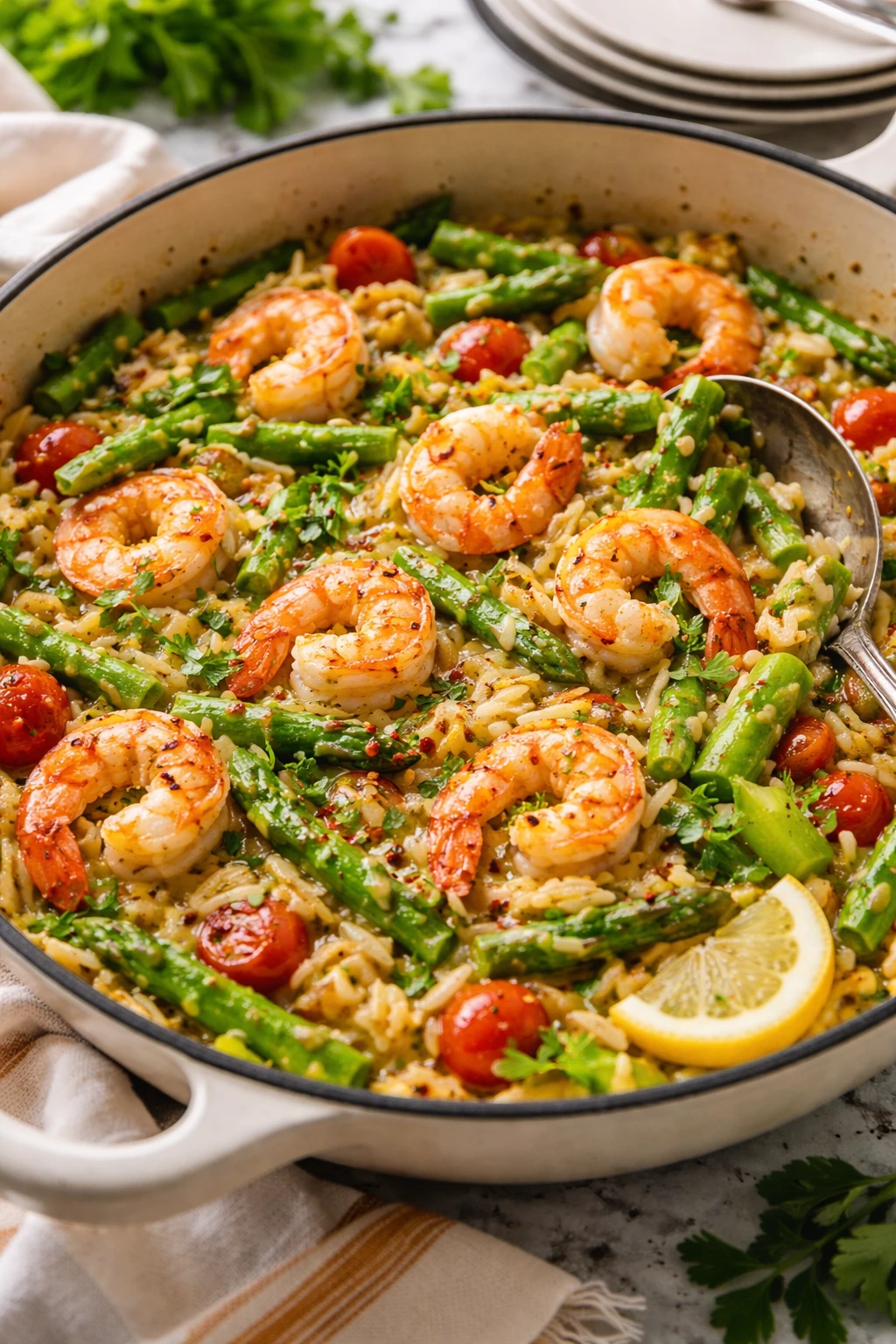
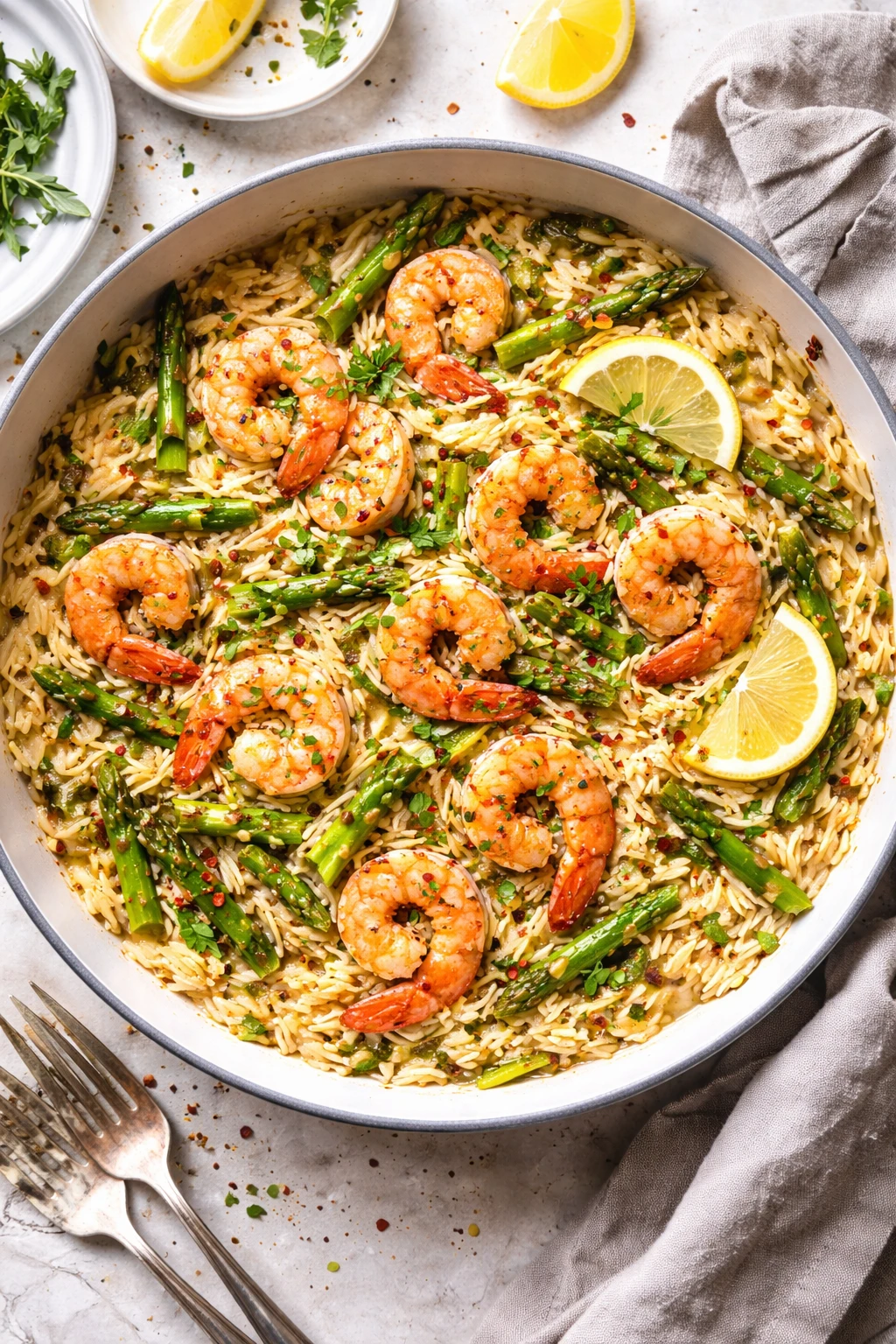
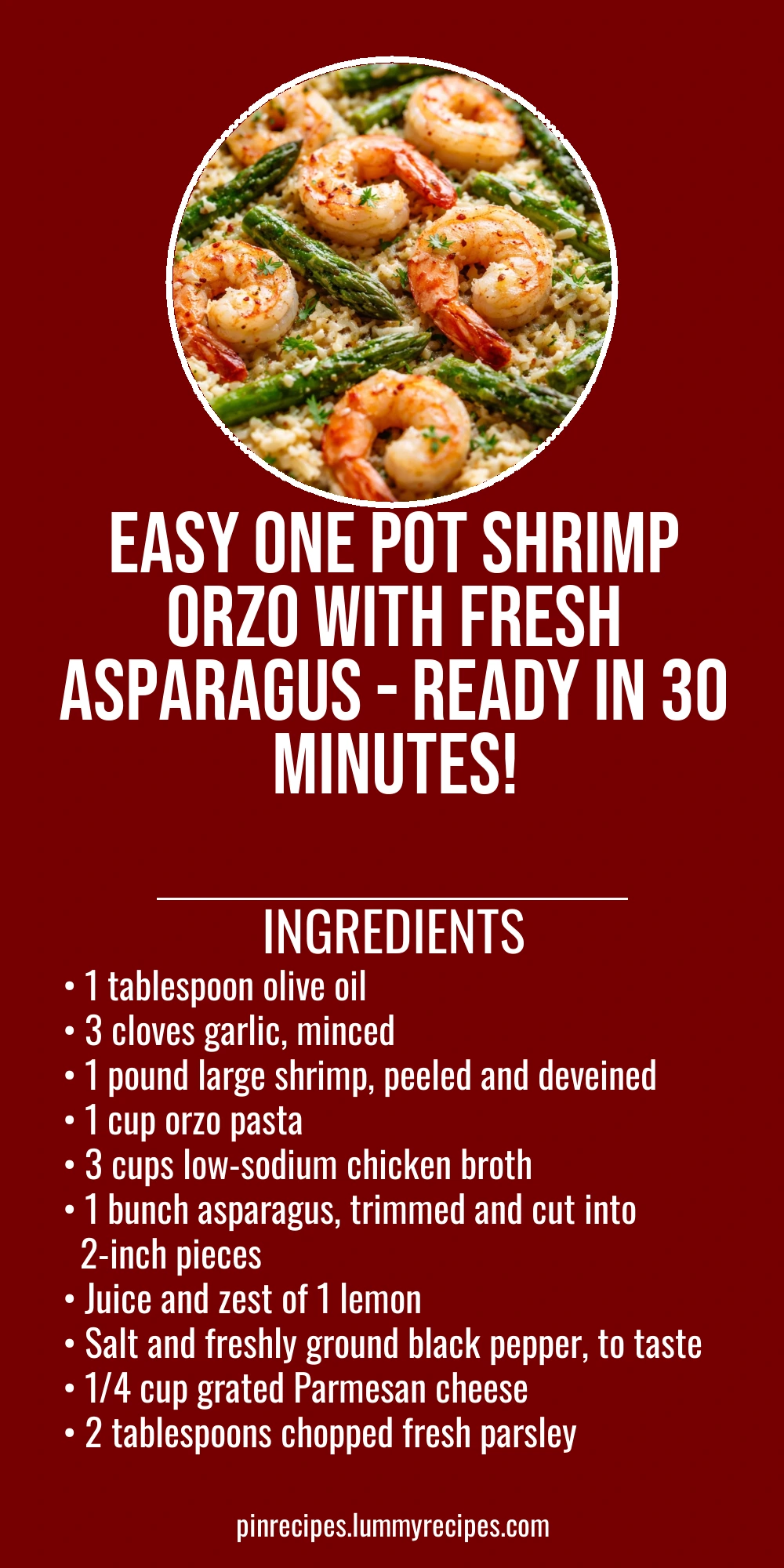
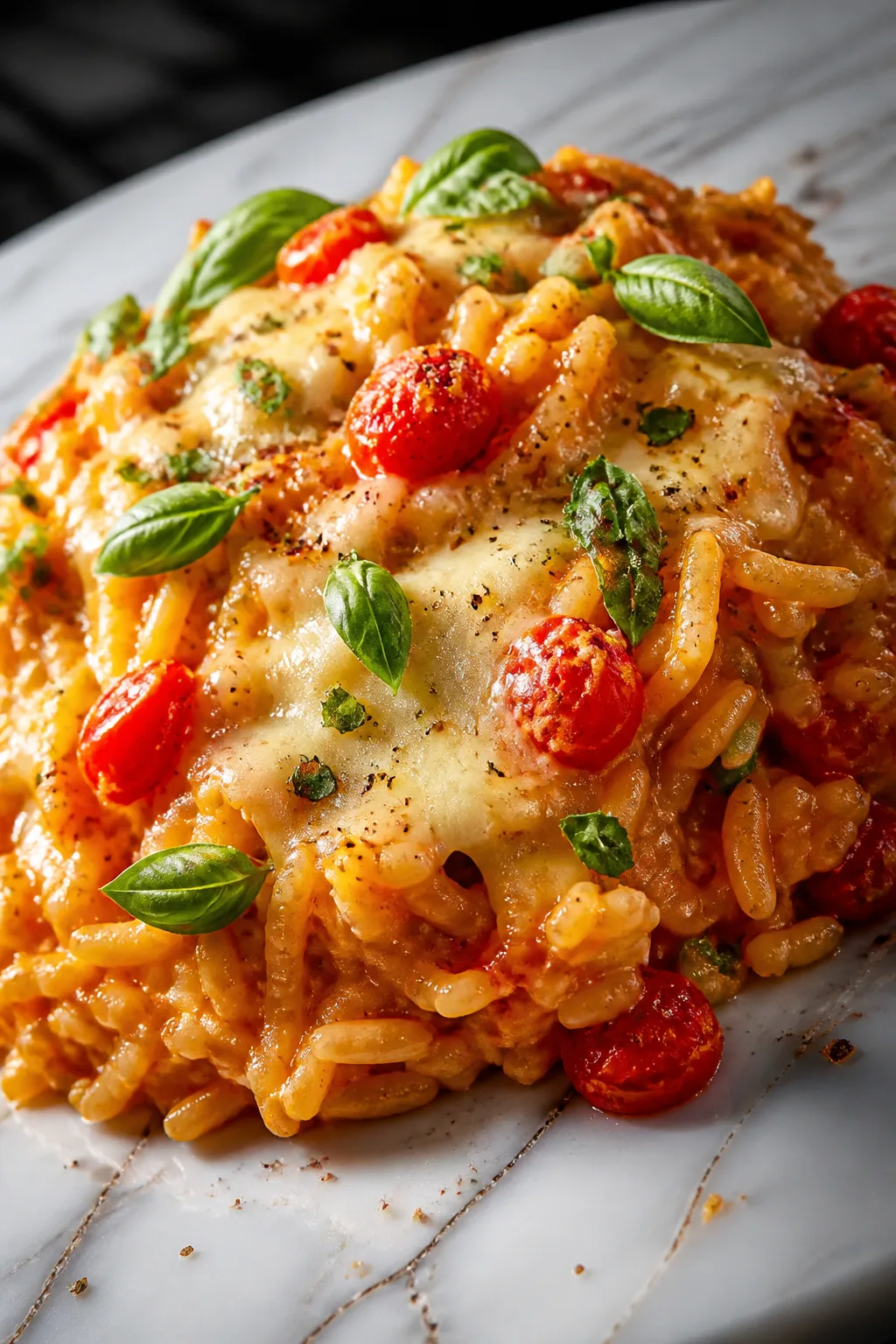
This one pot shrimp orzo with asparagus is such a lifesaver on busy nights. The shrimp cooks perfectly while the orzo soaks up all the garlicky lemon broth. I love how the asparagus adds a fresh crunch. Great for spring dinners!
Introduction
I first stumbled upon this one pot shrimp orzo asparagus recipe on a hectic weeknight when I wanted something quick but satisfying. The beauty of this dish is that it all cooks in one pan, which means less cleanup and more time to relax. What sets my version apart is the addition of fresh lemon zest and juice, which brightens the whole dish and balances the richness of the Parmesan. I also like to add the asparagus towards the end so it stays crisp and vibrant, giving a nice contrast to the tender shrimp and creamy orzo. Over the years, I've tweaked the timing to get the shrimp perfectly tender without overcooking, which can be tricky. The finished dish looks colorful with pink shrimp, green asparagus, and flecks of parsley, and tastes fresh yet comforting—a perfect balance that feels like a little celebration on your plate. Honestly, I’ve had my fair share of mushy orzo disasters before nailing this, so I’m excited to share what I’ve learned. Whether you’re cooking for family or just yourself, this recipe is a win.
How To Do It
Step 1
Heat the olive oil in a large skillet or sauté pan over medium heat. Once shimmering, add the minced garlic and sauté for about 30 seconds until fragrant but not browned. This step is crucial because garlic burns quickly and can turn bitter, so keep an eye on the color and stir constantly. The garlic oil infuses the whole dish with a warm, aromatic base that complements the shrimp perfectly.
⏱ Time: 2
✓ Doneness: Garlic is lightly golden and fragrant without any dark spots
Step 2
Add the peeled and deveined shrimp to the pan in a single layer. Cook for 1-2 minutes on each side until they turn pink and opaque. Avoid overcrowding the pan to ensure even cooking. Overcooked shrimp become rubbery, so watch closely and remove them as soon as they’re done. Once cooked, transfer the shrimp to a plate and set aside.
⏱ Time: 4
✓ Doneness: Shrimp are pink with opaque flesh and slightly curled tails
Step 3
Pour the orzo pasta into the same pan and stir it around in the garlic oil for about a minute. Toasting the orzo slightly before adding liquid helps develop a nuttier flavor and prevents it from sticking together later. Stir constantly to avoid burning, and you'll notice the orzo turning a pale golden color.
⏱ Time: 1
✓ Doneness: Orzo is lightly toasted and aromatic
Step 4
Slowly add the chicken broth to the pan, stirring to combine. Bring the mixture to a gentle boil, then reduce the heat to a simmer. This step allows the orzo to absorb the flavorful broth as it cooks. Stir occasionally to prevent sticking and ensure even cooking. If you rush this or keep the heat too high, the liquid will evaporate too quickly and the orzo won’t cook through.
⏱ Time: 10
✓ Doneness: Orzo is tender but slightly chewy, liquid mostly absorbed
Step 5
Add the chopped asparagus pieces to the pan, stirring them into the orzo and broth. Cover and cook for another 3-4 minutes until the asparagus is bright green and just tender. Adding asparagus later keeps it crisp and fresh instead of mushy. Check by piercing a piece with a fork—it should have a slight snap.
⏱ Time: 4
✓ Doneness: Asparagus is tender yet crisp and vibrant green
Step 6
Return the cooked shrimp to the pan and gently stir to combine. Let everything warm together for 1-2 minutes so the shrimp reheats without overcooking. This final melding of flavors brings the dish together. Avoid stirring too vigorously to keep the shrimp intact.
⏱ Time: 2
✓ Doneness: Shrimp are heated through but still firm and juicy
Step 7
Remove the pan from heat and stir in the lemon juice, lemon zest, and grated Parmesan cheese. The acidity from the lemon brightens the dish, while the cheese adds a creamy, salty richness. Stir well to create a silky sauce that lightly coats the orzo and shrimp.
⏱ Time: 2
✓ Doneness: Sauce is creamy and glossy, with fresh lemon aroma
Step 8
Season with salt and freshly ground black pepper to taste. Taste carefully before adding salt since the Parmesan and broth already contribute saltiness. Adjust seasoning gradually to avoid over-salting.
⏱ Time: 1
✓ Doneness: Balanced seasoning with no overpowering saltiness
Step 9
Garnish with chopped fresh parsley for a pop of color and fresh herbal note. Serve immediately while hot for the best texture and flavor. This dish is best enjoyed fresh but can be reheated gently if needed.
⏱ Time: 1
✓ Doneness: Bright green parsley scattered on top, dish steaming hot
Pro Tips
Pat shrimp dry before cooking to get a nice sear.
Removing excess moisture from shrimp prevents steaming and promotes browning, which adds flavor and a better texture. Wet shrimp release water when cooking, which lowers pan temperature and results in rubbery shrimp.
Toast the orzo briefly before adding broth.
Toasting enhances the orzo’s nutty flavor and helps keep the grains separate as they cook. It also adds a subtle depth that you won’t get if you just boil the pasta in broth.
Add asparagus near the end to keep it crisp.
Asparagus cooks quickly and will turn mushy if overcooked. Adding it late preserves its bright color and fresh snap, providing a nice contrast to the creamy orzo and tender shrimp.
Use fresh lemon zest and juice for brightness.
Lemon acidity balances the richness of the Parmesan and broth, lifting the overall flavor. Fresh zest contains aromatic oils that add complexity, which bottled lemon juice can’t replicate.
Don’t overcook the shrimp—remove it early.
Shrimp cooks fast and toughens if left in the pan too long. Removing it after initial cooking and reheating gently at the end keeps it tender and juicy.
Stir occasionally during orzo cooking to prevent sticking.
Orzo can stick to the bottom of the pan if left unattended. Gentle stirring ensures even cooking and prevents burning, especially as the liquid reduces.
Season gradually to avoid over-salting.
Ingredients like broth and Parmesan already contain salt, so adding salt in small increments and tasting prevents the dish from becoming too salty.
Common Mistakes to Avoid
Overcooking the shrimp
Why it happens Many cooks leave shrimp in the pan too long thinking it needs to be fully cooked with everything else, but shrimp cooks very quickly.
Fix Cook shrimp just until pink and opaque, then remove from heat. Reintroduce it at the end to warm through without overcooking.
Adding asparagus too early
Why it happens It’s easy to add all ingredients at once to save time, but asparagus becomes mushy quickly.
Fix Add asparagus in the last few minutes of cooking to keep it tender-crisp and vibrant.
Not toasting the orzo
Why it happens Skipping toasting to save time is common, but it misses out on flavor development.
Fix Spend a minute to toast the orzo in oil before adding broth for better flavor and texture.
Using salty broth without adjusting salt
Why it happens Many store-bought broths are salty, and adding extra salt without tasting leads to over-seasoning.
Fix Use low-sodium broth and adjust salt at the end, tasting as you go.
Overcooking the orzo
Why it happens Orzo cooks fast and can easily become mushy if left too long.
Fix Simmer gently and check doneness early to ensure the orzo is tender but still has a slight bite.
Variations
Spicy One Pot Shrimp Orzo
Add a pinch of red pepper flakes or a diced jalapeño when cooking the garlic for a spicy kick. This changes the flavor profile by adding heat that pairs well with the lemon and shrimp. Expect a lively, warming dish that’s still fresh.
Note: Adjust spice level carefully and add chili early to infuse the oil.
Creamy Coconut Shrimp Orzo
Swap half the chicken broth for coconut milk for a creamy, tropical twist. The coconut adds richness and subtle sweetness that complements the shrimp and asparagus beautifully.
Note: Reduce salt slightly since coconut milk is rich and can mask seasoning.
Herb-Loaded Shrimp Orzo
Mix in fresh herbs like dill, basil, and thyme along with parsley for a fragrant, garden-fresh version. This variation brightens the dish and adds complexity.
Note: Add delicate herbs at the end to preserve their flavor.
Vegetable Packed Shrimp Orzo
Add diced bell peppers, cherry tomatoes, or peas along with the asparagus for extra veggies and color. This makes the dish heartier and more vibrant.
Note: Adjust cooking times so vegetables remain crisp and don’t overcook.
Lemon Butter Shrimp Orzo
Finish the dish with a tablespoon of cold butter stirred in off heat for a silky, rich texture. This adds indulgence without overpowering the fresh lemon flavor.
Note: Add butter at the very end to prevent breaking the sauce.
Nutrition
Per Serving:
Nutritional values are estimates and may vary based on specific ingredients used.
Storage & Tips
Room Temperature
This dish should not be left out at room temperature for more than 2 hours. Cover it loosely if you need to keep it warm briefly before serving.
Refrigerator
Store leftovers in an airtight container in the fridge for up to 3 days. The orzo may absorb more liquid and thicken when cold, so reheat gently with a splash of broth or water to loosen the texture.
Freezer
Freeze in a sealed container for up to 2 months. To prevent freezer burn, wrap the container in foil or place in a freezer bag. Thaw overnight in the fridge before reheating.
Reheating
Reheat on the stovetop over low heat with a splash of broth or water, stirring occasionally until warmed through. Avoid microwave reheating at high power to prevent uneven heating and rubbery shrimp.
Make Ahead
You can prepare the orzo and broth base a day ahead and refrigerate. Add asparagus and shrimp fresh on the day of serving to keep textures perfect.
FAQ
Can I use frozen shrimp for this recipe?
Yes, frozen shrimp works well. Just thaw completely and pat dry before cooking to avoid excess moisture. This helps the shrimp sear properly and prevents the dish from becoming watery.
What can I substitute for orzo if I don’t have it?
You can use other small pasta shapes like acini di pepe or small shells. Keep in mind cooking times may vary slightly, so check for doneness early to avoid overcooking.
Can I make this recipe vegetarian?
Absolutely! Replace shrimp with chickpeas or firm tofu, and use vegetable broth instead of chicken broth. The lemon and Parmesan still provide great flavor.
How do I prevent the orzo from sticking together?
Toasting the orzo before adding broth and stirring occasionally while cooking helps keep the grains separate. Also, avoid overcooking which makes it mushy and sticky.
Can I prepare this dish ahead of time?
You can prepare the orzo and broth base a day ahead, but add shrimp and asparagus fresh when serving to maintain texture and flavor.
What if I don’t have fresh asparagus?
You can substitute frozen asparagus or green beans, but add them later in the cooking process to avoid overcooking and mushiness.
Is Parmesan necessary in this recipe?
Parmesan adds a creamy, salty richness that balances the lemon and shrimp. You can omit it for a dairy-free version but consider adding nutritional yeast or a splash of olive oil for richness.
How can I make this recipe spicier?
Add red pepper flakes or a diced jalapeño when sautéing the garlic. Start with a small amount and adjust to your preferred spice level.
Can I use vegetable broth instead of chicken broth?
Yes, vegetable broth works well and keeps the dish lighter. Just make sure it’s a flavorful broth to avoid a bland base.
How do I know when the shrimp is perfectly cooked?
Shrimp turn pink and opaque when done, curling slightly into a C shape. Overcooked shrimp curl tightly and become rubbery, so watch closely and remove promptly.
Final Thoughts
I hope you enjoy making and eating this one pot shrimp orzo asparagus as much as I do. Don’t forget to share your results and tweaks—happy cooking!