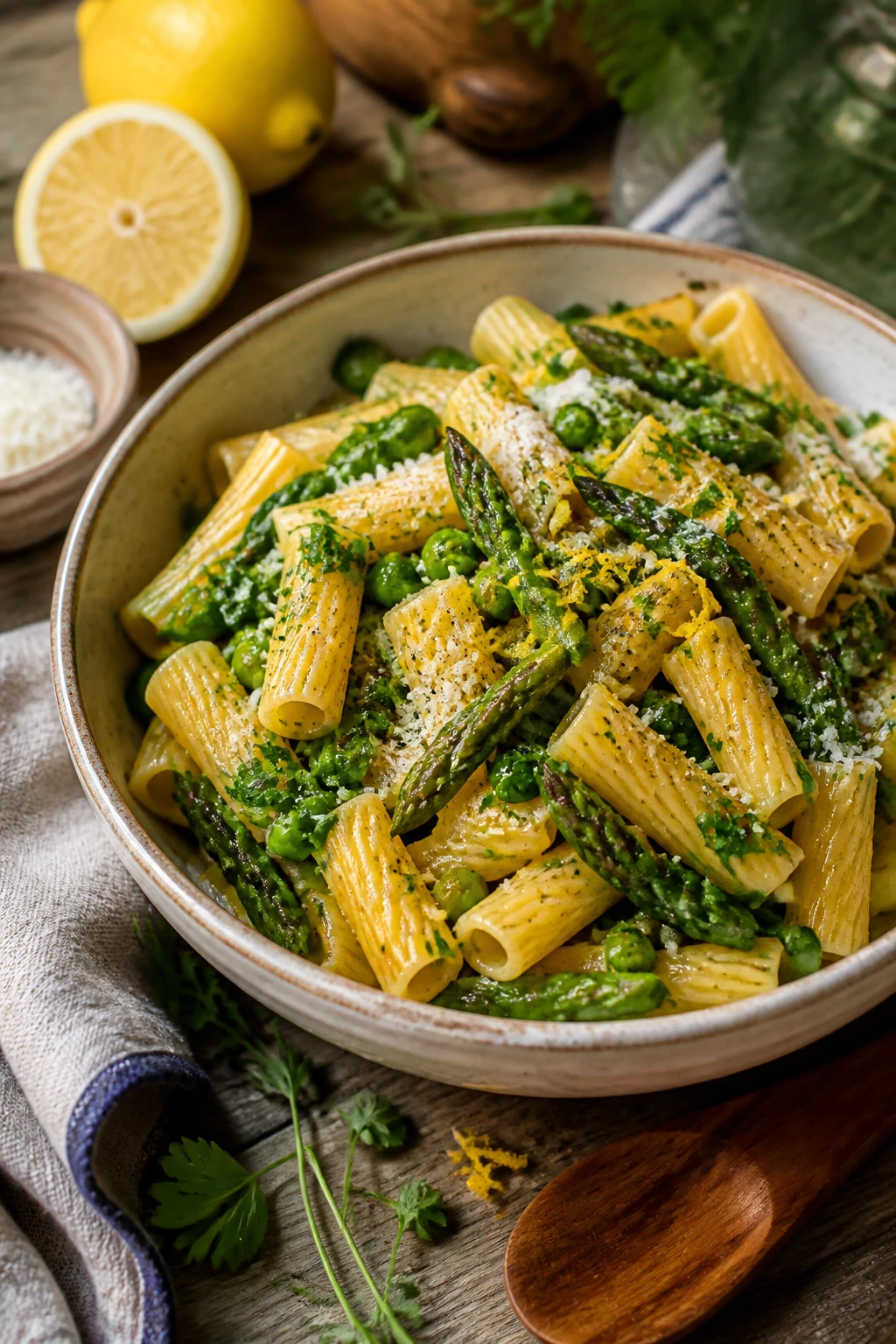
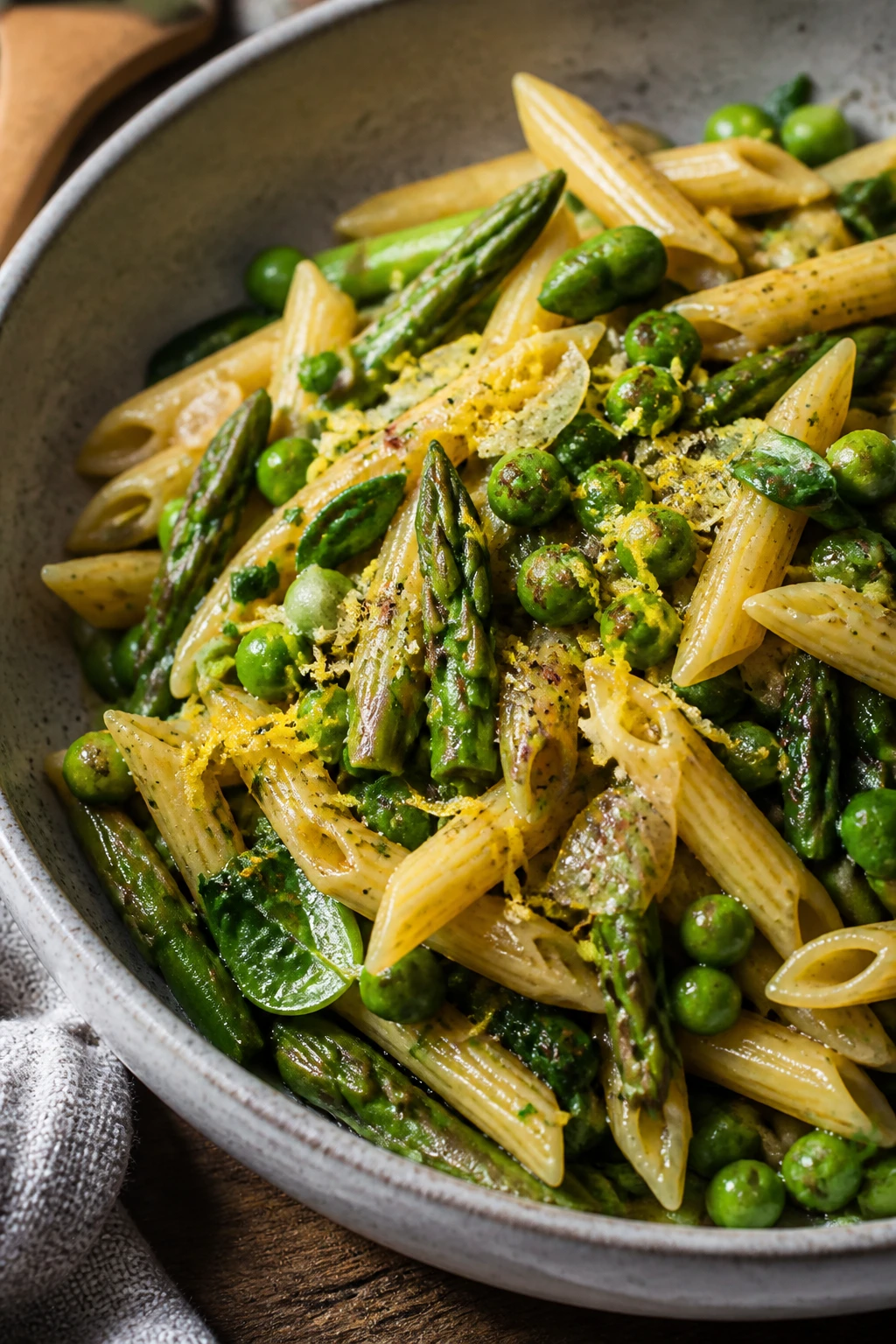
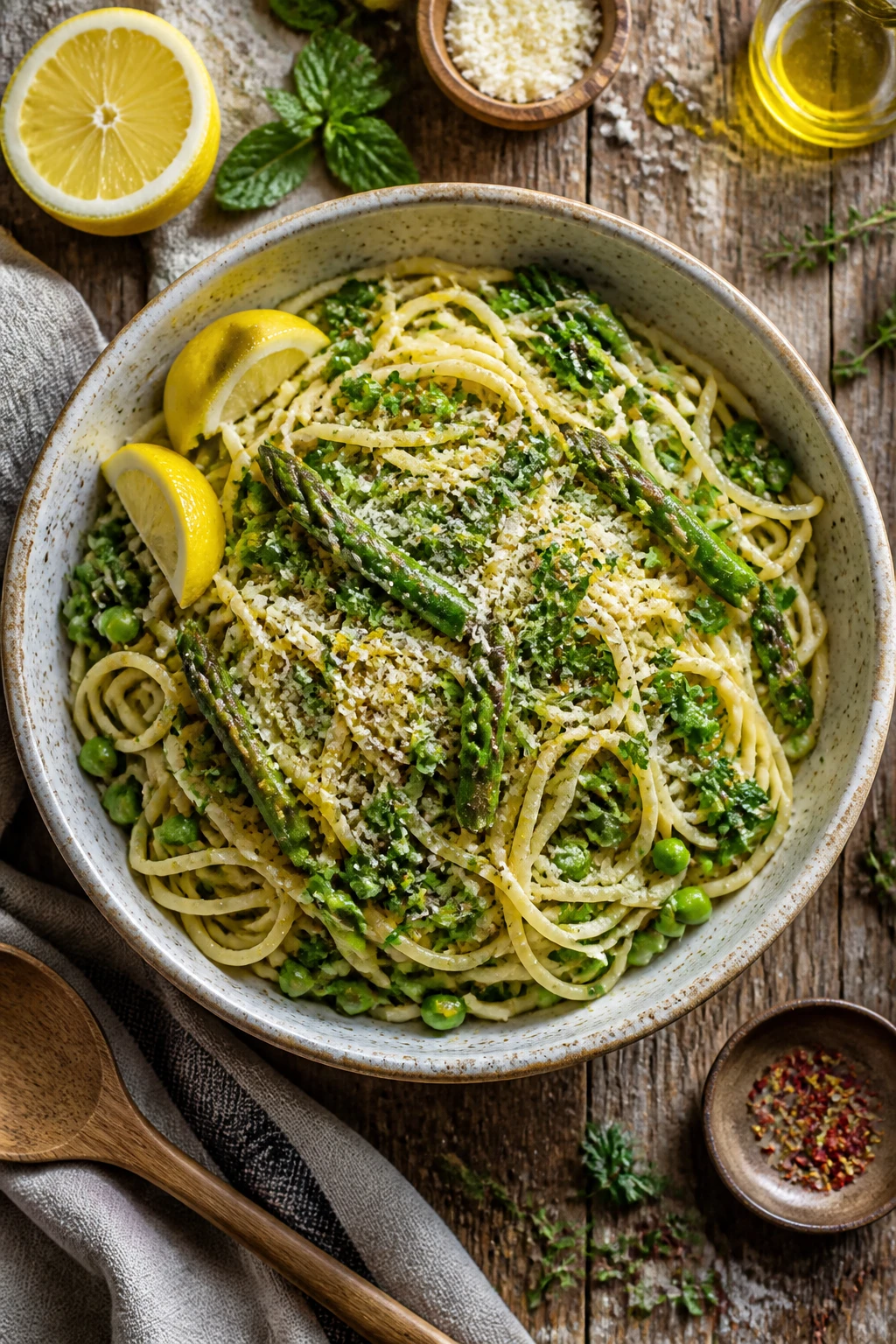
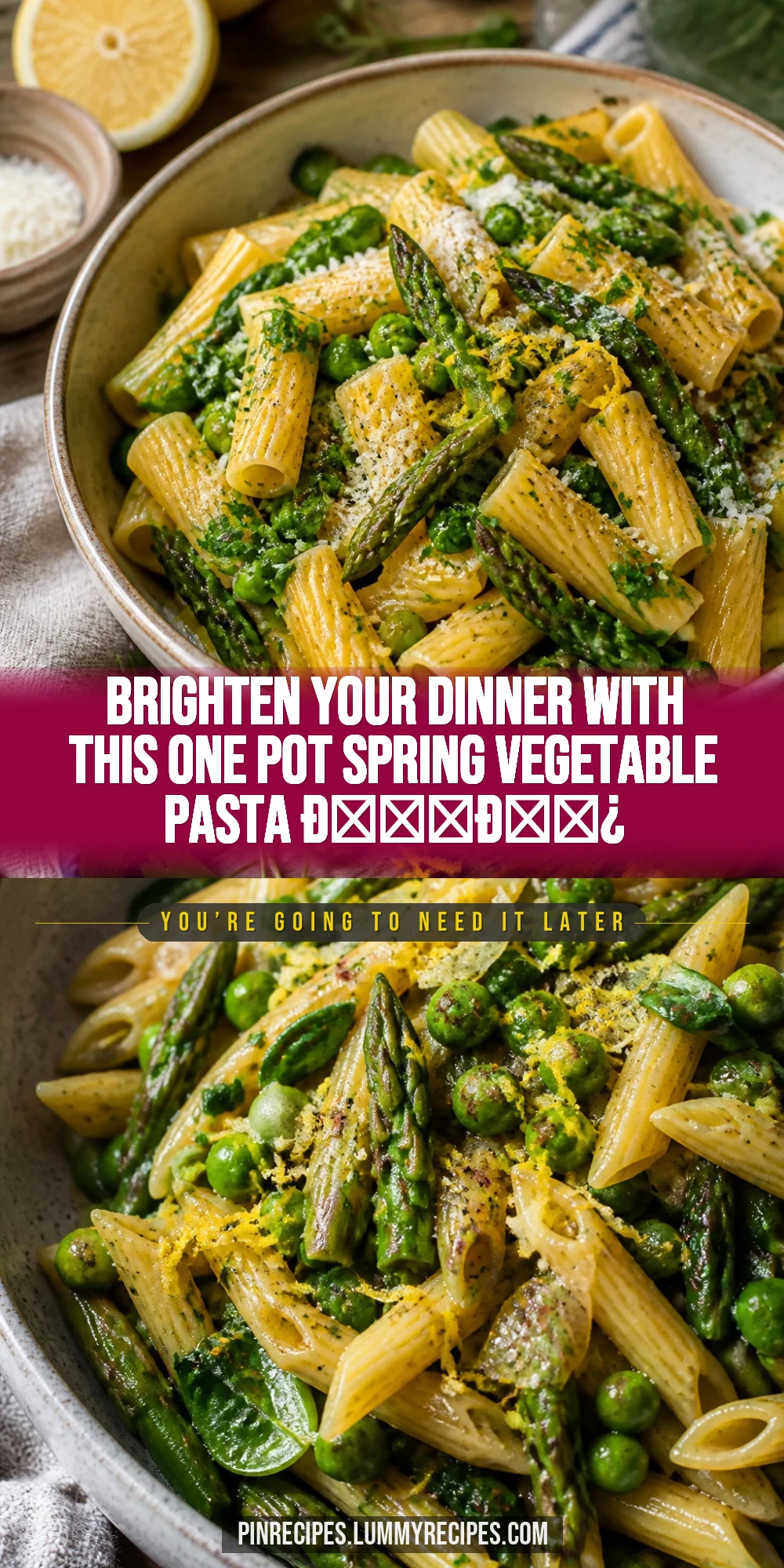
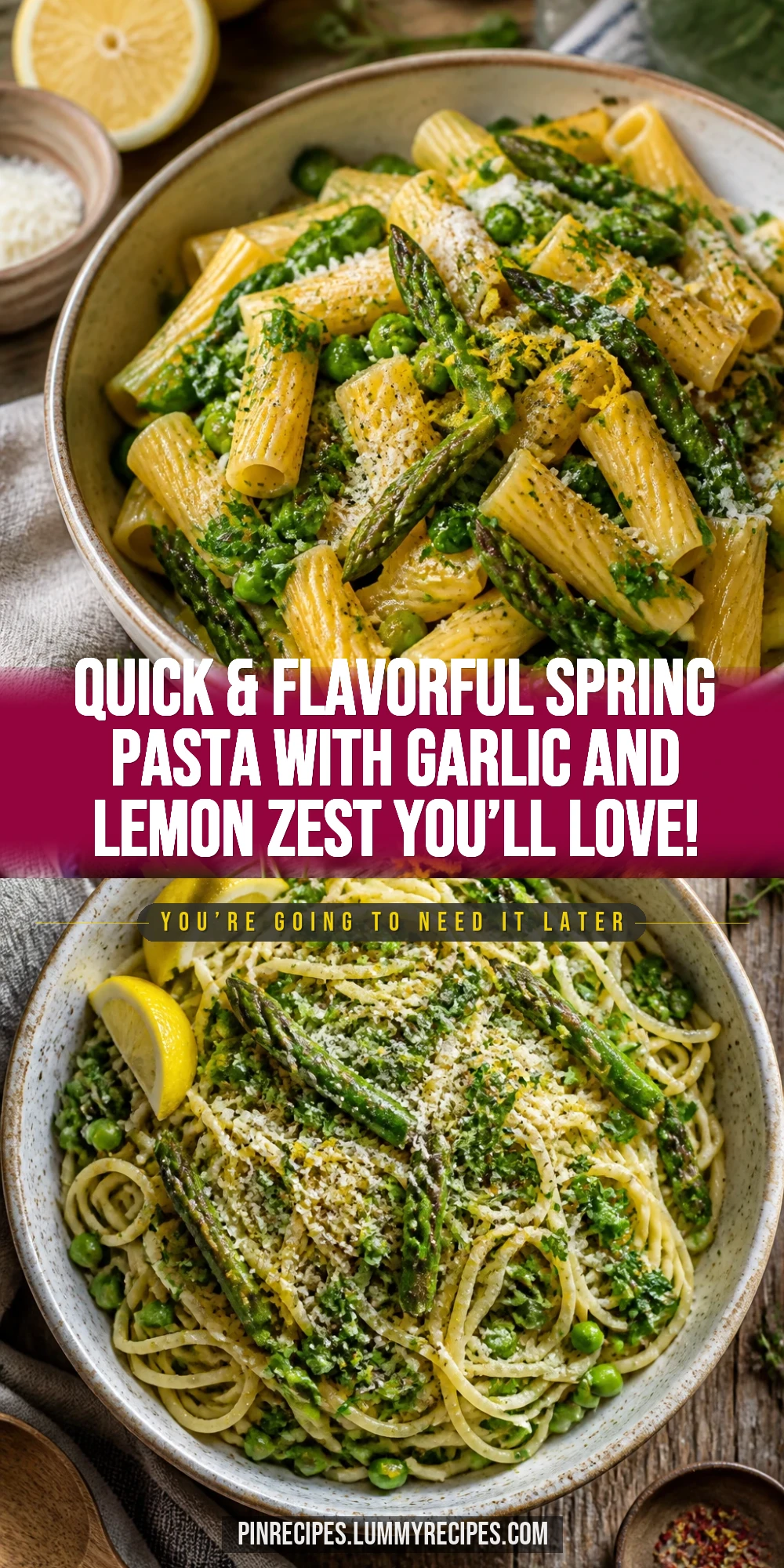
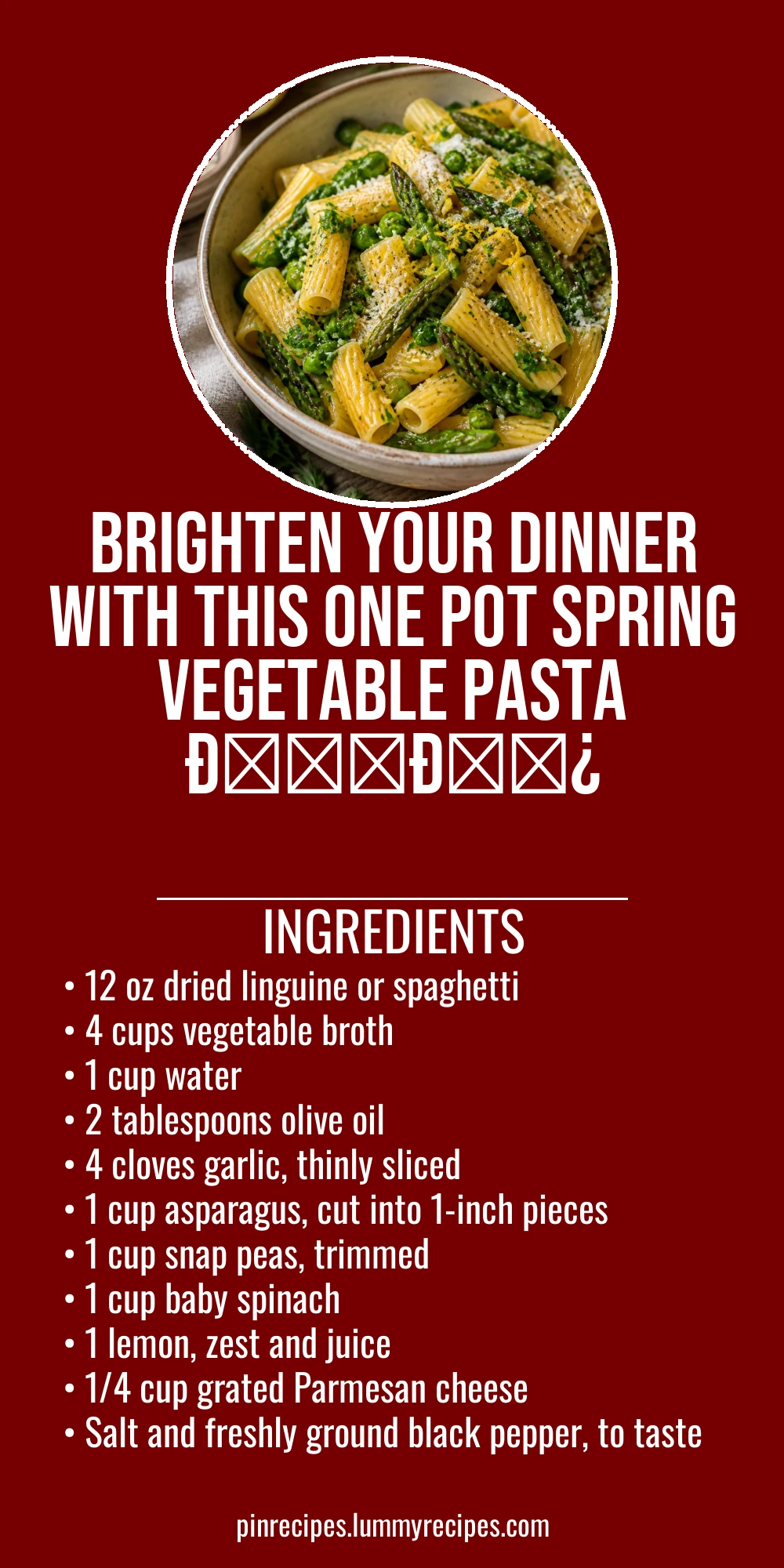
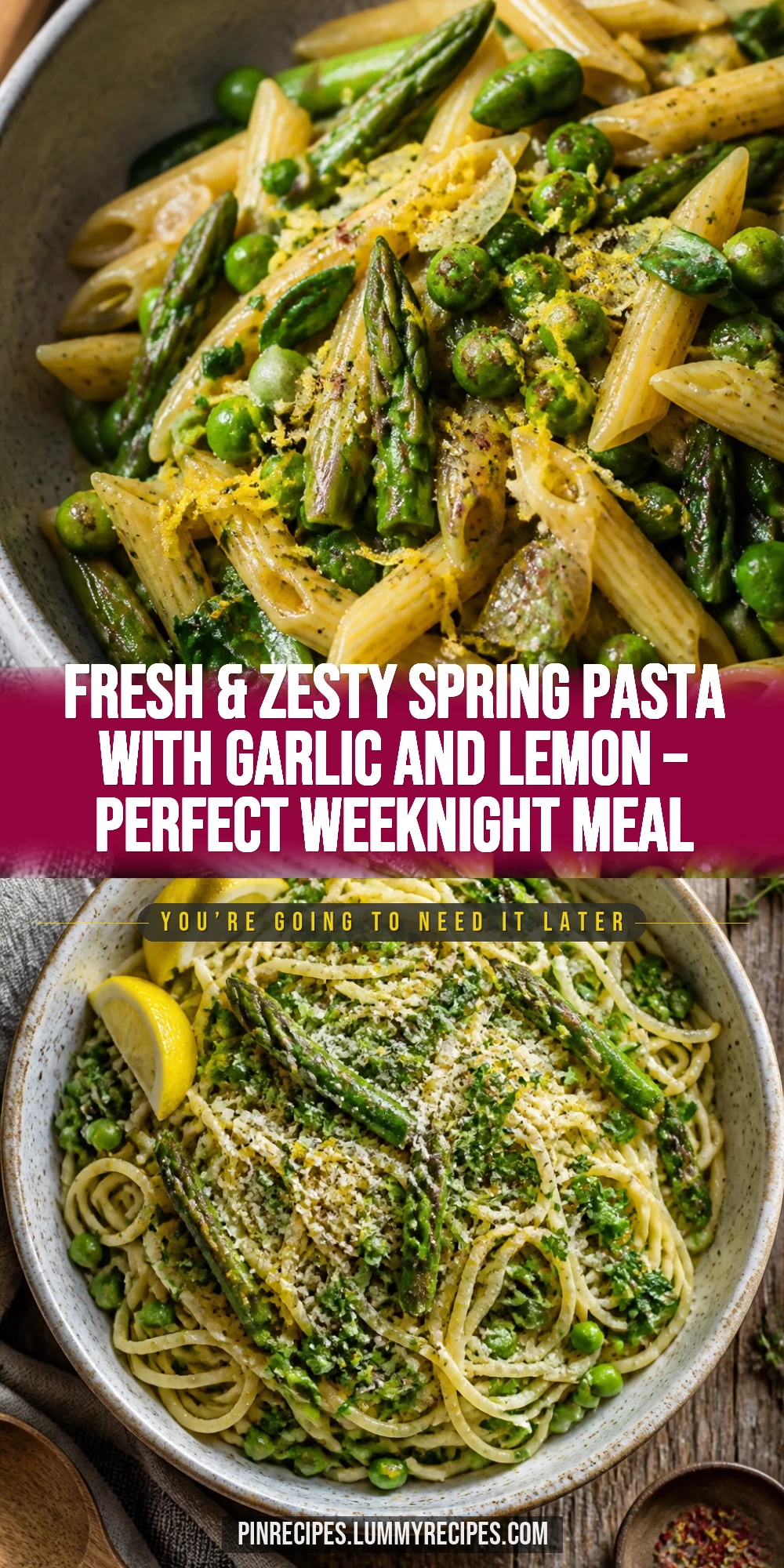
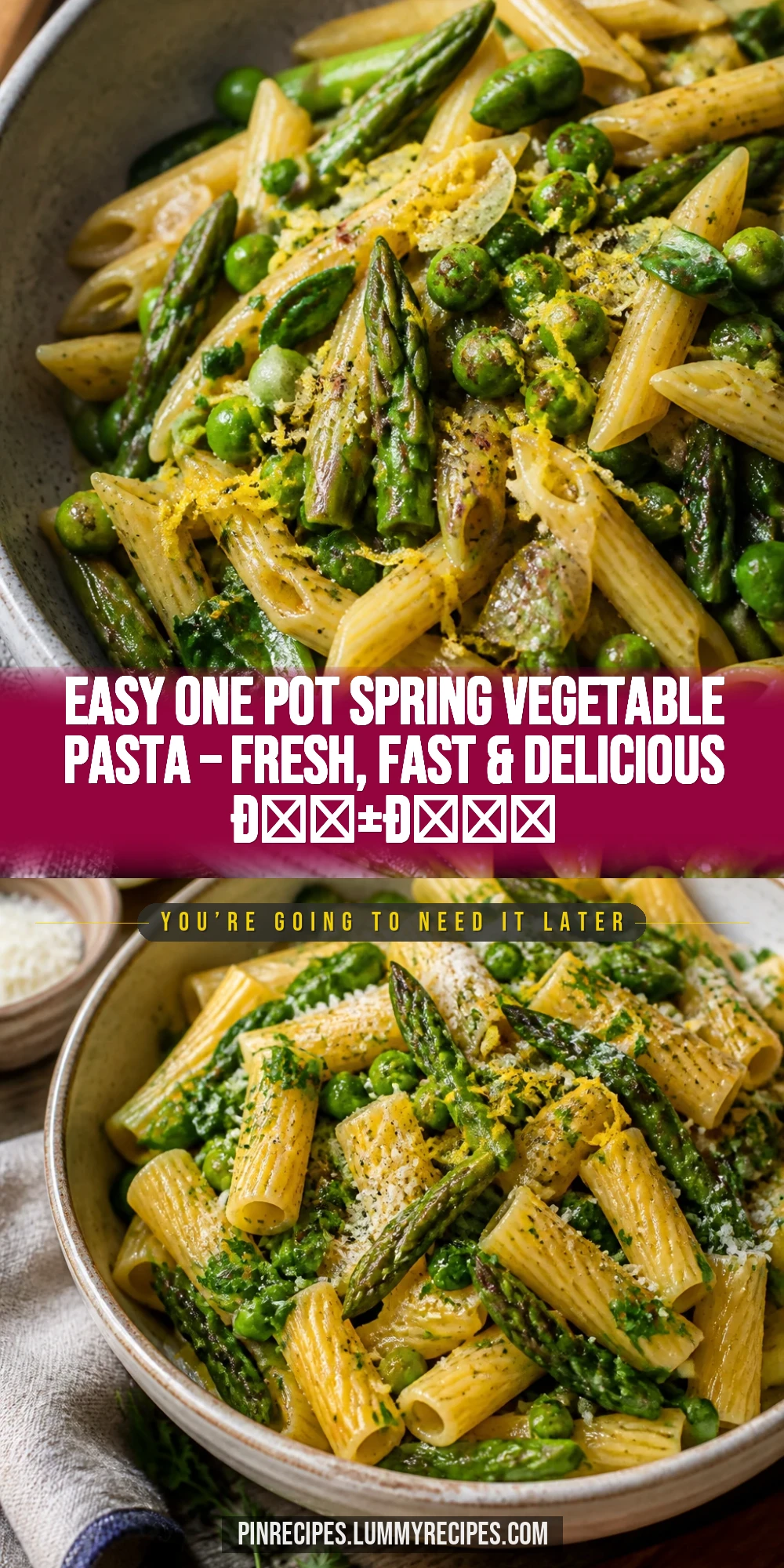
This one pot pasta is a fresh, vibrant way to enjoy spring veggies with a garlicky, zesty lemon twist. It’s super quick and perfect for a light weeknight meal when you want something bright but easy.
Introduction
I first made this One Pot Spring Vegetable Pasta on a whim when I was craving something light but flavorful after a long day. What I love most is how everything cooks together in one pot — no fuss, no extra pans. The lemon zest really brightens the whole dish and pairs beautifully with the fresh spring veggies like asparagus and snap peas. I’ve tried other versions before, but the trick I learned here is to add the garlic early so it infuses the olive oil, giving the pasta a subtle but delicious aroma. Plus, finishing with fresh lemon juice at the end keeps the flavors lively and fresh rather than dull. The pasta comes out perfectly tender, and the veggies stay crisp-tender, giving a lovely texture contrast. It’s such a simple recipe but feels special enough for a casual dinner with friends or a quick solo meal. You’ll find yourself making it again and again when spring rolls around!
How To Do It
Step 1
Heat the olive oil in a large deep skillet or wide pot over medium heat. Add the thinly sliced garlic and cook gently for about 2 minutes, stirring frequently, until fragrant and just starting to turn golden. This step is crucial because it infuses the oil with garlic flavor without burning it, which would make the dish bitter. Keep an eye on the garlic and lower the heat if it starts browning too fast.
⏱ Time: 3
✓ Doneness: Garlic is fragrant and light golden, not brown or burnt
Step 2
Add the dried pasta to the pot along with the vegetable broth and water. Push the pasta down gently so it’s mostly submerged. Bring the liquid to a boil, then reduce to a simmer. Stir frequently to prevent the pasta from sticking together or to the bottom of the pot. This method allows the pasta to cook evenly while soaking up the flavorful broth and garlic oil.
⏱ Time: 12
✓ Doneness: Pasta is tender but still slightly firm (al dente), liquid mostly absorbed
Step 3
When the pasta is about halfway cooked, add the asparagus and snap peas to the pot. Stir them in gently so they cook with the pasta and broth. Adding the vegetables at this stage ensures they stay crisp-tender and don’t get mushy. Keep the heat at a gentle simmer to let everything cook evenly.
⏱ Time: 6
✓ Doneness: Vegetables are bright green and tender-crisp
Step 4
Once the pasta and vegetables are cooked, stir in the baby spinach. The residual heat will wilt the spinach quickly without overcooking it. This adds a fresh pop of color and a mild earthy flavor to the dish.
⏱ Time: 2
✓ Doneness: Spinach is wilted but still vibrant green
Step 5
Remove the pot from heat and stir in the lemon zest and juice. This brightens the whole dish and adds a fresh citrus note that balances the garlic and vegetables perfectly. Taste and season with salt, pepper, and red pepper flakes if using. The acidity of the lemon juice can sometimes mute flavors, so adjusting seasoning here is key.
⏱ Time: 2
✓ Doneness: Dish smells fresh and bright, balanced flavors
Step 6
Finally, stir in the grated Parmesan cheese until melted and incorporated. This adds a creamy, savory finish that rounds out the flavors and gives the pasta a nice silky texture. If you want it dairy-free, you can skip this or use a vegan cheese alternative.
⏱ Time: 1
✓ Doneness: Cheese is melted and evenly distributed
Step 7
Serve the pasta immediately, garnished with fresh basil leaves for an herbal note and extra color. This dish is best enjoyed fresh to keep the pasta tender and the veggies crisp.
⏱ Time: 1
✓ Doneness: Pasta is hot and garnished attractively
Step 8
If you want to add protein, grilled chicken or shrimp pairs wonderfully with this pasta. Simply cook separately and toss on top before serving to keep the flavors clean and fresh.
⏱ Time: 5
✓ Doneness: Protein is cooked through and added just before serving
Step 9
Clean up is a breeze since everything cooks in one pot! Just soak the pot right after serving to make washing easier and preserve that lovely garlic flavor for your next meal.
⏱ Time: 5
✓ Doneness: Pot is soaked and ready for easy cleaning
Pro Tips
Don’t rush cooking the garlic; cook it gently over medium heat.
Cooking garlic too fast or at too high heat causes it to brown and become bitter, which can overpower the dish. Gentle cooking releases its sweet, aromatic flavors that infuse the oil and pasta beautifully.
Add vegetables at the right time to keep them crisp-tender.
Adding veggies too early makes them mushy and dulls their color and flavor. Adding them midway through pasta cooking ensures they cook just enough to stay bright and crunchy, providing a nice texture contrast.
Use fresh lemon zest and juice added off heat for best flavor.
Cooking lemon juice too long can cause bitterness and loss of brightness. Adding zest and juice after removing from heat keeps the citrus flavor fresh, lively, and balanced with the garlic and cheese.
Stir frequently while the pasta cooks to prevent sticking.
One pot pasta can clump or stick to the bottom if not stirred regularly. Frequent stirring ensures even cooking and a smooth sauce as the starch releases into the broth.
Use a wide, deep skillet or pot for even cooking.
A wide pot allows the pasta to spread out and cook evenly in the broth. A deep pan holds enough liquid for the pasta to cook fully without drying out.
Reserve some pasta cooking water before draining if you want a looser sauce.
The starchy pasta water can help loosen the sauce if it gets too thick. Adding a splash while tossing the pasta helps achieve the perfect consistency.
Serve immediately for best texture and flavor.
This pasta is best eaten fresh because the noodles can absorb too much liquid and become mushy if left to sit. Freshly cooked pasta retains its perfect al dente bite and vibrant veggie texture.
Common Mistakes to Avoid
Burning the garlic at the start
Why it happens Many cooks turn the heat too high or leave the garlic unattended, causing it to brown quickly and taste bitter.
Fix Cook garlic over medium or medium-low heat, stirring frequently. Remove from heat if it starts to brown too fast and add the next ingredients promptly.
Adding all vegetables too early
Why it happens It’s easy to toss everything in at once, but this leads to overcooked, mushy veggies.
Fix Add sturdier vegetables like asparagus midway through pasta cooking and delicate greens last to maintain texture and color.
Not stirring pasta enough during cooking
Why it happens One pot pasta tends to stick if left alone, especially early in cooking when starch is released.
Fix Stir every couple of minutes to separate noodles and prevent sticking or burning on the bottom.
Skipping lemon zest or juice
Why it happens Some skip citrus for simplicity, but this removes the bright note essential to the dish’s flavor balance.
Fix Always add fresh lemon zest and juice off heat to brighten the dish and balance richness.
Using fresh pasta instead of dried
Why it happens Fresh pasta cooks faster and releases less starch, which can lead to a watery sauce and mushy texture in this recipe.
Fix Stick with good quality dried pasta for the ideal texture and sauce consistency in one pot cooking.
Variations
Add Grilled Chicken for Protein Boost
Toss in sliced grilled chicken breast or thighs for a more filling meal. The smoky flavor pairs well with the lemon and garlic, making it a perfect dinner option for meat lovers.
Note: Cook chicken separately to avoid overcooking the pasta and veggies; add just before serving.
Make It Vegan by Skipping Cheese
Omit the Parmesan or substitute with nutritional yeast to keep it vegan. You’ll still get a delicious, bright pasta loaded with fresh spring veggies and lemon flavor.
Note: Nutritional yeast adds a cheesy flavor but doesn’t melt, so add it off heat.
Swap Vegetables for What’s in Season
Use peas, zucchini, or baby carrots instead of asparagus and snap peas depending on what’s freshest. This keeps the dish seasonal and adaptable to your pantry.
Note: Adjust cooking times for different veggies to maintain crisp-tender texture.
Add Red Pepper Flakes for a Spicy Kick
If you like heat, sprinkle in red pepper flakes when cooking the garlic to infuse the oil with spice. It adds a nice depth without overpowering the fresh flavors.
Note: Add flakes early with garlic but watch to avoid burning.
Use Whole Wheat Pasta for Extra Fiber
Swap regular pasta for whole wheat for a nuttier flavor and more fiber. The cooking time may be slightly longer, so adjust broth accordingly.
Note: Monitor pasta texture closely as whole wheat can become mushy if overcooked.
Nutrition
Per Serving:
Nutritional values are estimates and may vary based on specific ingredients used.
Storage & Tips
Room Temperature
This pasta is best eaten immediately but can be left out for up to 2 hours covered. Beyond that, bacterial growth increases and it’s safer to refrigerate.
Refrigerator
Store leftovers in an airtight container for up to 3 days. The pasta may absorb more liquid and soften, so reheat gently and add a splash of broth or water to loosen the sauce.
Freezer
Freezing is not recommended as the pasta texture will degrade and veggies become mushy. If needed, freeze in airtight containers for up to 1 month and thaw overnight in fridge.
Reheating
Reheat on the stovetop over low heat with a splash of broth or water to prevent drying out. Microwave reheating works too but stir halfway through for even warming.
Make Ahead
You can prep the veggies and grate lemon zest a day ahead. Store separately and add fresh lemon juice and cheese just before serving to keep flavors bright.
FAQ
Can I use fresh pasta instead of dried pasta in this recipe?
Fresh pasta cooks much faster and releases less starch, which can result in a watery sauce and mushy texture in this one pot method. I recommend using dried pasta to achieve the perfect al dente bite and sauce consistency.
What can I substitute if I don’t have asparagus or snap peas?
You can swap in other spring veggies like zucchini, peas, or baby carrots. Just adjust the cooking time to keep them crisp-tender. Add sturdier veggies earlier and delicate greens last to maintain texture.
How do I prevent the garlic from burning?
Cook garlic over medium or medium-low heat and stir frequently. If it starts browning too quickly, lower the heat immediately. Burnt garlic tastes bitter and will negatively affect the dish.
Can I make this recipe vegan?
Yes! Simply omit the Parmesan cheese or substitute with nutritional yeast for a cheesy flavor without dairy. Add the yeast off heat to keep its flavor intact.
How do I store and reheat leftovers without losing texture?
Store in an airtight container in the fridge for up to 3 days. Reheat gently on the stovetop with a splash of broth or water to loosen the sauce and avoid drying out the pasta.
Is it okay to add protein like chicken or shrimp?
Absolutely! Cook protein separately and add it just before serving to keep the pasta and veggies from overcooking. Grilled chicken or sautéed shrimp pair beautifully with the lemon garlic flavors.
Why is lemon zest added separately from lemon juice?
Lemon zest contains essential oils that add bright aroma and flavor without acidity. Adding zest and juice off heat keeps the citrus fresh and prevents bitterness that can develop if cooked too long.
Can I prepare parts of this recipe ahead of time?
Yes, you can chop vegetables and zest lemon a day ahead, storing them separately in the fridge. Add fresh lemon juice and cheese just before serving for the best flavor.
Final Thoughts
I hope you give this one pot spring vegetable pasta a try soon—it’s such a fresh, easy way to enjoy the season’s best veggies. Let me know how it turns out!