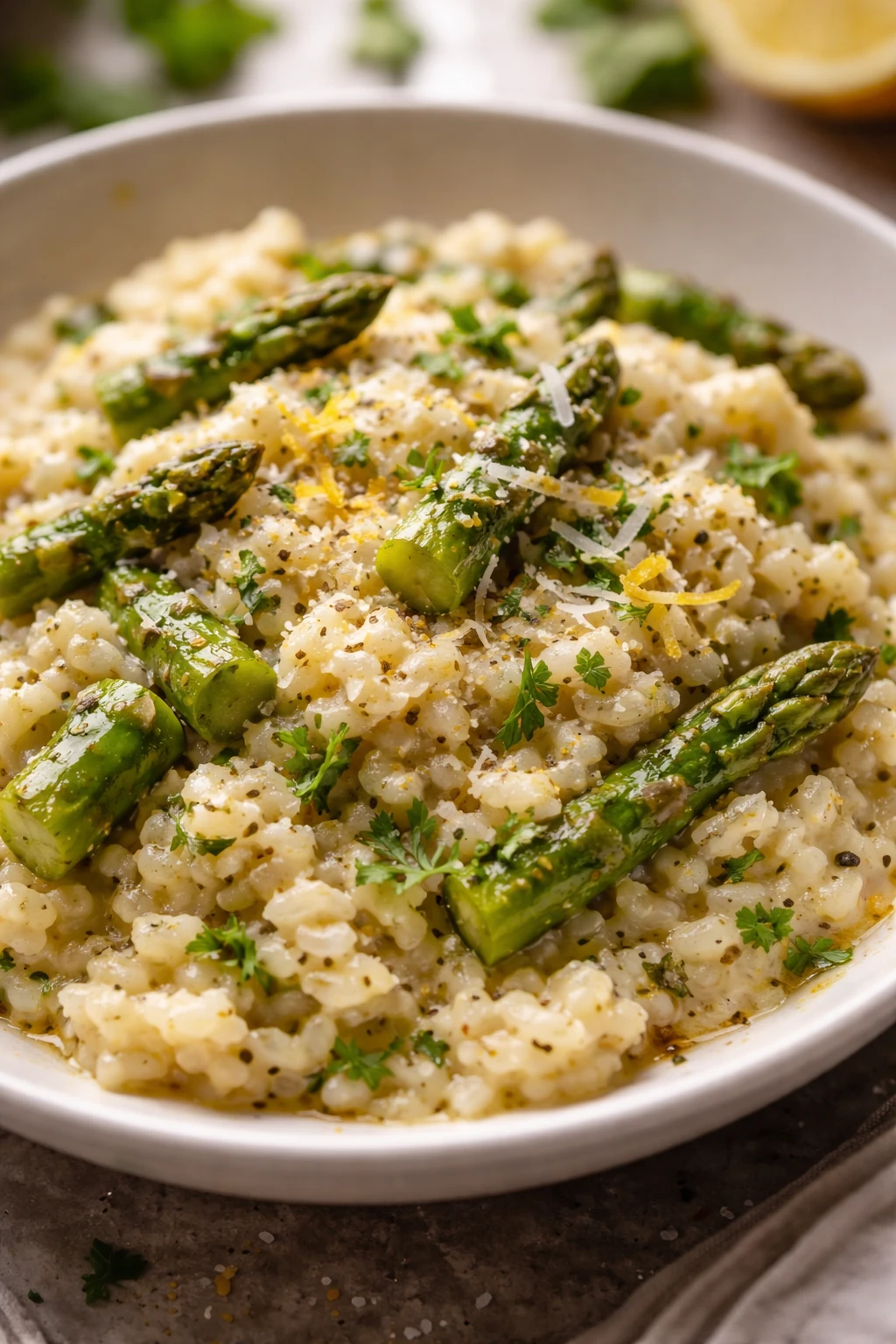
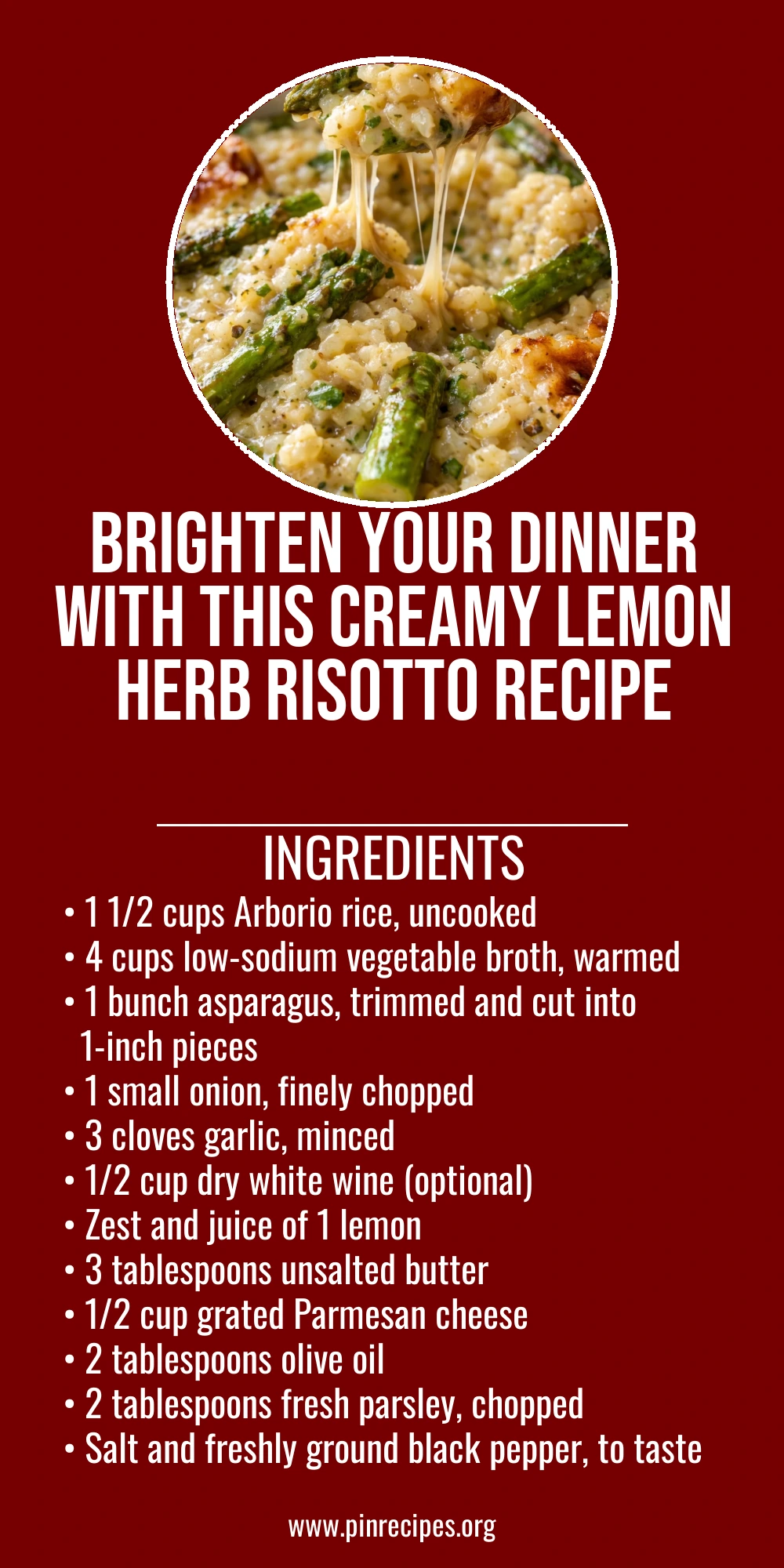
This lemon herb risotto is creamy, fresh, and comes together faster than you’d expect. The bright lemon zest and tender asparagus make it perfect for a light dinner or a special spring lunch.
Introduction
I first made this lemon herb risotto on a whim when I had some fresh asparagus and lemons sitting on my counter. I was craving something creamy and comforting but also bright and fresh to shake off winter blues. The trick I learned is to toast the rice gently before adding broth — it gives the risotto a lovely nutty depth while still keeping it light. Plus, stirring steadily but not obsessively lets the rice release its starch slowly, creating that signature creaminess without turning it mushy. What sets this version apart is the fresh lemon zest and juice added at the end, which really wakes up the dish and pairs beautifully with the tender asparagus. The finished risotto is silky, tangy, and herbaceous with just the right bite from the asparagus. It’s perfect for a quick weeknight dinner or a weekend lunch when you want something a little special but not complicated. Honestly, I’ve made it several times now and it never fails to impress my family and friends. If you love risotto but dread the long stirring, this recipe is for you — it’s quick, easy, and so rewarding.
How To Do It
Step 1
Heat the olive oil and 1 tablespoon of butter in a large skillet or saucepan over medium heat. Add the chopped onion and cook, stirring occasionally, until translucent and soft but not browned, about 5 minutes. This step is crucial because gently cooking the onion releases its sweetness and builds the flavor base for the risotto. Avoid rushing or turning the heat too high, as browning the onion can add bitterness and disrupt the delicate balance of flavors.
⏱ Time: 5 minutes
✓ Doneness: Onions are soft, translucent, and fragrant without any browning
Step 2
Add the minced garlic and cook for another 1 minute until fragrant. Then stir in the Arborio rice, coating each grain in the oil and butter. Toast the rice for 2-3 minutes, stirring frequently. This toasting step is essential because it slightly nutifies the rice and helps it maintain a firm texture during cooking. If you skip this, the risotto can become mushy or bland.
⏱ Time: 3-4 minutes
✓ Doneness: Rice grains look translucent at the edges but still opaque in the center
Step 3
Pour in the white wine (if using) and stir until it’s mostly absorbed. This adds a subtle acidity and complexity. If you don’t have wine, skip this step and start adding broth directly. Letting the alcohol cook off ensures the risotto won’t taste harsh or boozy.
⏱ Time: 2-3 minutes
✓ Doneness: Wine is almost completely absorbed, and rice looks glossy
Step 4
Begin adding the warm vegetable broth one ladle at a time, stirring often. Wait until the liquid is mostly absorbed before adding the next ladle. This gradual absorption encourages the rice to release its starch slowly, creating that creamy texture risotto is known for. Stirring also prevents sticking and promotes even cooking. Rushing this step by adding too much liquid at once can lead to uneven texture.
⏱ Time: 20-25 minutes
✓ Doneness: Rice is tender but still has a slight bite (al dente), and mixture is creamy
Step 5
About halfway through the broth additions, stir in the asparagus pieces. This timing lets the asparagus cook just enough to stay tender-crisp, preserving its bright color and fresh flavor. Adding it too early will make it mushy, too late and it won’t soften properly.
⏱ Time: 10-12 minutes
✓ Doneness: Asparagus is bright green and tender but still has a slight snap
Step 6
Once the rice is cooked to your liking and the asparagus is tender, remove the pan from heat. Stir in the remaining 2 tablespoons butter, grated Parmesan, lemon zest, and lemon juice. This finishing step enriches the risotto with buttery silkiness and adds a fresh citrus brightness that lifts the whole dish. Season with salt and pepper to taste. Don’t skip the lemon — it’s what makes this risotto truly special.
⏱ Time: 3-5 minutes
✓ Doneness: Risotto is creamy, glossy, and evenly coated with cheese and lemon
Step 7
Sprinkle chopped fresh parsley over the risotto and give it a final gentle stir. This adds a fresh herbal note and a pop of color. Serve immediately while warm and creamy for the best texture and flavor experience.
⏱ Time: 1-2 minutes
✓ Doneness: Parsley is bright and fresh, risotto is steaming and ready to eat
Step 8
If you want to prepare ahead, cook the risotto up to step 6 but hold off on adding parsley. Cool it quickly and store in an airtight container in the fridge. Reheat gently with a splash of broth or water to loosen it up, then finish with fresh parsley before serving.
⏱ Time: N/A
✓ Doneness: Risotto reheated until creamy and warm throughout
Step 9
Enjoy your quick and creamy lemon herb risotto with a crisp green salad or crusty bread. This dish pairs wonderfully with a glass of chilled white wine or sparkling water with lemon for a refreshing meal.
⏱ Time: N/A
✓ Doneness: Dish plated attractively and served warm
Pro Tips
Use warm broth throughout the cooking process.
Adding warm broth keeps the cooking temperature steady, which helps the rice cook evenly and release starch properly. Cold broth can shock the rice, slowing cooking and resulting in uneven texture.
Don’t skip toasting the rice before adding liquid.
Toasting coats the grains with fat and adds a subtle nutty flavor. It also helps the rice maintain its shape during cooking, preventing mushiness.
Stir often but don’t over-stir.
Frequent stirring encourages starch release for creaminess, but over-stirring can break the grains and turn the risotto gluey.
Add asparagus midway through cooking.
Adding asparagus too early will make it mushy; too late and it stays tough. Midway timing ensures tender-crisp texture and vibrant color.
Finish with fresh lemon zest and juice off heat.
Adding lemon at the end preserves its bright flavor and aroma, balancing the richness without cooking off the delicate citrus oils.
Use fresh Parmesan cheese for best melting.
Freshly grated Parmesan melts smoothly and adds depth. Pre-grated cheese often contains additives that affect melting and texture.
Serve risotto immediately for best texture.
Risotto thickens as it cools; serving right away ensures it’s creamy and silky. If needed, reheat gently with a splash of broth.
Common Mistakes to Avoid
Adding broth too quickly
Why it happens Many cooks want to speed up the process and pour in lots of broth at once, assuming it will cook faster.
Fix Add broth gradually, one ladle at a time, allowing the rice to absorb it fully before adding more. This slow absorption is critical for releasing starch and achieving the creamy texture risotto is known for.
Using cold broth
Why it happens It’s easy to grab broth straight from the fridge without warming it, especially when in a hurry.
Fix Always warm your broth before adding it to the rice. Cold broth drops the cooking temperature, causing uneven cooking and a longer cook time.
Overcooking asparagus
Why it happens Adding asparagus too early or cooking it too long results in mushy, dull-tasting veggies.
Fix Add asparagus halfway through cooking the rice to keep it tender yet crisp. Watch for bright green color and slight firmness as a doneness cue.
Skipping the lemon
Why it happens Some think lemon might overpower the dish or forget to add it altogether.
Fix Don’t skip the lemon zest and juice; they brighten and balance the richness, making the risotto feel fresh and lively.
Not stirring enough
Why it happens Stirring risotto can feel tedious, so some skip or stir too little.
Fix Stir often to release starch and prevent sticking, but avoid vigorous stirring that breaks the grains. Gentle, frequent stirring is key.
Variations
Mushroom and Thyme Risotto
Swap the asparagus for sautéed mushrooms and fresh thyme for an earthy, aromatic twist. The mushrooms add a meaty texture that pairs beautifully with the creamy risotto base. Finish with thyme instead of parsley for a different herbal note.
Note: Sauté mushrooms separately to avoid releasing too much moisture into the risotto, which could thin the texture.
Spinach and Goat Cheese Risotto
Add fresh spinach leaves near the end of cooking and finish with crumbled goat cheese instead of Parmesan. This variation offers a tangy creaminess and vibrant green color, perfect for a spring-inspired meal.
Note: Add spinach just before finishing to keep it bright and tender without overcooking.
Spicy Lemon Herb Risotto
Add a pinch of red pepper flakes when cooking the onions for a gentle heat that complements the lemon and herbs. This version is great if you like a little kick without overpowering the creamy base.
Note: Adjust spice level carefully to maintain balance with the lemon’s brightness.
Vegan Lemon Herb Risotto
Replace butter with olive oil and use nutritional yeast instead of Parmesan for a vegan-friendly version. The lemon and herbs keep it fresh and flavorful, while the nutritional yeast adds cheesy notes.
Note: Stir in nutritional yeast at the end off heat to preserve flavor.
Seafood Lemon Herb Risotto
Add cooked shrimp or scallops during the last few minutes of cooking for a luxurious seafood twist. The delicate seafood pairs wonderfully with lemon and herbs, making it a great dinner party dish.
Note: Cook seafood separately and fold in gently to avoid overcooking.
Nutrition
Per Serving:
Nutritional values are estimates and may vary based on specific ingredients used.
Storage & Tips
Room Temperature
Risotto should not be left out at room temperature for more than 2 hours. Cover it loosely with foil or a clean kitchen towel if serving buffet-style to prevent drying out.
Refrigerator
Store leftovers in an airtight container in the fridge for up to 3 days. The risotto will thicken and firm up when cold. Reheat gently with a splash of broth or water to restore creaminess before serving.
Freezer
Risotto can be frozen for up to 1 month. Pack in airtight freezer-safe containers or heavy-duty freezer bags, removing as much air as possible to prevent freezer burn. Thaw overnight in the fridge and reheat gently with added liquid.
Reheating
Reheat risotto over low heat on the stovetop or in the microwave, stirring and adding broth or water as needed to loosen the texture. Avoid overheating, which can dry it out or cause clumping.
Make Ahead
You can prepare the risotto up to step 6 a day ahead and refrigerate. Finish by gently reheating with added broth and stir in fresh lemon zest, juice, and parsley just before serving to keep flavors vibrant.
FAQ
Can I use a different type of rice for this risotto?
Arborio rice is best for risotto because of its high starch content, which creates creaminess. Using other rices like jasmine or basmati won’t produce the same texture and may result in a less creamy dish. If you can’t find Arborio, Carnaroli or Vialone Nano are good substitutes.
What if I don’t have white wine? Can I skip it?
Yes! White wine adds acidity and complexity, but you can skip it and start adding broth right away. The risotto will still be delicious, just a bit less layered in flavor.
How do I know when the risotto is done?
Properly cooked risotto should be tender but still have a slight bite (al dente). The texture should be creamy and not dry or soupy. Taste the rice near the end of cooking to check doneness.
Can I make this risotto vegan?
Absolutely! Substitute butter with olive oil and replace Parmesan with nutritional yeast or a vegan cheese alternative. The lemon and herbs will still keep it fresh and flavorful.
How do I prevent my risotto from becoming mushy?
Avoid adding too much liquid at once and don’t overcook the rice. Stir frequently but gently to release starch without breaking grains. Toasting the rice first also helps maintain texture.
Can I prepare risotto ahead of time?
You can cook the risotto up to just before adding lemon and parsley, then cool and refrigerate. Reheat gently with broth and finish with fresh lemon and herbs for best results.
What’s the best way to reheat leftover risotto?
Reheat on the stovetop over low heat or in the microwave, adding a splash of broth or water to loosen it up. Stir frequently to restore creaminess and prevent sticking.
How do I keep asparagus bright green and tender?
Add asparagus midway through cooking the risotto so it cooks just enough to be tender-crisp. Overcooking will dull its color and make it mushy.
Final Thoughts
I hope you enjoy making and eating this quick and creamy lemon herb risotto as much as I do. Don’t forget to share your results—I’d love to hear how it turns out!