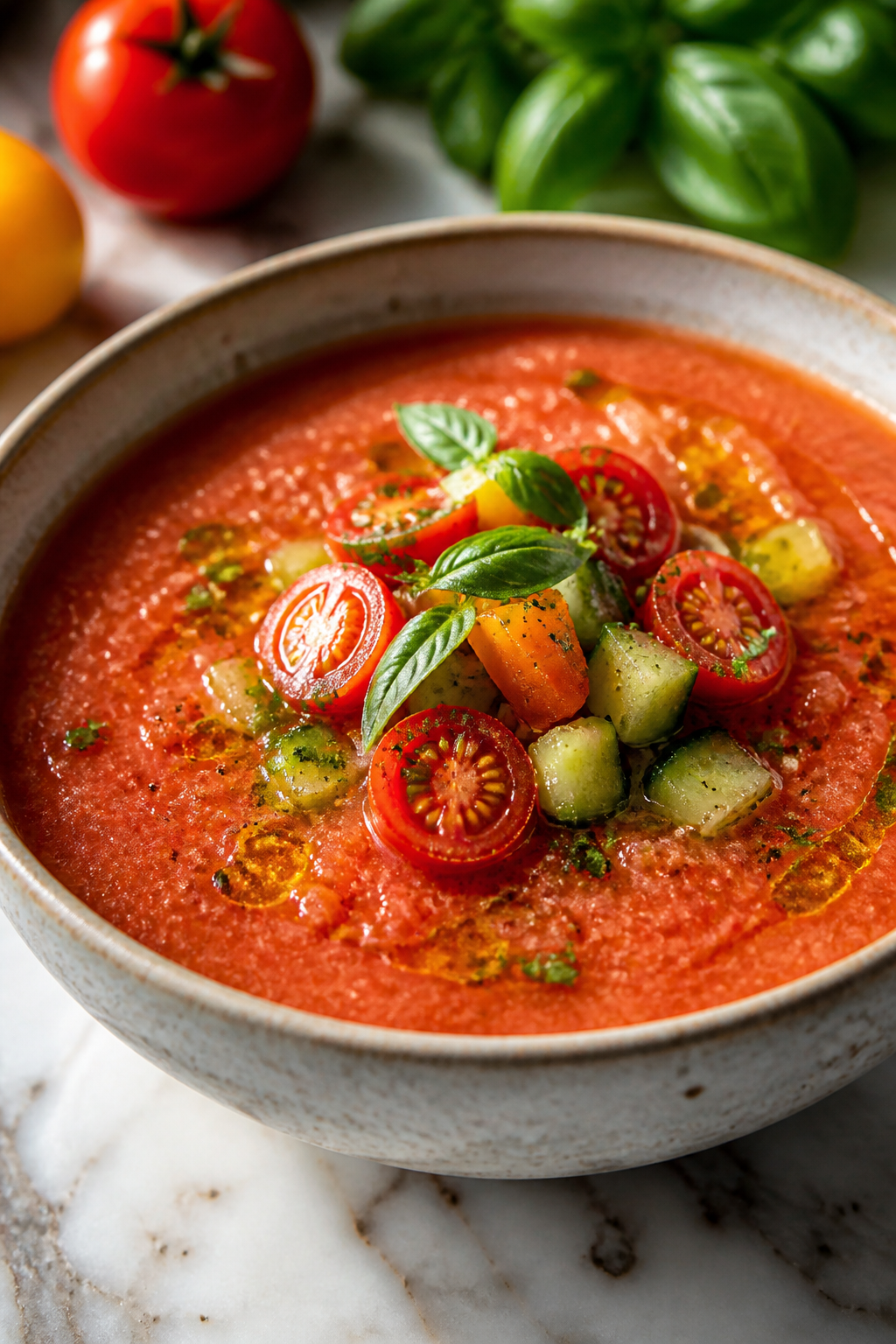
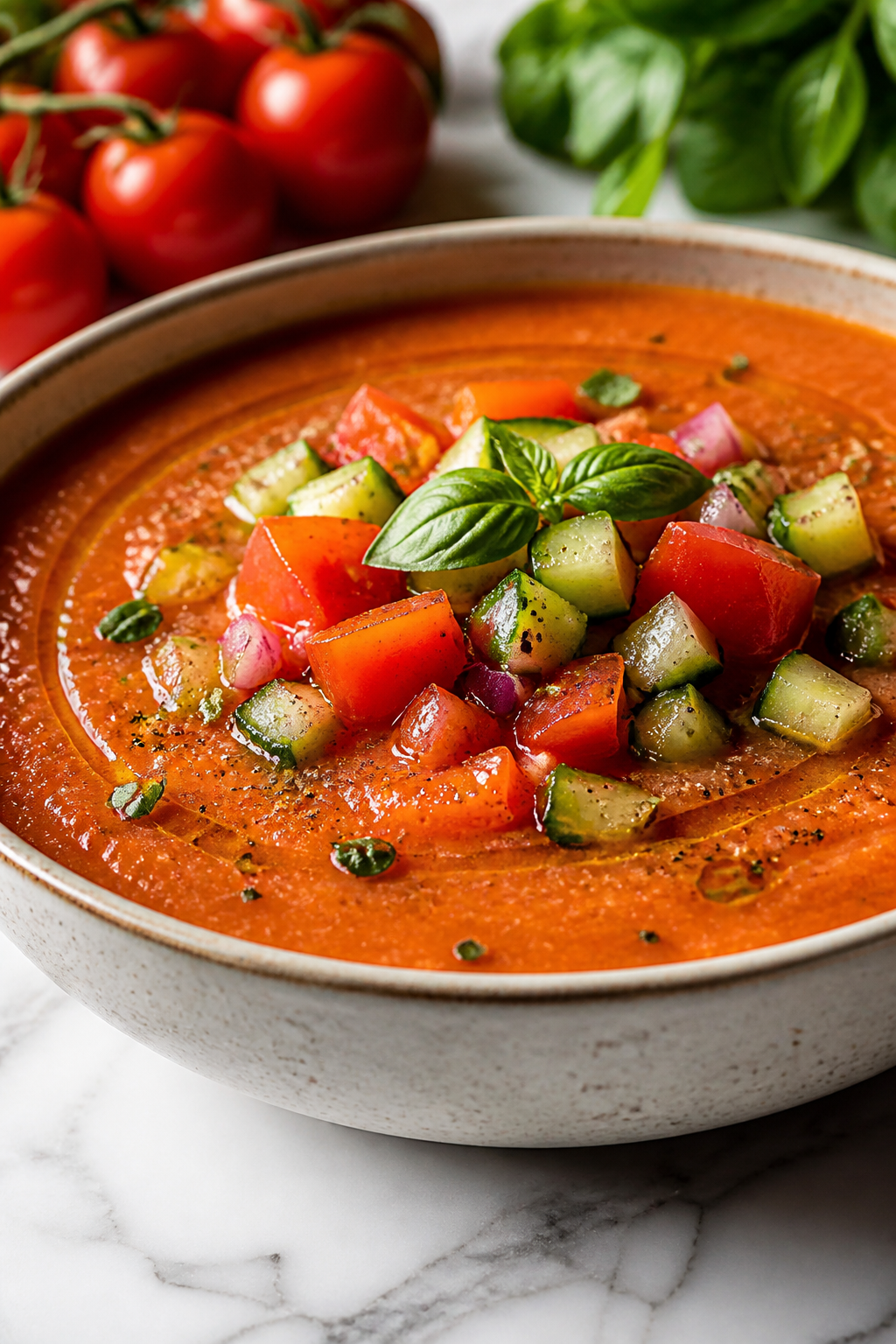
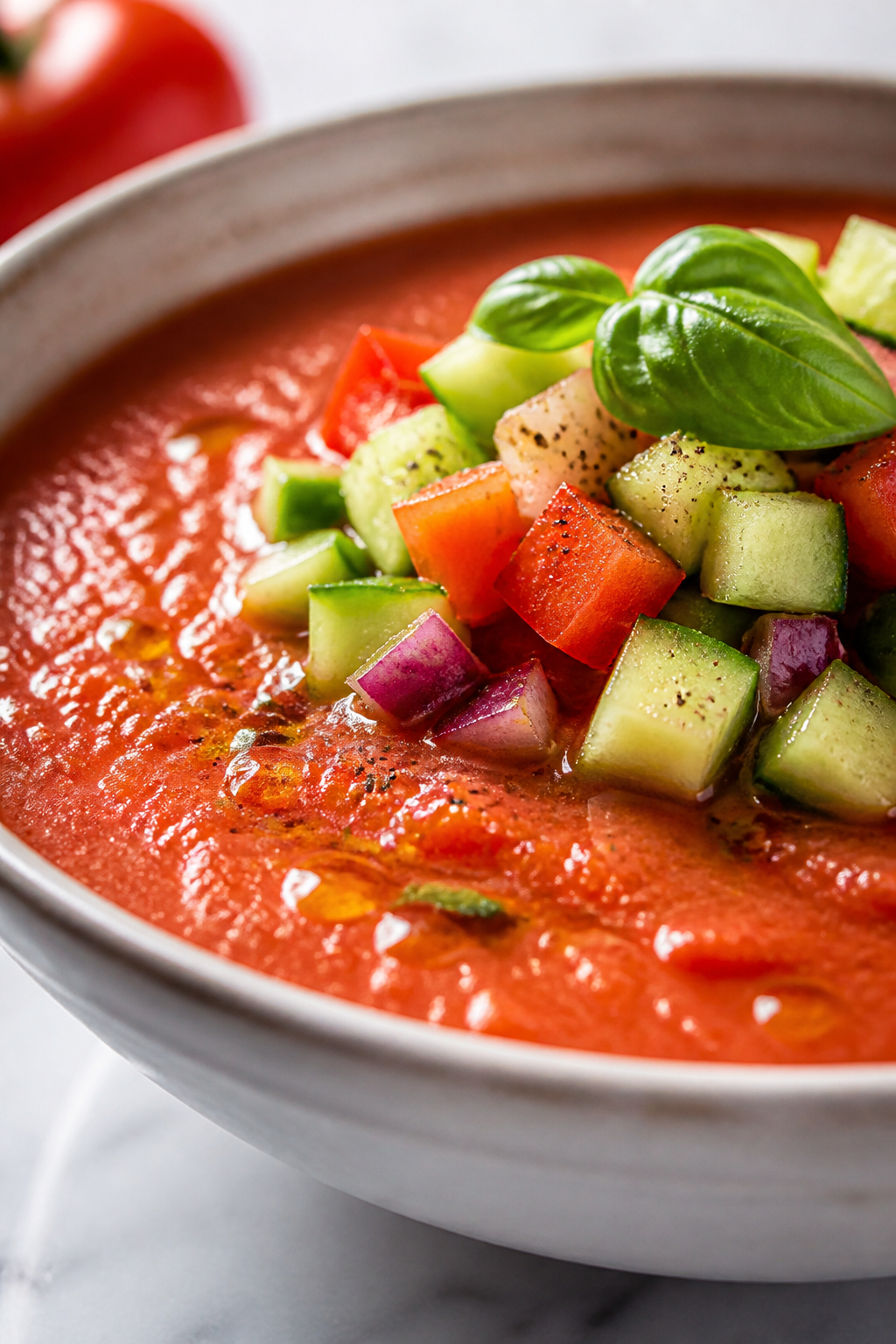
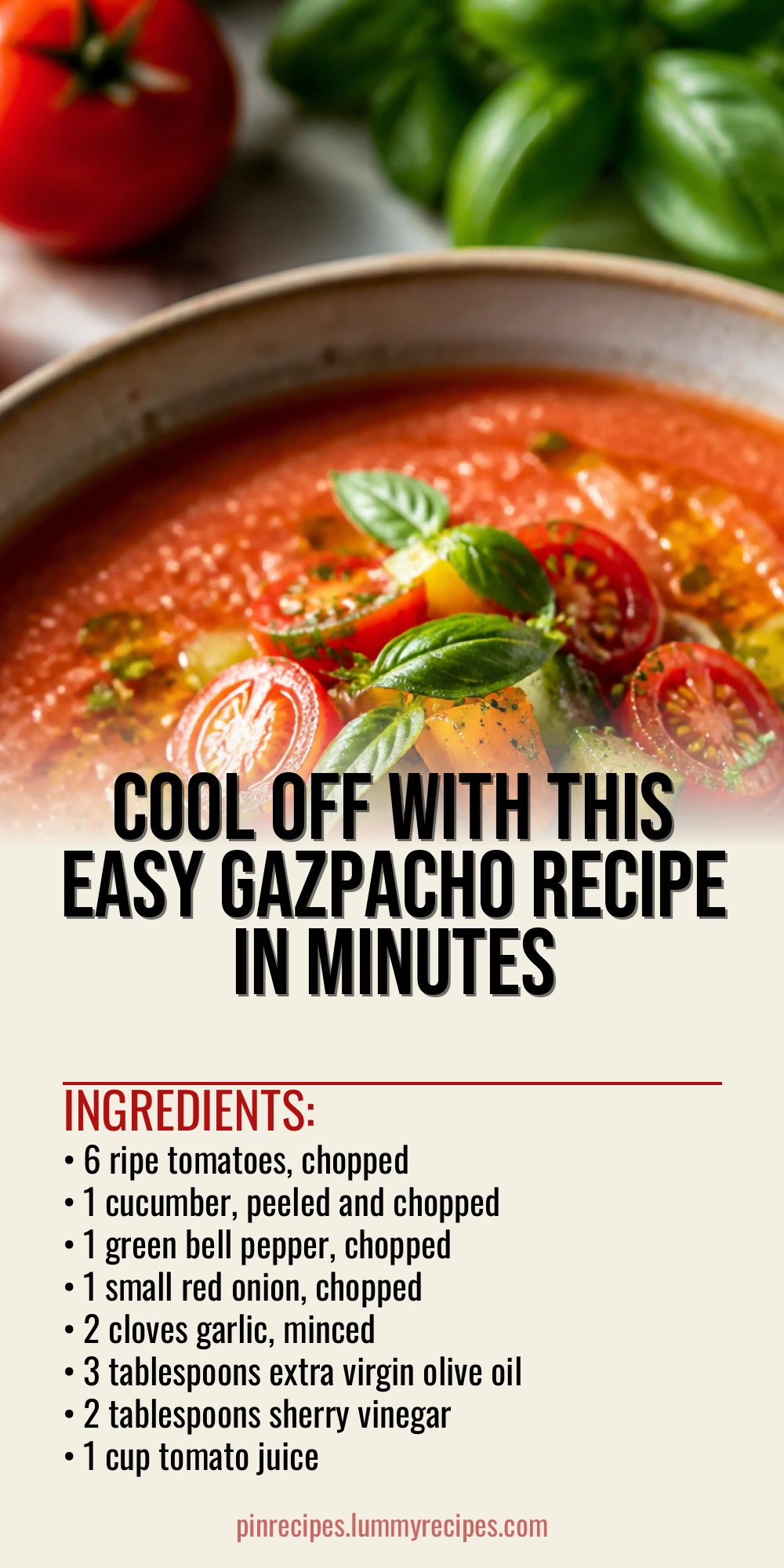
This cold gazpacho soup is a bright, fresh blend of ripe tomatoes and crisp veggies, blended smooth with a splash of sherry vinegar. It’s my go-to on sweltering days when you want something light but satisfying.
Introduction
I first discovered gazpacho on a trip to Spain years ago, and it instantly became one of my favorite ways to stay cool in the summer. There’s something so satisfying about a chilled soup that’s both refreshing and packed with fresh garden flavors. Over time, I’ve tweaked my recipe to balance the acidity of the tomatoes with just the right amount of olive oil and vinegar, making it smooth and vibrant without being too sharp. The secret I learned is to let the soup chill for at least a couple of hours so the flavors meld beautifully. I also like to add a splash of tomato juice to loosen it up and give it a silky texture. When you serve it, a sprinkle of fresh herbs adds a lovely pop of color and brightness. This recipe is perfect for hot afternoons when you want something light but still filling and nourishing. It’s simple, no-cook, and perfect for sharing with family or friends on a summer day. I hope you enjoy it as much as we do!
What You'll Need
Approximately 4 cups, 4 servings
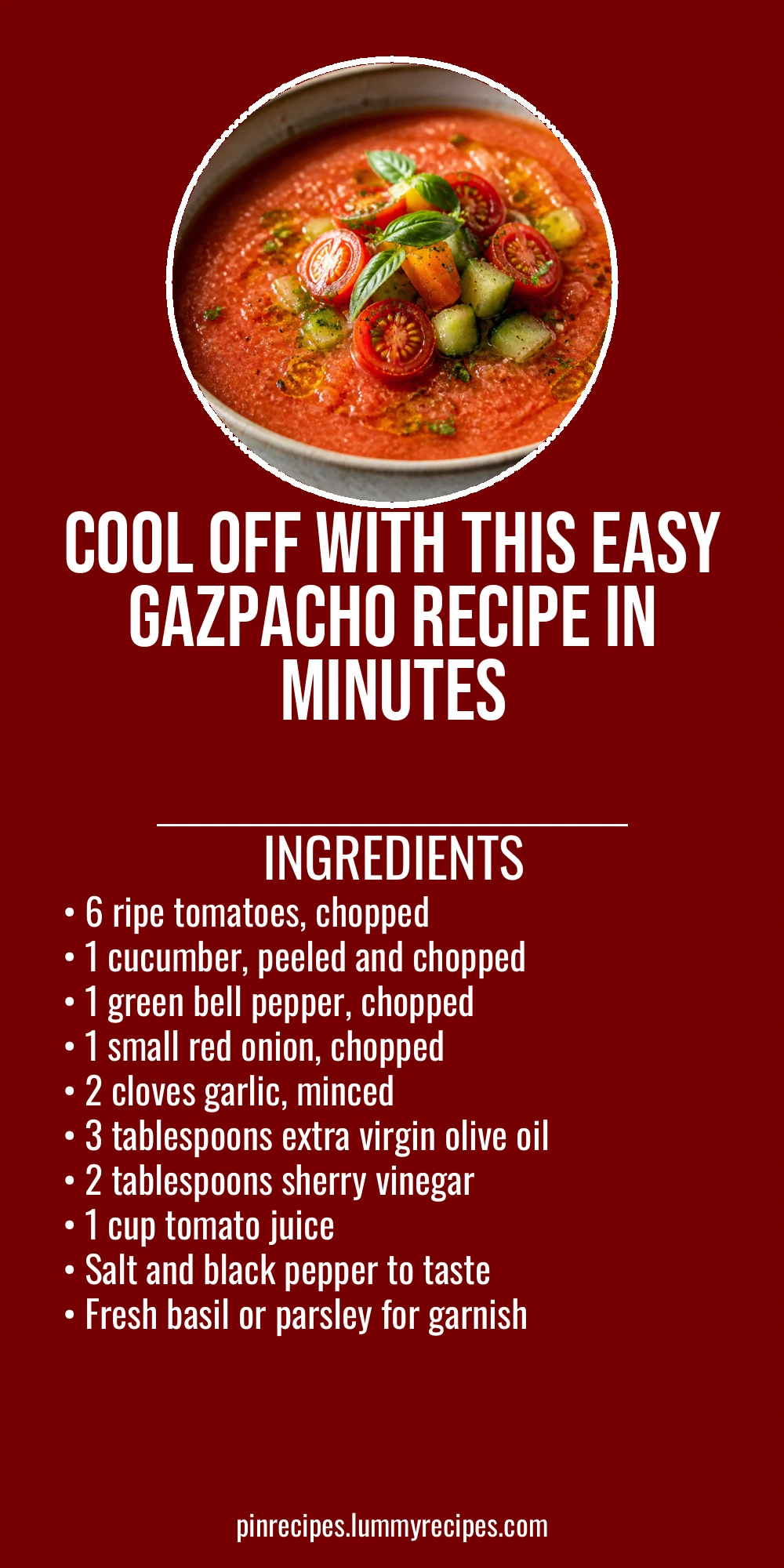
- 6 ripe tomatoes, chopped
- 1 cucumber, peeled and chopped
- 1 green bell pepper, chopped
- 1 small red onion, chopped
- 2 cloves garlic, minced
- 3 tablespoons extra virgin olive oil
- 2 tablespoons sherry vinegar
- 1 cup tomato juice
- Salt and black pepper to taste
- Fresh basil or parsley for garnish
How To Do It
Step 1
Start by washing and chopping all your fresh vegetables into roughly equal-sized pieces. This helps the blender process them evenly and ensures a smooth texture. When chopping, remove any tough stems or seeds, especially from the bell pepper and cucumber, to avoid bitterness. Fresh, ripe tomatoes are key here, so if they’re not juicy enough, add a bit more tomato juice later to adjust consistency. Take your time prepping to get the freshest flavors possible.
⏱ Time: 10 minutes
✓ Doneness: Vegetables are chopped into uniform pieces, ready to blend smoothly
Step 2
Combine the chopped tomatoes, cucumber, bell pepper, red onion, and garlic in a blender or food processor. Pulse until the mixture reaches your desired texture—some like it chunky, others smooth. Be careful not to overblend if you want a bit of texture. Adding the olive oil and sherry vinegar now helps emulsify the soup, giving it a rich mouthfeel and balanced acidity. Season with salt and pepper to taste, blending again briefly to mix everything evenly.
⏱ Time: 5 minutes
✓ Doneness: Soup is smooth or slightly chunky with a vibrant red color and well-mixed ingredients
Step 3
Pour the blended soup into a large bowl and stir in the tomato juice to loosen the consistency if needed. Taste and adjust seasoning—sometimes a little more vinegar or salt is needed to brighten the flavors. Cover the bowl tightly and refrigerate for at least 2 hours, preferably longer. Chilling allows the flavors to meld and develop, creating that classic refreshing taste gazpacho is known for.
⏱ Time: 2 hours or more
✓ Doneness: Soup is cold and flavors taste well-rounded and balanced
Step 4
Before serving, give the gazpacho a good stir and taste once more, adjusting seasoning if necessary. Ladle into bowls and garnish with fresh basil or parsley for a pop of color and fresh aroma. You can also drizzle a little extra virgin olive oil on top for richness. Serve chilled with crusty bread or as a light appetizer on a warm day.
⏱ Time: 5 minutes
✓ Doneness: Soup is cold, garnished, and ready to enjoy
Pro Tips
Use a blender for a smooth texture or pulse in a food processor for chunkier gazpacho.
Blending fully emulsifies the ingredients, creating a silky soup. Pulsing keeps some vegetable texture, which some prefer. The method you choose changes the mouthfeel, so pick based on your family’s preference.
Let the gazpacho chill for at least 2 hours before serving.
Chilling allows flavors to meld and mellow, making the soup taste more balanced and refreshing. Serving it immediately results in a sharper, less harmonious flavor.
Adjust the thickness with tomato juice or cold water as needed.
Tomato juiciness varies, so adding liquid helps you control the soup’s consistency. Too thick makes it heavy, too thin dilutes flavor. The right balance keeps it light and easy to sip.
Peel the cucumber to avoid bitterness from the skin.
Cucumber skin can be bitter and tough, especially in older cucumbers. Peeling ensures a smoother, more pleasant flavor and texture.
Season gradually and taste often.
Since gazpacho is served cold, flavors are less intense than hot soups. Adding salt and vinegar little by little helps you avoid over-seasoning and keeps the balance just right.
Use fresh herbs as garnish right before serving.
Fresh herbs add aroma and visual appeal that fades if mixed in too early. Adding them at the end keeps flavors vibrant and fresh.
Serve with crusty bread or croutons for texture contrast.
The crunchy bread complements the smooth, chilled soup, making the meal more satisfying and adding a nice contrast in texture.
Common Mistakes to Avoid
Using underripe or mealy tomatoes.
Why it happens People sometimes pick tomatoes that look good but aren’t ripe enough, thinking color alone is enough.
Fix Choose tomatoes that are slightly soft to the touch and smell fragrant. If tomatoes are underripe, add a pinch of sugar to balance acidity or wait for peak season.
Skipping the chilling time.
Why it happens In a rush, cooks may want to serve immediately, not realizing how much chilling improves flavor.
Fix Plan ahead to let the soup chill at least 2 hours. If pressed for time, chill as long as possible and add ice cubes just before serving.
Over-blending and making the soup too watery.
Why it happens Blenders can quickly liquify the soup, breaking down fibers too much.
Fix Pulse instead of blend fully if you want texture, or add less liquid. Stop blending as soon as smoothness is achieved.
Adding too much vinegar at once.
Why it happens People often add vinegar all at once to speed up seasoning.
Fix Add vinegar gradually, tasting after each addition to avoid overpowering acidity.
Not peeling the cucumber.
Why it happens Assuming cucumber skin is always fine to eat raw.
Fix Peel cucumbers to avoid bitterness and tough texture, especially if skin is thick or waxed.
Variations
Spicy Gazpacho
Add a small diced jalapeño or a pinch of cayenne pepper to the blender for a spicy kick. This variation adds warmth without overpowering the fresh flavors, perfect if you like a little heat.
Note: Start with small amounts of spice and adjust after chilling to avoid overwhelming the soup.
Green Gazpacho
Swap out tomatoes for a mix of green vegetables like tomatillos, green bell peppers, cucumber, and avocado. This version is creamy, tangy, and bright green, offering a fresh twist on the classic.
Note: Use avocado for creaminess and blend thoroughly for a smooth texture.
Chunky Gazpacho Salad
Blend half the vegetables smooth and chop the rest finely to stir in. This creates a chunky texture that feels more like a salad with broth, adding bite and variety to each spoonful.
Note: Reserve some veggies before blending and fold in at the end gently.
Gazpacho with Bread Croutons
Add toasted bread cubes on top when serving for crunch and substance. The croutons soak up the soup’s flavors and add a satisfying texture contrast.
Note: Use day-old bread and toast until golden for best crunch.
Gazpacho with Fresh Fruit
Add diced watermelon or strawberries to the soup for a sweet, refreshing twist. The fruit pairs beautifully with the acidity and adds a summery flavor dimension.
Note: Add fruit just before serving to keep it fresh and prevent mushiness.
Nutrition
Per Serving:
Nutritional values are estimates and may vary based on specific ingredients used.
Storage & Tips
Room Temperature
Gazpacho should not be left at room temperature for more than 2 hours due to the fresh vegetables and raw ingredients. Keep it covered and chilled until ready to serve.
Refrigerator
Store gazpacho in an airtight container for up to 3 days. The flavors may intensify and thicken; stir well before serving. It’s best served cold, but you can let it sit at room temp for 10 minutes before eating.
Freezer
Freezing is not recommended as the fresh vegetables and olive oil separate when thawed, affecting texture and flavor. If you do freeze, use airtight containers and thaw slowly in the fridge.
Reheating
Gazpacho is served cold and should not be reheated. If you prefer a warm soup, try a traditional tomato soup recipe instead.
Make Ahead
You can prepare the gazpacho base a day ahead and refrigerate it. Add fresh garnishes and adjust seasoning just before serving to keep flavors bright and fresh.
FAQ
Can I make gazpacho without a blender?
While a blender makes gazpacho smooth and easy, you can finely chop all the vegetables by hand for a chunkier texture. It will take more time and effort, but the fresh flavors remain delicious.
What can I substitute for sherry vinegar?
If you don’t have sherry vinegar, use red wine vinegar or apple cider vinegar in slightly smaller amounts. Avoid distilled white vinegar as it’s too harsh and can overpower the soup.
How long can I store gazpacho in the fridge?
Gazpacho keeps well for up to 3 days refrigerated in an airtight container. The flavors deepen over time but the fresh herbs and garnishes are best added just before serving.
Can I add bread to the soup for thickness?
Yes! Traditional gazpacho often includes stale bread soaked in water to thicken the soup. If you want a smoother, richer texture, soak a slice of bread, squeeze out excess water, and blend it with the vegetables.
Is gazpacho vegan and gluten-free?
Classic gazpacho is naturally vegan and gluten-free as it contains only vegetables, olive oil, and vinegar. Just be mindful if you add bread or croutons as garnish.
Can I make gazpacho spicier?
Absolutely! Adding a small jalapeño or a pinch of cayenne pepper during blending gives a nice kick. Start with a little and adjust after chilling to suit your taste.
Why does my gazpacho taste too acidic?
If your gazpacho is too acidic, try adding a pinch of sugar or more olive oil to balance it out. Also, letting it chill longer helps mellow sharp flavors.
Can I freeze gazpacho?
Freezing gazpacho isn’t recommended because the fresh vegetables and olive oil separate when thawed, ruining the texture and flavor. It’s best enjoyed fresh or refrigerated.
Final Thoughts
Give this fresh gazpacho a try on your next warm day—I’d love to hear how it turns out! It’s a simple, satisfying way to enjoy garden-fresh flavors with family.