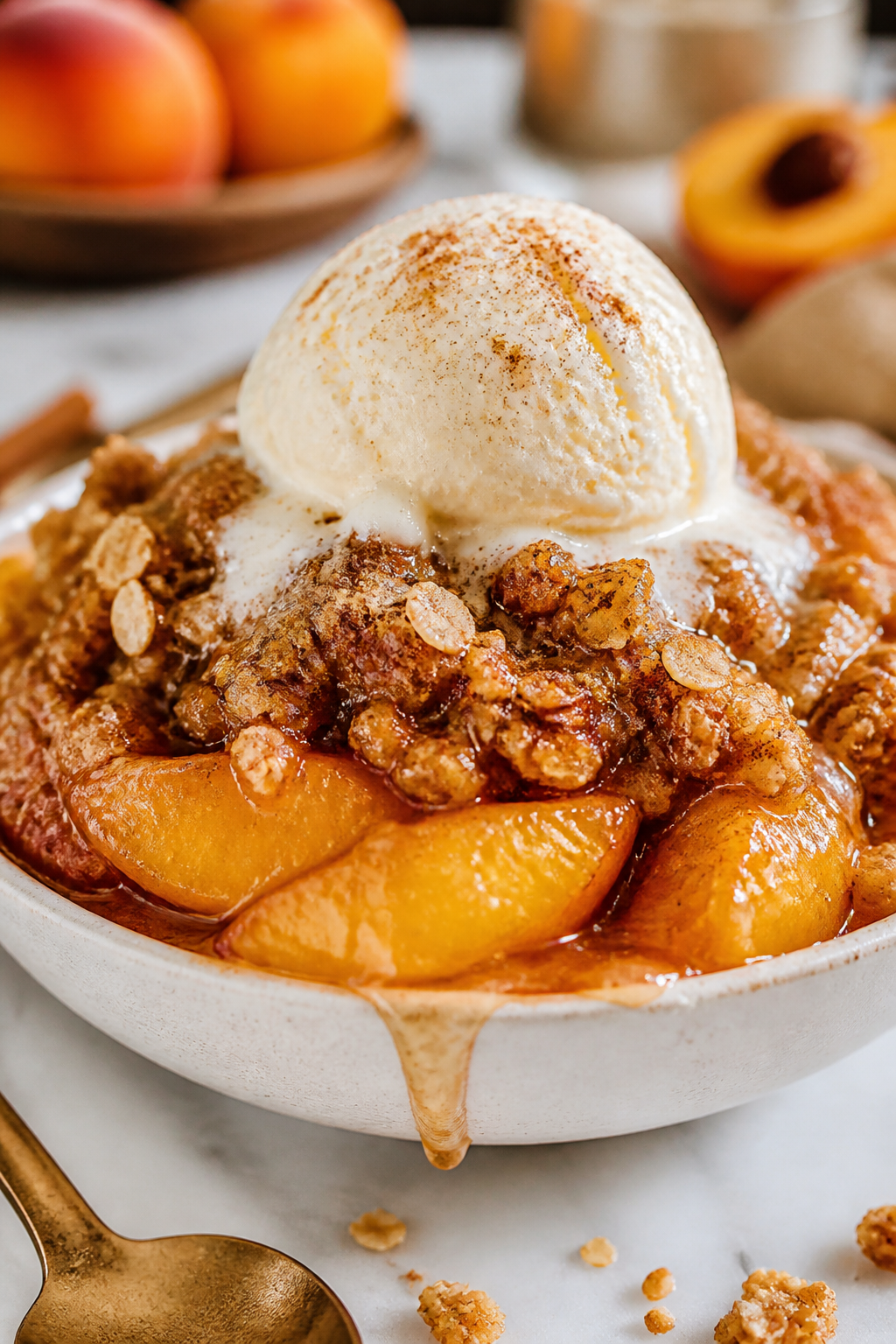
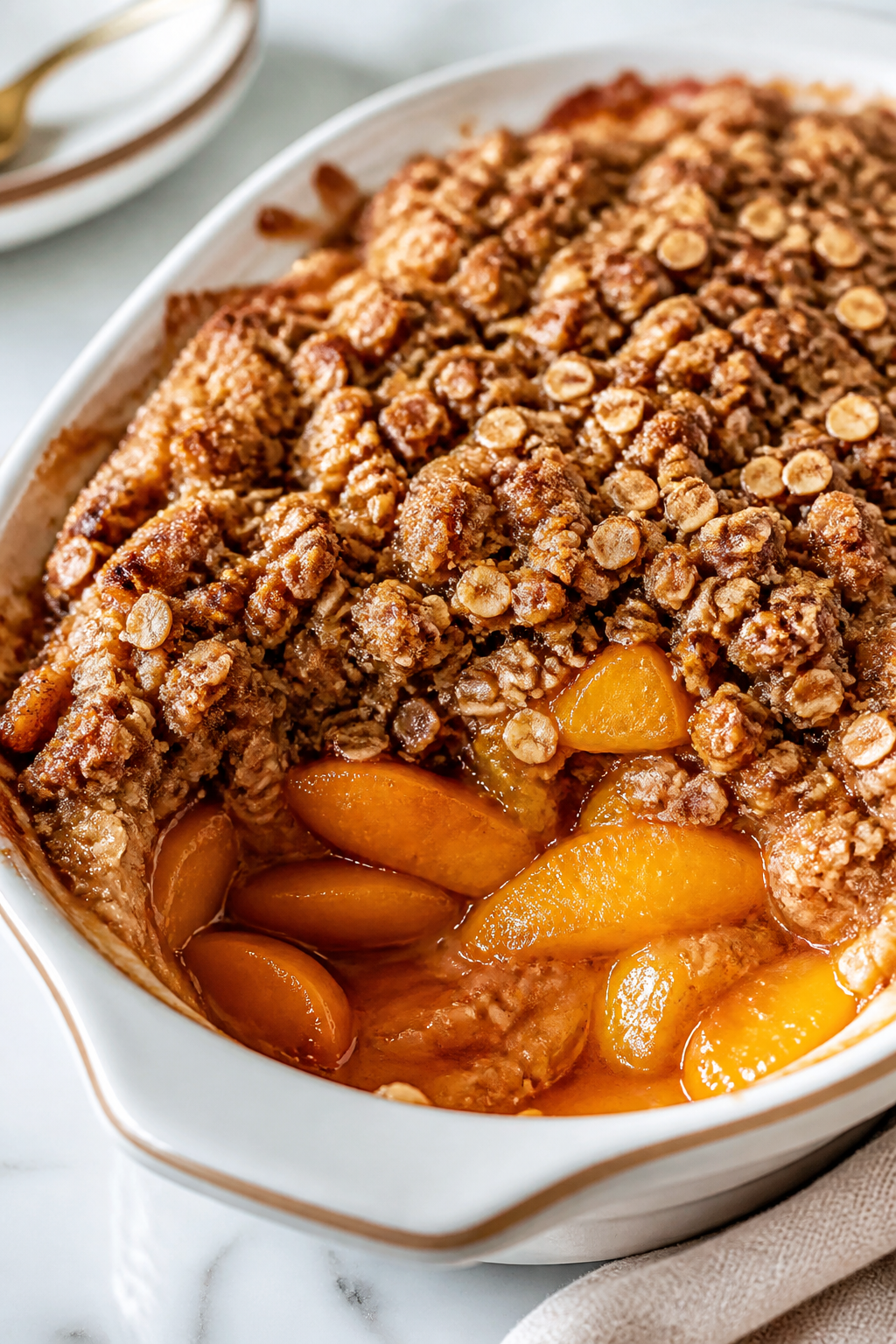
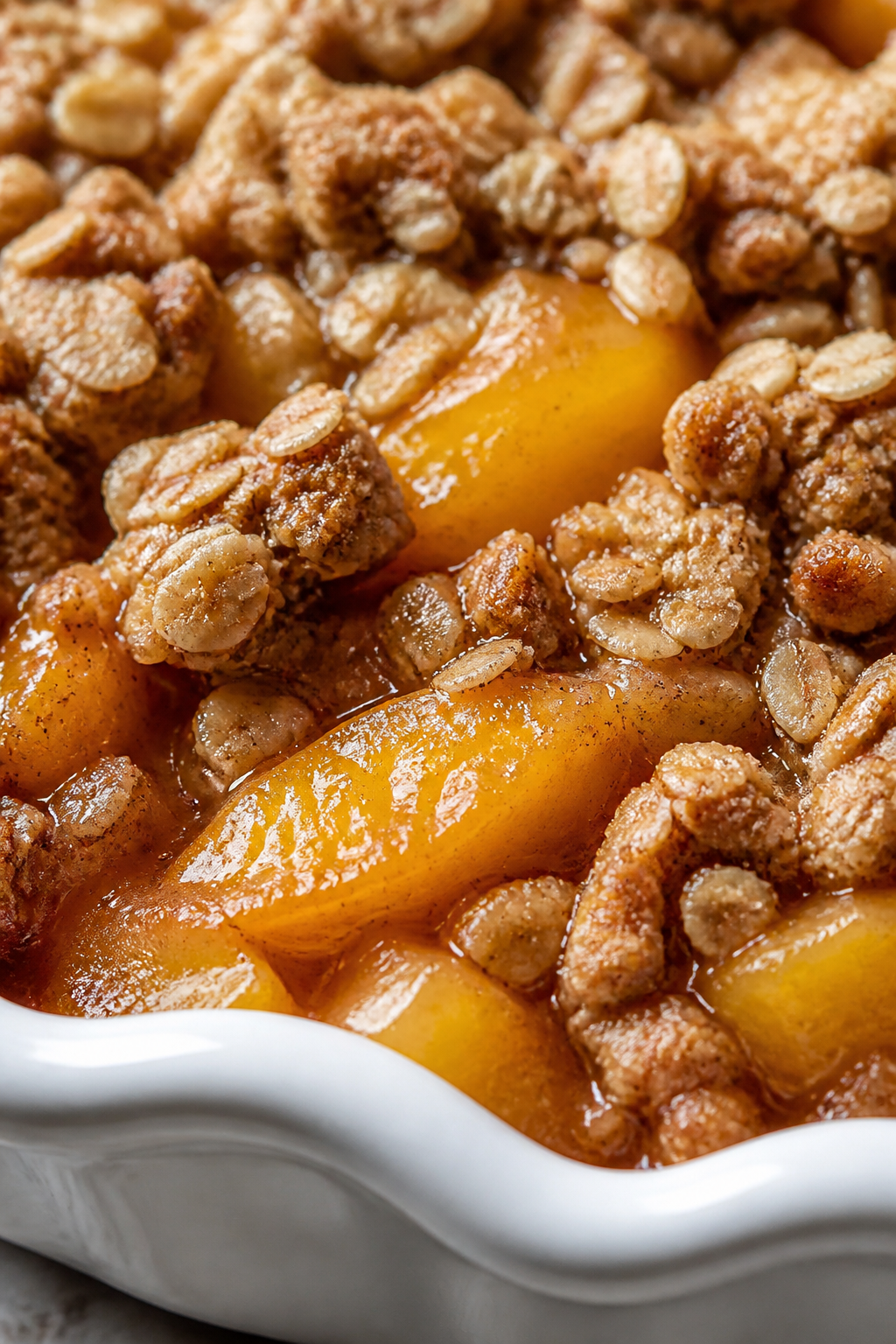
This peach cobbler is a lighter twist on a southern classic with a crunchy cinnamon oat crust that adds just the right touch of spice. It’s perfect for a summer dessert that won’t weigh you down but still feels indulgent.
Introduction
I first made this peach cobbler last summer when I wanted a dessert that felt indulgent but didn’t leave me feeling heavy or guilty afterward. Traditional peach cobblers are delicious but often loaded with butter and refined sugar, so I decided to experiment with a lighter version. Using rolled oats and almond flour for the crust adds a lovely texture and wholesome flavor, while applesauce replaces butter to keep it moist without the extra fat. The cinnamon sprinkled on top gives it that warm, comforting note that makes you want seconds. One thing I learned from trial and error was not to overcook the peaches; keeping them tender but still holding their shape makes all the difference. This cobbler is perfect for summer evenings when you want something sweet but refreshing. It’s easy to throw together and bakes up golden and crisp on top with juicy fruit underneath. I love serving it slightly warm with a dollop of Greek yogurt or a scoop of vanilla ice cream for a perfect balance. Honestly, it’s become a favorite in my house — a dessert that feels like a treat but is actually good for you!
How To Do It
Step 1
Preheat your oven to 350°F (175°C). In a large mixing bowl, toss the sliced peaches with maple syrup, vanilla extract, lemon juice, and 1/2 teaspoon ground cinnamon. This step helps the peaches macerate slightly, releasing their natural juices and infusing them with flavor. The lemon juice brightens the fruit and balances the sweetness, while the cinnamon adds warmth. Make sure to coat the peaches evenly to ensure every bite is flavorful.
⏱ Time: 10 minutes
✓ Doneness: Peaches look glossy and slightly softened but still hold their shape
Step 2
In a separate bowl, combine the rolled oats, whole wheat flour, almond flour, brown sugar, baking powder, and salt. Stir these dry ingredients together well to distribute the baking powder and sugar evenly. This mixture forms the base of your crust, and combining them thoroughly ensures even texture and rise. Mixing the dry ingredients first prevents clumps and helps the crust bake uniformly.
⏱ Time: 5 minutes
✓ Doneness: Dry ingredients are evenly mixed with no lumps
Step 3
Add the unsweetened applesauce and melted coconut oil to the dry ingredients. Stir gently until the mixture forms a crumbly dough. The applesauce acts as a moisture binder and fat substitute, keeping the crust tender without heaviness. Coconut oil adds a subtle richness and helps the crust crisp up as it bakes. Be careful not to overmix; you want a crumbly texture, not a batter.
⏱ Time: 3 minutes
✓ Doneness: Dough holds together loosely when pressed but is not sticky
Step 4
Spread the peach mixture evenly in a 9-inch baking dish. Distribute the oat crust mixture evenly over the top, gently pressing down to cover the peaches but not packing it too tightly. This layering allows the peaches to bubble up around the crust as it bakes, creating a lovely contrast of textures. Avoid pressing too hard, or the crust may become dense instead of crisp.
⏱ Time: 5 minutes
✓ Doneness: Peaches are fully covered with a crumbly crust layer
Step 5
Sprinkle the remaining teaspoon of cinnamon evenly over the top of the crust. This final touch enhances the aroma and adds a bit of spice to each bite. Cinnamon on top caramelizes slightly during baking, giving the crust a beautiful golden color and extra flavor complexity.
⏱ Time: 1 minute
✓ Doneness: Cinnamon is evenly dusted over crust surface
Step 6
Place the baking dish in the oven and bake at 350°F (175°C) for 25-30 minutes. The goal is to have the crust turn golden brown and crisp while the peach juices bubble around the edges. Keep an eye on it after 20 minutes to avoid burning. The bubbling juices indicate that the peaches are cooked through and that the flavors have melded beautifully.
⏱ Time: 25-30 minutes
✓ Doneness: Crust is golden brown and peach juices are bubbling
Step 7
Remove the cobbler from the oven and let it cool for at least 10 minutes before serving. This resting time allows the juices to thicken slightly and the crust to firm up, making it easier to serve. If you dig in too soon, the filling might be too runny and the crust less crisp.
⏱ Time: 10 minutes
✓ Doneness: Cobbler is warm but not hot, juices are thickened
Step 8
Serve the cobbler warm with a dollop of Greek yogurt or a small scoop of vanilla ice cream if you like. The cool creaminess balances the warm, spiced peaches and crunchy crust perfectly. This contrast of temperatures and textures really elevates the dessert experience.
⏱ Time: 5 minutes
✓ Doneness: Toppings complement the cobbler without melting too fast
Step 9
Store any leftovers in an airtight container in the refrigerator for up to 3 days. Reheat gently in the oven or microwave before serving to restore the crispness of the crust. Avoid overheating to prevent drying out the peaches or crust becoming soggy.
⏱ Time: N/A
✓ Doneness: Leftover cobbler reheated to warm with crust slightly crisp
Pro Tips
Don’t skip peeling the peaches for a smoother texture.
Peach skins can become tough and chewy after baking, which might detract from the tender filling. Peeling ensures the filling is silky and pleasant to eat, especially important in a light dessert where texture matters.
Use fresh peaches instead of canned for the best flavor.
Fresh peaches provide natural sweetness and juiciness without added syrup or preservatives, resulting in a brighter, fresher flavor. Canned peaches tend to be softer and can make the filling overly sweet or mushy.
Let the cobbler rest before serving to thicken the juices.
Resting allows the fruit juices to cool and thicken slightly, preventing the filling from being too runny. It also helps the crust firm up, making it easier to scoop and enjoy without falling apart.
Don’t overmix the crust dough to keep it crumbly.
Overmixing develops gluten and can make the crust tough. A crumbly dough ensures a tender, crisp topping that contrasts nicely with the soft fruit underneath.
Sprinkle cinnamon on top just before baking for aroma.
Cinnamon on the surface caramelizes during baking, releasing its fragrance and adding a warm, spicy note that enhances the whole dessert.
Use a glass or ceramic baking dish for even heat distribution.
These materials heat evenly and retain heat well, promoting uniform baking of the crust and fruit. Metal pans can sometimes cause uneven browning or hot spots.
Serve with a dollop of Greek yogurt instead of ice cream for a lighter option.
Greek yogurt adds creaminess and a bit of tang without the added sugar and fat of ice cream, keeping the dessert light and balanced.
Common Mistakes to Avoid
Using underripe or overripe peaches
Why it happens People often grab peaches that look ripe on the outside without checking firmness, leading to mushy or bland filling.
Fix Select peaches that yield slightly to gentle pressure but aren’t too soft. If peaches are underripe, let them ripen a day or two at room temperature before baking.
Overmixing the crust dough
Why it happens Trying to fully combine ingredients can lead to a dense, tough crust.
Fix Mix just until ingredients come together and form a crumbly texture. Stop as soon as the dough holds when pressed.
Skipping the resting time after baking
Why it happens Impatience to serve leads to a runny filling and crumbly crust.
Fix Let the cobbler cool at least 10 minutes to allow juices to thicken and crust to set for easier serving.
Not coating peaches evenly with syrup and spices
Why it happens Rushing or uneven mixing causes some bites to be bland.
Fix Gently toss peaches with syrup, cinnamon, and lemon juice until every slice is coated for consistent flavor.
Overbaking the cobbler
Why it happens Leaving it too long in the oven dries out the fruit and hardens the crust.
Fix Bake until crust is golden and juices bubble, then check every few minutes to avoid burning.
Variations
Gluten-Free Version
Swap the whole wheat flour with a gluten-free all-purpose blend and ensure oats are certified gluten-free. This keeps the crust tender and crumbly without gluten, maintaining the same great flavor and texture.
Note: Gluten-free flours absorb moisture differently, so watch the dough’s consistency and add a teaspoon of extra applesauce if it feels dry.
Add Fresh Ginger for a Spicy Kick
Grate a teaspoon of fresh ginger into the peach mixture for a zesty, warming flavor that pairs beautifully with cinnamon. This adds complexity and a slight heat to the cobbler.
Note: Fresh ginger releases juices that may slightly loosen the filling, so reduce added syrup by a tablespoon to balance moisture.
Use Frozen Peaches When Out of Season
Frozen peaches work well as a substitute; just thaw and drain excess liquid before mixing to avoid a watery filling. This makes the recipe accessible year-round.
Note: Frozen peaches tend to be softer, so reduce bake time by 5 minutes and monitor bubbling closely.
Top with Chopped Nuts for Extra Crunch
Sprinkle chopped walnuts or pecans over the crust before baking to add texture and a nutty flavor. It’s a simple way to elevate the dish’s complexity.
Note: Nuts toast quickly, so add them in the last 10 minutes of baking to prevent burning.
Make it Vegan by Using Maple Syrup and Coconut Yogurt
Use pure maple syrup instead of brown sugar and serve with coconut yogurt or vegan ice cream for a fully plant-based dessert that’s still creamy and satisfying.
Note: Ensure the coconut oil is refined to avoid a strong coconut flavor if preferred.
Nutrition
Per Serving:
Nutritional values are estimates and may vary based on specific ingredients used.
Storage & Tips
Room Temperature
The cobbler can safely sit out covered at room temperature for up to 2 hours. Cover it loosely with foil or a clean kitchen towel to protect from dust and insects. Beyond that, refrigeration is recommended.
Refrigerator
Store leftovers in an airtight container in the fridge for up to 3 days. The crust may soften slightly but reheating in the oven for 10 minutes restores some crispness. It can also be enjoyed cold, though the texture will be different.
Freezer
Freeze the cobbler in a freezer-safe container for up to 2 months. Wrap tightly with plastic wrap and foil to prevent freezer burn. Thaw overnight in the fridge before reheating. The texture may be a bit softer but still delicious.
Reheating
Reheat in a 325°F oven for 10-15 minutes until warmed through. Avoid microwaving as it can make the crust soggy. Adding a splash of water or juice before reheating helps maintain moisture.
Make Ahead
Prepare the peach filling and crust separately up to 2 days ahead. Store filling in the fridge and crust dough wrapped tightly. Assemble and bake fresh on serving day for best texture and flavor.
FAQ
Can I use canned peaches instead of fresh?
You can use canned peaches, but drain them well to avoid excess liquid making the cobbler soggy. Fresh peaches provide the best texture and flavor, but canned work in a pinch. Adjust sugar and syrup amounts since canned peaches may be sweeter.
Is this recipe suitable for diabetics or low-sugar diets?
This cobbler uses natural sweeteners like maple syrup and brown sugar sparingly, making it lower in added sugar than traditional recipes. However, it still contains natural fruit sugars, so portion control is important. You can reduce syrup slightly or use sugar substitutes if needed.
Can I make this cobbler ahead of time?
Yes! You can prepare the peach filling and oat crust separately up to two days ahead and store them in the fridge. Assemble and bake just before serving for the best texture. Alternatively, bake fully and reheat gently when ready to serve.
How can I make the crust crispier?
To get a crispier crust, avoid packing the topping too tightly and bake uncovered at 350°F until golden brown. Using coconut oil helps crispness. You can also broil for 1-2 minutes at the end of baking but watch carefully to avoid burning.
What if my peaches are too juicy and watery?
If peaches are very juicy, toss them with a tablespoon of cornstarch or oat flour to absorb excess liquid before baking. This helps thicken the filling and prevents it from becoming too runny.
Can I substitute the almond flour with regular flour?
You can replace almond flour with more whole wheat or all-purpose flour, but the crust will be less tender and moist. Almond flour adds richness and moisture that helps the topping stay crumbly and flavorful.
Is it necessary to use cinnamon in the recipe?
Cinnamon adds warmth and enhances the peach flavor, but you can omit it if you prefer. Consider substituting with nutmeg or ginger for a different spice profile.
How do I store leftovers to keep the crust from getting soggy?
Store leftovers in an airtight container in the fridge and reheat in the oven to restore crispness. Avoid covering the cobbler tightly while still warm, as condensation can soften the crust.
Final Thoughts
I hope you enjoy this refreshing low calorie peach cobbler as much as my family does! Give it a try and let me know how it turns out — I’d love to hear your thoughts.