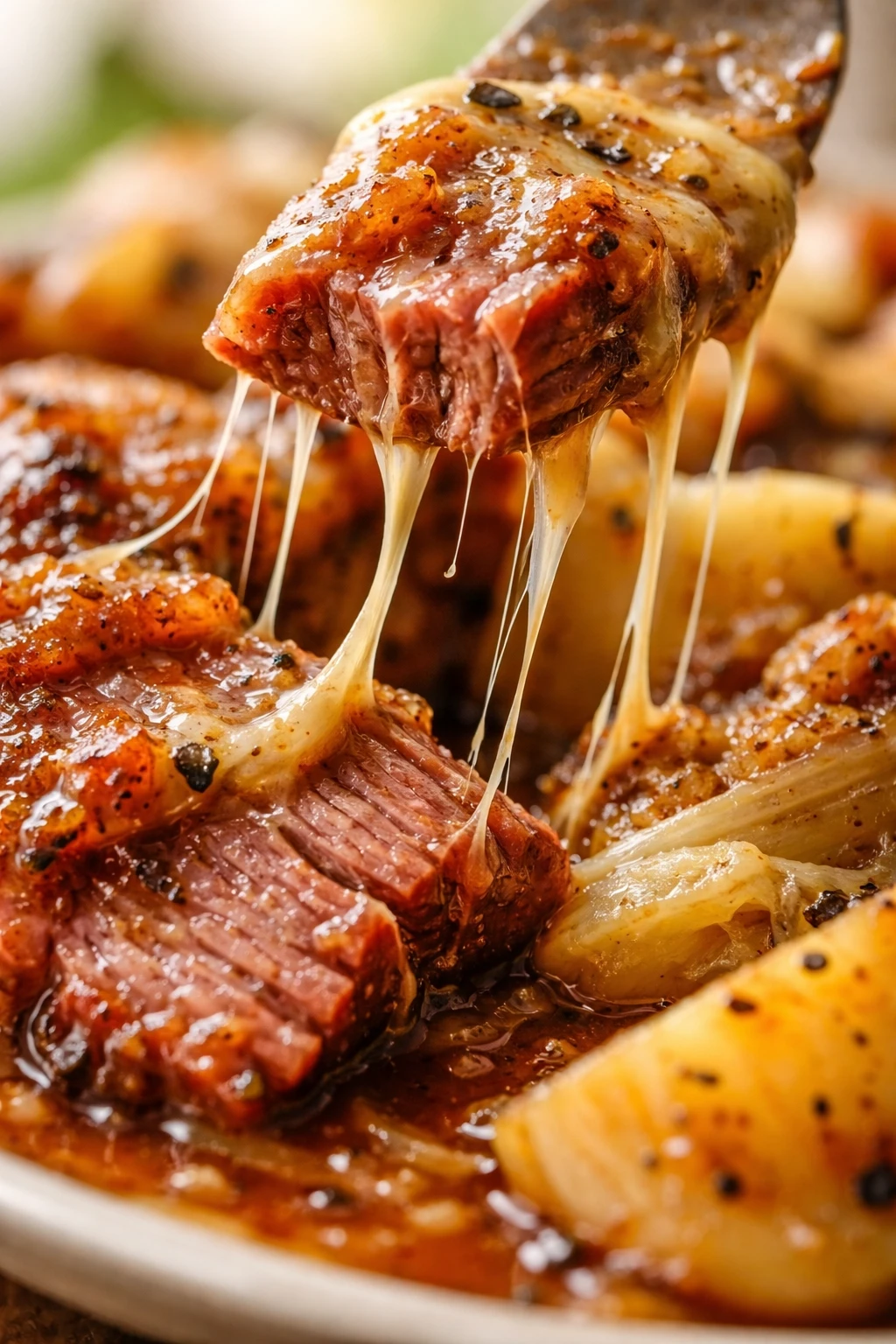
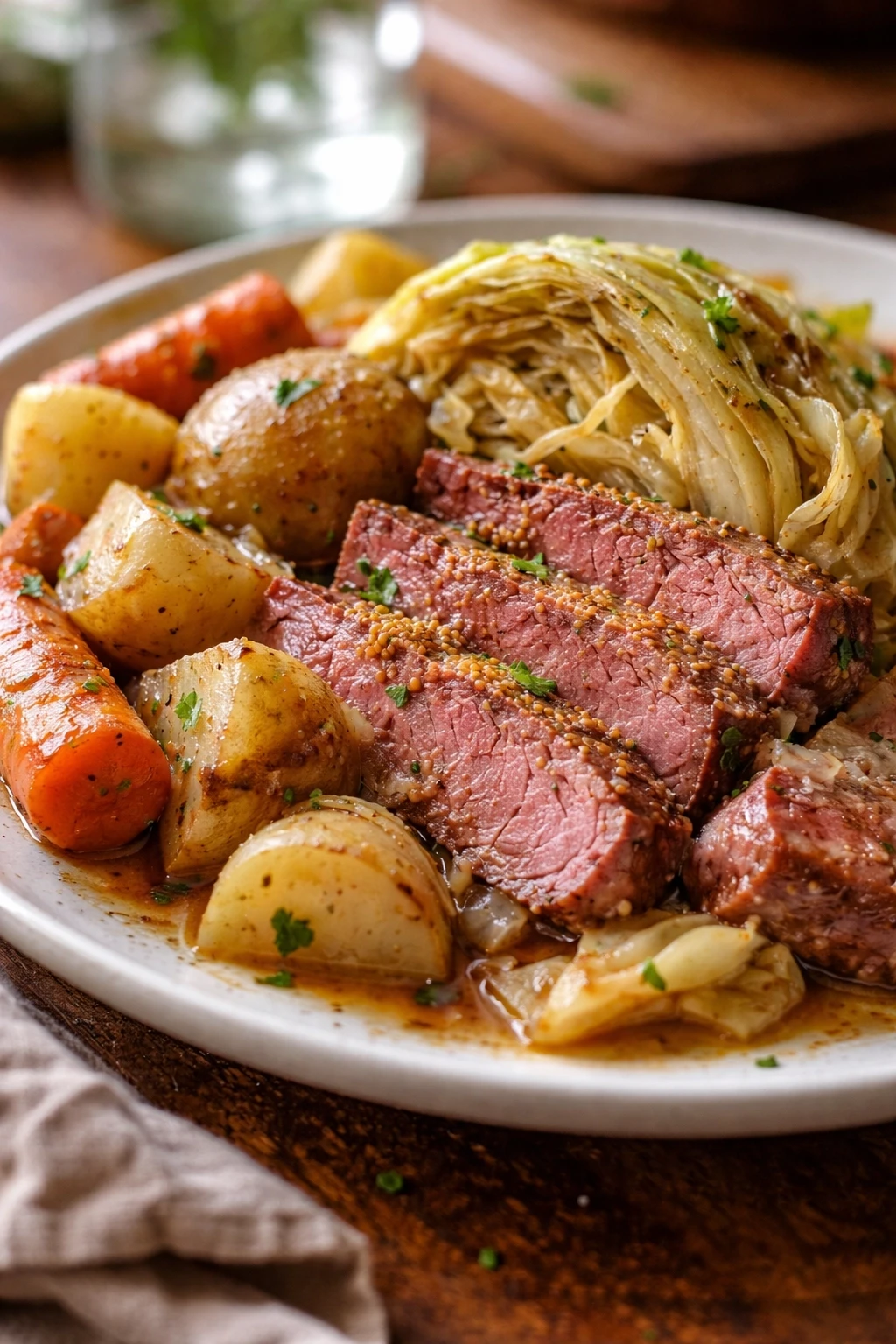
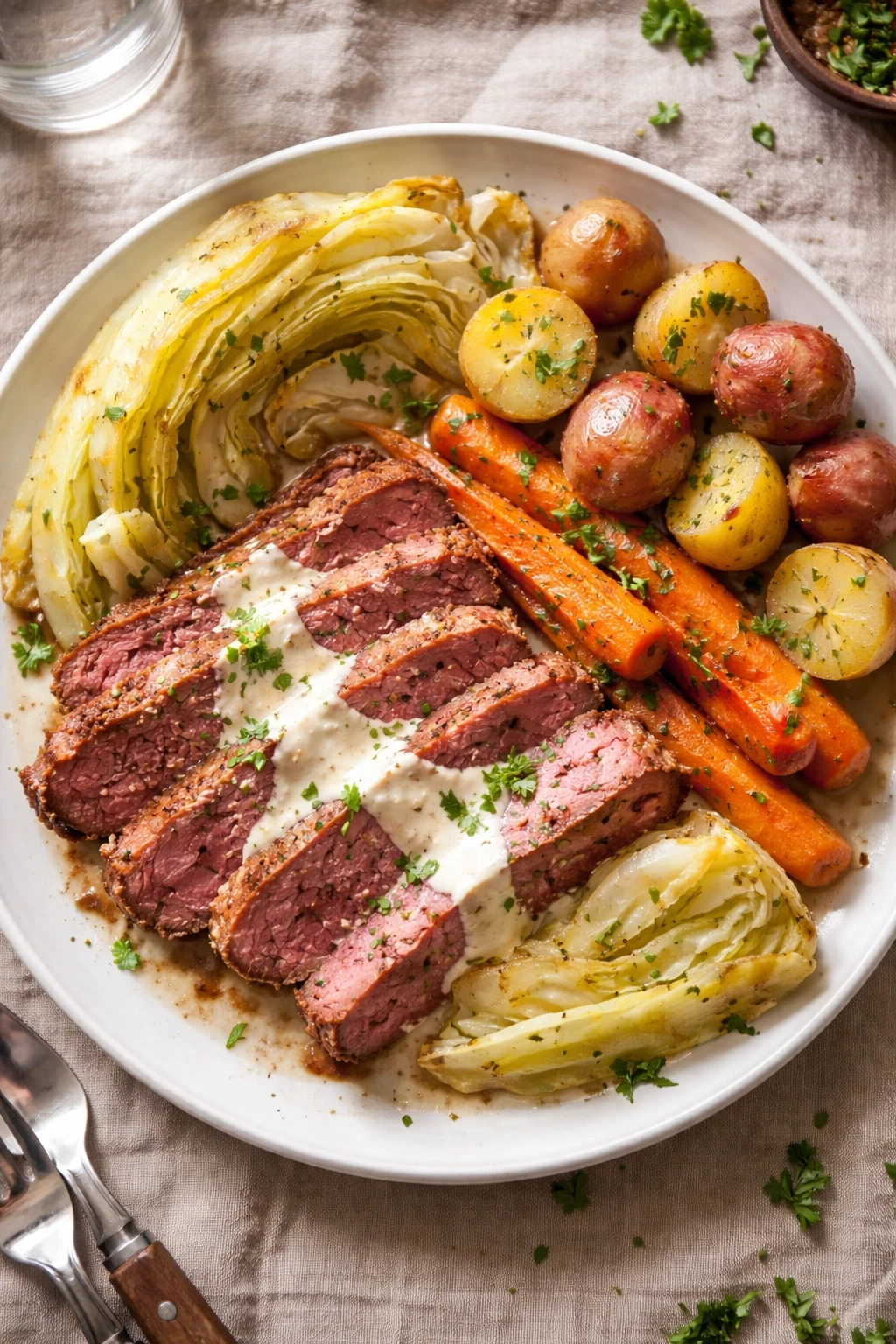
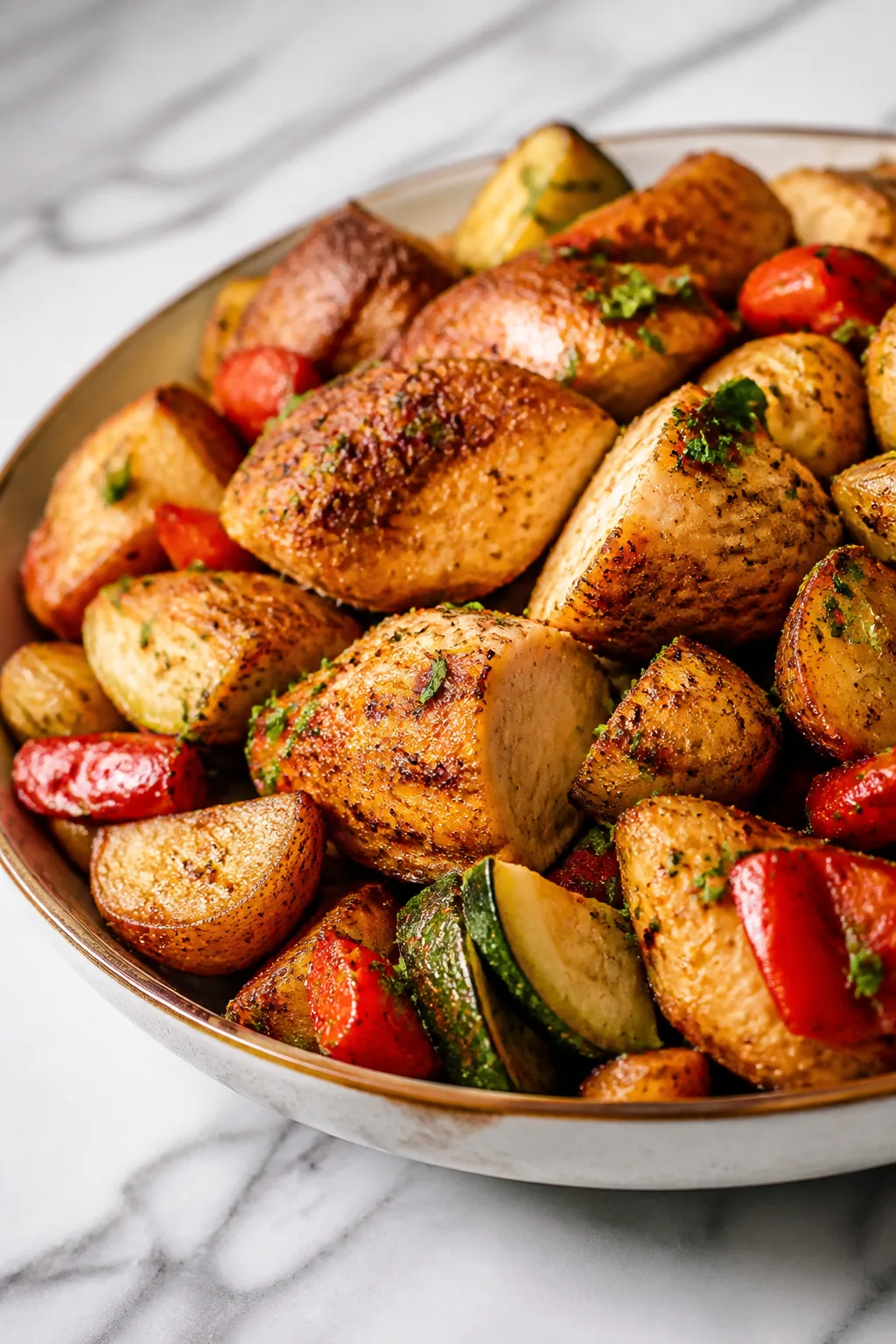
This slow-cooked corned beef and cabbage is the ultimate comfort meal. The crockpot does all the work, making the beef tender and flavorful. Perfect for a cozy weekend dinner or St. Patrick’s Day celebration.
Introduction
I first made this crockpot corned beef and cabbage years ago when I wanted a hands-off meal that still felt special. The slow cooker is a lifesaver here — it transforms a tough brisket into melt-in-your-mouth goodness without much fuss. What sets my version apart? I like to add fresh garlic and bay leaves for an extra aromatic punch, and layering the veggies on top lets them steam perfectly without turning mushy. I’ve had my share of dry corned beef disasters, but this method locks in moisture and flavor every time. When it’s done, you get tender beef with a rich, savory broth and veggies that soak up all that goodness. It’s exactly what I crave on chilly weekends or when I want a comforting meal with minimal effort. Plus, the leftovers are fantastic for sandwiches or hash the next day. Trust me, once you try this, you’ll want to make it again and again.
How To Do It
Step 1
Start by rinsing the corned beef brisket under cold water to remove excess salt and any brine residue. This step is important because it prevents the final dish from being overly salty. Place the brisket in the crockpot fat-side up and tuck the spice packet that came with it right on top. Adding the fat side up helps baste the meat during cooking, keeping it juicy and flavorful.
⏱ Time: 10 minutes
✓ Doneness: Brisket is evenly placed in crockpot, spice packet distributed on top
Step 2
Add the quartered onion, smashed garlic cloves, and bay leaves around the brisket. Pour in the beef broth until it comes about halfway up the sides of the meat. This liquid level ensures the brisket stays moist but doesn’t boil. Avoid covering it completely, as slow cooking with some exposure helps develop flavor and texture.
⏱ Time: 5 minutes
✓ Doneness: Broth partially covers brisket, aromatics evenly distributed
Step 3
Cover the crockpot and cook on low for 8 to 9 hours. Low and slow is key here to break down the tough connective tissue in the brisket, making it tender without drying it out. Resist the urge to open the lid too often, as it lets heat escape and lengthens cooking time.
⏱ Time: 8-9 hours
✓ Doneness: Brisket is fork-tender and easily pierced
Step 4
About 1 hour before the end of cooking, add the carrots and potatoes around the brisket. These root veggies take longer to cook, so adding them now ensures they’re perfectly tender but not mushy. Stir them gently into the broth to coat with flavor.
⏱ Time: 1 hour
✓ Doneness: Carrots and potatoes are submerged and beginning to soften
Step 5
Thirty minutes before serving, add the cabbage wedges on top of everything. The cabbage steams beautifully from the heat and broth, keeping a slight crunch and bright color. Avoid stirring the cabbage into the broth to prevent it from becoming soggy.
⏱ Time: 30 minutes
✓ Doneness: Cabbage is vibrant green and tender but holds shape
Step 6
Once cooking is done, carefully remove the brisket and let it rest on a cutting board for 10 minutes before slicing. Resting allows the juices to redistribute, keeping the meat moist when cut. Slice against the grain for the most tender bites.
⏱ Time: 10 minutes
✓ Doneness: Juices settle and brisket slices cleanly without shredding
Step 7
Use a slotted spoon to transfer the carrots, potatoes, and cabbage to a serving platter. Pour some of the cooking liquid over the veggies to keep them moist and flavorful. The broth is rich and infused with spices, so don’t toss it — it’s perfect for sipping or making gravy.
⏱ Time: 5 minutes
✓ Doneness: Vegetables glisten with broth and look tender but intact
Step 8
Serve the sliced corned beef alongside the vegetables, with a little extra broth on the side. Freshly cracked black pepper on top adds a nice bite. This meal pairs wonderfully with mustard or horseradish sauce if you like a little zing.
⏱ Time: 5 minutes
✓ Doneness: Plate looks inviting with balanced portions and vibrant colors
Step 9
Leftover tip: Save any remaining broth and veggies for next-day corned beef hash or sandwiches. The flavors deepen after resting overnight, making the leftovers even better. Just reheat gently on the stovetop or in the microwave.
⏱ Time: Varies
✓ Doneness: Leftovers are moist and flavorful after reheating
Pro Tips
Always rinse your corned beef before cooking to reduce excess saltiness.
Corned beef is cured in a salty brine, which can make the final dish too salty if not rinsed. Washing the brisket removes surface salt and brine residue, balancing the seasoning and preventing an overpowering salty flavor.
Layer vegetables on top of the brisket during cooking instead of underneath.
Placing veggies on top allows them to steam gently in the rising heat and broth vapors without becoming waterlogged. It also prevents the meat from sitting in a pool of vegetables that can cause uneven cooking and soggy textures.
Cook on low heat for best tenderness, resist opening the lid frequently.
Slow cooking at low temperature breaks down tough fibers gradually, resulting in tender meat. Opening the lid releases heat and extends cooking time, which can dry out the meat and disrupt the cooking process.
Let the brisket rest before slicing to retain juices.
Resting allows the muscle fibers to relax and reabsorb juices that would otherwise run out when slicing. This keeps the meat moist and tender, preventing dry or stringy slices.
Use fresh garlic and bay leaves to enhance broth flavor.
Fresh aromatics release essential oils and subtle flavors that infuse the broth and meat during slow cooking. Bay leaves add herbal depth, while garlic gives a gentle pungency that complements the beef.
Slice the brisket against the grain for maximum tenderness.
Cutting against the grain shortens muscle fibers, making each bite easier to chew and more tender. Slicing with the grain results in stringy, tougher pieces.
Save leftover broth for soups or sauces.
The cooking liquid is packed with flavor from the meat and aromatics, making it a perfect base for other dishes. Using it reduces waste and adds richness to future recipes.
Common Mistakes to Avoid
Not rinsing the corned beef before cooking
Why it happens Many cooks assume the brining spices are meant to stay on the meat, but this can lead to an overly salty final dish.
Fix Rinse the brisket thoroughly under cold water before placing it in the crockpot. This reduces excess salt and ensures balanced seasoning throughout cooking.
Adding all vegetables at the beginning
Why it happens It’s easy to think everything should go in at once, but vegetables vary in cooking time and texture.
Fix Add root vegetables like carrots and potatoes about an hour before the end, and cabbage only 30 minutes before serving to prevent mushiness.
Cooking on high heat for a shorter time
Why it happens Impatience or misunderstanding slow cooker settings leads to rushing the process.
Fix Use the low setting and allow 8-9 hours for the brisket to become tender. High heat can dry out meat and produce uneven results.
Slicing the meat immediately after cooking
Why it happens Eagerness to serve can cause skipping the resting period.
Fix Let the brisket rest 10 minutes on a cutting board before slicing to keep juices locked in and meat tender.
Not removing bay leaves before serving
Why it happens Bay leaves blend into the broth and can be forgotten, posing a choking hazard.
Fix Remove bay leaves carefully before plating to avoid unpleasant texture and ensure safe eating.
Variations
Spicy Mustard Corned Beef
Add a tablespoon of whole grain mustard and a pinch of cayenne pepper to the broth for a spicy kick. This variation adds warmth and depth, perfect if you like a little heat with your comfort food.
Note: The mustard seeds add texture and flavor, so stir gently before serving to distribute evenly without breaking the vegetables.
Beer-Braised Corned Beef
Replace half the beef broth with a dark stout beer for richer flavor. The beer’s maltiness complements the beef and adds complexity to the cooking liquid.
Note: Make sure to cook uncovered for the last hour to let some alcohol evaporate, preventing bitterness.
Slow Cooker Corned Beef with Root Veggie Medley
Add parsnips, turnips, and rutabaga along with carrots and potatoes for a more diverse vegetable side. This adds earthiness and a variety of textures to the meal.
Note: Cut all root vegetables into similar sizes to ensure even cooking and add them together one hour before the end.
Corned Beef and Cabbage Soup
After cooking, shred the brisket and combine with the broth and vegetables in a pot. Add barley or lentils to make a hearty soup perfect for chilly days.
Note: Simmer the soup gently for 20-30 minutes after combining to meld flavors without breaking down the vegetables too much.
Instant Pot Corned Beef and Cabbage
Use an Instant Pot to reduce cooking time dramatically. Pressure cook the brisket for 90 minutes, then add vegetables and cook on high pressure for 5 more minutes.
Note: Natural pressure release is important to keep the meat tender; quick release can toughen it.
Nutrition
Per Serving:
Nutritional values are estimates and may vary based on specific ingredients used.
Storage & Tips
Room Temperature
This dish can safely stay at room temperature for up to 2 hours when covered loosely with foil or a lid. Beyond that, bacteria growth can increase, so refrigerate promptly.
Refrigerator
Store leftovers in an airtight container for up to 4 days. The flavors deepen but the cabbage may soften further. Reheat gently to avoid drying out the meat, adding a splash of broth if needed.
Freezer
Freeze cooked corned beef and vegetables in airtight containers or heavy-duty freezer bags for up to 3 months. Wrap tightly to prevent freezer burn. Thaw overnight in the fridge before reheating.
Reheating
Reheat leftovers on the stovetop over low heat with a splash of broth to keep moist, stirring occasionally. Microwave on medium power in short bursts to avoid toughening the meat. Avoid overheating.
Make Ahead
You can prepare the corned beef and broth base 1-2 days ahead and refrigerate. Add fresh vegetables and finish cooking on the day you plan to serve for best texture and flavor.
FAQ
Can I use frozen corned beef brisket in this recipe?
Yes, but thaw it completely before cooking to ensure even cooking and proper texture. Cooking frozen meat in a crockpot can result in uneven doneness and longer cooking times.
What can I substitute for beef broth if I don’t have any?
You can use vegetable broth or even water with added bouillon cubes or seasoning. Keep in mind that beef broth adds richness, so substitute with something flavorful for best results.
How do I know when the corned beef is done?
The brisket should be fork-tender and easily pierced with a knife after 8-9 hours on low. If it feels tough, cook for another 30-60 minutes and check again.
Can I add other vegetables besides cabbage, carrots, and potatoes?
Absolutely! Root vegetables like parsnips or turnips work well. Just add them about an hour before the end to avoid mushiness. Avoid delicate veggies that cook quickly.
Is it okay to cook the corned beef on high in the crockpot?
You can, but it may result in less tender meat and uneven cooking. Low and slow is best for tender, juicy results with corned beef brisket.
How long can I keep leftovers in the fridge?
Leftovers stored in airtight containers should be eaten within 3-4 days. The meat stays moist and flavorful if reheated gently.
Can I skip the bay leaves?
Yes, but bay leaves add subtle herbal notes that enhance the broth’s flavor. If you don’t have any, consider adding a small sprig of thyme or rosemary instead.
What’s the best way to slice corned beef for serving?
Slice against the grain in thin slices to maximize tenderness. Cutting with the grain will make the meat stringy and tougher to chew.
Final Thoughts
Give this cozy crockpot corned beef and cabbage a try—you’ll love how easy it is and how comforting it tastes. Don’t forget to share your leftovers hacks with me!