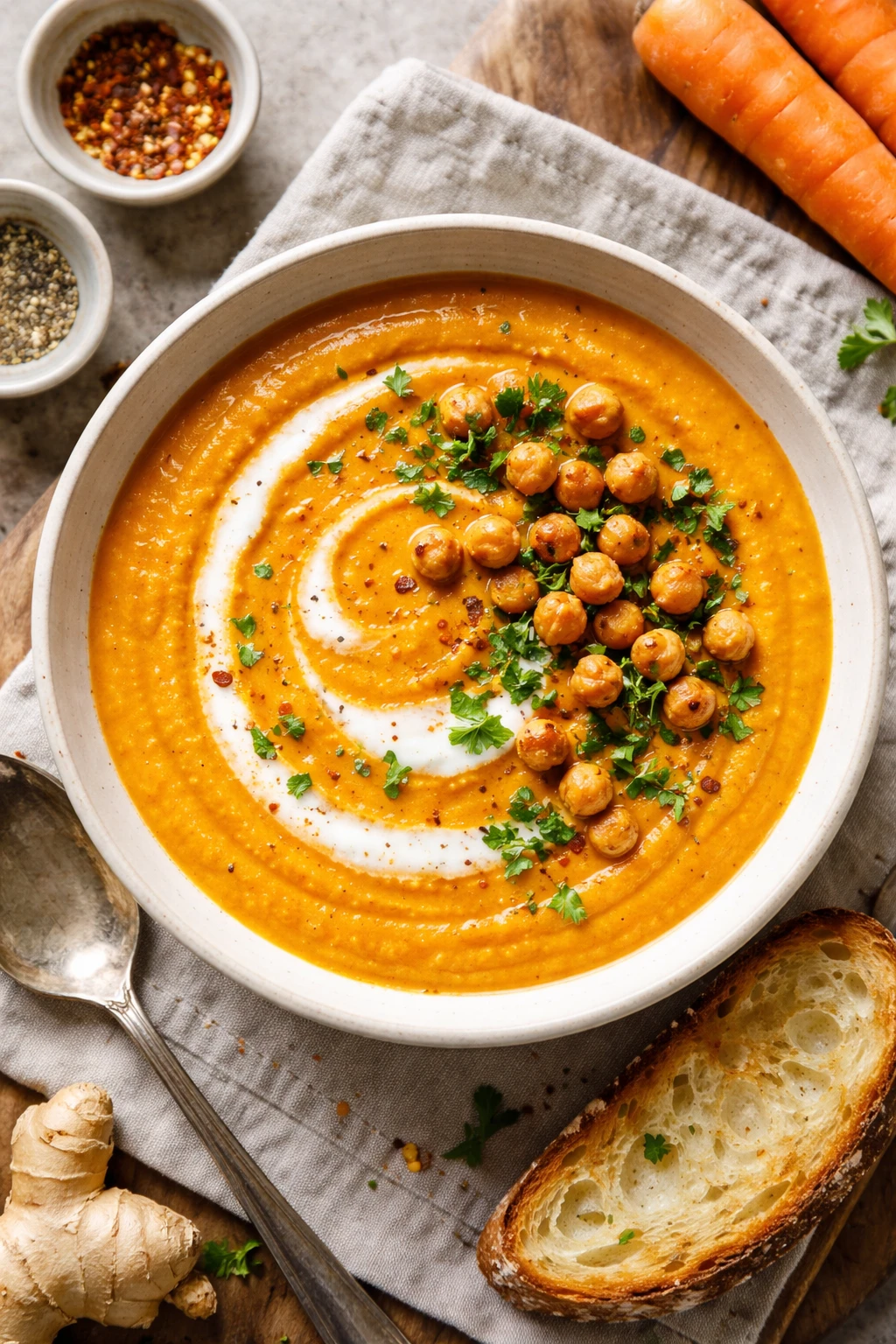
This carrot ginger soup is a warm hug in a bowl. The fresh ginger adds just the right zing, making it perfect for chilly nights or when you want something soothing and healthy.
Introduction
I first made this carrot ginger soup on a chilly autumn evening when I was craving something both light and soothing. I’d tried a few carrot soups before, but what really made this one stand out was the fresh ginger. It adds a gentle warmth and a bit of a zing that balances the natural sweetness of the carrots. Over time, I tweaked the recipe to use coconut milk instead of cream, which gives it a lovely silky texture without feeling heavy. The trick I learned is to sauté the ginger with the onions first to really bring out its aroma before adding the broth and carrots. It’s simple but makes a big difference. When it’s done, the soup is smooth, velvety, and comforting, perfect for a cozy night in or a light lunch. Plus, it’s easy enough to whip up on a weeknight when you want something nourishing without a lot of fuss. I love serving it with a sprinkle of fresh parsley or a slice of crusty bread. It’s become a go-to recipe in my kitchen, especially during colder months, and I think you’ll enjoy it just as much!
What You'll Need
Approximately 6 cups, 4 servings
- 1 tablespoon olive oil
- 1 medium onion, chopped
- 2 pounds carrots, peeled and sliced
- 2 tablespoons fresh ginger, grated
- 4 cups vegetable broth
- 1 cup coconut milk
- Salt and pepper to taste
- Fresh parsley for garnish (optional)
How To Do It
Step 1
Heat the olive oil in a large pot over medium heat. Add the chopped onion and sauté for about 5 minutes until it becomes soft and translucent. This step is important because gently cooking the onion brings out its natural sweetness and forms a flavorful base for the soup. Avoid browning the onions too much as it can make the soup taste bitter. Stir occasionally to prevent sticking, and watch for the onions to become tender but not browned.
⏱ Time: 5
✓ Doneness: Onions are soft, translucent, and fragrant without any browning.
Step 2
Add the grated fresh ginger to the pot with the onions and cook together for about 2 minutes, stirring frequently. Cooking the ginger with the onions helps release its essential oils and infuses the soup with a bright, warm flavor. Don’t rush this step; if you add the broth too soon, the ginger won’t have enough time to bloom. You’ll know it’s ready when the mixture smells fragrant and slightly spicy.
⏱ Time: 2
✓ Doneness: A fragrant, slightly spicy aroma fills the kitchen.
Step 3
Add the sliced carrots to the pot and stir well to combine with the onion and ginger mixture. This coats the carrots in the flavorful base and starts softening them before adding liquid. Cook for about 3 minutes, stirring occasionally. This brief sauté helps deepen the carrot flavor, which makes the soup taste richer and less one-dimensional.
⏱ Time: 3
✓ Doneness: Carrots are slightly softened and well coated with the onion-ginger mixture.
Step 4
Pour in the vegetable broth and bring the mixture to a boil over high heat. Once boiling, reduce the heat to low and let it simmer gently. Simmering allows the carrots to cook thoroughly and the flavors to meld together. It’s important to keep the heat low enough so the soup simmers and doesn’t boil vigorously, which could break down the carrots too much and make the soup grainy.
⏱ Time: 20
✓ Doneness: Carrots are tender when pierced easily with a fork.
Step 5
Once the carrots are soft, remove the pot from heat and let the soup cool slightly for a few minutes. This resting time makes blending safer and easier by reducing steam pressure. If you blend the soup while it’s too hot, it can splatter and cause burns, so patience here is key for safety and a smooth texture.
⏱ Time: 5
✓ Doneness: Soup has cooled enough to blend safely without steam bursts.
Step 6
Using an immersion blender, puree the soup directly in the pot until smooth and creamy. If you don’t have an immersion blender, carefully transfer the soup in batches to a regular blender and puree until smooth. Blending the soup creates that velvety texture that makes this dish so comforting. Be sure to blend thoroughly to avoid any chunks that might interrupt the smooth mouthfeel.
⏱ Time: 5
✓ Doneness: Soup is completely smooth with no visible pieces of carrot or onion.
Step 7
Return the blended soup to low heat and stir in the coconut milk. The coconut milk adds richness and a subtle sweetness that balances the ginger’s zing. Heat gently until warmed through but don’t let it boil again, as boiling can cause the coconut milk to separate and change texture. Stir frequently to combine everything evenly.
⏱ Time: 5
✓ Doneness: Soup is hot and creamy with a consistent texture.
Step 8
Taste the soup and season with salt and pepper as needed. This step is crucial because seasoning enhances all the flavors and brings the soup to life. Add salt gradually and taste after each addition to avoid over-salting. Pepper adds a nice subtle heat that complements the ginger.
⏱ Time: 2
✓ Doneness: Flavors are balanced, with a gentle warmth from the ginger and a hint of seasoning.
Step 9
Serve the soup hot, garnished with fresh parsley if you like. The fresh herb adds a pop of color and a mild freshness that contrasts nicely with the creamy soup. Pair it with crusty bread or a light salad for a complete meal. Enjoy immediately for the best flavor and texture.
⏱ Time: 1
✓ Doneness: Soup is steaming hot, smooth, and garnished attractively.
Pro Tips
Sauté the ginger with onions to bloom its flavor fully.
Cooking ginger gently in oil helps release its essential oils and aroma, which infuses the soup deeply. Skipping this step means the ginger flavor might be muted or sharp rather than mellow and integrated.
Use an immersion blender for easy, safe pureeing.
Immersion blenders let you puree the soup directly in the pot, reducing mess and risk of burns from transferring hot soup to a blender. Plus, you have better control over texture and can stop blending when it’s just right.
Don’t boil after adding coconut milk to prevent curdling.
Boiling can cause the coconut milk’s fats to separate, leading to a grainy texture and an unappetizing look. Gently warming it preserves the silky consistency and smooth mouthfeel.
Season at the end to balance flavors perfectly.
Salt and pepper enhance natural flavors but can easily overpower if added too early. Tasting and adjusting at the end ensures the soup tastes fresh and balanced.
Peel carrots with a vegetable peeler for a smooth texture.
Removing the outer skin eliminates any bitterness or dirt and helps the soup blend into a silky smooth consistency without fibrous bits.
Simmer the soup gently rather than boiling vigorously.
A gentle simmer softens carrots evenly and prevents breaking down the fibers too much, which keeps the soup’s texture smooth rather than grainy or watery.
Add fresh parsley just before serving for a pop of color.
Parsley adds a fresh, slightly peppery note and brightens the presentation without cooking down and losing its flavor.
Common Mistakes to Avoid
Skipping sautéing the ginger with onions
Why it happens Many think adding ginger directly to the broth is fine and faster, but this misses the chance to develop deeper flavor.
Fix Always cook ginger with onions in oil first to bloom the flavor. It takes just a couple of minutes and makes a big difference in aroma and taste.
Boiling the soup after adding coconut milk
Why it happens Some rush to reheat the soup quickly and don’t realize coconut milk can separate under high heat.
Fix Heat the soup gently on low after adding coconut milk, stirring often, to keep the texture smooth and creamy.
Not blending the soup thoroughly
Why it happens In a hurry, some may leave chunks, resulting in uneven texture.
Fix Use an immersion blender or blend in batches until completely smooth for the best velvety mouthfeel.
Using old or limp carrots
Why it happens Sometimes cooks use whatever’s on hand, but older carrots lack sweetness and vibrant color.
Fix Choose fresh, firm carrots for a naturally sweet and bright soup.
Over-salting the soup early on
Why it happens Adding salt at the start can concentrate flavors too much as the soup reduces.
Fix Wait until the end to season and adjust salt gradually to avoid an overly salty soup.
Variations
Spicy Carrot Ginger Soup
Add a pinch of cayenne pepper or a chopped fresh chili when sautéing the onions and ginger for a warming spicy kick. This variation adds heat that complements the ginger’s warmth and makes the soup even more comforting on cold days.
Note: Be cautious with the amount of chili to avoid overpowering the natural sweetness of the carrots.
Carrot Ginger Soup with Orange
Stir in fresh orange juice and zest at the end of cooking for a bright citrus twist. The orange enhances the carrot’s natural sweetness and adds a refreshing contrast to the spicy ginger.
Note: Add orange juice after blending to preserve its fresh flavor and avoid bitterness.
Creamy Carrot Ginger Soup with Coconut Cream
Swap coconut milk for coconut cream for an even richer, thicker soup. This version feels more indulgent and is perfect as a starter for special dinners or when you want a luxurious treat.
Note: Reduce the amount slightly as coconut cream is thicker and richer than coconut milk.
Carrot Ginger Soup with Roasted Carrots
Roast the carrots before adding them to the soup for a deeper, caramelized flavor. Roasting intensifies the sweetness and adds a subtle smoky note that makes the soup more complex.
Note: Roast carrots at 400°F for 20-25 minutes until tender and golden before simmering.
Vegan Carrot Ginger Soup with Turmeric
Add a teaspoon of ground turmeric along with the ginger for extra anti-inflammatory benefits and a beautiful golden color. This variation adds earthiness and boosts the nutritional profile.
Note: Simmer turmeric with the carrots to fully extract its flavor and color.
Nutrition
Per Serving:
Nutritional values are estimates and may vary based on specific ingredients used.
Storage & Tips
Room Temperature
The soup can safely sit out covered at room temperature for up to 2 hours. Beyond that, bacteria growth increases, so refrigerate promptly to keep it fresh and safe.
Refrigerator
Store in an airtight container in the fridge for up to 4 days. The soup thickens as it cools, so stir well before reheating. It can be enjoyed cold but tastes best warmed gently on the stove.
Freezer
Freeze the soup in airtight containers or heavy-duty freezer bags for up to 3 months. To prevent freezer burn, remove as much air as possible. Thaw overnight in the fridge before reheating.
Reheating
Reheat gently on the stovetop over low heat, stirring frequently. Add a splash of vegetable broth or water if it’s too thick. Avoid boiling to preserve the creamy texture and prevent coconut milk separation.
Make Ahead
You can prepare the soup base (sautéed onions, ginger, and carrots) a day ahead and refrigerate. Add broth and cook the next day, then blend and finish with coconut milk before serving for a quick meal.
FAQ
Can I use powdered ginger instead of fresh?
Powdered ginger lacks the fresh oils and brightness of fresh ginger, so the soup won’t have the same zing. If you must use powder, start with a small amount (about 1/2 teaspoon) and add gradually, but fresh ginger is definitely best for this recipe.
What can I substitute for coconut milk?
You can use heavy cream or cashew cream as alternatives for richness, but the flavor will be different. Coconut milk adds a subtle sweetness and pairs beautifully with ginger. For a dairy-free option, coconut milk is ideal.
How do I make the soup thicker or thinner?
For a thicker soup, reduce the amount of broth or simmer longer to concentrate flavors. To thin it out, add more broth or a splash of water when reheating until you reach your desired consistency.
Can I make this soup in a slow cooker?
Yes! Sauté the onions and ginger first, then add all ingredients to the slow cooker. Cook on low for 6-8 hours or high for 3-4 hours until carrots are soft. Blend before serving. This method develops deep flavors with minimal effort.
Is it okay to freeze this soup with coconut milk added?
Freezing soup with coconut milk is fine, but the texture might separate slightly upon thawing. Stir well when reheating to reincorporate. For best texture, you can freeze the soup without coconut milk and add it fresh when reheating.
Can I add other vegetables to this soup?
Absolutely! Sweet potatoes, butternut squash, or parsnips work well with carrots and ginger. Adjust cooking times accordingly, and blend everything together for a delicious twist.
How long does it take to prepare this soup from start to finish?
From chopping to serving, it takes about 45 minutes. The prep is quick, and simmering the carrots until tender takes the bulk of the time. It’s a great weeknight recipe that feels special without much fuss.
What’s the best way to store leftovers?
Store leftovers in airtight containers in the fridge for up to 4 days. Reheat gently on the stove, adding a little broth if needed. You can also freeze portions for longer storage.
Final Thoughts
I hope you give this carrot ginger soup a try—it’s become a comforting favorite in my kitchen. Let me know how yours turns out and if you add your own twist!