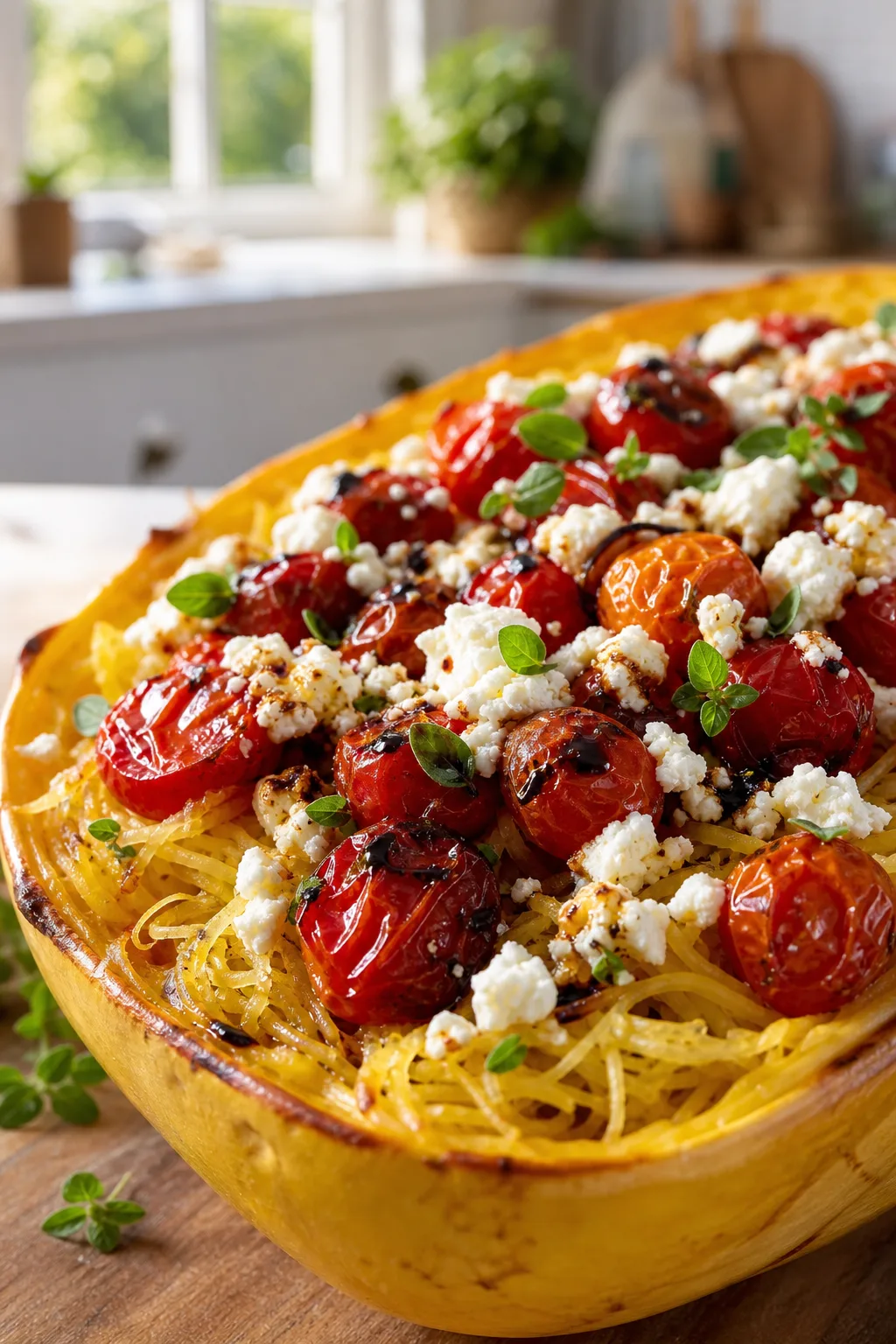
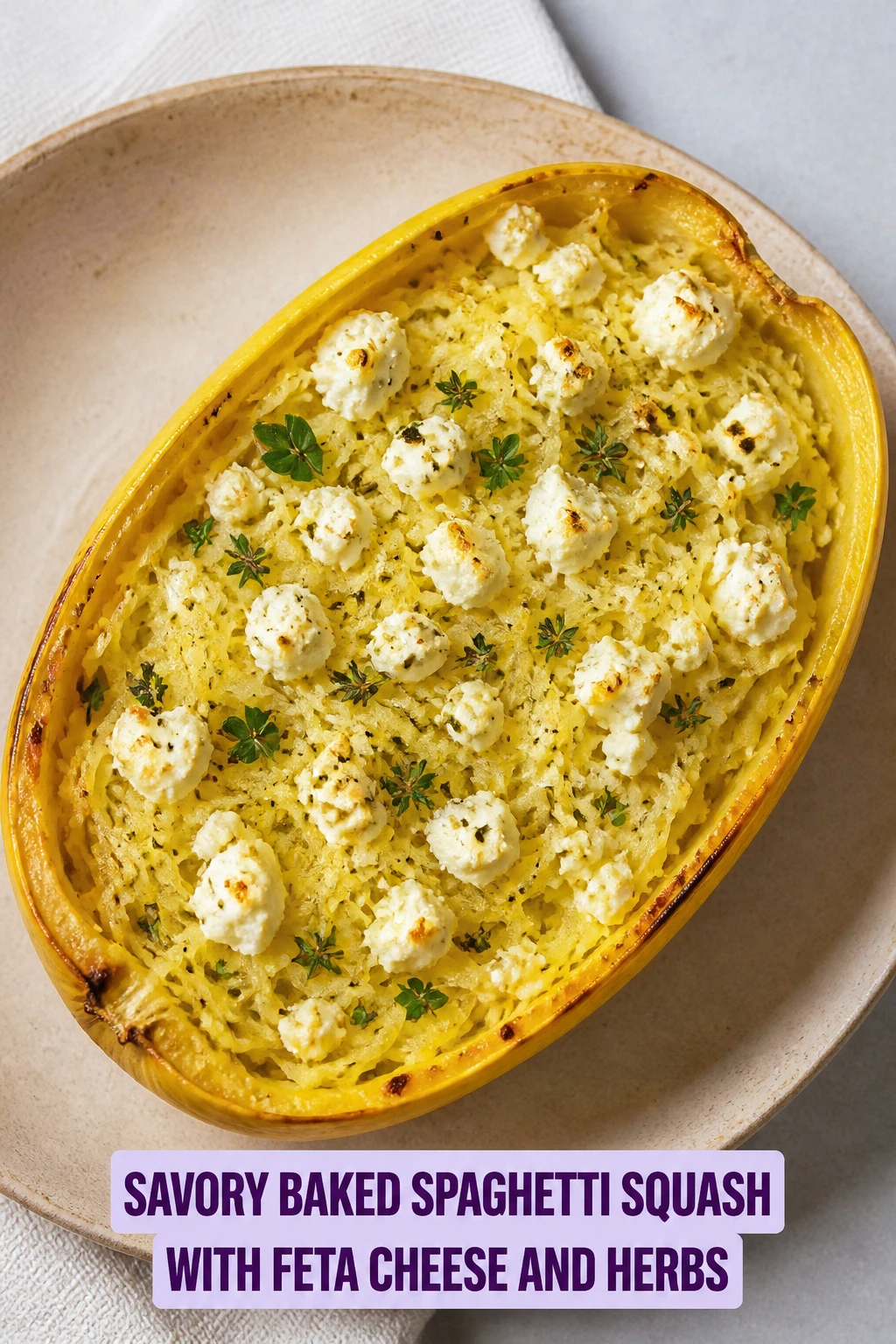
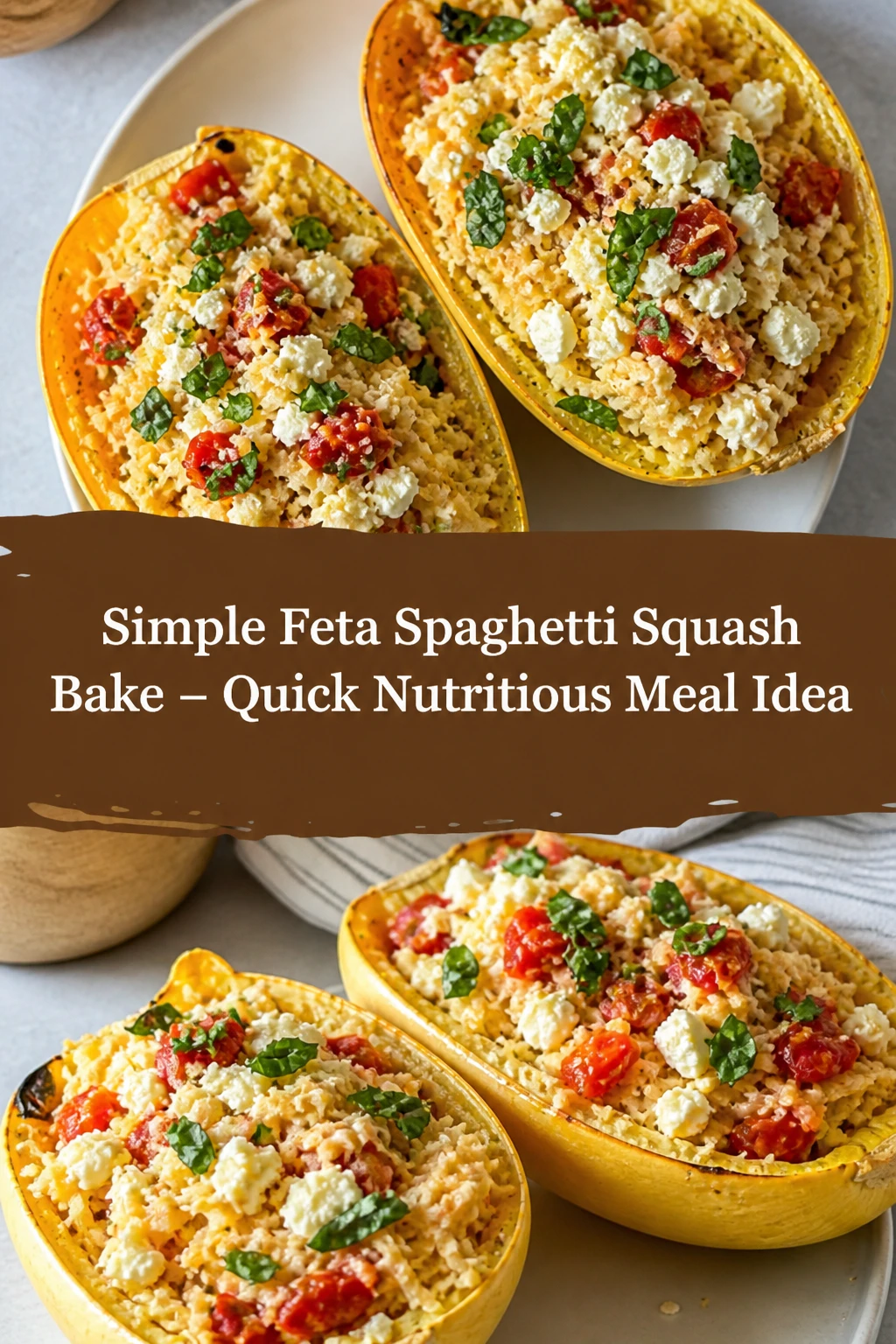
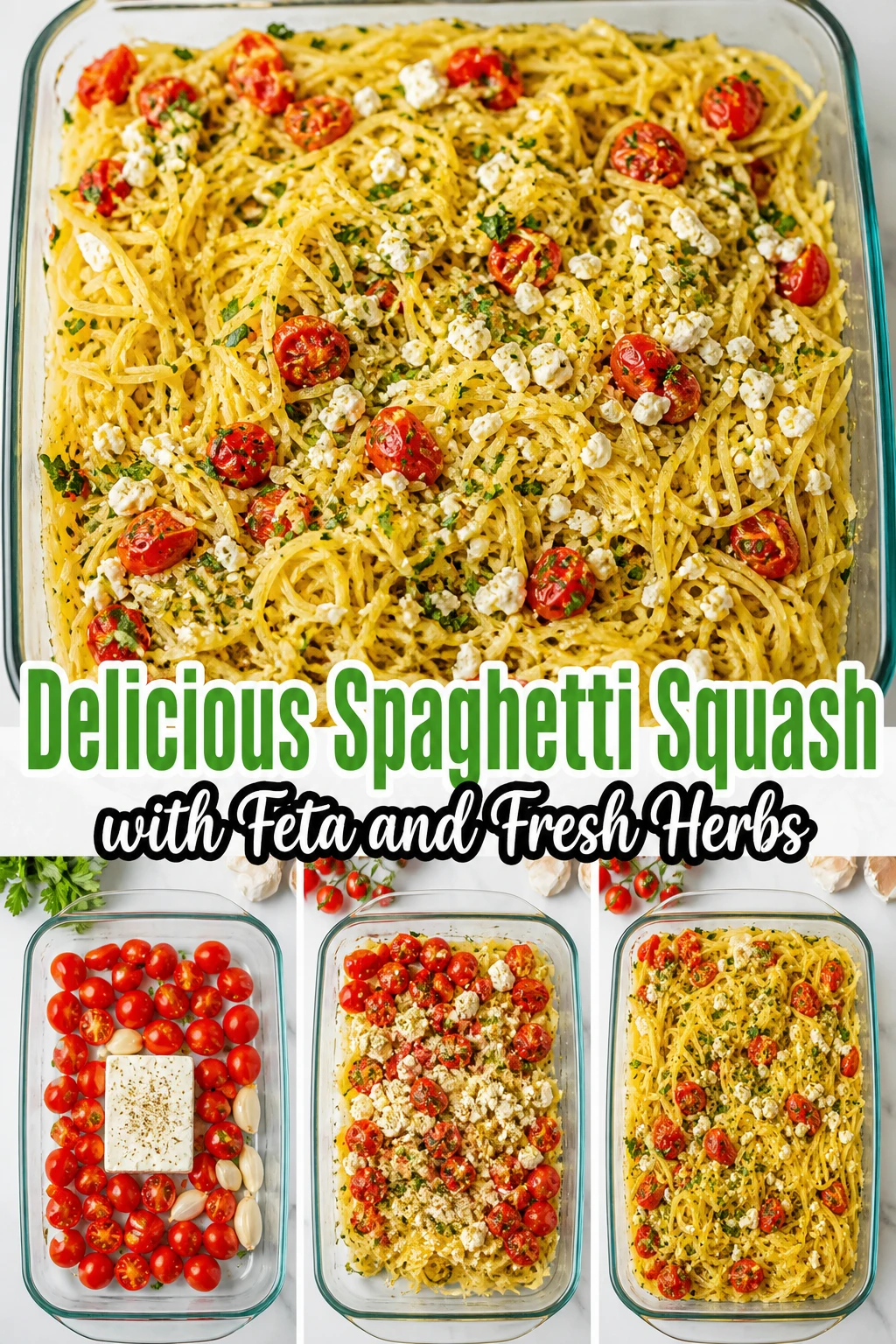
This baked spaghetti squash with feta and roasted tomatoes is a simple, delicious weeknight dinner that’s bursting with flavor. The feta melts into a creamy sauce, while the balsamic glaze adds a perfect tangy sweetness. It’s a fresh, healthy twist that my family loves!
Introduction
I first made this baked spaghetti squash with feta and roasted tomatoes on a whim after seeing the baked feta pasta trend sweeping the internet. I wanted a lighter, veggie-forward version that still delivered big on flavor. What makes this recipe special is roasting the feta and tomatoes right inside the spaghetti squash halves, which creates a luscious, creamy sauce when you mix everything together. The balsamic glaze adds just the right touch of sweetness and acidity to balance the dish. My family was hooked after the very first bite. I love that it’s simple enough for a weeknight dinner but feels special enough for guests. Plus, it’s naturally gluten-free and packed with fresh ingredients. The trick I learned is to roast the squash cut-side down first to get tender strands, then flip it to bake with the toppings so the feta melts perfectly without drying out. The finished dish is a beautiful mix of tender squash strands coated in tangy, creamy feta and sweet roasted tomatoes with a hint of oregano. It’s colorful, comforting, and so satisfying — you’ll want to make it again and again.
How To Do It
Step 1
Preheat your oven to 400°F (200°C). Cut the spaghetti squash in half lengthwise and scoop out the seeds with a spoon. Drizzle the cut sides with 1 tablespoon of olive oil and season lightly with salt and pepper. Place the squash halves cut-side down on a baking sheet lined with parchment paper. Roasting the squash this way helps steam the inside and tenderizes the strands without drying them out, which is essential for the perfect texture. Bake for 25 minutes or until the flesh is tender when pierced with a fork. Avoid skipping the cut-side down step, as roasting cut-side up can dry out the squash and make it less pleasant to eat.
⏱ Time: 25
✓ Doneness: The squash flesh should be soft and easily pierced with a fork but not mushy.
Step 2
Remove the baking sheet from the oven and carefully flip the squash halves cut-side up. Drizzle the remaining 1 tablespoon olive oil over the flesh. Scatter the cherry tomatoes evenly inside the squash cavities, then crumble the feta cheese on top. Sprinkle dried oregano (or fresh leaves) over everything. Return the squash to the oven and bake for an additional 10-15 minutes until the feta softens and starts to melt, and the tomatoes release their juices. This step infuses the squash with the tangy, creamy flavors of the feta and the sweetness of the roasted tomatoes. Rushing this step may leave the feta firm and the tomatoes undercooked, so be patient for the best flavor.
⏱ Time: 15
✓ Doneness: Feta should look soft and slightly melted; tomatoes will be juicy and caramelized at the edges.
Step 3
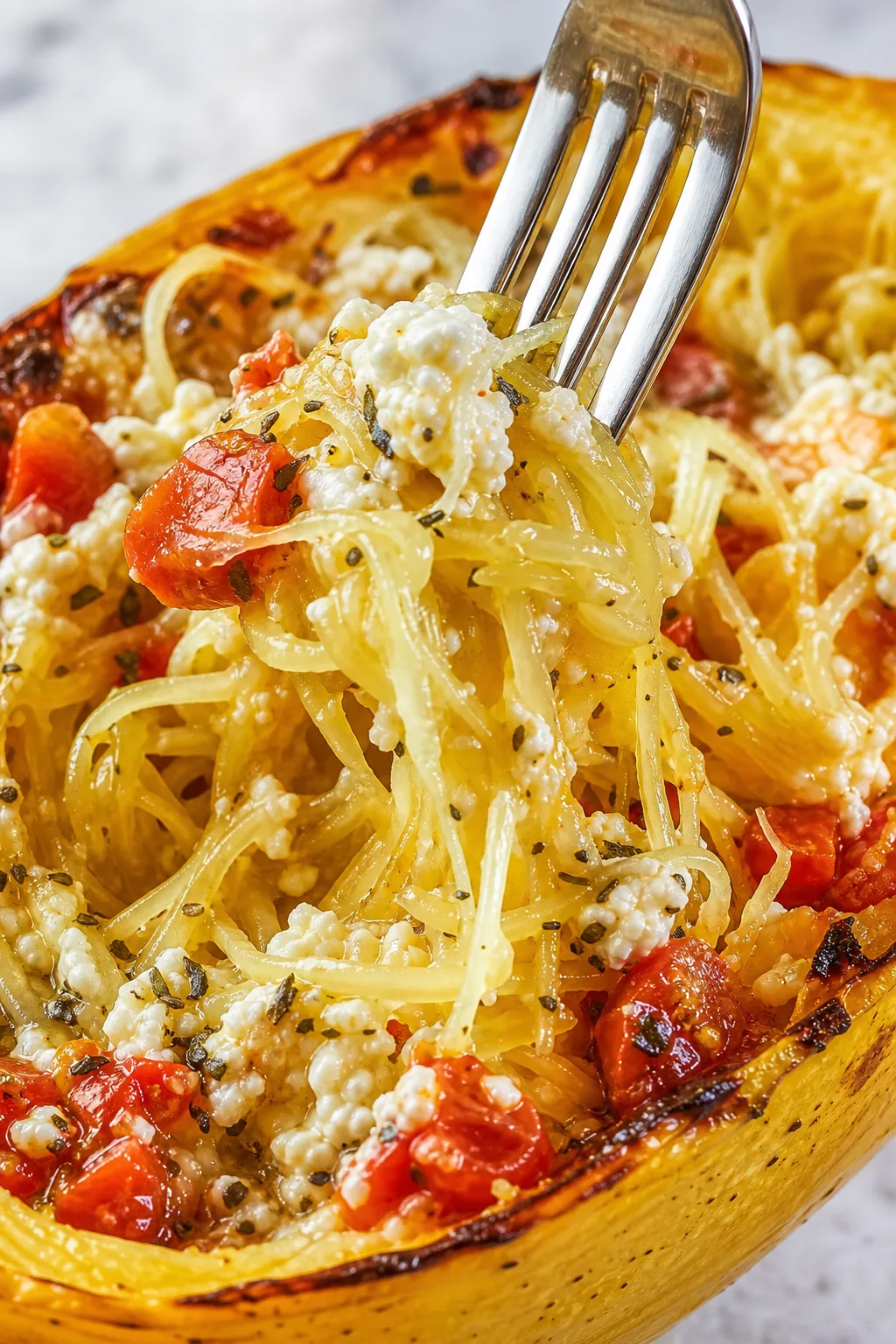
Once baked, remove the squash from the oven and let it cool for a few minutes until safe to handle. Use a fork to scrape the flesh of the squash, mixing the roasted tomatoes and melted feta together inside the shell. This creates a creamy, flavorful sauce that coats the squash strands perfectly. Be gentle to keep the strands intact for the best texture. Mixing well ensures every bite is balanced with the rich feta and sweet tomatoes.
⏱ Time: 5
✓ Doneness: The squash strands should separate easily and be coated evenly with the creamy feta-tomato mixture.
Step 4
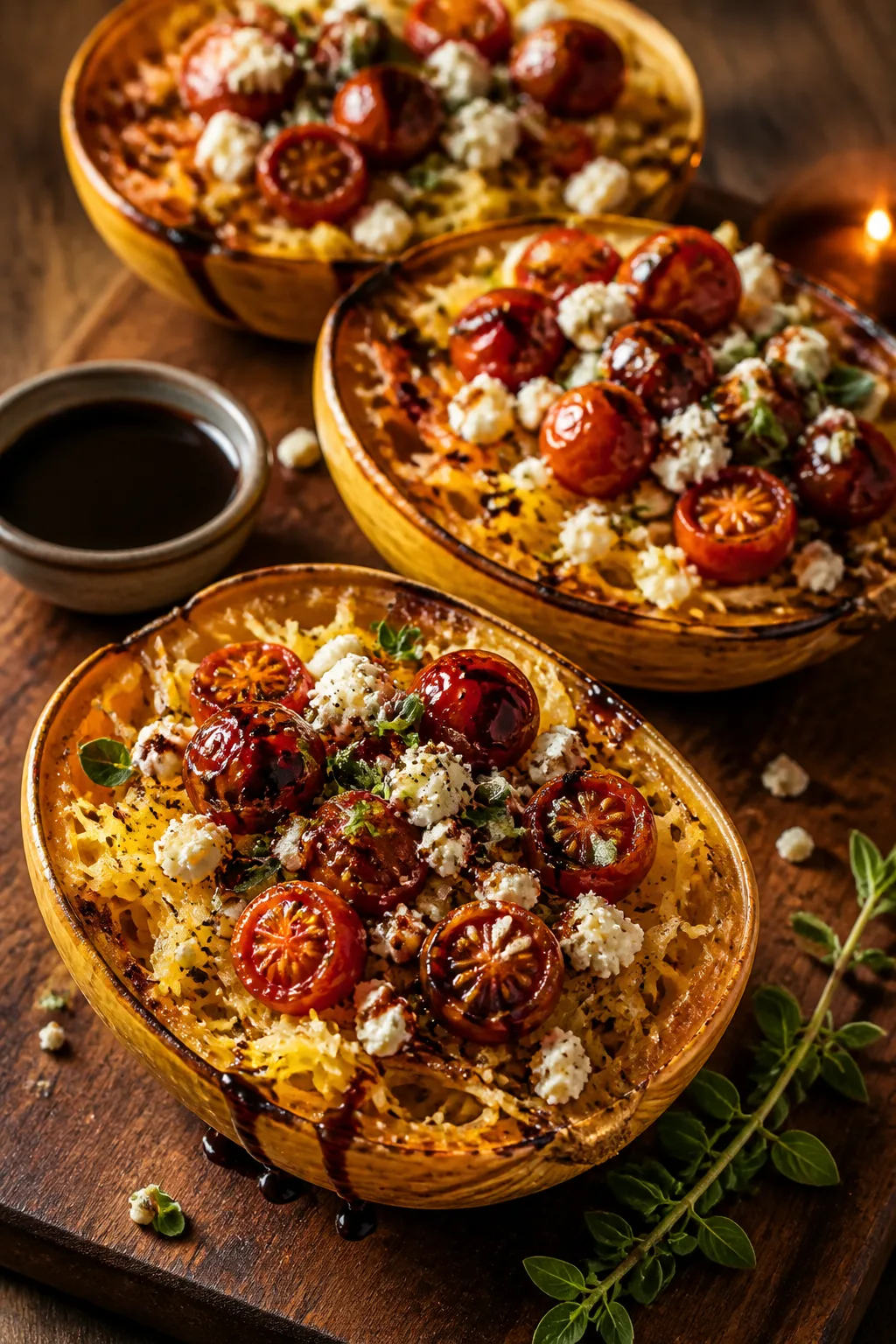
Transfer the spaghetti squash mixture to a serving dish or serve directly in the squash shells for a rustic presentation. Drizzle the balsamic glaze over the top for a touch of sweetness and acidity that brightens the dish. Garnish with additional fresh oregano if desired. The balsamic glaze is optional but highly recommended for balancing the richness of the feta and the natural sweetness of the roasted tomatoes.
⏱ Time: 2
✓ Doneness: The glaze should be glossy and evenly drizzled without overpowering the dish.
Step 5
Serve warm as a main dish or alongside a fresh green salad and crusty bread for a complete meal. This recipe pairs wonderfully with a simple arugula salad dressed with lemon and olive oil. The lightness of the salad complements the creamy, savory squash beautifully.
⏱ Time: 0
✓ Doneness: Dish should be warm and inviting, ready to enjoy immediately.
Step 6
To add a bit more texture, sprinkle toasted pine nuts or chopped walnuts over the finished dish before serving. This adds a pleasant crunch and nutty flavor that contrasts nicely with the creamy feta and soft squash strands.
⏱ Time: 0
✓ Doneness: Nuts should be lightly toasted and evenly distributed.
Step 7
If you want to make this recipe vegan, substitute the feta with a plant-based cheese alternative that melts well, such as almond or cashew-based feta. Keep the roasting times the same, but be mindful that some vegan cheeses melt differently, so check frequently to avoid overcooking.
⏱ Time: 0
✓ Doneness: Cheese should soften and blend with the tomatoes without burning.
Step 8
For added herbaceous freshness, stir in chopped fresh basil or parsley just before serving. This brightens the dish and complements the oregano’s earthiness.
⏱ Time: 0
✓ Doneness: Herbs should look fresh and vibrant, not wilted.
Step 9
Leftovers can be reheated gently in the oven or microwave. To keep the squash moist, cover loosely with foil or a microwave-safe lid and add a splash of water before reheating. This prevents drying out and keeps the strands tender.
⏱ Time: 0
✓ Doneness: Reheated squash should be warm but still moist and creamy.
Pro Tips
Roast the squash cut-side down first for tender strands.
Roasting cut-side down traps steam inside the squash, cooking the flesh evenly and preventing it from drying out. This method results in tender, moist strands that mimic pasta texture, which is essential for this dish's success.
Add the feta and tomatoes for the last 10-15 minutes of baking.
Adding these ingredients later ensures the feta softens and melts without drying or browning too much, while the tomatoes roast just enough to burst and caramelize, creating a balanced sauce.
Use a fork to gently scrape the squash strands after baking.
Scraping with a fork separates the strands without mashing them, preserving the delicate texture and allowing the creamy feta-tomato sauce to coat each strand beautifully.
Drizzle balsamic glaze just before serving.
Adding the glaze at the end maintains its glossy texture and bright acidity, which contrasts nicely with the creamy feta and sweet tomatoes, enhancing overall flavor.
Season lightly with salt before roasting; feta is salty enough.
Since feta cheese is naturally salty, avoid over-salting the squash before baking. This prevents the dish from becoming too salty while still enhancing the natural flavors.
Use fresh oregano if possible for brighter flavor.
Fresh oregano provides a lively herbal aroma that dried oregano can’t fully replicate. It adds complexity and freshness to the dish, making it more vibrant.
Serve immediately for best texture and flavor.
The combination of creamy feta and tender squash is best enjoyed warm. Letting it sit too long can cause the squash to dry out and the sauce to thicken, losing its luscious quality.
Common Mistakes to Avoid
Roasting the squash cut-side up first
Why it happens Many cooks assume roasting cut-side up is standard, but this exposes the flesh to direct heat, drying it out and causing tough strands.
Fix Always roast the squash cut-side down initially to trap steam and keep the flesh moist and tender. This simple adjustment dramatically improves texture.
Adding feta too early in baking
Why it happens Rushing by adding feta at the start can cause it to dry out or brown excessively, losing its creamy quality.
Fix Add feta and tomatoes only during the last 10-15 minutes of baking to allow gentle melting without drying.
Over-salting the squash before baking
Why it happens Since feta is salty, cooks often add too much salt to the squash, making the dish overly salty.
Fix Season the squash lightly before roasting and rely on the feta’s saltiness to balance the dish.
Not scraping the squash strands properly
Why it happens Some scrape too roughly or use a spoon, which mashes the strands and ruins texture.
Fix Use a fork gently to separate strands, preserving the delicate texture and allowing sauce to coat evenly.
Skipping the balsamic glaze drizzle
Why it happens Omitting the glaze loses a key flavor contrast that balances richness and acidity.
Fix Always add a light drizzle of balsamic glaze just before serving to brighten the dish.
Variations
Add Spinach and Garlic
Stir in sautéed spinach and minced garlic with the tomatoes before baking for extra greens and a fragrant boost. This adds depth and nutrition without overpowering the feta’s creaminess.
Note: Sauté spinach and garlic until wilted and fragrant, then add to the squash cavity before the final baking stage.
Use Goat Cheese Instead of Feta
Swap feta for tangy goat cheese for a creamier texture and slightly different flavor profile. Goat cheese melts beautifully and adds a luscious richness to the dish.
Note: Goat cheese may melt faster; watch closely during baking to avoid overcooking.
Add Toasted Pine Nuts
Top the finished dish with toasted pine nuts for a crunchy texture and nutty flavor that complements the creamy feta and sweet tomatoes perfectly.
Note: Toast pine nuts in a dry pan over medium heat until golden and fragrant, then sprinkle just before serving.
Make It Vegan
Replace feta with a plant-based cheese alternative that melts well, such as almond or cashew-based vegan feta. Keep the roasting times the same but watch the cheese closely to prevent burning.
Note: Some vegan cheeses melt differently; adjust baking time as needed.
Add Red Pepper Flakes for Heat
Sprinkle red pepper flakes over the tomatoes and feta before baking to add a subtle spicy kick that livens up the dish without overwhelming the other flavors.
Note: Add flakes sparingly and adjust to taste for balanced heat.
Nutrition
Per Serving:
Nutritional values are estimates and may vary based on specific ingredients used.
Storage & Tips
Room Temperature
This dish can safely sit out for up to 2 hours covered on the counter. Beyond that, refrigerate promptly to avoid spoilage. Cover loosely with foil or plastic wrap to keep moisture in.
Refrigerator
Store leftovers in an airtight container in the refrigerator for up to 4 days. The texture may firm up and the sauce thicken when cold, so reheat gently before serving to restore creaminess.
Freezer
Freeze baked spaghetti squash with feta in an airtight container for up to 2 months. Wrap tightly to prevent freezer burn. Thaw overnight in the fridge before reheating.
Reheating
Reheat gently in a 325°F oven covered with foil for 15-20 minutes or in the microwave with a splash of water to maintain moisture. Avoid high heat to prevent drying out the squash.
Make Ahead
You can roast the spaghetti squash and prepare the tomato-feta topping 1 day ahead. Store separately in the fridge and combine just before the final bake to keep textures fresh.
FAQ
Can I use frozen spaghetti squash for this recipe?
Frozen spaghetti squash can be used but tends to be softer and less stringy after thawing. It may not hold up as well when mixed with the feta and tomatoes, leading to a mushier texture. For best results, use fresh squash.
What can I substitute for feta if I don’t like cheese?
You can try a vegan cheese alternative that melts well or omit cheese altogether and add extra roasted tomatoes with herbs for flavor. Nutritional yeast sprinkled on top adds a cheesy note without dairy.
How do I know when the spaghetti squash is done roasting?
The squash is done when you can easily pierce the flesh with a fork and the strands separate easily. The flesh should be tender but not mushy.
Can I prepare this recipe vegan?
Yes, substitute feta with a plant-based cheese that melts well, such as almond or cashew-based vegan feta. Watch the cheese closely during baking as melting times vary.
Is it necessary to drizzle balsamic glaze?
While optional, the balsamic glaze adds a lovely sweet acidity that balances the richness of the feta and the sweetness of the tomatoes. You can omit it or substitute with a light drizzle of honey or maple syrup.
Can I add other vegetables to this dish?
Absolutely! Sautéed spinach, mushrooms, or zucchini work well mixed with the tomatoes and feta. Add them during the final baking stage to avoid overcooking.
How do I store leftovers to keep the best texture?
Store leftovers in an airtight container in the fridge. To keep moisture, reheat gently with a splash of water or olive oil. Avoid overheating to prevent drying out.
Can I make this recipe ahead of time?
Yes, roast the squash and prepare the tomato-feta topping a day ahead. Store separately and combine just before the final bake for best freshness and texture.
Final Thoughts
I hope you enjoy this easy and delicious baked spaghetti squash with feta as much as my family does. It’s a comforting, flavorful way to enjoy veggies — give it a try and let me know what you think!