A collection of easy, delicious recipes that make Easter dinner a breeze. Featuring simple yet flavorful dishes that let you enjoy the day without stress. Perfect for family gatherings or casual celebrations.
Introduction
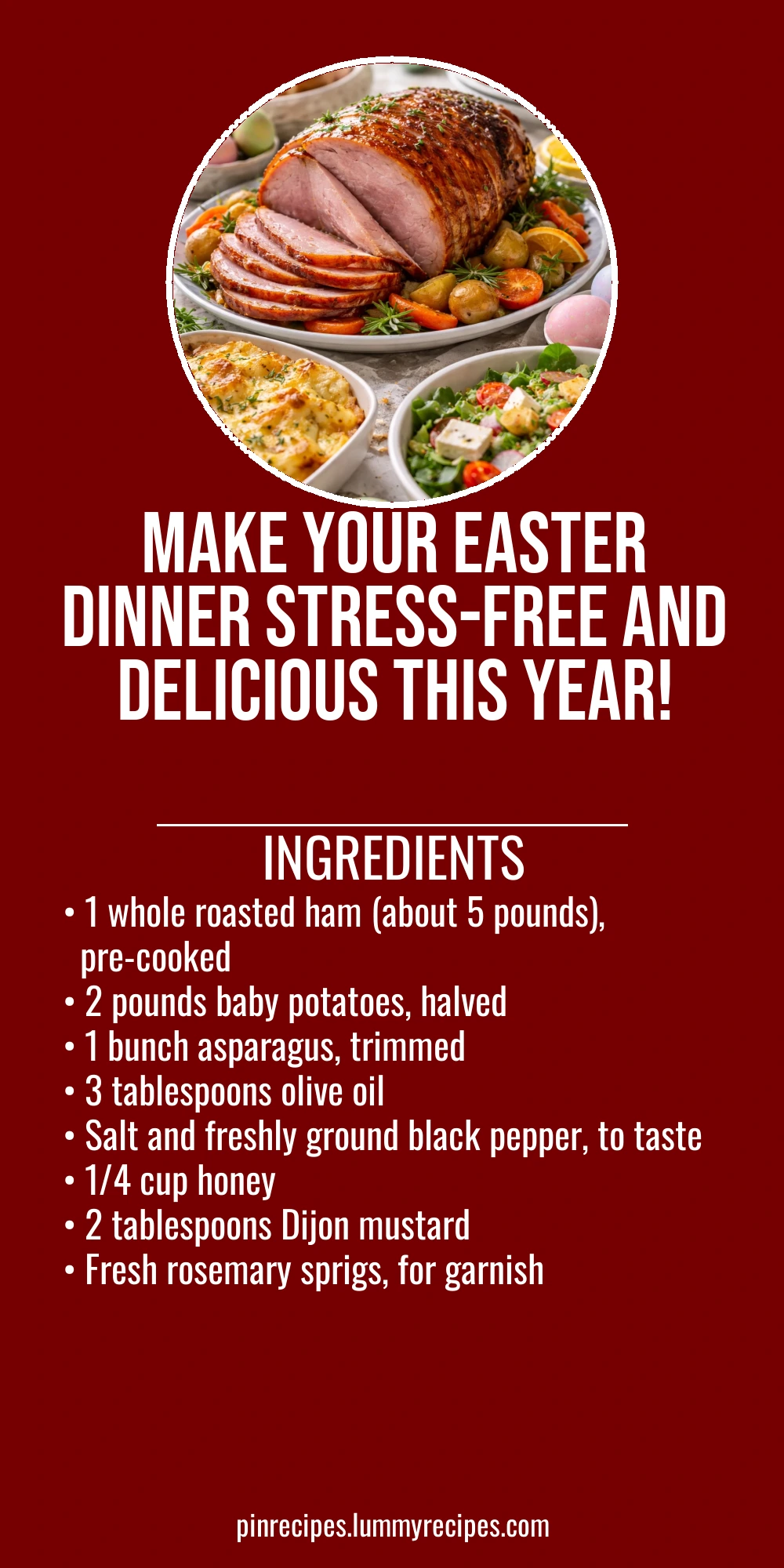
I remember the first time I tried hosting Easter dinner—it was a whirlwind of stress and last-minute scrambling. Over the years, I’ve learned that keeping things simple is the key to a truly enjoyable holiday meal. This collection of stress-free Easter dinner recipes is my go-to when I want to impress without the pressure. The star of the meal is a pre-cooked ham that you can glaze and roast quickly, paired with easy sides like roasted baby potatoes and tender asparagus. One trick I swear by is mixing honey and Dijon mustard for the glaze—it adds a perfect balance of sweetness and tang that makes the ham shine. These recipes work great because they don’t require hours of prep or complicated steps, so you can spend more time with your loved ones. The finished meal looks vibrant and inviting, with golden potatoes and bright green asparagus complementing the ham’s rich glaze. It’s a feast that feels special but doesn’t wear you out. I hope these dishes help you create a relaxed and memorable Easter celebration, just like they do for my family every year.
How To Do It
Step 1
Preheat your oven to 325°F (165°C). Place the pre-cooked ham in a roasting pan. Using a sharp knife, score the surface in a diamond pattern about 1/8 inch deep. This helps the glaze penetrate the meat and creates a beautiful caramelized crust. Avoid cutting too deep to keep the ham moist. Scoring also allows the glaze to cling better, ensuring every bite is flavorful.
⏱ Time: 10 minutes
✓ Doneness: Ham surface is scored evenly with diamond cuts but not sliced through
Step 2
In a small bowl, whisk together honey and Dijon mustard until smooth. Brush this glaze all over the ham, making sure to cover every scored section. The honey adds sweetness and helps with browning, while the mustard gives a subtle tang that balances the flavors. Applying the glaze before roasting lets it soak in and develop a sticky, delicious crust.
⏱ Time: 5 minutes
✓ Doneness: Ham is evenly coated with a shiny, smooth glaze
Step 3
Roast the ham uncovered in the preheated oven for about 15 minutes per pound, or until heated through and the glaze is caramelized. Baste the ham with additional glaze every 15 minutes to build layers of flavor and keep the meat moist. Avoid opening the oven door too often to maintain temperature and ensure even cooking.
⏱ Time: 1 hour 15 minutes
✓ Doneness: Ham is heated through and glaze is golden brown and sticky
Step 4
While the ham roasts, toss the halved baby potatoes with 2 tablespoons of olive oil, salt, and pepper. Spread them out on a baking sheet in a single layer to ensure even roasting. Roasting potatoes at a high temperature creates a crispy exterior while keeping the inside fluffy. Avoid overcrowding the pan to prevent steaming instead of roasting.
⏱ Time: 5 minutes prep + 30 minutes roasting
✓ Doneness: Potatoes are golden brown and crisp on the outside
Step 5
Add the potatoes to the oven about 30 minutes before the ham is done, roasting them at 400°F (200°C). This higher temperature crisps the skin nicely. Halfway through, flip the potatoes to brown evenly. Keep an eye on them so they don’t burn, adjusting time slightly if needed based on your oven's quirks.
⏱ Time: 30 minutes
✓ Doneness: Potatoes are fork-tender inside and crispy outside
Step 6
Trim the asparagus and toss with the remaining 1 tablespoon olive oil, salt, and pepper. You want the asparagus lightly coated to roast evenly without becoming soggy. Roasting asparagus brings out a nutty flavor and tender texture that pairs beautifully with the ham.
⏱ Time: 5 minutes prep
✓ Doneness: Asparagus spears are evenly coated and ready to roast
Step 7
Place the asparagus on a baking sheet and roast in the oven during the last 10-12 minutes of the ham’s cooking time at 400°F (200°C). Roasting asparagus quickly at high heat ensures it stays crisp-tender with bright color. Watch closely to prevent overcooking; they should have a slight snap when done.
⏱ Time: 10-12 minutes
✓ Doneness: Asparagus is bright green and tender-crisp
Step 8
Once the ham is done, remove it from the oven and let it rest for 10-15 minutes before slicing. Resting allows the juices to redistribute, making the meat juicier and easier to carve. Cover loosely with foil to keep warm. Avoid slicing immediately or the juices will run out and the meat will be dry.
⏱ Time: 10-15 minutes
✓ Doneness: Ham feels warm and slightly firm but juicy when pressed
Step 9
Garnish the ham with fresh rosemary sprigs for a lovely aroma and visual appeal. Arrange the roasted potatoes and asparagus on serving platters alongside the ham. This finishing touch elevates the presentation and adds a subtle herbal note that complements the glaze.
⏱ Time: 5 minutes
✓ Doneness: Dish is beautifully arranged and ready to serve
Pro Tips
Score the ham in a diamond pattern for better glaze absorption.
Scoring increases the surface area, allowing the glaze to seep deeper into the meat. This enhances flavor penetration and creates a visually appealing crust. Without scoring, the glaze sits mostly on top and can slide off during roasting.
Baste the ham every 15 minutes while roasting.
Regular basting builds layers of flavor and moisture, preventing the ham from drying out. It also helps the glaze caramelize evenly, producing a sticky, flavorful crust. Skipping this step can result in a dull, dry exterior.
Roast potatoes at a higher temperature separately from the ham.
Potatoes need higher heat to develop a crispy skin and fluffy interior. Roasting them at the ham’s lower temperature would yield soggy potatoes. Cooking them separately ensures optimal texture and flavor.
Add asparagus to the oven in the last 10-12 minutes.
Asparagus cooks quickly and benefits from high heat to stay crisp-tender and retain bright color. Adding it too early would overcook and mush it, losing its fresh texture.
Let the ham rest before slicing.
Resting allows juices to redistribute, making the meat juicier and easier to carve. Cutting immediately causes juices to run out, resulting in dry slices.
Use fresh rosemary as garnish for aroma and presentation.
Fresh herbs add a subtle herbal note and elevate the dish’s appearance, enhancing the festive feel. Dried herbs won’t provide the same fresh aroma or visual appeal.
Avoid overcrowding baking sheets when roasting vegetables.
Crowding traps steam and prevents browning. Spreading vegetables in a single layer promotes even roasting and crisp texture.
Common Mistakes to Avoid
Not scoring the ham before glazing.
Why it happens Many assume glazing is just a surface treatment and skip scoring to save time.
Fix Take the extra few minutes to score the ham in a diamond pattern. This allows the glaze to penetrate and caramelize properly, enhancing both flavor and appearance.
Overcooking the asparagus.
Why it happens Asparagus cooks fast, and it’s easy to forget it in the oven while focusing on other dishes.
Fix Add asparagus late in the cooking process and watch closely. Remove when bright green and just tender to keep texture crisp and fresh.
Roasting potatoes at too low a temperature.
Why it happens To save time, some roast potatoes alongside the ham at a lower temp, but this prevents crisping.
Fix Roast potatoes separately at 400°F (200°C) to achieve golden, crispy skins and fluffy interiors.
Skipping the resting period for the ham.
Why it happens Impatience or lack of awareness leads to slicing immediately after roasting.
Fix Let the ham rest 10-15 minutes covered loosely with foil. This step is essential for juicy, tender slices.
Using a pre-cooked ham that’s not fully cooked.
Why it happens Confusing labels or buying cheaper hams may lead to undercooked meat.
Fix Always check packaging to ensure the ham is fully cooked. If not, adjust cooking time accordingly to avoid food safety risks.
Variations
Glazed Pineapple Ham
Add pineapple juice and slices to the honey-Dijon glaze for a tropical twist. The acidity and sweetness of pineapple complement the ham beautifully, adding moisture and a fruity flavor. Serve with roasted sweet potatoes for a cohesive meal.
Note: Pineapple juice’s acidity can tenderize the ham slightly; apply glaze carefully to avoid over-tenderizing.
Herb-Crusted Leg of Lamb
Swap the ham for a leg of lamb rubbed with garlic, rosemary, and thyme. Roast similarly but adjust cooking times for lamb doneness. This variation offers a richer, more robust flavor profile for those wanting something different yet still stress-free.
Note: Monitor internal temperature carefully; lamb cooks faster than ham and benefits from resting.
Vegetarian Easter Feast
Replace the meat with a hearty mushroom and lentil loaf glazed with the honey-Dijon sauce. Pair with the same roasted vegetables for a satisfying plant-based celebration meal that everyone will enjoy.
Note: Mushroom loaf requires baking at moderate heat and careful handling to maintain moisture.
Garlic-Parmesan Roasted Potatoes
Mix minced garlic and grated Parmesan into the potatoes before roasting for an extra savory side. The cheese crisps up beautifully, adding a delicious umami boost to the meal.
Note: Add Parmesan in the last 10 minutes of roasting to prevent burning.
Honey-Mustard Glazed Turkey Breast
For a smaller crowd, use turkey breast instead of ham. Apply the same glaze and roast until juicy and golden. This leaner option is perfect for those who prefer white meat.
Note: Turkey breast cooks faster; use a meat thermometer to avoid drying out.
Nutrition
Per Serving:
Nutritional values are estimates and may vary based on specific ingredients and portion sizes.
Storage & Tips
Room Temperature
Easter dinner leftovers can safely sit out for up to 2 hours covered loosely. Beyond that, bacteria growth can increase, so refrigerate promptly. Cover dishes with foil or lids to prevent drying.
Refrigerator
Store leftovers in airtight containers for up to 4 days. The ham may firm up when cold but reheats well. Vegetables can lose some crispness, so reheat gently or enjoy cold in salads.
Freezer
Freeze ham slices and cooked vegetables separately for up to 3 months. Wrap tightly in plastic wrap and foil to prevent freezer burn. Thaw overnight in the fridge before reheating.
Reheating
Reheat ham slices in the oven at 275°F (135°C) covered with foil to retain moisture, about 15-20 minutes. For vegetables, a quick sauté or oven roast refreshes texture. Avoid microwaving ham too long to prevent dryness.
Make Ahead
Glaze the ham and prep vegetables a day ahead, storing them covered in the fridge. On the day, simply roast everything fresh. This cuts down active cooking time and reduces stress.
FAQ
Can I use a fresh ham instead of pre-cooked?
Yes, but fresh ham requires longer cooking times and careful temperature monitoring to ensure it’s fully cooked and safe to eat. Using pre-cooked ham is easier and more foolproof for stress-free cooking.
How do I prevent the ham glaze from burning?
Brush the glaze on in layers and baste periodically during roasting. If the glaze starts to darken too quickly, tent the ham loosely with foil to protect it while it finishes cooking.
Can I prepare the sides ahead of time?
Absolutely! You can wash and trim vegetables the day before and store them in airtight containers. Potatoes can be halved and kept in water to prevent browning. Roast fresh for best texture on serving day.
What’s the best way to slice the ham?
Use a sharp carving knife and slice against the grain for tender pieces. Let the ham rest before slicing to keep juices locked in and avoid dry meat.
How do I make the potatoes extra crispy?
Make sure to dry the potatoes well before roasting and don’t overcrowd the pan. Toss them in enough oil and roast at a high temperature, flipping halfway through for even browning.
Can I substitute asparagus with another vegetable?
Yes, green beans or Brussels sprouts work well roasted. Adjust cooking times accordingly—green beans roast quickly like asparagus, while Brussels sprouts may need a bit longer.
Is the honey-Dijon glaze suitable for diabetics?
The glaze contains honey, which is a sugar source. You can reduce the amount or substitute with a sugar-free alternative, but this will affect the caramelization and flavor profile.
How do I store leftover ham to keep it moist?
Wrap slices tightly in plastic wrap or store in an airtight container with a little broth or glaze to retain moisture. Refrigerate promptly and consume within 4 days.
Can I use this glaze on other meats?
Definitely! The honey-Dijon glaze pairs beautifully with pork, chicken, and turkey, adding a sweet and tangy flavor that enhances many dishes.
What if I don’t have fresh rosemary for garnish?
Dried rosemary won’t provide the same fresh aroma or appearance. You can omit it or use other fresh herbs like thyme or parsley for a different but still lovely finish.
Final Thoughts
I hope these stress-free Easter dinner recipes help you create a joyful celebration with less fuss and more flavor. Give them a try and share how your feast turns out!