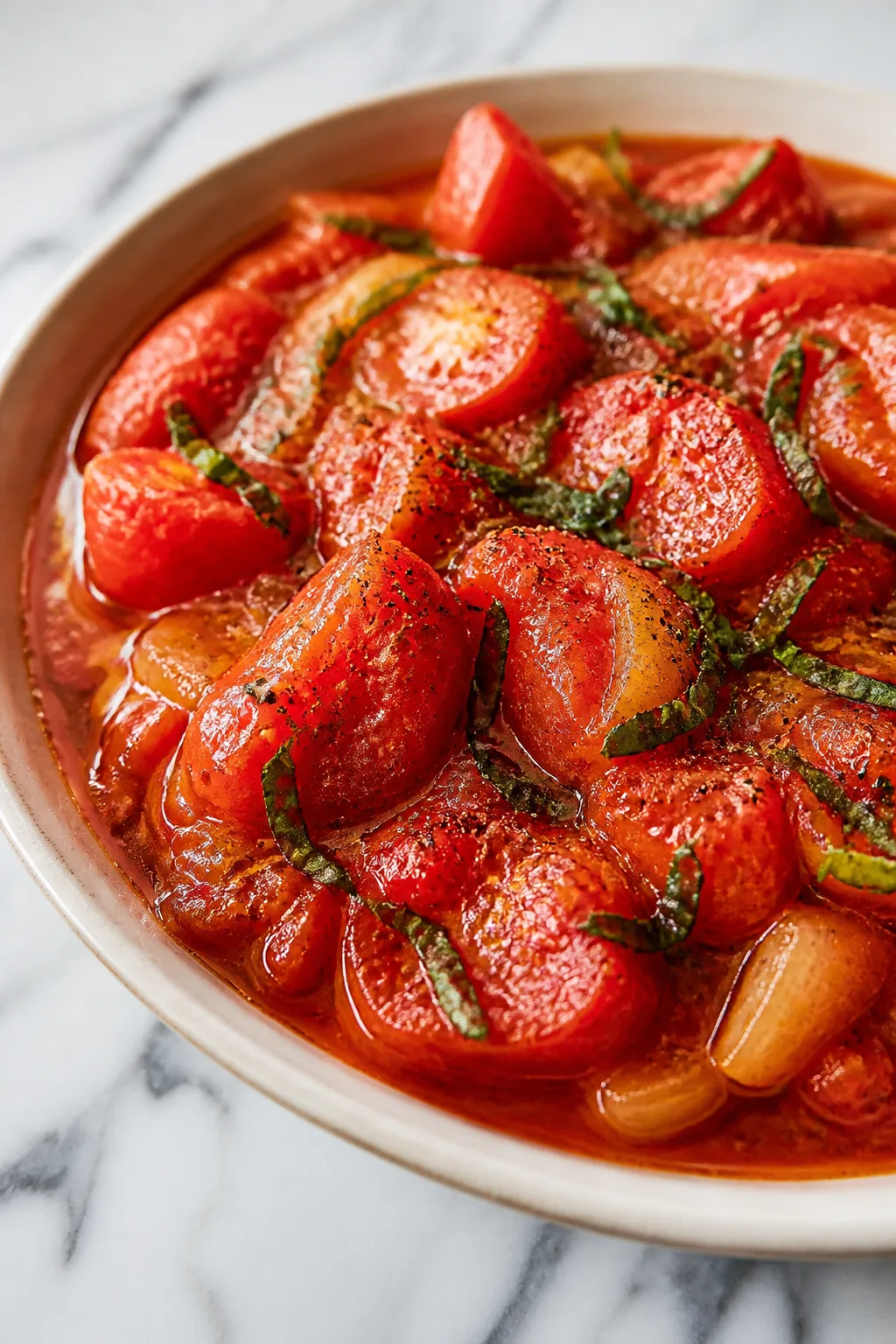
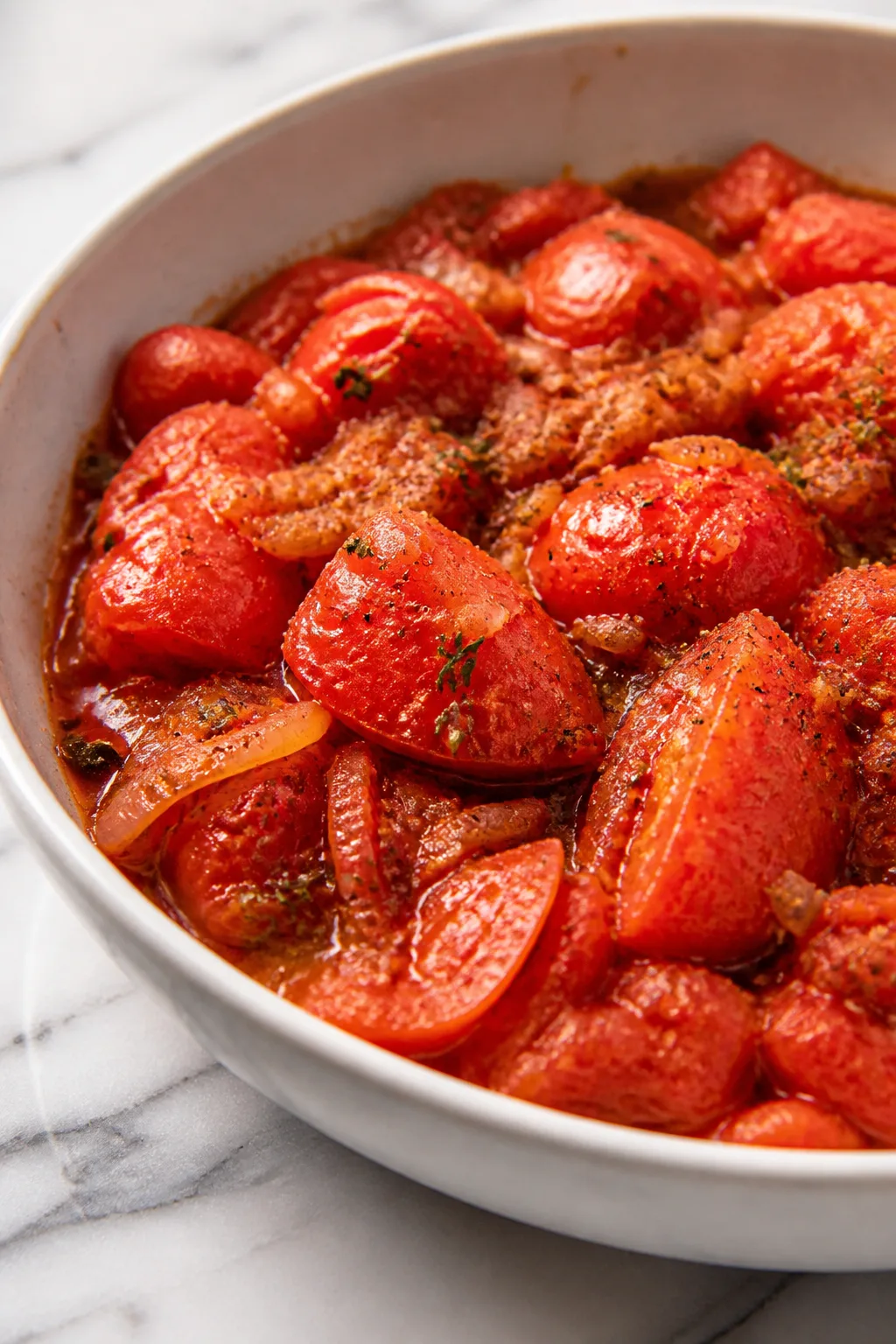
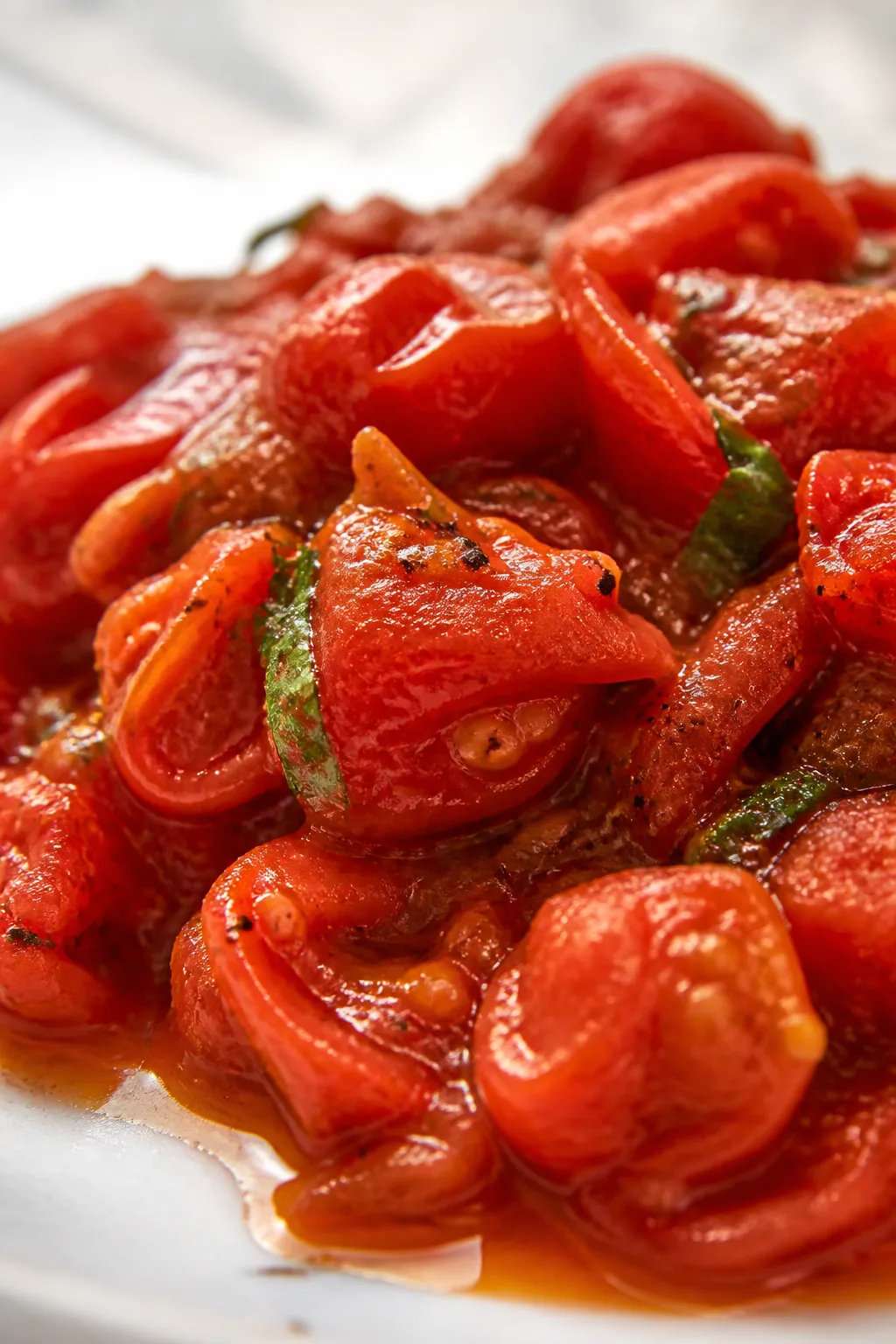
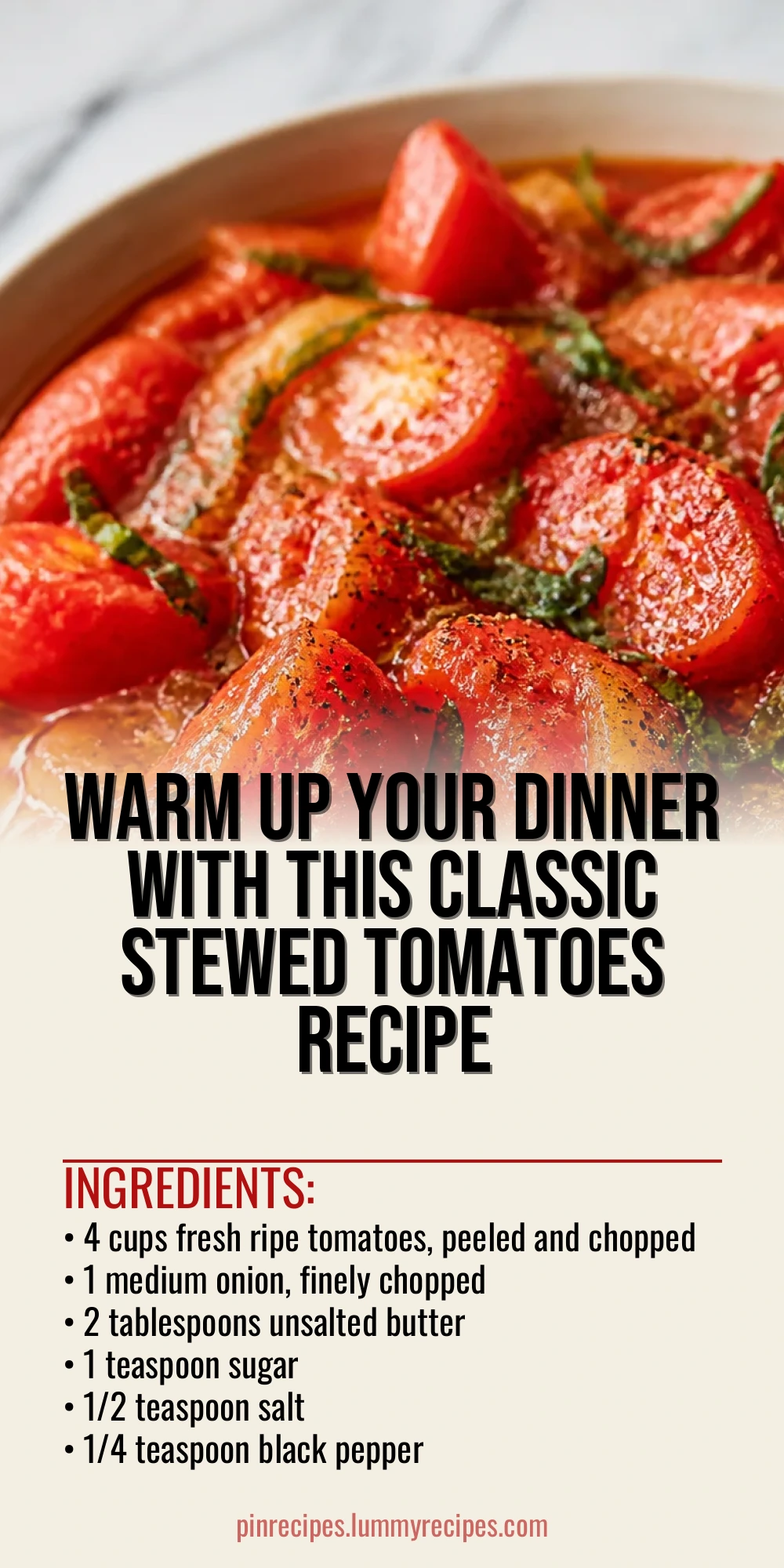
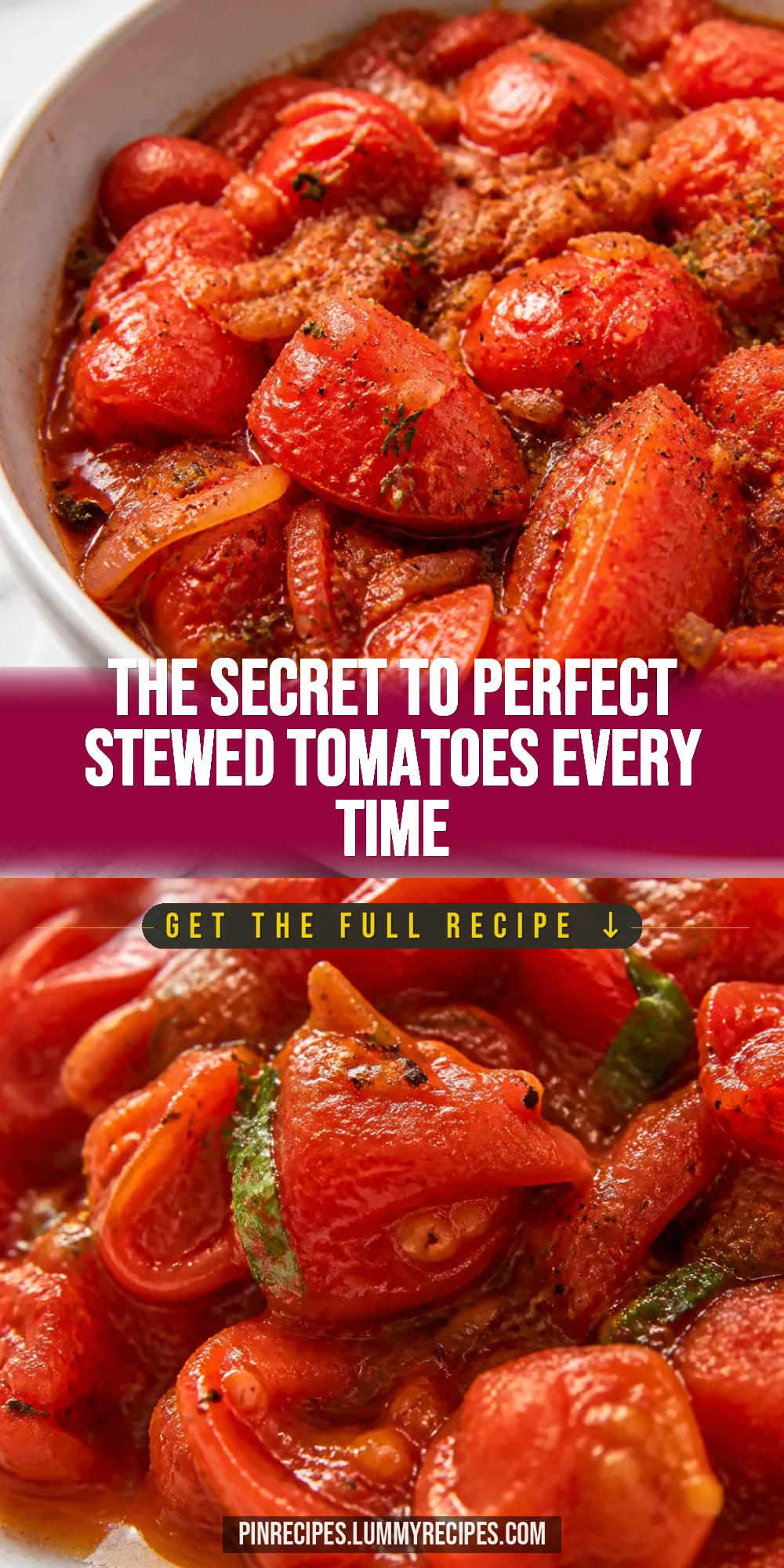
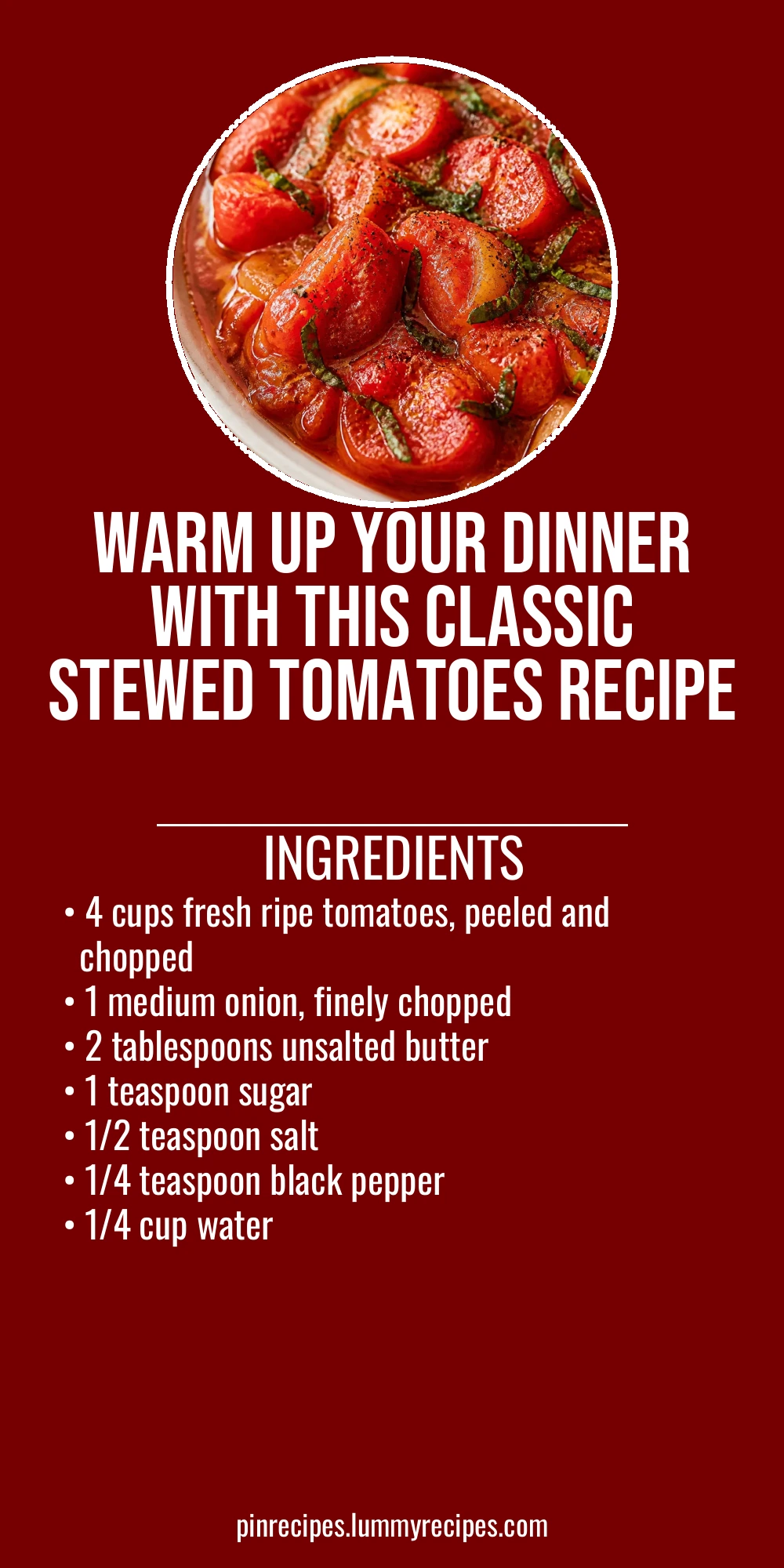
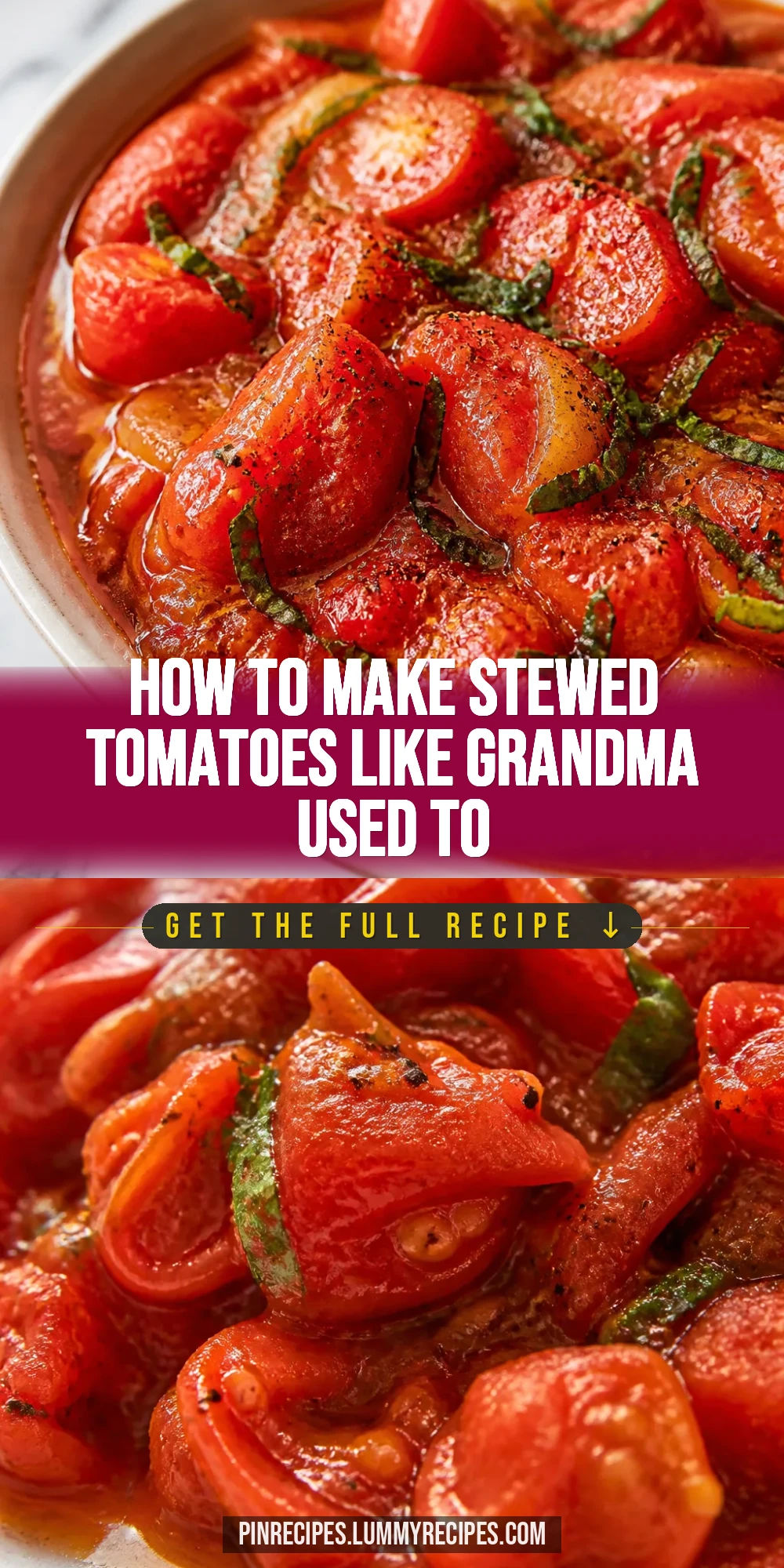
This old-fashioned stewed tomatoes recipe is a cozy side dish that brings out the natural sweetness of fresh tomatoes. Simmered gently with a touch of onion and a pinch of sugar, it’s perfect alongside Sunday roasts or any comforting meal.
Introduction
I’ve been making this classic stewed tomatoes recipe since I was a kid, watching my grandmother slowly simmer fresh tomatoes on the stove. It’s one of those simple dishes that feels like a warm hug on a plate. What I love about this version is how it balances the natural sweetness of ripe tomatoes with just a hint of onion and sugar to bring out the best flavors. It’s not rushed — the key is low and slow cooking, which softens the tomatoes into a luscious, chunky sauce that pairs beautifully with roasted meats or cornbread. I’ve tried faster versions, but they never quite get that comforting depth. The trick I learned is to peel the tomatoes first; it makes the texture so much smoother and less bitter. When it’s done, the kitchen smells heavenly, and you’ve got a side dish that feels like a little piece of home. It’s perfect for family dinners or whenever you want a taste of nostalgia.
How To Do It
Step 1
Start by peeling your tomatoes. To do this easily, score a small 'X' on the bottom of each tomato and blanch them in boiling water for about 30 seconds, then immediately transfer to ice water. This loosens the skins so they slip off easily without damaging the flesh. Peeling is key to avoid any bitterness and ensures a smooth, tender texture in your stew.
⏱ Time: 10 minutes
✓ Doneness: Tomato skins slip off easily when peeled correctly
Step 2
Chop the peeled tomatoes into chunks and finely dice the onion. The onion adds a subtle sweetness and depth to the stew, so don’t skip it. Finely chopping ensures it blends well and cooks evenly without overpowering the tomatoes.
⏱ Time: 5 minutes
✓ Doneness: Onion pieces are small and uniform
Step 3
Melt the butter in a medium saucepan over medium heat. Butter adds richness and helps carry the flavors of the tomatoes and onion. Avoid using oil here as butter gives a classic, comforting taste that’s hard to beat.
⏱ Time: 2 minutes
✓ Doneness: Butter is melted and slightly foaming but not browned
Step 4
Add the chopped onions to the melted butter and sauté gently until translucent and soft, about 5 minutes. This step draws out the onions’ natural sweetness and mellows their sharpness, which complements the tomatoes perfectly.
⏱ Time: 5 minutes
✓ Doneness: Onions are soft and translucent, not browned
Step 5
Add the chopped tomatoes to the pan along with the sugar, salt, pepper, and water. The sugar balances the acidity of the tomatoes, while the water helps create a stew-like consistency without drying out. Stir everything gently to combine.
⏱ Time: 3 minutes
✓ Doneness: Ingredients are evenly mixed and beginning to simmer
Step 6
Bring the mixture to a gentle simmer over medium-low heat. Then reduce the heat to low and let it cook uncovered for about 30-40 minutes, stirring occasionally. This slow simmer allows the tomatoes to break down and develop a rich, concentrated flavor.
⏱ Time: 30-40 minutes
✓ Doneness: Tomatoes are soft, stew is thickened but still saucy
Step 7
Taste and adjust seasoning if needed. Sometimes a pinch more salt or sugar can help balance the flavors depending on your tomatoes. This final tweak really makes the difference between good and great.
⏱ Time: 2 minutes
✓ Doneness: Flavors are balanced and pleasant, no overpowering acidity
Step 8
Remove from heat and let the stewed tomatoes rest for a few minutes before serving. This resting time lets the flavors meld even further and the stew cool just enough to serve comfortably.
⏱ Time: 5 minutes
✓ Doneness: Stew is warm and thickened, ready to enjoy
Step 9
Serve warm as a side dish with roasted meats, cornbread, or even over rice for a simple, comforting meal. This dish is best fresh but also reheats beautifully.
⏱ Time: 0 minutes
✓ Doneness: Stewed tomatoes are hot and flavorful on the plate
Pro Tips
Peel tomatoes by blanching and shocking in ice water for easy skin removal.
The skin of tomatoes can be tough and bitter, which affects texture and taste. Blanching loosens the skin without cooking the flesh, preserving fresh flavor and a smooth stew texture.
Cook the stew low and slow to develop deep, balanced flavors.
Simmering gently allows the tomatoes to break down properly and the flavors to meld without burning or becoming bitter. High heat can cause uneven cooking and harsh flavors.
Use unsalted butter instead of oil for a richer, more classic flavor.
Butter adds creaminess and helps soften the tomatoes’ acidity. Oils lack this richness and can make the dish feel flat or greasy.
Add sugar sparingly to balance acidity without making it sweet.
Tomatoes vary in tartness, so a touch of sugar rounds the flavor. Too much sugar will overpower the dish, so add gradually and taste.
Finely chop onions to ensure they cook evenly and blend well.
Large pieces can remain crunchy or overpower the stew. Finely chopped onions melt into the sauce, adding subtle sweetness and body.
Stir occasionally but gently to keep the tomato chunks intact.
Over-stirring can break down the tomatoes too much, resulting in a mushy stew. Gentle stirring helps maintain texture.
Adjust seasoning at the end after simmering to get the perfect balance.
Salt and pepper flavors intensify as the stew cooks. Adding them too early can lead to over-seasoning.
Common Mistakes to Avoid
Skipping the tomato peeling step
Why it happens Sometimes cooks want to save time or don’t realize the skin affects texture and bitterness.
Fix Take the extra 10 minutes to blanch and peel tomatoes. This improves the stew’s smoothness and removes any unpleasant bitterness from the skins.
Cooking over too high heat
Why it happens Impatience or lack of attention can lead to cranking up the heat to speed things up.
Fix Maintain a gentle simmer to prevent burning and preserve flavor. High heat can cause the tomatoes to taste harsh and ruin the texture.
Using underripe or watery tomatoes
Why it happens Sometimes only less ripe tomatoes are available or used to save money.
Fix Choose firm, ripe tomatoes with good color. Underripe tomatoes produce a watery, bland stew that lacks depth.
Over-stirring the stew
Why it happens Some cooks stir constantly to prevent sticking or out of nervousness.
Fix Stir gently and only occasionally to keep tomato chunks intact and avoid a mushy texture.
Not adjusting seasoning after cooking
Why it happens Adding all salt and pepper at the start assumes flavor won’t change during cooking.
Fix Taste and adjust seasoning at the end. This ensures balanced, well-rounded flavor.
Variations
Spiced Stewed Tomatoes
Add a pinch of smoked paprika or a small chopped chili pepper during cooking for a mild smoky or spicy kick. This variation adds warmth without overpowering the classic flavor.
Note: Add spices early with the onions to allow flavors to infuse evenly during simmering.
Herbed Stewed Tomatoes
Stir in fresh chopped basil or thyme at the end of cooking for a bright herbal note. This freshens the dish and complements the natural tomato sweetness.
Note: Add fresh herbs off heat to preserve their aroma and avoid bitterness.
Creamy Stewed Tomatoes
Stir in a splash of cream or half-and-half just before serving for a richer, silkier texture. This makes the stew feel more indulgent and pairs well with simple sides.
Note: Add cream off heat and stir gently to prevent curdling.
Stewed Tomatoes with Bacon
Cook chopped bacon first and use the rendered fat instead of butter. The smoky bacon flavor adds depth and a savory twist to the stew.
Note: Drain excess bacon fat if too much, to avoid greasiness.
Chunky Vegetable Stew
Add diced bell peppers and celery along with onions for extra texture and flavor. This makes the stew heartier and more vegetable-forward.
Note: Sauté additional vegetables with onions until softened before adding tomatoes.
Nutrition
Per Serving:
Nutritional values are estimates and may vary based on specific ingredients used.
Storage & Tips
Room Temperature
Stewed tomatoes can be kept at room temperature for up to 2 hours if covered. Beyond that, it’s best to refrigerate to prevent spoilage.
Refrigerator
Store in an airtight container for up to 4 days. The flavors deepen in the fridge, but the texture may thicken. Reheat gently before serving for best taste.
Freezer
Freeze in a sealed container for up to 3 months. To prevent freezer burn, wrap the container with an extra layer of plastic wrap or foil. Thaw overnight in the fridge before reheating.
Reheating
Reheat on the stovetop over low heat, stirring occasionally. Add a splash of water if the stew is too thick. Avoid microwaving at high power to prevent uneven heating.
Make Ahead
You can prepare the stewed tomatoes a day or two ahead and store in the fridge. Reheat gently just before serving. This makes it a great make-ahead side for busy dinners.
FAQ
Can I use canned tomatoes instead of fresh?
Yes, canned tomatoes work in a pinch, especially whole peeled ones. However, fresh tomatoes give a brighter, fresher flavor and better texture. If using canned, reduce added water and adjust seasoning as canned tomatoes can be more acidic.
Do I have to peel the tomatoes?
Peeling is highly recommended for a smooth texture and to avoid bitterness from the skins. It’s easy to do with blanching, and the result is worth the extra step.
Can I make this recipe vegan?
Absolutely! Simply substitute the butter with a plant-based margarine or olive oil. The flavor will be slightly different but still delicious and comforting.
How long can I store leftover stewed tomatoes?
Stored in an airtight container, leftovers keep well in the fridge for up to 4 days. For longer storage, freeze them for up to 3 months.
Is it okay to add other vegetables to the stew?
Yes, adding diced peppers, celery, or carrots can add texture and flavor. Just sauté them with the onions first to soften before adding tomatoes.
Can I make this recipe ahead of time?
Definitely! It actually tastes better the next day as the flavors meld. Store in the fridge and reheat gently before serving.
What’s the best way to reheat stewed tomatoes?
Reheat slowly on the stovetop over low heat, stirring occasionally. Add a splash of water if it’s too thick. Avoid high heat or microwave reheating to keep texture intact.
Can I freeze stewed tomatoes in glass containers?
It’s best to use freezer-safe plastic containers or heavy-duty freezer bags to avoid glass breakage from expansion. If using glass, leave plenty of headspace and ensure it’s tempered for freezing.
Final Thoughts
I hope you enjoy this classic stewed tomatoes recipe as much as my family does. Give it a try and share how it brings a bit of cozy comfort to your table!