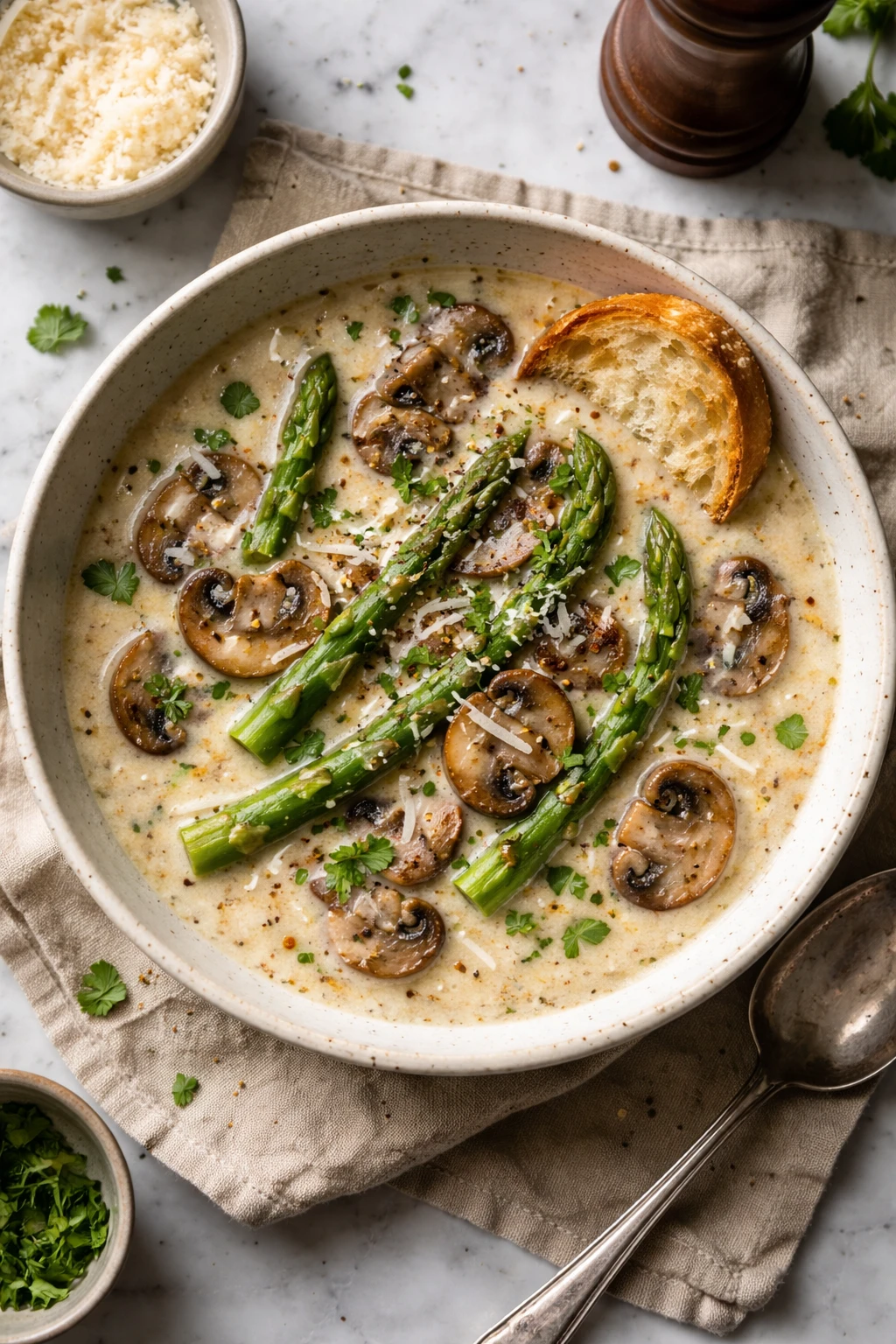
This silky mushroom and asparagus soup is like a warm hug on chilly evenings. The secret? A splash of cream and fresh thyme that elevates the earthy flavors. Ideal for a cozy dinner that feels fancy but is so easy to make!
Introduction
I first made this creamy mushroom and asparagus soup on a chilly spring evening when I had some fresh asparagus leftover and a craving for something comforting but light. The combination of earthy mushrooms with bright asparagus is just magical, and adding a bit of cream makes it silky without being heavy. What I love about this recipe is how easy it is to pull together, yet it feels special enough to serve for a cozy family dinner or when friends drop by unexpectedly. The trick I learned is to sauté the mushrooms and onions slowly to develop deep flavor before adding the broth. Also, blending part of the soup but leaving some chunks gives it a wonderful texture. The finished soup has this beautiful balance of creamy richness and fresh vegetable brightness that keeps you coming back for more. It’s one of those recipes I keep going back to because it’s simple, satisfying, and just feels like a warm hug in a bowl.
What You'll Need
Approximately 6 cups, 4 servings
- 2 tablespoons unsalted butter
- 1 medium onion, finely chopped
- 3 cloves garlic, minced
- 12 ounces cremini mushrooms, sliced
- 1 bunch asparagus, trimmed and cut into 1-inch pieces
- 4 cups vegetable broth
- 1/2 cup heavy cream
- 1 teaspoon fresh thyme leaves
- Salt and freshly ground black pepper, to taste
- 2 tablespoons olive oil
How To Do It
Step 1
Start by heating the butter and olive oil in a large pot over medium heat. Add the finely chopped onion and cook slowly for about 5-7 minutes until it turns translucent and soft but not browned. This gentle cooking releases the onion’s natural sweetness which forms the flavor base for the soup. Avoid rushing this step or turning the heat too high, as burnt onions would add bitterness. Stir occasionally and watch for a soft, fragrant aroma indicating the onions are ready.
⏱ Time: 7
✓ Doneness: Onions are translucent and soft, no browning or crisp edges
Step 2
Add the minced garlic and sliced mushrooms to the pot. Cook over medium heat for about 8-10 minutes, stirring often, until the mushrooms release their moisture and start to brown. This caramelization adds a deep umami flavor that’s essential for the soup’s richness. If you skip this step or cook too quickly, the mushrooms won’t develop as much flavor and the soup may taste flat. Keep stirring to prevent sticking and ensure even browning.
⏱ Time: 10
✓ Doneness: Mushrooms are browned and have shrunk in size, garlic is fragrant but not burnt
Step 3
Stir in the asparagus pieces and fresh thyme leaves, cooking for 2-3 minutes to slightly soften the asparagus while releasing the herb’s aroma. This step brightens the soup and adds a fresh note that balances the mushrooms’ earthiness. Don’t overcook the asparagus here; you want it tender but still retaining some bite for texture contrast.
⏱ Time: 3
✓ Doneness: Asparagus turns bright green and is just tender when pierced with a fork
Step 4
Pour in the vegetable broth and bring the mixture to a simmer. Let it cook gently for about 15 minutes to allow all the flavors to meld together. Simmering softens the vegetables further and helps the thyme infuse the broth. Avoid boiling vigorously as it could toughen the asparagus and make the soup cloudy.
⏱ Time: 15
✓ Doneness: Soup is simmering steadily, asparagus is tender throughout
Step 5
Use an immersion blender to puree about half of the soup directly in the pot. This technique creates a creamy texture without adding thickening agents. Leaving some chunks whole keeps the soup interesting and rustic. If you don’t have an immersion blender, transfer half the soup carefully to a blender and puree, then return it to the pot.
⏱ Time: 5
✓ Doneness: Soup is partially smooth with visible vegetable chunks
Step 6
Stir in the heavy cream and heat gently for another 3-5 minutes. The cream adds richness and smoothness, rounding out the flavors beautifully. Be careful not to boil after adding cream to prevent curdling. Just warm it through until the soup is silky and luscious.
⏱ Time: 5
✓ Doneness: Soup is warm, creamy, and slightly thickened without boiling
Step 7
Season the soup with salt and freshly ground black pepper to taste. Seasoning at the end allows you to adjust precisely since the broth and cream can vary in saltiness. Taste carefully and add seasoning gradually to avoid over-salting.
⏱ Time: 2
✓ Doneness: Balanced seasoning with no overpowering saltiness
Step 8
Ladle the soup into bowls and garnish with a few fresh thyme leaves or a drizzle of olive oil if you like. This adds a pretty finishing touch and a hint of fresh herb aroma right before serving. It also makes the presentation inviting and homey.
⏱ Time: 2
✓ Doneness: Soup looks inviting with fresh herb garnish and slight oil sheen
Step 9
Serve immediately with crusty bread or a light salad for a complete meal. The soup is best fresh but also reheats well if stored properly. Enjoy the creamy texture and fresh flavors together for a comforting dinner that feels special but is totally doable on a weeknight.
⏱ Time: 1
✓ Doneness: Soup is hot and creamy, paired well with bread or salad
Pro Tips
Sauté onions slowly over medium-low heat to develop sweetness.
Slow cooking onions breaks down their natural sugars gradually, creating a sweet, mellow flavor base. Rushing this step or cooking on high heat risks burning the onions, which imparts bitterness and ruins the soup’s delicate balance.
Brown mushrooms thoroughly to deepen umami flavor.
The Maillard reaction during browning produces complex flavor compounds that add richness and depth. Mushrooms release moisture, so cooking them slowly and stirring prevents steaming and encourages caramelization.
Add asparagus late to preserve its bright color and texture.
Asparagus cooks quickly and can become mushy or lose its vibrant green color if overcooked. Adding it near the end keeps it tender but crisp, providing a fresh contrast to the creamy soup.
Partially blend the soup for a creamy yet textured finish.
Blending only half the soup creates a velvety texture while retaining some chunks for body and interest. Fully pureed soup can feel heavy and one-dimensional, while unblended soup might be too thin.
Add cream at the end and warm gently to avoid curdling.
Cream can separate if boiled or heated too quickly. Adding it last and warming over low heat preserves its smooth texture and rich flavor, ensuring the soup stays silky.
Season at the end to control saltiness precisely.
Broth and cream vary in salt content, so seasoning after cooking lets you adjust to taste without over-salting. Tasting before adding salt is key to balance.
Use fresh thyme rather than dried for a brighter herbal note.
Fresh thyme releases subtle, fresh aromas that complement the soup without overpowering. Dried thyme can be too intense or woody, changing the flavor profile.
Common Mistakes to Avoid
Cooking mushrooms too quickly or overcrowding the pan
Why it happens Many cooks rush mushroom cooking to save time or add too many at once, causing them to steam instead of brown.
Fix Cook mushrooms in batches if needed, over medium heat, stirring occasionally. This allows moisture to evaporate and mushrooms to caramelize, enhancing flavor.
Overcooking asparagus until mushy and dull
Why it happens Adding asparagus too early or boiling vigorously breaks down its structure and color.
Fix Add asparagus near the end of cooking and simmer gently just until tender. This keeps it bright and slightly crisp.
Boiling soup after adding cream causing curdling
Why it happens High heat denatures the cream proteins, separating fat and liquid.
Fix Add cream last and warm on low heat without boiling. Stir gently to incorporate.
Not seasoning at the end leading to bland or over-salted soup
Why it happens Adding salt too early without tasting broth and cream levels causes misjudgment.
Fix Always taste before adding salt and season gradually at the end for balanced flavor.
Pureeing the entire soup making it too heavy
Why it happens Some blend everything for smoothness, losing texture contrast.
Fix Blend only half for creaminess while keeping chunks for interest and better mouthfeel.
Variations
Vegan Version
Swap butter for olive oil and use coconut cream or cashew cream instead of heavy cream. Use vegetable broth without added dairy. The soup will still be creamy and rich but with a subtle coconut note that pairs well with mushrooms and asparagus.
Note: Coconut or cashew cream can separate if boiled; warm gently and blend well to maintain smooth texture.
Add a Hint of White Wine
After sautéing mushrooms and onions, deglaze the pan with 1/4 cup dry white wine before adding broth. This adds brightness and subtle acidity, enhancing the soup’s complexity without overpowering.
Note: Allow wine to reduce slightly to cook off alcohol and concentrate flavor before adding broth.
Cheesy Twist
Stir in 1/2 cup grated Parmesan cheese at the end for a savory, nutty depth. This adds richness and a slightly salty finish that complements the creamy texture beautifully.
Note: Add cheese off heat or on very low heat to prevent clumping or graininess.
Spicy Kick
Add a pinch of red pepper flakes when sautéing onions or a dash of smoked paprika for warmth and spice. This variation adds a gentle heat that contrasts nicely with the creamy soup base.
Note: Adjust spice level carefully to keep balance with creamy flavors.
Herb Blend
Mix fresh parsley, chives, and tarragon with thyme for a more complex herbal profile. Stir in fresh herbs just before serving to keep their brightness and aroma intact.
Note: Add delicate herbs off heat to preserve flavor and color.
Nutrition
Per Serving:
Nutritional values are estimates and may vary based on specific ingredients used.
Storage & Tips
Room Temperature
Soup can safely sit at room temperature for up to 2 hours if covered. Beyond that, bacteria growth increases, so refrigerate promptly to keep it safe.
Refrigerator
Store soup in an airtight container for up to 4 days. The flavor may deepen, but the asparagus can soften further. Reheat gently on the stove or microwave before serving.
Freezer
Freeze soup in airtight containers or heavy-duty freezer bags for up to 3 months. Leave some headspace for expansion. Thaw overnight in the fridge and reheat gently to restore texture.
Reheating
Warm soup on the stovetop over low heat, stirring occasionally. Add a splash of broth or water if it’s too thick. Avoid boiling after adding cream to prevent curdling.
Make Ahead
You can prepare the soup base (sautéed veggies and broth) 1-2 days ahead and refrigerate. Add cream and finish seasoning just before reheating and serving for freshest flavor.
FAQ
Can I use frozen asparagus in this soup?
Yes, frozen asparagus works fine but tends to be softer. Add it a bit later in cooking to avoid overcooking. The soup might be less crisp but still tasty.
What can I substitute for heavy cream?
Half-and-half or coconut cream can be used for a lighter or dairy-free option, respectively. The texture will be less rich but still creamy.
How can I make this soup vegan?
Replace butter with olive oil and use coconut or cashew cream instead of dairy cream. Ensure your broth is vegetable-based and free of animal products.
Can I make this soup ahead of time?
Absolutely! Make the soup up to 2 days ahead and store in the fridge. Add cream and season just before reheating for best flavor.
Why does my soup sometimes turn grainy after adding cream?
This happens if you boil the soup after adding cream, causing it to curdle. Warm the soup gently on low heat and stir continuously to prevent this.
Is it necessary to blend half the soup?
Blending half creates a creamy texture while keeping some chunks for interest. You can blend fully or not at all, but partial blending offers the best balance.
Can I use other mushrooms instead of cremini?
Yes, shiitake or portobello mushrooms work well for deeper flavor. Avoid very watery mushrooms like enoki as they can alter texture.
How do I store leftover soup safely?
Cool soup quickly and store in airtight containers in the fridge for up to 4 days or freeze for up to 3 months. Reheat gently before serving.
Final Thoughts
I hope you enjoy making this cozy mushroom and asparagus soup as much as I do. It’s a simple way to bring warmth and comfort to your dinner table—let me know how yours turns out!