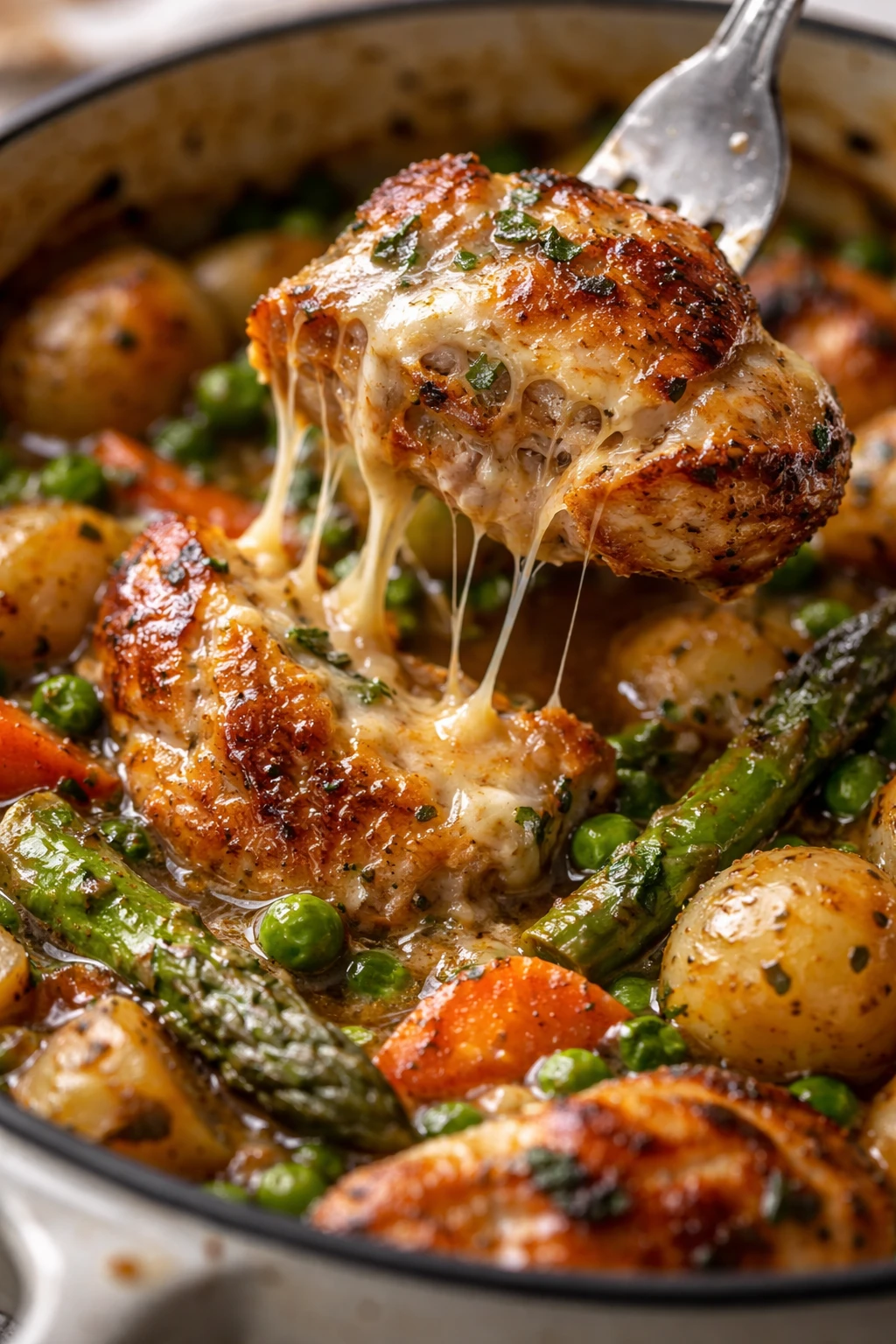
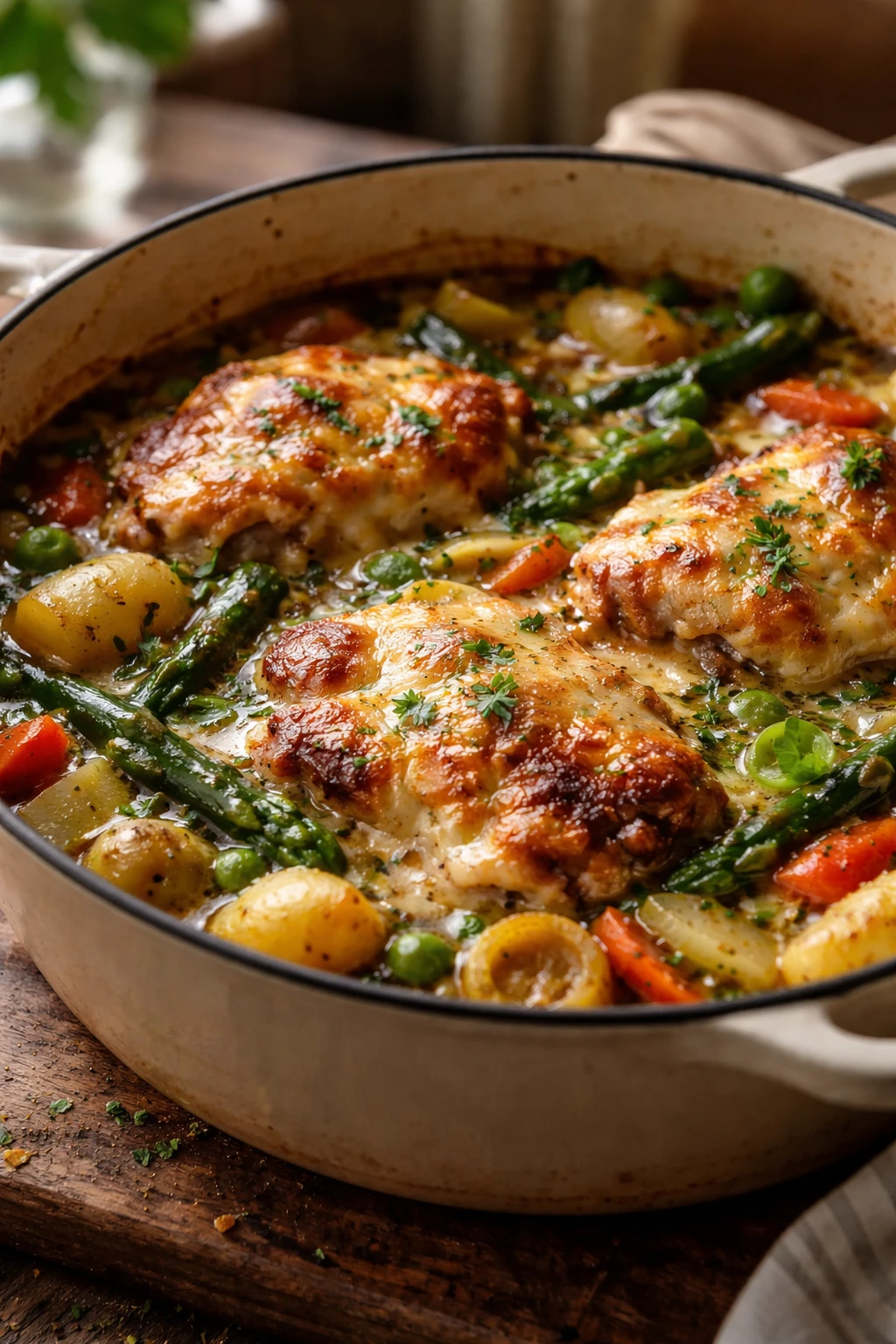
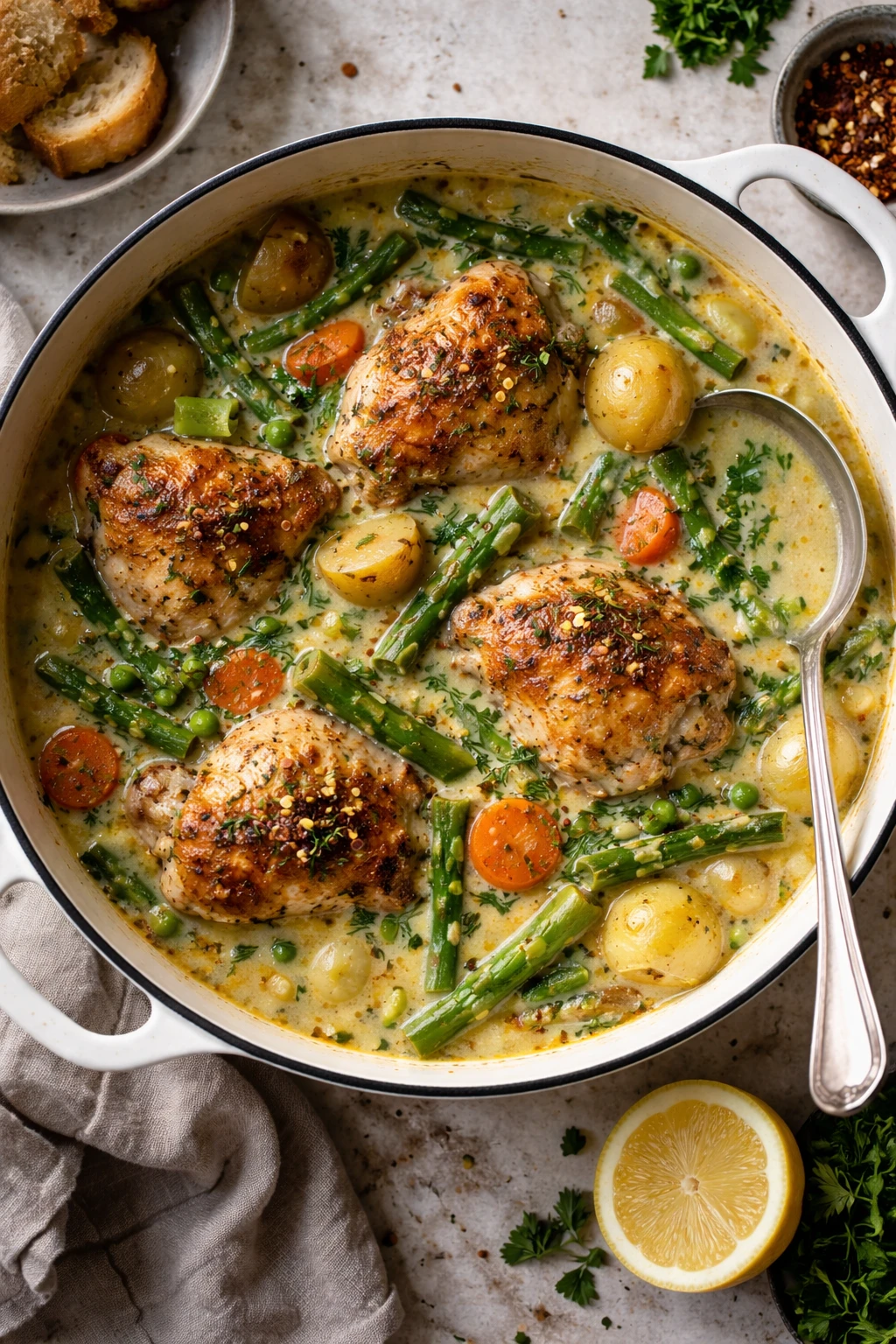
This one-pot chicken stew is loaded with fresh spring veggies and tender chicken, making it a comforting meal that’s both hearty and light. The secret? Slow simmering to blend all those fresh flavors perfectly. Great for a simple weeknight dinner or a cozy weekend lunch!
Introduction
I first made this one-pot chicken and spring vegetable stew on a chilly spring evening when I wanted something comforting but fresh. I’d been craving a meal that felt hearty without weighing me down, and this recipe hit the spot perfectly. What makes it stand out is the way the fresh asparagus and peas brighten the stew, giving it a lovely spring twist. Plus, cooking everything in one pot means less mess and more time to relax. I learned early on that browning the chicken before simmering really locks in the flavor and keeps the meat tender. The broth simmers gently with the veggies, soaking up all those delicious aromas. When it’s done, you get a stew that’s warm and satisfying but still light enough to enjoy any time. It’s become a go-to in my house for those nights when you want something simple and nourishing without fussing over a million pots. You’ll notice the veggies stay vibrant and fresh, which is such a treat compared to heavier winter stews. Give it a try—I think you’ll love how easy and tasty it is!
What You'll Need
Approximately 4 hearty servings
- 1 tablespoon olive oil
- 1 pound boneless skinless chicken thighs, cut into chunks
- 1 medium onion, diced
- 3 cloves garlic, minced
- 3 medium carrots, sliced
- 2 cups asparagus, cut into 2-inch pieces
- 1 cup fresh peas
- 4 cups low-sodium chicken broth
- 1 teaspoon dried thyme
- Salt and pepper to taste
- 2 tablespoons chopped fresh parsley
How To Do It
Step 1
Heat olive oil in a large pot over medium-high heat. Add the chicken chunks in a single layer, making sure not to crowd the pan. Brown the chicken on all sides for about 5-7 minutes. This step is crucial because browning develops deep flavor through the Maillard reaction and helps seal in the juices, resulting in tender, flavorful meat. Avoid stirring too often or you’ll steam the chicken instead of browning it. Once browned, remove the chicken and set aside.
⏱ Time: 7 minutes
✓ Doneness: Chicken pieces are golden brown on all sides with a slight crust.
Step 2
In the same pot, add the diced onion and cook over medium heat until softened and translucent, about 5 minutes. Stir in the minced garlic and cook for another minute until fragrant. This step builds the stew’s flavor base by softening the aromatics and releasing their sweetness. Rushing this or skipping it can leave the stew tasting flat or raw.
⏱ Time: 6 minutes
✓ Doneness: Onions are soft and translucent; garlic is aromatic but not browned.
Step 3
Return the browned chicken to the pot. Add the sliced carrots, dried thyme, and pour in the chicken broth. Bring the mixture to a gentle simmer over medium heat. Simmer uncovered for about 15 minutes to allow the flavors to meld and the chicken to cook through. Simmering gently helps tenderize the chicken and lets the broth absorb the vegetable flavors. Avoid boiling vigorously as it can toughen the meat and cloud the broth.
⏱ Time: 15 minutes
✓ Doneness: Broth gently bubbles; chicken is cooked through and carrots start to soften.
Step 4
Add the asparagus pieces and fresh peas to the pot. Continue to simmer for another 5-7 minutes until the vegetables are tender but still bright and slightly crisp. Adding the delicate spring vegetables towards the end preserves their fresh flavor and vibrant color, keeping the stew lively and fresh-tasting.
⏱ Time: 7 minutes
✓ Doneness: Vegetables are tender yet vibrant green and not mushy.
Step 5
Season the stew with salt and pepper to taste. Stir in chopped fresh parsley just before serving to add a fresh herbal note and a pop of color. Fresh herbs added at the end brighten the dish and enhance the overall flavor without overpowering the delicate vegetables.
⏱ Time: 2 minutes
✓ Doneness: Stew is well seasoned with fresh green flecks of parsley.
Step 6
Ladle the stew into bowls and serve hot with crusty bread or over rice for a complete meal. The warm broth and tender chicken pair beautifully with the fresh veggies, making this stew a satisfying yet light comfort food.
⏱ Time: 0 minutes
✓ Doneness: Stew is steaming hot and ready to enjoy.
Step 7
If you want a thicker stew, mix 1 tablespoon of cornstarch with 2 tablespoons of cold water and stir it into the simmering stew during the last few minutes. This will give the broth a nice velvety texture without overpowering the fresh flavors.
⏱ Time: 3 minutes
✓ Doneness: Broth thickens slightly and coats the back of a spoon.
Step 8
For added depth, consider stirring in a splash of lemon juice or a teaspoon of white wine vinegar just before serving. The acidity brightens the flavors and balances the richness of the chicken and broth.
⏱ Time: 1 minute
✓ Doneness: Stew has a subtle tang that lifts the overall flavor.
Step 9
Let leftovers cool to room temperature before storing. Reheat gently on the stove with a splash of broth or water to revive the stew’s texture and flavors. Avoid overheating to keep the chicken tender and vegetables fresh.
⏱ Time: 0 minutes
✓ Doneness: Stew is evenly reheated without drying out.
Pro Tips
Don’t skip browning the chicken before simmering.
Browning triggers the Maillard reaction, which creates rich, complex flavors and a pleasant crust. Skipping this step results in bland chicken and a less flavorful stew.
Add delicate vegetables like asparagus and peas last.
These veggies cook quickly and retain their color and texture better when added near the end. Adding them too early makes them mushy and dull.
Simmer gently instead of boiling vigorously.
A gentle simmer cooks the chicken evenly and keeps the broth clear and flavorful. Boiling can toughen meat and cloud the stew.
Use low-sodium broth to control seasoning.
Store-bought broths vary in salt content. Starting with low-sodium lets you adjust seasoning precisely without over-salting.
Fresh herbs go in at the end.
Adding herbs too early causes them to lose their flavor and brightness. Stir them in just before serving for maximum freshness.
Thicken the stew with a cornstarch slurry if desired.
A cornstarch slurry gently thickens the broth without clouding it or altering the flavor, giving a silky texture.
Serve with crusty bread to soak up the broth.
The bread complements the stew’s flavors and adds a satisfying textural contrast.
Common Mistakes to Avoid
Skipping the chicken browning step
Why it happens People often want to save time and skip browning, assuming simmering alone is enough to flavor the chicken.
Fix Take the extra 5-7 minutes to brown the chicken in batches without crowding the pan. This step adds essential flavor and texture, making the stew much tastier.
Adding all vegetables at once
Why it happens It’s tempting to throw everything in together for simplicity.
Fix Add hard vegetables like carrots early but hold off on tender spring veggies until the last few minutes to keep them fresh and vibrant.
Boiling instead of simmering
Why it happens Some cooks confuse a rolling boil with a proper simmer.
Fix Lower the heat once the stew comes to a boil so it just bubbles gently. This keeps meat tender and broth clear.
Using high-sodium broth without adjusting salt
Why it happens Not checking broth sodium content can lead to an overly salty stew.
Fix Choose low-sodium broth or adjust added salt gradually while tasting.
Overcooking fresh herbs
Why it happens Adding herbs too early causes them to lose flavor.
Fix Add fresh herbs right before serving to keep their brightness.
Variations
Spicy Spring Chicken Stew
Add a diced jalapeño or a pinch of red pepper flakes when cooking the onions for a subtle heat that complements the fresh veggies. This variation adds a warming kick without overpowering the stew’s delicate flavors.
Note: Watch the spice level carefully and add gradually to avoid overpowering the broth.
Creamy One-Pot Chicken Stew
Stir in ½ cup of heavy cream or coconut milk at the end of cooking for a richer, creamier texture. This gives the stew a comforting, silky mouthfeel while keeping the spring veggies vibrant.
Note: Add cream off heat to prevent curdling and stir gently.
Herbed Lemon Chicken Stew
Add fresh lemon zest and a squeeze of lemon juice just before serving along with extra fresh herbs like dill or tarragon for a bright, aromatic twist that enhances the spring flavors.
Note: Add lemon juice last to preserve its fresh acidity.
Vegetarian Spring Stew
Replace chicken with firm tofu or chickpeas and use vegetable broth. This makes a delicious plant-based stew that’s still hearty and full of fresh spring vegetables.
Note: Sauté tofu until golden for better texture; adjust cooking times for chickpeas.
Rustic Potato and Chicken Stew
Add diced potatoes along with carrots for a heartier stew. Potatoes soak up the broth and add a comforting starchy element, perfect for cooler days.
Note: Simmer potatoes longer until tender; may need extra broth.
Nutrition
Per Serving:
Nutritional values are estimates and may vary based on specific ingredients used.
Storage & Tips
Room Temperature
You can keep the stew covered at room temperature for up to 2 hours safely. Beyond that, refrigerate to prevent bacterial growth.
Refrigerator
Store leftovers in an airtight container for up to 3 days. The flavors meld over time, but vegetables may soften. Reheat gently to preserve texture.
Freezer
Freeze the stew in airtight containers for up to 3 months. Cool completely before freezing to prevent ice crystals. Thaw overnight in the fridge before reheating.
Reheating
Reheat on the stovetop over low heat, adding a splash of broth or water to loosen the stew if needed. Avoid high heat to keep chicken tender and veggies intact.
Make Ahead
You can brown the chicken and prep vegetables a day ahead, storing them separately. Assemble and simmer the stew on the day you plan to serve for freshest flavor.
FAQ
Can I use chicken breasts instead of thighs?
Yes, but chicken breasts cook faster and can dry out if overcooked. Add them later in the simmering process and watch closely to keep them tender and juicy.
How do I thicken the stew if it’s too thin?
Make a slurry by mixing 1 tablespoon cornstarch with 2 tablespoons cold water and stir it into the simmering stew. Cook a few more minutes until it thickens to your liking.
Can I make this stew in a slow cooker?
Absolutely! Brown the chicken and sauté the aromatics first, then transfer everything to the slow cooker. Cook on low for 4-6 hours, adding delicate veggies in the last 30 minutes.
What can I substitute for fresh peas if I don’t have any?
Frozen peas work just as well—add them frozen during the last few minutes of cooking. Avoid canned peas as they can be mushy and less flavorful.
Is it okay to use dried parsley instead of fresh?
Fresh parsley adds brightness and color that dried can’t replicate. If you must use dried, add it earlier in cooking but expect a milder flavor.
How can I make this stew spicier?
Add chopped jalapeño or red pepper flakes when cooking the onions. Start with a small amount and adjust to taste to avoid overpowering the stew.
Can I freeze leftovers?
Yes, freeze in airtight containers for up to 3 months. Thaw overnight in the fridge and reheat gently. Fresh veggies might soften but the stew will still taste great.
What’s the best way to reheat without drying out the chicken?
Reheat slowly on the stove over low heat, adding a splash of broth or water if needed. Avoid microwaving on high to prevent drying the chicken.
Final Thoughts
I hope you enjoy this cozy one-pot chicken and spring vegetable stew as much as my family does. Give it a try and let me know how it turns out!