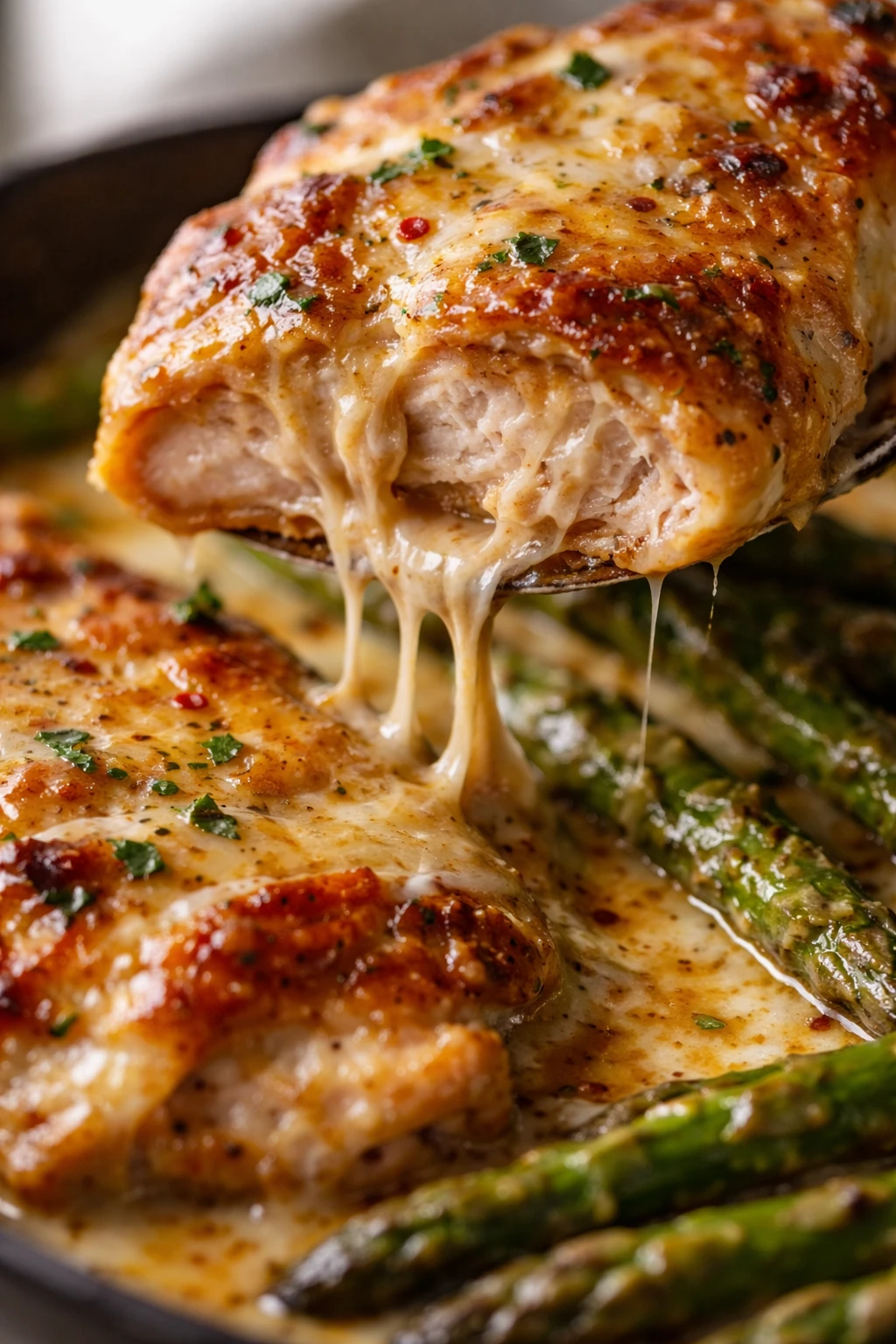
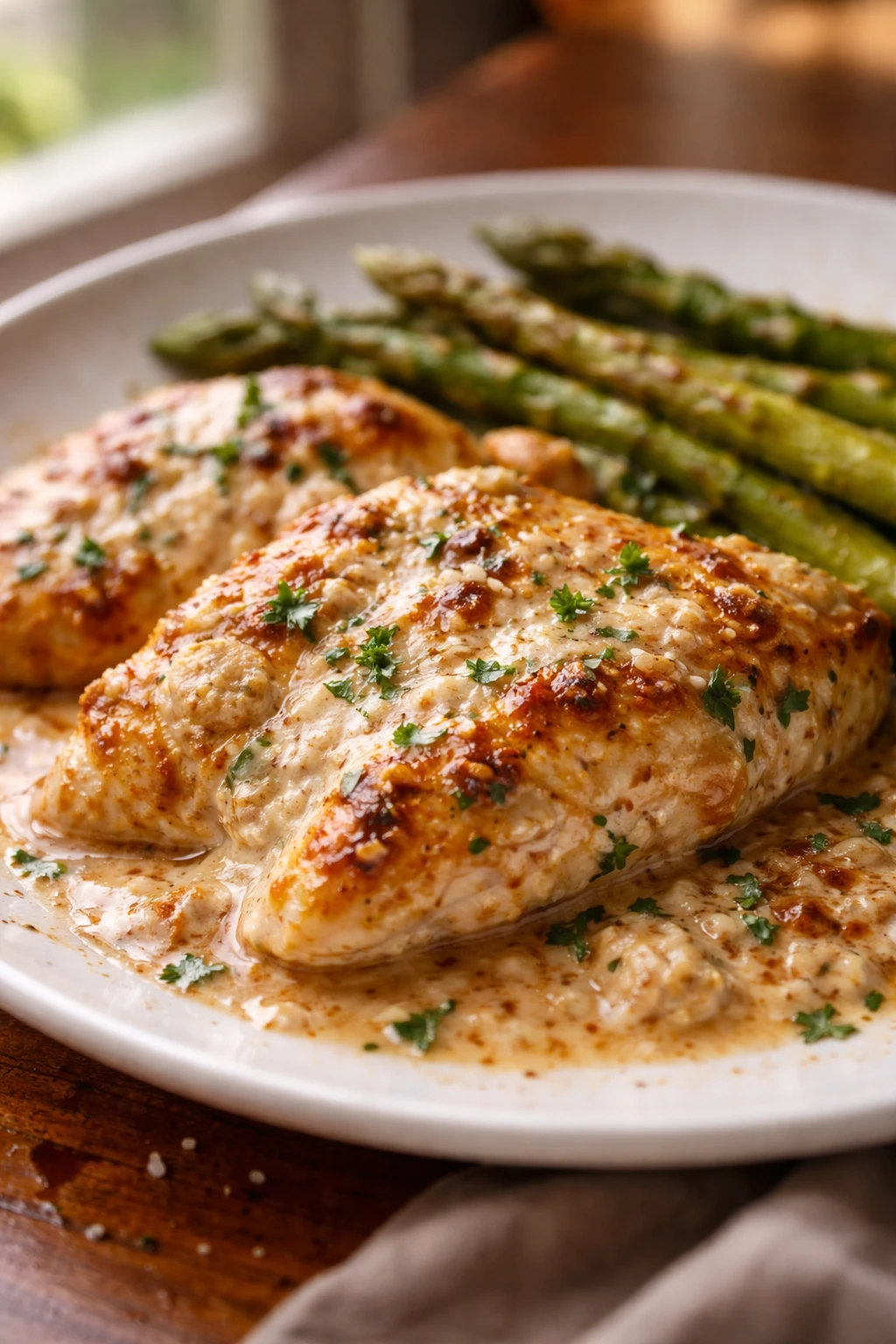
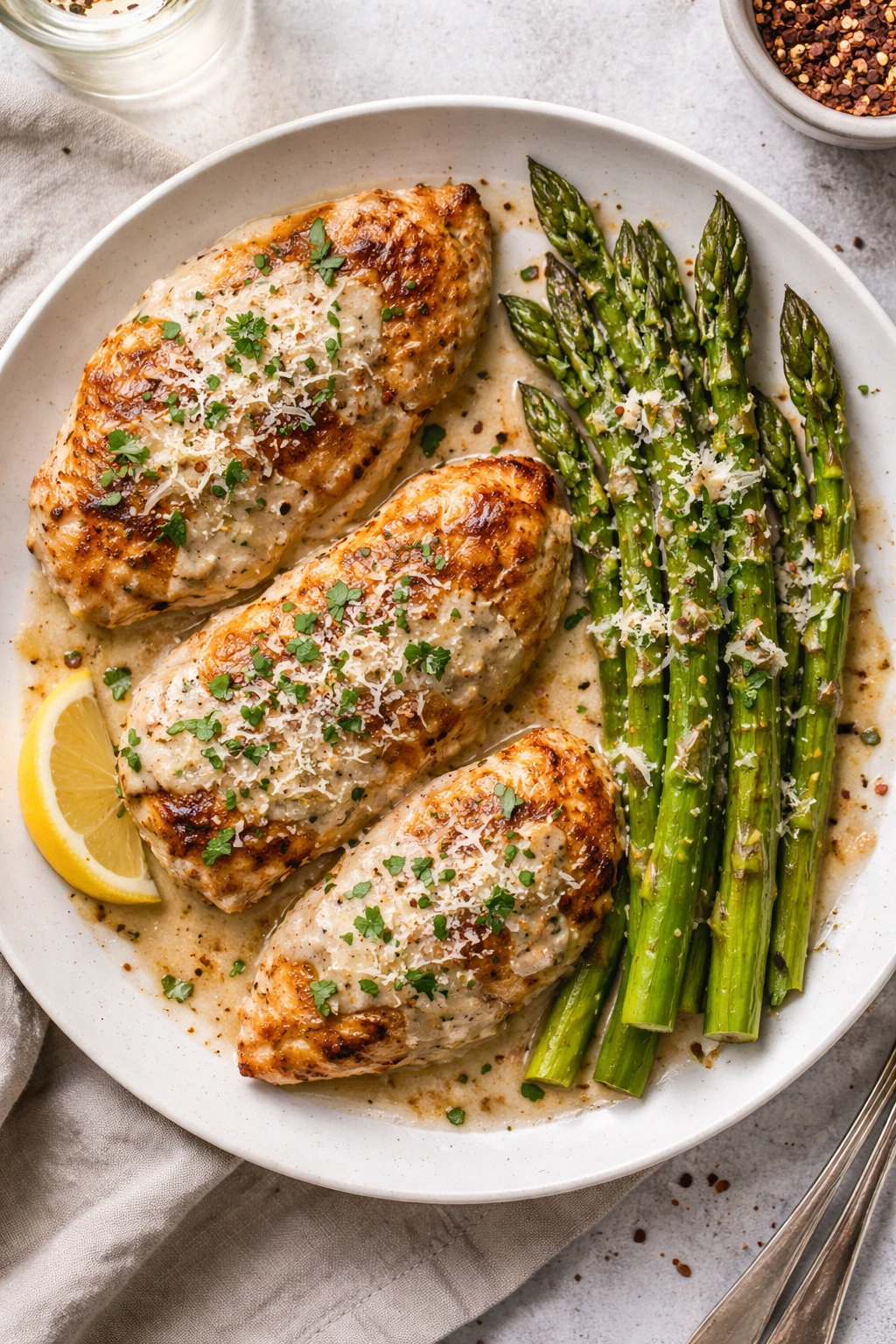
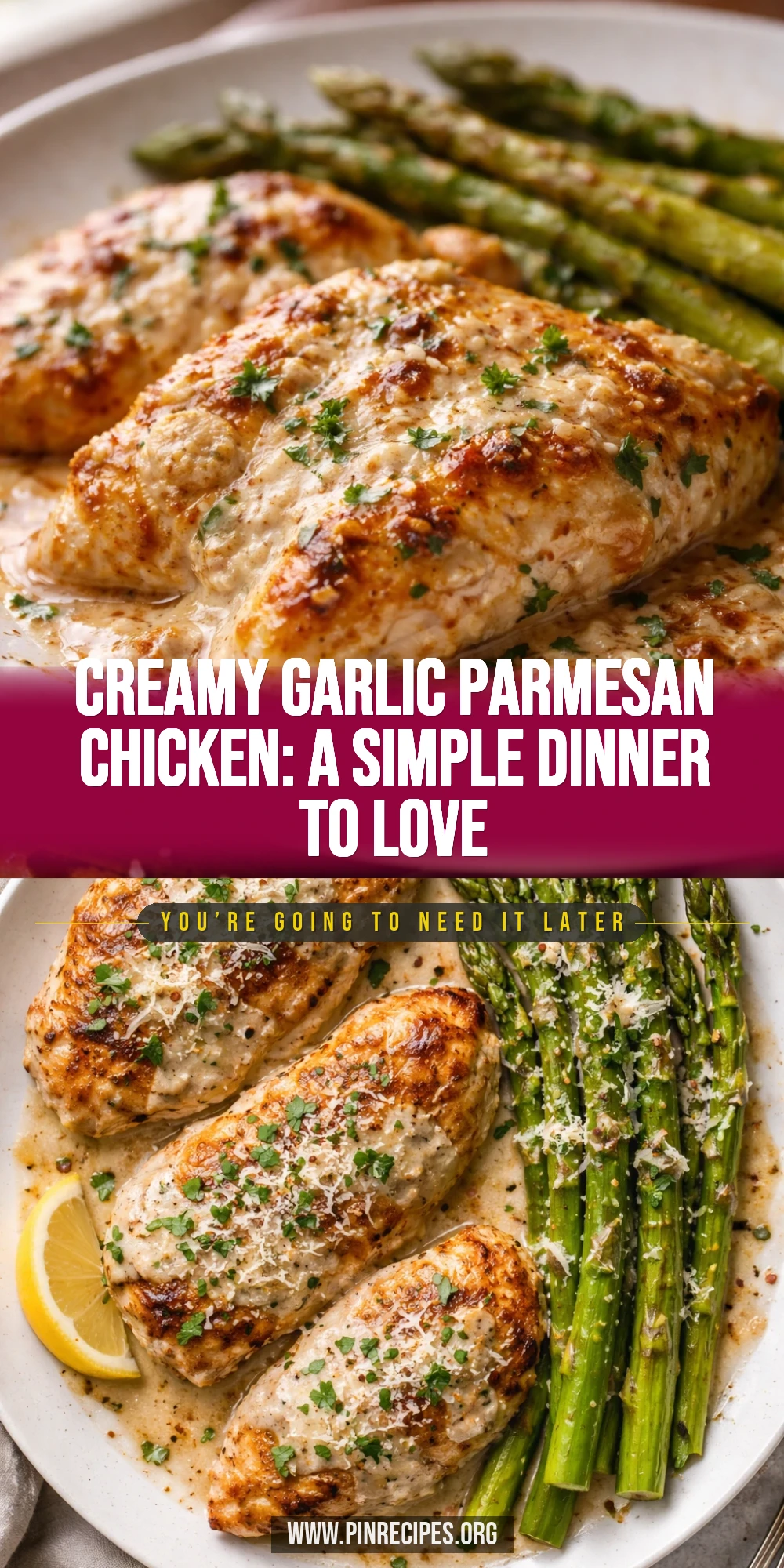
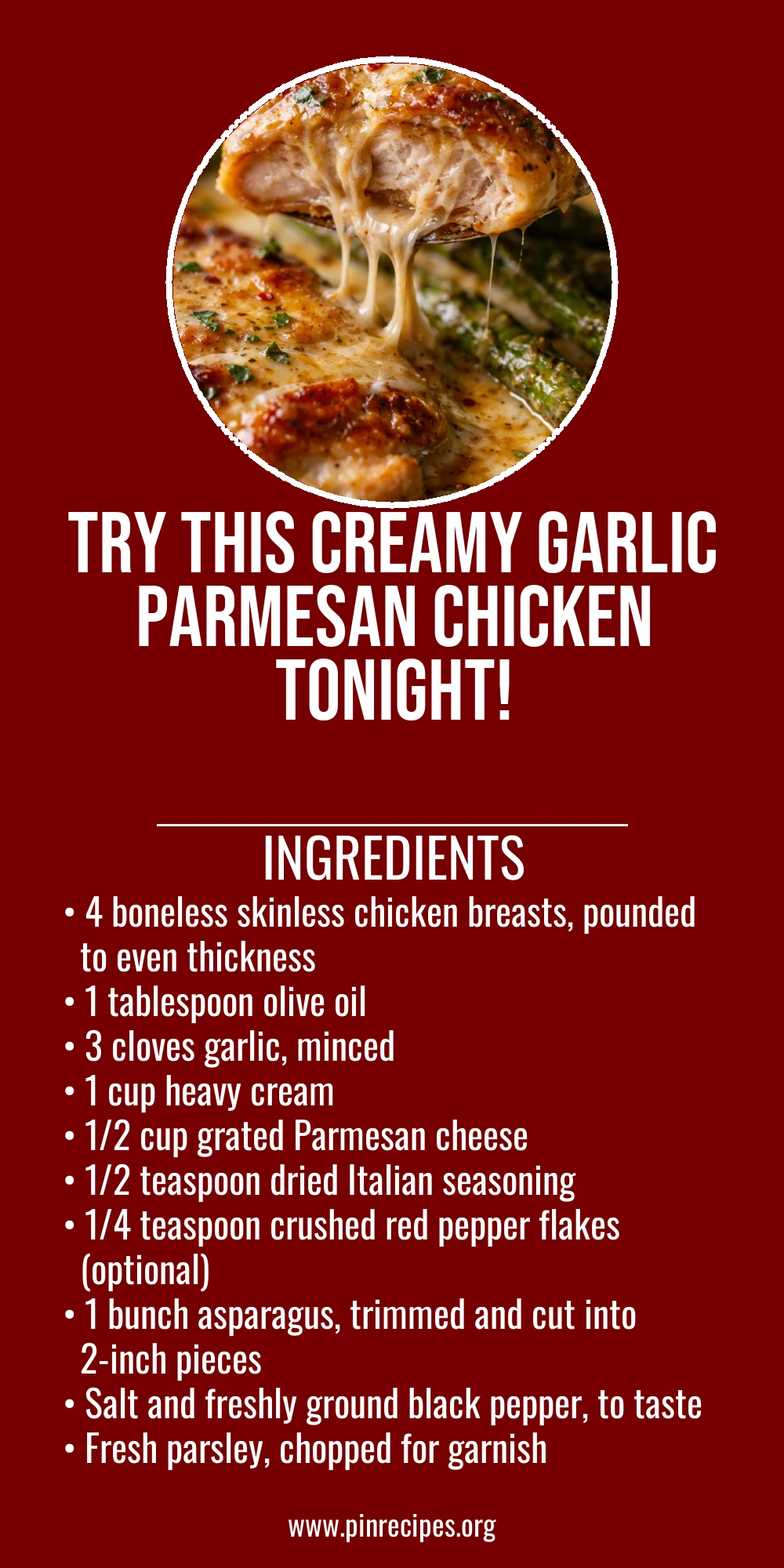
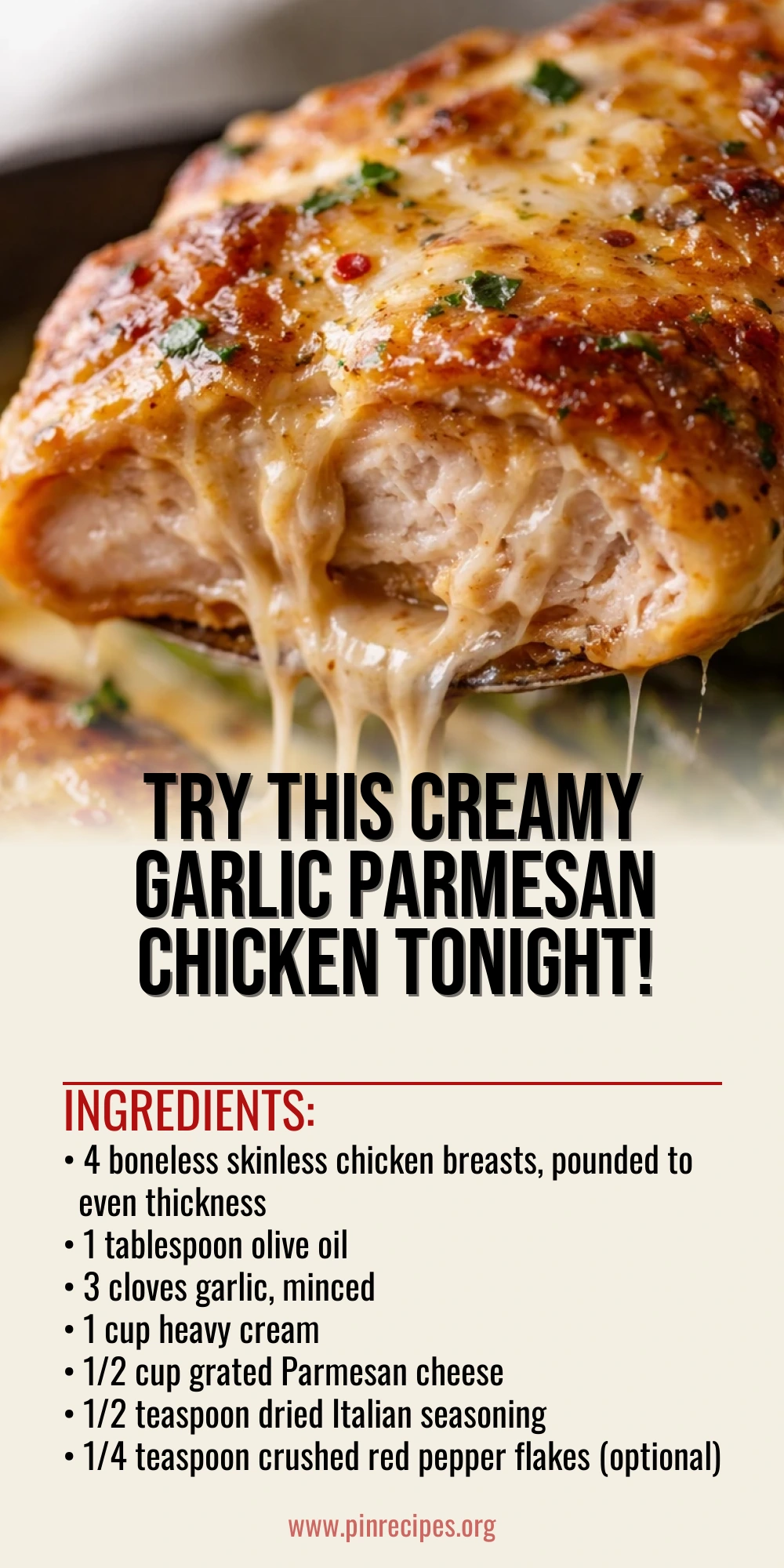
This creamy garlic parmesan chicken is a weeknight winner. The sauce is rich but lightened by fresh asparagus, making it a perfect dinner that feels fancy but cooks up fast.
Introduction
I stumbled upon this creamy garlic parmesan chicken recipe a few years ago when I wanted a comforting dinner that didn't take all night. What I love about this version is how the asparagus adds a fresh, slightly crisp contrast to the rich sauce. I usually pound the chicken breasts to an even thickness so they cook quickly and evenly, which is a little trick I picked up after some unevenly cooked dinners. The sauce is simple but packed with garlic flavor and just the right amount of Parmesan to make it indulgent without being heavy. When it’s done, the chicken is tender and coated in a velvety sauce, with the asparagus providing a nice pop of green and texture. It’s become a staple in my weeknight rotation because it feels special but is so easy to throw together. Plus, it’s one of those dishes that everyone in my family actually loves, which is a win in my book!
How To Do It
Step 1
Start by prepping your chicken breasts. Place them between two sheets of plastic wrap or parchment and gently pound them with a meat mallet or rolling pin to about 1/2 inch thickness. This helps them cook evenly and stay juicy. If you skip this step, you might end up with dry edges and undercooked centers. Season both sides with salt, pepper, and a sprinkle of Italian seasoning to build flavor right from the start.
⏱ Time: 10 minutes
✓ Doneness: Chicken breasts are uniformly flattened and seasoned evenly.
Step 2
Heat olive oil in a large skillet over medium-high heat. When the oil shimmers, add the chicken breasts and cook without moving them for about 5-6 minutes until golden brown on one side. Flip and cook another 5 minutes until the chicken is cooked through. Avoid overcrowding the pan to ensure a nice sear. Overcooking will dry out the chicken, so watch for firm but springy texture and clear juices.
⏱ Time: 12 minutes
✓ Doneness: Chicken is golden brown and cooked through, no longer pink inside.
Step 3
Remove the chicken from the skillet and set aside. In the same pan, reduce heat to medium and add minced garlic. Stir frequently for about 1 minute until fragrant but not browned, as burnt garlic tastes bitter and can ruin the sauce.
⏱ Time: 1 minute
✓ Doneness: Garlic is aromatic and lightly softened, no browning.
Step 4
Pour in the heavy cream and stir to deglaze the pan, scraping up any browned bits from the bottom. This adds tons of flavor to the sauce. Let the cream simmer gently for 2-3 minutes to thicken slightly. Avoid boiling vigorously or the cream may curdle.
⏱ Time: 3 minutes
✓ Doneness: Sauce thickens slightly and coats the back of a spoon.
Step 5
Stir in the grated Parmesan cheese, Italian seasoning, and red pepper flakes if using. Keep stirring until the cheese melts completely and the sauce is smooth. If the sauce feels too thick, add a splash of water or broth to loosen it up. Season with salt and pepper to taste.
⏱ Time: 3 minutes
✓ Doneness: Sauce is creamy, cheesy, and smooth without lumps.
Step 6
Add the trimmed asparagus pieces to the sauce and stir to coat. Cover the skillet and let the asparagus cook in the sauce for about 4-5 minutes until tender but still bright green and slightly crisp. Overcooked asparagus becomes mushy and dull in color.
⏱ Time: 5 minutes
✓ Doneness: Asparagus is tender yet firm and vibrant green.
Step 7
Return the cooked chicken breasts to the skillet, nestling them into the sauce and asparagus. Spoon some sauce over the top and let everything warm together for 2-3 minutes so the flavors meld. This step ensures the chicken stays juicy and the sauce coats it beautifully.
⏱ Time: 3 minutes
✓ Doneness: Chicken is warmed through and sauce clings to the surface.
Step 8
Taste the sauce and adjust seasoning if needed. Sometimes a little extra salt or pepper brightens the dish. If you want more garlic punch, you can add a small splash of garlic-infused olive oil at this point.
⏱ Time: 2 minutes
✓ Doneness: Balanced seasoning with no overpowering flavors.
Step 9
Serve the creamy garlic parmesan chicken hot, garnished with freshly chopped parsley for a pop of color and freshness. This dish pairs wonderfully with crusty bread or a simple side of rice to soak up the sauce. Enjoy immediately for best texture and flavor.
⏱ Time: 2 minutes
✓ Doneness: Dish plated attractively with vibrant green garnish.
Pro Tips
Pound the chicken breasts to even thickness before cooking.
This ensures the chicken cooks evenly and stays juicy. Uneven breasts can lead to dry edges or undercooked centers, which ruins the texture and taste.
Don’t rush the searing step; let the chicken brown properly.
The Maillard reaction during searing adds deep flavor and a pleasant crust. Flipping too soon prevents this and results in pale, bland chicken.
Simmer the cream gently to prevent curdling.
Boiling cream can cause it to separate, ruining the sauce’s smooth texture. A gentle simmer keeps the emulsion stable and silky.
Add the asparagus last and cook just until tender-crisp.
Overcooked asparagus becomes mushy and loses its vibrant color and fresh flavor, which balances the richness of the sauce.
Use freshly grated Parmesan for best melting and flavor.
Pre-grated cheese often contains additives that affect melting and texture. Freshly grated cheese melts smoothly and brings authentic flavor.
Deglaze the pan with cream to capture flavorful brown bits.
Those browned bits from searing chicken are packed with flavor. Deglazing lifts them into the sauce, enriching its taste.
Season the sauce at the end to avoid over-salting.
Parmesan cheese is salty, so seasoning after adding cheese helps balance the flavors without making the dish too salty.
Common Mistakes to Avoid
Not pounding chicken evenly
Why it happens Many cooks assume chicken will cook evenly as is, but breasts vary in thickness which leads to uneven cooking.
Fix Use a meat mallet or rolling pin to gently pound chicken to uniform thickness before cooking. This prevents dry or raw spots.
Overcooking chicken breasts
Why it happens Rushing the cooking or cooking at too high heat can dry out the chicken quickly.
Fix Cook over medium-high heat and watch for visual cues like golden crust and no pink inside. Use a thermometer if unsure (165°F internal temp).
Burning the garlic
Why it happens Garlic cooks very fast and burns easily if left unattended or cooked on too high heat.
Fix Add garlic after removing chicken and reduce heat to medium. Stir constantly and cook just until fragrant.
Boiling the cream sauce
Why it happens High heat causes cream to curdle and separate.
Fix Simmer gently and stir often, keeping the heat moderate to maintain smooth sauce.
Overcooking asparagus
Why it happens Cooking asparagus too long results in mushy texture and dull color.
Fix Add asparagus last and cook just until tender-crisp, about 4-5 minutes.
Variations
Add Mushrooms for Earthy Flavor
Sauté sliced mushrooms with the garlic before adding cream for a deeper, earthier sauce. Mushrooms add umami and texture, making the dish heartier.
Note: Cook mushrooms until browned and their moisture evaporates before adding cream to avoid watery sauce.
Swap Asparagus for Broccoli
If asparagus isn’t in season, use broccoli florets instead. They provide a similar crunch and pair well with creamy sauces, though the cooking time may be slightly longer.
Note: Steam broccoli separately or add earlier to the sauce to ensure it softens properly.
Make it Spicy with Red Pepper Flakes
Add a pinch or two of crushed red pepper flakes to the sauce for a gentle heat that livens up the creamy richness. Great for those who like a little kick.
Note: Add red pepper flakes with the garlic to infuse the oil and sauce evenly.
Use Half-and-Half for Lighter Sauce
Replace heavy cream with half-and-half for a lighter version. The sauce won’t be as thick or rich but still delicious and creamy enough for a weeknight meal.
Note: Simmer gently and watch closely as half-and-half can curdle more easily than heavy cream.
Serve Over Pasta or Rice
Instead of serving chicken and asparagus alone, spoon the creamy sauce over cooked pasta or rice to make it a complete meal with extra carbs and comfort.
Note: Drain pasta or rice well to prevent thinning the sauce.
Nutrition
Per Serving:
Nutritional values are estimates and may vary based on specific ingredients used.
Storage & Tips
Room Temperature
This dish should not be left out at room temperature for more than 2 hours. Cover loosely if you need to keep it out briefly before serving.
Refrigerator
Store leftovers in an airtight container in the fridge for up to 3 days. The sauce may thicken when cold; reheat gently with a splash of cream or water to loosen it.
Freezer
Freeze the chicken and sauce separately in airtight containers for up to 2 months. Thaw overnight in the fridge before reheating to maintain texture.
Reheating
Reheat on the stovetop over low heat, stirring often and adding a splash of cream or broth if the sauce is too thick. Avoid microwaving as it can cause uneven heating and curdling.
Make Ahead
You can prepare the sauce and trim asparagus a day ahead, storing them separately. Cook chicken fresh or reheat gently to keep it juicy. Assemble and warm everything just before serving.
FAQ
Can I use chicken thighs instead of breasts?
Absolutely! Boneless skinless thighs work well and stay juicy. They may need a slightly longer cooking time and won’t require pounding. Adjust cooking times accordingly and watch for doneness.
What can I substitute for heavy cream?
Half-and-half or whole milk mixed with a bit of melted butter can work, but the sauce will be less rich and may not thicken as well. Coconut cream is an option for dairy-free but changes the flavor profile.
How do I prevent the cream sauce from curdling?
Cook the sauce on medium or low heat and avoid boiling. Stir frequently and add cheese gradually. Using fresh heavy cream also helps maintain a smooth texture.
Can I make this recipe gluten-free?
Yes! This recipe is naturally gluten-free as long as your Parmesan cheese and seasonings don’t contain additives with gluten. Always check labels to be sure.
What sides go best with this dish?
Crusty bread, rice, or simple pasta are great for soaking up the sauce. A light salad or roasted potatoes also complement the creamy chicken nicely.
How do I know when the chicken is fully cooked?
The chicken should be golden brown on the outside and no longer pink inside. Using a meat thermometer, the internal temperature should reach 165°F (74°C).
Can I prepare this dish ahead of time?
You can prep the sauce and asparagus a day ahead, but it’s best to cook the chicken fresh or reheat gently to avoid drying it out. Assemble just before serving.
How do I store leftovers properly?
Keep leftovers in airtight containers in the fridge for up to 3 days. Reheat gently on the stove with a splash of cream or broth to restore sauce consistency.
Final Thoughts
Give this creamy garlic parmesan chicken with asparagus a try — it’s a cozy, flavorful dinner that’s easier than it looks. I’d love to hear how it turns out for you!