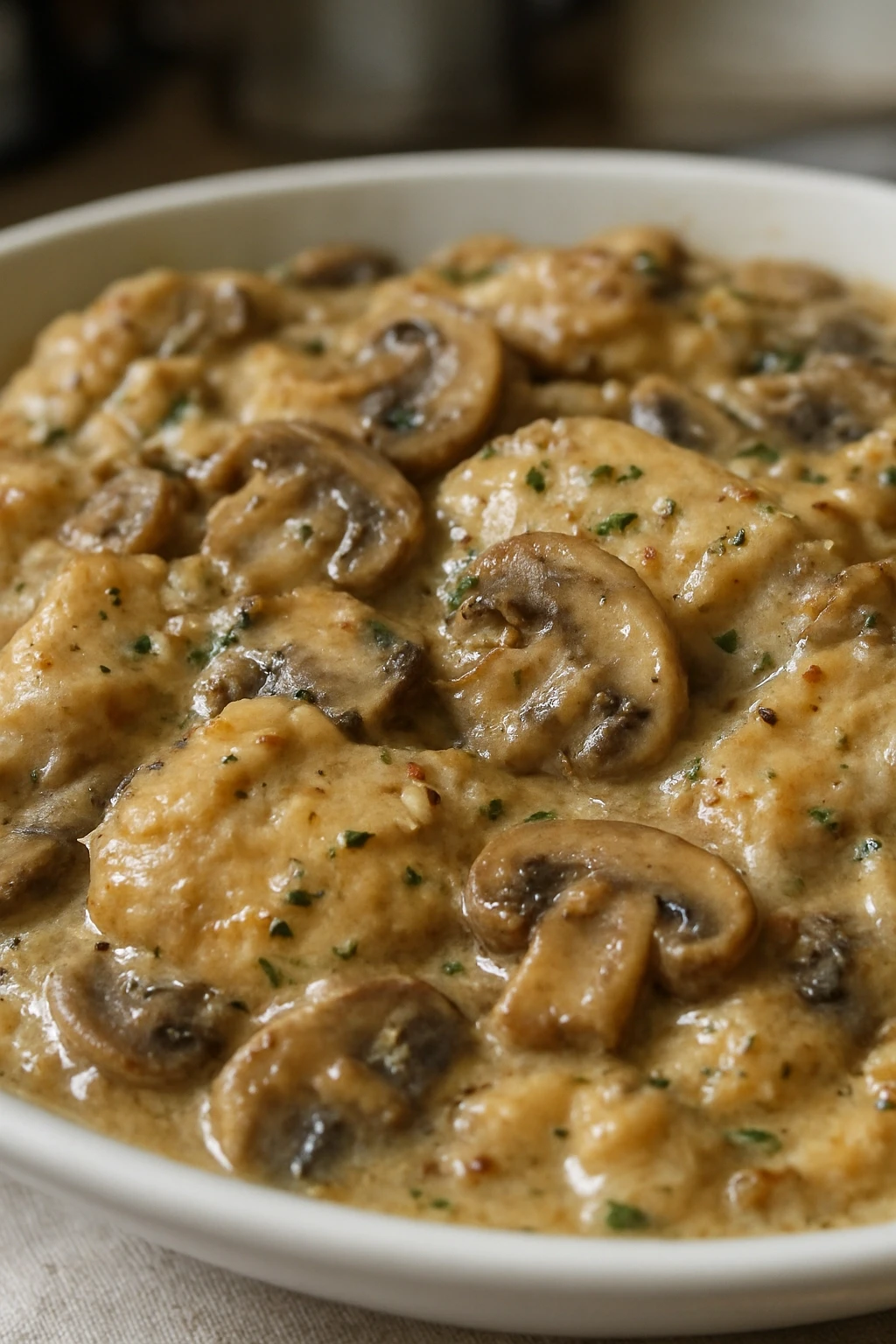
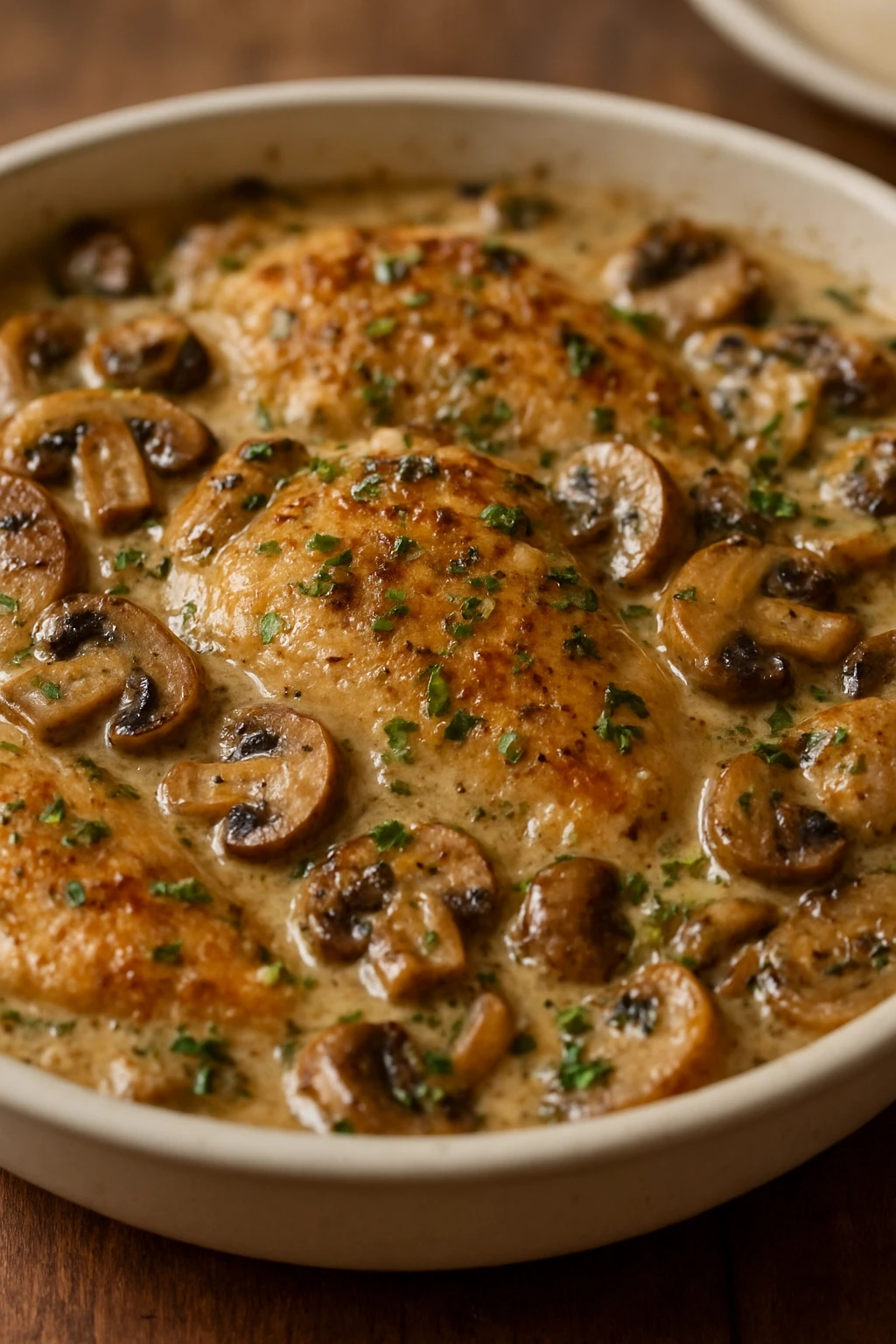
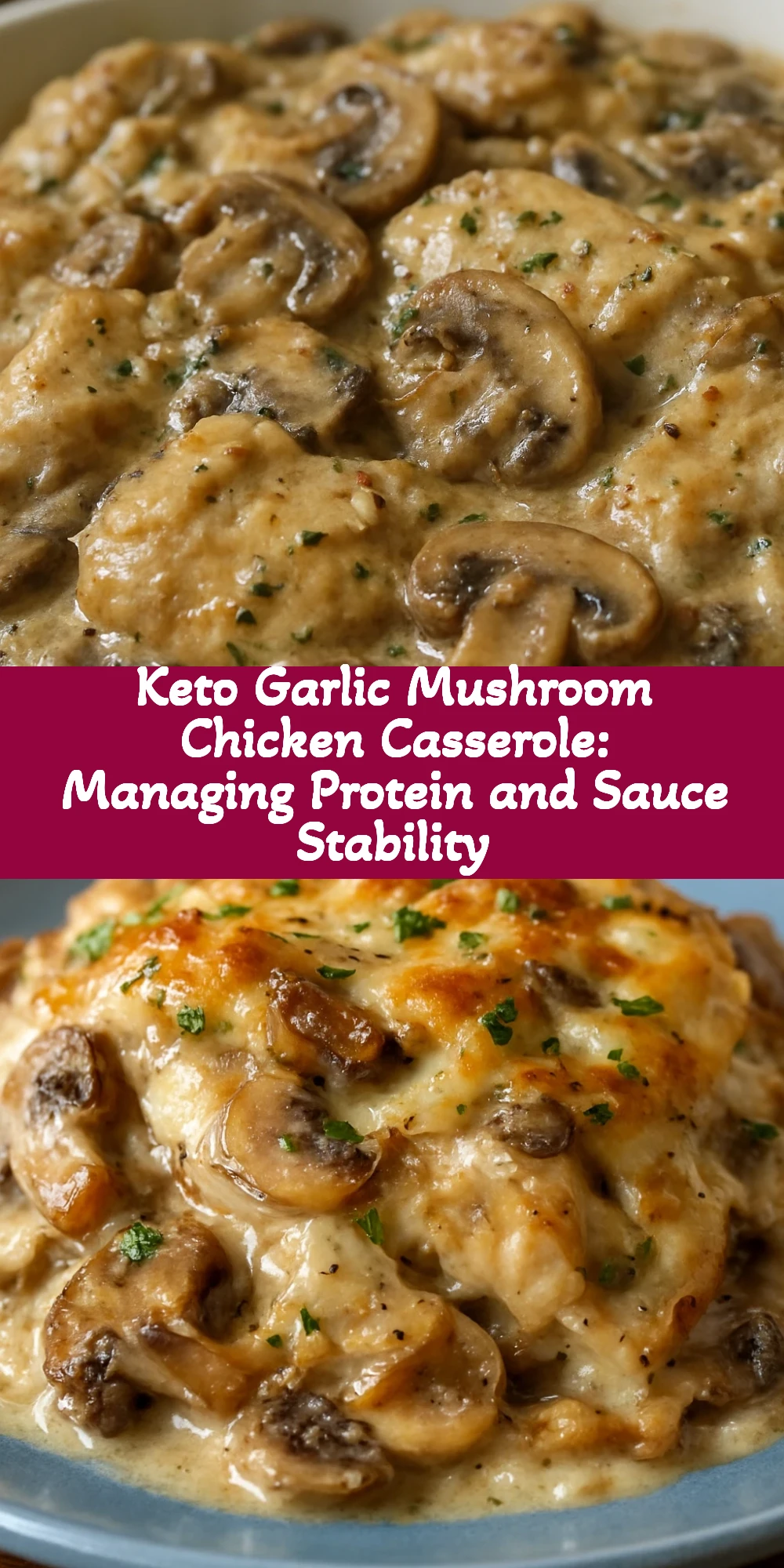
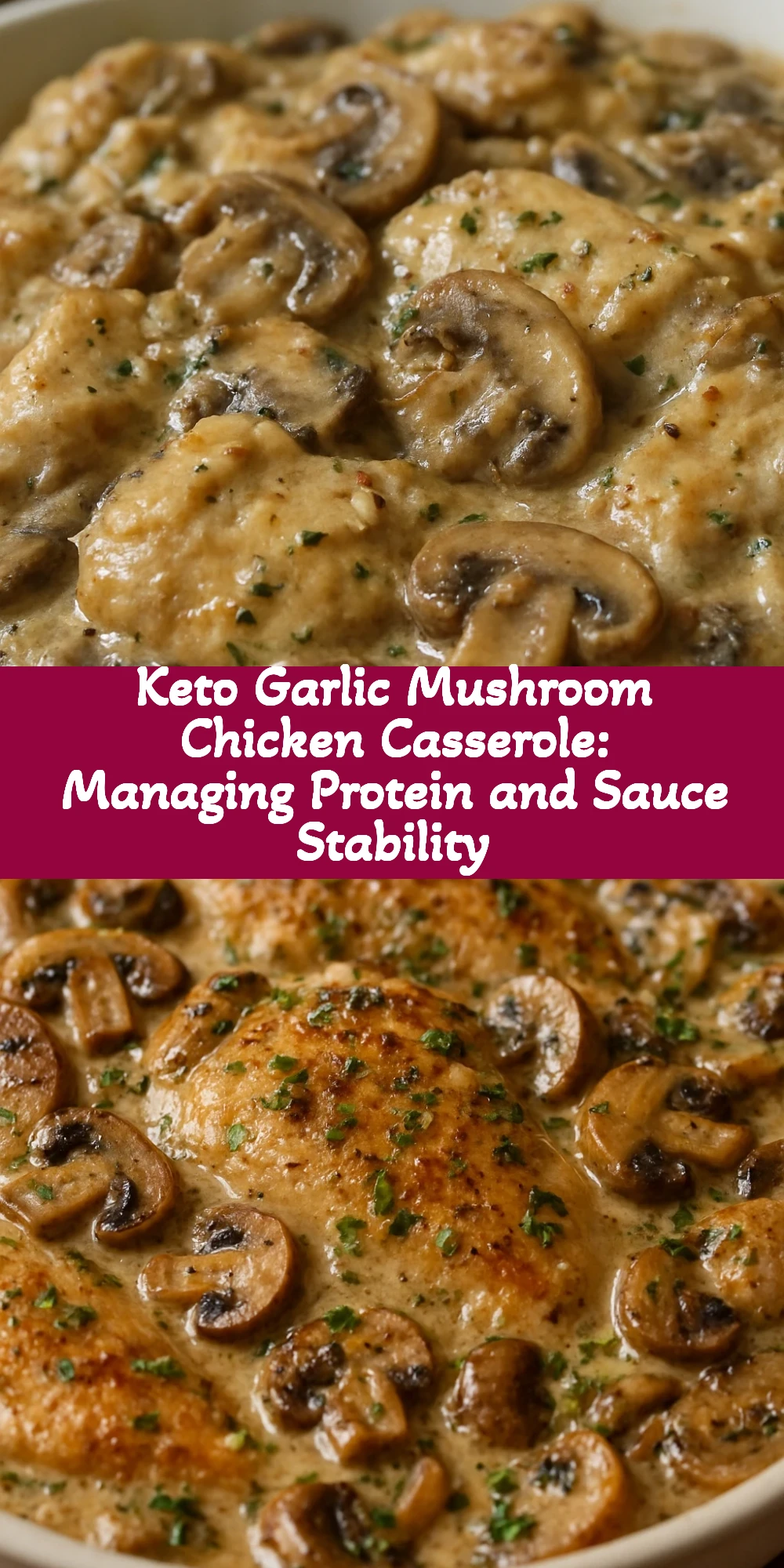
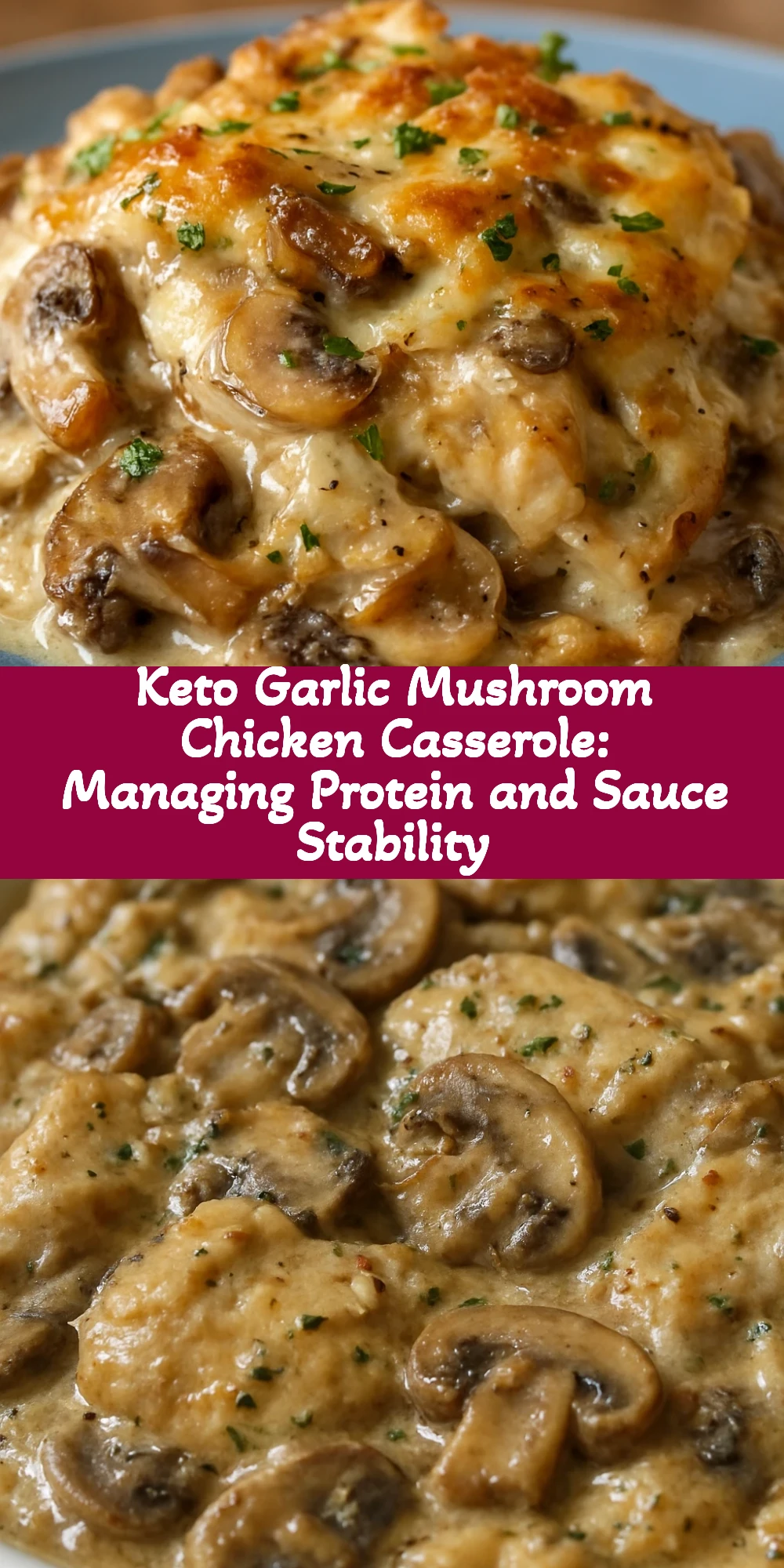
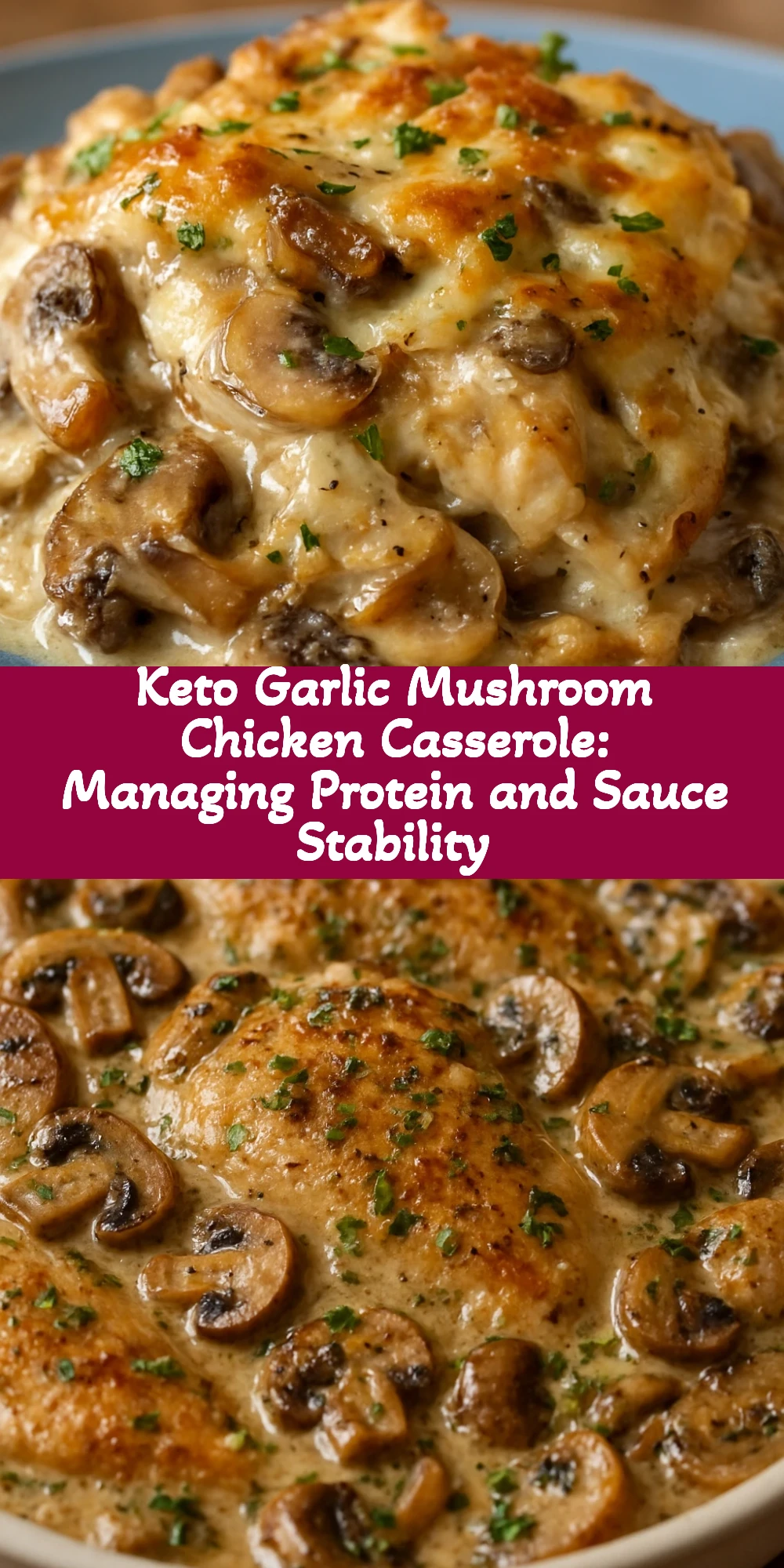
A guide to making a keto-compliant chicken and mushroom casserole that maintains creamy sauce consistency while preventing common failures like curdled dairy, overcooked chicken, and watery vegetables. Learn the science of fat emulsification and proper casserole layering.
What You'll Need
Approximately 8 cups of casserole, 6 servings
- 1.25 pounds (565g) boneless, skinless chicken breasts, cut into 1.5-inch (4cm) cubes
- 1 pound (450g) mushrooms (cremini, button, or oyster), sliced 1/4 inch (6mm) thick
- 3 tablespoons (45ml) unsalted butter, divided
- 1 tablespoon (15ml) avocado oil or olive oil
- 5 cloves (25g) garlic, minced
- 1 cup (240ml) heavy cream, room temperature
- 1/2 cup (120ml) chicken broth, unsalted preferred
- 1.5 cups (150g) shredded mozzarella cheese (part-skim if possible)
- 1/4 cup (25g) grated Parmesan cheese
- 1.5 teaspoons (3g) dried thyme
- 1/2 teaspoon (1g) dried oregano
- 3/4 teaspoon (4.5g) fine sea salt, divided
- 1/4 teaspoon (0.5g) black pepper, divided
- 1/4 teaspoon (0.5g) garlic powder
- Optional garnish: 1 tablespoon (3g) fresh parsley, chopped
How To Do It
Step 1
Pat the chicken breast pieces completely dry using paper towels. Moisture on the surface prevents browning and creates steam that prevents proper searing. Cut the chicken into uniform 1.5-inch (4cm) cubes. Uniform sizing ensures even cooking—smaller pieces will be overcooked while larger pieces remain undercooked if sizes vary significantly.
⏱ Time: 5 minutes
✓ Doneness: Chicken pieces are completely dry with no visible moisture, all pieces are roughly the same size
Step 2
Slice the mushrooms to approximately 1/4 inch (6mm) thickness, which is thin enough to cook evenly but thick enough to maintain structure. Place a large skillet over medium-high heat and add 1.5 tablespoons (22ml) of olive oil or avocado oil. Once the oil shimmers (approximately 30 seconds), add approximately half the mushroom slices in a single layer. Do not crowd the pan—mushrooms should not overlap. Leave them undisturbed for 2-3 minutes to allow the bottom surface to brown and water to evaporate. Stir and cook for another 2-3 minutes until mushrooms are golden and have released most of their moisture. Transfer to a plate. Repeat with the remaining mushrooms and an additional 1.5 tablespoons (22ml) of oil.
⏱ Time: 10-12 minutes total
✓ Doneness: Mushrooms are golden brown on all sides, they no longer release visible liquid when pressed with a spoon, they've reduced to approximately 60 percent of their original volume
Step 3
Reduce heat to medium and add 1 tablespoon (15ml) of butter to the now-empty skillet. Once melted and foaming, add the chicken pieces in a single layer. Leave them undisturbed for 2 minutes to allow the bottom surface to brown and develop flavor through the Maillard reaction. Stir and continue cooking for another 4-5 minutes until all external surfaces are browned (not necessarily cooked through—the oven will finish cooking). The chicken will reach approximately 155-160°F (68-71°C) internal temperature at this point. This step is about browning and flavor development, not full cooking.
⏱ Time: 7-8 minutes
✓ Doneness: Chicken is golden brown on all external surfaces, juices run clear when pierced, no pink remains on the surface
Step 4
Add the minced garlic and cook for 30-45 seconds, stirring constantly. The garlic should become fragrant but not brown. Browned garlic tastes acrid and bitter. Remove the skillet from heat.
⏱ Time: 1 minute
✓ Doneness: Garlic is fragrant and slightly softened, no browning visible, mixture smells intensely aromatic
Step 5
Add the cooked mushrooms back to the skillet with the chicken. Stir to combine. The residual heat will warm the mushrooms without further cooking them.
⏱ Time: 1 minute
✓ Doneness: Mushrooms are distributed throughout the chicken mixture, everything is combined
Step 6
Pour the heavy cream and chicken broth together into the skillet slowly while stirring constantly. The cream and broth should be approximately room temperature (not cold from the refrigerator). Cold dairy added to a hot pan can shock-cool the surface and prevent proper emulsification. Stir until everything is combined. The liquid should come approximately halfway up the chicken and mushroom mixture.
⏱ Time: 2-3 minutes
✓ Doneness: Cream and broth are fully combined, no streaks of cream remain, mixture is uniform in color
Step 7
Add the mozzarella and Parmesan cheese in small handfuls, stirring constantly after each addition. Wait until the cheese is mostly melted before adding more. This gradual addition allows the cheese to distribute evenly and melt smoothly without creating clumps. Once all cheese is added and melted, add the dried thyme, oregano, 1/2 teaspoon (3g) of salt, 1/8 teaspoon (0.25g) of black pepper, and garlic powder. Stir thoroughly.
⏱ Time: 3-4 minutes
✓ Doneness: All cheese is melted and incorporated, sauce is smooth and creamy, herbs are distributed throughout, sauce is light tan in color
Step 8
Taste the sauce and adjust seasoning. The sauce should taste seasoned but not overly salty—remember that the casserole will concentrate flavors slightly as it bakes. You want to season slightly under what tastes right at this point, as baking will intensify the flavors. If the sauce seems thin and watery rather than creamy, it means the emulsion is breaking or mushroom water wasn't fully evaporated. If this happens, do not add more cream or cheese—instead, transfer the mixture immediately to the baking dish and bake. The oven heat will complete the emulsification.
⏱ Time: 2 minutes
✓ Doneness: Sauce tastes balanced and seasoned, flavors are well-developed
Step 9
Preheat the oven to 375°F (190°C) if not already done. Transfer the entire chicken and mushroom mixture from the skillet to a greased 9x13 inch (23x33 cm) baking dish, spreading it evenly. The mixture should come to approximately the halfway point of the baking dish. If you notice excess liquid pooling (more than approximately 1/4 inch / 6mm of liquid on top), you can drain some off using a spoon, but this is rarely necessary if you've properly cooked the mushrooms.
⏱ Time: 2-3 minutes
✓ Doneness: Mixture is evenly distributed in the baking dish, surface is level
Step 10
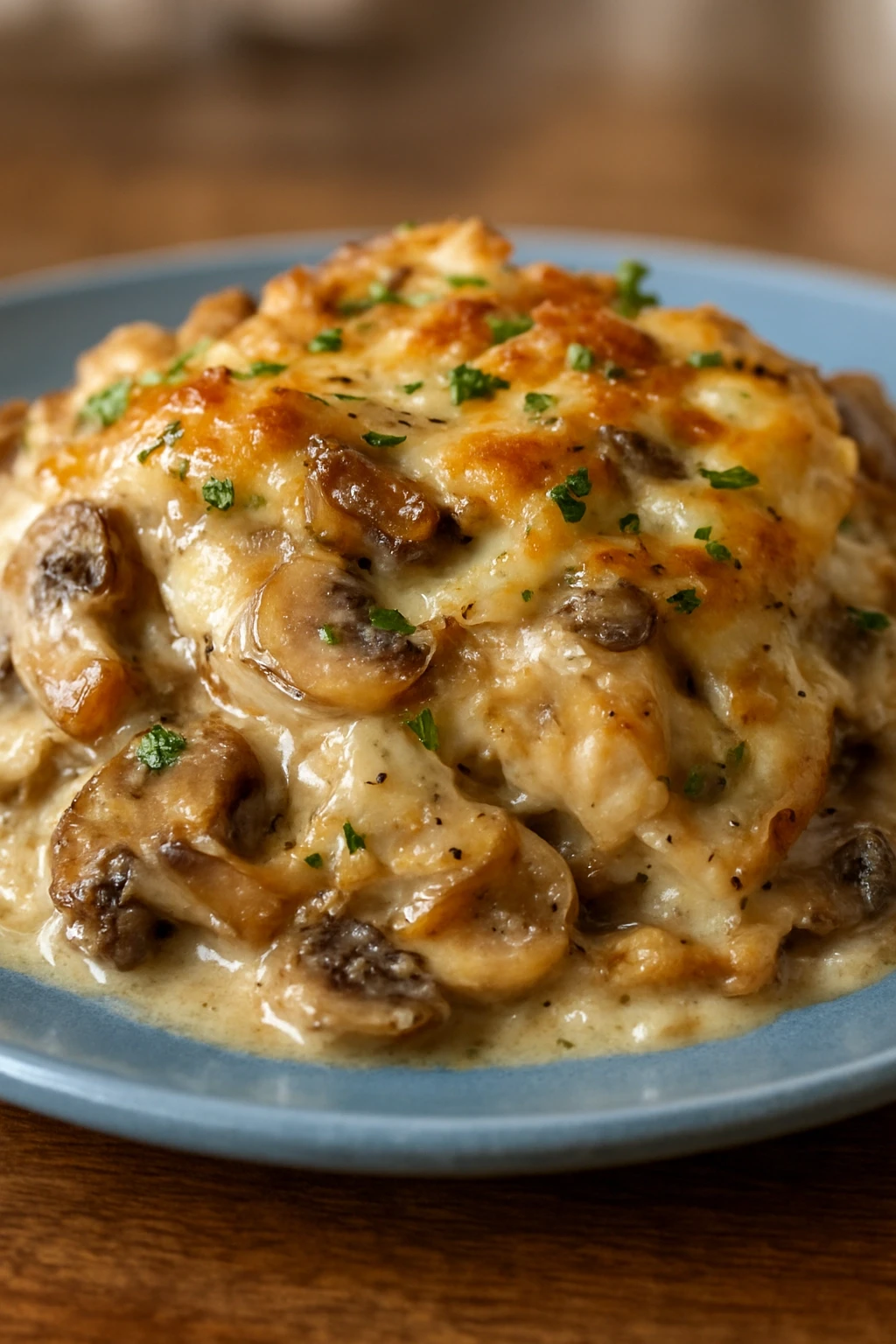
Place the baking dish in the preheated oven and bake uncovered for 25-35 minutes. The casserole will start bubbling around the edges at approximately 20 minutes. It is fully cooked when the entire surface is bubbling gently (not violently boiling), the cheese on top is light golden brown, and the internal temperature of the chicken reaches 165°F (74°C) when measured with a meat thermometer in the thickest piece. Check for doneness at 25 minutes and again at 30 minutes if unsure.
⏱ Time: 25-35 minutes
✓ Doneness: Entire casserole is bubbling gently around the edges and across the surface, cheese is light golden on top, internal temperature reads 165°F (74°C) when measured with meat thermometer
Step 11
Remove the casserole from the oven and let it rest for 5 minutes at room temperature. This resting period allows the internal temperature to stabilize and allows the sauce to set very slightly, making it easier to scoop clean portions. During resting, the casserole will continue cooking slightly from carryover heat. This additional cooking is minimal and negligible.
⏱ Time: 5 minutes
✓ Doneness: Casserole is still steaming, bubbling has subsided significantly, cheese is firm to touch but not hard
Step 12
Serve directly from the baking dish or transfer to a serving platter. If desired, sprinkle fresh parsley over the top for color and brightness. Serve with vegetables, cauliflower rice, or on its own as a complete keto meal.
⏱ Time: 2 minutes
✓ Doneness: Casserole is ready to serve, portions are well-defined when scooped
Pro Tips
Cook mushrooms in batches and avoid crowding the pan. Crowded mushrooms release water and steam rather than brown and evaporate that water. Taking extra time to cook them in two batches prevents a watery casserole.
Mushroom water prevents browning and reduces umami flavor development. When mushrooms have space in the pan and higher heat, the water they release can evaporate rather than reabsorb. This concentrates their savory flavor. Crowded mushrooms create steam which makes them pale and leaves extra liquid that dilutes the final sauce.
Brown chicken for flavor development, not for doneness. Remove chicken once the exterior is brown at approximately 155-160°F (68-71°C) internal temperature. The oven will finish cooking it to the proper 165°F (74°C).
Chicken breast is lean and continues drying out the longer it cooks. Browning happens quickly at high heat and develops flavor compounds through the Maillard reaction. Stopping at internal browning rather than full doneness allows the oven's gentler heat to finish cooking without over-drying the meat. The total cooking time is faster, and the final result is moister.
Ensure heavy cream and broth are room temperature before adding to the hot skillet. If they're cold from the refrigerator, let them sit on the counter for 10-15 minutes before using.
Cold dairy added to a hot pan shock-cools the surface, preventing proper emulsification. The fat and water in the cream separate rather than integrate smoothly. Room-temperature dairy integrates seamlessly and creates a smooth, creamy sauce. This is why the texture is suddenly better with just this one adjustment.
Add cheese gradually in small handfuls, stirring between each addition. Wait for the cheese to be mostly melted before adding more. This prevents clumping and ensures even distribution.
Adding all the cheese at once creates clumps that don't melt evenly. Large cheese pieces hold heat differently than individual strands, creating inconsistent texture. Gradual addition, with stirring between batches, ensures smooth, uniform sauce. The difference is immediately visible.
Do not boil the stovetop sauce or the oven-baked casserole. Boiling breaks the emulsion between fat and water in the dairy, creating a grainy, separated texture. Keep the stovetop mixture below a simmer (around 170°F / 77°C) and the oven at 375°F (190°C), which produces gentle bubbling but not violent boiling.
Proteins in heavy cream denature at temperatures above 180°F (82°C), causing curdling. Gentle heat allows the fat and water to remain suspended together. Boiling breaks this suspension, creating a broken, separated sauce. This is irreversible once it happens in a casserole, so preventing it is essential.
Let the finished casserole rest for 5 minutes after removing from the oven before serving. This allows the sauce to set slightly and carryover cooking to complete the process for all pieces.
Resting allows internal temperatures to equalize throughout the casserole. The thickest pieces continue cooking slightly from residual heat. This ensures the entire casserole reaches proper doneness simultaneously rather than having some overcooked and some undercooked areas. The sauce also sets enough to portion cleanly without breaking the emulsion.
Common Mistakes to Avoid
Cooking mushrooms in a crowded pan or on low heat
Why it happens It seems efficient to cook all mushrooms at once in one batch. Low heat seems gentler and safer. However, crowded mushrooms steam rather than brown, and low heat doesn't drive off their water content.
Fix Cook mushrooms in batches with adequate oil and medium-high heat. Two batches take only a few extra minutes but produce dramatically better results. The mushrooms brown, their water evaporates, and they contribute flavor rather than wateriness to the final dish.
Using cold heavy cream straight from the refrigerator
Why it happens Convenience—it seems faster to use ingredients directly. However, temperature shock prevents proper emulsification.
Fix Remove cream from the refrigerator 10-15 minutes before use, or gently warm it in a small saucepan over low heat. Room-temperature cream integrates perfectly with the hot sauce and creates smoothness. This single change makes a noticeable difference in final texture.
Overcooking chicken on the stovetop to full doneness before transferring to the oven
Why it happens People think they should cook chicken completely on the stovetop. However, this requires high heat for extended time, drying out the lean meat.
Fix Brown chicken for flavor until the exterior is golden and the internal temperature reaches approximately 155-160°F (68-71°C). The oven will bring it to the final 165°F (74°C). This two-stage cooking prevents over-drying and keeps the meat moist. The flavor is noticeably better.
Adding cheese all at once in one large addition
Why it happens It seems faster and more efficient to add all the cheese at once. However, large cheese additions create clumps and uneven texture.
Fix Add cheese in small handfuls, stirring between each addition. Wait for mostly-melted cheese before adding more. This takes only a minute or two longer but ensures smooth, uniform sauce. The difference is immediately visible.
Allowing the sauce to boil on the stovetop or the casserole to boil violently in the oven
Why it happens High heat seems like it should cook faster and more thoroughly. However, boiling breaks the dairy emulsion and creates a separated, grainy sauce.
Fix Keep the stovetop mixture at a gentle simmer around 170°F (77°C), not boiling. Bake at 375°F (190°C), which produces gentle bubbling, not violent boiling. The entire casserole will cook perfectly at this temperature, and the sauce will stay smooth.
Not cooking mushrooms long enough and adding them when still wet
Why it happens Mushrooms seem cooked when they've turned from white/tan to brown. However, they still contain significant water that will be released into the casserole during baking.
Fix Cook mushrooms until they're golden and have noticeably reduced in volume (to approximately 60 percent of original size). They should no longer release visible liquid when pressed. This extra cooking time is what prevents a watery casserole.
Variations
Spinach and Chicken Casserole
Add 2 cups (60g) of fresh spinach or 1 cup (140g) of frozen spinach (thawed and drained well) in step 6 after adding the mushrooms. The spinach adds nutrients and a subtle earthiness that complements the creamy sauce. It wilts completely during cooking and adds no significant volume to the final dish. Total carbohydrates increase by approximately 1g per serving.
Note: If using frozen spinach, squeeze it thoroughly to remove all water before adding. Excess water from spinach creates a watery sauce just as mushroom water does. Fresh spinach is lighter—use it raw and it will wilt from the heat of the sauce.
Garlic and Italian Herb Casserole
Increase garlic to 7 cloves (35g), add 1 teaspoon (2g) of fresh basil (or 1/2 teaspoon / 1g of dried basil), and add 1/4 teaspoon (0.5g) of red pepper flakes. The additional garlic intensifies savory flavor, basil adds an herbaceous note, and red pepper flakes create subtle heat. These additions keep the recipe firmly keto-compliant while adding flavor complexity.
Note: Fresh basil should be added after baking is complete to preserve its flavor and color. Dried basil is added with the other dried herbs. Red pepper flakes can be added in step 4 with the garlic for more distribution, or sprinkled on top before serving for more pronounced spice.
Bacon and Chicken Casserole
Cook 4 slices (115g) of bacon until crispy, crumble into small pieces, and add in step 5 when mushrooms are returned to the skillet. The bacon adds fat, salty umami flavor, and a smoky undertone. This variation is still keto-compliant and adds approximately 3g fat per serving while keeping carbohydrates unchanged.
Note: Reserve 1 tablespoon (15ml) of bacon fat and use it in place of one of the oil additions when cooking mushrooms. This amplifies the bacon flavor throughout the entire dish. The fat content increases slightly but stays well within keto macronutrient ratios.
Creamy Dill Chicken Casserole
Replace thyme and oregano with 1.5 teaspoons (3g) of dried dill (or 1 tablespoon / 9g of fresh dill). Dill has a subtle, slightly tangy herb flavor that pairs beautifully with mushrooms and chicken. Add 1 tablespoon (15ml) of lemon juice (approximately 0.2g carbohydrates) in step 7 after the sauce is complete. The lemon brightens the dish without curdling the dairy because it's added to the finished sauce, not during cooking.
Note: Dill has a stronger, more particular flavor than thyme. It's not universally loved, but those who enjoy it find it transforms the dish. The lemon juice must be added after cooking is complete and the temperature has dropped slightly, not during the hot cooking process, as acid can curdle hot cream.
Creamy Garlic Sausage Casserole
Replace the 1.25 pounds (565g) of chicken breast with 1.25 pounds (565g) of Italian sausage (removed from casing if in links). Brown the sausage exactly as you would the chicken, breaking it into chunks as it cooks. The sausage is already seasoned and contains fat, which creates a richer sauce. Reduce the Parmesan cheese to 2 tablespoons (12g) since the sausage already adds saltiness and richness.
Note: Sausage releases fat as it cooks, which is beneficial for sauce emulsification. You may not need to add all the oil when cooking mushrooms if there's adequate sausage fat in the pan. The total fat content increases, but this aligns with keto macronutrients. The carbohydrate count remains the same or increases only minimally depending on sausage brand.
Nutrition
Per Serving:
approximately 385
Calories
These values are estimates and will vary based on exact chicken trim level, mushroom water content before cooking, and specific cheese brands used. Values assume part-skim mozzarella and medium-sized mushrooms. Net carbohydrates exclude fiber, relevant for keto macronutrient tracking.
Storage & Tips
Refrigerator
Cool the casserole to room temperature completely before refrigerating in an airtight container or covered baking dish. Store for up to 4 days. The fat will solidify as it cools, creating a slightly thicker consistency. This is normal and beneficial as it protects the casserole from oxidation.
Freezer
Freeze the cooled casserole for up to 3 months in a freezer-safe baking dish covered tightly with plastic wrap and aluminum foil, or in freezer containers. The creamy sauce freezes well without significant quality loss. Thaw overnight in the refrigerator before reheating.
Reheating
Reheat in a 350°F (175°C) oven for 20-30 minutes, covered with aluminum foil to prevent excess browning on top. The foil protects the cheese while the gentle oven heat warms everything evenly. Alternatively, reheat gently on the stovetop over low heat, stirring occasionally, for 15-20 minutes. The stovetop method allows you to monitor the temperature and ensure the sauce doesn't boil. Add 2-3 tablespoons (30-45ml) of chicken broth or cream if the casserole seems dry after reheating.
Make Ahead
Prepare the casserole completely through step 8 (finishing the sauce in the skillet). Cool to room temperature, transfer to a baking dish, cover tightly, and refrigerate for up to 2 days. When ready to bake, add 5-10 minutes to the baking time (approximately 30-40 minutes total) because you're starting with a cold casserole. The result is nearly identical to baking fresh.
FAQ
Why is my casserole sauce watery or grainy instead of creamy and smooth?
Two causes: either mushroom water wasn't adequately evaporated during cooking (making the sauce watery), or the dairy broke and curdled from overheating (making it grainy). Prevention: cook mushrooms in batches until they're golden and reduced. Keep the stovetop sauce below a simmer. If it already happened, the grainy texture is difficult to reverse, but watery sauce can improve slightly during baking as water evaporates.
My chicken is dry and tough. What went wrong?
The chicken was cooked too long on the stovetop or the internal oven temperature was too high. Chicken breast dries out rapidly once it exceeds 170°F (77°C). Solution: brown chicken only until external surfaces are golden (approximately 155-160°F / 68-71°C internal temperature) and let the oven finish cooking it gently. Also verify your oven temperature with an oven thermometer—many ovens run hotter than displayed.
Can I make this casserole with chicken thighs instead of breasts?
Yes. Chicken thighs contain more fat and are much harder to overcook. They maintain tenderness even if cooked longer. Use 1.5 pounds (680g) of bone-in, skin-on thighs (or 1.25 pounds / 565g of boneless, skinless thighs). Remove the skin before cooking. The cooking time increases slightly (approximately 5-10 minutes longer) because thighs are thicker, but the method is identical.
What type of mushrooms work best? Can I use canned mushrooms?
Fresh mushrooms (cremini, button, oyster, or a mix) work best because they brown and develop umami flavor. Avoid portobello mushrooms—they're large and watery. Canned mushrooms contain added sodium and have already released their water during canning. They can work if fresh aren't available, but drain them completely and don't cook them further—just add them in step 5.
Can I use half-and-half instead of heavy cream to reduce fat content?
Yes, but the sauce will be thinner and less rich. Half-and-half contains approximately 11 percent fat compared to heavy cream's 36 percent. Use the same amount (1 cup / 240ml), and the final dish will be slightly less creamy. The sauce may also be more prone to breaking if overheated, so watch the temperature carefully.
Why does the recipe call for unsalted broth instead of salted?
Unsalted broth gives you complete control over final sodium content. Salted broths vary widely in sodium levels between brands, making consistent seasoning difficult. You can always add salt, but you cannot remove it. Start with unsalted broth and taste at the end to adjust. If you only have salted broth, reduce the salt added in step 7 by approximately 1/4 teaspoon (1.5g).
Final Thoughts
This casserole demonstrates how understanding the science of proteins, fat emulsification, and moisture management improves everyday cooking. The same principles—proper protein browning without overcooking, managing vegetable moisture, and maintaining stable dairy emulsions—apply to countless other dishes beyond this single recipe. Once you understand why each technique matters, you can confidently adjust ingredients and cooking methods to suit your preferences and available ingredients while maintaining the essential qualities that make the dish work.