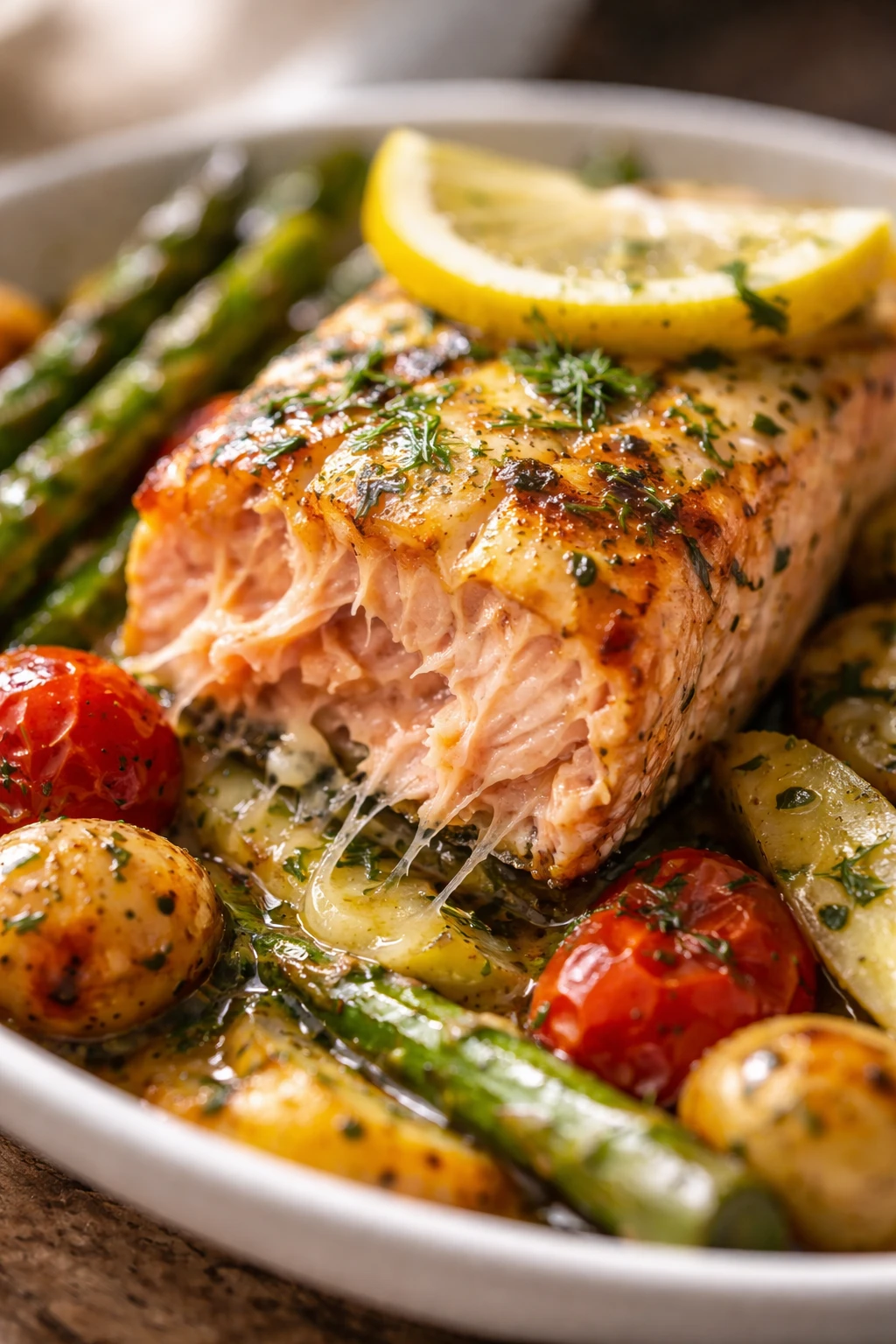
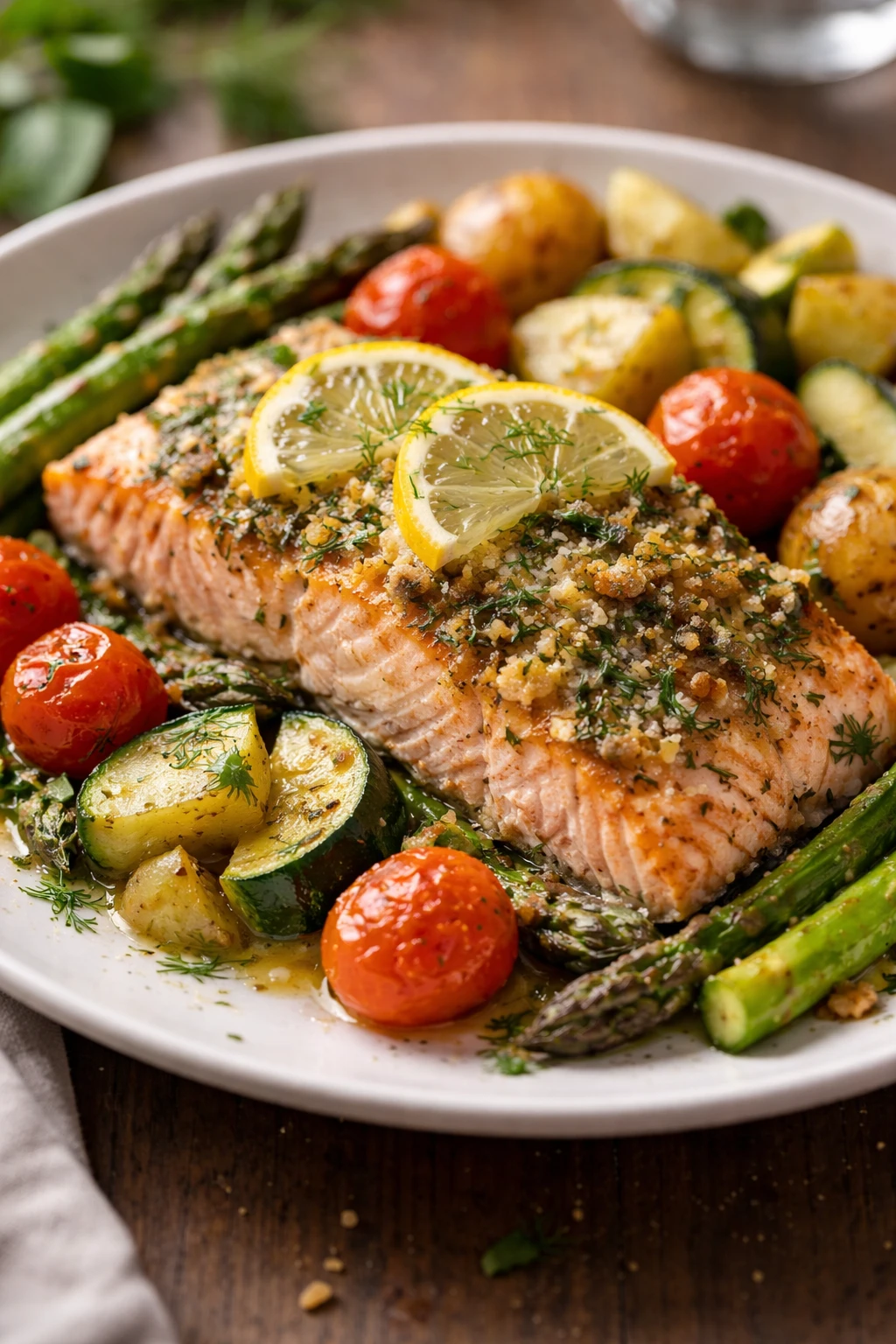
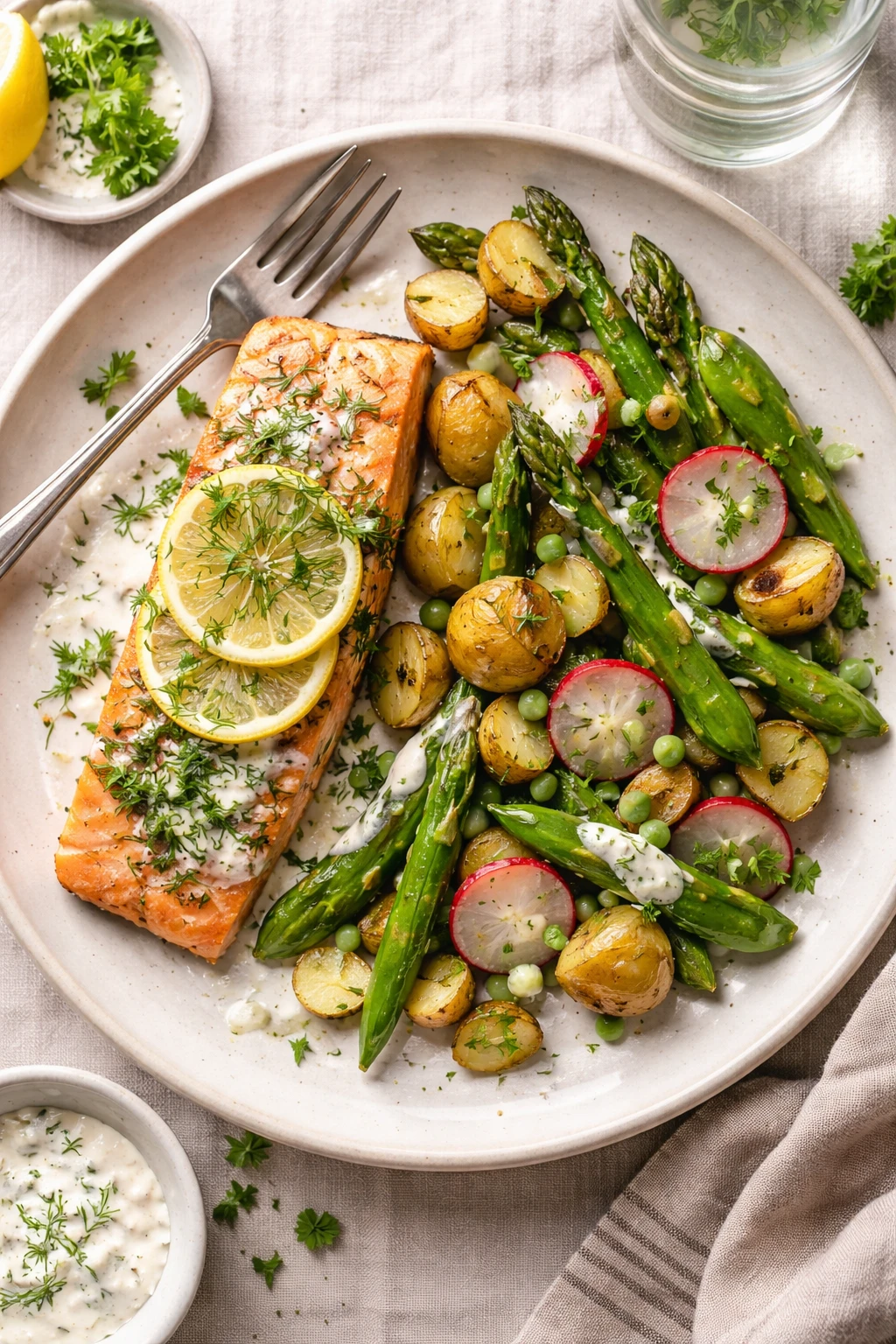
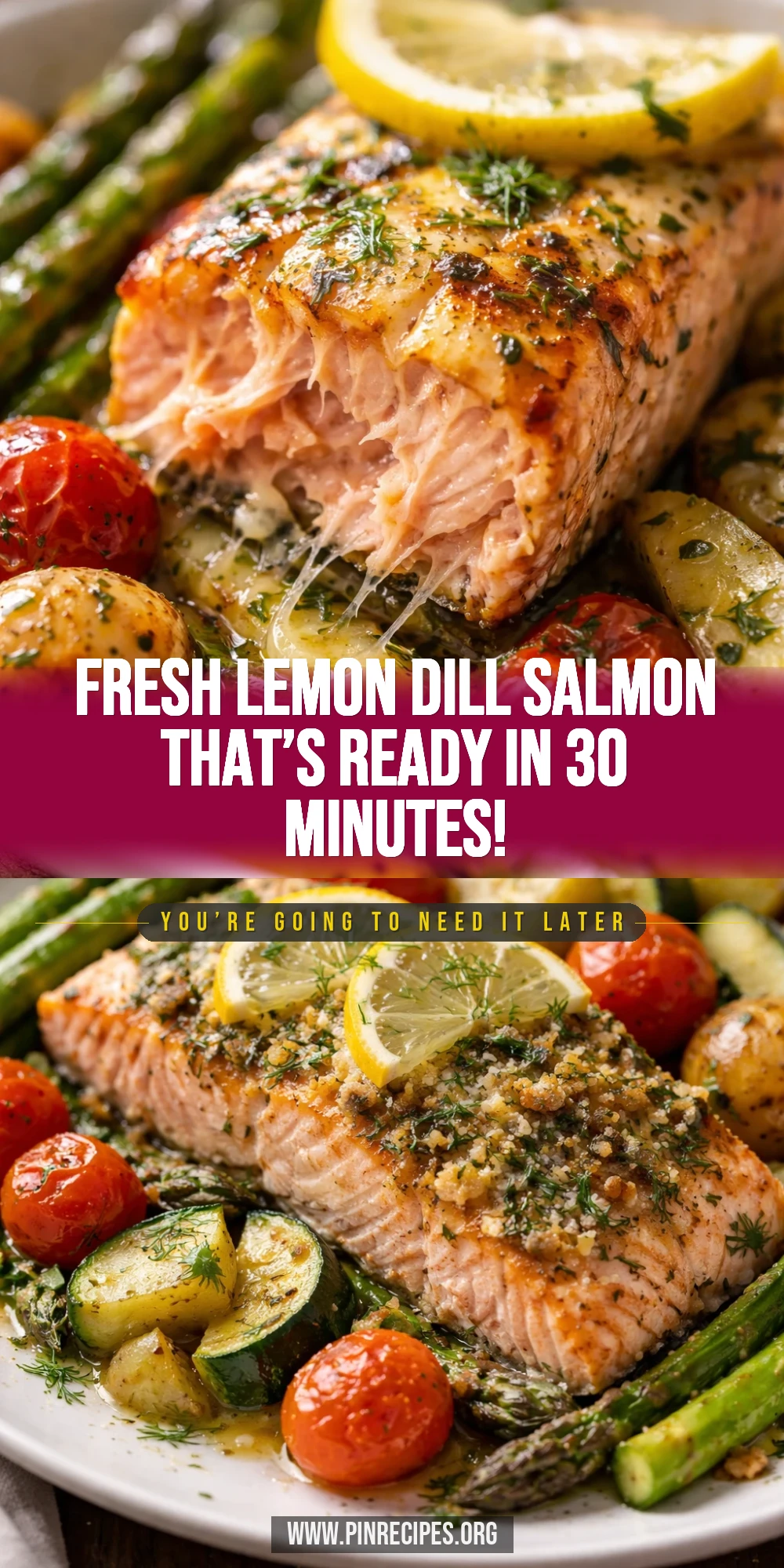
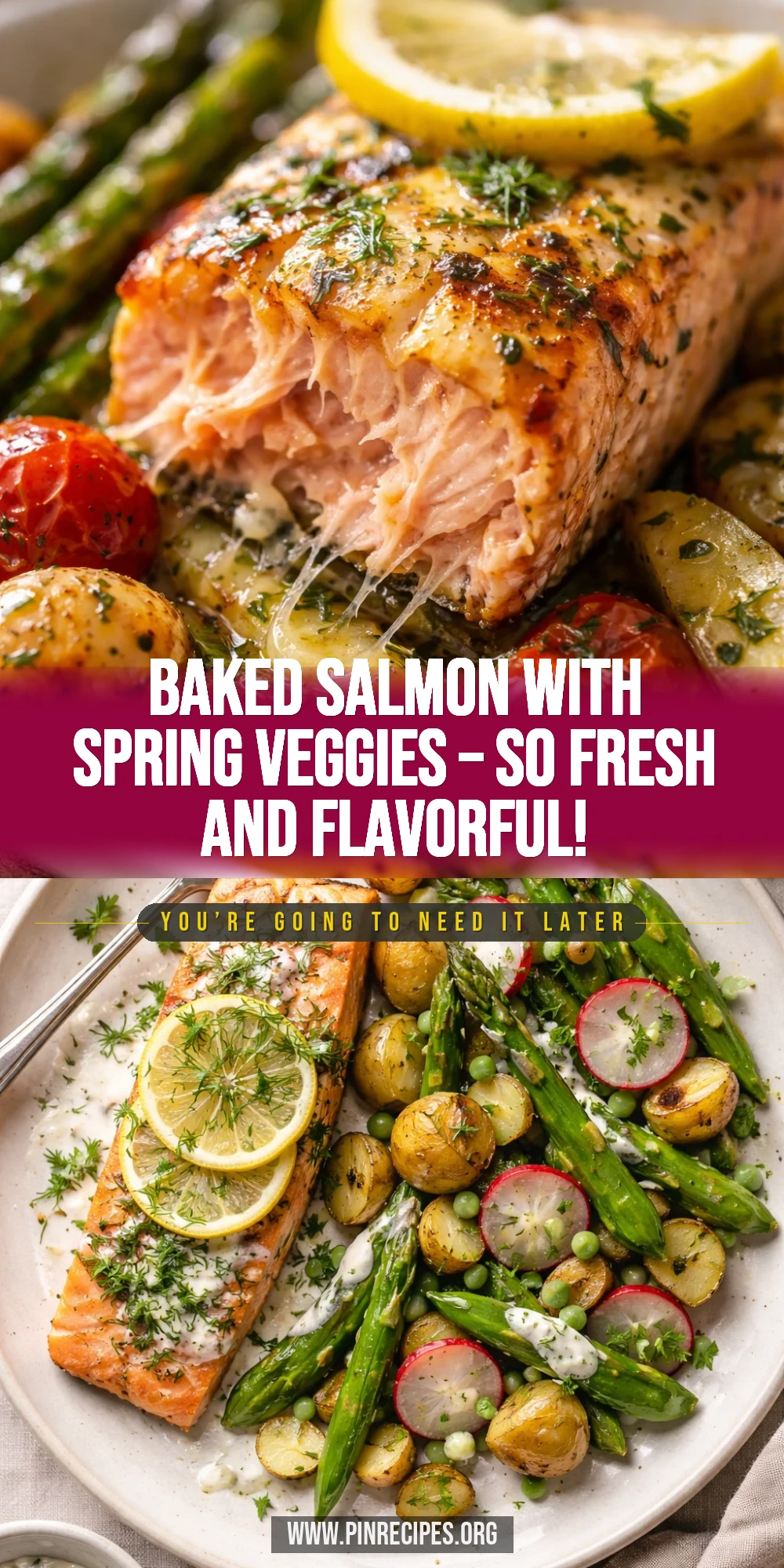
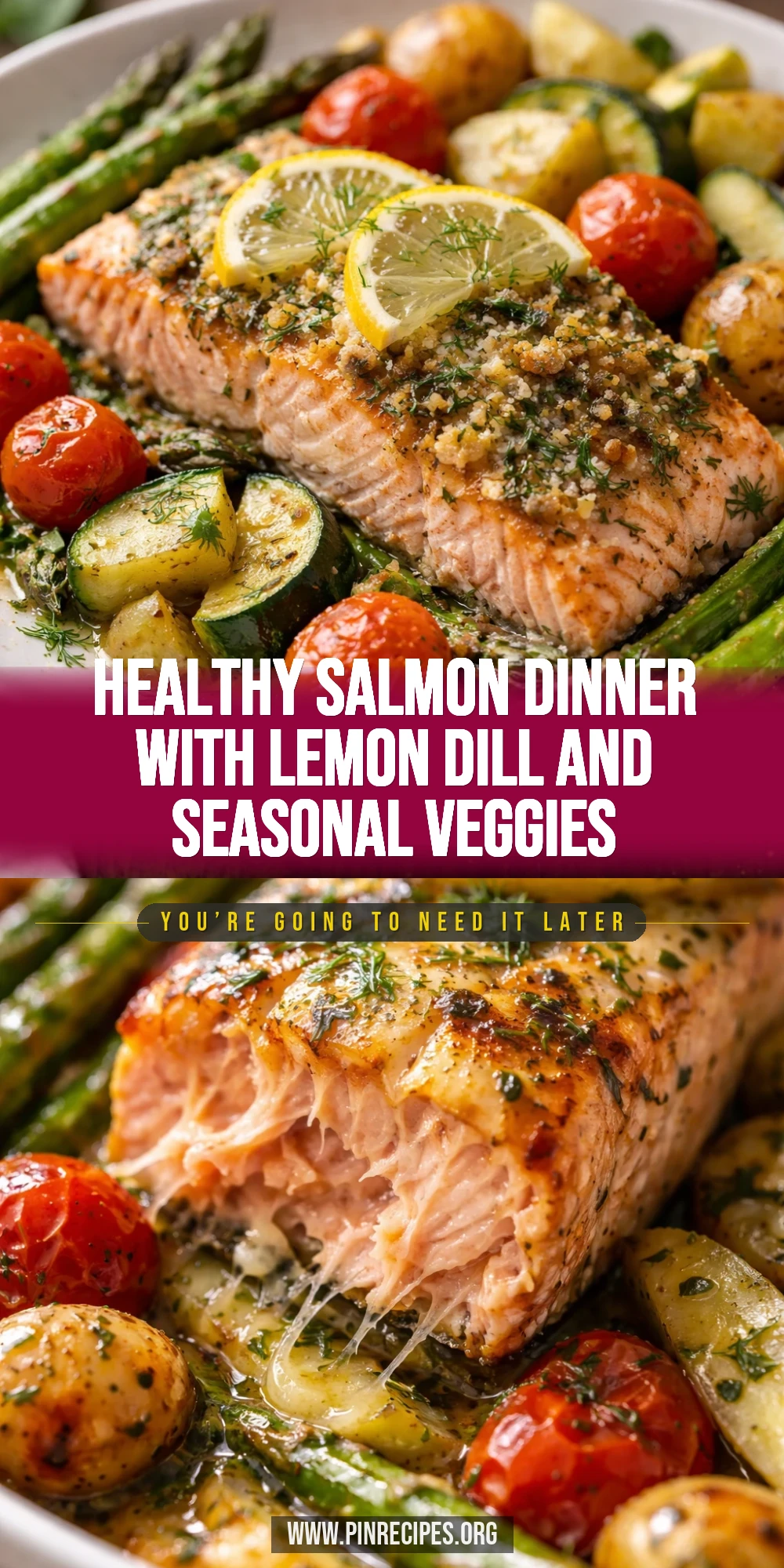
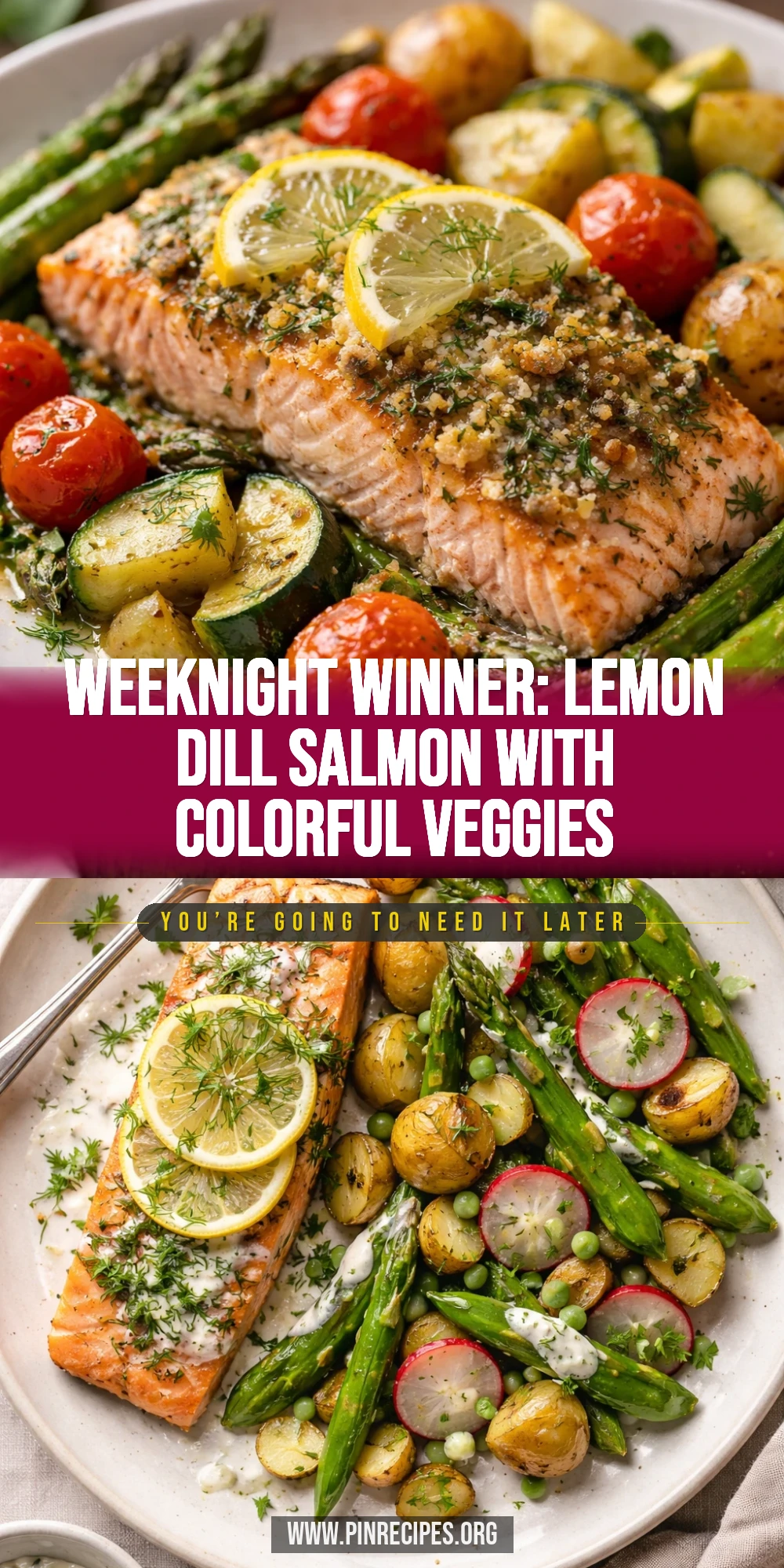
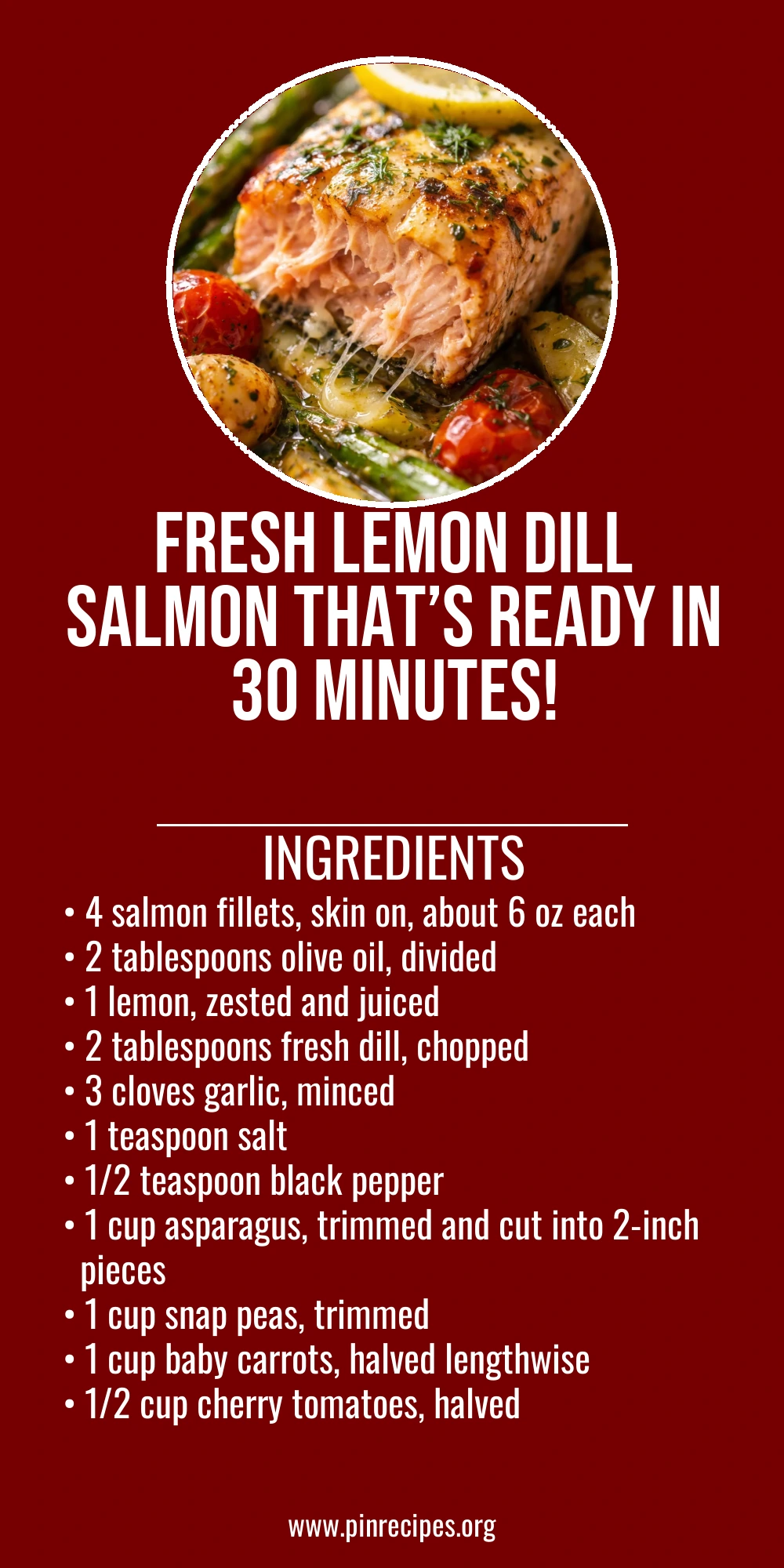
This baked salmon is super fresh and light, thanks to lemon and dill. Tossed with vibrant spring veggies, it’s a simple, healthy dinner that’s ready in under 45 minutes. Great for busy nights when you want something tasty but fuss-free!
Introduction
I first tried baking salmon with lemon and dill a few years ago when I wanted a healthy dinner that didn’t feel boring. What I love about this version is how the fresh dill really brightens the dish without overpowering the delicate salmon flavor. Plus, roasting the salmon and vegetables together keeps things simple and hands-off, which is a lifesaver on busy nights. I’ve tweaked the veggie mix to include crisp asparagus, sweet snap peas, and tender baby carrots, which all roast beautifully alongside the fish. One trick I’ve learned is to not overcook the salmon — it should flake easily but still be moist inside. The lemon zest and juice add a fresh, tangy punch that keeps the whole plate lively. This meal looks colorful and inviting on the plate, making it feel like a special treat even when you’re just cooking for yourself. It’s become a go-to recipe in my house for spring and summer dinners, and I think you’ll find it to be just as fuss-free and delicious!
How To Do It
Step 1
Preheat your oven to 400°F (200°C). While it heats, line a baking sheet with parchment paper or lightly grease it with olive oil. This prevents sticking and helps with easy cleanup, so your salmon and veggies slide right off without breaking apart. A well-prepped pan also ensures even cooking and browning, which adds flavor.
⏱ Time: 5 minutes
✓ Doneness: Oven preheated fully and baking sheet ready with parchment or oil sheen
Step 2
In a small bowl, whisk together 1 tablespoon olive oil, lemon zest, lemon juice, minced garlic, chopped dill, salt, and pepper. This marinade not only flavors the salmon but also helps keep it moist during baking. The acid in the lemon juice tenderizes the fish slightly, while the dill adds a fresh herbal note. Mixing it well ensures every bite is flavorful.
⏱ Time: 5 minutes
✓ Doneness: Marinade is well combined and aromatic
Step 3
Place the salmon fillets skin-side down on the prepared baking sheet. Brush the lemon dill marinade evenly over each fillet, making sure to coat the tops and sides. Don’t skip the skin side — it helps protect the fish from drying out and crisps up nicely. Applying the marinade evenly ensures balanced flavor and moisture throughout.
⏱ Time: 5 minutes
✓ Doneness: Salmon fillets are fully coated and arranged spaced apart on the sheet
Step 4
Toss the asparagus, snap peas, baby carrots, and cherry tomatoes with the remaining 1 tablespoon olive oil and a pinch of salt and pepper in a mixing bowl. This light coating helps the vegetables roast evenly and develop a slight caramelization, which brings out their natural sweetness and adds depth to the dish.
⏱ Time: 5 minutes
✓ Doneness: Vegetables are evenly coated and glistening with oil
Step 5
Arrange the tossed vegetables around the salmon fillets on the baking sheet in a single layer. Spreading them out helps everything cook evenly and prevents steaming, which can make veggies soggy. Roasting at a high temperature concentrates their flavors and keeps them crisp-tender.
⏱ Time: 5 minutes
✓ Doneness: Vegetables are spread evenly without overlapping too much
Step 6
Place the baking sheet in the preheated oven and bake for about 15-18 minutes. Check the salmon at 15 minutes by gently pressing the top; it should flake easily but still be moist inside. Overcooking will dry it out, so keep a close eye. The vegetables should be tender but still have a slight bite and some color.
⏱ Time: 15-18 minutes
✓ Doneness: Salmon flakes easily with a fork, vegetables are tender and lightly browned
Step 7
Remove the baking sheet from the oven and let the salmon rest for 2-3 minutes. Resting allows the juices to redistribute, keeping the fish moist and flavorful. Meanwhile, you can give the vegetables a quick stir to mix their flavors and serve immediately for best texture and taste.
⏱ Time: 3 minutes
✓ Doneness: Salmon has rested and veggies look vibrant and glossy
Step 8
Serve the salmon fillets with a generous helping of the roasted spring vegetable medley. You can add an extra squeeze of fresh lemon juice or a sprinkle of fresh dill on top for brightness. This final touch lifts the whole dish and makes it taste even fresher and more vibrant.
⏱ Time: 2 minutes
✓ Doneness: Plated dish looks colorful and appetizing
Step 9
Enjoy your meal warm, pairing it with a simple side like quinoa, rice, or crusty bread if you want something more filling. This dish shines on its own but is versatile enough to complement many sides. The lemon and dill flavors keep it light and perfect for spring or summer dining.
⏱ Time: 0 minutes
✓ Doneness: Ready to eat and enjoy
Pro Tips
Pat salmon dry before marinating to ensure better browning.
Removing excess moisture from the fish surface allows the marinade to adhere better and promotes a nice crust during baking. Moisture on the surface can steam the fish instead of roasting it, leading to a less appealing texture.
Use a sharp knife to slice vegetables uniformly for even cooking.
Uniform pieces cook at the same rate, preventing some veggies from being undercooked while others burn. This ensures a balanced texture and flavor throughout the vegetable medley.
Don’t overcrowd the baking sheet to allow proper roasting.
Crowding traps steam, which softens vegetables and prevents browning. Spreading ingredients out helps develop caramelization and enhances flavor and texture.
Let the salmon rest after baking for a few minutes before serving.
Resting lets the juices redistribute inside the fish, keeping it moist and tender. Cutting into it immediately can cause juices to run out, resulting in dryness.
Add lemon zest to the marinade, not just juice.
Lemon zest contains flavorful oils that provide a bright citrus aroma and flavor without adding extra acidity. This balances the tanginess and enriches the overall taste.
Use parchment paper for easy cleanup and to prevent sticking.
Parchment creates a non-stick surface and absorbs some oils, making cleanup faster and keeping the salmon intact when transferring from the baking sheet.
Check salmon doneness early to avoid overcooking.
Salmon cooks quickly and continues to cook slightly after removal from the oven. Checking early ensures it stays moist and flaky rather than dry and tough.
Common Mistakes to Avoid
Overcooking the salmon
Why it happens Many home cooks leave salmon in the oven too long, thinking it needs to be fully 'done' to be safe, but this dries it out.
Fix Check the salmon at 15 minutes by gently pressing the top; it should flake easily but still be moist inside. Remove it right away to prevent drying. Using a timer and visual cues helps avoid this common error.
Skipping the marinade step
Why it happens Sometimes people want to save time and skip marinating, but this reduces flavor and moisture retention.
Fix Even a quick 5-minute marinade adds brightness and keeps the salmon juicy. Whisk lemon, dill, garlic, and oil together and brush it on before baking for best results.
Crowding the pan with vegetables
Why it happens Trying to fit everything on one pan can cause steaming instead of roasting.
Fix Spread veggies in a single layer with space between pieces. Use two pans if needed to ensure proper caramelization and crispness.
Not drying salmon before marinating
Why it happens Wet fish causes marinade to slide off and prevents a good crust from forming.
Fix Pat fillets dry with paper towels before applying marinade. This step helps the flavors stick and improves texture.
Using dried dill instead of fresh
Why it happens Dried dill lacks the brightness and aroma of fresh, resulting in a flat flavor.
Fix Always use fresh dill for this recipe. If unavailable, increase dried dill slightly but expect a less vibrant flavor.
Variations
Spicy Lemon Dill Salmon
Add a pinch of red pepper flakes or cayenne to the marinade for a spicy kick. This variation adds warmth that contrasts nicely with the fresh lemon and dill, perfect if you like a little heat. The texture remains tender and moist with just a bit of zing.
Note: Be careful not to add too much spice or it can overpower the delicate salmon flavor. Adjust to taste.
Herb Mix Upgrade
Mix fresh parsley and chives with dill in the marinade for a more complex herbal flavor. This adds layers of freshness and a subtle onion note from chives. It’s a great way to customize the dish with garden herbs you have on hand.
Note: Use equal parts herbs to keep balance and chop finely for even distribution.
Creamy Dill Sauce on the Side
Serve the salmon with a simple sauce made from Greek yogurt, lemon juice, dill, and garlic. This adds a cool, creamy element that contrasts the roasted fish and vegetables. It’s great for adding moisture and tang.
Note: Prepare the sauce chilled and serve immediately to keep it fresh and vibrant.
Roasted New Potatoes with Veggies
Add halved baby potatoes to the vegetable medley for a heartier meal. The potatoes roast well alongside the other veggies and soak up the lemon dill flavors. Expect a more filling dish with a comforting texture contrast.
Note: Cut potatoes small enough to cook through in the same time as other vegetables.
Gluten-Free Soy Glaze Addition
Drizzle a gluten-free soy sauce glaze over the salmon before baking for an umami boost. This adds a savory depth that pairs surprisingly well with lemon and dill. It’s a nice twist for those who enjoy Asian-inspired flavors.
Note: Reduce added salt since soy sauce is salty, and watch for caramelization to avoid burning.
Nutrition
Per Serving:
Nutritional values are estimates and may vary based on specific ingredients used.
Storage & Tips
Room Temperature
This salmon dish can be safely kept at room temperature for up to 2 hours if covered loosely. Beyond that, bacteria growth increases, so it’s best to refrigerate promptly.
Refrigerator
Store leftovers in an airtight container for up to 3 days. The salmon may firm up and the vegetables soften when cold. Reheat gently to avoid drying out, or enjoy cold in salads.
Freezer
Freeze cooked salmon and vegetables separately in airtight containers or freezer bags for up to 2 months. Wrap tightly to prevent freezer burn. Thaw overnight in the fridge before reheating.
Reheating
Reheat gently in a low oven (300°F) for 10-15 minutes or microwave on medium power with a splash of water or lemon juice to maintain moisture. Avoid high heat which can dry the fish.
Make Ahead
You can prep the marinade and chop vegetables 1 day ahead and store them separately. Assemble and bake just before serving for optimal freshness and texture.
FAQ
Can I use frozen salmon for this recipe?
Yes, but it’s best to thaw the salmon completely in the refrigerator before baking. Cooking from frozen can result in uneven cooking and a less tender texture. Plan ahead to ensure even roasting.
What can I substitute if I don’t have fresh dill?
Fresh dill is ideal, but if unavailable, use dried dill at about one-third the amount, keeping in mind it’s less vibrant. Alternatively, fresh parsley or tarragon can add herbal notes, though the flavor will differ slightly.
Can I make this recipe gluten-free?
Absolutely! This recipe is naturally gluten-free since it uses fresh ingredients and olive oil. Just double-check any seasoning blends or packaged ingredients to be sure they don’t contain gluten.
How do I know when the salmon is perfectly cooked?
The salmon should flake easily with a fork but remain moist inside. Overcooked salmon becomes dry and tough. Checking at 15 minutes and using visual cues like flaking texture helps get it just right.
Can I use other vegetables instead of the spring mix?
Yes, feel free to swap in veggies like zucchini, bell peppers, or green beans. Just adjust cooking times for denser veggies and cut them into uniform sizes for even roasting.
Is it necessary to keep the skin on the salmon?
Keeping the skin on helps protect the flesh from drying out and crisps up nicely, adding texture. You can remove it after cooking if you prefer, but it’s beneficial during baking.
Can I grill the salmon and vegetables instead of baking?
Yes, grilling works well but requires more attention to avoid burning. Use indirect heat for the salmon and grill veggies in a basket or foil. The flavor will be smokier and slightly different.
How can I make this recipe spicier?
Add red pepper flakes or a dash of cayenne to the marinade for heat. Start with a small amount and adjust to your taste to avoid overpowering the delicate salmon flavor.
Final Thoughts
I hope you love this easy lemon dill salmon as much as I do! It’s a fresh, flavorful dinner that’s simple enough for any night. Let me know how it turns out!