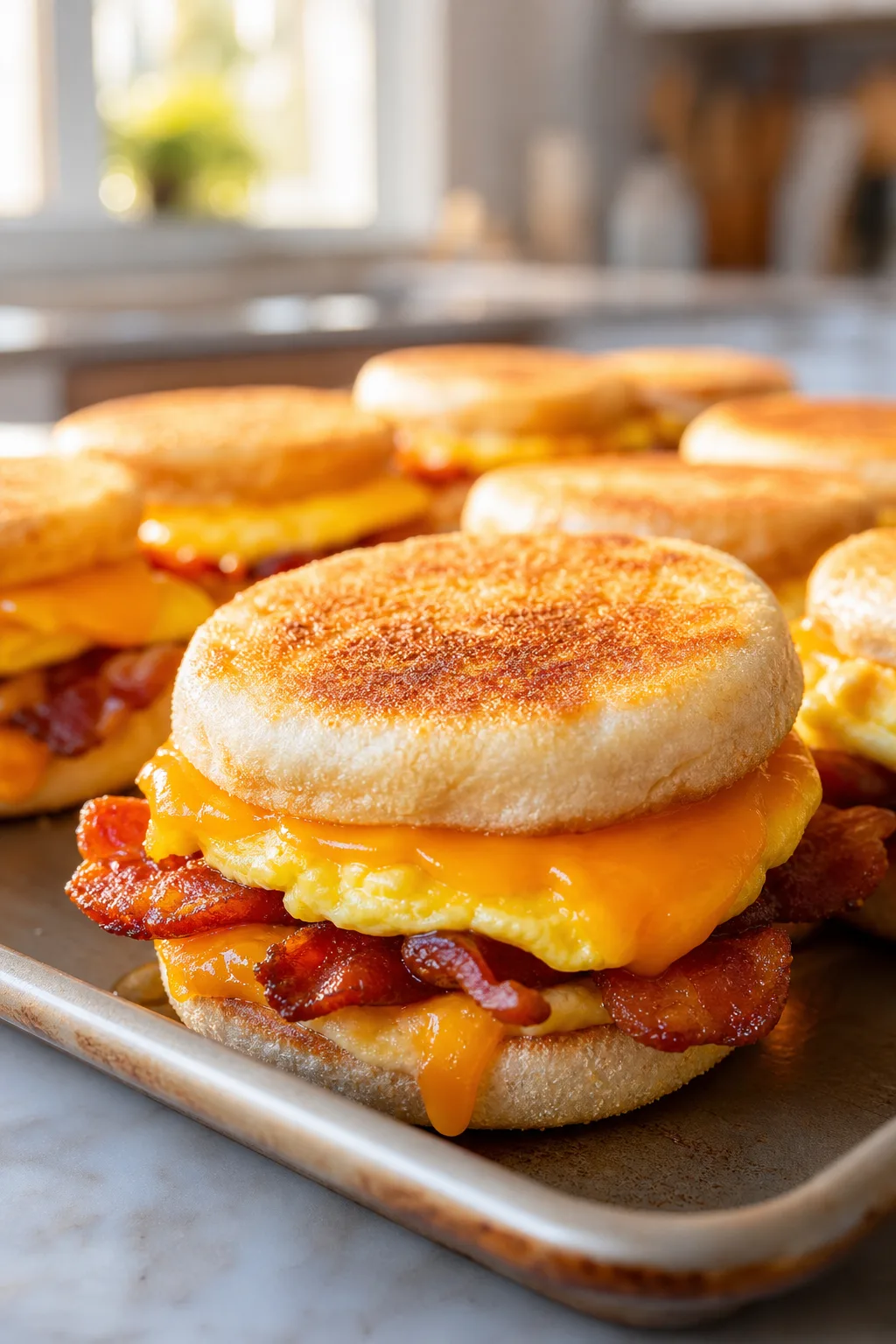
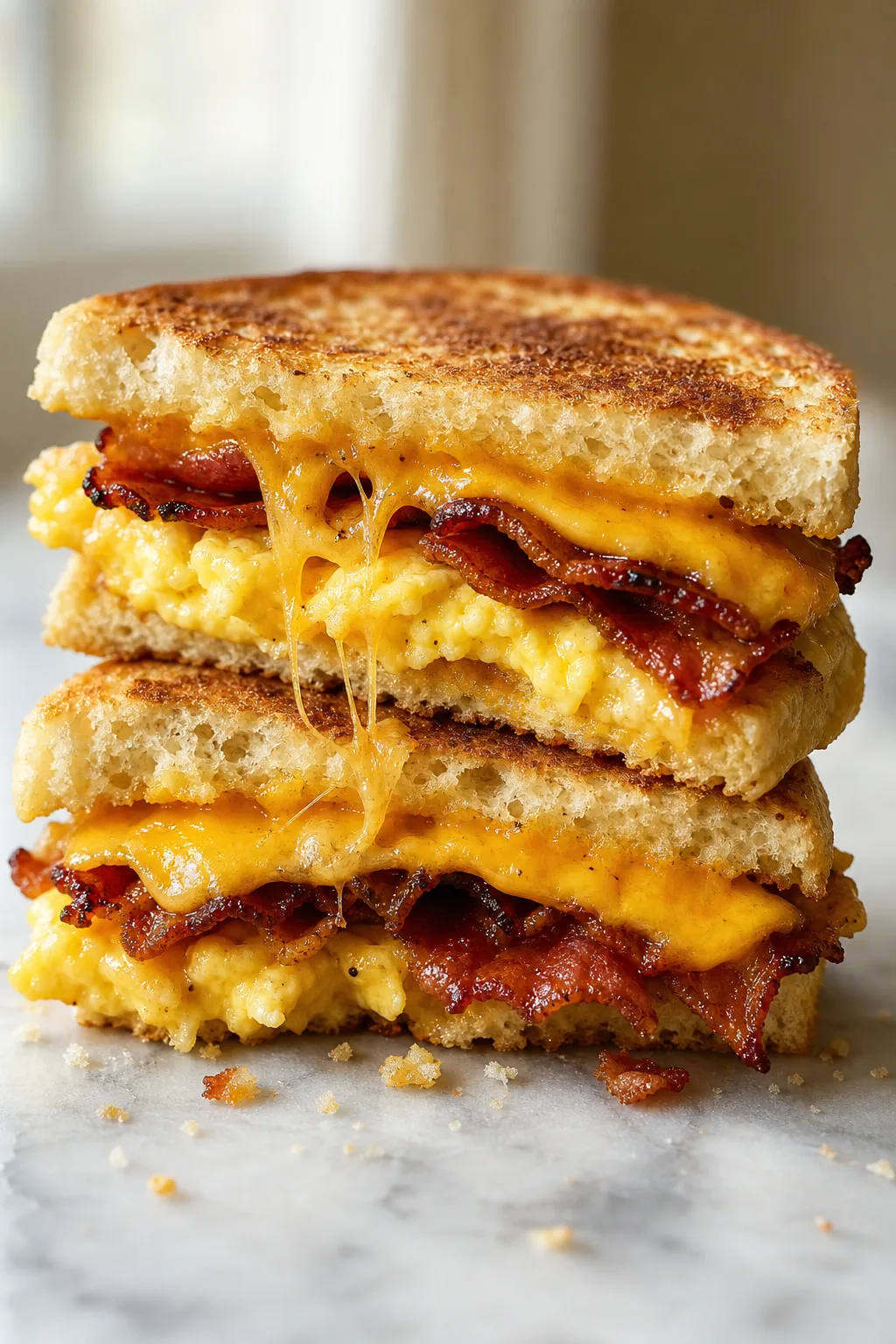
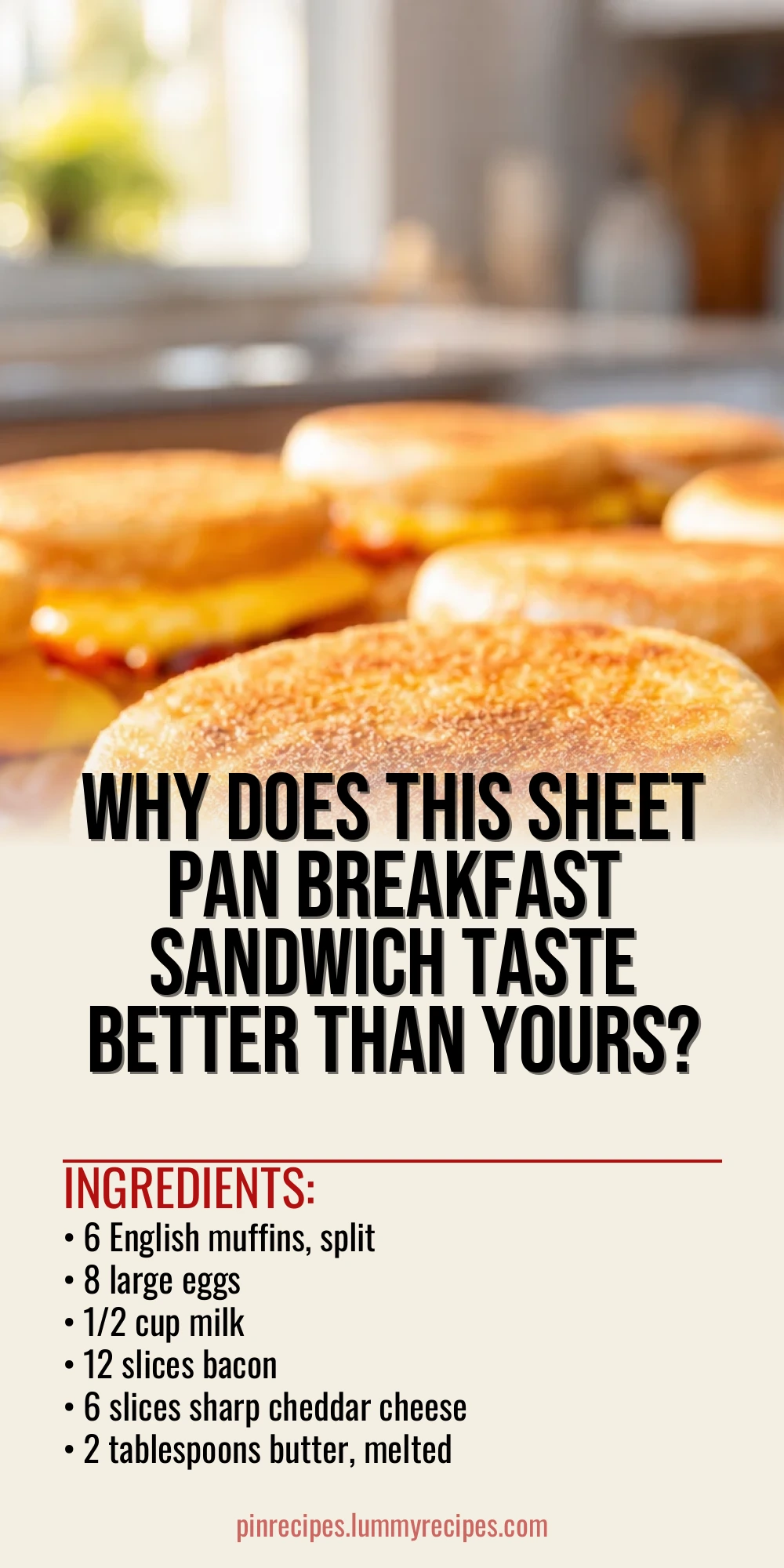
This sheet pan breakfast sandwich recipe is a game changer for busy mornings. It’s loaded with fluffy eggs, crispy bacon, and melty cheese all baked together for easy cleanup. Perfect for feeding a crowd or meal prepping your week.
Introduction
I first made this sheet pan breakfast sandwich recipe on a hectic weekend morning when I wanted something hearty but fuss-free. The idea of baking everything together on one pan sounded too good to be true, but it totally works! What makes this version stand out is the layering technique — placing eggs, bacon, and cheese on the English muffins then baking them all at once ensures the flavors meld perfectly. Plus, using melted butter brushed on the muffins before baking gives them that irresistible golden crisp. I’ve tried making breakfast sandwiches the traditional way, frying everything separately, but this sheet pan method saves so much time and cleanup without sacrificing any flavor. The sandwiches come out with fluffy eggs, crispy bacon edges, and gooey cheese all nestled inside toasted muffins. It’s a simple recipe that feels special enough for guests but easy enough for a weekday treat. Whenever I serve these, my family always asks for seconds. It’s become my go-to when I want a cozy, satisfying breakfast without the morning rush.
How To Do It
Step 1
Preheat your oven to 375°F (190°C). Line a large sheet pan with parchment paper for easy cleanup. Split the English muffins and arrange them cut side up on the pan. Brush each muffin half generously with melted butter to ensure they toast up golden and crisp while baking. This step is crucial because the butter creates a barrier that keeps the muffins from getting soggy from the eggs later. Avoid skipping it or using too little butter, as that can result in dry or chewy muffins.
⏱ Time: 10
✓ Doneness: Muffins should appear golden and slightly crispy around the edges after baking.
Step 2
In a medium bowl, whisk together the eggs, milk, salt, and pepper until fully combined and slightly frothy. Pour the egg mixture evenly over the buttered English muffin halves on the sheet pan. The milk helps keep the eggs fluffy and tender while baking. Pour carefully to avoid spilling over the edges, which can make cleanup harder. If you rush this step, the eggs may not distribute evenly, causing some sandwiches to have too much or too little egg.
⏱ Time: 5
✓ Doneness: Eggs should fill the muffin cavities evenly without spilling over the pan edges.
Step 3
Arrange the bacon slices evenly over the eggs on each muffin half. Using uncooked bacon here allows it to crisp up perfectly in the oven alongside the eggs and muffin. Make sure the bacon slices don’t overlap too much for even cooking. Overlapping can cause uneven cooking and chewy spots. The bacon fat will also add flavor and moisture to the eggs as it renders.
⏱ Time: 2
✓ Doneness: Bacon slices are laid flat and cover the egg surface without crowding.
Step 4
Place a slice of cheddar cheese on top of each bacon-topped muffin half. The cheese melts into the warm eggs and bacon, creating a gooey, flavorful layer. Using sharp cheddar adds a nice tang that balances the richness. If you prefer, you can swap for other cheeses like Swiss or pepper jack, but cheddar gives the best melt and flavor combination here.
⏱ Time: 1
✓ Doneness: Cheese slices cover the bacon evenly and lay flat without curling.
Step 5
Bake the sheet pan in the preheated oven for 20-25 minutes, or until the eggs are set and the cheese is melted and bubbly. Keep an eye on the bacon edges; they should be crispy but not burnt. Baking everything together allows the ingredients to meld while the muffins toast underneath. Avoid opening the oven frequently as it can lower the temperature and affect cooking time.
⏱ Time: 25
✓ Doneness: Eggs are firm and no longer jiggle, cheese is melted and golden at edges.
Step 6
Remove the sheet pan from the oven and let the sandwiches cool for 3-5 minutes before serving. This resting time helps the eggs finish setting and makes the sandwiches easier to handle. If served immediately, the eggs might be too hot and the cheese too runny to hold together well.
⏱ Time: 5
✓ Doneness: Sandwiches are warm but not too hot to touch, cheese slightly thickened.
Step 7
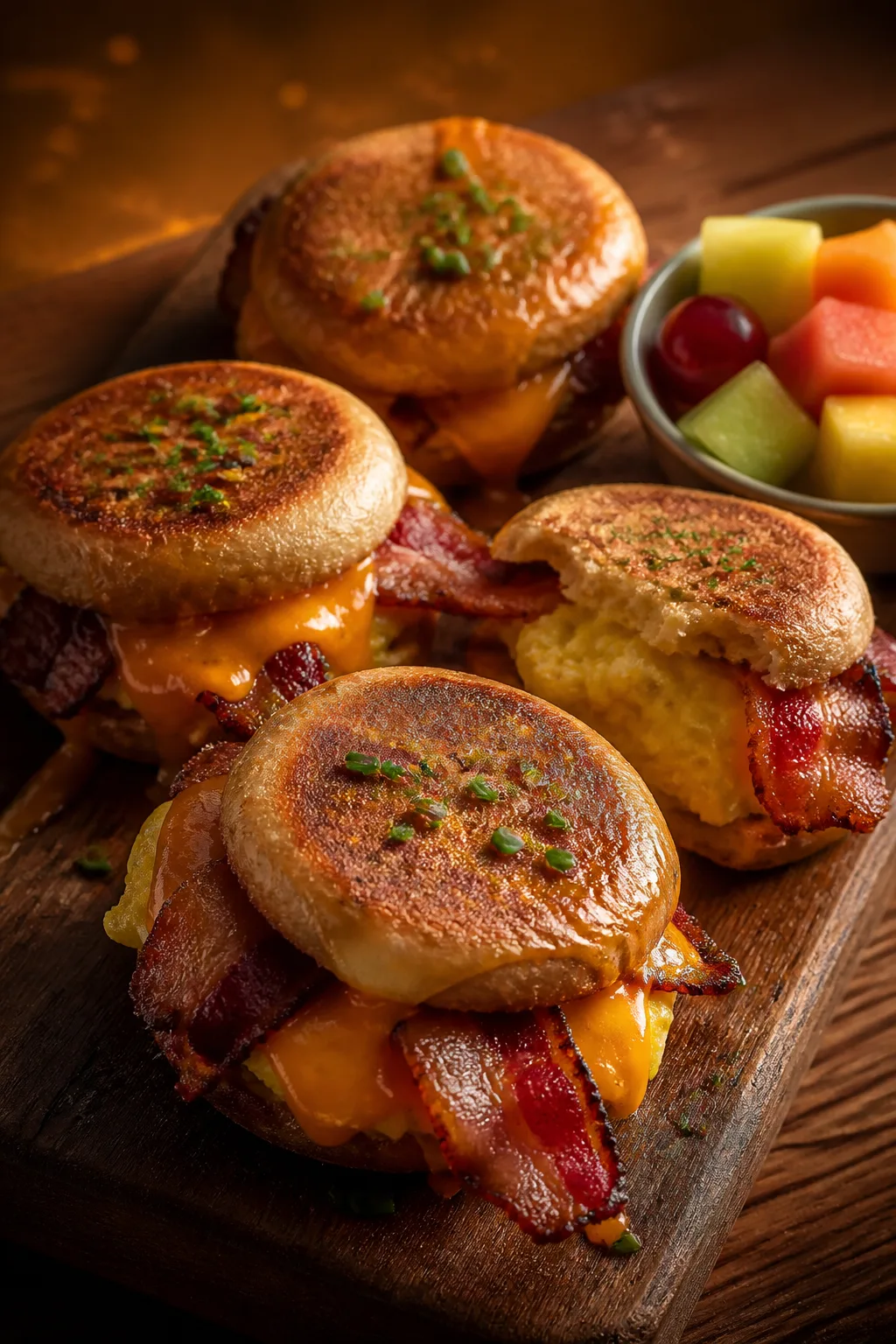
Optional: Sprinkle chopped fresh chives over the sandwiches for a pop of color and mild onion flavor. This step adds freshness and a nice visual contrast. You can also add a dash of hot sauce or ketchup if you like a bit of tang or spice.
⏱ Time: 1
✓ Doneness: Chives are evenly scattered and brighten the sandwich appearance.
Step 8
Serve the sheet pan breakfast sandwiches warm, either as is or with your favorite morning sides like fresh fruit or hash browns. These sandwiches hold up well if you want to pack them for a grab-and-go breakfast or brunch gathering. They’re filling, flavorful, and perfect for feeding a crowd without standing over the stove.
⏱ Time: 0
✓ Doneness: Sandwiches plated attractively and ready to enjoy.
Step 9
To store leftovers, wrap individual sandwiches tightly in foil or plastic wrap. Reheat in a 350°F oven until warmed through, about 10-12 minutes, to restore the crispy muffin texture and melty cheese. Avoid microwaving if possible, as it can make the muffins soggy and the bacon chewy.
⏱ Time: 0
✓ Doneness: Sandwiches reheated thoroughly with crisp muffin edges.
Pro Tips
Brush the English muffins thoroughly with melted butter before baking.
Butter promotes the Maillard reaction, which browns the muffins to a beautiful golden crisp. Without this, the muffins can become soggy from the egg mixture. The butter also adds rich flavor and helps create a barrier that keeps the muffins toasted and not chewy.
Use thick-cut bacon and place it flat without overlapping.
Thick-cut bacon crisps up nicely in the oven without burning quickly. Overlapping bacon can cause uneven cooking, leading to chewy spots. Baking the bacon uncooked on the sheet pan lets the fat render slowly, infusing the eggs with flavor while crisping the bacon edges.
Whisk eggs with milk until slightly frothy for fluffier texture.
Milk adds moisture and helps the eggs bake up tender and custardy instead of rubbery. Whisking incorporates air, which makes the eggs lighter and fluffier. Skipping milk or not whisking enough can result in dense, dry eggs.
Let the sandwiches rest 3-5 minutes after baking before serving.
Resting lets the eggs finish setting and the cheese stabilize, making the sandwiches easier to handle and less likely to fall apart. Serving immediately can cause runny eggs and cheese that’s too hot to eat comfortably.
Avoid overcrowding the sheet pan to ensure even cooking.
Crowding traps steam and prevents proper browning and crisping. Spacing the sandwiches allows hot air to circulate, resulting in evenly cooked eggs, crispy bacon, and toasted muffins.
Use parchment paper on the sheet pan for easy cleanup.
Baking eggs and bacon on a sheet pan can get messy. Parchment paper prevents sticking and makes cleanup quick and effortless, encouraging you to make this recipe more often.
Reheat leftovers in the oven instead of the microwave.
Microwaving can make muffins soggy and bacon chewy. Oven reheating restores the crispy muffin edges and melty cheese texture, making leftovers almost as good as fresh.
Common Mistakes to Avoid
Skipping the butter on the English muffins
Why it happens Some cooks assume the muffins will toast enough without butter or want to reduce fat. This leads to muffins that are dry or soggy under the eggs.
Fix Always brush the muffin halves generously with melted butter before adding eggs. This ensures a golden, crisp texture and richer flavor.
Using pre-cooked bacon instead of raw
Why it happens Pre-cooked bacon seems like a shortcut but doesn’t crisp properly during baking with eggs.
Fix Use raw thick-cut bacon slices laid flat on the eggs. This crisps up nicely and flavors the eggs as it cooks.
Pouring eggs too quickly causing spills
Why it happens Rushing the egg pouring step can lead to uneven distribution and messy spills on the pan.
Fix Pour eggs slowly and evenly into each muffin cavity to ensure all sandwiches have the right amount and prevent overflow.
Overcrowding the sheet pan
Why it happens Trying to fit too many sandwiches causes steaming instead of toasting.
Fix Bake in batches or use a larger pan so sandwiches have space to brown evenly.
Not letting sandwiches rest before serving
Why it happens Impatience leads to runny eggs and cheese that doesn’t set.
Fix Allow sandwiches to cool 3-5 minutes before eating for perfect texture and easier handling.
Variations
Vegetarian Sheet Pan Sandwich
Swap bacon for sautéed mushrooms or roasted tomatoes for a vegetarian version. You can also add spinach or avocado slices after baking for extra freshness. The eggs and cheese still provide plenty of protein and richness.
Note: Sauté mushrooms beforehand to remove moisture so the sandwich doesn’t become soggy. Roast tomatoes until slightly caramelized for best flavor.
Spicy Southwest Version
Add diced jalapeños to the egg mixture and swap cheddar for pepper jack cheese. Top with sliced avocado and a drizzle of chipotle mayo after baking for a smoky kick.
Note: Be careful with jalapeños if you prefer mild spice; remove seeds to reduce heat. Adjust baking time slightly if using wetter ingredients.
Gluten-Free Breakfast Sandwich
Use gluten-free English muffins or sandwich thins to make this recipe suitable for gluten-sensitive diets. All other ingredients remain the same for a delicious gluten-free breakfast.
Note: Check the gluten-free muffins’ texture as some brands may be denser; adjust baking time to avoid over-toasting.
Cheese Lover’s Deluxe
Add a mix of cheeses like mozzarella, cheddar, and parmesan for extra melty, flavorful sandwiches. Sprinkle parmesan on top before baking for a crispy cheesy crust.
Note: Use cheeses that melt well and balance strong flavors; avoid overly salty cheeses that can overpower the dish.
Herbed Egg and Bacon Sandwich
Mix fresh herbs like chives, parsley, or thyme into the egg mixture before baking. This adds brightness and complexity to the classic flavors.
Note: Chop herbs finely and fold gently into eggs to distribute evenly without overworking the mixture.
Nutrition
Per Serving:
Nutritional values are estimates and may vary based on specific ingredient brands and portion sizes.
Storage & Tips
Room Temperature
These sandwiches can be left out at room temperature for up to 2 hours if covered loosely with foil or a clean towel. Beyond that, bacterial growth increases, so refrigerate promptly.
Refrigerator
Store leftovers in an airtight container or wrapped tightly in plastic wrap in the fridge for up to 3 days. The sandwiches may lose some crispness but reheat well in the oven to restore texture.
Freezer
Wrap sandwiches individually in plastic wrap and then foil to prevent freezer burn. Freeze for up to 2 months. Thaw overnight in the fridge before reheating.
Reheating
Reheat sandwiches in a 350°F oven for 10-12 minutes until warmed through and muffin edges crisp again. Avoid microwaving to prevent sogginess. Adding a splash of water to the pan can help keep eggs moist during reheating.
Make Ahead
You can assemble the sandwiches on the sheet pan up to 24 hours ahead, cover tightly with plastic wrap, and refrigerate. Bake fresh in the morning for best texture and flavor.
FAQ
Can I make this recipe dairy-free?
Yes! Substitute the cheddar cheese with a dairy-free cheese alternative and use a dairy-free milk like almond or oat milk in the eggs. Also, replace the butter with a plant-based spread to keep the muffins crispy and flavorful.
What if I don’t have English muffins?
You can use sandwich thins, small bagels, or even sliced bread. Just keep in mind that bread slices may get soggier and might not hold the egg mixture as well. Toasting beforehand helps maintain structure.
Can I prepare this recipe vegan?
This recipe relies on eggs, cheese, and bacon, so making it fully vegan would require significant substitutions. You could try scrambled tofu instead of eggs, plant-based cheese, and vegan bacon alternatives, but cooking times and textures will differ.
How do I avoid soggy muffins?
Brushing the muffins with melted butter before adding eggs is key to preventing sogginess. Also, avoid pouring too much egg mixture over the edges and bake on a lined sheet pan to allow air circulation.
Can I use pre-cooked bacon?
While you can, pre-cooked bacon won’t crisp up as well during baking and may become chewy. Using raw bacon slices lets them crisp nicely and flavor the eggs as they cook.
What’s the best way to reheat leftovers?
Reheating in a 350°F oven for 10-12 minutes restores the crispy muffin edges and melty cheese. Avoid microwaving as it tends to make the muffins soggy and bacon rubbery.
Can I add vegetables to this recipe?
Absolutely! Chopped spinach, bell peppers, or mushrooms can be added to the egg mixture before baking. Just sauté any watery vegetables first to prevent sogginess.
How do I make these sandwiches ahead for a crowd?
Assemble the sandwiches on the sheet pan, cover tightly with plastic wrap, and refrigerate up to 24 hours before baking fresh. This saves time on the day of your event while keeping flavors fresh.
Final Thoughts
I hope you give this sheet pan breakfast sandwich recipe a try soon — it’s a simple way to make mornings deliciously easy. Let me know how it turns out for your family!