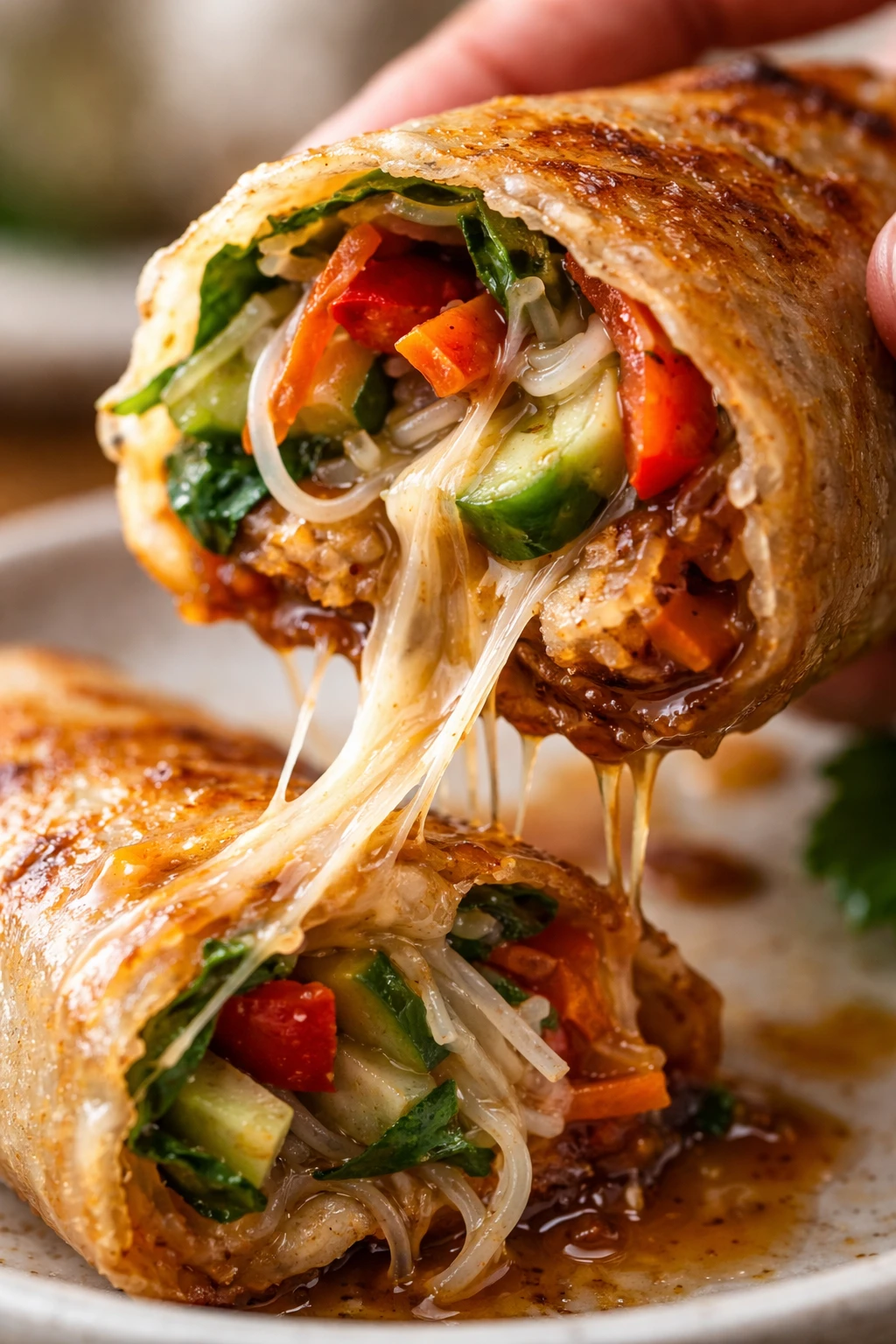
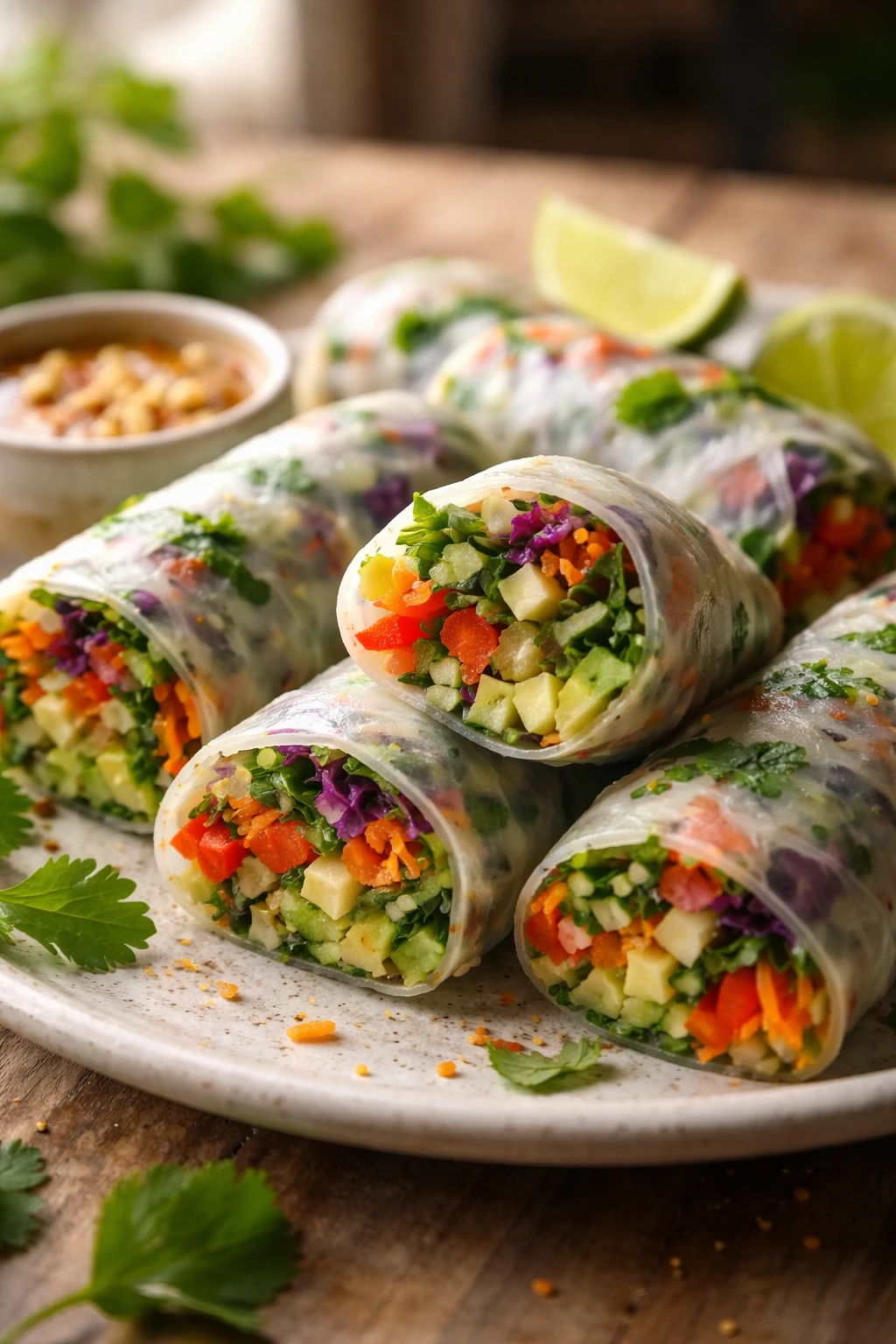
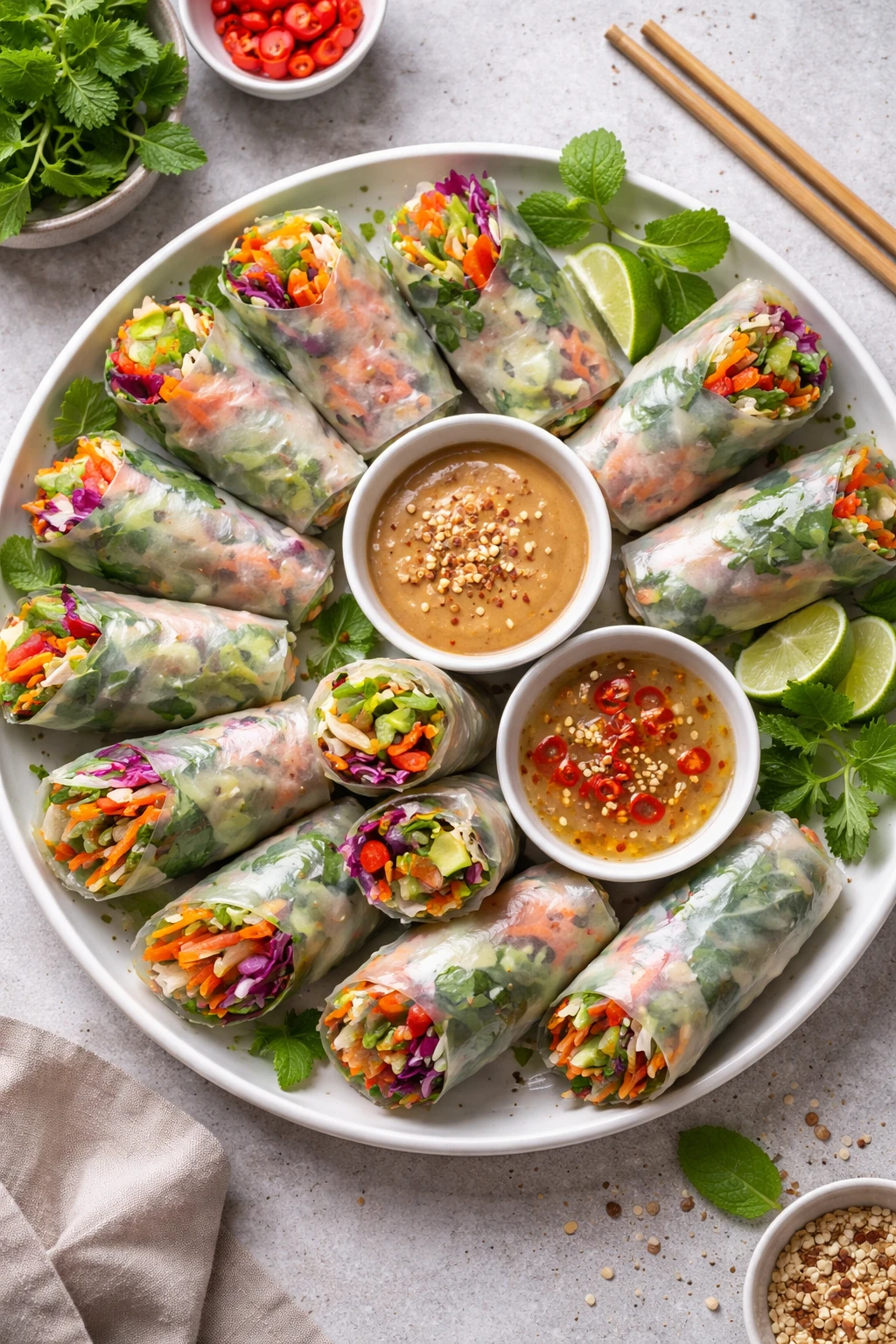
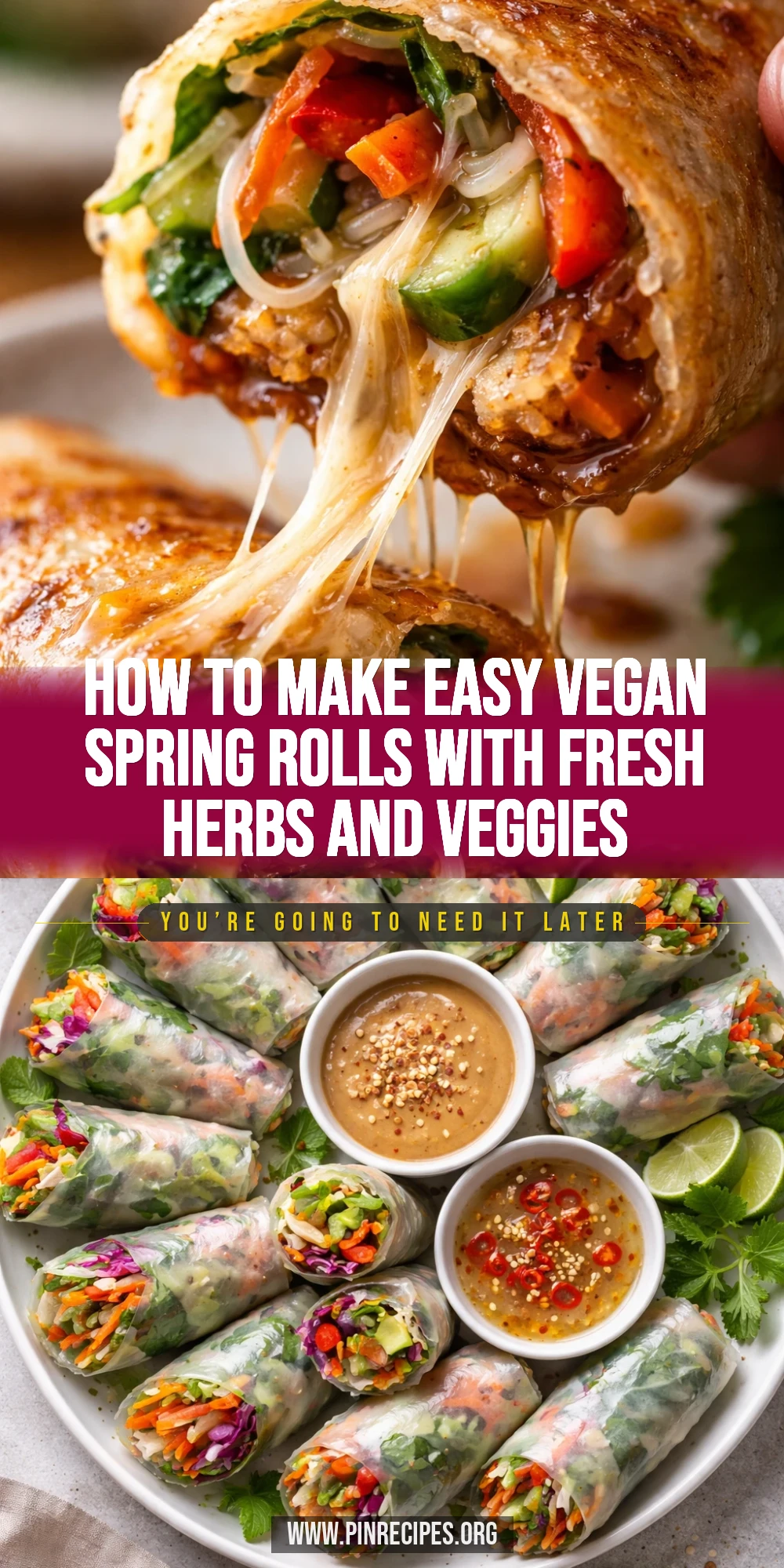
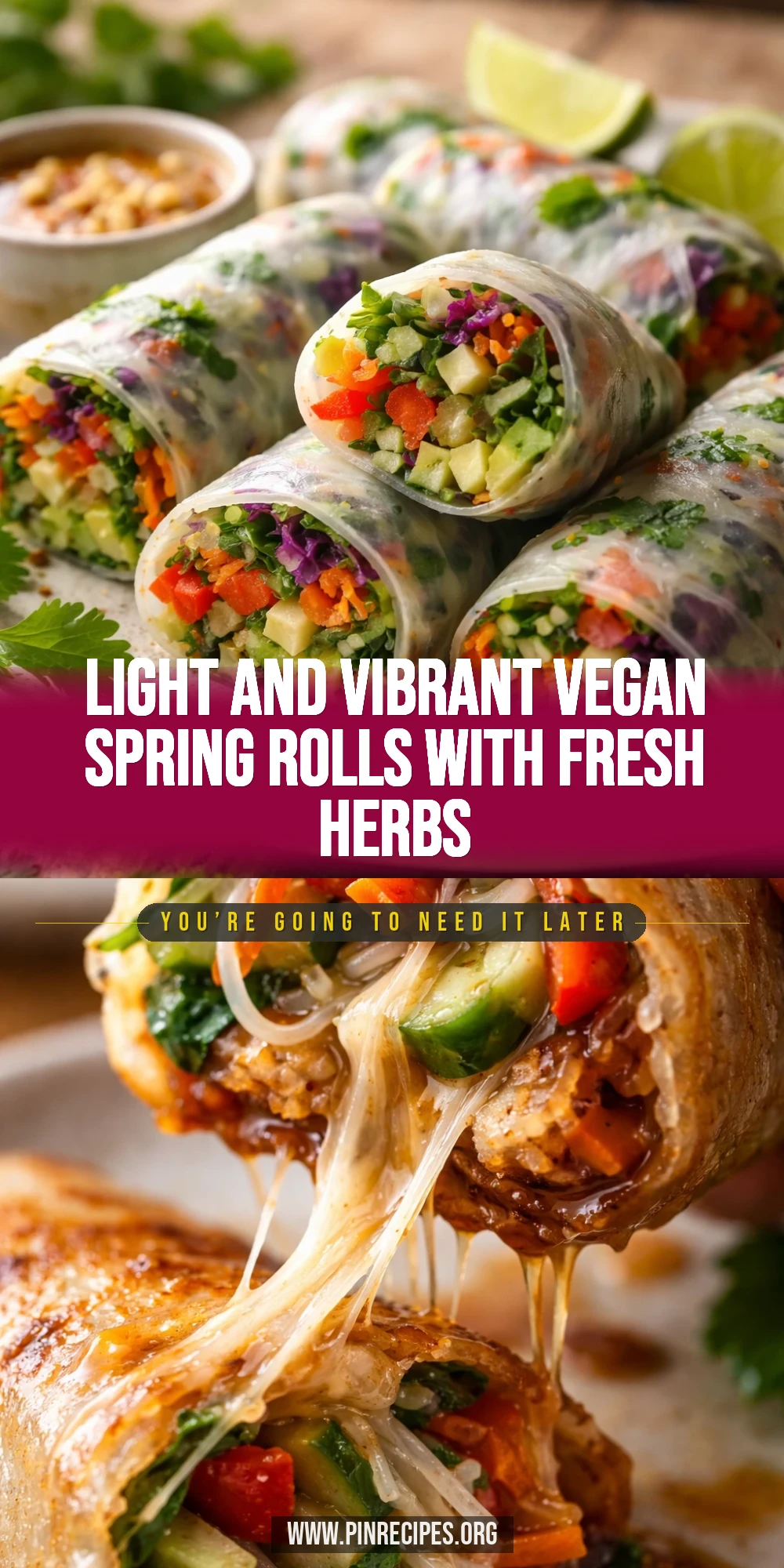
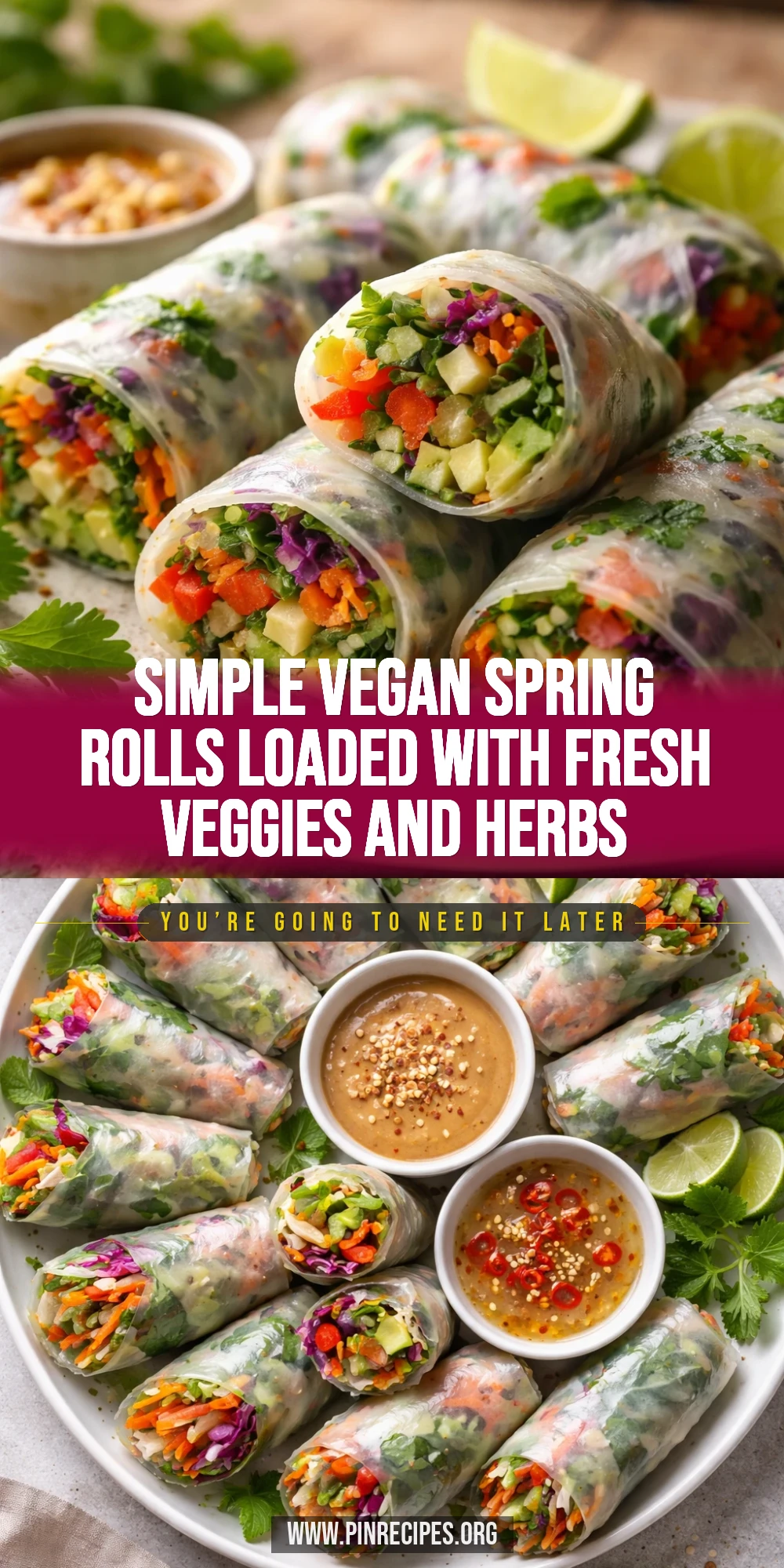
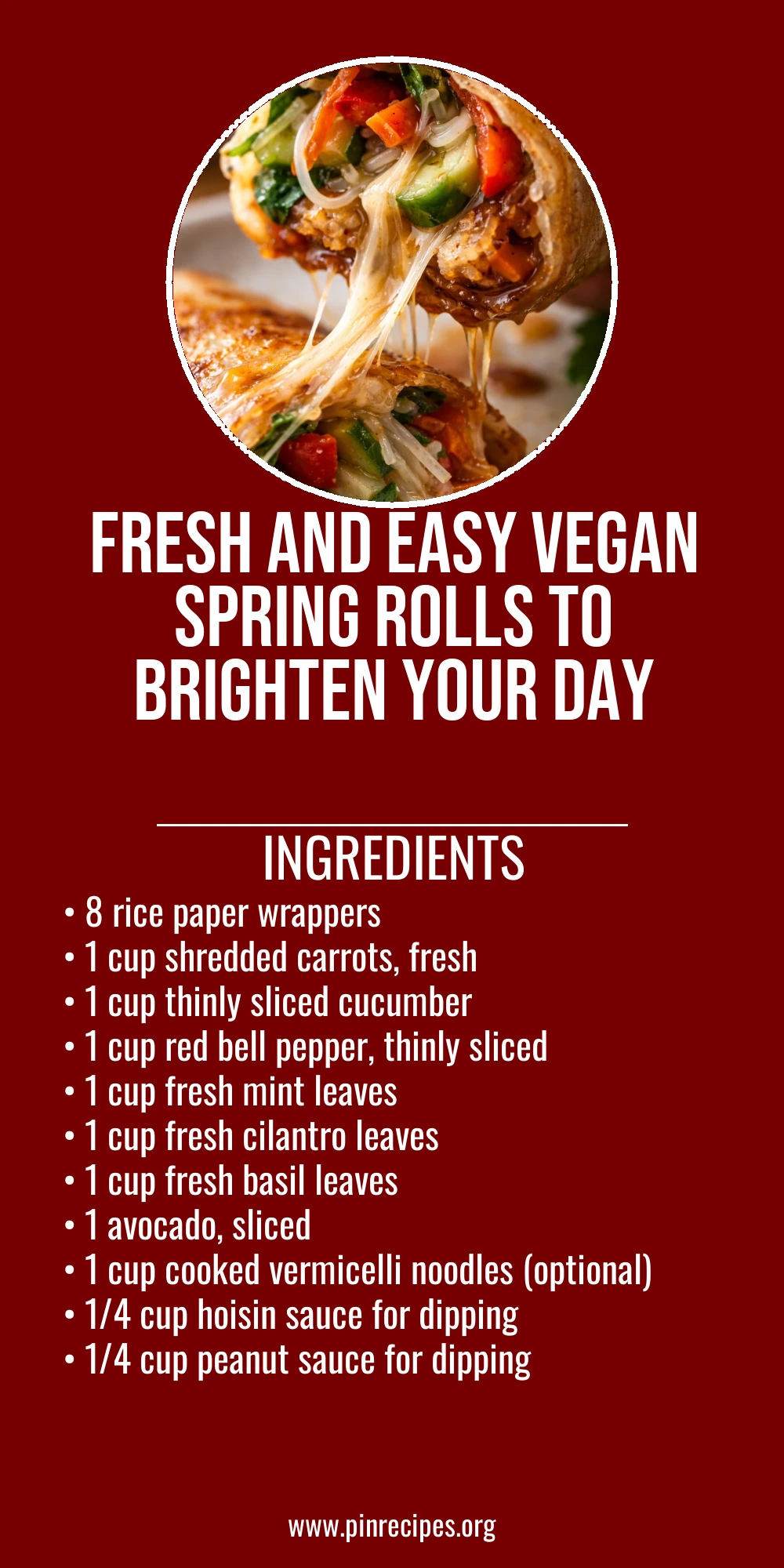
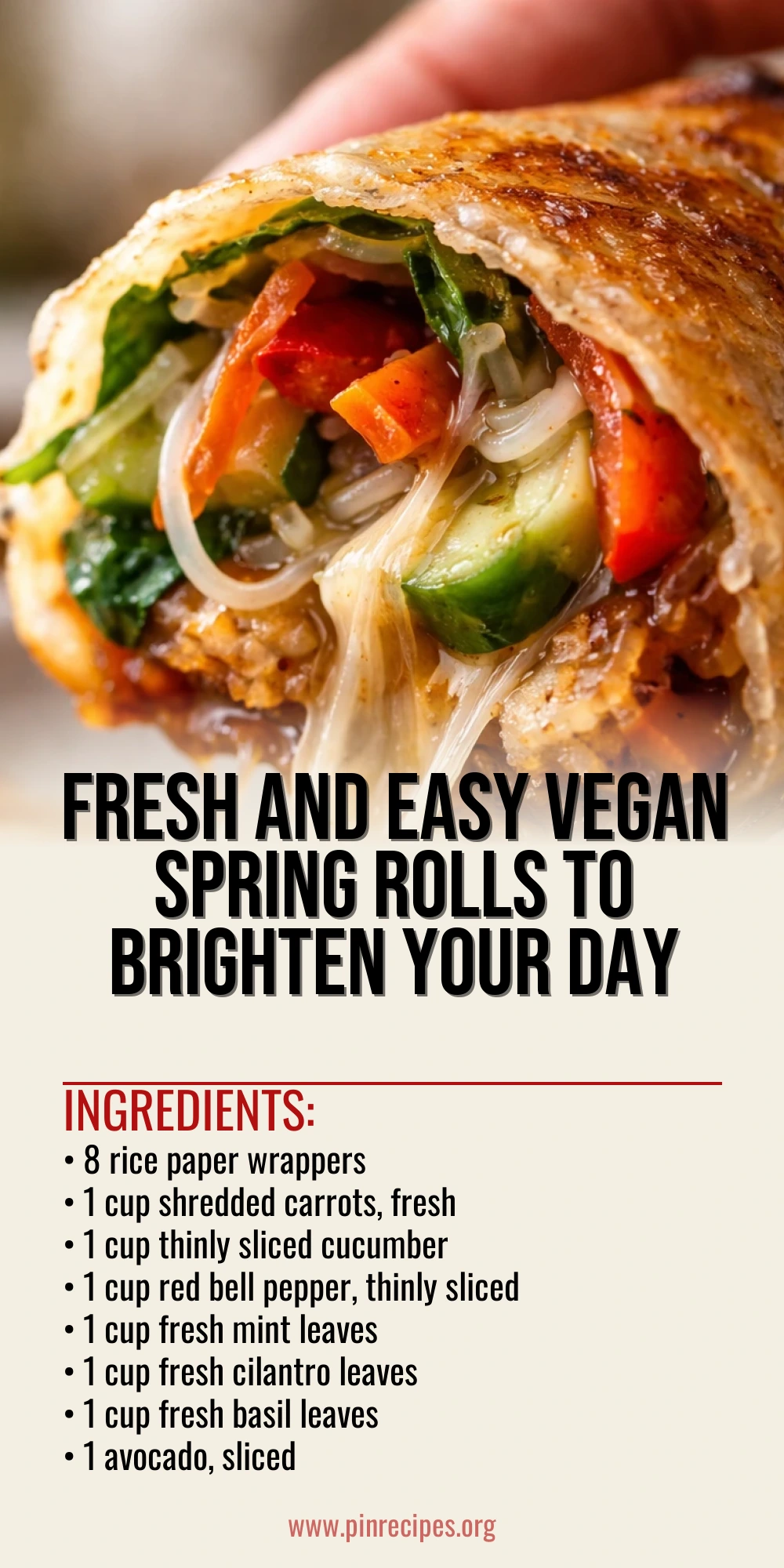
These vegan spring rolls are light, fresh, and packed with crisp veggies and fragrant herbs. The rice paper wrapping keeps things delicate yet satisfying. Perfect for a healthy lunch or appetizer on a sunny day!
Introduction
I first stumbled upon vegan spring rolls at a little café during a summer trip, and I was instantly hooked. The combination of fresh herbs, crisp veggies, and the delicate rice paper wrapper was so refreshing and light — perfect for warm days. Since then, I've been experimenting to make my own version at home that’s both simple and flavorful. What sets this recipe apart is the generous use of fresh herbs like mint, basil, and cilantro, which really elevate the taste and give it that authentic, vibrant punch. I also like to add creamy avocado slices for a bit of richness and optional vermicelli noodles to make them more filling. The trick I learned is to soak the rice paper just enough to make it pliable but not too soft, so it holds together nicely without tearing. When you bite into these, you get a satisfying crunch from the veggies and a burst of herbal freshness. Plus, dipping them in hoisin or peanut sauce adds that perfect sweet and savory balance. These rolls are great as a light lunch, appetizer, or even a healthy snack to share with friends. I hope you love making and eating them as much as I do!
How To Do It
Step 1
Prepare all your veggies and herbs by washing and slicing them thinly. This step is crucial because thin, uniform pieces make rolling easier and ensure every bite has a balanced flavor and texture. Avoid overloading the rolls with too many fillings, which can cause tearing. Keep everything within reach before starting to assemble.
⏱ Time: 10
✓ Doneness: Veggies are crisp, thinly sliced, and ready to use
Step 2
Fill a large shallow bowl with warm water. Dip one rice paper wrapper into the water for about 10-15 seconds until it softens but is still slightly firm. This timing is key; too long and it becomes too fragile to handle, too short and it won’t be pliable enough. Lay it flat on a clean surface immediately after soaking.
⏱ Time: 2
✓ Doneness: Rice paper is soft, flexible, and slightly tacky but not sticky
Step 3
Place a small handful of vermicelli noodles (if using) near the bottom third of the wrapper, leaving space at the edges. This adds a nice texture and makes the rolls more filling. If you skip noodles, the rolls will be lighter and more veggie-focused.
⏱ Time: 2
✓ Doneness: Noodles are neatly placed without overcrowding
Step 4
Layer on the sliced veggies—carrots, cucumber, bell pepper—plus a few slices of avocado for creaminess. Then add a generous handful of fresh herbs like mint, basil, and cilantro. The herbs bring a fresh, aromatic flavor that’s essential to authentic spring rolls.
⏱ Time: 3
✓ Doneness: Fillings are evenly distributed and not overstuffed
Step 5
Fold the sides of the rice paper inward over the filling, then roll it tightly from the bottom up, like a burrito. Rolling tightly helps the spring roll hold its shape and prevents it from falling apart when eaten. If the wrapper tears, try soaking it for a shorter time next round.
⏱ Time: 3
✓ Doneness: Spring roll is compact, sealed, and smooth
Step 6
Repeat the soaking and rolling process for the remaining rice papers and fillings. Work quickly but gently to keep the wrappers from drying out or sticking together. Keep finished rolls covered with a damp cloth to maintain moisture.
⏱ Time: 10
✓ Doneness: All rolls are completed and remain pliable
Step 7
Prepare dipping sauces like hoisin or peanut sauce. These add a sweet, salty, and nutty contrast to the fresh rolls. You can buy pre-made sauces or quickly whip up a peanut sauce with peanut butter, soy sauce, lime juice, and a bit of maple syrup.
⏱ Time: 5
✓ Doneness: Sauces are smooth, flavorful, and ready for dipping
Step 8
Serve the spring rolls immediately for the best texture and freshness. If you need to store them, cover with a damp towel and plastic wrap to prevent drying, but they’re best eaten within a few hours. These rolls don’t reheat well since the rice paper can become tough.
⏱ Time: 1
✓ Doneness: Spring rolls remain fresh and moist
Step 9
Enjoy your vegan spring rolls as a light meal, appetizer, or snack. Pair with your favorite dipping sauces and maybe a crisp salad or soup for a complete meal. They’re great for entertaining too—everyone loves rolling their own!
⏱ Time: 0
✓ Doneness: Ready to eat and enjoy
Pro Tips
Don’t over-soak the rice paper; 10-15 seconds is usually enough.
Over-soaking makes the rice paper too soft and prone to tearing, which makes rolling frustrating and messy. The right timing keeps the wrapper pliable but sturdy enough to hold the fillings securely.
Use a damp towel to cover finished rolls to keep them from drying out.
Rice paper dries quickly when exposed to air, becoming brittle and unpleasant to eat. Covering with a damp cloth keeps moisture in and preserves the fresh texture until serving.
Slice all veggies uniformly thin for easy rolling and balanced bites.
Evenly thin slices ensure the rolls are easy to bite into without tearing the wrapper. Thick or uneven pieces can cause the roll to burst or be difficult to eat.
Add fresh herbs generously for authentic flavor and aroma.
Herbs like mint and cilantro provide bright, fresh notes that transform simple veggies into a vibrant dish. Skimping on herbs results in a duller, less exciting roll.
Prepare dipping sauces ahead to let flavors meld.
Sauces like peanut or hoisin taste better when made in advance, allowing ingredients to blend. This also saves time during assembly and serving.
Work quickly but gently when assembling to prevent wrappers from drying.
Rice paper dries fast and becomes brittle, so assembling rolls promptly keeps them soft and easy to handle. If you pause too long, the wrapper can crack.
Use room temperature water for soaking rice paper.
Warm water softens rice paper evenly without making it sticky or fragile. Cold water slows the softening process, while hot water can over-soften and weaken the wrapper.
Common Mistakes to Avoid
Overfilling the spring rolls
Why it happens It’s tempting to stuff as much as possible, but too much filling makes rolling difficult and causes the wrapper to tear or burst during eating.
Fix Use a modest amount of filling and spread it evenly. Leave space at the edges to fold the rice paper securely. Practice rolling gently but firmly to get the right tension.
Soaking rice paper too long
Why it happens Beginners often soak the wrapper until it’s very soft, thinking it will be easier to roll, but it becomes fragile and tears easily.
Fix Dip the wrapper briefly, about 10-15 seconds, just until it’s pliable but still slightly firm. Test one wrapper first to get a feel for the timing.
Using wet or soggy vegetables
Why it happens Not drying washed vegetables well can add excess moisture, which makes the rice paper soggy and prone to breaking.
Fix Pat all veggies dry with a clean towel or use a salad spinner. Crisp, dry veggies help keep the roll intact and fresh.
Skipping fresh herbs
Why it happens Some skip herbs to simplify the recipe or because they’re not familiar with them, losing the signature flavor boost.
Fix Don’t omit fresh herbs. If unavailable, try to find substitutes like fresh parsley or add a squeeze of lime for brightness, but fresh herbs are best.
Not covering rolls after making
Why it happens Leaving rolls uncovered causes the rice paper to dry out quickly and become brittle.
Fix Cover the rolls with a damp kitchen towel or plastic wrap immediately after rolling to keep them soft and fresh until serving.
Variations
Spicy Vegan Spring Rolls
Add thinly sliced jalapeño or a drizzle of sriracha inside the rolls for a spicy kick. You can also mix chili flakes into the dipping sauce. Expect a bolder flavor with a pleasant heat that complements the fresh herbs.
Note: Be mindful when slicing spicy peppers—remove seeds if you want milder heat. The spice can intensify quickly, so add gradually.
Tofu-Packed Spring Rolls
Include marinated and pan-fried tofu strips for extra protein and a chewy texture. Use a simple soy sauce and garlic marinade. This makes the rolls more filling and hearty, great for a main meal.
Note: Press tofu well before marinating to remove excess moisture, ensuring it browns nicely and doesn’t make the rolls soggy.
Fruit-Infused Spring Rolls
Add thin slices of mango or pineapple for a sweet, tropical twist. The fruit pairs beautifully with herbs and veggies, creating a refreshing contrast. Perfect for summer or as a light dessert option.
Note: Use firm, ripe fruit to avoid excess juiciness that can weaken the wrapper.
Peanut Butter Vegan Spring Rolls
Spread a thin layer of peanut butter inside the rice paper before adding veggies for a creamy, nutty surprise. This adds richness and pairs well with fresh herbs and crunchy vegetables.
Note: Use smooth peanut butter for easier spreading and avoid overpowering the fresh flavors.
Gluten-Free Spring Rolls
Ensure all sauces and noodles used are gluten-free. Substitute soy sauce with tamari or coconut aminos. This variation keeps the recipe accessible for gluten-sensitive eaters without sacrificing flavor.
Note: Double-check labels on packaged ingredients to avoid hidden gluten sources.
Nutrition
Per Serving:
Nutritional values are estimates and may vary based on specific ingredients used.
Storage & Tips
Room Temperature
Spring rolls can be kept at room temperature for up to 2 hours if covered with a damp cloth to prevent drying. Beyond that, they risk becoming soggy or unsafe to eat.
Refrigerator
Store spring rolls in an airtight container lined with a damp paper towel for up to 24 hours. Note that rice paper may harden slightly when cold, so serve at room temperature or with a quick steam to soften.
Freezer
Freezing is not recommended as rice paper becomes brittle and the fresh veggies lose texture. For best quality, enjoy fresh or refrigerate short-term.
Reheating
Avoid reheating spring rolls; they are best served fresh. If needed, steam briefly to soften the rice paper but this may alter texture and freshness.
Make Ahead
Prepare all fillings and dipping sauces 1-2 days ahead and store separately. Assemble rolls just before serving for optimal freshness and texture.
FAQ
Can I make these spring rolls ahead of time?
You can prep the veggies and herbs a day ahead and store them separately in airtight containers. However, it’s best to assemble the spring rolls shortly before serving to keep the rice paper from drying out or becoming soggy.
What can I use if I can’t find rice paper wrappers?
Rice paper is traditional and gives the rolls their signature texture. If unavailable, you might try large butter lettuce leaves as a wrap, though the experience will be different. Avoid substituting with tortillas or other wraps as they won’t have the same delicate chew.
How do I prevent rice paper from tearing?
Soak the rice paper just until pliable, about 10-15 seconds, and handle gently. Don’t overfill the rolls and fold the edges carefully. If a wrapper tears, discard it and try another to avoid leaks.
Can I add protein to these spring rolls?
Absolutely! Tofu, tempeh, or cooked shrimp work well if you’re not strictly vegan. Marinate or cook tofu beforehand for extra flavor. Adding protein makes the rolls more filling and balanced.
What dipping sauces go best with vegan spring rolls?
Classic options include hoisin sauce, peanut sauce, or a simple mix of soy sauce and lime juice. You can also try sweet chili sauce or make your own peanut-lime dipping sauce for variety.
Are these spring rolls gluten-free?
Rice paper and fresh veggies are naturally gluten-free. Just check your dipping sauces and noodles to ensure they don’t contain gluten. Use tamari or gluten-free soy sauce as alternatives.
How long do spring rolls last in the fridge?
Stored properly in an airtight container with a damp towel, they last about 24 hours. Beyond that, the rice paper tends to harden or get soggy, and the veggies lose their crispness.
Can I freeze vegan spring rolls?
Freezing is not recommended because the rice paper becomes brittle and veggies lose texture. It’s best to enjoy these fresh or store in the fridge short-term.
Final Thoughts
Give these easy vegan spring rolls a try—you'll love how fresh and tasty they are! Don’t forget to share your rolling adventures and favorite dipping sauces with me.