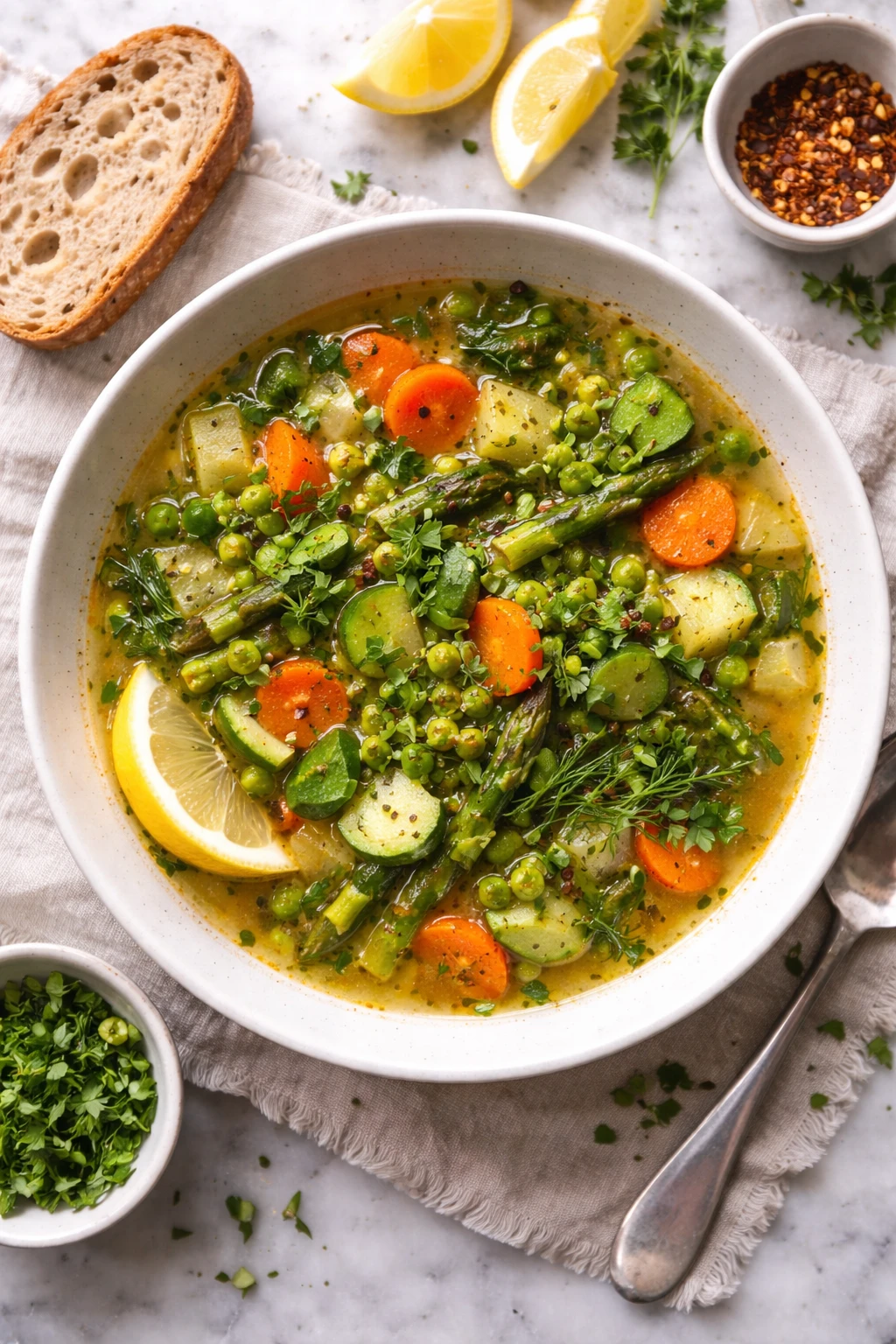
This fresh vegan spring soup bursts with tender veggies and fragrant herbs. The secret? A splash of lemon juice brightens it all up. Great for a light lunch or cozy dinner on a cool day.
Introduction
I first stumbled upon this vegan spring vegetable soup recipe a few years back when I wanted something light but satisfying after a long winter. What really hooked me was how the fresh herbs—parsley, dill, and chives—bring the whole dish to life, making it taste like spring in a bowl. Unlike heavier soups, this one feels bright and clean but still comforting. The trick I learned is to add the lemon juice right at the end; it wakes up all the flavors without overpowering them. I also love that it’s super forgiving—you can swap in whatever spring veggies you have on hand. The finished soup has this lovely balance: tender veggies, fresh herbal notes, and a subtle zing from the lemon. It’s perfect for a cozy lunch or a light dinner when you want something nourishing but not too heavy. Honestly, I’ve made this recipe countless times, and it never gets old. It’s one of those go-to meals that feels both fresh and homey at once.
What You'll Need
Approximately 6 cups, 4 servings
- 2 tablespoons olive oil, cold-pressed
- 1 medium onion, diced
- 2 cloves garlic, minced
- 3 cups vegetable broth, low sodium
- 1 cup asparagus tips, chopped
- 1 cup sugar snap peas, trimmed
- 1 cup baby carrots, sliced
- 1 medium potato, peeled and diced
- 1/2 cup fresh parsley, chopped
- 1/4 cup fresh dill, chopped
- 1/4 cup fresh chives, chopped
- Juice of 1 lemon
- Salt and pepper, to taste
How To Do It
Step 1
Heat the olive oil in a large pot over medium heat until shimmering but not smoking. Add the diced onion and cook, stirring occasionally, until translucent and soft, about 5-7 minutes. This step builds the flavor base for your soup by gently caramelizing the onions, which adds subtle sweetness and depth. Avoid browning or burning the onions here, as that can create bitterness that masks the fresh vegetable flavors later.
⏱ Time: 7 minutes
✓ Doneness: Onions are soft, translucent, and slightly glossy without any browned bits.
Step 2
Add the minced garlic to the pot and stir for about 1 minute until fragrant. Garlic cooks quickly and can burn easily, so keep the heat moderate and stir constantly. This step infuses the oil with garlic’s aromatic flavor, which will gently permeate the entire soup. Burnt garlic tastes bitter and will ruin the delicate vegetable flavors, so watch closely.
⏱ Time: 1 minute
✓ Doneness: Garlic is fragrant but not browned or burnt.
Step 3
Pour in the vegetable broth and bring the mixture to a gentle boil. Then add the diced potatoes and sliced baby carrots. Lower the heat to a simmer and cook for about 10 minutes, or until the potatoes are just tender. The potatoes add body to the soup and help create a comforting texture without heaviness. Simmering gently ensures the vegetables cook evenly without breaking down too much.
⏱ Time: 10 minutes
✓ Doneness: Potatoes are fork-tender but still hold their shape.
Step 4
Add the asparagus tips and sugar snap peas to the pot. These delicate spring veggies cook quickly, so adding them later keeps their texture crisp and fresh. Simmer for an additional 5 minutes until the peas and asparagus are tender but still vibrant. Overcooking will make them mushy and dull the bright green color.
⏱ Time: 5 minutes
✓ Doneness: Vegetables are tender but still bright green and slightly crisp.
Step 5
Turn off the heat and stir in the fresh parsley, dill, and chives. Fresh herbs lose their brightness if cooked too long, so adding them at the end preserves their flavor and aroma. The herbs give the soup a fresh, springtime lift that’s truly irresistible.
⏱ Time: 1 minute
✓ Doneness: Herbs look vibrant and release a fresh, fragrant aroma.
Step 6
Add the lemon juice and stir well. This final touch brightens the entire soup, balancing the earthiness of the vegetables and the richness of the broth. Lemon juice added too early will lose its punch, so it’s best to add it at the very end to keep the flavor fresh and lively.
⏱ Time: 30 seconds
✓ Doneness: Soup has a fresh, tangy aroma and a bright flavor.
Step 7
Season the soup with salt and freshly ground black pepper to taste. Seasoning at the end allows you to adjust the flavors precisely, as the broth and lemon juice can alter the saltiness. Taste carefully and add small amounts at a time to avoid over-salting.
⏱ Time: 1 minute
✓ Doneness: Balanced seasoning that enhances but doesn’t overpower the soup.
Step 8
Let the soup rest for a few minutes off the heat to allow the flavors to meld together. This short resting period helps the herbs infuse the broth and the lemon juice to mellow slightly, creating a harmonious flavor profile. Don’t skip this step as it makes a noticeable difference.
⏱ Time: 5 minutes
✓ Doneness: Soup tastes well-rounded and balanced.
Step 9
Serve the soup warm with a drizzle of good olive oil or a sprinkle of extra fresh herbs if you like. This adds a lovely finishing touch and a bit of richness without dairy. It’s a simple way to elevate the presentation and flavor just before serving.
⏱ Time: 2 minutes
✓ Doneness: Soup looks vibrant and inviting with fresh herb garnish.
Pro Tips
Don’t rush sautéing the onions; cook them low and slow.
Slowly cooking onions releases their natural sweetness and builds a complex flavor base. If you rush or cook on too high heat, they can burn and taste bitter, which will negatively affect the entire soup’s flavor.
Add delicate veggies like asparagus and peas at the very end.
These vegetables cook quickly and retain their bright color and crispness when added last. Adding them too early results in mushy texture and dull colors, making the soup less appealing.
Use fresh herbs and add them off the heat.
Fresh herbs lose their aroma and flavor when cooked too long. Stirring them in just before serving preserves their vibrant taste and makes the soup feel fresh and lively.
Season the soup at the end after adding lemon juice.
Lemon juice changes the perceived saltiness, so seasoning before adding it can lead to over-salting. Tasting and adjusting at the end ensures balanced flavor.
Use low-sodium broth to control salt levels.
Broth can vary widely in salt content. Starting with low-sodium broth lets you season precisely, avoiding a soup that’s too salty or bland.
Let the soup rest a few minutes before serving.
Resting allows flavors to meld and the herbs to infuse the broth, resulting in a more harmonious and developed taste.
Add a splash of olive oil when serving.
A drizzle of good olive oil adds richness and a silky mouthfeel without dairy, enhancing the soup’s texture and flavor.
Common Mistakes to Avoid
Overcooking spring vegetables
Why it happens Many cooks add all vegetables at once to save time, not realizing delicate veggies need less cooking.
Fix Add tender veggies like asparagus and snap peas in the last 5 minutes of cooking to keep them crisp and vibrant.
Burning garlic during sauté
Why it happens Garlic cooks very quickly and can burn if added too early or cooked on high heat.
Fix Add garlic after onions are softened and cook on medium heat for just about a minute, stirring constantly.
Not seasoning properly
Why it happens Skipping seasoning or adding salt too early can lead to bland or overly salty soup.
Fix Use low-sodium broth and season at the end, tasting after adding lemon juice to balance flavors.
Using dried herbs instead of fresh
Why it happens Dried herbs are often used for convenience but lack the brightness needed here.
Fix Use fresh parsley, dill, and chives added off heat to preserve their fresh flavor and aroma.
Skipping the lemon juice
Why it happens Some skip lemon juice thinking it’s optional, but it’s key for brightness.
Fix Always add fresh lemon juice at the end for a vibrant, balanced flavor that lifts the whole soup.
Variations
Add Coconut Milk for Creaminess
Stir in 1/2 cup of full-fat coconut milk at the end for a creamy, slightly sweet twist that still keeps the soup vegan and light. This adds a silky texture and subtle tropical flavor.
Note: Add coconut milk off heat to avoid curdling and preserve creaminess.
Spicy Kick with Red Pepper Flakes
Add a pinch of red pepper flakes when sautéing the onions for a gentle heat that complements the fresh herbs and vegetables. It’s a nice way to warm up the soup on chilly days.
Note: Adjust amount to taste; add early to infuse the oil with spice.
Swap Potatoes for Sweet Potatoes
Use diced sweet potatoes instead of regular potatoes for a slightly sweeter flavor and richer color. Sweet potatoes also add extra fiber and nutrients.
Note: Sweet potatoes cook a bit faster; check tenderness early to avoid mushiness.
Add Fresh Peas for Extra Sweetness
Toss in 1 cup of fresh or thawed frozen peas with the asparagus and snap peas for a pop of sweetness and vibrant green color that enhances the spring vibe.
Note: Add peas late in cooking to keep their texture intact.
Use Different Herb Combinations
Try swapping dill for tarragon or basil for a different herbal note. Each herb changes the flavor profile, giving the soup a new twist while keeping it fresh and light.
Note: Add herbs off heat to keep their delicate aromas.
Nutrition
Per Serving:
Nutritional values are estimates and may vary based on specific ingredients used.
Storage & Tips
Room Temperature
Keep the soup covered and at room temperature for no more than 2 hours to prevent bacterial growth. Avoid leaving it out longer to maintain food safety.
Refrigerator
Store in an airtight container in the fridge for up to 4 days. The flavors deepen but fresh herbs may lose some brightness. Reheat gently on the stove or microwave before serving.
Freezer
Freeze the soup in airtight containers or heavy-duty freezer bags for up to 3 months. Thaw overnight in the fridge and reheat gently to preserve texture and flavor.
Reheating
Reheat on the stovetop over low heat, stirring occasionally. Add a splash of vegetable broth or water if the soup thickens too much. Avoid boiling to keep vegetables tender and herbs fresh.
Make Ahead
You can chop vegetables and prepare broth up to 2 days ahead. Store separately and combine just before cooking to keep veggies fresh. Herbs and lemon juice should be added only at the last minute.
FAQ
Can I use frozen vegetables instead of fresh?
Yes, frozen spring vegetables like asparagus and peas work well if fresh aren’t available. Add them later in the cooking process to avoid overcooking and mushiness. Frozen veggies may release extra water, so adjust broth amounts accordingly.
What can I substitute for fresh herbs if I don’t have them?
If you don’t have fresh herbs, you can use dried ones but reduce the quantity since dried herbs are more concentrated. Add dried herbs earlier in cooking to allow flavors to develop, but know the soup won’t have the same bright, fresh taste.
Is this soup suitable for meal prep?
Absolutely! This soup keeps well in the fridge for several days and freezes nicely. Just add fresh herbs and lemon juice when reheating to refresh the flavors. It’s a great option for healthy make-ahead meals.
Can I make this soup in a slow cooker?
You can, but add delicate vegetables and herbs toward the end of cooking to prevent them from becoming mushy. Slow cookers tend to dull fresh flavors, so finishing with fresh lemon juice and herbs is especially important.
How can I make the soup more filling?
Add cooked beans, lentils, or quinoa to boost protein and make it heartier. You can also stir in some cooked pasta or grains just before serving for extra substance.
What if I don’t have lemon juice?
Try to use fresh lemon juice whenever possible for the best flavor and brightness.
Can I add other vegetables to this soup?
Definitely! Feel free to add zucchini, spinach, or green beans depending on what you have. Just adjust cooking times so that all veggies are tender yet not mushy.
Why does my soup taste bland sometimes?
Blending flavors in soup takes time and balance. Make sure to season at the end, add fresh herbs off heat, and finish with lemon juice. Using low-sodium broth lets you control saltiness better. Also, avoid overcooking veggies which can dull flavors.
Final Thoughts
I hope you enjoy this easy vegan spring vegetable soup as much as I do! It’s a fresh, comforting way to celebrate the season—let me know how yours turns out.