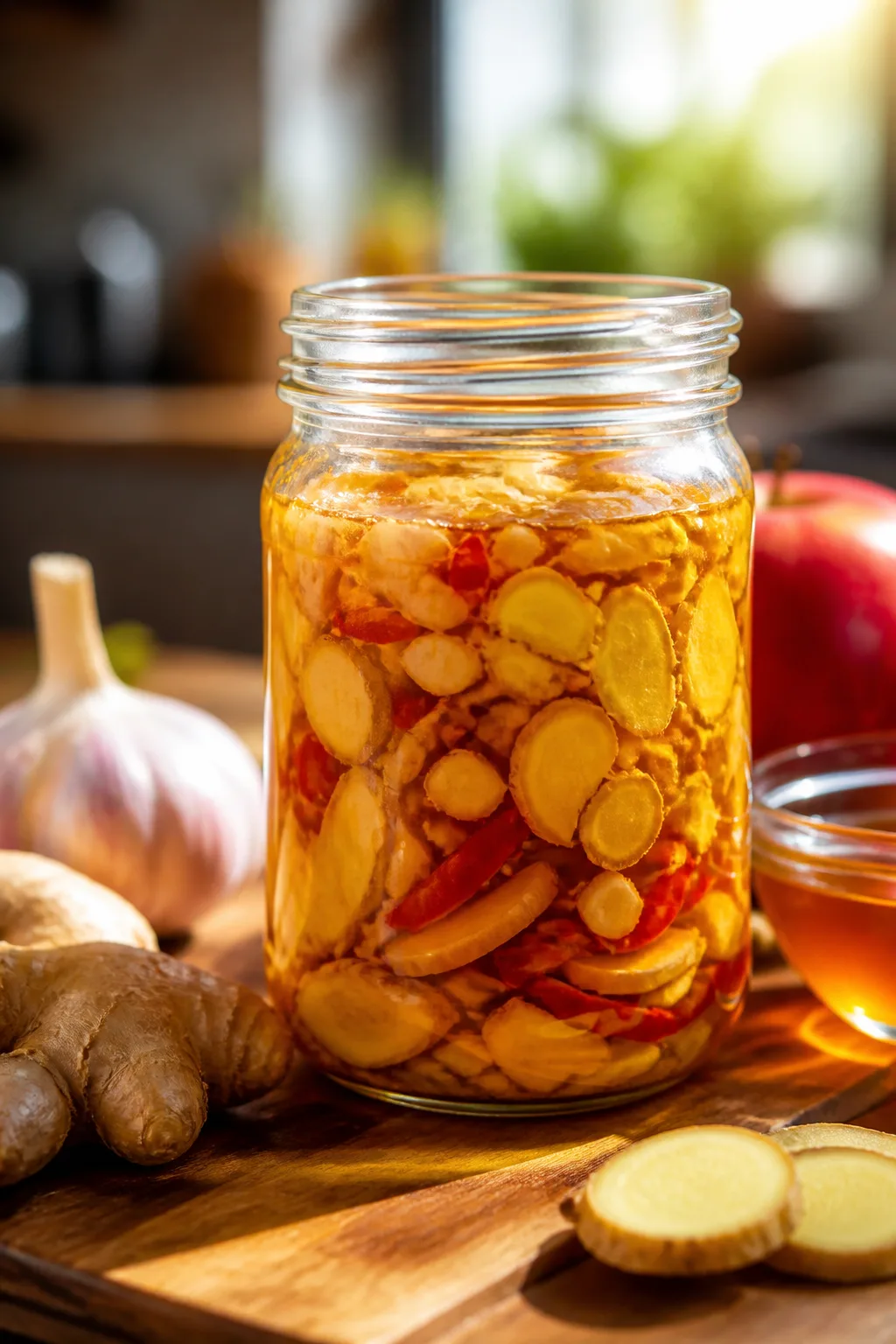
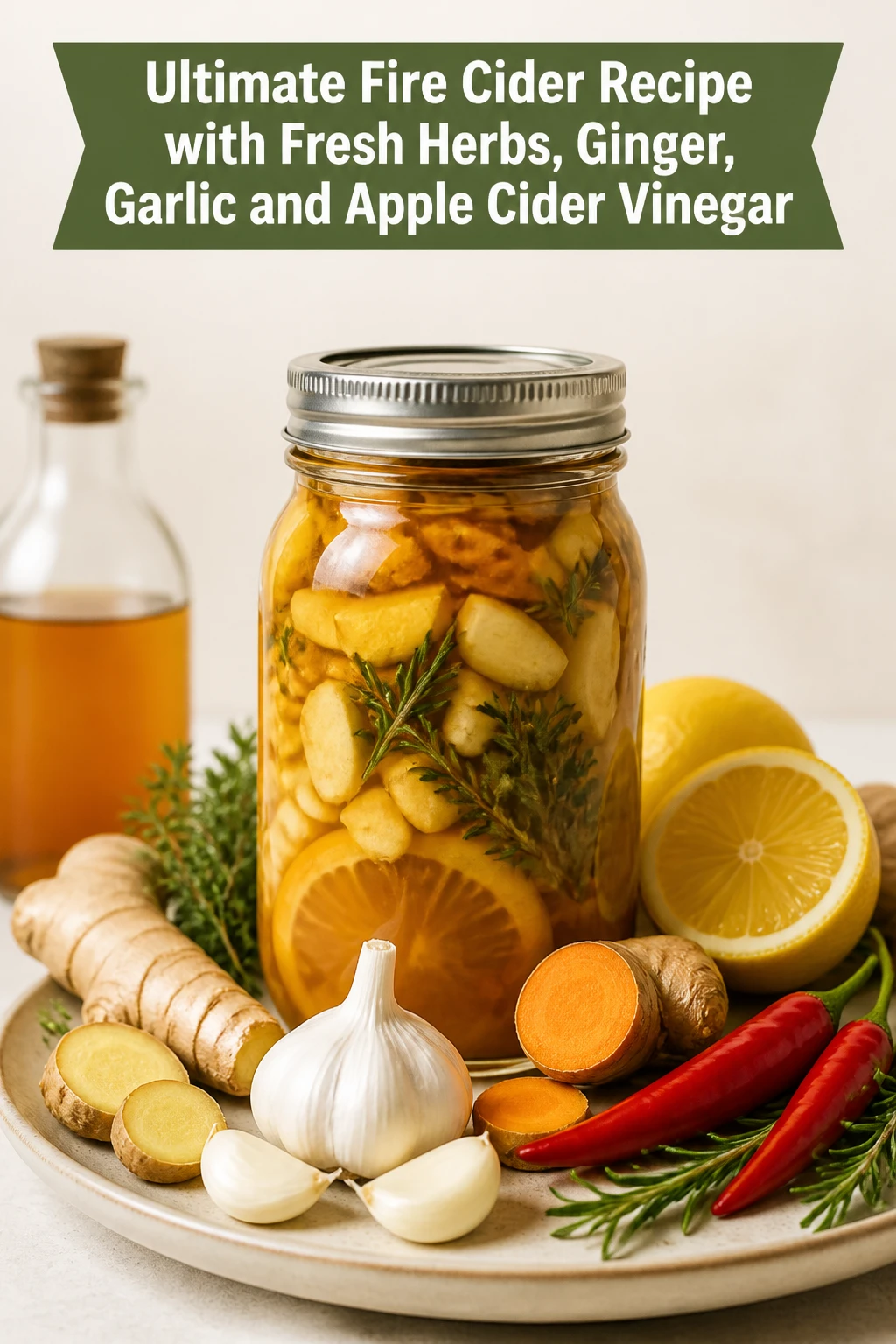
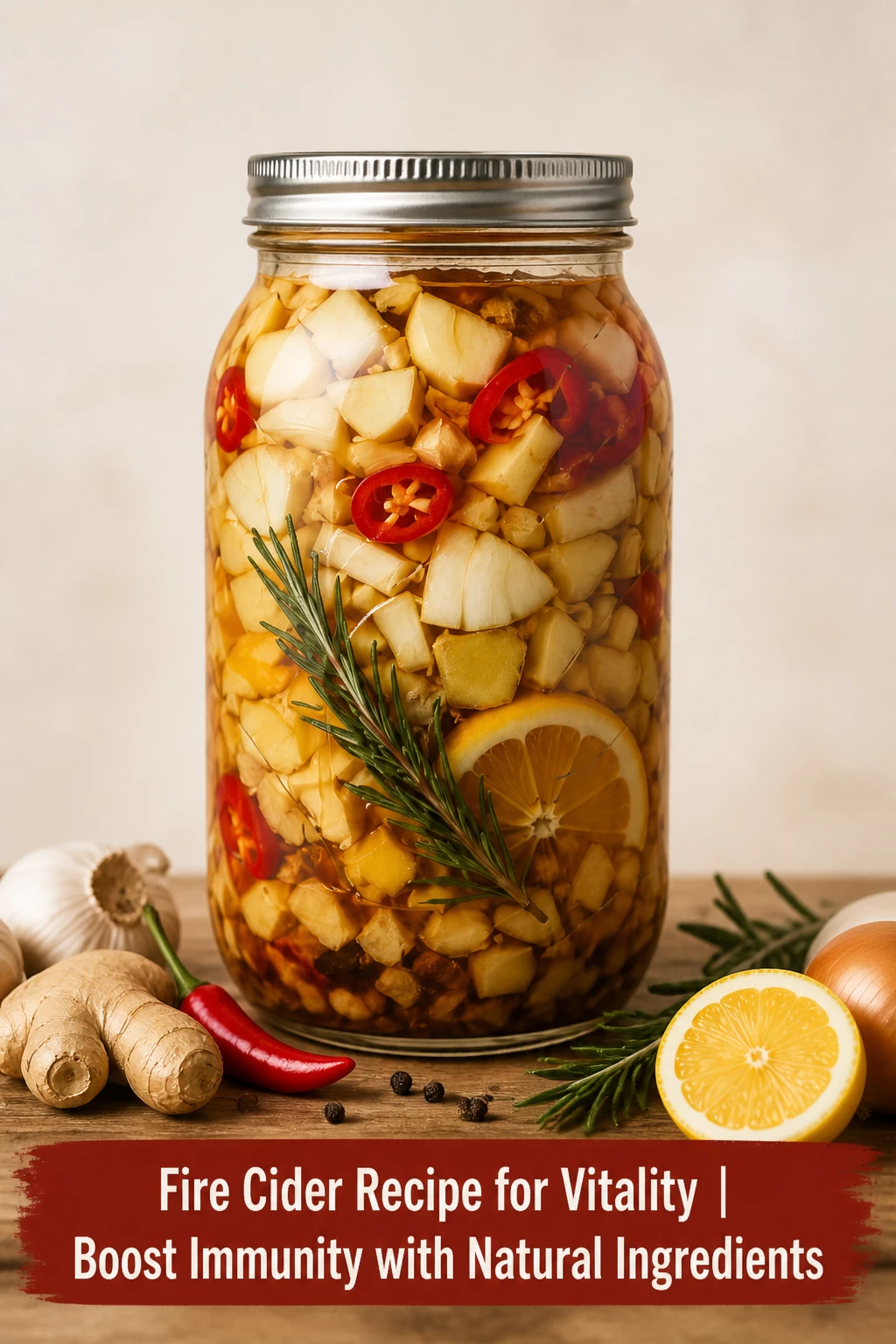
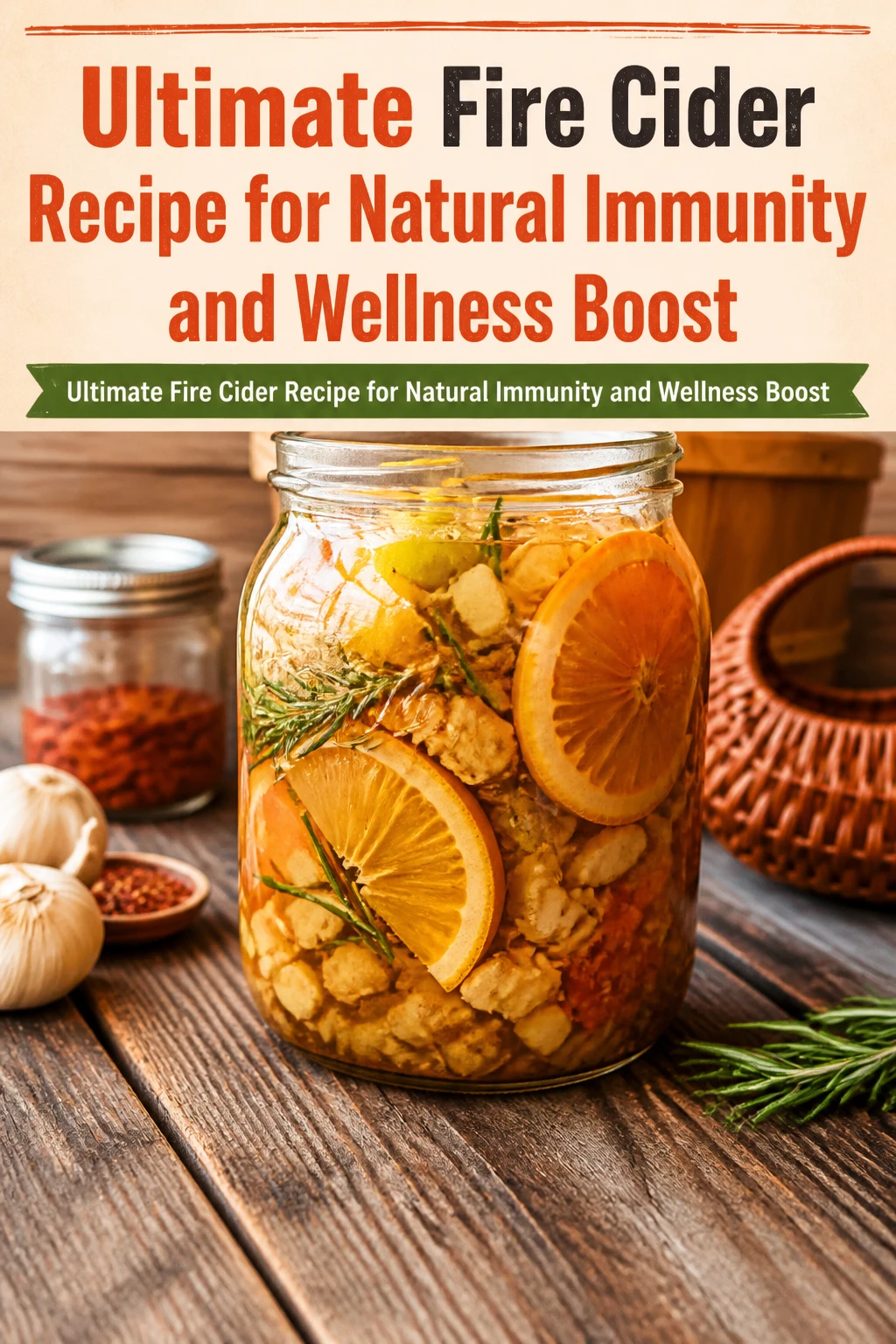
This homemade fire cider is a zesty herbal tonic that packs a punch with fresh ginger, garlic, and apple cider vinegar. It’s a simple natural remedy that’s perfect for boosting immunity during cold seasons or anytime you need a little extra wellness kick.
Introduction
I first discovered fire cider years ago when I was searching for a natural way to boost my family's immunity during cold season. After trying a few versions, I developed this homemade fire cider recipe that uses fresh ginger, garlic, and apple cider vinegar for a bold, tangy kick. What makes this version special is the combination of fresh hot peppers and horseradish, which adds a spicy warmth that wakes up your senses. I love that it’s so easy to make—just chop, combine, and let it steep for a few weeks. The daily shaking helps the flavors meld beautifully, and the final strained tonic is perfect to sip straight or add to drinks. It’s become a staple in our kitchen, especially when anyone feels a sniffle coming on. The sharp vinegar bite balanced with honey makes it surprisingly pleasant to take. Plus, it’s a wonderful ritual to prepare it together and know you’re making something good for your body. If you’re looking for a simple, effective herbal tonic, this fire cider is a fantastic place to start.
What You'll Need
Approximately 4 cups strained fire cider, about 8 servings
- 1 cup peeled and sliced fresh ginger root
- 1 cup peeled garlic cloves
- 1 cup chopped hot peppers (such as jalapeño or habanero)
- 2 lemons, sliced
- 1/4 cup peeled and grated fresh horseradish root
- 2 tablespoons dried turmeric powder or 1/4 cup fresh grated turmeric
- 1 quart raw apple cider vinegar
- Honey to taste (optional)
- Fresh herbs (rosemary, thyme, or oregano) a few sprigs
How To Do It
Step 1
Start by thoroughly washing all your fresh ingredients. Peel and slice the ginger root into thin pieces to maximize surface area for infusion. Peel the garlic cloves and chop the hot peppers, removing seeds if you prefer less heat. Slice the lemons thinly, leaving the peel on for extra flavor. Grate the horseradish root finely and prepare the fresh herbs by rinsing them gently. This prep ensures all the flavors will release fully into the vinegar during steeping.
⏱ Time: 15 minutes
✓ Doneness: Ingredients are evenly chopped and prepped, ready for layering in the jar.
Step 2
Layer the prepared ingredients into a large, clean glass jar. Start with the ginger and garlic, then add the hot peppers, lemon slices, horseradish, turmeric, and fresh herbs. Pour raw apple cider vinegar over the top, fully submerging all the ingredients. Seal the jar tightly with a lid. This layering helps distribute flavors evenly and vinegar acts as a preservative and extraction medium.
⏱ Time: 5 minutes
✓ Doneness: All ingredients are submerged in vinegar with no air pockets.
Step 3
Place the jar in a cool, dark spot and shake it vigorously once a day. This daily agitation helps release the essential oils and compounds from the ingredients into the vinegar. The steeping period should last 3 to 4 weeks to develop a full-bodied, potent tonic. Resist the urge to open the jar frequently to maintain the infusion environment.
⏱ Time: 3-4 weeks
✓ Doneness: The vinegar darkens and smells pungent and spicy, indicating full infusion.
Step 4
After the steeping period, strain the mixture through a fine mesh sieve or cheesecloth into a clean container. Press the solids to extract as much liquid as possible. Sweeten the strained fire cider with honey to taste, balancing the sharpness of the vinegar with natural sweetness. Stir well to combine. This final step transforms the tonic into a palatable, ready-to-use remedy.
⏱ Time: 10 minutes
✓ Doneness: Liquid is clear of solids, with a balanced sweet and tangy flavor.
Step 5
Store your fire cider in airtight glass bottles in the refrigerator or a cool pantry. It will keep well for several months. Use a tablespoon daily as a health tonic or add it to salad dressings and marinades for a flavorful boost. Keeping it chilled preserves its potency and freshness.
⏱ Time: Ongoing
✓ Doneness: Fire cider remains fresh and vibrant in flavor over time.
Step 6
If you want a milder version, dilute the fire cider with water or juice before consuming. This makes it easier on the palate while still delivering the health benefits. Experiment with ratios to find what suits your taste best.
⏱ Time: As needed
✓ Doneness: Flavor is balanced and pleasant to drink.
Step 7
Use clean utensils each time you dip into the fire cider to avoid contamination. This helps prevent spoilage and extends shelf life. Always reseal the bottles tightly after use.
⏱ Time: Ongoing
✓ Doneness: Fire cider remains clear and free of mold or off smells.
Step 8
Consider customizing your fire cider by adding other herbs like rosemary or oregano during the steeping process. These add unique flavors and additional health benefits. Just be sure to keep the total volume of solids manageable to ensure proper infusion.
⏱ Time: During prep
✓ Doneness: Herbs are fresh and well incorporated in the mixture.
Step 9
Before gifting or sharing, label your fire cider with the date it was made and ingredients used. This helps track freshness and informs recipients about potential allergens or taste profiles. Presentation matters when sharing homemade remedies!
⏱ Time: 5 minutes
✓ Doneness: Labels are clear and neatly applied.
Pro Tips
Shake the jar vigorously every day during steeping.
Daily shaking redistributes the ingredients and vinegar, increasing contact between the herbs and liquid. This promotes better extraction of flavors and beneficial compounds. Without shaking, some ingredients may settle and infuse unevenly, resulting in a less potent tonic.
Use a clean glass jar with a tight-fitting lid for steeping.
Glass is non-reactive and won’t leach chemicals into the vinegar, preserving the purity of your infusion. A tight lid prevents contamination and evaporation of the volatile compounds. Plastic containers can absorb flavors and may degrade over time.
Strain the fire cider thoroughly before sweetening.
Removing solids prevents mold growth and extends shelf life. It also provides a smoother liquid that’s easier to use as a tonic or in recipes. Sweetening after straining allows you to adjust the flavor precisely without interfering with the infusion process.
Common Mistakes to Avoid
Not shaking the jar daily during steeping.
Why it happens Many assume that simply leaving the ingredients to soak is enough, but without agitation, flavors and beneficial compounds extract unevenly.
Fix Make it a habit to shake the jar vigorously every day. This ensures all ingredients are evenly infused and prevents settling, resulting in a more balanced and potent fire cider.
Using pasteurized apple cider vinegar.
Why it happens Pasteurized vinegar is more common and often less expensive, so cooks might default to it without realizing the difference.
Fix Always choose raw, unfiltered apple cider vinegar with the 'mother' for its enzymes and probiotics. This enhances both flavor and health benefits, making your fire cider more effective.
Adding honey before straining.
Why it happens Some add honey early to sweeten the mixture, not realizing it can ferment or spoil during steeping.
Fix Wait until after straining the infused vinegar to add honey. This prevents fermentation and keeps your fire cider fresh longer.
Variations
Mild Fire Cider
For a gentler tonic, reduce or omit the hot peppers and horseradish. Add extra lemon slices and a bit more honey to balance the flavors. This version is great for those sensitive to spice but still wanting the health benefits.
Note: Less spicy ingredients mean a milder infusion, so steeping time can be shortened to 2 weeks without losing flavor.
Herbal Fire Cider
Add fresh herbs like rosemary, thyme, and oregano for additional immune-boosting properties and a more complex flavor profile. These herbs complement the spicy base and add aromatic depth.
Note: Use about 2-3 sprigs of each herb, and ensure they are fresh and clean to avoid introducing contaminants.
Citrus Fire Cider
Increase the lemon quantity and add orange or grapefruit slices for a brighter, citrus-forward fire cider. This variation adds vitamin C and a refreshing twist to the traditional recipe.
Note: Citrus peels contain oils that can intensify bitterness if steeped too long; consider limiting steep time to 3 weeks.
Nutrition
Per Serving:
Nutritional values are estimates and may vary based on specific ingredients used.
Storage & Tips
Room Temperature
Fire cider can be kept at room temperature for up to 1 week if stored in a cool, dark place in a sealed jar. However, refrigeration is recommended to maintain freshness and potency.
Refrigerator
Store fire cider in an airtight glass container in the refrigerator for up to 6 months. Over time, the flavor may mellow but will remain effective. It can be consumed cold or at room temperature.
Freezer
Freezing is not recommended as it can alter the texture and flavor of the vinegar infusion. Instead, make smaller batches to ensure freshness.
Reheating
Fire cider is typically consumed cold or at room temperature. If preferred warm, gently heat a small amount without boiling to preserve the beneficial enzymes and compounds.
Make Ahead
You can prepare the fire cider jar with all ingredients up to 1 day in advance before adding vinegar. Once vinegar is added, begin the steeping process immediately and label with the start date.
FAQ
Can I use white vinegar instead of apple cider vinegar?
White vinegar lacks the natural enzymes, probiotics, and milder flavor of raw apple cider vinegar, which are essential for traditional fire cider. Using white vinegar will result in a harsher taste and fewer health benefits, so it’s best to stick with raw apple cider vinegar.
How spicy will the fire cider be?
The spice level depends on the type and amount of hot peppers and horseradish used. You can adjust these ingredients to your heat tolerance. Removing seeds from peppers reduces heat, and omitting horseradish will also mellow the tonic.
Is it safe to take fire cider daily?
Yes, taking 1 tablespoon daily is generally safe for most people and can support immune health. However, if you have acid reflux, stomach ulcers, or are sensitive to spicy foods, start with smaller amounts and consult your doctor if unsure.
Can I add other herbs or spices?
Absolutely! Many variations include herbs like rosemary, thyme, or oregano, and spices like cinnamon or cloves. Just ensure you use fresh, clean ingredients and adjust steeping time accordingly.
How do I know when the fire cider is ready?
After 3 to 4 weeks of steeping and daily shaking, the vinegar will darken and smell pungent and spicy. This indicates the flavors and compounds have fully infused, and it’s ready for straining and sweetening.
Can I reuse the solids after straining?
It’s not recommended as most of the beneficial compounds have been extracted. The solids may be bitter or unpleasant if reused. Compost or discard them instead.
What is the best way to consume fire cider?
Many take it straight by the tablespoon daily, or dilute it with water or juice to reduce intensity. It can also be added to salad dressings, marinades, or cocktails for a flavorful health boost.
Will fire cider lose potency over time?
Stored properly in the refrigerator, fire cider maintains potency for several months. Over time, flavors may mellow but the tonic remains effective. Avoid exposure to heat and light to preserve quality.
Final Thoughts
I hope you enjoy making and sipping this homemade fire cider as much as my family does. It’s a simple, powerful way to support your health naturally—give it a try and share how it works for you!