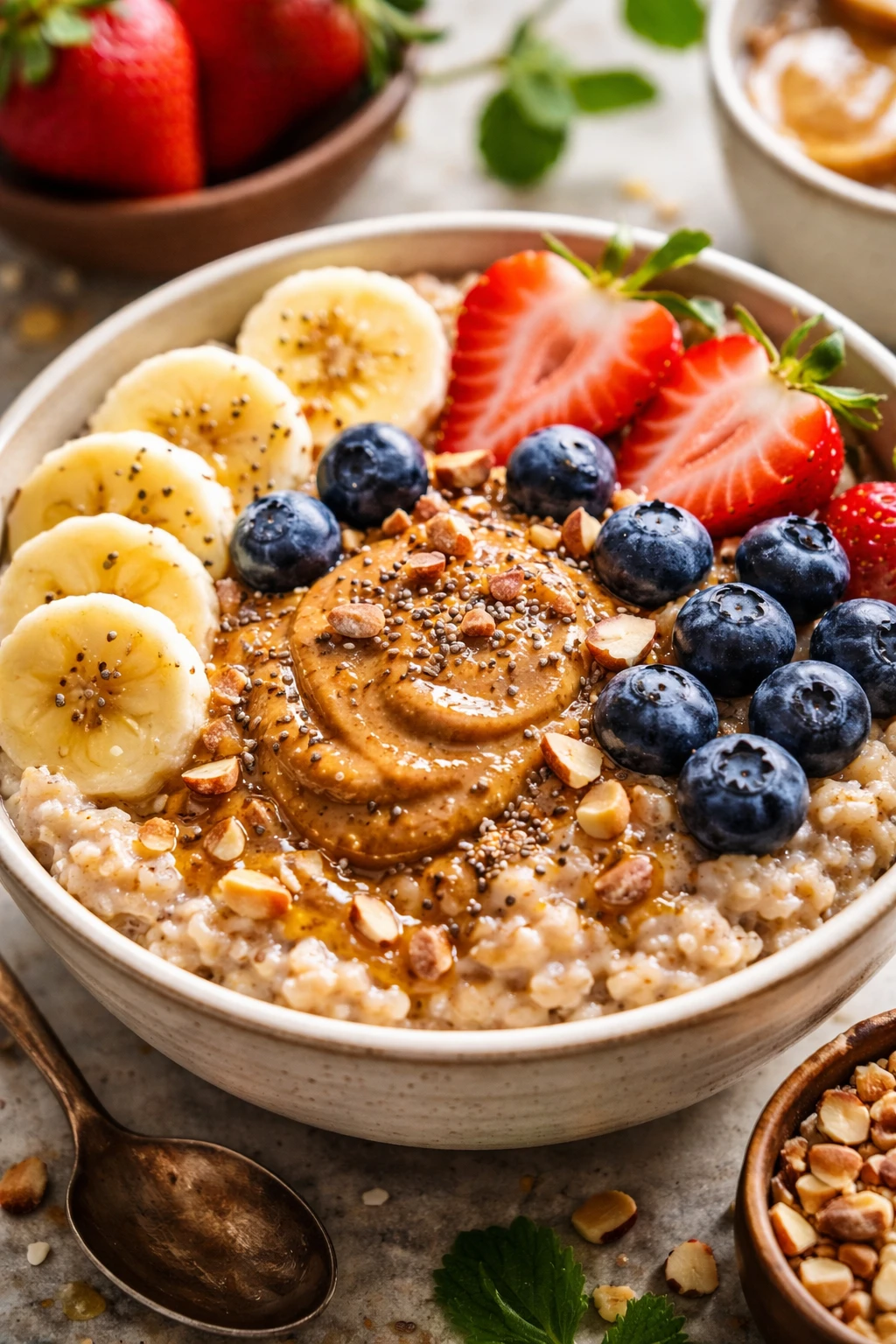
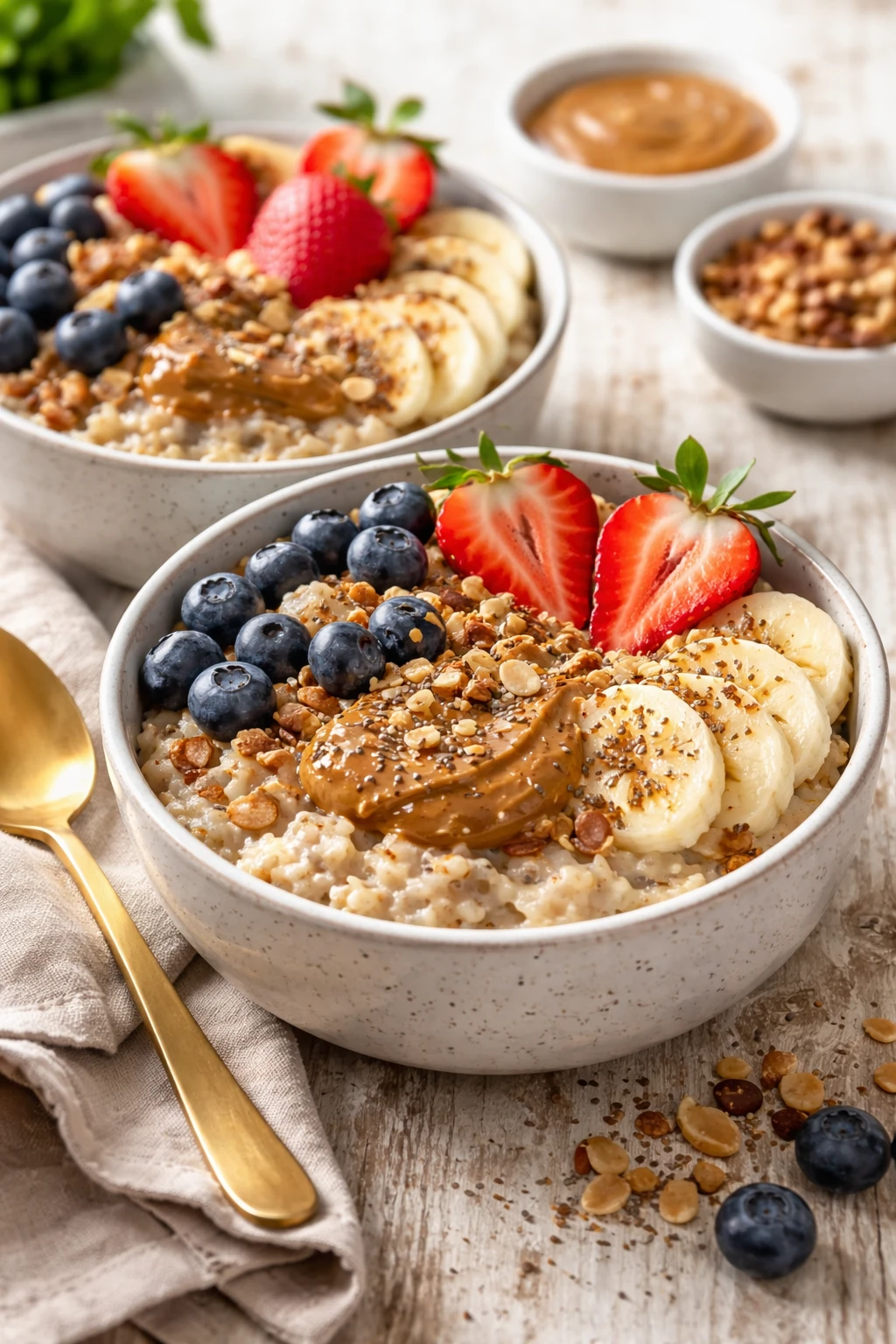
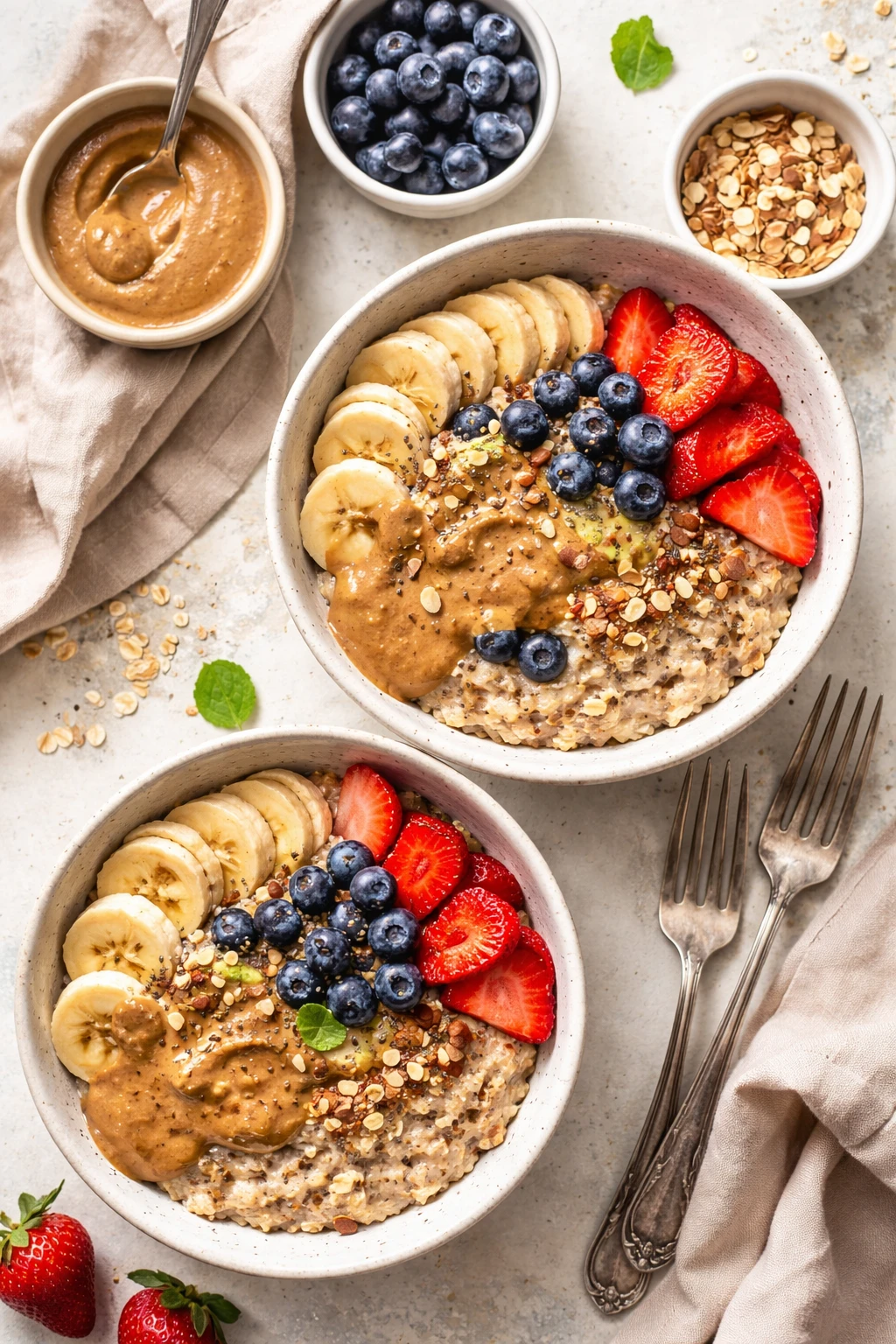
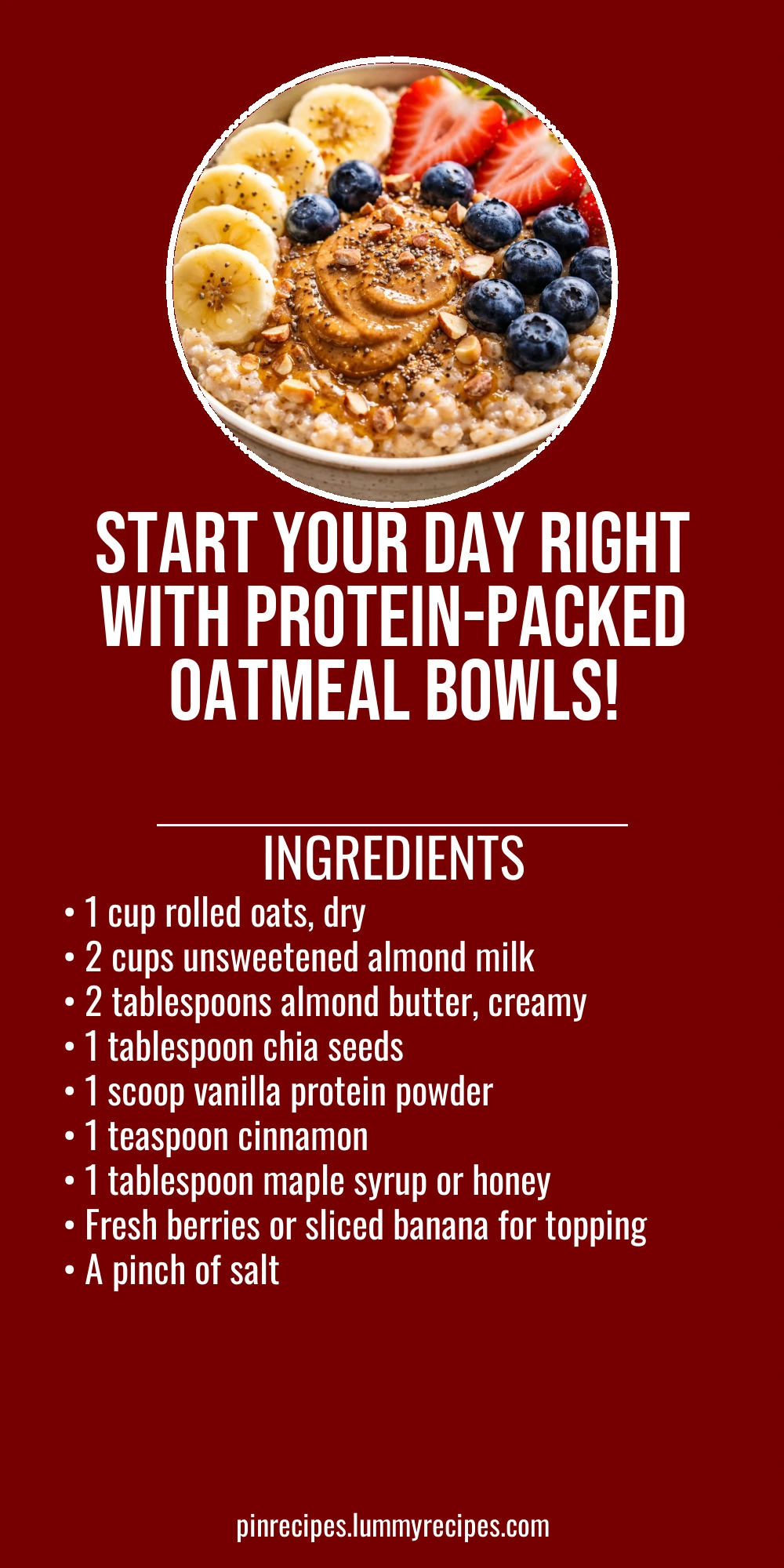
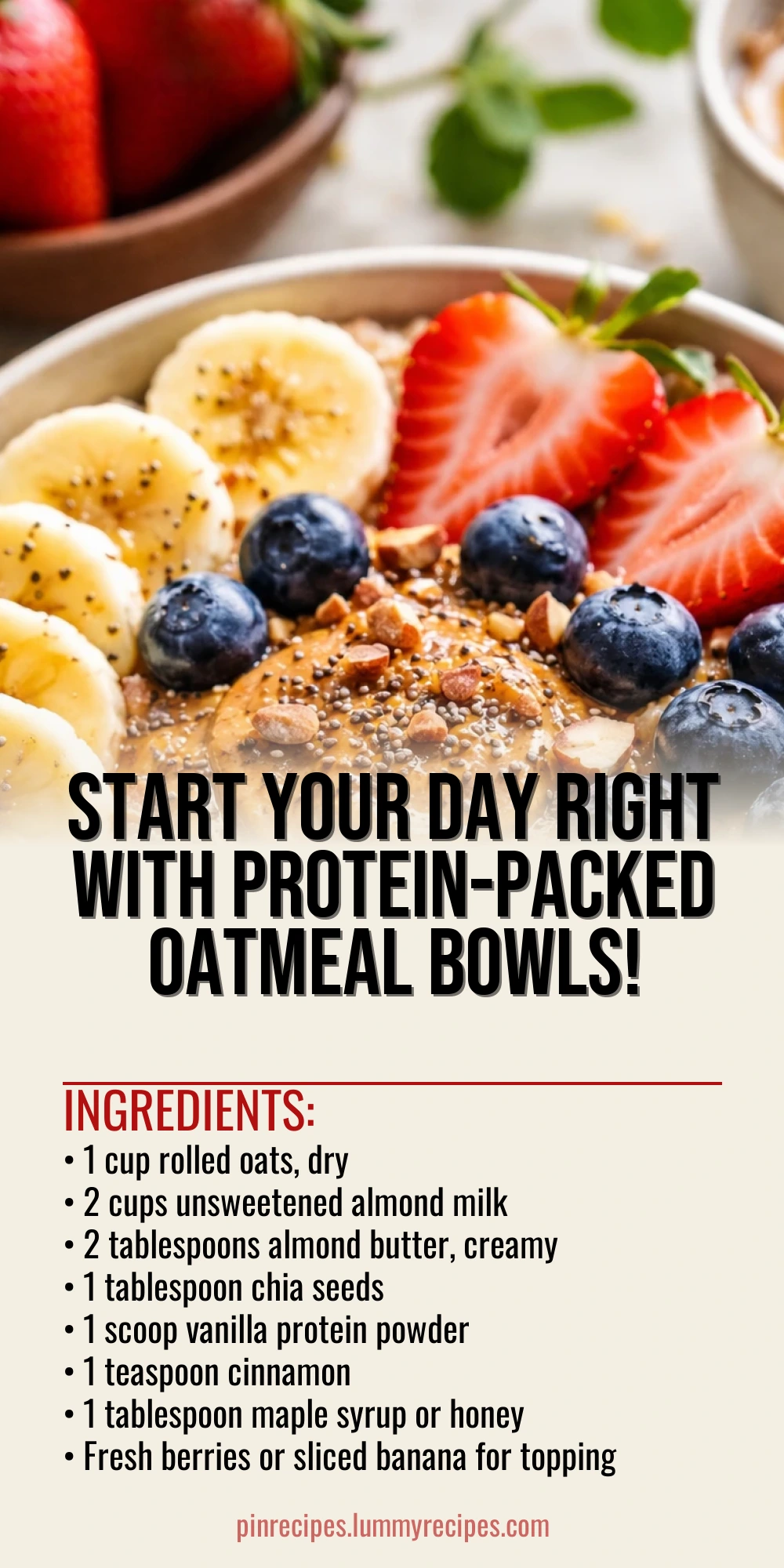
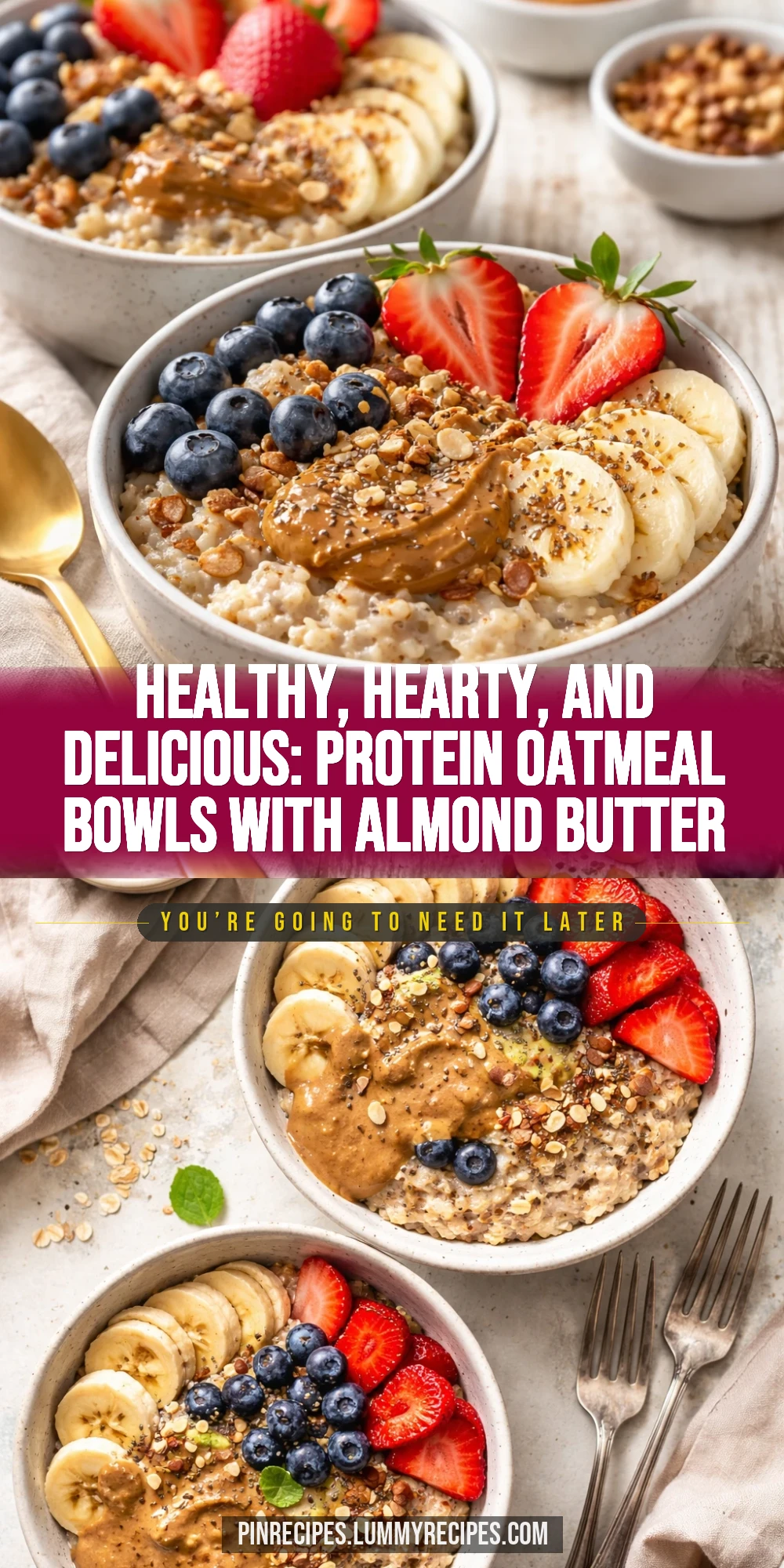
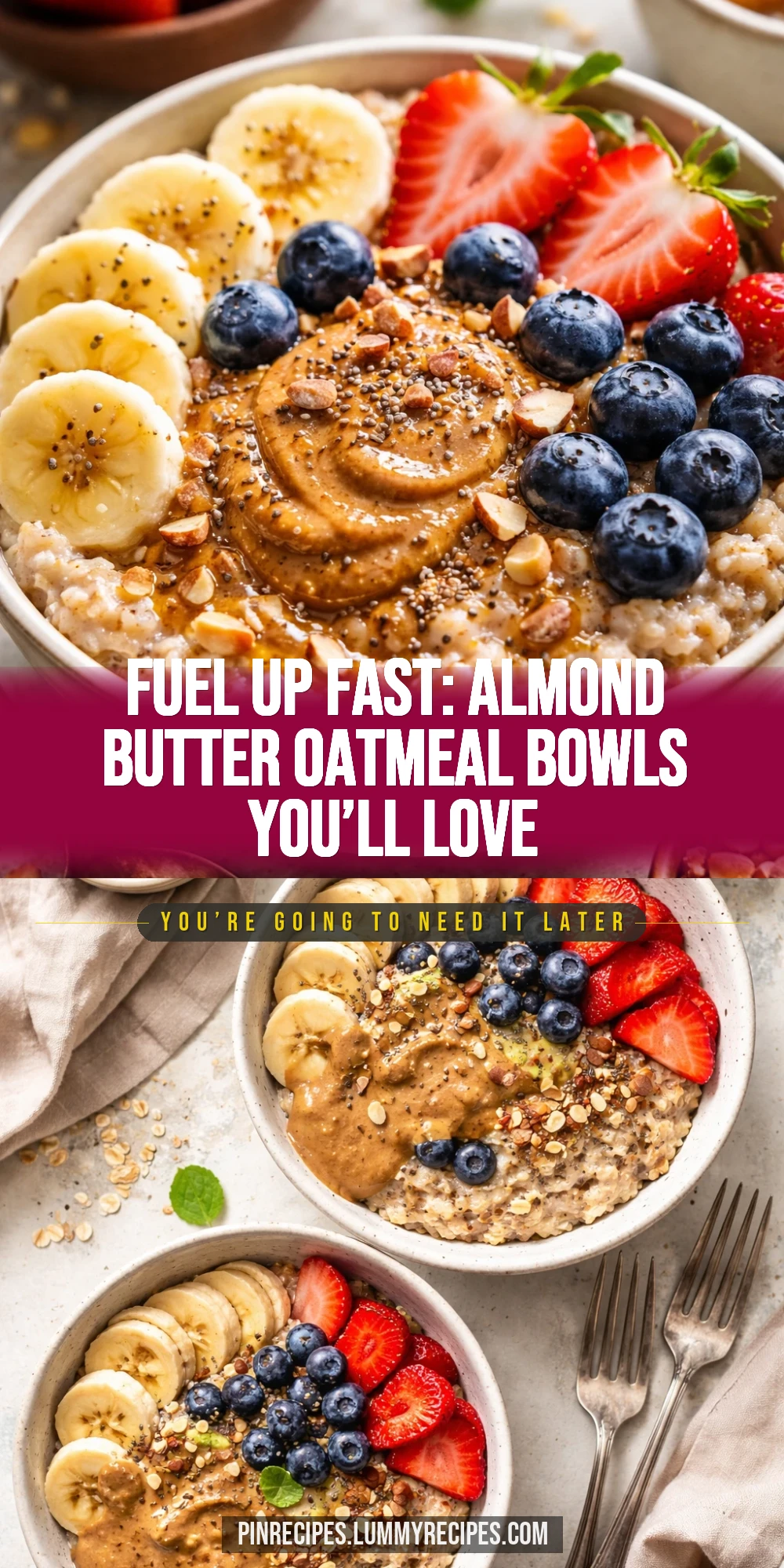
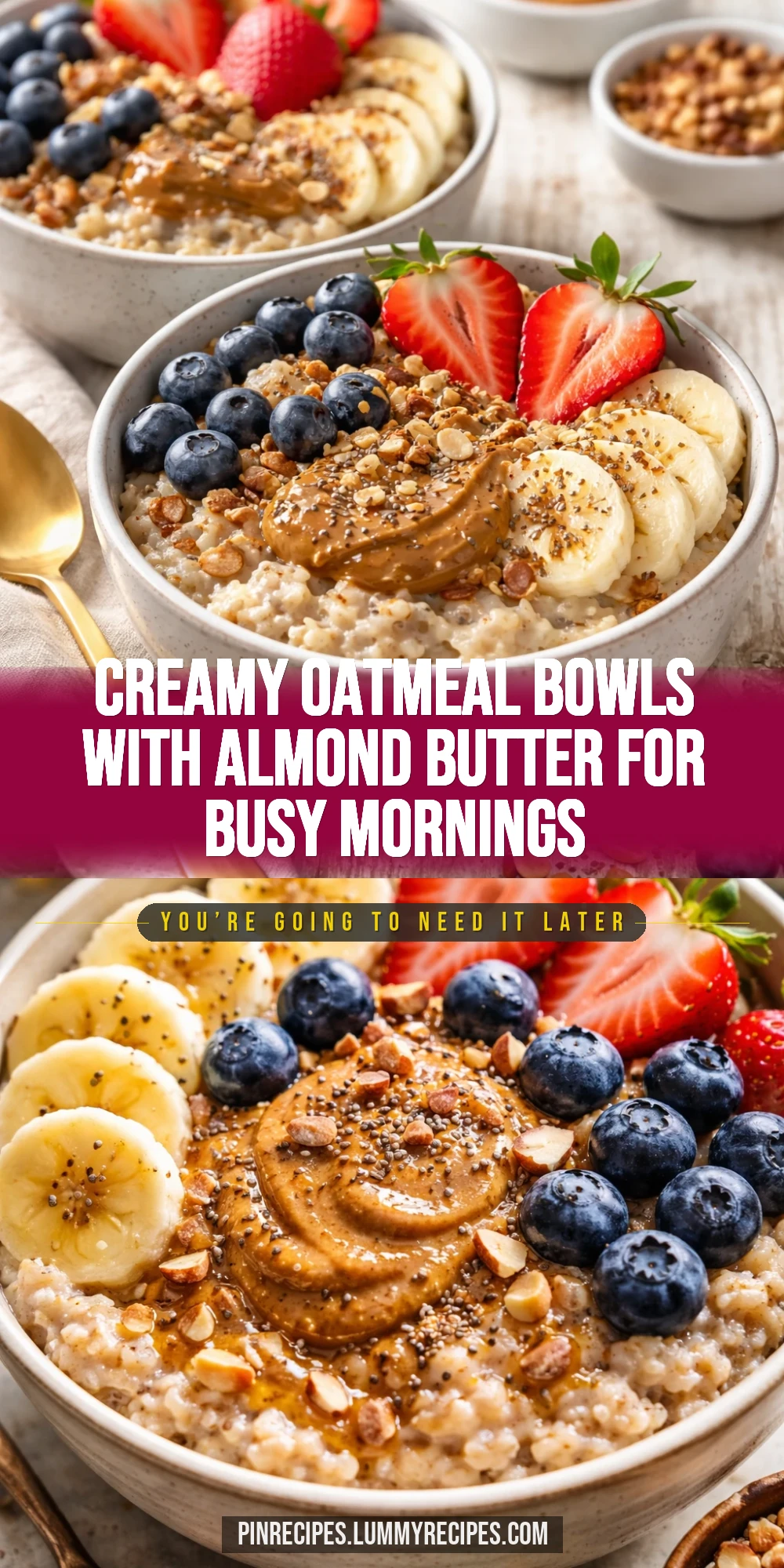
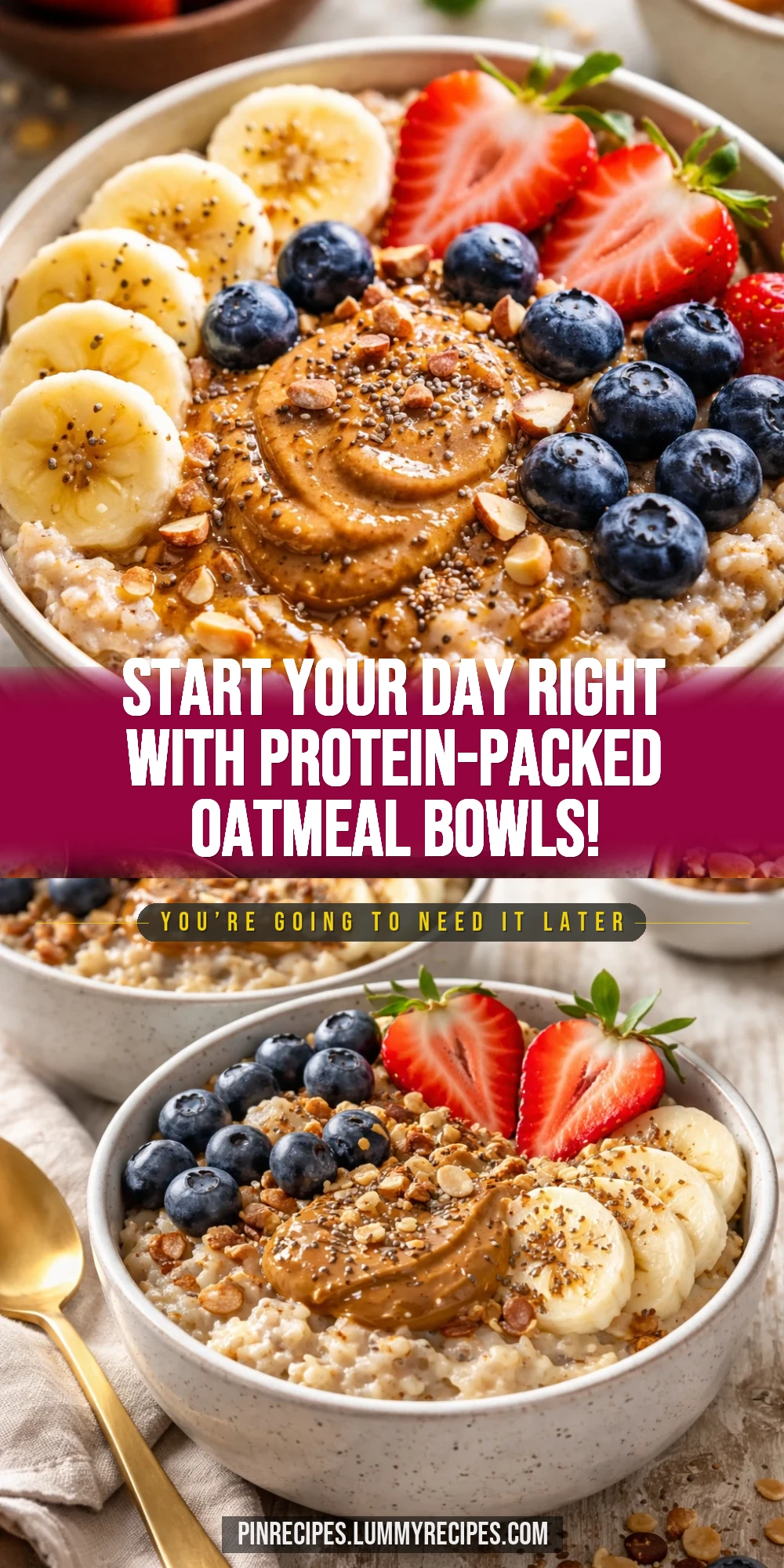
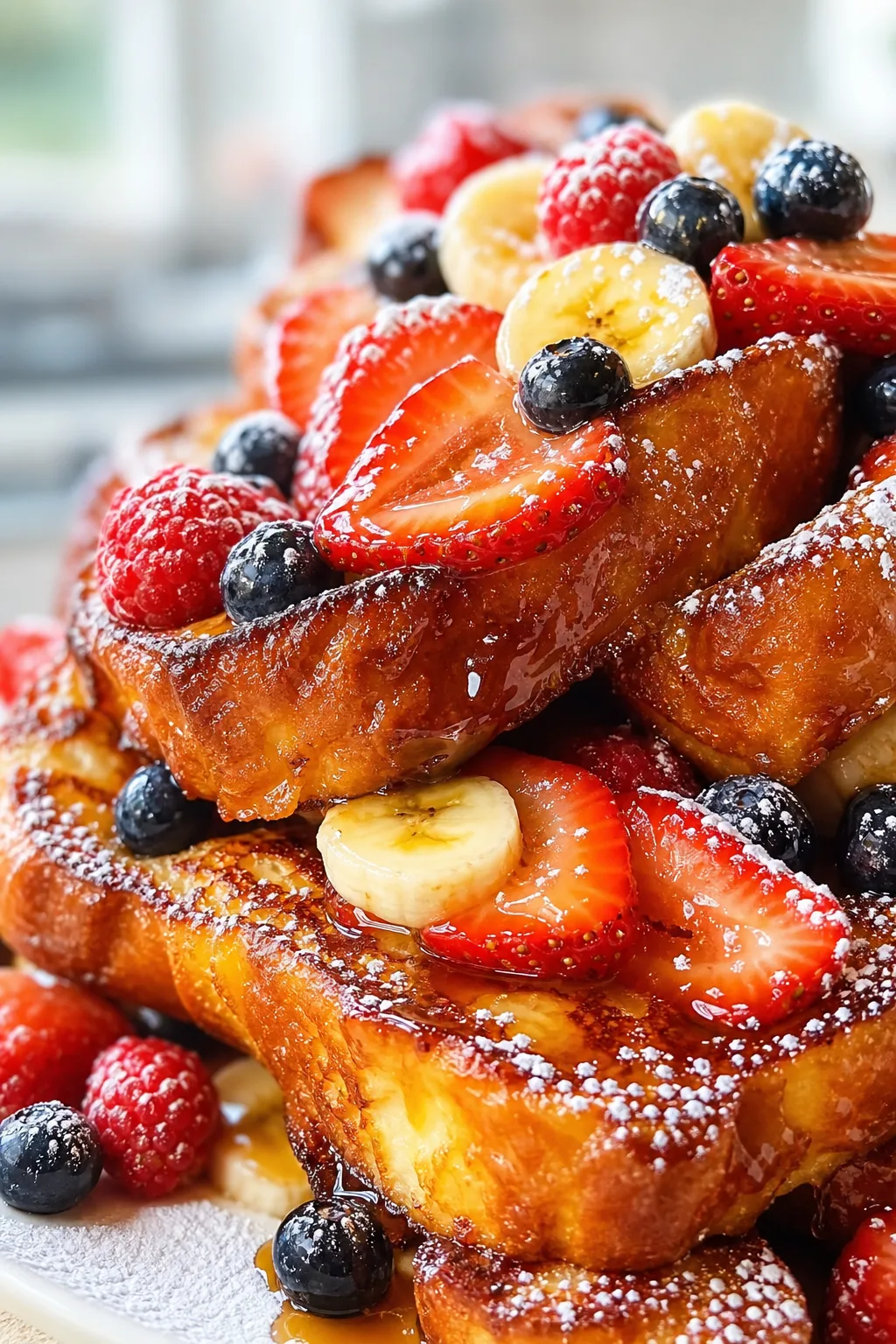
These oatmeal bowls pack a protein punch with creamy almond butter and wholesome oats, making mornings easier and more satisfying. I love adding a sprinkle of chia seeds for an extra boost. Perfect for a nutritious start to busy days!
Introduction
I first started making these high-protein oatmeal bowls when I needed a breakfast that would keep me full and energized through long mornings. Regular oatmeal is great, but I wanted something with more staying power and flavor. Adding almond butter and protein powder was a game changer — it makes the bowl creamy and satisfying without feeling heavy. Plus, the chia seeds add a nice texture and extra fiber. I usually make this when I’m rushing out the door but still want a wholesome meal. The trick I learned is to cook the oats gently with almond milk and stir in the protein powder off the heat so it doesn’t clump. The finished bowls are warm, creamy, and just sweet enough with a hint of cinnamon. My family loves customizing theirs with different fruits or nuts on top. It’s a recipe that’s simple but feels special, perfect for starting your day on the right foot.
How To Do It
Step 1
Start by combining the rolled oats and almond milk in a medium saucepan over medium heat. Stir occasionally to prevent sticking and allow the oats to absorb the milk slowly. This gentle simmer helps the oats become tender and creamy without drying out or burning. Watch for small bubbles forming around the edges and a thickening texture, which means the oats are cooking through. Avoid rushing this step by turning up the heat too high, as it can cause uneven cooking or a burnt bottom. This slow cooking is key to a smooth, luscious base for your bowl.
⏱ Time: 8-10 minutes
✓ Doneness: Oats are soft, creamy, and the mixture has thickened but is still pourable
Step 2
Once the oats are cooked, remove the pan from heat and quickly stir in the vanilla protein powder, almond butter, cinnamon, chia seeds, maple syrup, and a pinch of salt. Stirring off heat prevents the protein powder from clumping or becoming gritty. The almond butter melts into the warm oats, creating a rich, nutty flavor and creamy texture. Mixing in chia seeds at this stage allows them to hydrate slightly without becoming slimy. If you add the protein powder too early, it can curdle or separate, so timing is important for a smooth finish.
⏱ Time: 2-3 minutes
✓ Doneness: Mixture is smooth, thickened, and evenly combined with no lumps
Step 3
Spoon the oatmeal into bowls and top with fresh berries or sliced banana. The fresh fruit adds natural sweetness and a refreshing contrast to the warm, creamy oats. You can also add a drizzle of extra almond butter or a sprinkle of nuts for crunch. Serving immediately ensures the oats stay warm and the toppings fresh. If you wait too long, the chia seeds may thicken the oatmeal more, changing the texture.
⏱ Time: 2 minutes
✓ Doneness: Bowls look inviting with vibrant fruit and creamy almond butter swirls
Step 4
If you want to prep ahead, you can cook the oats as directed, then cool and refrigerate. When ready to eat, reheat gently with a splash of almond milk to loosen the texture. Stir well to recombine the almond butter and protein powder. This keeps the bowl creamy and prevents it from drying out. Avoid overheating as it can cause separation or a grainy texture.
⏱ Time: 5 minutes reheating
✓ Doneness: Oatmeal is warm, creamy, and smooth after reheating
Step 5
For a thicker texture, reduce the almond milk slightly or add more chia seeds. If you prefer a thinner consistency, just add extra almond milk when reheating or before serving. Adjusting liquid ratios lets you customize the bowl to your liking, whether you want it spoonable or more like a porridge. Remember that chia seeds will thicken the mixture as they absorb liquid, so balance accordingly.
⏱ Time: Adjust as needed
✓ Doneness: Desired texture achieved—thick and spoonable or looser and creamy
Step 6
Experiment with mix-ins like cinnamon, nutmeg, or a pinch of sea salt to enhance flavor layers. These spices bring warmth and depth without extra calories. A little salt also balances the sweetness and brings out the almond butter’s nuttiness. Adding these seasonings during the final stir-in step ensures they distribute evenly without overpowering the bowl.
⏱ Time: 1-2 minutes
✓ Doneness: Aromatic, balanced flavor with subtle spice notes
Step 7
If you want to boost the protein further, try folding in Greek yogurt or cottage cheese after cooking. This adds creaminess and tang while increasing protein content. Be gentle folding them in off heat to avoid curdling. This technique works great if you prefer a chilled or room temperature oatmeal bowl.
⏱ Time: 2 minutes
✓ Doneness: Smooth, creamy texture with added richness
Step 8
To make this recipe vegan, ensure your protein powder is plant-based and use maple syrup instead of honey. These swaps keep the bowl fully plant-friendly without sacrificing flavor or texture. The almond butter and chia seeds already provide plenty of richness and protein, so the vegan version is just as satisfying.
⏱ Time: N/A
✓ Doneness: Vegan-friendly, creamy, and protein-rich bowl
Step 9
Serve these bowls immediately for the best texture and flavor. If you want to store leftovers, place them in airtight containers and refrigerate. Reheat gently with almond milk before eating to restore creaminess. Avoid microwave overheating to prevent drying or graininess. Enjoy your nourishing breakfast with a cup of tea or coffee for a complete morning routine.
⏱ Time: Immediate serving recommended
✓ Doneness: Warm, creamy, and fresh-tasting oatmeal bowl
Pro Tips
Cook oats on medium-low heat to avoid sticking and burning.
Oats can scorch easily if the heat is too high, which creates a bitter taste and uneven texture. Medium-low heat allows the oats to absorb liquid gradually, producing a creamy consistency without sticking to the pot.
Add protein powder off the heat to prevent clumping.
Protein powder tends to clump or become grainy when exposed to direct heat. Stirring it in after removing the oats from the stove keeps the texture smooth and integrates the protein evenly.
Use creamy almond butter for a richer texture.
Creamy almond butter melts smoothly into the warm oats, creating a luscious mouthfeel. Chunky or dry almond butter can disrupt the texture and make the bowl less cohesive.
Include a pinch of salt to balance sweetness and enhance flavors.
Salt enhances the natural sweetness of the maple syrup and almond butter, rounding out the flavor profile. Without salt, the bowl can taste flat or overly sweet.
Top with fresh fruit just before serving for brightness and texture contrast.
Fresh fruit adds natural sweetness, acidity, and a juicy crunch that complements the creamy oats. Adding fruit too early can cause it to break down and lose its freshness.
Use unsweetened almond milk to control sugar content.
Sweetened almond milk can add unnecessary sugars that overpower the natural flavors. Unsweetened milk lets you control sweetness with maple syrup or honey.
Stir chia seeds in at the end to prevent over-thickening.
Chia seeds swell as they absorb liquid, thickening the mixture. Adding them last keeps the texture balanced and prevents the oatmeal from becoming too gel-like.
Common Mistakes to Avoid
Cooking oats on too high heat causing burning or sticking.
Why it happens Many cooks rush the process by turning the heat up, thinking it will speed cooking. This often leads to scorching and uneven texture.
Fix Maintain medium-low heat and stir occasionally to prevent sticking. Slow cooking allows oats to absorb liquid evenly and develop a creamy texture without burning.
Adding protein powder while oats are still hot.
Why it happens Some assume mixing protein powder during cooking saves time, but heat causes it to clump or separate.
Fix Remove the pot from heat first, then stir in protein powder thoroughly. This preserves a smooth, creamy consistency.
Skipping the pinch of salt.
Why it happens Salt is often overlooked in sweet dishes, but it’s essential to balance flavors.
Fix Always add a small pinch of salt to enhance sweetness and deepen flavor complexity.
Using instant oats instead of rolled oats.
Why it happens Instant oats seem convenient but break down too much and become mushy.
Fix Use old-fashioned rolled oats for the best texture and creaminess.
Adding fruit too early causing sogginess.
Why it happens Some add toppings before serving, which can make fruit lose texture and flavor.
Fix Add fresh fruit right before serving to keep it vibrant and fresh.
Variations
Berry Almond Protein Oatmeal Bowl
Swap the banana for mixed fresh berries like blueberries and raspberries for a tart, antioxidant-rich topping. Add a teaspoon of lemon zest to brighten the flavors. This variation offers a refreshing twist with a burst of color and vitamin C.
Note: Berries add moisture, so reduce almond milk slightly to keep texture balanced.
Chocolate Almond Butter Protein Oatmeal
Add a tablespoon of cocoa powder to the oats while cooking and top with dark chocolate chips and sliced almonds. This variation satisfies chocolate cravings while keeping it healthy and protein-rich.
Note: Cocoa powder can thicken the oats; add a bit more almond milk if needed.
Tropical Almond Butter Oatmeal Bowl
Top your bowl with diced mango, pineapple, and shredded coconut for a tropical flair. A drizzle of honey complements the fruit, making it feel like a mini vacation in a bowl.
Note: Use unsweetened shredded coconut to avoid extra sugars.
Savory Almond Butter Oatmeal Bowl
For a savory twist, omit the maple syrup and cinnamon. Stir in sautéed spinach, cherry tomatoes, and a poached egg. The almond butter adds creaminess that pairs surprisingly well with savory flavors.
Note: Adjust salt to taste and serve immediately for best texture.
Peanut Butter and Banana Protein Oatmeal
Replace almond butter with peanut butter and add sliced banana on top. This classic combo is comforting and packed with protein. It’s a great option if you prefer peanut flavor over almond.
Note: Peanut butter is often thicker; warm slightly before stirring in for smooth mixing.
Nutrition
Per Serving:
Nutritional values are estimates and may vary based on specific ingredients used.
Storage & Tips
Room Temperature
Oatmeal bowls can be kept at room temperature for up to 2 hours if covered. Beyond that, bacteria growth can occur, so refrigerate leftovers promptly to ensure safety.
Refrigerator
Store leftovers in airtight containers for up to 3 days. The oats will thicken as they cool, so add a splash of almond milk and reheat gently before serving. Flavor is best when warmed; cold oats may taste dense and less creamy.
Freezer
You can freeze cooked oatmeal in portioned airtight containers for up to 2 months. Thaw overnight in the fridge and reheat with almond milk to restore creaminess. Avoid freezing with fresh fruit toppings, add those fresh after reheating.
Reheating
Reheat on the stovetop over low heat with a splash of almond milk, stirring frequently to prevent sticking. Microwave reheating is possible but do so in short intervals and stir to avoid hot spots or drying out. Avoid overheating to keep texture smooth.
Make Ahead
Cook the oats and mix in protein powder and almond butter up to 2 days ahead. Store in the fridge and add fresh toppings just before serving. This saves time on busy mornings without compromising texture or flavor.
FAQ
Can I use steel-cut oats instead of rolled oats?
Yes, but steel-cut oats require longer cooking time and yield a chewier texture. You’ll need to cook them for about 20-30 minutes and adjust liquid accordingly. The creamy texture of rolled oats is more typical for this recipe, but steel-cut oats offer a nuttier bite if you prefer.
What if I don’t have protein powder?
You can omit protein powder but the bowl will have less protein overall. To compensate, add extra almond butter or a dollop of Greek yogurt. Another option is stirring in nut butter powders or seeds like hemp for added protein.
Can I make this recipe vegan?
Absolutely! Use plant-based protein powder and replace honey with maple syrup or agave nectar. Unsweetened almond milk is already vegan, so the recipe is naturally plant-friendly with these simple swaps.
How do I prevent the protein powder from clumping?
Always add protein powder after removing the oats from heat and stir vigorously. Adding it to boiling oats causes clumps and a gritty texture. Stirring off heat ensures smooth incorporation.
Is it okay to add fruit during cooking?
It’s best to add fresh fruit as a topping after cooking to maintain its texture and flavor. Cooking fruit with oats can make it mushy and less vibrant. For dried fruit, you can add it during cooking to soften it.
Can I prepare this recipe the night before?
Yes! Cook the oats and mix in the almond butter and protein powder, then refrigerate overnight. In the morning, reheat gently with a splash of almond milk and add fresh toppings. This makes a quick grab-and-go breakfast.
What’s the best way to store leftovers?
Store leftovers in airtight containers in the fridge for up to 3 days. Reheat with a little almond milk to loosen the texture. Avoid leaving at room temperature for more than 2 hours to prevent spoilage.
Can I use peanut butter instead of almond butter?
Yes, peanut butter works well and gives a different flavor profile. Choose natural peanut butter without added sugars or oils for the healthiest option. The texture may be slightly thicker, so warm it a bit before mixing.
Final Thoughts
I hope you give these protein-packed almond butter oatmeal bowls a try—they’re a cozy, nourishing way to start the day. Let me know how you customize yours!