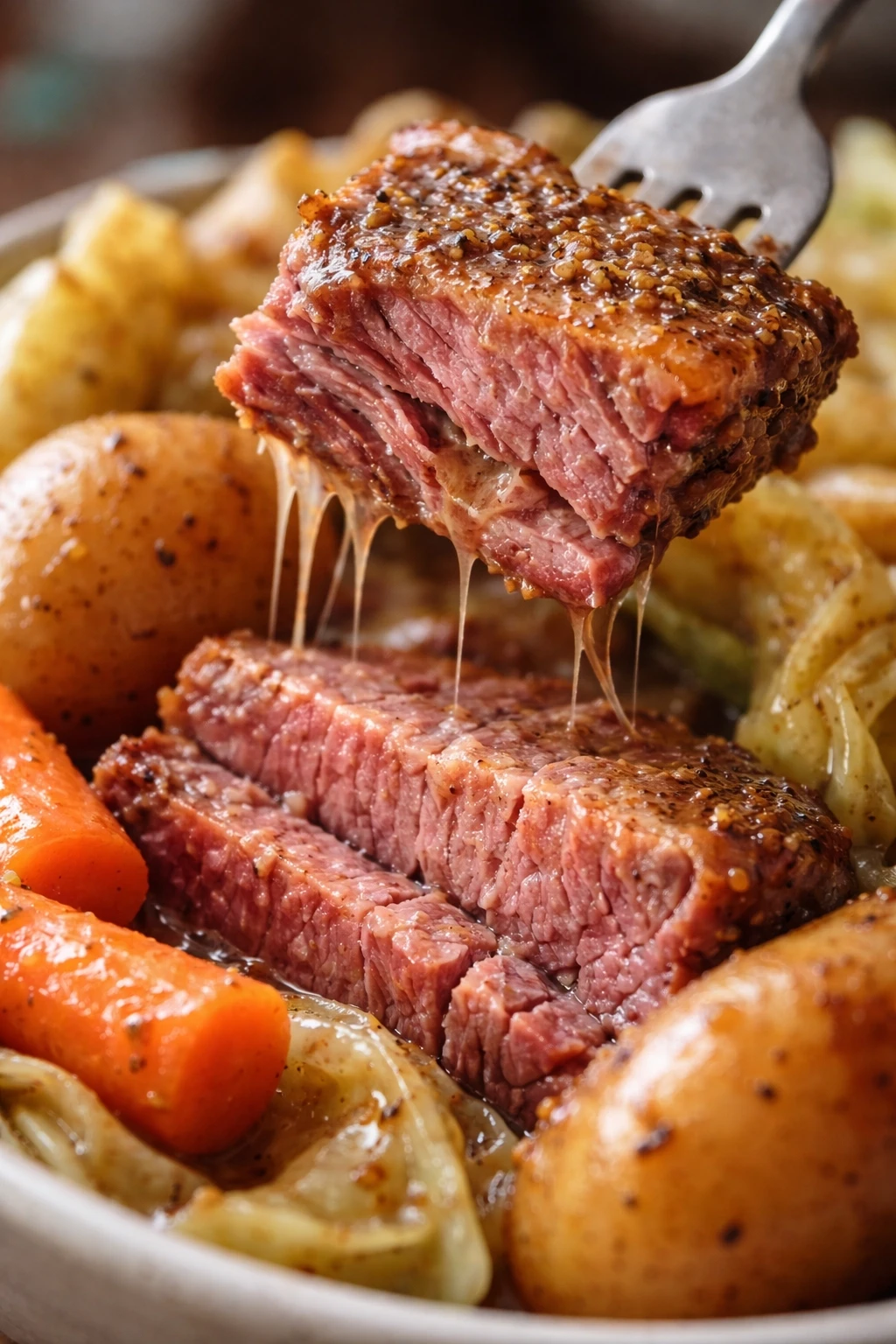
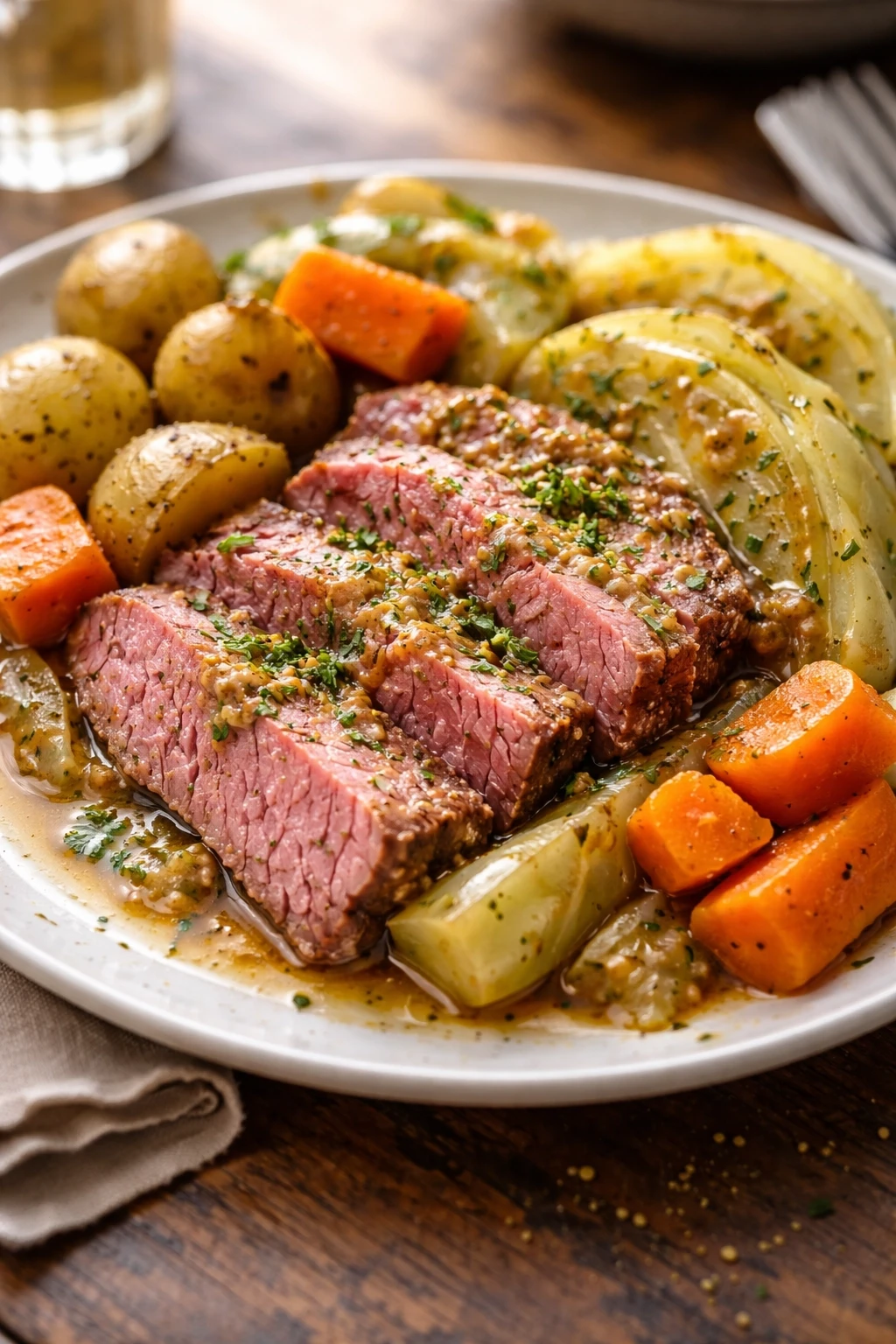
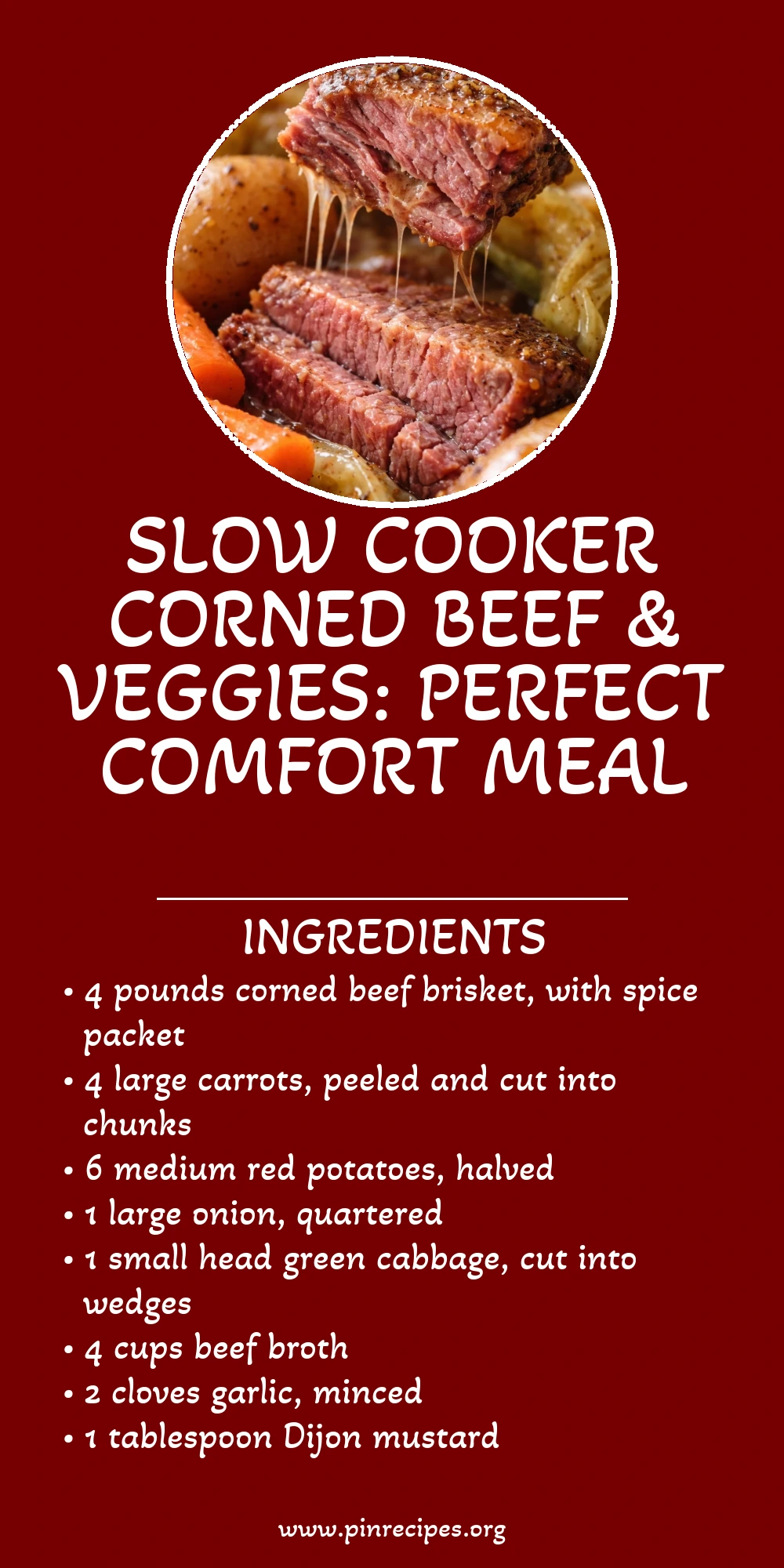
This slow cooker corned beef is pure comfort—fall-apart tender meat with perfectly cooked veggies. The secret? Low and slow cooking that locks in flavor. Great for cozy dinners or St. Patrick’s Day celebrations!
Introduction
I first tried making corned beef in the slow cooker a few years ago when I wanted a fuss-free St. Patrick’s Day dinner. Honestly, my first attempt was a bit dry because I rushed the cooking time and didn’t add enough liquid. But after some trial and error, I found the perfect balance of low heat and long cooking to get that melt-in-your-mouth texture. What sets this recipe apart is adding the vegetables halfway through cooking so they don’t turn to mush but still soak up all that savory flavor. The beef ends up tender and juicy, and the carrots, potatoes, and cabbage come out just right—soft but still holding their shape. It’s the kind of meal that fills the kitchen with cozy smells and leaves everyone asking for seconds. Plus, it’s super easy to prep, making it perfect for busy weekends or when you want a comforting meal without standing over the stove all day.
What You'll Need
Serves approximately 6 hearty portions
- 4 pounds corned beef brisket, with spice packet
- 4 large carrots, peeled and cut into chunks
- 6 medium red potatoes, halved
- 1 large onion, quartered
- 1 small head green cabbage, cut into wedges
- 4 cups beef broth
- 2 cloves garlic, minced
- 1 tablespoon Dijon mustard
- 1 teaspoon black pepper
- Fresh parsley, chopped (for garnish)
How To Do It
Step 1
Rinse the corned beef brisket under cold water to remove excess brine, then pat dry with paper towels. This step is important because too much saltiness can overpower the dish. Place the brisket in the slow cooker fat side up, and pour in the beef broth along with the minced garlic. Adding the broth ensures the meat stays moist during the long cooking process, and the garlic infuses subtle aromatic depth. Avoid skipping the rinsing, as it balances the seasoning and prevents an overly salty final dish.
⏱ Time: 10 minutes
✓ Doneness: Beef is submerged in broth with garlic visibly dispersed
Step 2
Sprinkle the included spice packet evenly over the brisket. Then, cover and cook on low for 6 hours. Cooking low and slow allows the connective tissues in the brisket to break down gently, resulting in tender, juicy meat. Resist the temptation to cook on high, which can dry out the brisket and make it tough. The slow cooker’s steady low heat is key to achieving that perfect texture.
⏱ Time: 6 hours
✓ Doneness: Meat is tender and easily pierced with a fork
Step 3
After 6 hours, add the carrots, potatoes, and onion to the slow cooker around the brisket. These vegetables take less time to cook than the beef, so adding them now prevents them from becoming mushy. Arrange them evenly so they cook uniformly. Stirring isn’t necessary here, but make sure the broth covers the vegetables partially for even cooking.
⏱ Time: 5 minutes
✓ Doneness: Vegetables nestled around brisket, broth level consistent
Step 4
Cover and continue cooking on low for another 2 hours. This allows the vegetables to soften without losing their shape and absorb the rich flavors from the broth and meat. The timing is crucial—too long and the veggies turn to mush; too short and they’ll be undercooked. Check for tenderness by piercing with a fork near the end.
⏱ Time: 2 hours
✓ Doneness: Carrots and potatoes are fork-tender but intact
Step 5
About 30 minutes before serving, add the cabbage wedges on top of the other ingredients. Cabbage cooks quickly and benefits from a shorter cooking time to stay vibrant and slightly crisp. Cover and finish cooking, allowing the cabbage to steam in the slow cooker’s heat and broth vapors.
⏱ Time: 30 minutes
✓ Doneness: Cabbage is tender yet bright green and not mushy
Step 6
Carefully remove the brisket from the slow cooker and place it on a cutting board. Let it rest for 10 minutes before slicing against the grain. Resting helps the juices redistribute, keeping the meat moist and flavorful. Slicing against the grain breaks up the muscle fibers, making each bite tender.
⏱ Time: 10 minutes
✓ Doneness: Juices are visible on cutting board, meat slices easily
Step 7
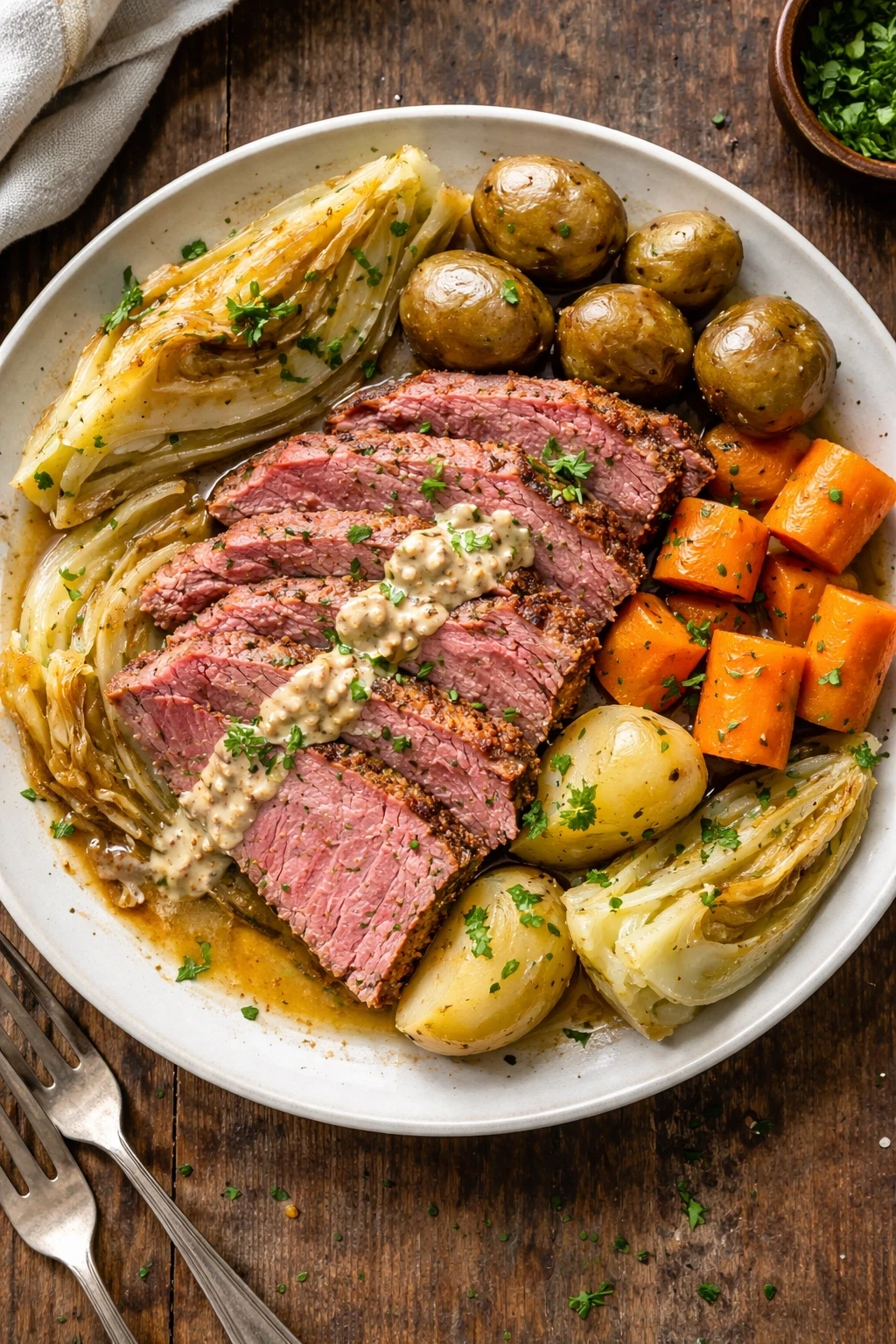
Use a slotted spoon to transfer the vegetables to a serving platter. Spoon some of the cooking liquid over the veggies to keep them moist and flavorful. This step enhances the natural sweetness of the vegetables and ties the dish together with the savory broth.
⏱ Time: 5 minutes
✓ Doneness: Vegetables glistening with broth, vibrant in color
Step 8
Slice the corned beef into 1/4-inch thick slices and arrange on the platter alongside the vegetables. Drizzle a bit of Dijon mustard over the meat if desired for a tangy contrast. The mustard cuts through the richness of the beef and complements the spices nicely.
⏱ Time: 5 minutes
✓ Doneness: Meat slices neatly arranged with slight sheen from mustard
Step 9
Garnish with freshly chopped parsley for a pop of color and fresh herb flavor. Serve immediately while warm. This final touch brightens the dish visually and adds a subtle freshness that balances the hearty flavors.
⏱ Time: 2 minutes
✓ Doneness: Parsley evenly sprinkled, dish looks inviting
Pro Tips
Rinse the corned beef before cooking to reduce excess saltiness.
Corned beef is cured in a salty brine, and rinsing removes surface salt that can make the dish overly salty. This step balances the seasoning and prevents the broth and vegetables from tasting too salty. Skipping this can lead to an unpleasantly salty final dish.
Add vegetables in stages based on their cooking times.
Root vegetables like carrots and potatoes need longer cooking, while cabbage cooks quickly. Adding them at different times ensures each is perfectly tender without becoming mushy. This timing preserves texture and flavor, making the dish more enjoyable.
Cook the brisket fat side up to baste the meat as it cooks.
The fat melts slowly over the meat, keeping it moist and adding rich flavor. Cooking fat side down would cause the fat to render into the broth, losing its basting effect. This small detail improves tenderness and juiciness.
Let the meat rest before slicing to retain juices.
Resting allows the muscle fibers to relax and reabsorb juices that would otherwise leak out when slicing. This results in moist, tender slices rather than dry meat. It’s a simple step that makes a big difference in texture.
Slice the meat against the grain for maximum tenderness.
Cutting against the grain shortens muscle fibers, making each bite easier to chew and more tender. Slicing with the grain results in tougher, stringier pieces. This technique is key for a satisfying texture.
Use low heat and avoid opening the slow cooker lid frequently.
Maintaining a consistent low temperature helps break down collagen slowly. Opening the lid lets heat escape and prolongs cooking time, which can dry out the meat. Trust the slow cooker to do its work uninterrupted.
Add a splash of mustard when serving for a tangy contrast.
The acidity and sharpness of mustard cut through the richness of the beef, balancing flavors and enhancing the overall taste. It’s a classic pairing that elevates the dish with minimal effort.
Common Mistakes to Avoid
Skipping the rinsing step for the corned beef.
Why it happens Many assume the spice packet controls all seasoning, so they skip rinsing. They may not realize the brine leaves the meat very salty on the surface.
Fix Always rinse the brisket under cold water before cooking to remove excess salt. Pat dry thoroughly to prevent diluting the broth. This simple step balances salt levels and improves overall flavor.
Adding all vegetables at once at the start.
Why it happens It's tempting to throw everything in together for convenience, but this overlooks different cooking times.
Fix Add root vegetables like carrots and potatoes after several hours, then cabbage near the end. This staging keeps veggies firm and prevents mushy textures.
Cooking on high heat in the slow cooker.
Why it happens Rushing the cooking to save time is common, but high heat tightens meat fibers and dries out the brisket.
Fix Set the slow cooker to low and allow 8-10 hours for best tenderness. Slow, gentle heat breaks down connective tissue properly.
Not resting the meat before slicing.
Why it happens Eager to serve, cooks slice immediately, causing juices to run out.
Fix Let the meat rest 10-15 minutes after cooking. This keeps slices juicy and flavorful.
Slicing with the grain resulting in tough bites.
Why it happens It can be confusing to identify grain direction, leading to cutting the wrong way.
Fix Look closely at the meat fibers and slice perpendicular to them. This shortens fibers and improves tenderness.
Variations
Spicy Irish Corned Beef
Add a chopped jalapeño or a teaspoon of crushed red pepper flakes to the broth for a subtle kick. This variation adds warmth without overpowering the classic flavors, perfect if you like a little heat. The spice blends well with the garlic and mustard.
Note: Monitor cooking closely to prevent the spice from becoming too intense; adjust quantity based on preference.
Beer-Braised Corned Beef
Replace half the beef broth with a good Irish stout or lager. The beer adds a deep, malty flavor that complements the meat beautifully. This version is great for celebrations or when you want richer, more complex notes.
Note: Use a beer with moderate bitterness to avoid overpowering the dish; avoid overly hoppy styles.
Vegetarian Slow Cooker Stew
Skip the corned beef and use vegetable broth with hearty root vegetables, cabbage, and beans for protein. This creates a comforting stew with similar flavors but plant-based. It’s a cozy option for meat-free days.
Note: Adjust cooking times for beans accordingly and add them pre-soaked to ensure tenderness.
Slow Cooker Corned Beef Hash
Use leftover corned beef and vegetables to make a hash by sautéing chopped meat and veggies with onions and potatoes. This is a delicious breakfast or brunch twist that uses leftovers creatively.
Note: Crisp the hash in a hot skillet for texture contrast and flavor.
Herb-Infused Corned Beef
Add fresh herbs like thyme, rosemary, and bay leaves to the broth for an aromatic boost. These herbs enhance the savory profile and add complexity without changing the classic taste.
Note: Tie herbs in a bundle for easy removal before serving.
Nutrition
Per Serving:
Nutritional values are estimates and may vary based on specific ingredients used.
Storage & Tips
Room Temperature
This dish can safely stay at room temperature for up to 2 hours when covered. Beyond that, bacteria growth increases, so refrigerate promptly. Cover with foil or a lid to keep moisture in and prevent contamination.
Refrigerator
Store leftovers in an airtight container for up to 4 days. The flavors deepen overnight, but vegetables may soften further. Reheat gently to avoid drying out the meat, ideally in a covered dish with a splash of broth.
Freezer
Freeze cooked corned beef and vegetables in airtight containers or heavy-duty freezer bags for up to 3 months. Wrap tightly to prevent freezer burn. Thaw overnight in the fridge before reheating to maintain texture.
Reheating
Reheat on the stovetop over low heat with a bit of broth to keep moist, stirring occasionally. Microwave works too but cover to retain steam. Avoid overheating which can toughen the meat and mush the vegetables.
Make Ahead
Prepare the brisket and broth base 1-2 days ahead, refrigerate covered. Add vegetables fresh on the day of serving and finish cooking to keep their texture bright and fresh.
FAQ
Can I cook corned beef without a slow cooker?
Absolutely! You can simmer corned beef on the stovetop or bake it in the oven. The slow cooker just makes it hands-off and foolproof. For stovetop, simmer gently in broth for 3-4 hours until tender, adding vegetables in the last hour. Oven roasting at 325°F covered for 3 hours also works well.
What if I don’t have the spice packet?
You can make your own blend using mustard seeds, coriander, peppercorns, bay leaves, and crushed red pepper flakes. Toasting the spices lightly before adding enhances their flavor. This DIY spice mix gives you control and freshness.
How do I prevent vegetables from getting mushy?
Add vegetables at staggered times based on how long they need to cook—roots first, cabbage last. Also, cut them into larger chunks to help maintain shape. Avoid overcooking by checking tenderness near the end of cooking time.
Can I use frozen vegetables?
Frozen veggies tend to release more water and become mushy in slow cooking. If using frozen, add them closer to the end of cooking and reduce added liquid to compensate. Fresh is best for texture.
Is it necessary to let the meat rest?
Yes, resting lets the juices redistribute, keeping the meat moist and tender. Without resting, slicing causes juices to leak out, resulting in drier meat. A 10-15 minute rest is ideal.
Can I make this recipe gluten-free?
Definitely! Just ensure your beef broth and any added condiments like mustard are gluten-free. Corned beef and vegetables themselves are naturally gluten-free, making this an easy dish to adapt.
How salty will the dish be?
Taste the broth before serving and dilute with water if needed. Adding mustard also balances salt with acidity.
Can I double the recipe?
You can, but make sure your slow cooker is large enough to accommodate the extra volume without overcrowding. Cooking times may increase slightly, so check meat tenderness before removing.
Final Thoughts
Give this slow cooker corned beef a try for a comforting, no-fuss meal that feels like a warm hug. I’d love to hear how it turns out for you!