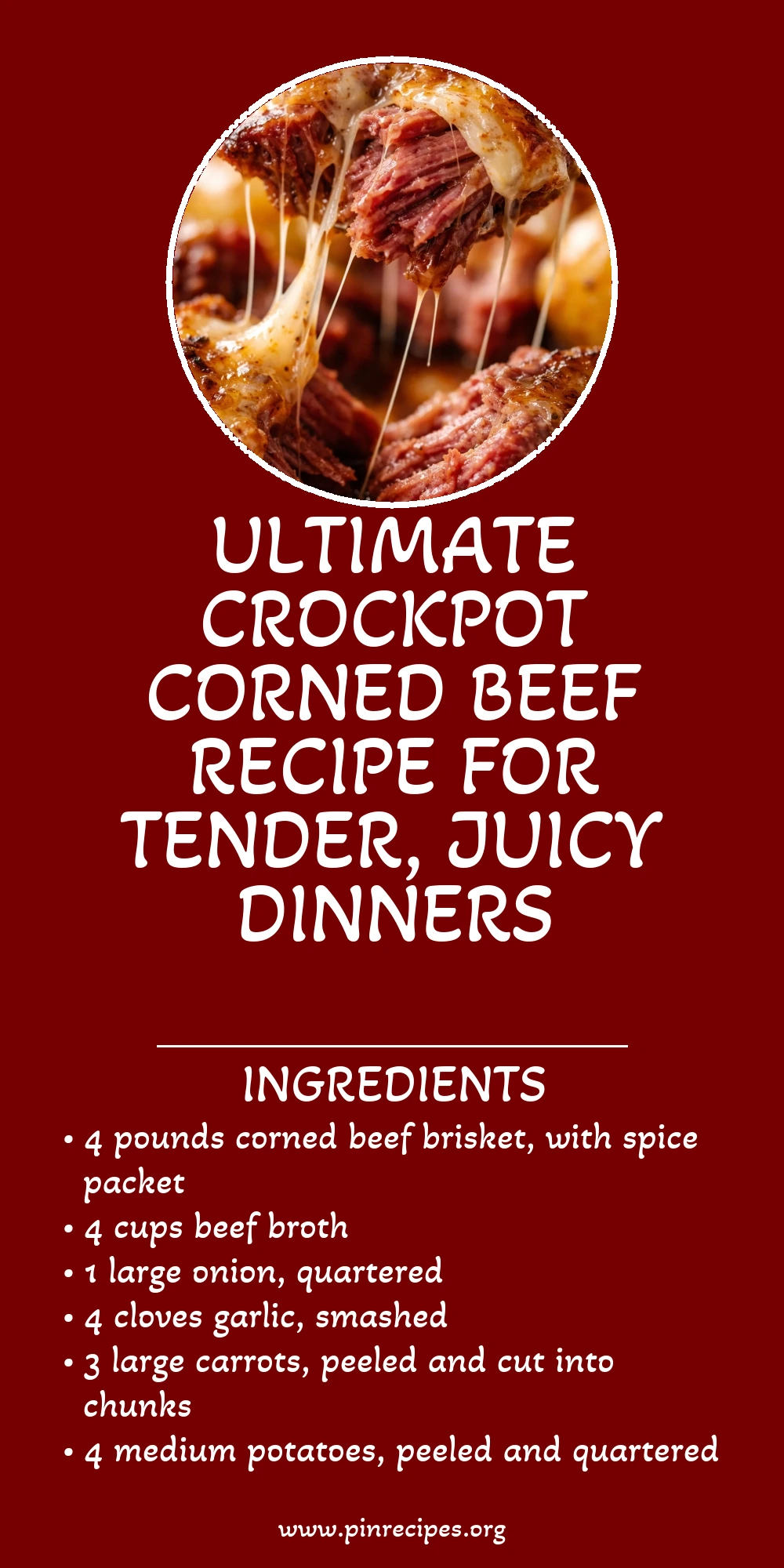
This slow-cooked corned beef turns out tender and juicy every time. The crockpot does the hard work, and the secret is low and slow cooking with classic spices. Perfect for a cozy weekend dinner when you want comfort food without fuss.
Introduction
I first tried making corned beef in the crockpot years ago after a few failed attempts at boiling it on the stove. The crockpot method was a game changer—no more dry or tough meat! What I love about this recipe is how the low, slow heat melts the beef into tender perfection while the broth and spices infuse deep flavor. Plus, cooking the veggies right alongside the meat means everything's ready at the same time, soaking up those savory juices. I usually serve this on a lazy Sunday when I want a meal that feels like a warm hug but doesn’t require babysitting the stove. The trick I learned is to resist the urge to peek too often; letting the crockpot work undisturbed is key. When it's done, the corned beef practically falls apart and the cabbage is tender but not mushy. It’s simple, satisfying, and honestly, a bit nostalgic for me. I hope you enjoy making it as much as I do!
How To Do It
Step 1
Start by rinsing the corned beef brisket under cold water to remove excess saltiness from the curing process. This step is crucial because it balances the flavors and prevents the dish from becoming overly salty. Pat the meat dry with paper towels to help the seasoning stick better. Avoid skipping this rinse; otherwise, your final dish might taste too salty and mask the other flavors.
⏱ Time: 10 minutes
✓ Doneness: Meat surface is damp but not wet, and saltiness is toned down
Step 2
Place the rinsed brisket into the crockpot fat side up. Pour in the beef broth and add the spice packet that came with the corned beef along with the peppercorns, brown sugar, and Dijon mustard. This combination enhances the savory depth and adds a subtle sweetness that balances the saltiness. The fat side up positioning allows the fat to baste the meat during cooking, keeping it moist.
⏱ Time: 5 minutes
✓ Doneness: Brisket is submerged about halfway in liquid, spices are evenly distributed
Step 3
Add the quartered onion and smashed garlic cloves around the brisket. These aromatics slowly release flavor and soften during the long cook, infusing the broth and meat. It’s important not to chop the onion too finely here; larger pieces hold up better and prevent the broth from becoming cloudy or overly strong.
⏱ Time: 5 minutes
✓ Doneness: Onion pieces are nestled around meat and garlic is fragrant
Step 4
Cover and cook on low for 8 hours. This slow cooking at low temperature is what makes the brisket melt-in-your-mouth tender. Resist the urge to open the lid frequently, as heat escapes and extends cooking time. The slow simmer gently breaks down the tough connective tissue without drying out the meat.
⏱ Time: 8 hours
✓ Doneness: Meat is fork-tender and easily pierced without resistance
Step 5
About 2 hours before serving, add the carrots and potatoes to the crockpot, placing them around the brisket. These root vegetables absorb the flavorful broth and soften perfectly without turning mushy. Adding them too early would cause them to disintegrate, so timing is key here.
⏱ Time: 2 hours
✓ Doneness: Carrots and potatoes are tender but still hold shape when pierced with a fork
Step 6
In the last 30 minutes, add the cabbage wedges on top of everything. The cabbage cooks quickly and should be tender but still have a bit of bite. Overcooking cabbage can make it limp and overly strong-flavored, so adding it last preserves its texture and sweetness.
⏱ Time: 30 minutes
✓ Doneness: Cabbage is bright green and tender with slight firmness
Step 7
Carefully remove the brisket and let it rest on a cutting board for 10 minutes before slicing. Resting allows the juices to redistribute within the meat, making each slice juicy and flavorful rather than dry. Cutting too soon will cause the juices to run out and dry the meat.
⏱ Time: 10 minutes
✓ Doneness: Meat feels firm but gives slightly when pressed
Step 8
Slice the brisket against the grain into 1/4-inch thick pieces. Slicing against the grain shortens the muscle fibers and makes the meat easier to chew. Cutting with the grain results in tougher, stringier bites. Take your time here for the best texture.
⏱ Time: 5 minutes
✓ Doneness: Slices are smooth and tender, not stringy or chewy
Step 9
Serve the sliced corned beef with the cooked vegetables, spooning some of the flavorful broth over the top. This adds moisture and ties all the elements together. Leftover broth can be strained and saved as a rich soup base or gravy.
⏱ Time: 5 minutes
✓ Doneness: Dish looks vibrant with tender meat and vegetables glistening
Pro Tips
Rinse the corned beef thoroughly before cooking.
This step removes excess salt from the curing brine, preventing the final dish from being too salty. It also allows the spices you add to shine through better. Skipping this can result in an unbalanced, overly salty flavor that masks the meat’s natural taste.
Cook on low heat for the full 8 hours without lifting the lid.
Slow, steady heat breaks down tough fibers and collagen into gelatin, making the meat tender. Opening the lid releases heat and extends cooking time, which can dry out the meat. Trust the process and resist peeking to get the best results.
Add vegetables at staggered times based on their cooking speed.
Carrots and potatoes need longer to cook than cabbage. Adding them all at once can make the cabbage mushy or the root veggies undercooked. Timing their addition preserves texture and ensures every component is perfectly done.
Rest the meat before slicing.
Resting allows juices to redistribute evenly throughout the brisket. Slicing too soon causes the juices to escape, leading to dry meat. A short rest guarantees juicy, tender slices that hold together well.
Slice against the grain for maximum tenderness.
Cutting against the grain shortens muscle fibers, making meat easier to chew. Cutting with the grain results in stringy, tougher bites. Identifying the grain direction before slicing improves the eating experience.
Use the cooking liquid as a flavorful gravy or soup base.
The broth is infused with rich beef flavor and spices. Strain it and use it to moisten the meat or as a base for soups. This reduces waste and adds extra depth to your meal.
Keep the fat cap on during cooking.
The fat bastes the meat as it cooks, keeping it moist and adding richness. Removing it can dry out the brisket. You can trim excess fat after cooking if desired.
Common Mistakes to Avoid
Skipping the rinse step on corned beef.
Why it happens Many assume the spice packet is enough to season the meat and overlook the curing saltiness. They might also be in a hurry and skip rinsing to save time.
Fix Always rinse the brisket under cold water for a few minutes before cooking. This balances the saltiness and prevents the dish from tasting overwhelmingly salty. Pat dry afterward to help spices adhere.
Cooking on high heat or for too short a time.
Why it happens Impatience or misunderstanding of slow cooking leads cooks to crank the heat to speed things up.
Fix Use the low setting on the crockpot and allow 8 hours. This slow breakdown of collagen is what makes the meat tender. High heat cooks too fast, toughening the meat and drying it out.
Adding all vegetables at the start.
Why it happens Thinking it’s simpler to dump everything in at once or forgetting that different veggies have different cooking times.
Fix Add root vegetables like carrots and potatoes halfway through cooking, and cabbage in the last 30 minutes. This timing keeps textures balanced and flavors fresh.
Slicing the meat immediately after cooking.
Why it happens Eagerness to serve or lack of awareness about resting meat.
Fix Let the brisket rest for at least 10 minutes after cooking. This allows juices to redistribute and prevents dryness. Cover loosely with foil during resting.
Cutting with the grain instead of against it.
Why it happens Not paying attention to muscle fiber direction or not knowing the difference.
Fix Identify the grain direction by looking for the lines in the meat and slice perpendicular to them. This shortens fibers and makes the meat easier to chew.
Variations
Spicy Mustard Corned Beef
Add a tablespoon of whole grain mustard and a pinch of cayenne pepper to the broth for a spicy kick. This variation adds complexity and heat while keeping the classic flavors intact. Great if you like a little zip in your comfort food.
Note: Cayenne is potent; add gradually to avoid overpowering. The mustard seeds also add texture to the broth.
Beer-Braised Corned Beef
Replace half the beef broth with a good quality dark beer like stout or porter. The beer adds a malty, slightly bitter depth that complements the meat beautifully. This version is perfect for St. Patrick’s Day or anytime you want richer flavor.
Note: Use low sodium broth to balance the saltiness from the beer. Cooking time remains the same.
Slow Cooker Reuben Style
Serve the sliced corned beef on rye bread with melted Swiss cheese, sauerkraut, and Russian dressing for a homemade Reuben sandwich. This turns your dinner into a fun, casual meal with layered textures and flavors.
Note: Reheat slices gently to avoid drying before assembling sandwiches.
Vegetarian Braised Cabbage Side
For a veggie-forward twist, double the cabbage and add other hearty vegetables like parsnips or turnips. Cook without meat but use vegetable broth and similar spices for a comforting vegetarian main or side.
Note: Cooking time is shorter for vegetables only; adjust accordingly to avoid overcooking.
Herb-Infused Corned Beef
Add fresh herbs like thyme, rosemary, and bay leaves to the crockpot for an aromatic boost. These herbs enhance the flavor complexity and freshness of the dish, making it feel more elevated without extra effort.
Note: Remove herbs before serving to avoid bitter notes from overcooked leaves.
Nutrition
Per Serving:
Nutritional values are estimates and may vary based on specific ingredients used.
Storage & Tips
Room Temperature
Corned beef dinner can safely sit at room temperature for up to 2 hours if covered loosely. Beyond that, bacteria growth increases, so refrigerate promptly to maintain safety and freshness.
Refrigerator
Store leftovers in an airtight container in the fridge for up to 4 days. The meat may firm up and the vegetables soften further when cold; reheat gently to restore texture and warmth without drying out.
Freezer
Freeze leftovers for up to 3 months. Wrap tightly in plastic wrap and foil or use freezer-safe containers to prevent freezer burn. Thaw overnight in the fridge before reheating to preserve texture.
Reheating
Reheat gently on the stovetop over low heat with a splash of broth or water to keep meat moist. Microwave on medium power in short bursts to avoid drying. Avoid overheating which toughens the meat.
Make Ahead
You can prepare the corned beef and broth base 1-2 days ahead, store in the fridge, and add vegetables on the day of serving. This keeps veggies fresh and prevents them from overcooking.
FAQ
Can I cook corned beef on high in the crockpot to save time?
While it’s tempting to speed things up, cooking corned beef on high often results in tougher, drier meat because the collagen doesn’t have time to break down properly. Low and slow cooking for 8 hours is best for tender, juicy results.
What if I don’t have a crockpot? Can I make this on the stove?
Yes, you can simmer the corned beef in a covered pot with broth and spices on low heat for about 3-4 hours, adding vegetables later. The key is low heat and patience to avoid tough meat.
Is it necessary to rinse the corned beef before cooking?
Yes, rinsing removes excess curing salt and prevents the dish from becoming overly salty. It also helps the added spices and broth flavors to shine through better.
Can I use frozen corned beef brisket?
It’s best to thaw frozen brisket completely before cooking to ensure even cooking and proper tenderness. Cooking frozen meat in the crockpot can lead to uneven texture and unsafe temperature zones.
How do I know when the corned beef is done?
The meat is done when it’s fork-tender and easily pierced without resistance. It should feel soft but still hold together when sliced. This usually takes about 8 hours on low in a crockpot.
Can I add other vegetables besides carrots, potatoes, and cabbage?
Absolutely! Parsnips, turnips, or even rutabaga work well and add variety. Just adjust the timing based on how long each vegetable takes to cook to avoid mushiness.
What’s the best way to reheat leftovers without drying the meat?
Reheat gently on the stovetop with a splash of broth or water over low heat, or microwave on medium power in short intervals. Avoid high heat which can toughen the meat and dry out vegetables.
Can I prepare this recipe ahead of time?
Yes, you can cook the corned beef and broth base a day ahead, refrigerate, and add vegetables just before serving. This keeps veggies fresh and prevents overcooking.
Final Thoughts
Give this crockpot corned beef a try next time you want a fuss-free, comforting meal. I’d love to hear how it turns out for you—don’t forget to share your photos!