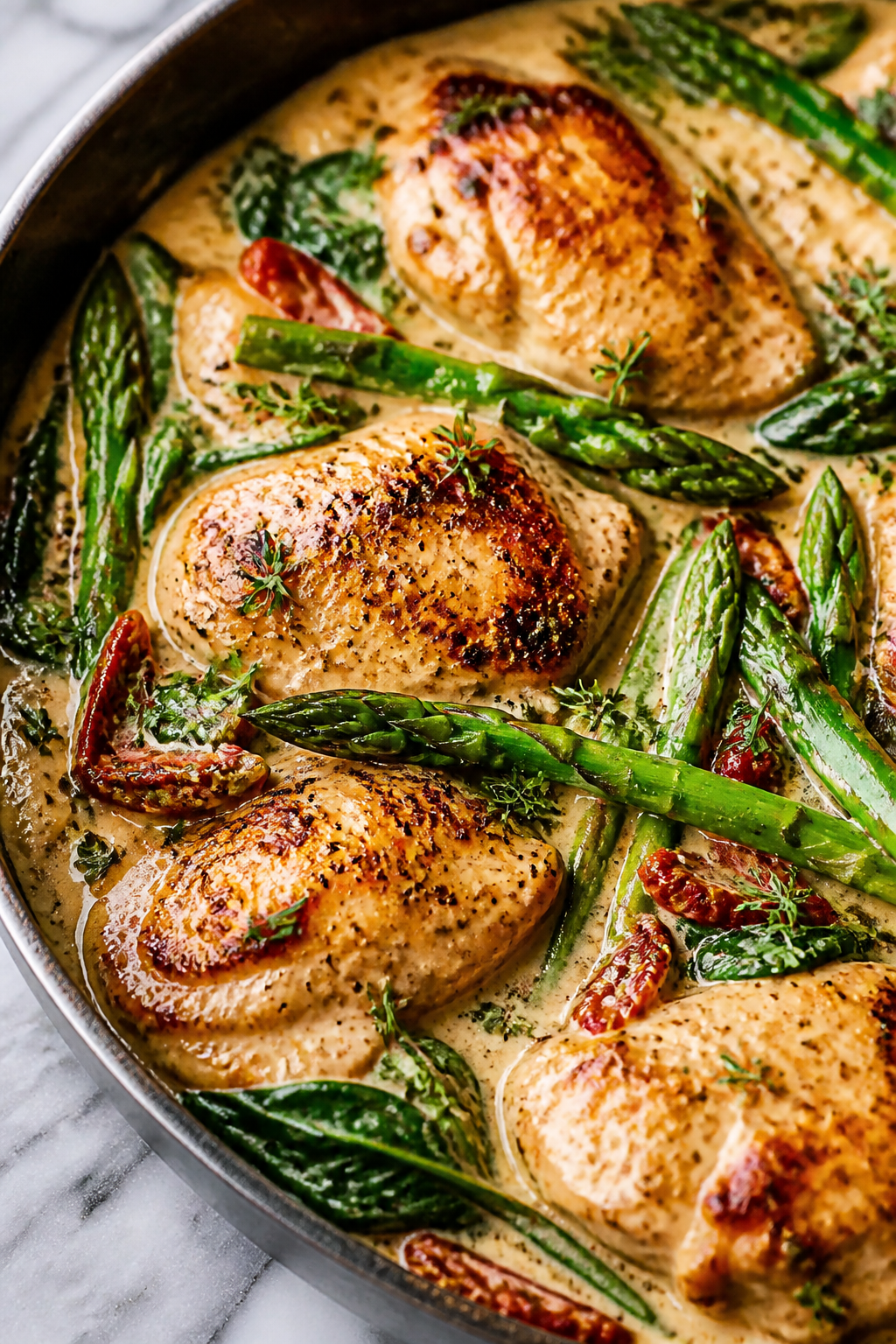
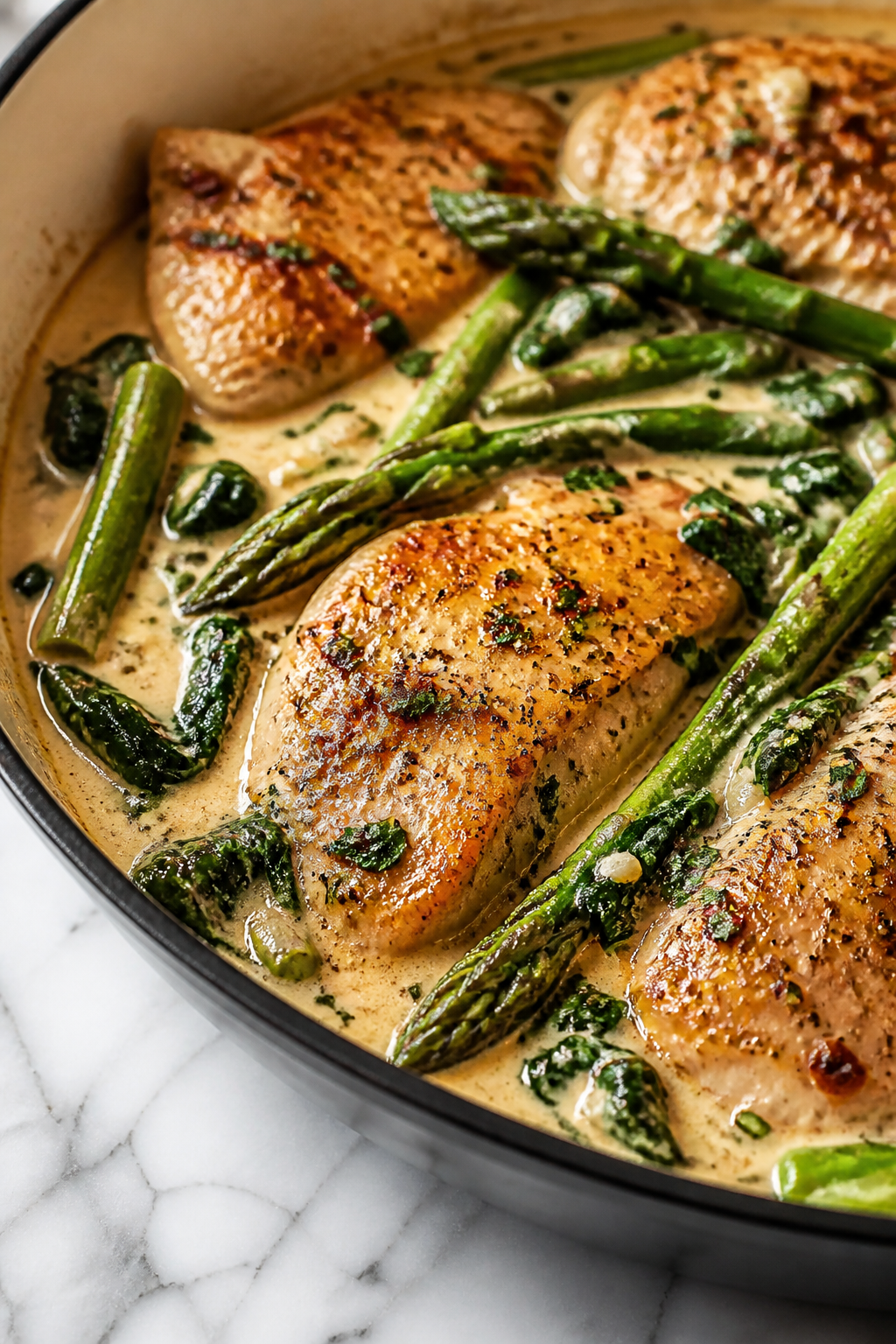
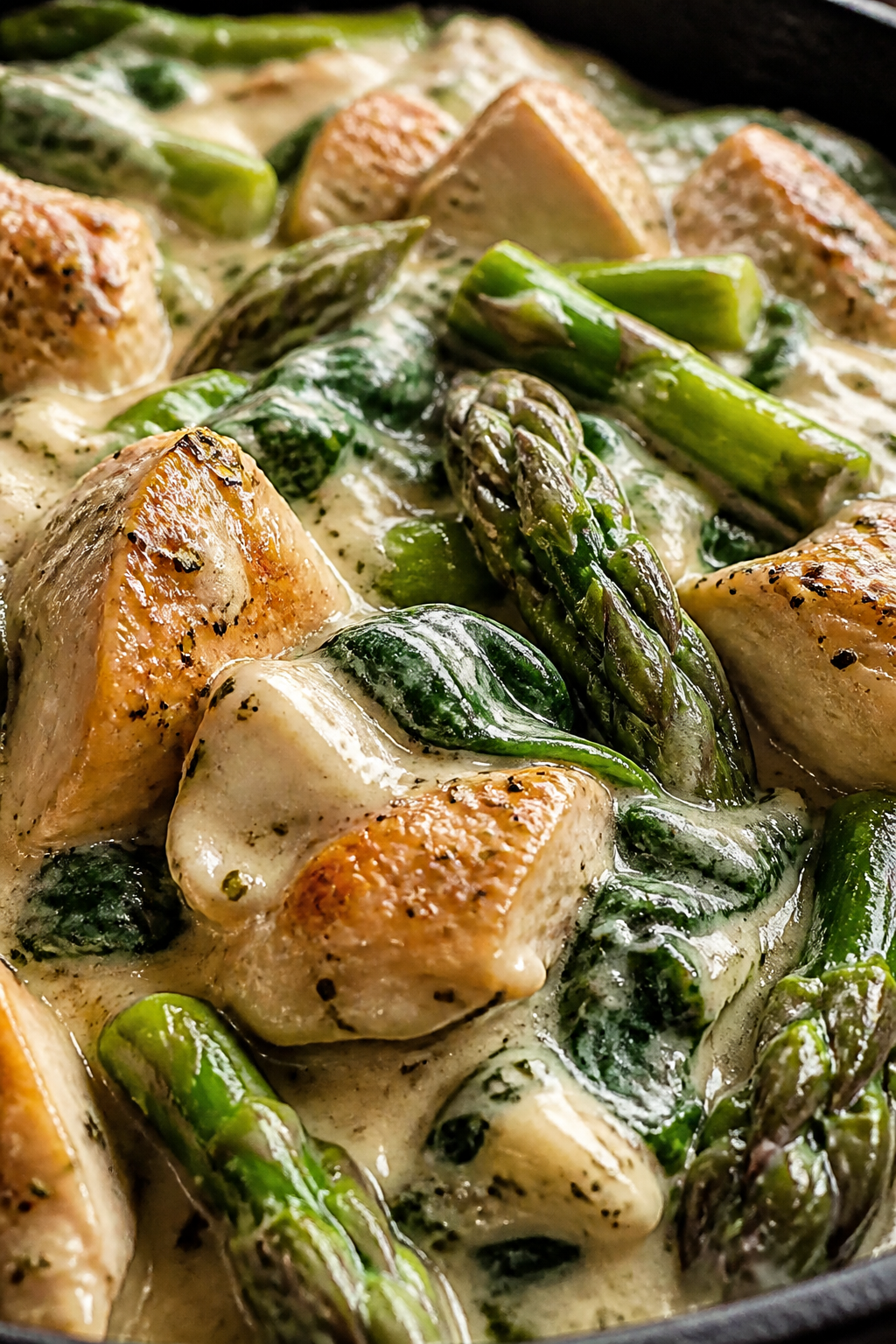
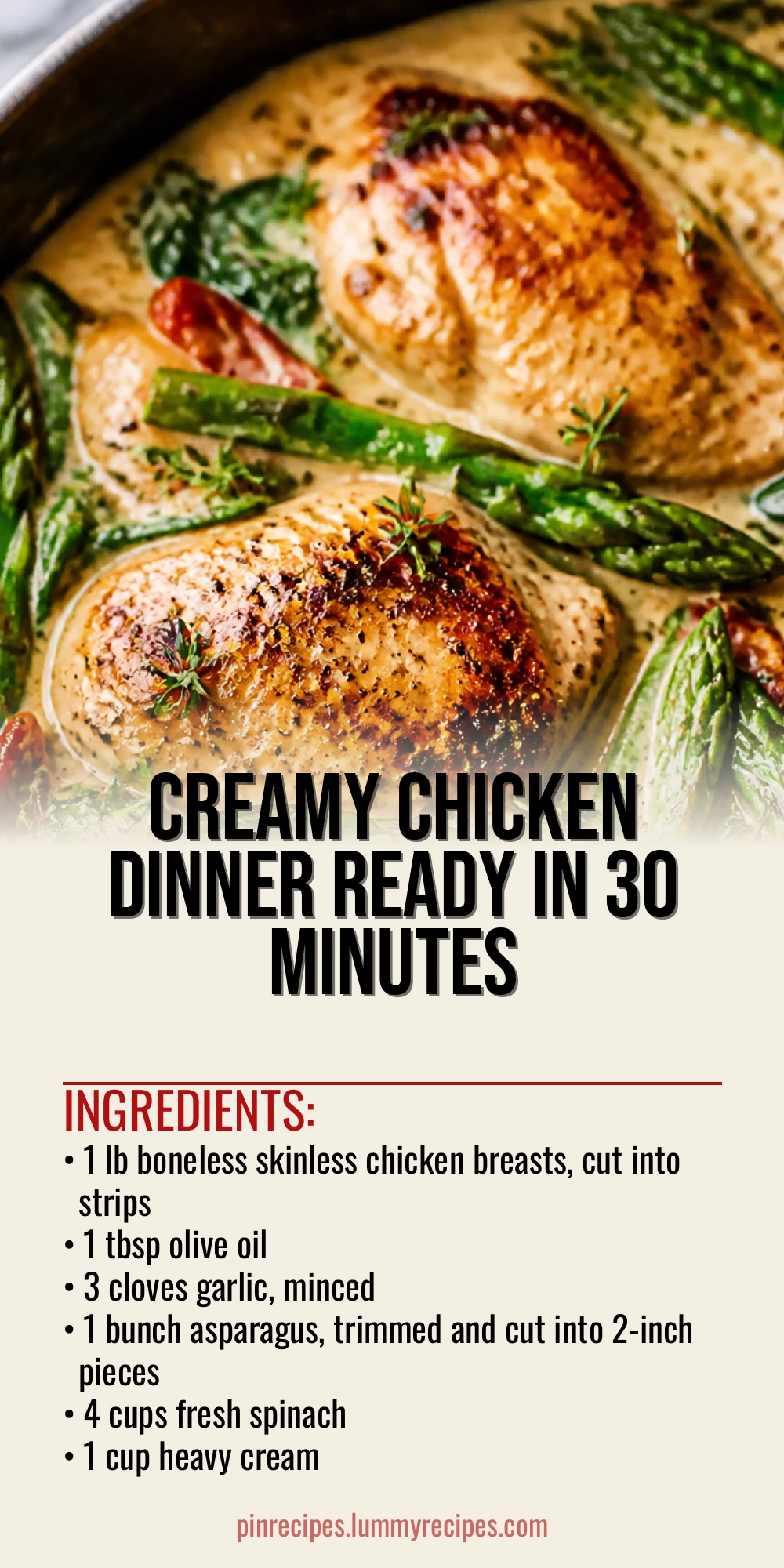
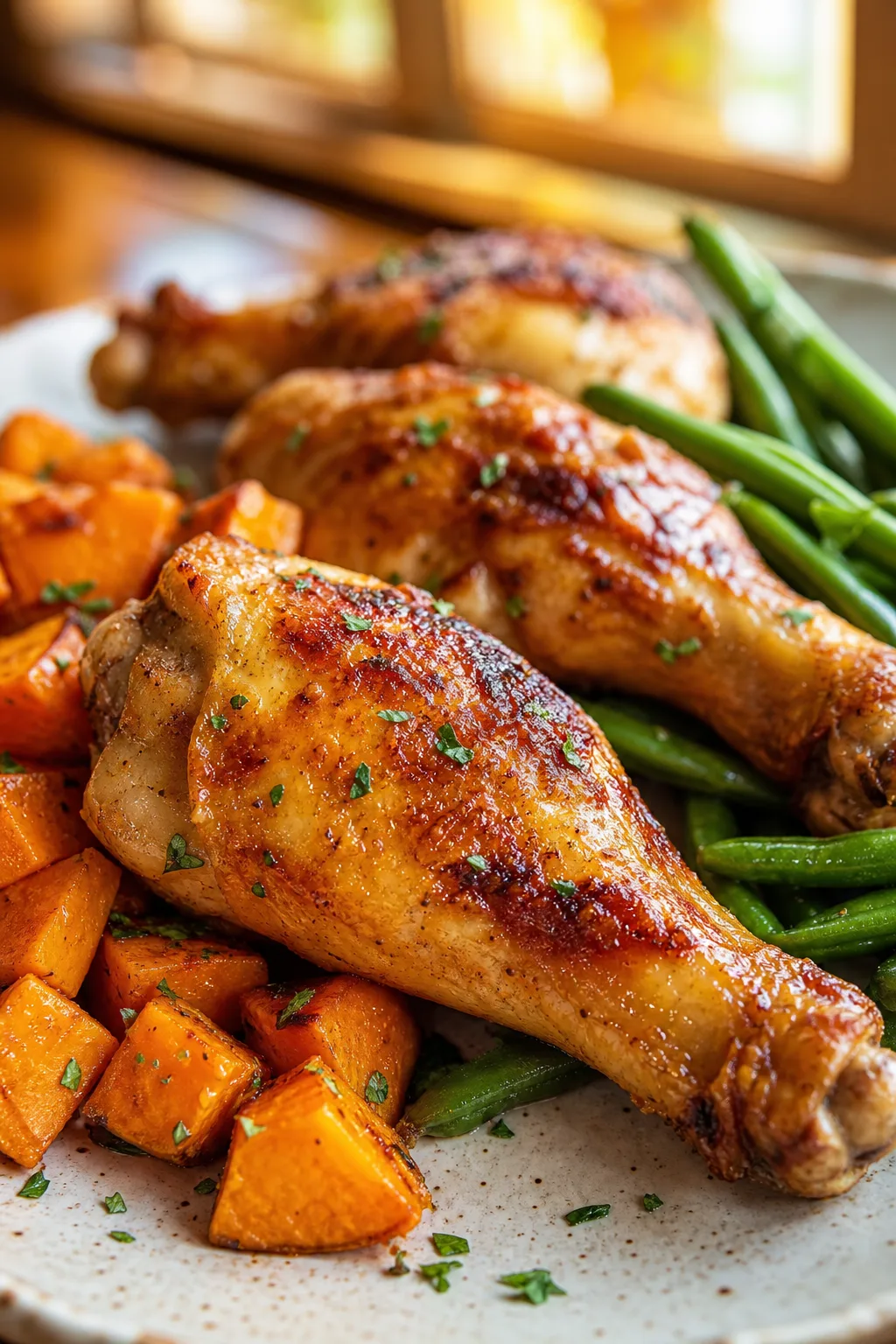
This one-pan creamy chicken dish is a weeknight lifesaver—quick, comforting, and full of fresh veggies. The secret is a simple garlic cream sauce that brings everything together perfectly. Great for busy nights when you want something wholesome and tasty!
Introduction
I first made this one-pan creamy chicken dish on a hectic weeknight when I wanted something cozy but quick. What I love about this version is how the asparagus and spinach add fresh, vibrant flavors that keep it from feeling heavy. Plus, cooking everything in one pan means minimal cleanup—a total win in my book. The trick I learned is to cook the chicken just right before adding the cream sauce, so it stays juicy and tender. The sauce itself is simple but rich, thanks to garlic and Parmesan, which gives it that comforting, homemade feel. When it’s done, you get a beautiful creamy sauce coating the chicken and veggies, making it perfect for a family dinner that feels special without a lot of fuss. I’ve tried other recipes that either overcook the chicken or make the sauce too thin, but this one strikes the perfect balance every time. It’s become a go-to for me when I want something delicious, quick, and satisfying.
How To Do It
Step 1
Heat the olive oil in a large skillet over medium-high heat. Add the chicken strips in a single layer, making sure not to crowd the pan so they brown nicely instead of steaming. Cook for about 4-5 minutes per side until golden and cooked through. This step is key because properly searing the chicken locks in juices and builds flavor. Avoid stirring too much early on, or the chicken won’t develop that nice crust.
⏱ Time: 10 minutes
✓ Doneness: Chicken is golden brown on both sides and no longer pink inside
Step 2
Add the minced garlic to the pan and sauté for about 1 minute until fragrant—don't let it burn or it will taste bitter. Then toss in the asparagus pieces and cook for 3-4 minutes until just tender but still crisp. Cooking the asparagus separately ensures it retains a nice bite instead of turning mushy.
⏱ Time: 5 minutes
✓ Doneness: Garlic is fragrant and asparagus is bright green and slightly tender
Step 3
Pour in the chicken broth and heavy cream, scraping up any browned bits from the bottom of the pan with a wooden spoon. These bits add deep flavor to the sauce. Stir in the Parmesan cheese and dried Italian herbs. Simmer gently over medium heat, stirring often so the sauce thickens without curdling. This slow simmer melds the flavors and creates a silky texture.
⏱ Time: 7 minutes
✓ Doneness: Sauce thickens slightly and coats the back of a spoon
Step 4
Add the fresh spinach to the pan and stir until wilted, about 2 minutes. Spinach cooks quickly and adds a lovely color and nutrition boost. Be careful not to overcook or it will become slimy. Season with salt and pepper to taste.
⏱ Time: 3 minutes
✓ Doneness: Spinach is wilted but still bright green
Step 5
Give everything a final stir and adjust seasoning if needed. If the sauce is too thick, add a splash of chicken broth or water to loosen it. Let the dish rest off heat for a couple minutes to let the flavors meld before serving.
⏱ Time: 2 minutes
✓ Doneness: Sauce smooth and creamy, flavors well blended
Step 6
Serve the creamy chicken and veggies over cooked rice, pasta, or crusty bread to soak up the sauce. Garnish with a little lemon zest for a fresh, bright finish if you like. This adds a subtle zing that cuts through the richness beautifully.
⏱ Time: 2 minutes
✓ Doneness: Dish plated attractively with garnish
Step 7
Clean up your pan while enjoying your meal—one-pan dinners mean fewer dishes, which I always appreciate after a busy day. Plus, the pan retains some of the sauce’s flavor, so a quick wipe-down is all it takes.
⏱ Time: 5 minutes
✓ Doneness: Pan cleaned easily, kitchen tidy
Step 8
If you want to prep ahead, chop the veggies and chicken in advance and store separately in the fridge. This makes the cooking process even faster on the day you want to eat it.
⏱ Time: Optional prep time
✓ Doneness: Ingredients prepped and ready for quick cooking
Step 9
For a little extra flavor, try adding a pinch of crushed red pepper flakes when you add the garlic. It gives the dish a gentle heat that complements the creamy sauce without overpowering it.
⏱ Time: Optional step
✓ Doneness: Subtle spicy aroma mingling with garlic
Pro Tips
Pat chicken dry before cooking.
Removing moisture from the chicken surface helps it brown better. Wet chicken steams instead of sears, resulting in less flavor and a soggy texture. A dry surface encourages the Maillard reaction, giving you that golden crust.
Don’t overcrowd the pan when searing.
Crowding traps steam and prevents proper browning. Cooking chicken in batches if needed ensures each piece gets a nice crust. This step is key for flavor and texture.
Add vegetables in stages based on cooking time.
Asparagus takes longer to cook than spinach, so adding them separately prevents overcooking. This keeps veggies crisp and vibrant, improving both texture and appearance.
Simmer sauce gently, don’t boil.
Boiling cream sauces can cause curdling or separation. A gentle simmer allows the sauce to thicken slowly and emulsify, resulting in a smooth, creamy texture.
Use freshly grated Parmesan cheese.
Freshly grated cheese melts better and adds richer flavor. Pre-grated cheese often contains anti-caking agents that affect melting and texture.
Season in layers.
Adding salt and herbs at different stages builds depth of flavor. Seasoning only at the end can result in flat-tasting dishes.
Let the dish rest before serving.
Resting allows flavors to meld and sauce to thicken slightly. It also helps the chicken juices redistribute, keeping meat tender.
Common Mistakes to Avoid
Overcooking the chicken
Why it happens Many cooks rush the process or cook chicken on too high heat, leading to dry, tough meat.
Fix Cook chicken over medium-high heat just until no longer pink inside, about 4-5 minutes per side. Use a meat thermometer if unsure (165°F internal temp). Avoid flipping too often to let a crust form.
Burning the garlic
Why it happens Garlic cooks quickly and can easily burn if left unattended or cooked on too high heat.
Fix Add garlic after chicken is mostly cooked and sauté briefly (about 1 minute), stirring constantly. Remove from heat if it starts to brown too fast.
Overcooking vegetables
Why it happens Adding all veggies at once or cooking too long makes asparagus mushy and spinach slimy.
Fix Add asparagus first to cook until tender-crisp, then add spinach last to just wilt. Timing is key to preserve texture.
Sauce separating or curdling
Why it happens Boiling cream or adding cheese too quickly can cause the sauce to break.
Fix Simmer sauce gently over medium heat, stirring often. Add cheese gradually and avoid high heat.
Using frozen chicken without thawing
Why it happens Frozen chicken releases excess water when cooked, leading to watery sauce and uneven cooking.
Fix Thaw chicken fully in the fridge before cooking to ensure even texture and flavor.
Variations
Mushroom and Herb Creamy Chicken
Add sliced mushrooms along with the asparagus for an earthy twist. Fresh thyme or rosemary enhances the flavor. Expect a heartier dish with deeper umami notes.
Note: Sauté mushrooms first until golden to release moisture before adding chicken.
Lemon Garlic Creamy Chicken
Stir in fresh lemon juice and zest at the end for a bright, fresh flavor that cuts through the richness. Great for spring and summer dinners.
Note: Add lemon juice off heat to prevent curdling.
Creamy Chicken with Sun-Dried Tomatoes
Mix in chopped sun-dried tomatoes for a sweet and tangy flavor contrast. This adds color and a Mediterranean flair to the dish.
Note: Add tomatoes along with the cream to warm through.
Spicy Creamy Chicken
Include a pinch of crushed red pepper flakes or cayenne pepper when cooking garlic for a subtle kick. Perfect if you like a little heat without overpowering the creaminess.
Note: Adjust spice level gradually to avoid overwhelming the dish.
Dairy-Free Creamy Chicken
Use coconut milk or cashew cream instead of heavy cream and omit Parmesan. This keeps the texture creamy but changes the flavor profile slightly.
Note: Simmer gently and stir frequently to prevent separation.
Nutrition
Per Serving:
Nutritional values are estimates and may vary based on specific ingredients used.
Storage & Tips
Room Temperature
This dish can safely sit out for up to 2 hours covered. Beyond that, bacteria growth can increase, so refrigerate promptly.
Refrigerator
Store leftovers in an airtight container for up to 3 days. The sauce may thicken and the spinach darken when cold. Reheat gently on stovetop or microwave, adding a splash of broth or cream to loosen the sauce.
Freezer
Freeze in airtight containers for up to 2 months. Wrap tightly to prevent freezer burn. Thaw overnight in the fridge before reheating. Texture may soften slightly after freezing.
Reheating
Reheat over low-medium heat on stovetop, stirring often to prevent sauce from sticking or separating. Microwave on medium power in short bursts, stirring between. Add a little broth or cream if sauce is too thick.
Make Ahead
Chop vegetables and slice chicken up to 1 day ahead, storing separately in the fridge. Assemble and cook the dish fresh for best texture and flavor.
FAQ
Can I use chicken thighs instead of breasts?
Yes, boneless skinless chicken thighs work well and stay juicy. They may take a couple more minutes to cook through. Adjust cooking time accordingly and watch for doneness to avoid overcooking.
What can I serve this dish with?
It’s great over cooked pasta, rice, or mashed potatoes to soak up the creamy sauce. Crusty bread also works well for dipping. Choose a mild side so the sauce remains the star.
How do I prevent the sauce from curdling?
Avoid boiling the cream sauce. Keep heat at medium or lower and stir frequently. Add cheese gradually and off direct high heat if possible to keep the sauce smooth.
Can I make this recipe dairy-free?
Yes, substitute heavy cream with coconut milk or cashew cream and omit Parmesan cheese. The texture will be creamy but the flavor will change slightly. Simmer gently to avoid separation.
Is it okay to use frozen asparagus?
Fresh asparagus is best for texture, but you can use frozen. Thaw and drain it well before adding to avoid excess water in the sauce. Cook it briefly to prevent mushiness.
Can I prepare this dish in advance?
You can chop and prep ingredients a day ahead, but it’s best to cook the chicken and sauce fresh to keep the texture and flavors vibrant. Leftovers reheat well though.
What if I don’t have Parmesan cheese?
You can substitute with Pecorino Romano or a mild aged cheese. Avoid processed cheeses as they won’t melt well and affect the sauce texture.
How do I know when the chicken is fully cooked?
Chicken should reach an internal temperature of 165°F. It should be opaque and firm but still juicy. Cut into a piece to check there’s no pink inside if you don’t have a thermometer.
Final Thoughts
I hope you enjoy making and sharing this cozy one-pan creamy chicken as much as my family does. Let me know how it turns out and any tweaks you try!