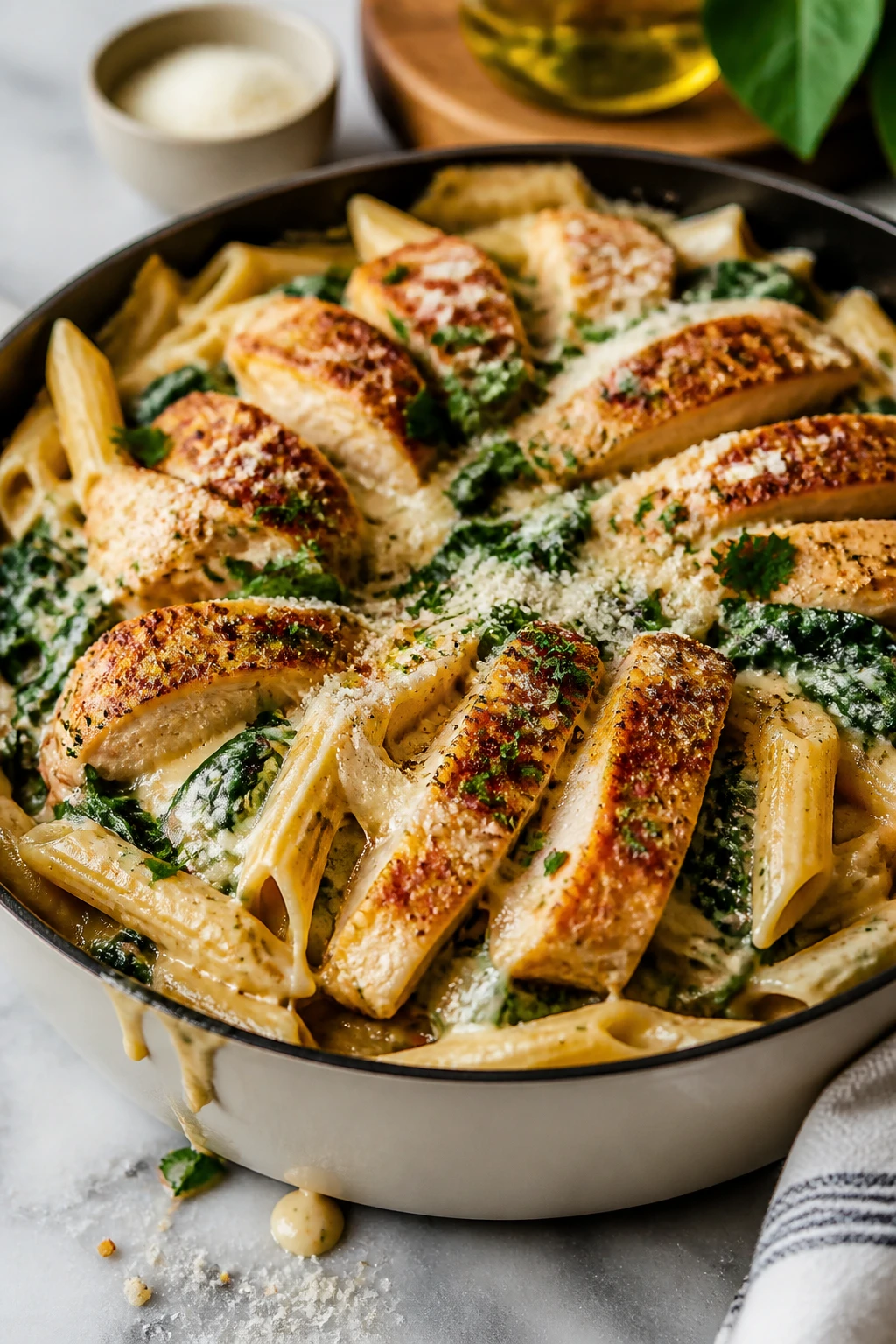
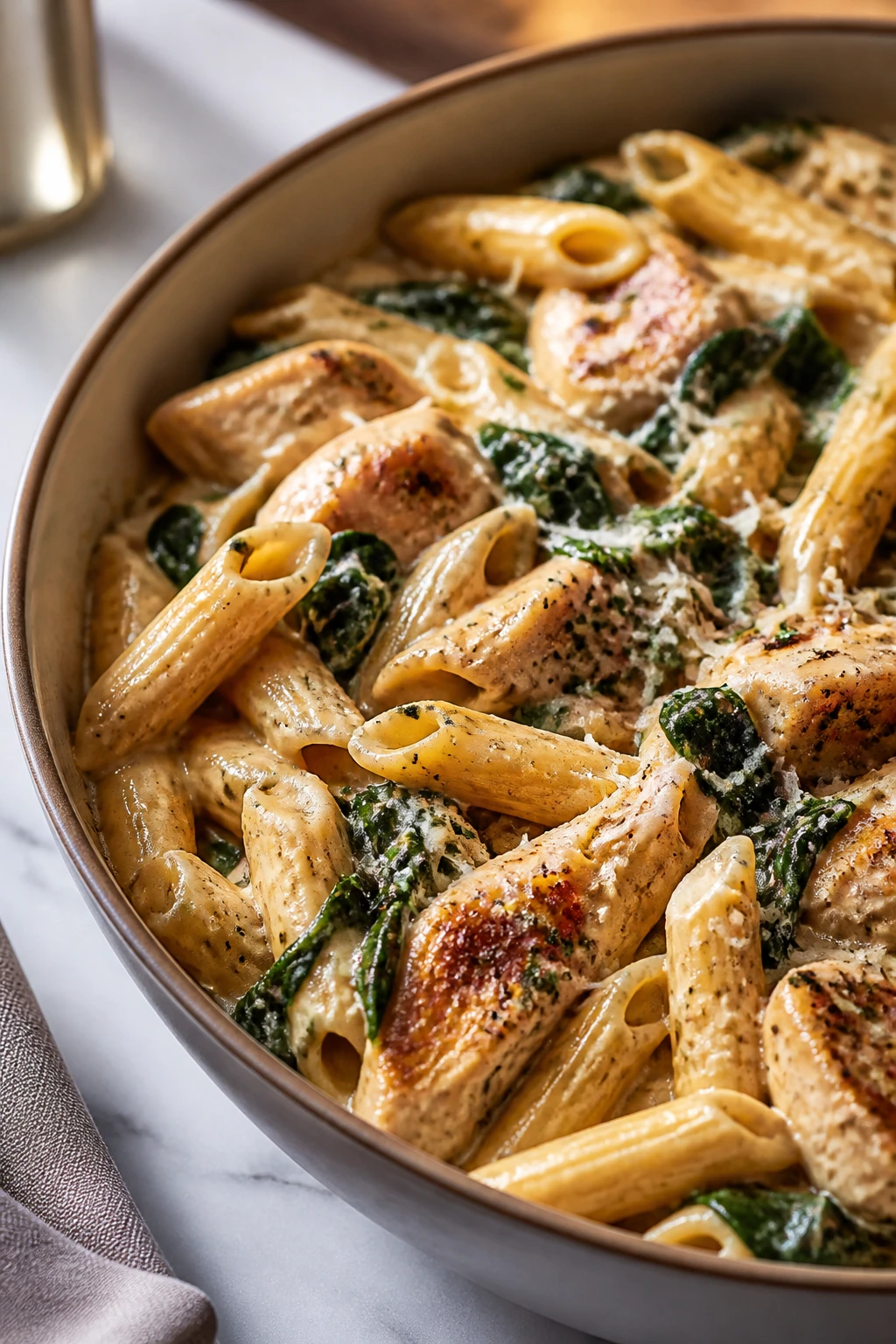
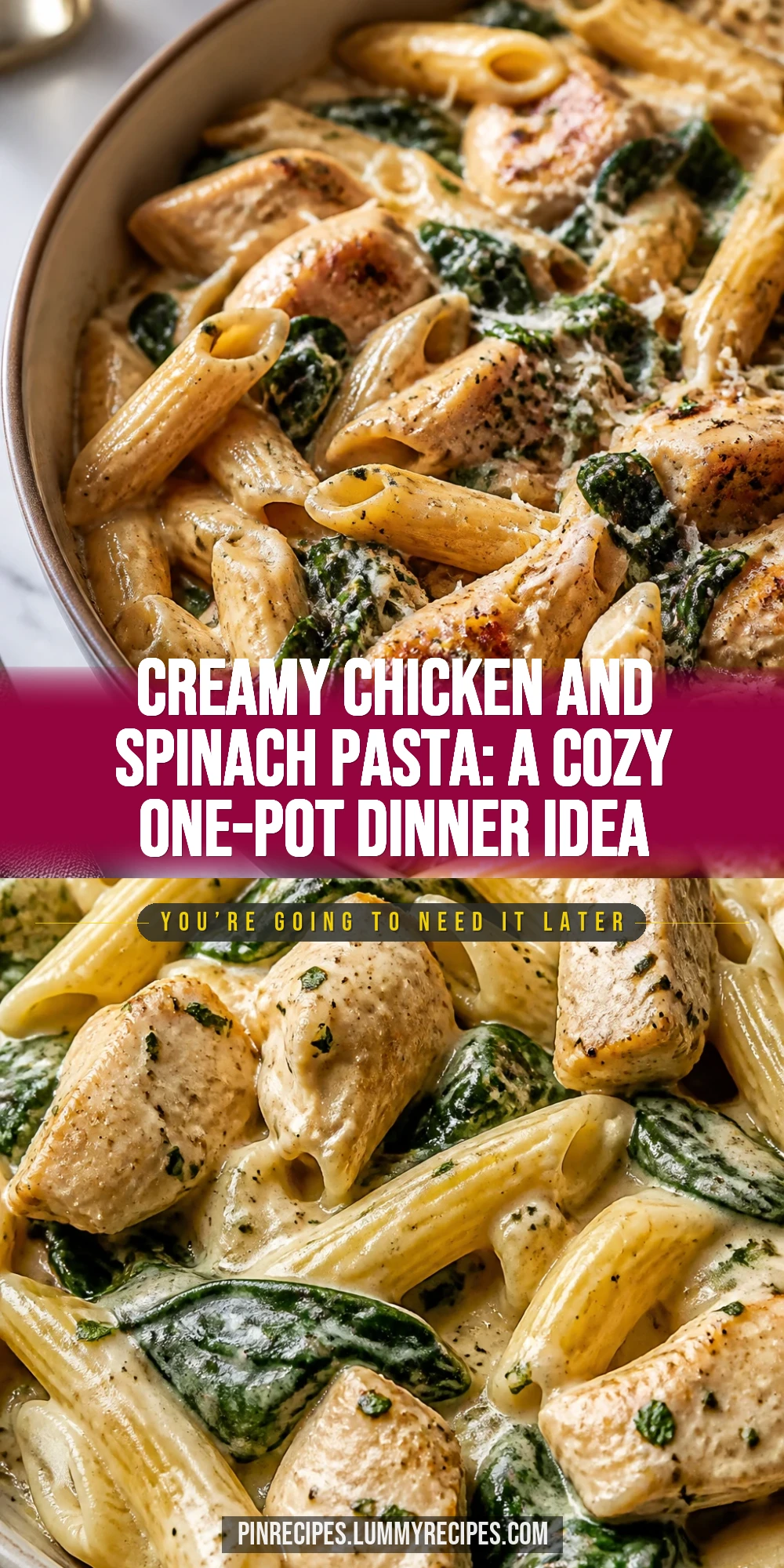
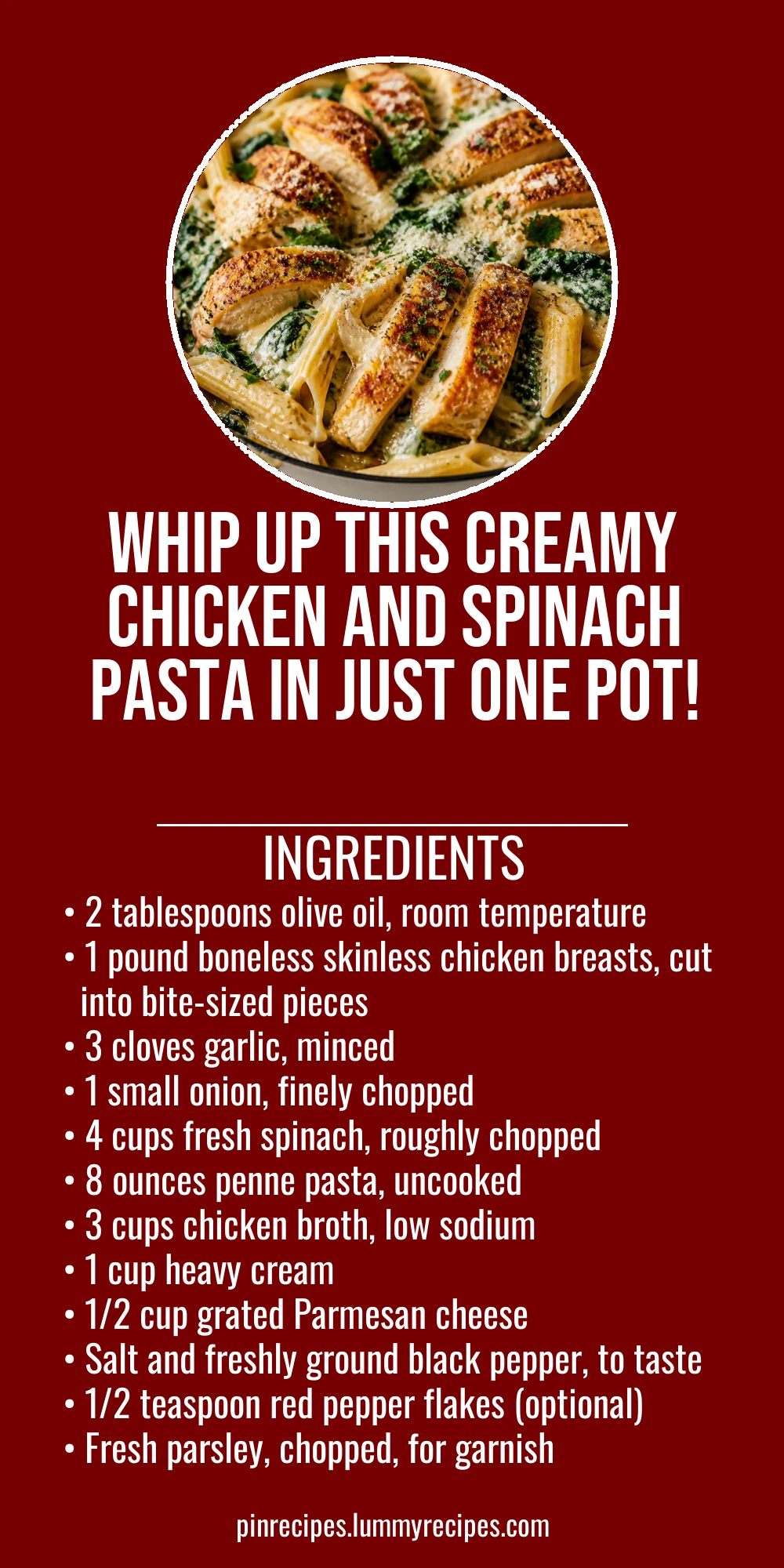
This one-pot creamy chicken and spinach pasta is my go-to for busy weeknights. The secret? Cooking everything together so the flavors meld perfectly and cleanup is a breeze. It’s cozy, rich, and ready in under 45 minutes!
Introduction
I first stumbled upon this one-pot creamy chicken and spinach pasta during a particularly hectic week when I wanted something comforting but quick. What I love most is how everything cooks together in one pan, which means fewer dishes and a richer flavor because the pasta absorbs all the garlicky, cheesy goodness. I tried a few versions before settling on this balance of creaminess and a slight tang from the Parmesan. The fresh spinach adds a nice pop of color and a subtle earthy flavor that keeps it from feeling too heavy. One trick I learned is to add the pasta directly to the broth and chicken mixture without pre-boiling it — it steams right in the sauce, soaking up all those flavors. The result is a creamy, luscious pasta that’s perfect for weeknight dinners when you want something cozy but don’t want to spend hours cooking. Plus, my family loves it, and it’s easy enough to tweak with whatever greens or cheese you have on hand. It’s definitely become a staple in my rotation, especially when I need a no-fuss meal that still feels special.
How To Do It
Step 1
Heat the olive oil in a large deep skillet or Dutch oven over medium-high heat. Add the chicken pieces in a single layer, making sure not to crowd the pan, and cook until they’re golden brown on the outside but not fully cooked through, about 5-6 minutes. This initial sear locks in juices and adds flavor through the Maillard reaction. Avoid stirring too often so the chicken can brown properly; otherwise, it will steam and won’t develop that nice crust.
⏱ Time: 6 minutes
✓ Doneness: Chicken pieces are golden brown on the edges but still slightly pink inside
Step 2
Add the chopped onion and minced garlic to the chicken in the pan. Sauté for about 3-4 minutes until the onion becomes translucent and the garlic is fragrant. This step builds the flavor base for the sauce. Be careful not to burn the garlic as it can turn bitter. Stir frequently to cook evenly and release the aromatics into the oil.
⏱ Time: 4 minutes
✓ Doneness: Onions are translucent and soft, garlic is aromatic but not browned
Step 3
Pour in the chicken broth and bring the mixture to a gentle boil. Add the uncooked penne pasta directly to the liquid. Stir to prevent sticking and reduce the heat to maintain a simmer. Cooking the pasta directly in the broth allows it to absorb the savory flavors and thickens the sauce as starches release. Stir occasionally to keep the pasta from clumping or sticking to the bottom.
⏱ Time: 10-12 minutes
✓ Doneness: Pasta is tender but still firm to the bite, broth is mostly absorbed
Step 4
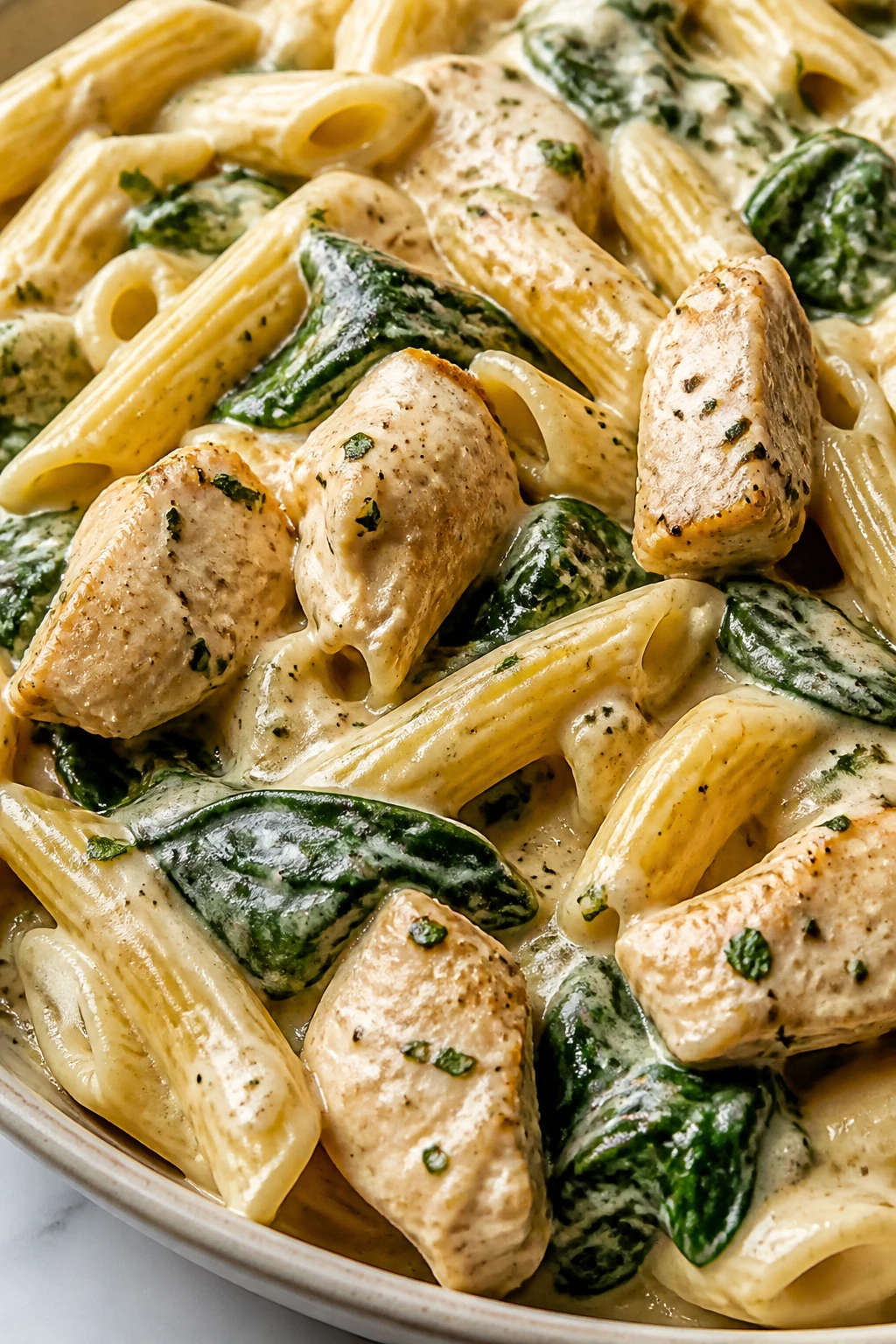
Once the pasta is almost cooked, stir in the heavy cream and Parmesan cheese. This enriches the sauce, making it creamy and luscious. Keep the heat low to prevent the cream from curdling. Stir until the cheese melts completely and the sauce thickens, coating the pasta evenly. Taste and season with salt, pepper, and red pepper flakes if using.
⏱ Time: 5 minutes
✓ Doneness: Sauce is thick and creamy, evenly coats the pasta with no graininess
Step 5
Fold in the fresh spinach and cook for another 2-3 minutes until wilted. Adding spinach at the end preserves its vibrant color and fresh flavor while softening it just enough. Overcooking spinach can make it mushy and dull, so watch closely and remove from heat as soon as it’s wilted.
⏱ Time: 3 minutes
✓ Doneness: Spinach is bright green and tender but not slimy
Step 6
Give the pasta a final stir and adjust seasoning if needed. If the sauce is too thick, add a splash of chicken broth or cream to loosen it up. Let the pasta rest off the heat for a couple of minutes to thicken slightly and allow the flavors to meld. This resting step helps the sauce cling better to the pasta.
⏱ Time: 2 minutes
✓ Doneness: Sauce consistency is creamy and coats pasta well without pooling
Step 7
Serve the pasta hot, garnished with freshly chopped parsley and extra Parmesan if desired. The garnish adds a fresh herbal note and a little texture contrast. This dish pairs well with a simple green salad or crusty bread to soak up the sauce.
⏱ Time: Immediate
✓ Doneness: Pasta looks inviting with vibrant green spinach and a sprinkle of herbs
Step 8
To store leftovers, cool the pasta completely before transferring to an airtight container. Reheat gently with a splash of broth or cream to restore creaminess. Avoid overheating as it can cause the sauce to separate. This pasta reheats well and tastes great the next day.
⏱ Time: N/A
✓ Doneness: Leftovers are creamy and flavorful after reheating
Step 9
For meal prep, you can chop the chicken and spinach ahead of time and keep them refrigerated. When ready to cook, follow the recipe as usual, adding prepped ingredients straight to the pan. This saves time on busy nights without sacrificing flavor.
⏱ Time: N/A
✓ Doneness: Ingredients are ready to go and cooking time is reduced
Pro Tips
Don’t overcrowd the pan when searing chicken.
Crowding traps steam, preventing the chicken from browning properly. Browning creates flavor and texture through the Maillard reaction, so giving the pieces space ensures a richer taste and better mouthfeel.
Add pasta directly to the broth without pre-cooking.
This technique allows the pasta to absorb the broth’s flavor and release starches to thicken the sauce naturally. It saves time and creates a creamier, more cohesive dish than cooking pasta separately.
Use freshly grated Parmesan cheese for best melting.
Freshly grated cheese melts smoothly and enriches the sauce without graininess. Pre-grated cheese often contains additives that prevent clumping but can cause a gritty texture in sauces.
Add spinach at the very end to preserve color and texture.
Spinach wilts quickly and can become mushy if overcooked. Adding it last keeps it vibrant and fresh-tasting, adding a nice contrast to the creamy pasta.
Simmer gently after adding cream to avoid curdling.
High heat can cause the cream to separate, ruining the sauce’s texture. Keeping the heat low allows the cream and cheese to emulsify into a silky sauce.
Let the pasta rest off heat for a few minutes before serving.
Resting thickens the sauce slightly and helps flavors meld. It also allows the pasta to finish absorbing the sauce, resulting in a more flavorful bite.
Season gradually and taste as you go.
Because the broth and cheese add saltiness, it’s important to season carefully to avoid an overly salty dish. Tasting throughout ensures balanced flavor.
Common Mistakes to Avoid
Skipping the sear on the chicken
Why it happens Many cooks want to save time and skip browning, assuming it’s unnecessary.
Fix Take the extra few minutes to sear the chicken in batches without crowding. This step develops deep flavor and a better texture that you won’t get if you just boil the chicken with the pasta.
Overcooking the pasta in the broth
Why it happens Rushing or not stirring enough can cause pasta to stick or become mushy.
Fix Keep the heat at a gentle simmer and stir occasionally to prevent clumping. Check pasta a minute or two before package instructions to avoid overcooking.
Adding spinach too early
Why it happens Some cooks add spinach with the broth, not realizing it will overcook.
Fix Add spinach at the very end and cook just until wilted to keep its texture and bright color.
Using pre-grated Parmesan cheese
Why it happens Convenience often wins, but pre-grated cheese can affect sauce texture.
Fix Grate fresh Parmesan yourself for a smoother, richer sauce that melts perfectly.
Cooking on too high heat after adding cream
Why it happens High heat may cause cream to curdle or separate.
Fix Lower the heat to a gentle simmer after adding cream and cheese, stirring frequently to maintain a smooth sauce.
Variations
Mushroom and Herb Creamy Chicken Pasta
Add sliced mushrooms when cooking the onions for an earthy twist. Fresh thyme or rosemary adds aromatic depth. Expect a heartier texture and richer flavor with the mushrooms soaking up the creamy sauce.
Note: Sauté mushrooms until golden before adding broth to prevent sogginess and concentrate flavor.
Spicy Cajun Creamy Chicken Pasta
Incorporate Cajun seasoning and a pinch of cayenne pepper with the garlic and onions for a spicy kick. This variation has bold flavors and a bit of heat that livens up the creamy base.
Note: Adjust spice levels carefully to balance heat without overpowering the creaminess.
Vegan Creamy Spinach Pasta
Swap chicken for sautéed tofu or chickpeas and use coconut milk with nutritional yeast instead of cream and Parmesan. This version is plant-based but still creamy and comforting.
Note: Use firm tofu pressed well and cook until golden for best texture.
Sun-Dried Tomato and Basil Chicken Pasta
Add chopped sun-dried tomatoes and fresh basil at the end for a bright, tangy flavor contrast. This variation feels fresh and slightly Mediterranean.
Note: Add tomatoes with the spinach to warm through without losing texture.
Cheesy Broccoli and Chicken Pasta
Include small broccoli florets with the pasta in the broth for extra veggies. The broccoli adds a nice crunch and pairs well with the creamy sauce and chicken.
Note: Add broccoli early enough to cook through but not become mushy, about 5 minutes before pasta finishes.
Nutrition
Per Serving:
Nutritional values are estimates and may vary based on specific ingredients used.
Storage & Tips
Room Temperature
This pasta can safely sit at room temperature for up to 2 hours if covered loosely. Beyond that, bacteria growth increases, so refrigerate promptly to maintain freshness and safety.
Refrigerator
Store leftovers in an airtight container for up to 3 days. The sauce may thicken and flavors meld further. Reheat gently with a splash of broth or cream to restore creaminess; avoid overheating to prevent separation.
Freezer
Freeze in airtight containers for up to 2 months. Wrap tightly to prevent freezer burn. Thaw overnight in the refrigerator before reheating. Texture may soften slightly, but flavor remains intact.
Reheating
Reheat on the stovetop over low heat with a splash of chicken broth or cream, stirring frequently until warmed through. Microwaving is possible but may cause uneven heating and sauce separation.
Make Ahead
Chop chicken and spinach 1-2 days ahead and store separately. Combine and cook the pasta fresh to maintain texture. Alternatively, prepare the entire dish and refrigerate; reheat gently when ready to serve.
FAQ
Can I use chicken thighs instead of breasts?
Absolutely! Chicken thighs add more flavor and stay moist due to higher fat content. Cut into bite-sized pieces and adjust cooking time slightly to ensure they cook through. The richer taste complements the creamy sauce well.
What if I don’t have heavy cream on hand?
You can substitute with half-and-half or whole milk, but the sauce will be less rich and creamy. To thicken, you might add a slurry of cornstarch and water. Avoid skim milk as it can curdle easily.
Can I make this recipe gluten-free?
Yes, just swap the penne pasta for a gluten-free variety. Be mindful that some gluten-free pastas cook faster or have different textures, so adjust cooking time accordingly to avoid mushiness.
How do I prevent the sauce from separating?
Cook the sauce on low heat after adding cream and cheese, stirring frequently. High heat causes the fat and liquid to separate. Also, avoid overcooking the pasta once the sauce is added.
Is it okay to use frozen spinach?
You can, but frozen spinach releases more water which can thin the sauce. Thaw and drain it well before adding, and reduce other liquids slightly to maintain creaminess.
Can I add other vegetables?
Definitely! Mushrooms, broccoli, or sun-dried tomatoes work great. Add them at appropriate times so they cook properly without becoming mushy or underdone.
How can I make this recipe spicier?
Add red pepper flakes or a dash of cayenne pepper with the garlic and onions. Start with a small amount and adjust to taste. You can also finish with a drizzle of hot sauce if desired.
What’s the best way to reheat leftovers?
Reheat gently on the stovetop over low heat with a splash of broth or cream to restore creaminess. Stir often to prevent sticking and uneven heating. Avoid high heat which can cause separation.
Final Thoughts
I hope you enjoy making this creamy chicken and spinach pasta as much as I do! It’s simple, satisfying, and perfect for busy nights—let me know how yours turns out!