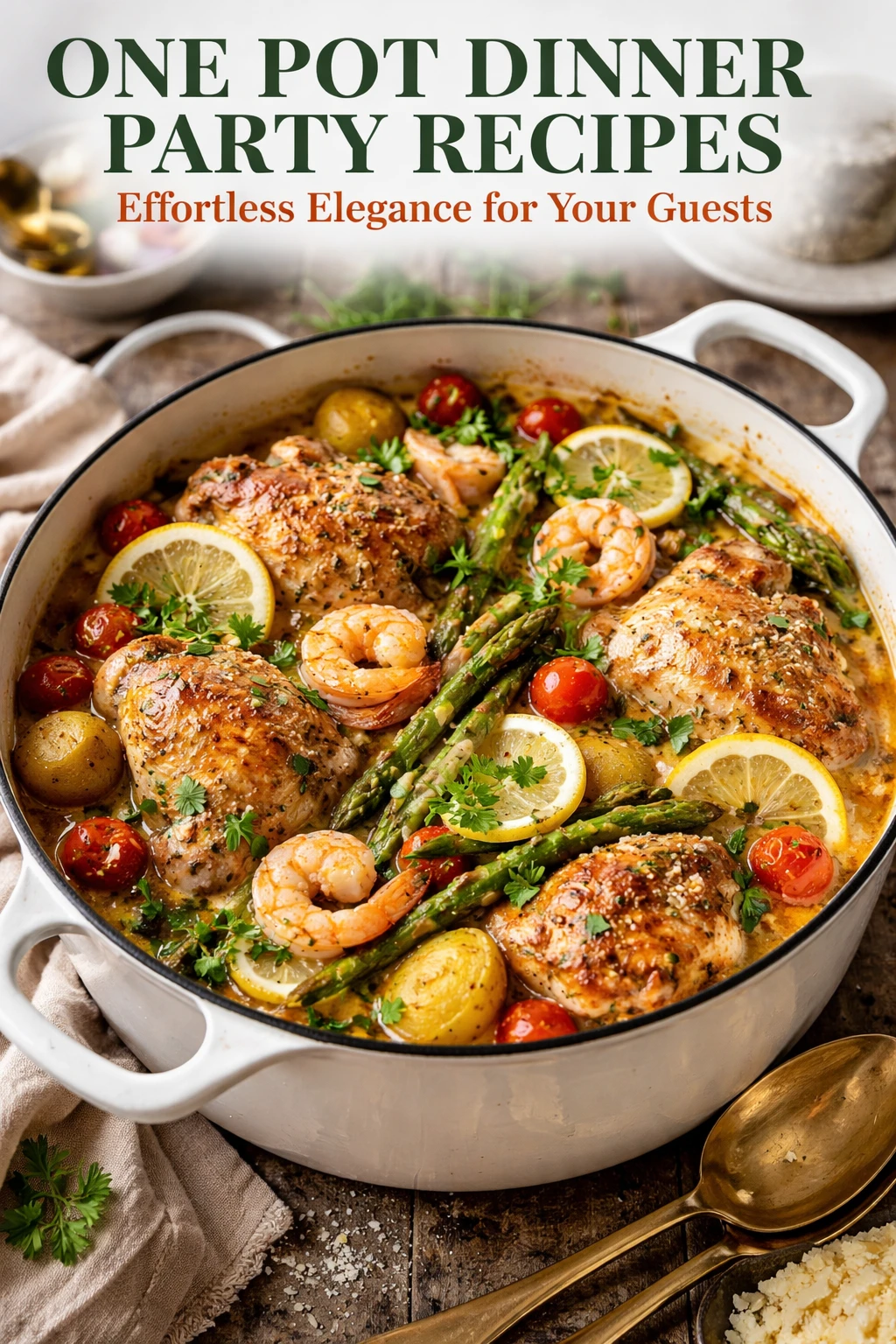
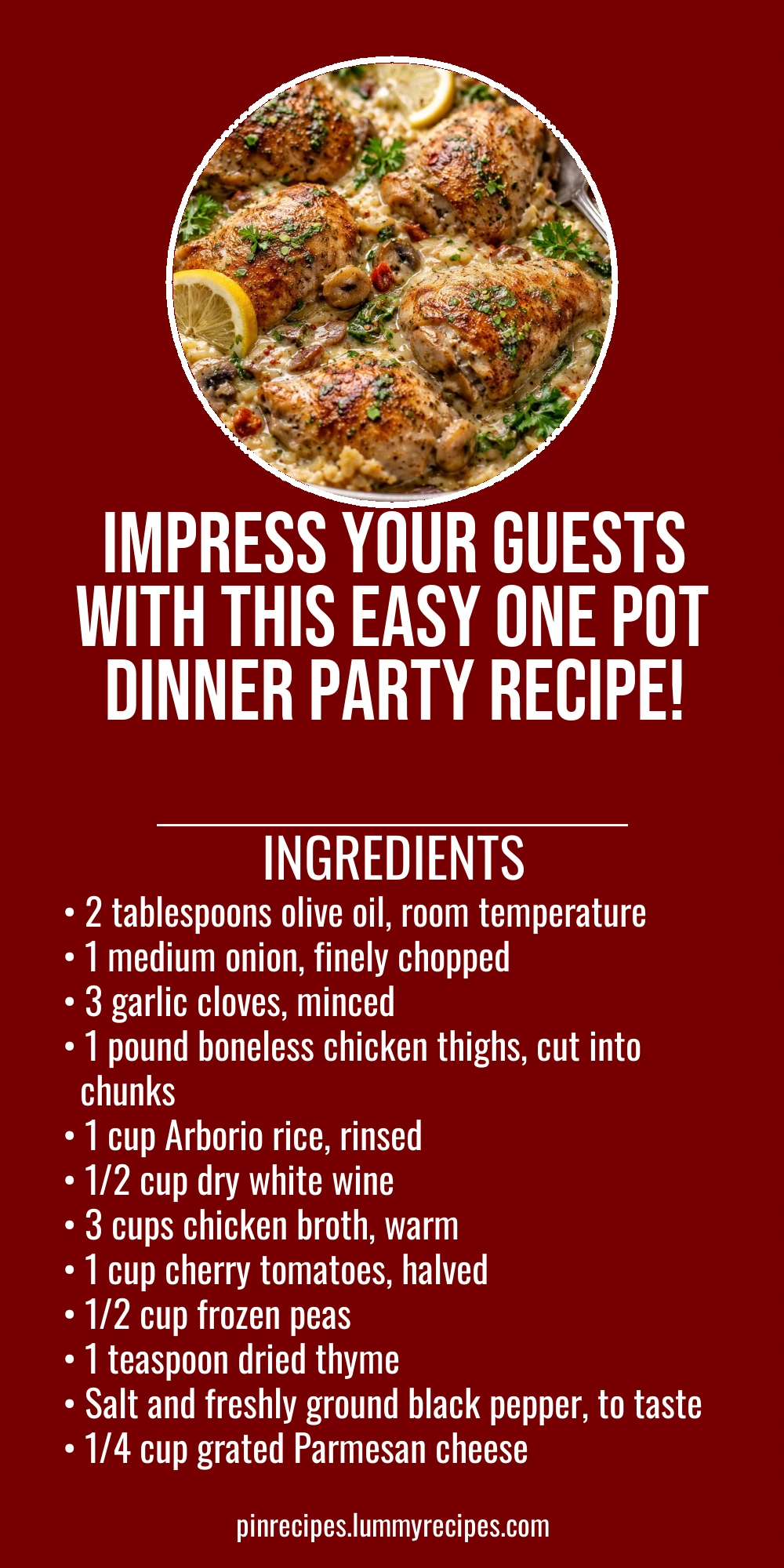
This one pot dinner party recipe is a lifesaver when you want to impress without the stress. Featuring simple ingredients cooked together for rich, layered flavors. Ideal for cozy evenings with friends or family gatherings!
Introduction
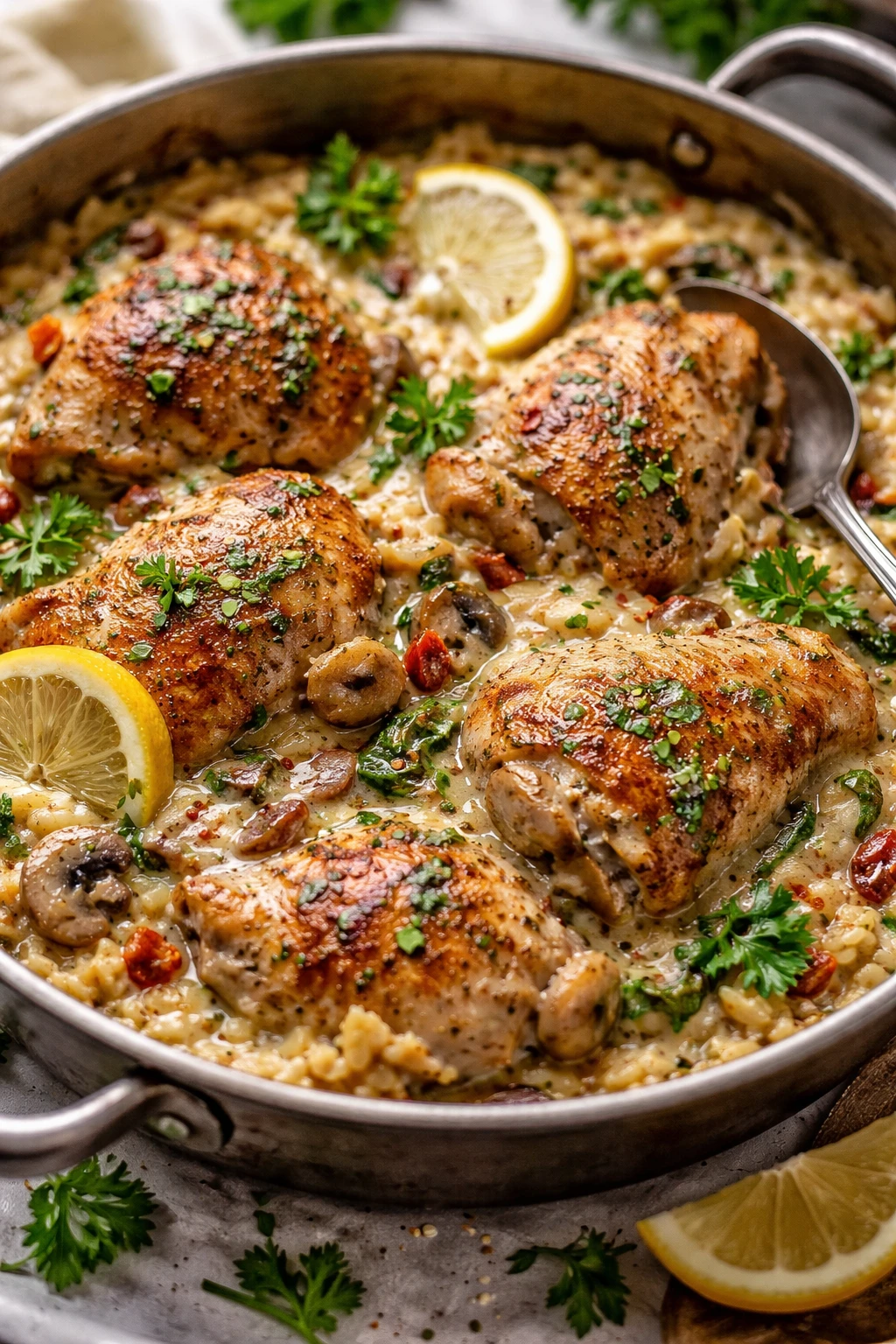
I stumbled upon this one pot dinner party recipe a few years ago when I needed something impressive yet manageable for a small gathering at my place. I remember feeling overwhelmed with the usual multi-dish dinner prep, so I wanted a recipe that would let me enjoy the evening without being stuck in the kitchen. What makes this version special is how everything cooks together, layering flavors beautifully while keeping cleanup minimal. The secret is in searing the chicken first to lock in juices, then slowly simmering the rice in broth and wine for a creamy finish. It’s hearty but not heavy, with bursts of freshness from the tomatoes and peas. When it’s done, the dish looks rustic and inviting — perfect for a cozy dinner party vibe. I love that it feels fancy but is really straightforward, so even if you’re not a seasoned cook, you’ll nail it. Plus, the Parmesan stirred in at the end adds a lovely richness that keeps everyone asking for seconds. Honestly, it’s become my go-to for when I want to impress without the fuss.
How To Do It
Step 1
Heat the olive oil in a large, heavy-bottomed pot over medium-high heat. Once hot, add the chopped onion and sauté until translucent and fragrant, about 4-5 minutes. This step is crucial because it builds the flavor base for the entire dish. If you rush or skip it, the final dish may lack depth. Stir frequently to avoid browning too much, which could impart bitterness.
⏱ Time: 5
✓ Doneness: Onions are soft, translucent, and slightly golden at the edges.
Step 2
Add the minced garlic and cook for another minute until aromatic, being careful not to burn it. Then add the chicken chunks, seasoning them with salt and pepper. Brown the chicken on all sides, about 6-8 minutes, to develop a caramelized crust. This step locks in moisture and intensifies flavor. If you overcrowd the pot, the chicken will steam instead of sear, so cook in batches if needed.
⏱ Time: 8
✓ Doneness: Chicken pieces are golden brown and release easily from the pan.
Step 3
Pour in the white wine to deglaze the pot, scraping up any browned bits stuck to the bottom. Let it simmer until reduced by half, about 3-4 minutes. This concentrates flavor and removes the raw alcohol taste. Don’t rush this step; the wine reduction adds a subtle acidity that balances the richness of the dish.
⏱ Time: 4
✓ Doneness: Wine has reduced to a syrupy consistency and the pot bottom is mostly clear.
Step 4
Stir in the Arborio rice, coating each grain with the flavorful mixture. Toast the rice for 2 minutes, stirring constantly to prevent sticking. Toasting helps the rice absorb liquids evenly and adds a nutty depth. Avoid skipping this or the rice may cook unevenly and become mushy.
⏱ Time: 2
✓ Doneness: Rice grains look translucent around edges but still opaque in the center.
Step 5
Add the warm chicken broth, dried thyme, and cherry tomatoes to the pot. Bring to a gentle simmer. Cover loosely and cook over low heat for 18-20 minutes, stirring occasionally to prevent the rice from sticking. This slow simmer allows the rice to absorb the liquid fully and become creamy. Avoid high heat here, which can scorch the bottom and dry out the dish.
⏱ Time: 20
✓ Doneness: Rice is tender but still slightly firm to the bite; liquid mostly absorbed.
Step 6
Five minutes before the end of cooking, stir in the frozen peas. This adds a pop of color and sweetness without overcooking. Adding them too early will make them mushy and dull the texture. Keep the heat low to gently warm the peas through.
⏱ Time: 5
✓ Doneness: Peas are bright green and tender but not mushy.
Step 7
Remove the pot from heat and stir in the grated Parmesan cheese. This enriches the dish with a creamy, savory finish. The residual heat melts the cheese perfectly without clumping. If you add cheese too early, it can separate and become grainy.
⏱ Time: 2
✓ Doneness: Cheese is fully melted, making the dish creamy and cohesive.
Step 8
Taste and adjust seasoning with more salt and pepper if needed. Freshly chopped parsley sprinkled on top adds a fresh herbal note and brightens the presentation. Don’t skip the seasoning check; the flavors deepen during cooking and may need a final boost.
⏱ Time: 3
✓ Doneness: Balanced seasoning with fresh herb aroma.
Step 9
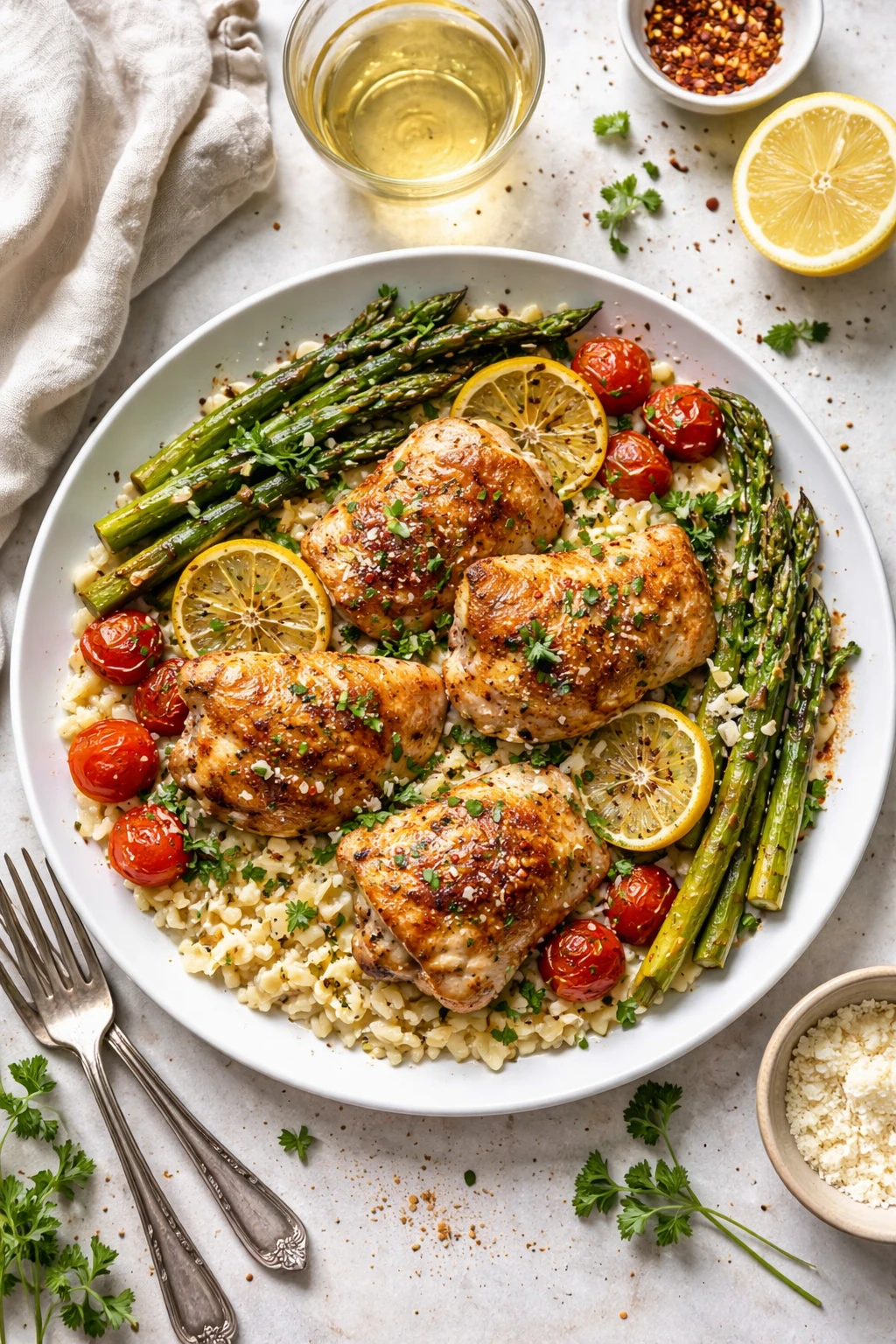
Serve the dish straight from the pot with crusty bread or a simple green salad. The rustic presentation invites everyone to dig in and enjoy the comfort of a home-cooked meal that feels special. This one pot meal shines best warm and fresh but leftovers reheat beautifully.
⏱ Time: 2
✓ Doneness: Dish is steaming hot and visually inviting with vibrant colors.
Pro Tips
Don’t overcrowd the pan when browning chicken to ensure proper searing.
Crowding traps moisture and causes the chicken to steam instead of brown, resulting in a less flavorful and less appealing texture. Searing creates complex flavors through the Maillard reaction, so giving each piece enough space is key for that golden crust.
Use warm broth when adding to the rice to maintain a steady cooking temperature.
Adding cold liquid cools down the pot, slowing the cooking process and potentially causing uneven rice texture. Warm broth keeps the temperature consistent, allowing the rice to absorb liquid gradually and cook evenly.
Stir the rice occasionally during simmering to prevent sticking but avoid over-stirring.
A gentle stir helps distribute heat and prevents the rice from sticking to the pot bottom. However, constant stirring can break down grains and make the dish gluey. Finding a balance preserves the creamy texture without mushiness.
Add delicate ingredients like peas near the end to preserve their color and texture.
Cooking peas too long results in dull color and a mushy texture, which detracts from the dish’s visual appeal and mouthfeel. Adding them late keeps them vibrant and slightly crisp.
Deglaze the pot with wine or broth to lift flavorful browned bits after searing.
These browned bits contain concentrated flavor compounds that enrich the dish. Deglazing dissolves them into the cooking liquid, intensifying overall taste and preventing bitterness from burnt residue.
Use freshly grated Parmesan cheese instead of pre-grated for better melting.
Pre-grated cheeses often contain additives that inhibit melting and cause clumping. Freshly grated cheese melts smoothly, creating a creamy texture and richer flavor.
Let the dish rest a few minutes off heat before serving to thicken naturally.
Resting allows residual heat to finish cooking and the starches to settle, resulting in a creamier, more cohesive texture. Serving immediately may yield a looser consistency.
Common Mistakes to Avoid
Skipping the searing step for chicken
Why it happens Many assume cooking the chicken directly with rice saves time, but this misses out on flavor development.
Fix Always brown the chicken first in batches if needed to avoid overcrowding. This step locks in juices and creates a savory crust that adds depth to the dish.
Using cold broth when cooking the rice
Why it happens It’s easy to grab broth straight from the fridge, but this cools the pot and slows cooking.
Fix Warm your broth before adding to keep the cooking temperature steady, which helps the rice cook evenly and absorb flavors better.
Overcooking peas
Why it happens Adding peas too early or cooking on high heat can make them mushy and dull in color.
Fix Add peas in the last 5 minutes of cooking and keep heat low to preserve their bright color and slight crunch.
Not deglazing the pot after searing
Why it happens Some skip deglazing to save time, unaware that it captures flavorful browned bits.
Fix Pour in wine or broth and scrape the bottom of the pot after searing chicken to incorporate all those tasty bits into the dish.
Using pre-grated Parmesan
Why it happens Convenience often wins over quality, but pre-grated cheese contains anti-caking agents.
Fix Grate your own Parmesan fresh to ensure it melts smoothly and enriches the dish’s texture and flavor.
Variations
Vegetarian One Pot Dinner Party
Swap chicken for hearty mushrooms and add extra vegetables like zucchini and bell peppers. Use vegetable broth and finish with nutritional yeast or vegan Parmesan for a savory finish. Expect a lighter, earthier flavor profile with the same comforting texture.
Note: Cook mushrooms first until browned to develop umami, then proceed as usual. Adjust cooking time slightly to ensure vegetables are tender but not mushy.
Spicy One Pot Dinner Party
Add red pepper flakes or diced jalapeños when sautéing onions and garlic for a kick. Finish with a squeeze of lime and chopped cilantro for brightness. This variation brings warmth and zest, perfect for spice lovers.
Note: Adjust spice level to taste, and be mindful when adding heat early to avoid overpowering the other flavors.
Creamy Mushroom and Herb One Pot
Incorporate sautéed mushrooms and fresh herbs like rosemary and sage. Stir in a splash of cream or crème fraîche at the end for extra richness. This version is earthy and luxurious, great for a cozy dinner party.
Note: Add cream off heat to prevent curdling and maintain a smooth texture.
Seafood One Pot Dinner Party
Replace chicken with shrimp and scallops, adding them in the last 5 minutes to avoid overcooking. Use fish stock or broth for added depth. This variation offers a lighter, elegant seafood twist with delicate flavors.
Note: Cook seafood gently and briefly to keep it tender; avoid simmering too long or it will become rubbery.
Mediterranean One Pot Dinner Party
Add olives, sun-dried tomatoes, and artichoke hearts for a Mediterranean flair. Use oregano and basil as herbs, and finish with crumbled feta cheese. Expect a tangy and vibrant dish with a salty, fresh finish.
Note: Add delicate ingredients near the end to preserve their texture and flavor.
Nutrition
Per Serving:
Nutritional values are estimates and may vary based on specific ingredients used.
Storage & Tips
Room Temperature
This dish can safely sit at room temperature for up to 2 hours when covered. Beyond that, bacteria growth increases, so refrigerate promptly to keep it safe.
Refrigerator
Store leftovers in an airtight container for up to 3 days. The dish may thicken in the fridge; add a splash of broth or water when reheating to loosen the texture. It tastes best warmed but can be eaten cold if preferred.
Freezer
Freeze in a sealed container for up to 2 months. To prevent freezer burn, press plastic wrap directly onto the surface before sealing. Thaw overnight in the refrigerator for best results. Reheat gently to restore creaminess.
Reheating
Reheat on the stovetop over low heat, stirring occasionally and adding a splash of broth or water to prevent drying out. Alternatively, microwave in short bursts, stirring in between. Avoid overheating which can dry out the chicken and rice.
Make Ahead
You can prepare the chicken and sauté the onions and garlic 1 day ahead, storing them separately in the fridge. Assemble and cook the rice and liquids on the day of serving for the freshest texture and flavor.
FAQ
Can I use chicken breasts instead of thighs?
You can substitute chicken breasts, but they cook faster and can dry out more easily. To avoid this, cut them into larger chunks and reduce cooking time after adding broth. Keep an eye on texture to prevent toughness.
What if I don’t have white wine?
If you prefer to skip wine, simply replace it with an equal amount of broth plus a tablespoon of lemon juice or vinegar to add acidity. This keeps the flavor balanced without alcohol.
Can I make this recipe vegan?
Absolutely! Replace chicken with mushrooms or tofu, use vegetable broth, and swap Parmesan for nutritional yeast or vegan cheese. The cooking technique remains the same and results in a flavorful plant-based meal.
How do I prevent the rice from sticking to the pot?
Use a heavy-bottomed pot and stir occasionally during simmering. Also, make sure to toast the rice and add warm broth gradually. Avoid high heat which can cause sticking and burning.
Is it okay to use frozen peas?
Yes, frozen peas work perfectly. Add them near the end of cooking so they warm through without becoming mushy or losing their bright color.
Can I double this recipe for a larger crowd?
You can double the ingredients but use a larger pot to avoid overcrowding. Cooking time may increase slightly, so check rice doneness and liquid absorption carefully.
What’s the best way to reheat leftovers?
Reheat gently on the stovetop with a splash of broth or water to loosen the rice. Microwave works too but stir frequently to heat evenly and prevent drying out.
Can I prepare this recipe entirely ahead of time?
You can prep some components like chopping veggies and browning chicken in advance, but it’s best to cook the rice and assemble the dish on the day of serving for optimal texture and flavor.
Final Thoughts
I hope you give this one pot dinner party recipe a try—it’s a real crowd-pleaser with minimal fuss. Don’t forget to share how it turns out for your next get-together!