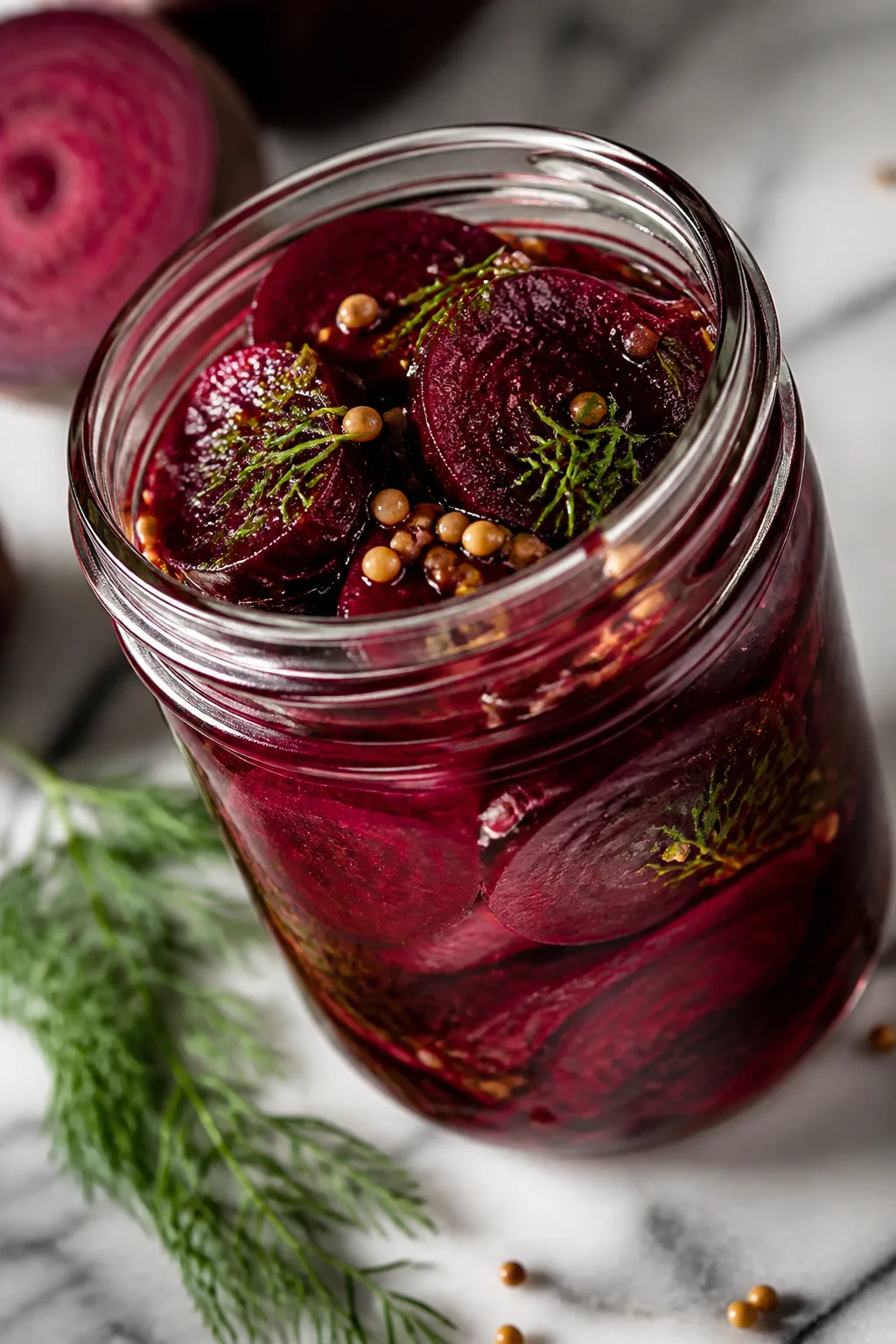
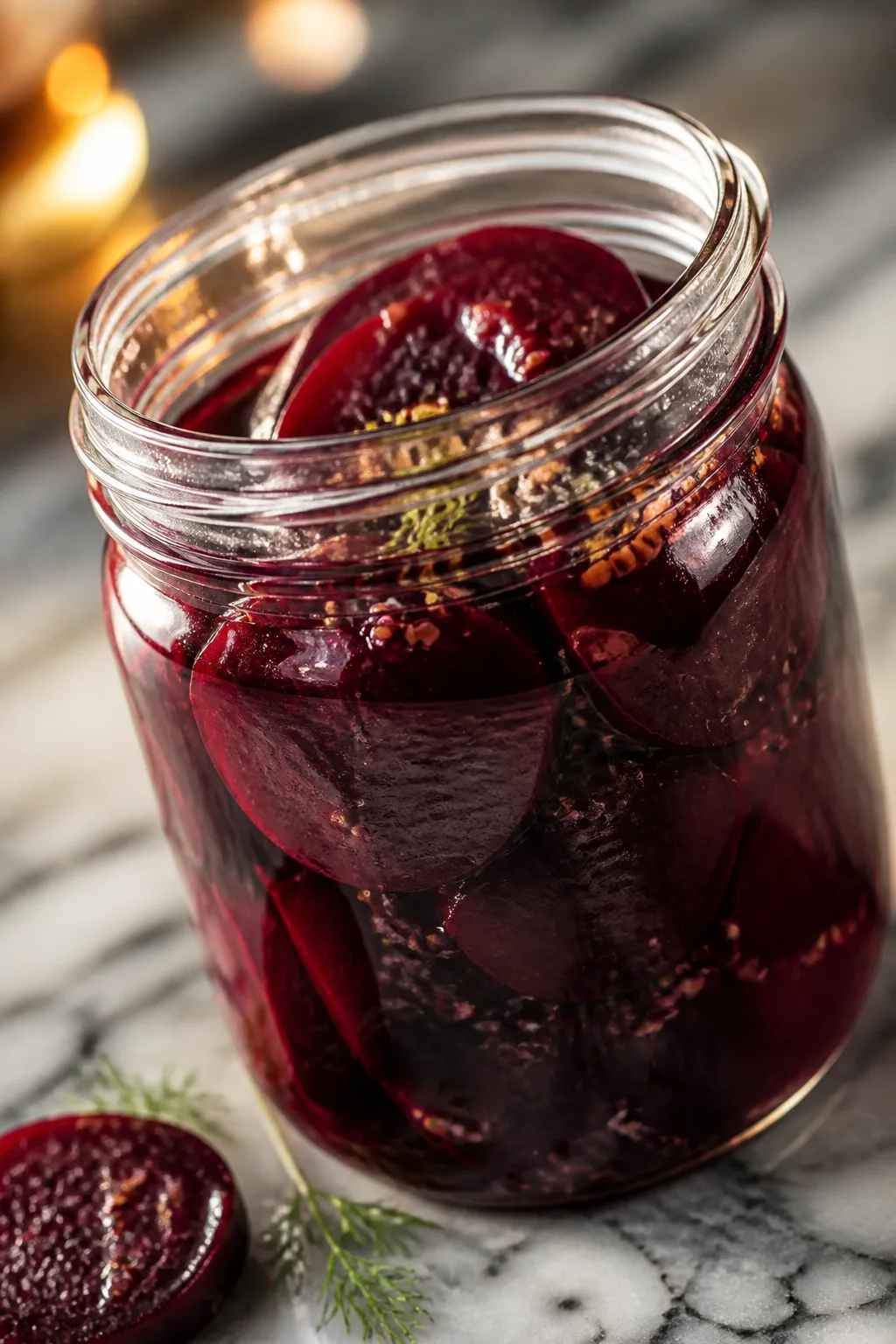
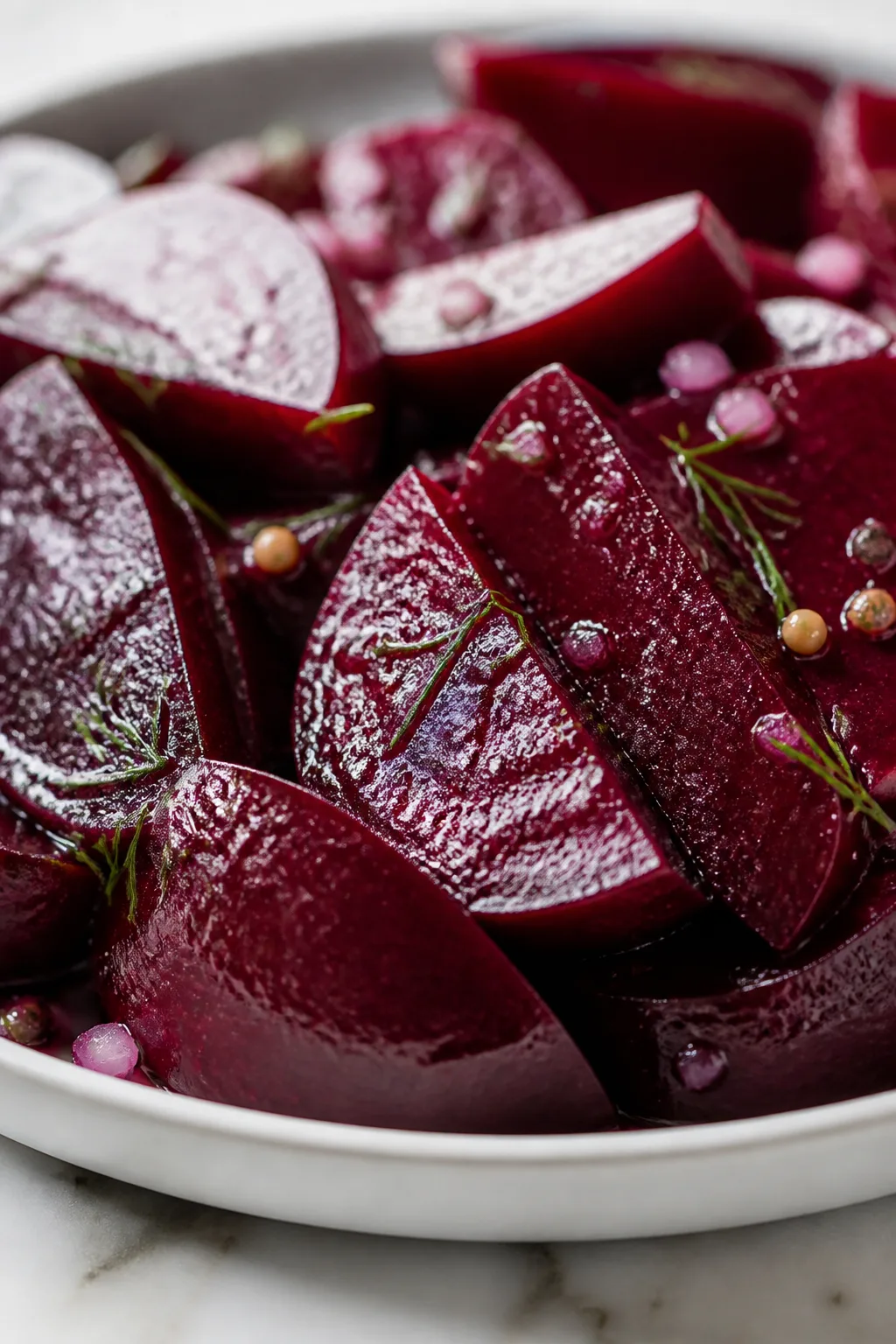
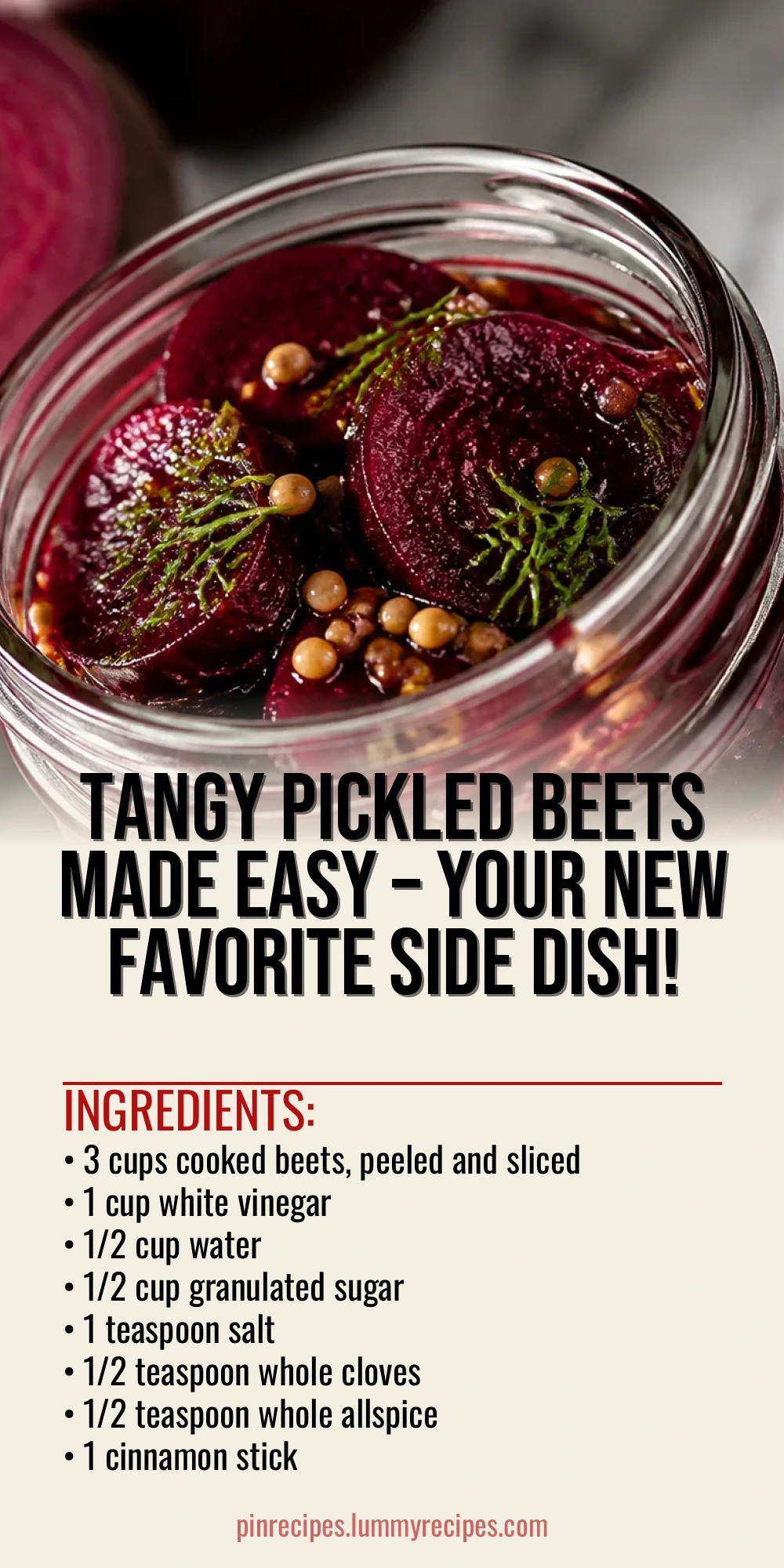
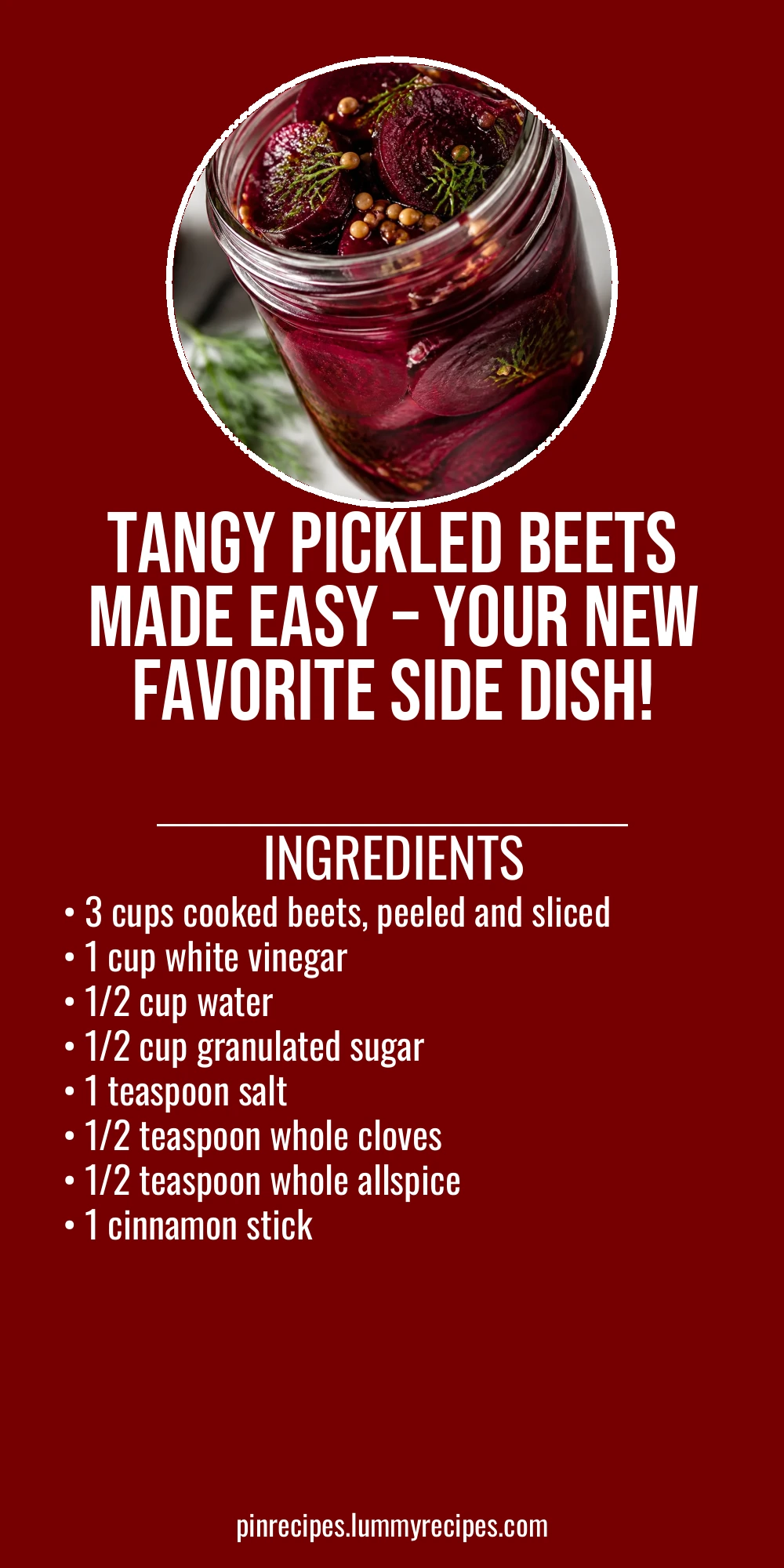
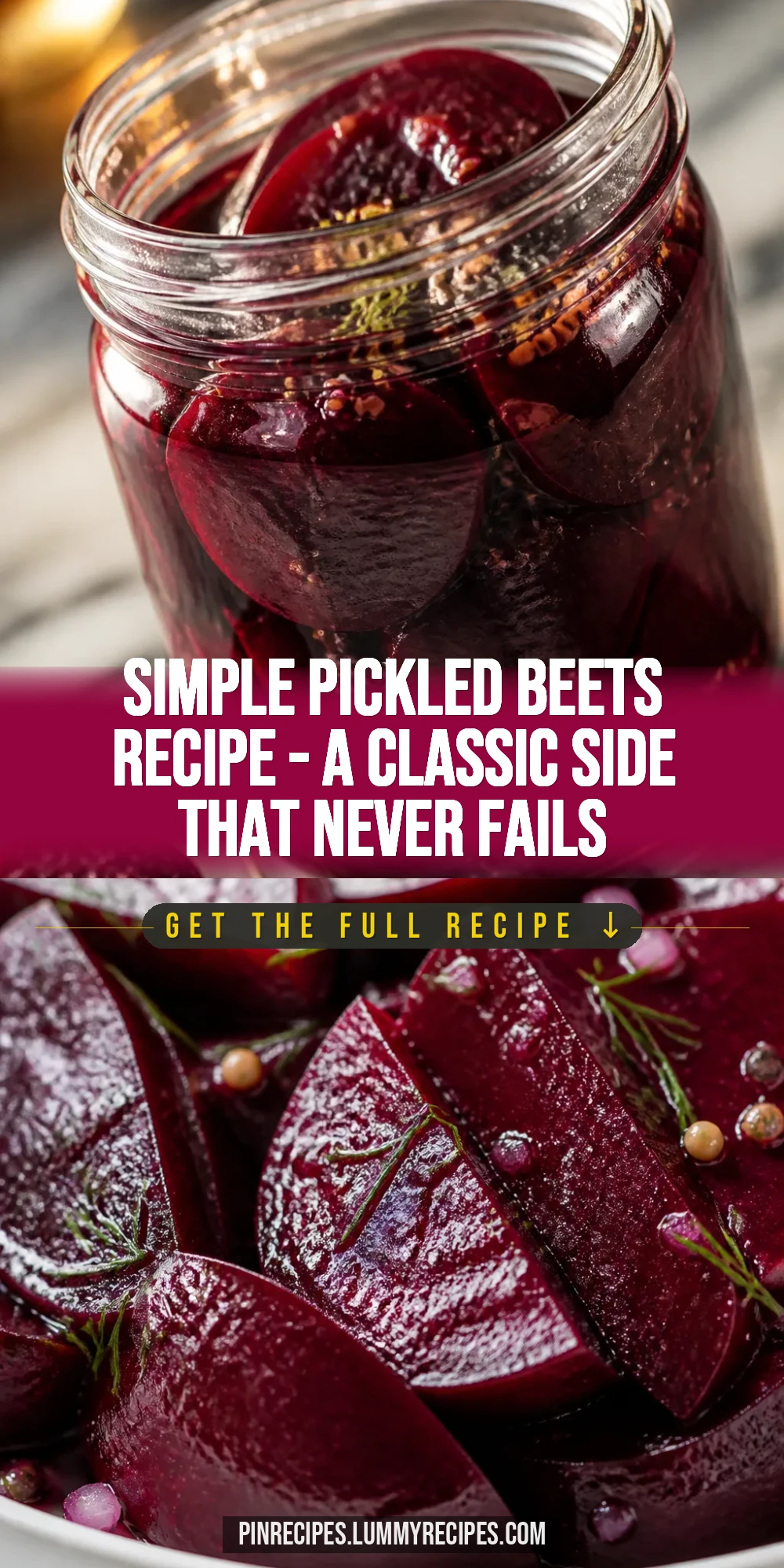
This pickled beets recipe is a straightforward way to add a tangy, sweet crunch to any meal. Using a simple vinegar and spice blend, it’s perfect for salads or as a side all year round.
Introduction
I first tried pickled beets when I was a kid visiting my grandma’s house. She always had a jar ready in the fridge, and I loved that sweet and tangy bite with my meals. Over the years, I’ve tweaked the recipe a bit to suit my taste—especially by balancing the sugar and vinegar just right. What sets my version apart is the use of whole spices like cloves and allspice, which add a warm, subtle depth without overpowering the beets’ natural sweetness. The cinnamon stick is a little secret I picked up from a friend, and it really rounds out the flavor beautifully. The finished pickled beets have a lovely ruby color and a crisp-tender texture that’s perfect for salads, sandwiches, or just as a side. They keep well in the fridge, so I usually make a batch ahead and enjoy them for a week or so. Honestly, once you try this recipe, you’ll find yourself reaching for them as an easy way to brighten up any meal.
What You'll Need
Approximately 3 cups pickled beets, 4 servings
- 3 cups cooked beets, peeled and sliced
- 1 cup white vinegar
- 1/2 cup water
- 1/2 cup granulated sugar
- 1 teaspoon salt
- 1/2 teaspoon whole cloves
- 1/2 teaspoon whole allspice
- 1 cinnamon stick
How To Do It
Step 1
Start by cooking your beets if they aren’t already cooked. The best way is to boil them whole with the skins on to keep their flavor and nutrients intact. Boil for about 30-40 minutes until a fork slides in easily. This method helps keep the beets tender but not mushy. Avoid overcooking because mushy beets won’t hold their shape well in the pickling liquid. Once cooked, drain and let them cool slightly before peeling. The skins should come off easily by rubbing with your hands or a paper towel.
⏱ Time: 30-40 minutes
✓ Doneness: Beets are tender when pierced easily with a fork but still firm enough to slice
Step 2
Slice the peeled beets into about 1/4-inch thick rounds or wedges, whichever you prefer. Uniform slices ensure even pickling. Place the sliced beets in a heatproof jar or bowl. This step is important because the size of the slices affects how quickly the flavors penetrate. Too thick, and the pickling liquid won’t fully infuse; too thin, and they might become too soft.
⏱ Time: 10 minutes
✓ Doneness: Beets are evenly sliced and arranged ready for pickling
Step 3
In a small saucepan, combine the vinegar, water, sugar, and salt. Add the whole cloves, allspice, and cinnamon stick. Heat the mixture over medium heat, stirring occasionally until the sugar and salt dissolve completely. This step is crucial because dissolving the sugar and salt ensures a smooth, balanced pickling liquid. Also, heating helps release the essential oils from the spices, infusing the liquid with flavor.
⏱ Time: 5-7 minutes
✓ Doneness: Sugar and salt are fully dissolved, and liquid is hot but not boiling
Step 4
Pour the hot pickling liquid over the sliced beets, making sure they’re fully submerged. If you’re using a jar, leave some headspace at the top. The hot liquid helps soften the beets slightly and infuses them with flavor quickly. Cover tightly with a lid or plastic wrap. Leaving the beets submerged is key to preventing spoilage and ensuring even flavor distribution.
⏱ Time: 5 minutes
✓ Doneness: Beets are fully covered by the pickling liquid with no air pockets
Step 5
Let the jar cool to room temperature before refrigerating. This prevents condensation which can dilute the brine. Once cooled, place the jar in the fridge and let the beets pickle for at least 24 hours before eating. The longer they sit, the better the flavor. I usually wait 2-3 days for the best tangy-sweet balance. Patience here really pays off.
⏱ Time: 24-72 hours
✓ Doneness: Beets develop a vibrant color and tangy aroma
Step 6
Before serving, taste your pickled beets and adjust seasoning if needed. If you want them sweeter, add a little more sugar to the jar and stir gently. For a stronger tang, add a splash more vinegar. This final tweak lets you customize the flavor exactly to your liking. Just be careful not to add too much at once, as the flavors intensify over time.
⏱ Time: 5 minutes
✓ Doneness: Balanced sweet and tangy flavor with warm spice notes
Step 7
Serve your pickled beets chilled or at room temperature. They’re fantastic tossed in salads, paired with cheese, or alongside roasted meats. Their bright color and zesty flavor really lift up any dish. Plus, they add a nice crunch that contrasts well with softer textures. I often keep a jar handy for last-minute additions to meals or snacks.
⏱ Time: Immediate
✓ Doneness: Pickled beets are cool, flavorful, and crisp-tender
Step 8
If you want to store your pickled beets longer, keep them refrigerated in an airtight jar. They’ll stay good for up to 2 weeks. Always use a clean fork to avoid contamination. This helps maintain freshness and prevents spoilage. Also, the flavor continues to develop over time, so they taste even better after a few days.
⏱ Time: Storage
✓ Doneness: Pickled beets remain bright and flavorful without off smells
Step 9
For a deeper flavor, you can experiment with adding fresh herbs like dill or bay leaves to the jar before pouring the liquid. This adds an herbal freshness that complements the warm spices. Just be sure to remove herbs after a few days if you prefer a cleaner taste. This small addition can make your pickled beets uniquely yours.
⏱ Time: Optional
✓ Doneness: Herbal notes subtly enhance the pickled beets’ flavor
Pro Tips
Cook beets whole with skins on to preserve flavor and moisture.
Cooking beets whole protects their texture and prevents them from becoming waterlogged. The skins act as a natural barrier, trapping moisture and flavor inside. Peeling after cooking is easier and keeps the beets vibrant and firm.
Use whole spices instead of ground for clearer brine and easier removal.
Whole spices release flavor gradually without clouding the pickling liquid. They’re also easy to fish out before serving, preventing an overpowering taste or gritty texture in the final dish.
Let the pickled beets sit refrigerated for at least 24 hours before eating.
This resting time allows the vinegar and spices to fully infuse the beets, balancing the flavors and softening the texture. Eating too soon results in a sharper, less harmonious taste.
Adjust sugar and vinegar after pickling to fine-tune sweetness and tang.
Taste preferences vary, so tweaking the balance after pickling lets you customize the flavor. Adding a bit more sugar or vinegar in small amounts helps achieve your perfect sweet-tart ratio.
Use a non-reactive container like glass for pickling.
Glass jars won’t react with the acidic vinegar, preserving flavor and safety. Metal containers may impart off flavors or discolor the beets.
Avoid overcooking beets to keep them firm enough to slice.
Overcooked beets become mushy and won’t hold their shape in the pickling liquid, resulting in a less appealing texture.
Store pickled beets in the fridge in an airtight container for best freshness.
Cold storage slows bacterial growth and preserves flavor and texture. Airtight sealing prevents contamination and keeps the pickles crisp.
Common Mistakes to Avoid
Using undercooked or overcooked beets.
Why it happens People often rush the cooking process or leave beets boiling too long, not realizing how texture affects pickling.
Fix Cook beets just until fork-tender but still firm. Test by piercing with a fork; it should slide in easily without the beet falling apart. This ensures they keep a nice bite after pickling.
Not dissolving sugar and salt completely in the brine.
Why it happens Skipping the heating step or stirring insufficiently can leave grainy bits that don’t blend well.
Fix Heat the vinegar mixture until sugar and salt are fully dissolved. This ensures a smooth, balanced pickling liquid and consistent flavor.
Using metal containers for pickling.
Why it happens Some cooks use what’s on hand without considering reactivity.
Fix Always use glass or food-safe plastic containers to avoid metallic flavors and discoloration caused by acidic vinegar reacting with metal.
Not letting the beets pickle long enough.
Why it happens Impatience leads to eating them too soon when flavors haven’t developed.
Fix Refrigerate for at least 24 hours, ideally 2-3 days, to allow full flavor infusion and proper texture.
Leaving beets exposed to air in the jar.
Why it happens Not fully submerging beets in brine can cause spoilage and uneven flavor.
Fix Ensure beets are completely covered by the pickling liquid. Use a small weight or clean utensil to keep them submerged if needed.
Variations
Spicy Pickled Beets
Add a sliced jalapeño or a pinch of crushed red pepper flakes to the pickling liquid for a spicy kick. This variation adds warmth and depth without overpowering the natural sweetness of the beets, perfect for those who like a little heat.
Note: Adjust the amount of spice carefully; too much can overwhelm the delicate beet flavor. Let the beets pickle a bit longer to mellow the heat.
Herbed Pickled Beets
Toss in fresh dill sprigs or a bay leaf to the jar before adding the hot brine. The herbs add a fresh, aromatic layer that complements the warm spices and vinegar, making the pickled beets great for salads or sandwiches.
Note: Remove herbs after 3-4 days if you prefer a cleaner flavor, or leave in for more herbal intensity.
Apple Cider Vinegar Pickled Beets
Swap white vinegar for apple cider vinegar for a milder, fruitier tang. This variation softens the sharpness and adds a subtle apple note, creating a slightly sweeter and more complex flavor profile.
Note: Maintain the same acidity level by using vinegar with 5% acidity to ensure proper preservation.
Quick Pickled Beets
Slice the beets thinner and pour hot brine over them, then let sit at room temperature for 1-2 hours before refrigerating. This speeds up flavor infusion for when you’re short on time, though longer pickling still yields better depth.
Note: Thinner slices pickle faster but can become softer, so watch texture closely.
Balsamic Pickled Beets
Add a splash of balsamic vinegar to the brine for a rich, slightly sweet complexity. This variation brings a deeper color and a gourmet twist while keeping the recipe simple and approachable.
Note: Use balsamic sparingly as it’s quite strong; balance with white vinegar to keep acidity.
Nutrition
Per Serving:
Nutritional values are estimates and may vary based on specific ingredients used.
Storage & Tips
Room Temperature
Pickled beets should not be left at room temperature for more than 2 hours to prevent spoilage. Always cover the jar with a lid or plastic wrap to keep out contaminants. For short serving periods, keep the jar covered and refrigerated between uses.
Refrigerator
Store pickled beets in an airtight glass jar in the refrigerator for up to 2 weeks. The flavor continues to develop over time, but texture may soften slightly. They can be eaten cold straight from the fridge or brought to room temperature before serving for a milder tang.
Freezer
Freezing pickled beets is not recommended as it can cause texture to become mushy due to water expansion. If needed, freeze cooked beets before pickling but not after pickling to preserve the best texture and flavor.
Reheating
Pickled beets are typically served cold or at room temperature and do not require reheating. If you prefer warm beets, gently warm a small portion in a pan over low heat with a splash of the pickling liquid to keep them moist. Avoid microwaving as it can alter texture.
Make Ahead
You can cook and peel the beets 1-2 days ahead and keep refrigerated. Prepare the pickling brine and slice beets the day of serving, then pour hot brine over them and refrigerate. This saves time while ensuring fresh flavor and texture.
FAQ
Can I use canned beets instead of fresh beets for pickling?
While you can use canned beets in a pinch, fresh cooked beets give the best texture and flavor. Canned beets are often softer and may become mushy after pickling. If using canned, drain them well and reduce pickling time to avoid over-softening.
How long do pickled beets last in the fridge?
Properly stored in an airtight jar, pickled beets last about 2 weeks in the refrigerator. Their flavor deepens over time, but after two weeks, texture and taste may start to decline. Always check for off smells or mold before eating.
Can I make pickled beets without sugar?
You can omit sugar if you prefer a less sweet pickle, but it will change the flavor balance and preservation slightly. The sugar helps mellow the vinegar’s acidity and preserve the beets. Consider adding a natural sweetener like honey or maple syrup as a substitute.
Why are my pickled beets mushy?
Mushy beets usually result from overcooking before pickling or slicing too thinly. To avoid this, cook beets just until fork-tender and slice moderately thick. Also, don’t pickle for too long if slices are very thin.
Can I use other types of vinegar for pickling beets?
Yes, apple cider vinegar or white wine vinegar can be used, but keep the acidity around 5% to ensure safety and flavor. Avoid flavored or malt vinegars as they can alter color and taste unexpectedly.
Do I need to sterilize jars before pickling?
For refrigerated pickles like this recipe, sterilizing jars isn’t strictly necessary but recommended for longer storage and safety. Simply wash jars and lids in hot soapy water and rinse well before use.
Can I add other vegetables to the pickled beets?
Yes, you can add sliced onions, carrots, or cucumbers to the jar for variety. Just make sure all vegetables are sliced evenly and submerged in the brine. Adjust pickling time accordingly.
How can I make pickled beets less sour?
If your pickled beets are too sour, add a little more sugar or a splash of water to the jar and stir gently. Let them sit a day longer to mellow the acidity. Balancing vinegar and sugar is key to a pleasant taste.
Final Thoughts
I hope you enjoy making and eating this simple pickled beets recipe as much as my family does. It’s an easy way to brighten your meals and add a touch of homemade charm. Let me know how yours turn out!