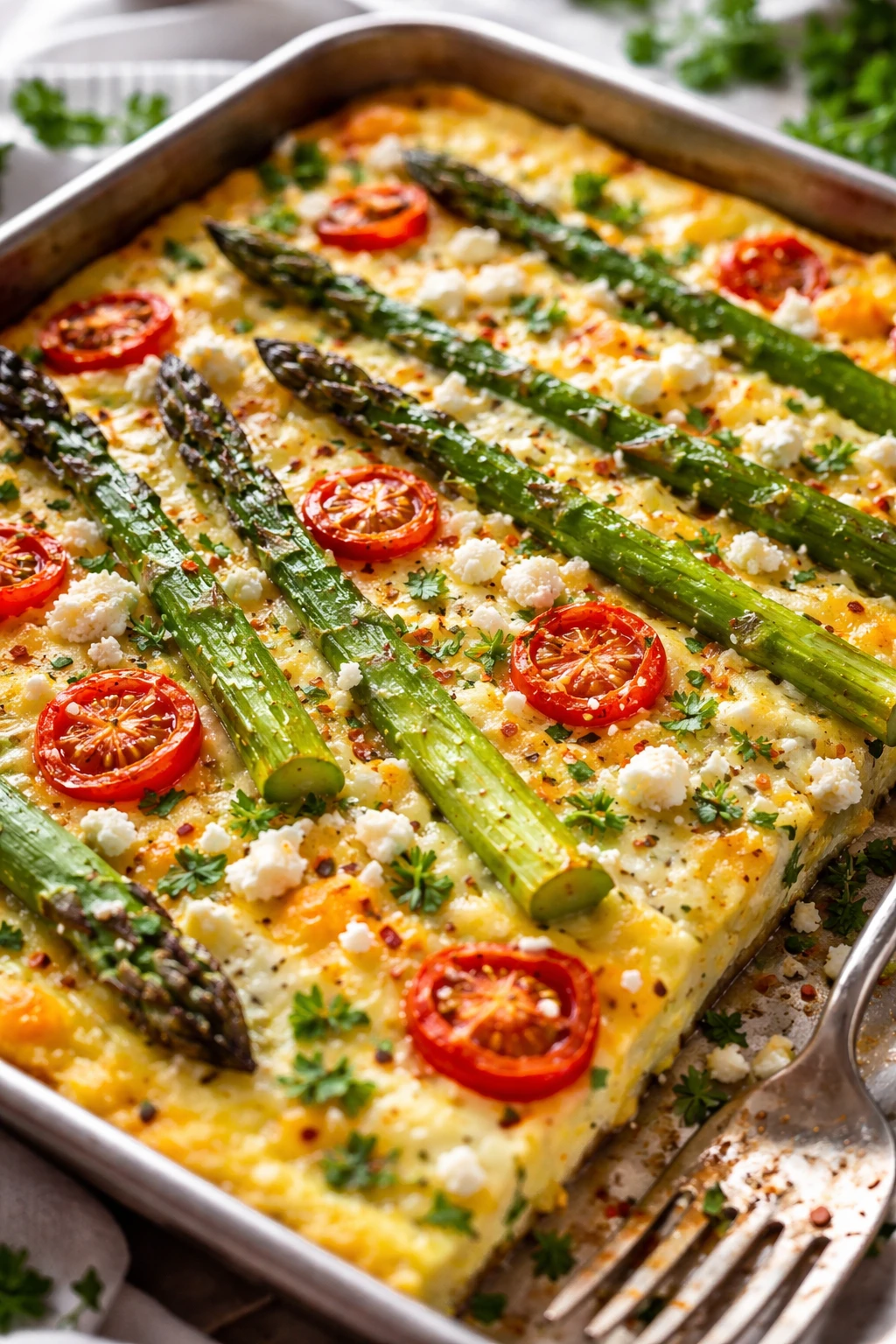
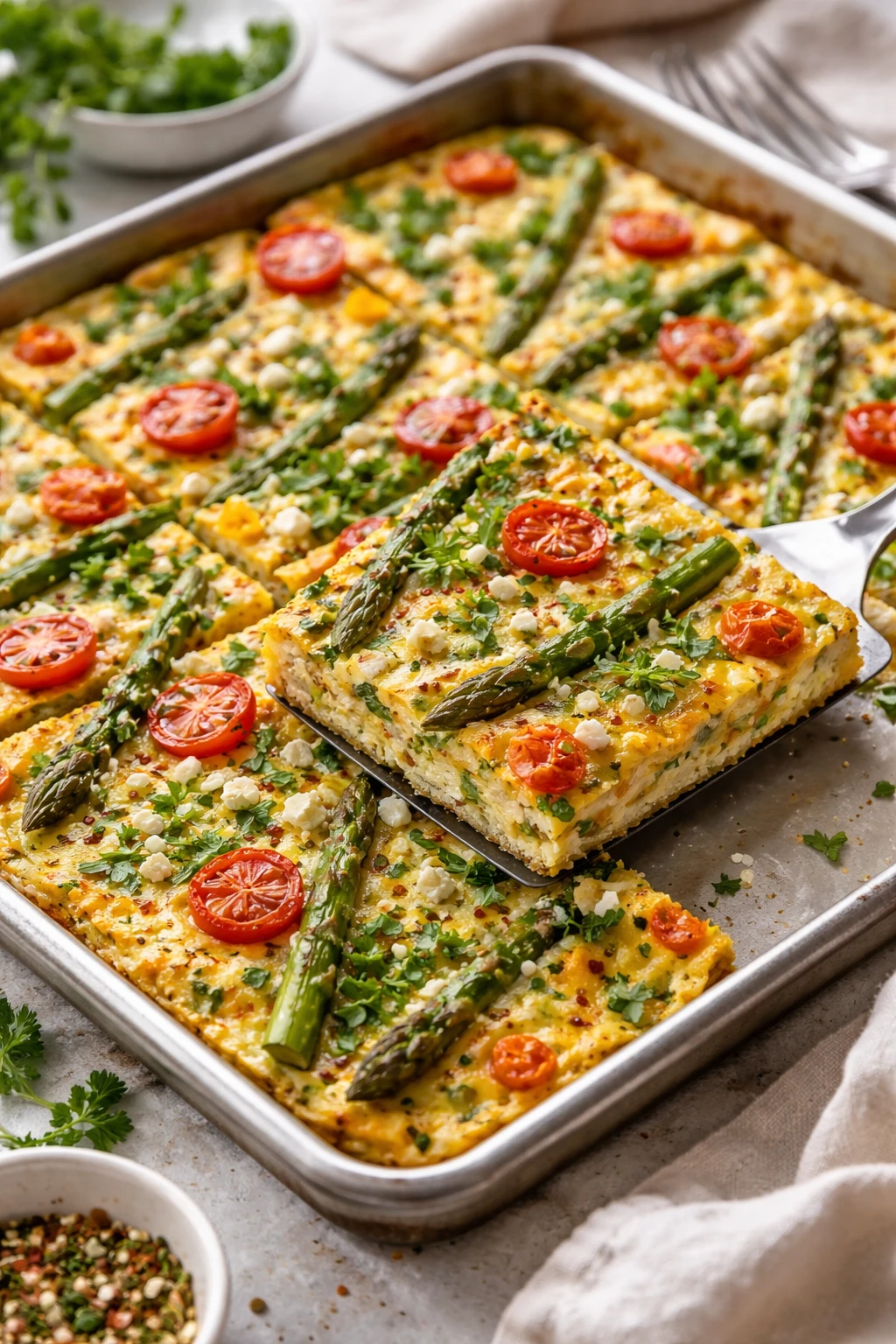
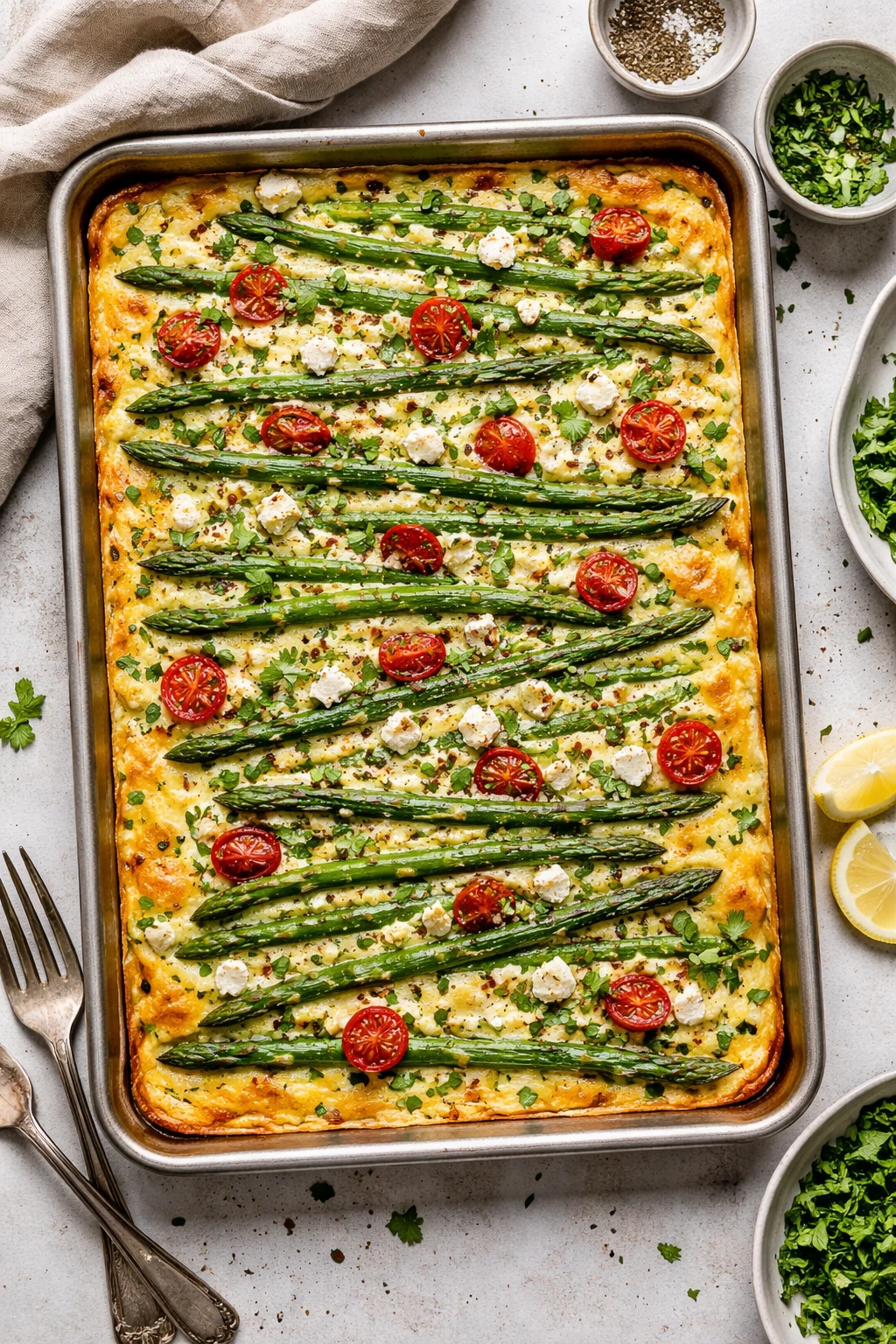
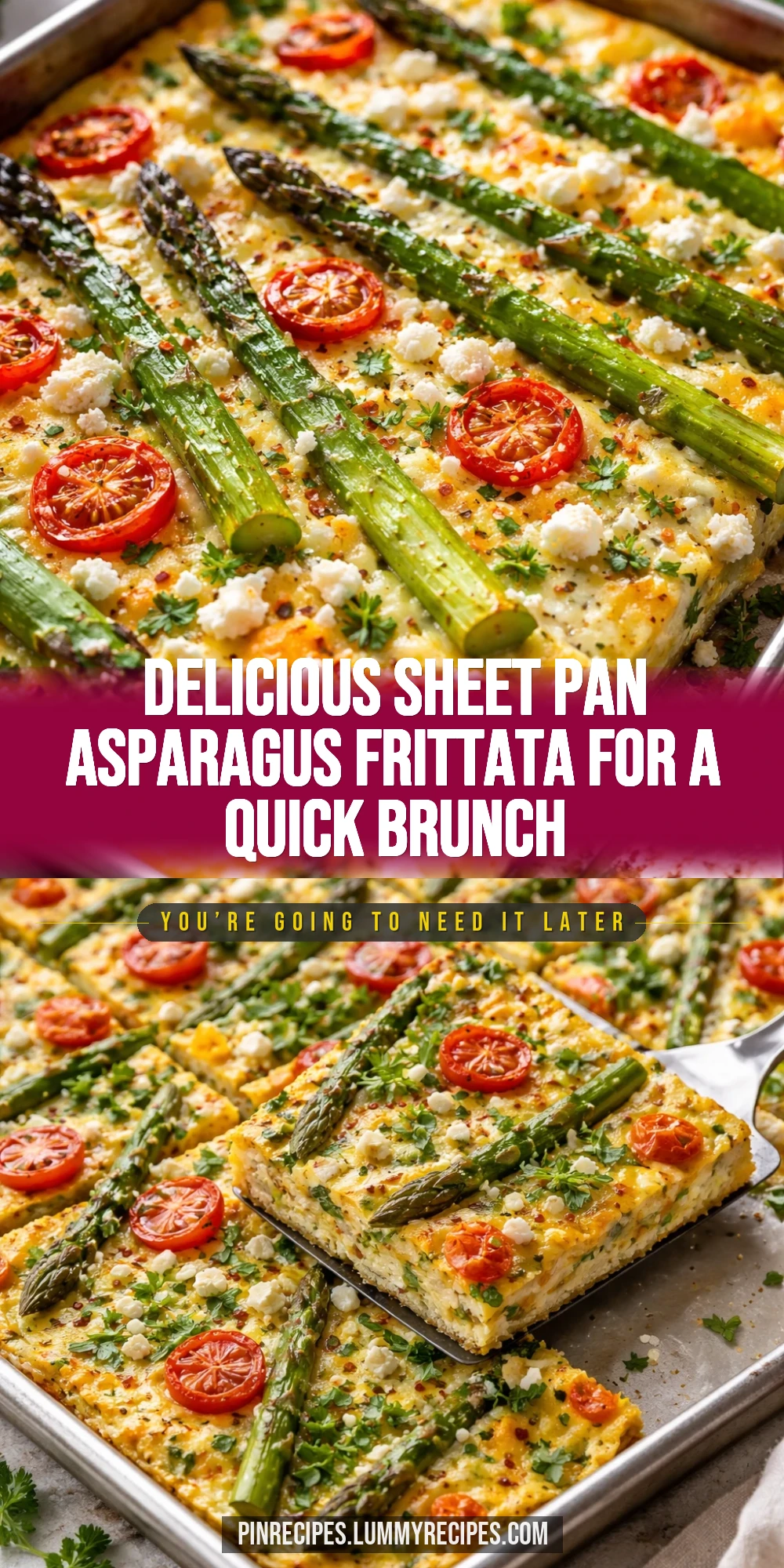
This sheet pan asparagus frittata is a light, veggie-packed dish that’s quick to make and easy to serve. Roasting asparagus right on the pan adds a smoky depth, making it great for brunch or a simple dinner.
Introduction
I first made this sheet pan asparagus frittata on a lazy weekend when I wanted something easy but a little special. What I love about this recipe is how roasting the asparagus right on the pan alongside the eggs brings out a subtle smoky flavor that you don't get when you just steam or boil veggies. Plus, baking everything together means minimal dishes, which is always a win in my book. I’ve tweaked the classic frittata by adding a splash of milk for creaminess and sharp cheddar for a bit of tang. The trick I learned is to whisk the eggs and milk thoroughly to get that fluffy, tender texture without it turning rubbery. When it comes out of the oven, it’s golden on top with just the right wobble inside, and the asparagus is tender but still bright. It’s perfect for brunch, but I also love it as a light dinner with a simple salad. Honestly, it’s become a staple in my kitchen because it’s so adaptable and forgiving—plus, it looks beautiful on the table, which never hurts!
What You'll Need
One 12x17 inch sheet pan frittata, approximately 6 servings
- 12 large eggs, beaten
- 1 cup whole milk
- 1 bunch fresh asparagus, trimmed and cut into 2-inch pieces
- 1 medium onion, thinly sliced
- 1 cup shredded sharp cheddar cheese
- 2 tablespoons olive oil
- 1 teaspoon salt
- 1/2 teaspoon black pepper
- 1 teaspoon fresh thyme leaves
How To Do It
Step 1
Preheat your oven to 375°F (190°C). Line a large sheet pan with parchment paper or lightly grease it with olive oil to prevent sticking. This step is crucial because it ensures even cooking and easy cleanup. If the pan isn’t prepared well, the frittata might stick and break apart when you try to slice it. Also, preheating the oven fully before baking helps the frittata set evenly and develop a nice golden top.
⏱ Time: 10 minutes
✓ Doneness: Oven is fully heated and pan is ready with a light coating of oil or parchment
Step 2
Toss the asparagus pieces and sliced onion with olive oil, salt, and pepper directly on the sheet pan. Spread them out in a single layer. Roasting the vegetables first for about 10 minutes softens them and intensifies their flavors, which adds depth to the frittata. Don’t overcrowd the pan or the veggies will steam instead of roast, losing that slight caramelization that makes this dish special.
⏱ Time: 10 minutes
✓ Doneness: Asparagus is tender with some browned spots; onions are translucent and slightly caramelized
Step 3
While the vegetables roast, whisk the eggs and milk in a large bowl until fully combined and slightly frothy. This aeration helps create a fluffy texture. Season the mixture with salt, pepper, and fresh thyme. The thyme adds a subtle herbal note that complements the asparagus beautifully. Be sure to whisk thoroughly to avoid any egg whites or yolks remaining separate, which can cause uneven cooking.
⏱ Time: 5 minutes
✓ Doneness: Egg mixture is smooth, pale yellow, and slightly frothy
Step 4
Once the vegetables are roasted, remove the sheet pan from the oven and evenly spread the asparagus and onions across the pan. Pour the egg mixture over the vegetables, tilting the pan if needed to distribute the eggs evenly. This ensures every bite has a good balance of eggs and veggies. Avoid stirring after pouring to allow the frittata to set properly during baking.
⏱ Time: 5 minutes
✓ Doneness: Egg mixture covers vegetables evenly without pooling in one area
Step 5
Sprinkle the shredded cheddar cheese evenly over the top. The cheese melts and browns during baking, adding a savory richness and a slightly crispy crust. Using sharp cheddar gives a nice tang that cuts through the creaminess of the eggs. If you prefer a milder flavor, you can substitute with mozzarella or Monterey Jack.
⏱ Time: 2 minutes
✓ Doneness: Cheese is evenly distributed in a thin layer over the eggs
Step 6
Place the sheet pan in the preheated oven and bake for about 20-25 minutes. The baking time depends on your oven and the thickness of the egg layer. You want the frittata to puff up slightly and the edges to turn golden brown. Avoid opening the oven door too often, as this can cause the eggs to deflate and cook unevenly.
⏱ Time: 20-25 minutes
✓ Doneness: Frittata is set in the center with a golden, lightly puffed top
Step 7
To check doneness, gently shake the pan; the frittata should be mostly firm with a slight jiggle in the center. Insert a toothpick or knife in the middle—it should come out clean or with just a few moist crumbs. Overbaking will make the frittata dry and rubbery, so keep a close eye near the end of cooking.
⏱ Time: 2 minutes
✓ Doneness: Toothpick comes out clean; center is firm but not dry
Step 8
Remove the frittata from the oven and let it rest for 5 minutes before slicing. Resting allows the eggs to finish setting and makes slicing cleaner. Cutting too soon can cause the frittata to break apart. Use a sharp knife and cut into squares or wedges depending on your serving preference.
⏱ Time: 5 minutes
✓ Doneness: Frittata firms up slightly and slices hold shape well
Step 9
Serve warm or at room temperature with a fresh green salad or crusty bread. This frittata also reheats well, making it great for leftovers. If you want to add a little extra brightness, a squeeze of lemon or sprinkle of fresh herbs like parsley or chives works beautifully.
⏱ Time: 0 minutes
✓ Doneness: Ready to enjoy with complementary sides
Pro Tips
Make sure to preheat your oven fully before baking the frittata.
A fully preheated oven ensures the eggs cook evenly and quickly, preventing the frittata from drying out or becoming rubbery. If the oven is not hot enough at the start, the eggs may cook unevenly, leading to a soggy center or overcooked edges.
Whisk the eggs and milk until frothy to incorporate air.
Incorporating air into the egg mixture creates a lighter, fluffier texture in the finished frittata. Without this step, the eggs can turn dense and heavy, which makes the dish less enjoyable.
Don’t overcrowd the sheet pan when roasting asparagus and onions.
Overcrowding traps steam and prevents proper roasting, which means the vegetables won’t caramelize properly. Caramelization adds flavor and reduces moisture, which is key to a flavorful and well-textured frittata.
Use a sharp knife to slice the frittata after resting.
Cutting while the frittata is still hot can cause it to break apart. Resting allows the eggs to set fully, making slicing cleaner and presentation better.
Add fresh herbs like thyme or parsley for extra aroma and flavor.
Herbs brighten the dish and add a fresh, herbal note that complements the earthiness of asparagus and richness of eggs and cheese. Adding them at the whisking stage infuses the entire frittata.
Use parchment paper or grease the pan well to prevent sticking.
Eggs are prone to sticking, especially on metal pans. Proper preparation ensures the frittata lifts cleanly without tearing, preserving its shape and making serving easier.
Let the frittata rest 5 minutes before serving.
Resting helps residual heat finish cooking the eggs gently and firms up the texture, resulting in cleaner slices and a better mouthfeel.
Common Mistakes to Avoid
Skipping the vegetable roasting step
Why it happens Some might think it’s faster or easier to just add raw vegetables to the eggs, assuming they’ll cook through in the oven.
Fix Roast the asparagus and onions first to develop flavor and reduce moisture. This prevents a watery frittata and ensures the vegetables are tender and caramelized, enhancing the overall taste and texture.
Using cold eggs straight from the fridge
Why it happens It’s easy to overlook the temperature of eggs before mixing, especially when in a hurry.
Fix Bring eggs to room temperature before whisking to help them blend better with milk and cook more evenly. Cold eggs can cause uneven cooking and a less tender texture.
Overbaking the frittata
Why it happens Waiting too long or baking at too high a temperature can dry out the eggs.
Fix Bake at 375°F and start checking for doneness around 20 minutes. Remove when the center is just set with a slight jiggle to keep it moist and tender.
Not seasoning the egg mixture properly
Why it happens Sometimes salt and herbs are only added to the veggies or cheese, not the eggs.
Fix Season the eggs with salt, pepper, and herbs before baking to ensure every bite is flavorful and well-balanced.
Cutting the frittata immediately after baking
Why it happens Impatience or wanting to serve right away can lead to slicing too soon.
Fix Allow the frittata to rest for 5 minutes so it firms up and slices cleanly without crumbling.
Variations
Mushroom and Spinach Sheet Pan Frittata
Swap out asparagus for sautéed mushrooms and fresh spinach for a hearty, earthy twist. The mushrooms add umami richness while spinach brings a mild, fresh flavor. This variation is equally easy to prepare and perfect for any meal.
Note: Sauté mushrooms first to remove excess moisture before adding to the pan to avoid sogginess.
Mediterranean Style with Feta and Sun-Dried Tomatoes
Add crumbled feta cheese and chopped sun-dried tomatoes for a tangy, savory Mediterranean flair. The salty feta pairs beautifully with the sweetness of roasted asparagus, creating a vibrant flavor profile.
Note: Distribute feta evenly to prevent clumping and balance flavors.
Vegan Tofu Sheet Pan Frittata
For a vegan version, replace eggs with silken tofu blended with chickpea flour and nutritional yeast. Roast the asparagus as usual. This version is protein-packed and has a similar texture to traditional frittata.
Note: Bake slightly longer at lower temperature to set tofu mixture without drying.
Spicy Jalapeño and Cheddar Frittata
Add diced jalapeños and extra sharp cheddar for a spicy kick. This variation wakes up the palate and pairs well with a dollop of sour cream or avocado on top.
Note: Remove seeds from jalapeños to control heat level.
Herbed Goat Cheese and Leek Frittata
Use goat cheese for creaminess and mild tang, and replace onions with sautéed leeks for a subtle onion flavor. Fresh herbs like tarragon or chives enhance the delicate flavors.
Note: Sauté leeks gently to soften and sweeten before adding to the pan.
Nutrition
Per Serving:
Nutritional values are estimates and may vary based on specific ingredients used.
Storage & Tips
Room Temperature
The frittata can safely sit at room temperature for up to 2 hours if covered loosely with foil or a clean kitchen towel to protect it from contaminants.
Refrigerator
Store leftovers in an airtight container in the fridge for up to 4 days. The texture may firm up when cold, but reheating gently restores its softness. It can also be enjoyed cold as a quick snack.
Freezer
Freeze portions wrapped tightly in plastic wrap and foil for up to 2 months. To prevent freezer burn, ensure no air pockets remain. Thaw overnight in the fridge before reheating.
Reheating
Reheat in a 350°F oven for 10-15 minutes until warmed through. Alternatively, microwave on medium power in 30-second intervals to avoid rubberiness. Adding a splash of milk before reheating helps maintain moisture.
Make Ahead
You can prep the vegetables and whisk the egg mixture 1 day ahead, storing separately in the fridge. Assemble and bake fresh on the day of serving for best texture and flavor.
FAQ
Can I use frozen asparagus for this frittata?
You can, but frozen asparagus tends to release more water when cooked, which might make the frittata watery. If using frozen, thaw and pat dry thoroughly, then roast to evaporate excess moisture before adding eggs.
What’s the best way to store leftovers?
Store leftover frittata in an airtight container in the refrigerator for up to 4 days. It reheats well and can also be eaten cold. For longer storage, freeze portions tightly wrapped for up to 2 months.
Can I make this frittata gluten-free?
Yes! This recipe is naturally gluten-free as it contains no flour or gluten-containing ingredients. Just double-check any added seasonings or cheese labels to ensure they’re gluten-free.
How do I prevent the frittata from sticking to the pan?
Use parchment paper or generously grease your sheet pan with olive oil. This prevents sticking and helps the frittata lift cleanly after baking for neat slices.
Can I add other vegetables to the frittata?
Absolutely! Feel free to add bell peppers, mushrooms, spinach, or zucchini. Just roast them first or sauté to remove excess moisture so the frittata sets properly.
Why is my frittata rubbery sometimes?
Overcooking is usually the culprit. Bake at a moderate temperature and check for doneness early. Also, whisking eggs with milk and not overmixing helps keep the texture tender.
Can I prepare the frittata ahead of time?
You can prep the veggies and egg mixture a day ahead and store separately in the fridge. Assemble and bake fresh for best texture, but fully cooked frittata can also be refrigerated and reheated.
Is it okay to use a smaller pan?
Yes, but a smaller pan will result in a thicker frittata, which may need longer baking time and careful monitoring to avoid undercooked center or burnt edges.
Final Thoughts
I hope you enjoy making and sharing this sheet pan asparagus frittata as much as I do! Don’t forget to let me know how it turns out and any twists you try.