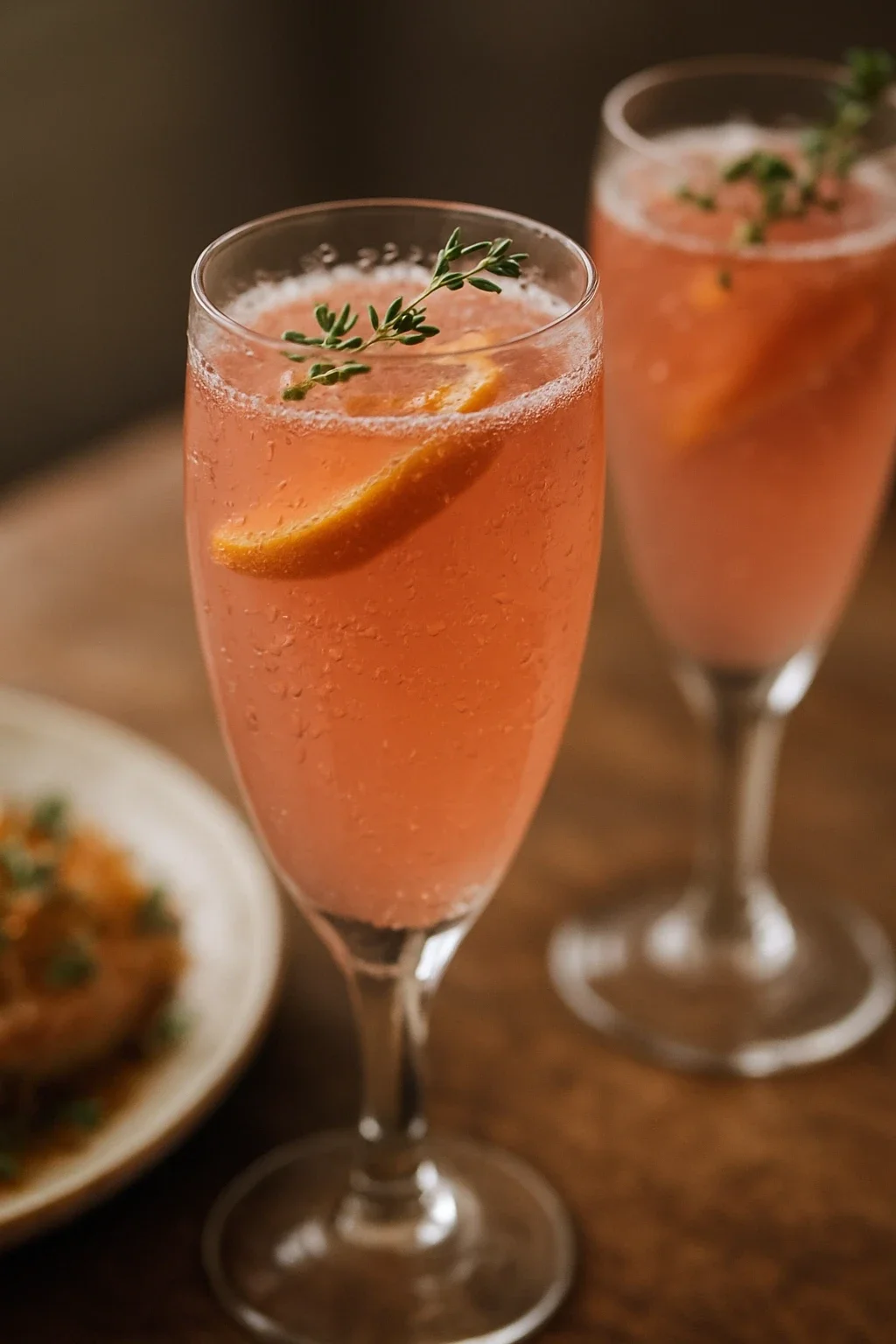
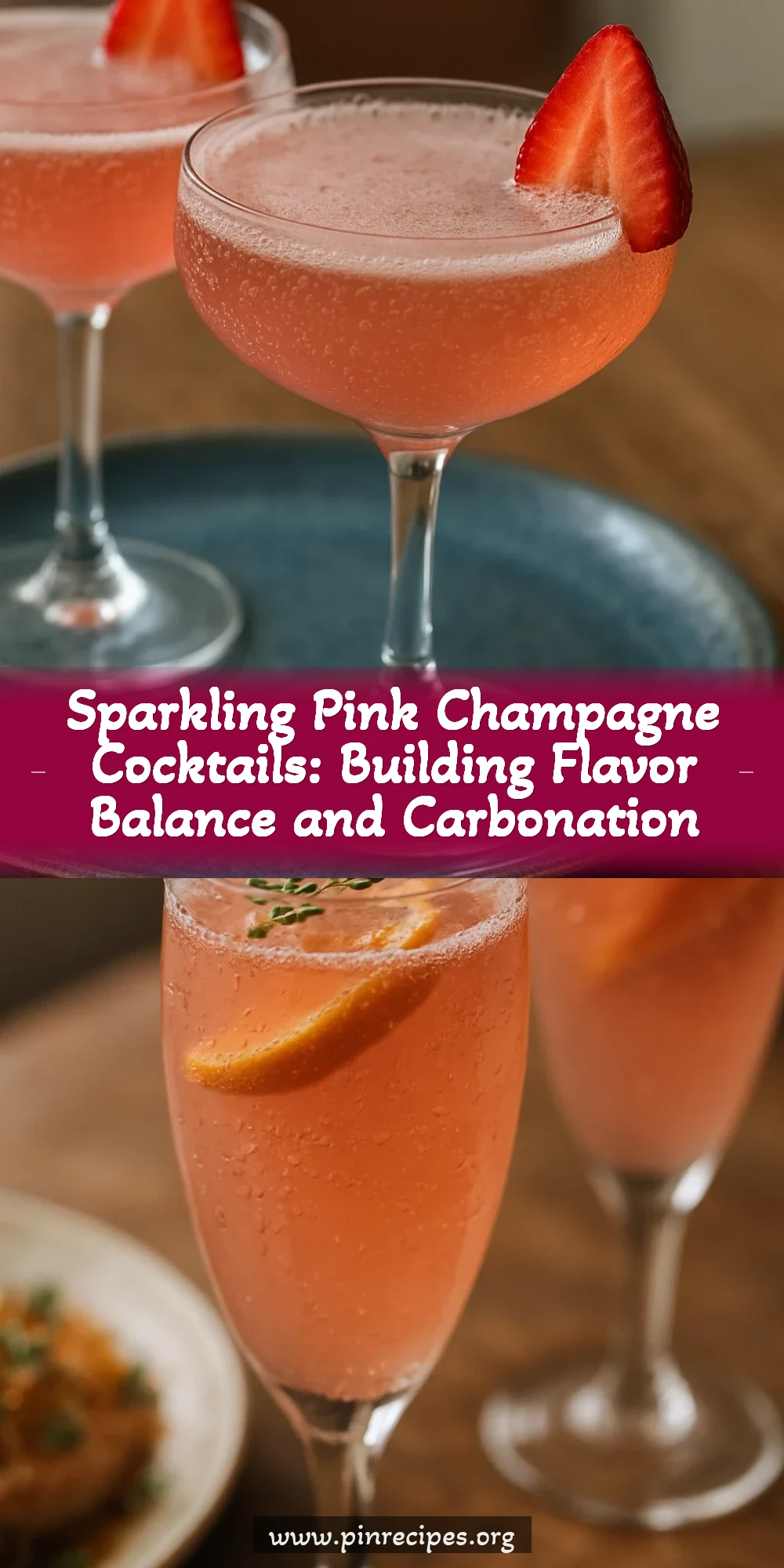
A guide to crafting sparkling pink champagne cocktails that balance sweetness, acidity, and carbonation. Learn why champagne structure matters, how to incorporate raspberry flavor without muddying bubbles, and techniques for achieving that elegant presentation that makes these drinks special for occasions.
How To Do It
Step 1
Place two coupe glasses in the freezer for at least 10 minutes before preparing the cocktails. Cold glassware keeps the champagne colder longer, preserving carbonation and creating a more refreshing drinking experience. If you don't have time to freeze, fill the glasses with ice water while you prepare the other components, then dump the water immediately before pouring.
⏱ Time: 10 minutes (can be done while preparing other ingredients)
✓ Doneness: Glass feels cold to the touch, interior surfaces are frosted or show condensation
Step 2
If using fresh raspberries, place them in a small bowl and gently muddle them with the back of a spoon or a muddler, breaking them down just enough to release their juice. The goal is not to pulverize them into fine paste, but rather to crack their structure so juice flows out. This gentle approach preserves more carbonation than aggressive muddling. If using frozen raspberries, thaw them first by letting them sit at room temperature for 3-4 minutes, then muddle gently. You should have approximately 2 tablespoons (30ml) of raspberry juice with some berry pieces.
⏱ Time: 2-3 minutes
✓ Doneness: Raspberries release visible liquid, mixture looks wet and jammy but not completely pureed, berry solids still visible
Step 3
Strain the muddled raspberries through a fine-mesh strainer into a small bowl or measuring cup, pressing gently with the back of a spoon to extract as much liquid as possible. Discard the solids. This step is important because it removes pulp that can interfere with carbonation and create a murky appearance. You should have approximately 2-3 tablespoons (30-45ml) of clear raspberry juice. If you're using frozen raspberries, this juice will be slightly more diluted from thawing, which is acceptable.
⏱ Time: 1-2 minutes
✓ Doneness: Liquid passes through strainer, solids remain in mesh, juice is clear with pink color
Step 4
Add the fine sugar or simple syrup to the strained raspberry juice and stir until completely dissolved. If using sugar crystals, they should fully dissolve and become transparent. If using simple syrup, it will blend immediately. The sugar serves two purposes: it enhances the raspberry's natural sweetness, and it provides the right level of sweetness to balance the champagne's dryness. At this point, taste a tiny amount of the mixture on your finger—it should taste quite sweet and concentrated, which is correct. This concentration is intentional because it will be diluted by the champagne.
⏱ Time: 1 minute
✓ Doneness: Sugar crystals completely dissolved, mixture appears clear and syrupy, no graininess visible
Step 5
Add the optional fresh lemon juice to the raspberry mixture and stir well. The lemon juice adds acidity that brightens the drink and prevents it from tasting cloying. Start with 1/2 tablespoon (7ml) and taste a tiny amount—if it seems too sweet, add another 1/4 tablespoon. If using the optional raspberry liqueur, add it now as well and stir. The liqueur adds depth and complexity without requiring additional liquid puree. This step is optional, but it noticeably improves the drink's balance.
⏱ Time: 1 minute
✓ Doneness: Lemon juice and liqueur are fully incorporated, mixture smells bright and fruity
Step 6
Remove the champagne from the refrigerator. It should be very cold—ideally between 35-40°F (2-4°C). If you have access to a wine thermometer, this helps, but it's not necessary. The bottle should feel intensely cold to the touch. At this temperature, carbonation remains stable. Open the champagne bottle carefully by loosening the wire cage, placing a cloth over the cork, and gently twisting the bottle (not the cork) to ease the cork out with a quiet pop rather than a loud explosion. A loud pop indicates too much pressure and potential carbonation loss.
⏱ Time: 2-3 minutes
✓ Doneness: Champagne is very cold, cork removes with gentle pressure and quiet sound, bottle remains mostly sealed until opening
Step 7
Divide the raspberry juice mixture evenly between the two chilled coupe glasses, using approximately 1.5 tablespoons (22ml) of mixture per glass. Pour the mixture carefully to avoid splashing, which introduces air and causes premature carbonation loss. The mixture should coat the bottom of the glass and create a light pink hue.
⏱ Time: 1 minute
✓ Doneness: Each glass contains equal amount of raspberry mixture, mixture settles at bottom without splashing
Step 8
Pour the cold champagne slowly down the inside of each glass, tilting the glass at a 45-degree angle. This angled pour reduces the impact force of the champagne hitting the bottom of the glass, which prevents excessive bubble disruption and carbonation loss. Pour until the glass is approximately three-quarters full. The champagne will gradually mix with the raspberry juice as you pour and during drinking, creating the pink color. Do not stir vigorously, as this causes carbonation to escape rapidly.
⏱ Time: 1-2 minutes
✓ Doneness: Champagne flows smoothly into glass, bubbles form steadily and rise through liquid, final color is pale pink to medium pink depending on raspberry amount
Step 9
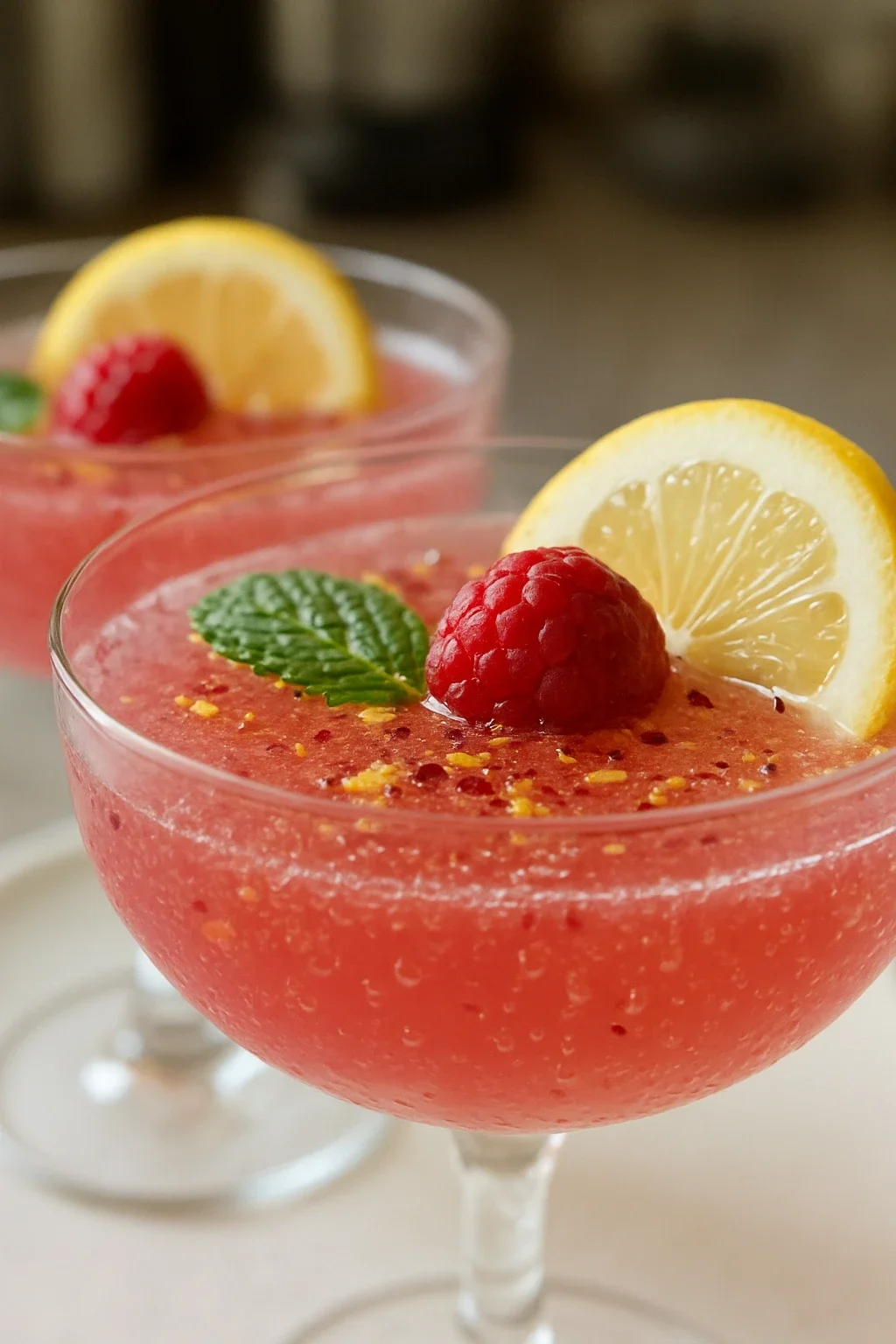
Garnish each glass with 2-3 fresh raspberries placed on the rim or floating on the surface. You can also add a thin lemon wheel or twist if desired. The garnish adds visual appeal and signals the drink's flavor profile. If you choose to rim the glasses with sugar or salt, do this before pouring any liquid—wet the rim with a damp cloth or simple syrup, dip into fine sugar or sea salt, then proceed with pouring.
⏱ Time: 1 minute
✓ Doneness: Raspberries are positioned securely on rim or surface, drink looks visually appealing and elegant
Step 10
Serve immediately and drink within 5-10 minutes for optimal carbonation. As time passes, the champagne continues losing bubbles and the drink becomes flatter. The flavors remain pleasant, but the characteristic sparkle and texture deteriorate noticeably after 10 minutes. If guests arrive at different times, prepare cocktails individually rather than making a batch ahead.
⏱ Time: Immediate consumption
✓ Doneness: Bubbles are actively rising through liquid, drink feels cold, flavors are fresh and balanced
Pro Tips
Use Brut or Extra Dry champagne specifically. Avoid Demi-Sec or Doux champagne, which are already sweet and will make the cocktail cloying.
Brut champagne contains 0-12 grams of residual sugar per liter, while Demi-Sec contains 32-50 grams. Doux is even sweeter. The Brut's dryness is what allows the raspberry sweetness to shine without the drink becoming unbalanced. If you use a sweet champagne, the drink tastes like raspberry syrup rather than an elegant cocktail.
Chill both the champagne and the glasses thoroughly before mixing. Even a 5-degree temperature difference noticeably affects how quickly the drink goes flat.
Carbonation is temperature-dependent. Warm champagne loses bubbles much faster than cold champagne. The relationship is exponential—each 10-degree increase doubles the rate of carbonation loss approximately. Cold glassware keeps the drink cold longer and maintains carbonation throughout consumption.
Muddle raspberries gently and strain them completely rather than leaving berry pieces in the drink. This preserves carbonation and creates a cleaner, more elegant appearance.
Raspberry pulp provides additional surface area for carbon dioxide to escape. Large contact between pulp and air causes rapid bubble loss. Straining creates a clear, liquid raspberry flavoring that doesn't interfere with carbonation. The drink looks more sophisticated and stays bubbly longer.
Pour champagne slowly down the side of the tilted glass rather than straight down from above. This gentle pour preserves significantly more carbonation than a direct pour.
Impact force causes champagne to lose bubbles. When you pour forcefully from above, the champagne hits the bottom of the glass with force, disrupting dissolved carbon dioxide. A side pour reduces impact, and the bubbles remain stable in the glass rather than escaping as a violent rush.
Add optional lemon juice to balance sweetness, even if it seems like an extra step. The difference in flavor balance is noticeable.
Raspberry is a sweet fruit. Without additional acidity, the drink can taste one-note and cloying. A small amount of lemon juice (which you won't taste directly) brightens the overall flavor profile by adding acidity similar to how you might use vinegar in cooking. This technique is called 'balancing sweetness with acidity.'
Make cocktails to order rather than making a batch ahead of time. Prepare the raspberry mixture in advance, but add champagne and serve immediately when guests arrive.
Champagne's carbonation is the defining characteristic of this drink. Once poured, the bubbles begin escaping immediately. A batch made 30 minutes ahead will be noticeably flatter. Making to order ensures every guest receives a fully carbonated, fresh drink.
Common Mistakes to Avoid
Using heavily sweetened or Demi-Sec champagne instead of Brut
Why it happens People assume that sweet champagne will make a sweeter, more appealing cocktail, or they purchase whatever champagne is on sale without checking the sweetness level.
Fix Always select Brut or Extra Dry champagne for this cocktail. Check the label for the sweetness classification. The dryness of Brut champagne is essential for the balance of the final drink. Sweet champagne creates a cloying, one-dimensional flavor.
Muddling raspberries aggressively or not straining them, leaving pulp in the drink
Why it happens People think more berry flavor is better and muddle heavily to extract maximum juice. Or they skip straining to save time.
Fix Muddle gently—just enough to release juice, not to pulverize. Always strain through a fine-mesh strainer. The pulp-free liquid preserves carbonation significantly better and creates a more elegant appearance. The drink tastes just as fruity without the pulp.
Pouring warm champagne or serving in room-temperature glasses
Why it happens Champagne sits on the counter for a while, or glasses aren't chilled ahead of time.
Fix Keep champagne in the refrigerator or in an ice bucket until the moment of serving. Chill glasses in the freezer for at least 10 minutes before mixing. Temperature control is crucial for preserving carbonation. Warm champagne is noticeably flatter and less refreshing.
Stirring the drink vigorously after pouring champagne, which causes rapid carbonation loss
Why it happens People think mixing ensures the flavors combine, or they don't realize that stirring releases bubbles.
Fix Do not stir after adding champagne. The drink will mix naturally as you drink it. The bubbles traveling upward help distribute flavor. Vigorous stirring releases carbonation rapidly and results in a flat drink.
Making the cocktail far in advance and serving it flat
Why it happens People prepare the drinks ahead of time thinking it saves effort.
Fix Prepare the raspberry mixture ahead if desired, but add champagne only when ready to serve. The carbonation is the defining characteristic of this drink, and it begins escaping immediately upon pouring. Serve within 5-10 minutes of preparation.
Variations
Strawberry Champagne Cocktail
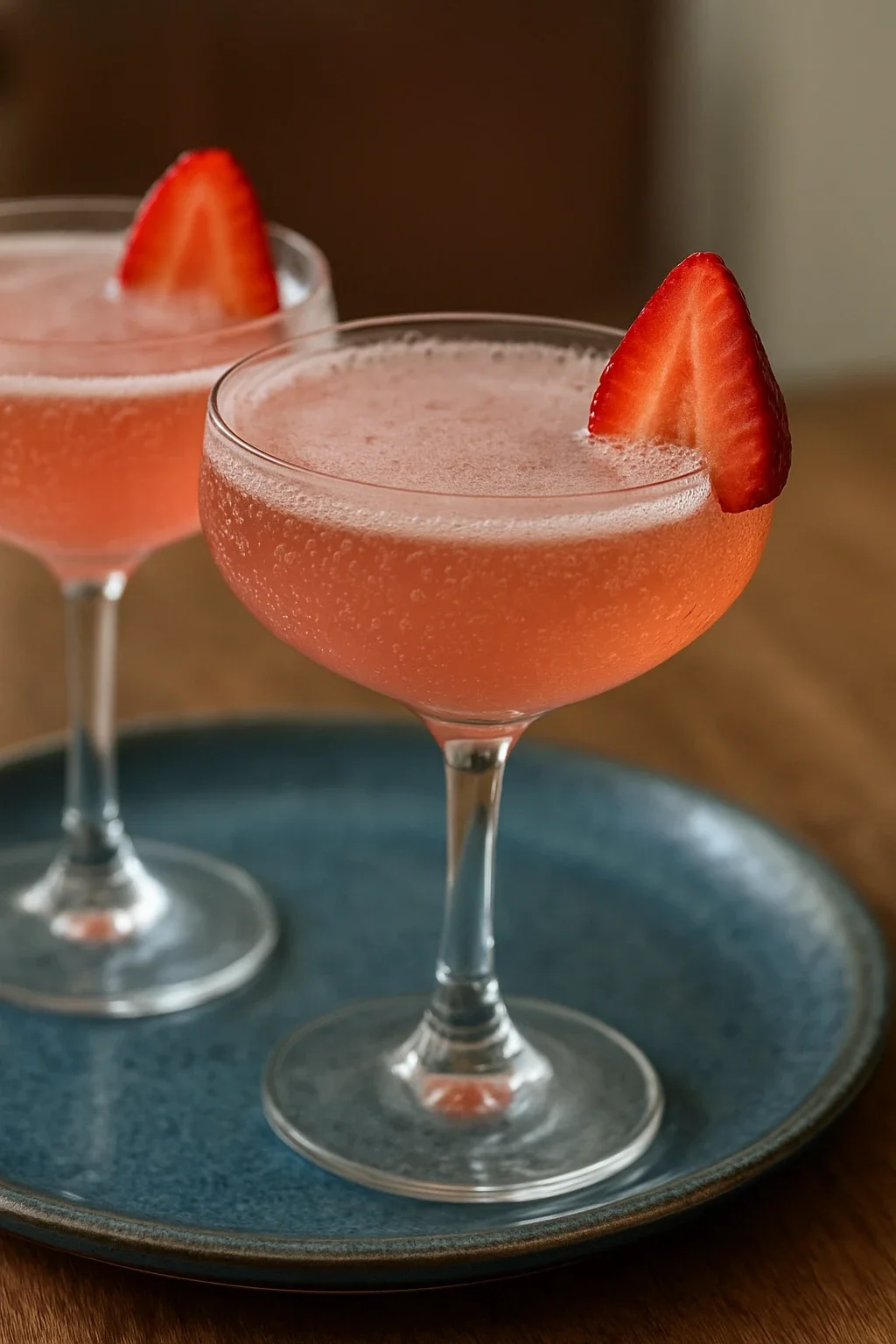
Replace raspberries with fresh strawberries. Hull 3-4 medium strawberries, slice them, and muddle gently. Strain through a fine-mesh strainer. Proceed with the same technique as the raspberry version. Strawberries create a lighter pink color and slightly different flavor—less tart than raspberries and more delicate. Use the same sugar and optional lemon juice amounts.
Note: Strawberries are slightly less acidic than raspberries, so the optional lemon juice is more important for flavor balance. The color will be a lighter, more pale pink than raspberry.
Blackberry Champagne Cocktail
Replace raspberries with fresh blackberries. Use 3/4 cup (approximately 90g) of fresh or thawed blackberries, muddle gently, and strain. Blackberries create a deeper, darker pink color and a more complex, slightly earthy flavor. Add the optional lemon juice and sugar as directed.
Note: Blackberries have larger seeds and pulp than raspberries. Straining is even more important to avoid a gritty texture. The final drink will be a beautiful deep pink or lavender color.
Pomegranate Champagne Cocktail
Replace the raspberry puree with 2-3 tablespoons (30-45ml) of fresh pomegranate juice (not pomegranate-flavored cocktail mix). Combine with sugar and optional lemon juice as directed. This variation requires less muddling since pomegranate juice is liquid. The flavor is tart and complex, and the color is a deep red-pink.
Note: Pomegranate juice can be quite tart, so start with the minimum sugar amount (1 tablespoon) and taste before adding more. You may want to reduce the lemon juice since pomegranate is already acidic.
Raspberry Champagne Cocktail with Raspberry Liqueur
This is the same as the base recipe but with 2 tablespoons (30ml) of raspberry liqueur (such as Chambord) added. The liqueur adds depth and sophisticated flavor without requiring additional pulp. Use slightly less raspberry puree (about 1.5-2 tablespoons) to account for the liqueur. This version is richer and more complex.
Note: Raspberry liqueur is sweetened, so taste before adding additional sugar. You may need to reduce the added sugar to 1 tablespoon to avoid over-sweetening. This variation works well for more formal occasions.
Peachy Champagne Cocktail
Use peach puree or fresh peach juice instead of raspberry. If using fresh peaches, peel, pit, and blend 1-2 medium peaches to create puree. Strain through a fine-mesh strainer to remove pulp. Combine with sugar and optional lemon juice. The flavor is sweeter and more delicate than raspberry, and the color is pale pink to apricot.
Note: Peaches are sweeter and less acidic than raspberries, so include the optional lemon juice for balance. The flavor is more delicate, making this variation suitable for afternoon celebrations rather than evening occasions.
Nutrition
Per Serving:
approximately 110
Calories
15g (per 5-ounce serving)
Alcohol G
These values are estimates and vary based on champagne brand, raspberry puree concentration, and added sugar. Values assume Brut champagne (which contains minimal residual sugar) and do not account for optional liqueur if used. Adding liqueur increases calories by approximately 40 per serving.
Storage & Tips
Refrigerator
The raspberry mixture (without champagne) can be stored in an airtight container in the refrigerator for up to 3 days. Keep champagne bottles sealed in the refrigerator. Opened champagne bottles can remain in the refrigerator with a stopper or cork for approximately 24 hours, though carbonation diminishes significantly after 6-8 hours. Champagne degrades in flavor quality as it sits open.
Freezer
Do not freeze the prepared raspberry mixture, as this damages its texture and flavor. Unopened champagne should not be frozen unless the bottle can withstand pressure changes (which most cannot). Freezing can cause corks to pop from pressure.
Reheating
This is a chilled beverage—no reheating is required. Consume immediately after preparation for optimal carbonation and flavor. If the mixture sits longer than 10 minutes, the bubbles will have largely escaped, and the drink will taste flat.
Make Ahead
Prepare the raspberry mixture up to 3 days in advance and store in the refrigerator in a sealed container. Keep champagne in the refrigerator. When guests arrive, simply add champagne to the prepared mixture and serve immediately. This approach allows you to prepare the more time-consuming part (muddling and straining) in advance while ensuring the champagne stays carbonated.
FAQ
Why is my champagne cocktail flat?
You likely waited too long to serve it, poured from too high above the glass, or used warm champagne. Carbonation begins escaping immediately upon pouring. Serve within 5-10 minutes of preparation and use cold champagne poured gently down the side of a tilted glass. If the champagne bottle sat open for more than a few hours before mixing, the bottle's carbonation may already be depleted.
Can I use prosecco or other sparkling wines instead of champagne?
Yes. Prosecco, Cava, or any Brut sparkling wine works well. True champagne comes from the Champagne region of France, but other sparkling wines provide similar results. Choose Brut or Extra Dry versions to maintain proper sweetness balance. The technique and proportions remain the same.
Can I make a larger batch ahead of time for a party?
Prepare the raspberry mixture ahead, but add champagne to individual glasses only when serving. Making the full cocktail ahead results in flat drinks. If timing is tight, prepare the raspberry mixture in a pitcher, then pour from the pitcher into glasses, immediately add champagne, and serve.
What if I don't have fresh raspberries?
Frozen raspberries work well—thaw them first, then muddle gently. Pomegranate juice or strawberry puree are good substitutes. High-quality frozen raspberries are often better than grocery-store 'fresh' raspberries that have traveled long distances. Avoid raspberry 'cocktail mix' or syrup, which contains artificial flavors and excessive sugar.
How far in advance should I chill the champagne?
Ideally, champagne should be in the refrigerator for at least 2-4 hours before serving. If you're short on time, place the bottle in an ice bucket filled with ice and cold water for 20-30 minutes. Check the temperature with your hand—it should feel very cold. Warm champagne noticeably lacks carbonation and tastes flat.
Can I use sugar on the rim like a regular cocktail?
Yes. Wet the rim of the coupe glass with simple syrup or a damp cloth, then dip into fine sugar. This is optional but adds visual elegance. Use fine sugar rather than coarse sugar, which looks less refined. Apply the sugar before pouring any liquid.
Final Thoughts
Sparkling pink champagne cocktails demonstrate how a few quality ingredients and proper technique create an elegant drink. The focus isn't on complexity but on balance—between the champagne's dryness and the raspberry's sweetness, between flavor intensity and visual appeal, between speed of preparation and preservation of carbonation. Once you understand why each step matters, you can adapt this formula to other fruits and create variations that feel as refined as the original. These are the kinds of drinks that make occasions feel special.